
 ЖИ көмекші



Short term plan: term 3
|
Unit5: Hot and Cold |
Lesson 36 |
||
|
Teacher’s name: |
Sovetkhan Rys |
||
|
Date: |
30.01.25 |
||
|
Grade: 4 B |
Number present: |
absent: |
|
|
Lesson title |
Weather 2 |
||
|
Learning objectives |
4.1.4.1 understand an increasing range of short supported questions on general and some curricular topics 4.1.7.1 use contextual clues to predict content and meaning in short supported talk on an increasing range of general and some curricular topics 4.2.1.1 make basic statements which provide information on an increasing range of general and some curricular topics 4.3.3.1 recognise basic opinions in short, simple texts on an increasing range of general range of general and some curricular topics |
||
|
Lesson objectives |
- Talk about weather and natural disasters. -Learn new words -Watch a video “ Flood Safety Tips” -Make questions and answer for them |
||
|
Value links |
Honesty – You may highly value telling people the truth. This one gets tricky when being honest can be hurtful to others. So, a person who really puts honesty first might be the sort of person who will tell the truth even if it hurts to do so. |
||
|
Plan |
|||
|
Part of the lesson/Time |
Teacher’s activity |
Student’s activity |
Assessment |
Resources |
|
The beginning of the lesson
3 min |
Organization moment : 1.Greeting. . (Whole class, Individually) Warm-up Phonetic Drill Exercise. Sit nicely Be quit No talking No sleeping Have a nice day
|
Pupils greet teacher and sit down. “have a nice day” Whole class. Group work Checking home task: “Who is the fastest” method
|
Teacher controls the process, gives feedback and asks additional questions if it’s necessary. Teacher evaluate pupils with phrases Well done!”
Good job! Assessment criteria - Learners have met the learning objectives if they can talk about camping and camping safety -repeat, chorally and/or individually -Ask individual pupils to name them Total: 2 assyks |
Pictures Bells Worksheets Assyks
https://wordwall.net/resource/84941736
fortune’s wheel |
|
1 min Pre-reading stage |
Pre-learning “Brainstorming” method” Teacher asks learners to look at whiteboard. Teacher asks learners some questions Teacher controls answers and give them feedbacks. |
(Whole class) (Open –ended task) The aim: To develop pupils speaking skills, critical thinking skills and create friendly atmosphere Efficiency: By wishing each other they feel better and feel the support of others Lead-in -what types of natural disasters do you know? Transcripts: Tornado, hail, etc. |
Descriptors: Students of the class are listed. Students' attention is drawn to the lesson. Learners remember previous lesson vocabulary Students say different words from the picture Learners should guess the names of natural disasters. Share with ideas. Answer for teacher’s questions. Learners can say names of natural disasters on their native languages Assessment: Teacher’s feedback CCQ: -Is a tornado dangerous? Can a flood happen after snow melts? Yes/No answers Differentiation: - |
whiteboard
|
|
8 min |
Teacher attends learners’ attention on the blackboard.
|
(individually )(whole class) “Multiphoto” method
The aim: To develop pupils speaking, listening skills and create friendly atmosphere Efficiency: By wishing each other they feel better and feel the support of others Task 1.Look at the blackboard. Repeat new words. Remember order of these words. Stick new words on dictionaries. Flood — [flʌd]наводнение Storm —[stɔːrm] шторм Thunder — [ˈθʌndər] гром Lightning — [ˈlaɪtnɪŋ] молния Avalanche —[ˈævəˌlæntʃ] лавина Tornado — [tɔːˈneɪdoʊ]торнадо Hail — [heɪl] град
|
Descriptor: Repeat new words Remember new words Assessment: Teacher’s assessment Differentiation: By task: Learners are given tasks. Strong learners: Repeat new words independently Evaluate their own progress Apply new words creatively Weak learners: Repeat new words with teacher’s support Have difficulty using new words independently Limited self-evaluation Use words only in familiar contexts Teacher’s feedback:
|
Worksheets Assyk
Blackboard Pictures of natural disasters Names of natural disasters cards |
|
3 min |
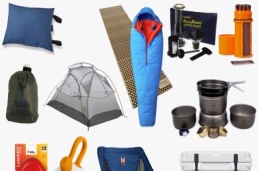
Teacher shows to pupils video about “Flood Safety Tips” Teacher gives to 2 groups rucksack and cards with different things. learners should what they take in emergency situations From this video teacher develops pupils “functional literacy” Emergency Numbers: Fire Service: 101 Police: 102 Ambulance: 103 Emergency Gas Service: 104 Unified Rescue Service: 112 "111 Emergency Service" Contact Center "111" is available 24/7. "111" ensures confidentiality. |
(whole class) (group work) The aim: To develop students' ability to make correct decisions in emergency situations. Efficiency:To conduct a discussion on how to prepare for a potential flood, including assembling emergency kits and knowing evacuation routes. Task 2. Watch a video “Flood Safety Tips” and choose what you will take with you in emergency situations
|
Descriptors: Watch a video Choose correct variant Assessment -Group assessment Teacher’s feedback Total: 2 assyks Differentiation: By on students' language proficiency and cognitive skills. Strong Learners: Independently watch the video and understand all key flood safety tips. Choose the correct cards confidently and justify their choice. Evaluate their own progress by reflecting on what they’ve learned about flood safety. Weak Learners: Watch the video with teacher’s support and focus on identifying basic flood safety tips. read correct answer with guidance and support from the teacher. |
https://www.youtube.com/watch?v=cqCMXSOo8qc
Emergency Call Numbers pictures Cards |
|
5 min |
Teacher attends learners’ attention on the walls
|
Group work. The aim: to enhance students' vocabulary, spelling, and critical thinking skills by unscrambling letters to form meaningful words. It also aims to foster teamwork and collaboration among classmates.Efficiency:Improves spelling, word recognition, and vocabulary-building skills. Makes learning interactive and enjoyable, sustaining students' interest in language activities. «Detective » method
Task 3.Unscramble the letters to form words. ANSWERS
|
Descriptor: Read words Put letters in order Write on copybooks Say right variant Assessment: Self assessment Differentiation By task Strong learners Read orally without teacher’s support Can guess natural disasters Weak learners Read orally with a little teacher’s support Total: 2 assyks |
Pictures of camels
|
|
1 min Warm up |
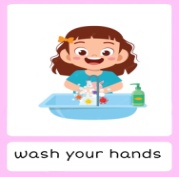
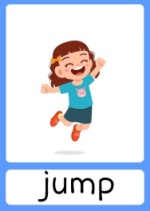
Teacher shows cards with different actions Ask children to look at the pictures of the actions. |
Whole class Learners stand in a circle and repeat the actions
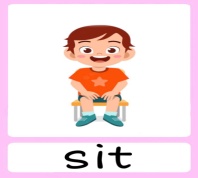
Transcript Sit, run, eat, wash your hands, walk, sleep, dance, sing, jump |
Descriptor: Do actions Assessment - Teacher’s feedback: Well done! Good job!
|
https://youtu.be/S6vxAvx4TW4?si=RKdeYteuoMOGcZ8F kuy cards |
|
6 min |
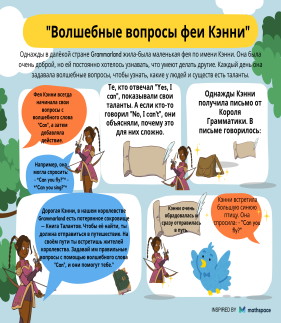
Teacher gives learners comics about “can” learners read orally them. Then learners make their own questions using “can” |
Whole class The students listen attentively to the teacher's explanation. Students complete the exercise given by the teacher, forming their own questions using "can." They may work in pairs or groups to practice asking and answering questions with "can." |
Descriptor: Read comics Make sentences assessment - |
Comics
|
|
6 min |
Teacher attends learners attention on the whiteboard. Learners should put words in order. Teacher checks learners Transcripts: Can you speak English? Can your mum swim? Can they run? Can Mike jump? Can James dance? |
Whole class, group work, individually Task. 4 make sentences The aim: To develop pupils speaking skills and create friendly atmosphere Efficiency: By wishing each other they feel better and feel the support of others
|
Descriptor:
Assessment Pair assessment Differentation By task Strong learners Do task without teacher’s support Make sentences in correct order Check weak learners’ sentences Weak learners Do task with a little teacher’s support Make sentences with some mistakes Total:2 assyks |
Whiteboard Assyks https://wordwall.net/resource/84495160 cards |
|
4min |
By this task teacher can provide learners’ reading skills, listening skills, speaking skills respect each other and listen carefully.
|
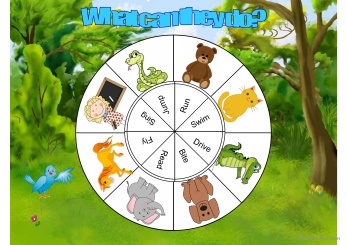
Group work Task 5. Answer for the questions “Yes, it can/ No, it can’t Receiving the cards and carefully reading the questions. Reflecting on each question and deciding how to respond: “yes, it can” or “no, it can’t.” Participating in the discussion if the teacher invites them to share their answers with the class. Interacting with classmates, discussing their answers and opinions. Smiling and maintaining a positive attitude towards the task, even if the answer is “no, it can’t.” |
Descriptor:
Assessment: Group assessment Total: 2 assyks |
Cards roulettes
|
|
3 min |
By this task teacher can provide learners’ writing skills respect each other and listen carefully. Explain the task structure and provide an example. Read the task instructions with the students and clarify any new words or constructions. Organize individual or pair work on forming questions and answers. Check the task completion, correct mistakes, and provide feedback. |
Read the task instructions and identify key words. Formulate questions from the given phrases (e.g., “Can I go camping?”). Provide answers using the appropriate information (“Yes, you can” / “No, you can’t”). Write down the answers or say them out loud. Task 6. Ex.12 p.51 (AB) Form questions and answer them with Yes, I can/No I can’t Transcript: Can we leave early? Yes, you can Can I go out tonight? No, you can’t Can I close the door, please? Yes , you can |
Descriptor: 1. form 4 questions. 2. provide correct answers 3. use grammatically correct structures in questions and answers. Assessment: Teacher’s assessment Total: 2 assyks |
AB assyks |
|
The end of the lesson 5 min |
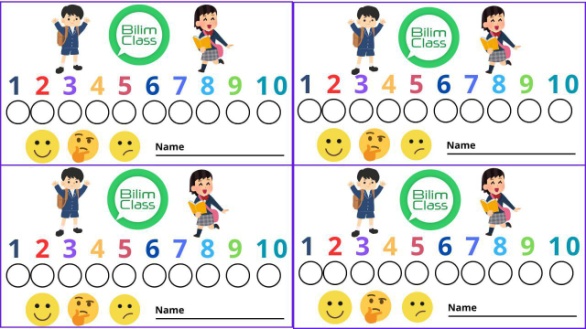
Teacher gives instruction to learners to conclude today’s lesson using method “Bilimclass” Give them feedback, marks and hometask Say them goodbye |
Learners conclude the lesson Fill the blanket Share with another students Say to teacher goodbye Hometask: make 3 questions with “can” |
Descriptor: Fill the table |
|












 Жүктеу
жүктеу мүмкіндігіне ие боласыз
Бұл материал сайт қолданушысы жариялаған. Материалдың ішінде жазылған барлық ақпаратқа жауапкершілікті жариялаған қолданушы жауап береді. Ұстаз тілегі тек ақпаратты таратуға қолдау көрсетеді. Егер материал сіздің авторлық құқығыңызды бұзған болса немесе басқа да себептермен сайттан өшіру керек деп ойласаңыз осында жазыңыз
 11 Ақпан 2025
 139
139Ашық сабақ 4 сынып “Weather 2”
Short term plan: term 3
|
Unit5: Hot and Cold |
Lesson 36 |
||
|
Teacher’s name: |
Sovetkhan Rys |
||
|
Date: |
30.01.25 |
||
|
Grade: 4 B |
Number present: |
absent: |
|
|
Lesson title |
Weather 2 |
||
|
Learning objectives |
4.1.4.1 understand an increasing range of short supported questions on general and some curricular topics 4.1.7.1 use contextual clues to predict content and meaning in short supported talk on an increasing range of general and some curricular topics 4.2.1.1 make basic statements which provide information on an increasing range of general and some curricular topics 4.3.3.1 recognise basic opinions in short, simple texts on an increasing range of general range of general and some curricular topics |
||
|
Lesson objectives |
- Talk about weather and natural disasters. -Learn new words -Watch a video “ Flood Safety Tips” -Make questions and answer for them |
||
|
Value links |
Honesty – You may highly value telling people the truth. This one gets tricky when being honest can be hurtful to others. So, a person who really puts honesty first might be the sort of person who will tell the truth even if it hurts to do so. |
||
|
Plan |
|||
|
Part of the lesson/Time |
Teacher’s activity |
Student’s activity |
Assessment |
Resources |
|
The beginning of the lesson
3 min |
Organization moment : 1.Greeting. . (Whole class, Individually) Warm-up Phonetic Drill Exercise. Sit nicely Be quit No talking No sleeping Have a nice day
|
Pupils greet teacher and sit down. “have a nice day” Whole class. Group work Checking home task: “Who is the fastest” method
|
Teacher controls the process, gives feedback and asks additional questions if it’s necessary. Teacher evaluate pupils with phrases Well done!”
Good job! Assessment criteria - Learners have met the learning objectives if they can talk about camping and camping safety -repeat, chorally and/or individually -Ask individual pupils to name them Total: 2 assyks |
Pictures Bells Worksheets Assyks
https://wordwall.net/resource/84941736
fortune’s wheel |
|
1 min Pre-reading stage |
Pre-learning “Brainstorming” method” Teacher asks learners to look at whiteboard. Teacher asks learners some questions Teacher controls answers and give them feedbacks. |
(Whole class) (Open –ended task) The aim: To develop pupils speaking skills, critical thinking skills and create friendly atmosphere Efficiency: By wishing each other they feel better and feel the support of others Lead-in -what types of natural disasters do you know? Transcripts: Tornado, hail, etc. |
Descriptors: Students of the class are listed. Students' attention is drawn to the lesson. Learners remember previous lesson vocabulary Students say different words from the picture Learners should guess the names of natural disasters. Share with ideas. Answer for teacher’s questions. Learners can say names of natural disasters on their native languages Assessment: Teacher’s feedback CCQ: -Is a tornado dangerous? Can a flood happen after snow melts? Yes/No answers Differentiation: - |
whiteboard
|
|
8 min |
Teacher attends learners’ attention on the blackboard.
|
(individually )(whole class) “Multiphoto” method
The aim: To develop pupils speaking, listening skills and create friendly atmosphere Efficiency: By wishing each other they feel better and feel the support of others Task 1.Look at the blackboard. Repeat new words. Remember order of these words. Stick new words on dictionaries. Flood — [flʌd]наводнение Storm —[stɔːrm] шторм Thunder — [ˈθʌndər] гром Lightning — [ˈlaɪtnɪŋ] молния Avalanche —[ˈævəˌlæntʃ] лавина Tornado — [tɔːˈneɪdoʊ]торнадо Hail — [heɪl] град
|
Descriptor: Repeat new words Remember new words Assessment: Teacher’s assessment Differentiation: By task: Learners are given tasks. Strong learners: Repeat new words independently Evaluate their own progress Apply new words creatively Weak learners: Repeat new words with teacher’s support Have difficulty using new words independently Limited self-evaluation Use words only in familiar contexts Teacher’s feedback:
|
Worksheets Assyk
Blackboard Pictures of natural disasters Names of natural disasters cards |
|
3 min |
Teacher shows to pupils video about “Flood Safety Tips” Teacher gives to 2 groups rucksack and cards with different things. learners should what they take in emergency situations From this video teacher develops pupils “functional literacy” Emergency Numbers: Fire Service: 101 Police: 102 Ambulance: 103 Emergency Gas Service: 104 Unified Rescue Service: 112 "111 Emergency Service" Contact Center "111" is available 24/7. "111" ensures confidentiality. |
(whole class) (group work) The aim: To develop students' ability to make correct decisions in emergency situations. Efficiency:To conduct a discussion on how to prepare for a potential flood, including assembling emergency kits and knowing evacuation routes. Task 2. Watch a video “Flood Safety Tips” and choose what you will take with you in emergency situations
|
Descriptors: Watch a video Choose correct variant Assessment -Group assessment Teacher’s feedback Total: 2 assyks Differentiation: By on students' language proficiency and cognitive skills. Strong Learners: Independently watch the video and understand all key flood safety tips. Choose the correct cards confidently and justify their choice. Evaluate their own progress by reflecting on what they’ve learned about flood safety. Weak Learners: Watch the video with teacher’s support and focus on identifying basic flood safety tips. read correct answer with guidance and support from the teacher. |
https://www.youtube.com/watch?v=cqCMXSOo8qc
Emergency Call Numbers pictures Cards |
|
5 min |
Teacher attends learners’ attention on the walls
|
Group work. The aim: to enhance students' vocabulary, spelling, and critical thinking skills by unscrambling letters to form meaningful words. It also aims to foster teamwork and collaboration among classmates.Efficiency:Improves spelling, word recognition, and vocabulary-building skills. Makes learning interactive and enjoyable, sustaining students' interest in language activities. «Detective » method
Task 3.Unscramble the letters to form words. ANSWERS
|
Descriptor: Read words Put letters in order Write on copybooks Say right variant Assessment: Self assessment Differentiation By task Strong learners Read orally without teacher’s support Can guess natural disasters Weak learners Read orally with a little teacher’s support Total: 2 assyks |
Pictures of camels
|
|
1 min Warm up |
Teacher shows cards with different actions Ask children to look at the pictures of the actions. |
Whole class Learners stand in a circle and repeat the actions
Transcript Sit, run, eat, wash your hands, walk, sleep, dance, sing, jump |
Descriptor: Do actions Assessment - Teacher’s feedback: Well done! Good job!
|
https://youtu.be/S6vxAvx4TW4?si=RKdeYteuoMOGcZ8F kuy cards |
|
6 min |
Teacher gives learners comics about “can” learners read orally them. Then learners make their own questions using “can” |
Whole class The students listen attentively to the teacher's explanation. Students complete the exercise given by the teacher, forming their own questions using "can." They may work in pairs or groups to practice asking and answering questions with "can." |
Descriptor: Read comics Make sentences assessment - |
Comics
|
|
6 min |
Teacher attends learners attention on the whiteboard. Learners should put words in order. Teacher checks learners Transcripts: Can you speak English? Can your mum swim? Can they run? Can Mike jump? Can James dance? |
Whole class, group work, individually Task. 4 make sentences The aim: To develop pupils speaking skills and create friendly atmosphere Efficiency: By wishing each other they feel better and feel the support of others
|
Descriptor:
Assessment Pair assessment Differentation By task Strong learners Do task without teacher’s support Make sentences in correct order Check weak learners’ sentences Weak learners Do task with a little teacher’s support Make sentences with some mistakes Total:2 assyks |
Whiteboard Assyks https://wordwall.net/resource/84495160 cards |
|
4min |
By this task teacher can provide learners’ reading skills, listening skills, speaking skills respect each other and listen carefully.
|
Group work Task 5. Answer for the questions “Yes, it can/ No, it can’t Receiving the cards and carefully reading the questions. Reflecting on each question and deciding how to respond: “yes, it can” or “no, it can’t.” Participating in the discussion if the teacher invites them to share their answers with the class. Interacting with classmates, discussing their answers and opinions. Smiling and maintaining a positive attitude towards the task, even if the answer is “no, it can’t.” |
Descriptor:
Assessment: Group assessment Total: 2 assyks |
Cards roulettes
|
|
3 min |
By this task teacher can provide learners’ writing skills respect each other and listen carefully. Explain the task structure and provide an example. Read the task instructions with the students and clarify any new words or constructions. Organize individual or pair work on forming questions and answers. Check the task completion, correct mistakes, and provide feedback. |
Read the task instructions and identify key words. Formulate questions from the given phrases (e.g., “Can I go camping?”). Provide answers using the appropriate information (“Yes, you can” / “No, you can’t”). Write down the answers or say them out loud. Task 6. Ex.12 p.51 (AB) Form questions and answer them with Yes, I can/No I can’t Transcript: Can we leave early? Yes, you can Can I go out tonight? No, you can’t Can I close the door, please? Yes , you can |
Descriptor: 1. form 4 questions. 2. provide correct answers 3. use grammatically correct structures in questions and answers. Assessment: Teacher’s assessment Total: 2 assyks |
AB assyks |
|
The end of the lesson 5 min |
Teacher gives instruction to learners to conclude today’s lesson using method “Bilimclass” Give them feedback, marks and hometask Say them goodbye |
Learners conclude the lesson Fill the blanket Share with another students Say to teacher goodbye Hometask: make 3 questions with “can” |
Descriptor: Fill the table |
|
 Жүктеу

 Жүктеу
шағым қалдыра аласыз


 Бұл курс Қазақстан Республикасы Оқу-ағарту министрлігімен келісілген


