
 ЖИ көмекші


 Қауіпсіз төлем

жүктеу мүмкіндігіне ие боласыз
Бұл материал сайт қолданушысы жариялаған. Материалдың ішінде жазылған барлық ақпаратқа жауапкершілікті жариялаған қолданушы жауап береді. Ұстаз тілегі тек ақпаратты таратуға қолдау көрсетеді. Егер материал сіздің авторлық құқығыңызды бұзған болса немесе басқа да себептермен сайттан өшіру керек деп ойласаңыз осында жазыңыз
 28 Қаңтар 2026
 22
22
1 жыл бойы шексіз жүктеңіз
ашық сабақ 4сынып
|
Module 5 Food and Drinks Lesson 4 |
School:19 |
||
|
Date: : 4 a-21\01\2026 4ә-21\01\2026 4б-16\01\2026a.y |
Teacher name:S.O.Tanirbergenova |
||
|
Grade: 4 a 4ә 4б-16\01\2026a.y |
Number present: |
absent: |
|
|
Lesson theme |
I like popcorn! |
||
|
Learning objectives |
4.3.5.1 Read short, simple illustrated fiction and non-fiction stories using a dictionary. 4.3.3.2 Identify the main points of short simple texts with support. |
||
|
Lesson objectives Based on President K. Tokayev’s instructions at the National Kurultai sessions and Order No. 123 of the Ministry of Education |
Learners will be able to:
|
||
|
Plan |
|||
|
Stages / Time |
Teachers actions |
Students’ actions |
Assessment criteria |
Resources |
|
Beginning of the lesson Warming-up 7 min |
Organization moment: Revise the language of the previous lesson. Write a list of food items and adjectives on the board. Ask individual pupils to choose two of the food items and compare them using one of the adjectives. Warming-up: Play a quick 'Word Association' game. Say "Popcorn" and have students say a word related to it, like "movies," "salty," "snack." Repeat with "Juice" (e.g., "fruit," "sweet," "drink"). |
e.g. Pupil 1: Crisps are saltier than cheese. etc |
The teacher assess learners for their ability. “Good job! Well done!” Formative Assessment
|
Pictures worksheet
ChatGPT
(OpenAI) – Жалпы
мақсаттағы жасанды интеллект жүйесі. |
|
Middle of the lesson Presentationand practice. 30 min |
Task : Listen and Read – Comic “I like popcorn!” (Track 41) Ask: Can you make popcorn? Explain the question, in L1 if necessary. Elicit the pupils’ answer to see how many boys and girls can cook or make a snack. Have a class discussion about who usually cooks in their family. Ask them if it’s only the girls’ responsibility to help with the cooking and other household activities. Explain that whether you are a boy or a girl you should help in the house. This will bring a sense of equality and at the same time teach important life skills. Read the title of the story and explain its meaning, in L1 if necessary. Go through the pictures and set the scene. Follow the same procedure and present the rest of the story. Play the audio. The pupils listen and follow the story in their books. Ask, as you write on the board: Who likes salty popcorn? Write Cody and Carlos on the board. Play the audio again. The pupils listen and answer (Carlos). Time permitting, play the audio a third time with pauses for the pupils to listen and repeat, chorally and/or individually. Check the pupils’ pronunciation and intonation. If you wish, play the animated video for the pupils to watch the story. Extension Activity (Optional) Write the following words on the board: watch, funny, worry and fantastic. Ask the pupils to go through the dialogue again and tell the class what they mean. Explain that they can use their dictionaries. |
e.g. Teacher: (pointing to Dad in picture 1) Who’s this? Class: Dad. Teacher: (pointing to Cody) Who’s this? Class: Cody. Teacher: (pointing to Carlos) Who’s this? Class: Carlos. Teacher: (pointing to picture 2) They are in the kitchen. etc |
Students read and intone phrases correctly. Use phrases in the dialogue. Teacher’s assessment Pupils are evaluated with phrases like: Well done! Brilliant! Good job! I like it! |
P.B.p.60, ex.1 Audio CD Pictures IWB |
|
Activity 2: Read again. Complete. Explain the activity. The pupils read the story again and complete the activity. Check their answers.
Activity 3: Game: Make a TV. Play the Who's on TV? game! The pupils, as a class, make a TV out of a cardboard box. They can draw buttons and, if they wish, make and attach an ‘antenna’ to it. Guide them through the cutting out of a circle on the bottom of the box as well as the ‘screen’ so that their faces are visible when they put their head in the box. Alternatively, the pupils can use a sheet of A4 paper, decorate it and cut out a ‘screen’ in the middle so that their faces are visible when they put the paper in front of them. Play the Who’s on TV? game. Divide the pupils into two teams, A and B. Pupils from each team take turns holding the box up so that their heads appear on the ‘screen’ and say a line from the dialogue. Choose a pupil from the other team and ask them to guess who it is, e.g. Zhaniya. If they guess correctly, they get one point for their team. The team with the most points wins the game. |
Extension Activity (Optional) • For stronger classes: In groups, the pupils act out the dialogue from the story. Allow them some time to rehearse their dialogues. Invite some groups to come to the front of the classroom and act out their dialogues. Provide any necessary help. • For weaker classes: Hand out the photocopies of the story cards, one set per pupil. Ask the pupils to colour them in. Play the audio with pauses. The pupils listen and hold up the corresponding story cards. Assessment criteria: "Thumbs Up / Thumbs Down" or teacher observation of students' ability to complete the activity and participate in the game. |
PB p.61, ex.2,3 cardboard boxes, scissors, glue, markers. |
||
|
Activity book. Activity 1: Look, read and match. The teacher directs students' attention to the six panels of a comic strip (presumably from the student book) and the four speech bubbles below. The teacher reads the speech bubbles aloud, and students must match them to the correct picture panel. |
Students analyze the pictures and the dialogue, drawing lines to connect each speech bubble to the corresponding comic panel. The teacher assesses the students' comprehension of a story by checking if they can correctly match the dialogue to the visual context. |
Activity book p.54 |
||
|
End of the lesson 8 min |
Consolidate the language of the lesson. Ask the pupils to look at the pictures in the story for a few minutes and then close their books. Divide the class into two teams, A and B. Ask individual pupils from both teams questions about the toys in the story. Each correct answer wins a point. The team with the most points wins. Teacher: What colour is the teddy bear? Team A, Pupil 1: (It’s) blue! Teacher: Correct! |
|
Suggested answer key
|
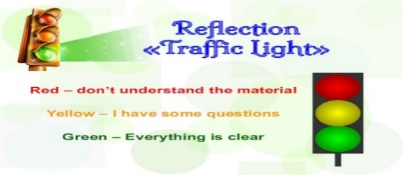
Poster Success |
|
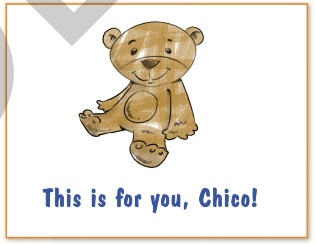
Extension Activities (Optional) 1 Ask the pupils, in L1 if necessary, to tell you which part of the story they liked best and why. Ask them to draw a happy face or a sad face, depending on whether they liked the story or not. 2 The pupils, in pairs, think of and draw a present for Chico for being a ‘good boy’. Then they present their drawings to the class. |
|
|||
|
|
|
|||











 Бұл курс Қазақстан Республикасы Оқу-ағарту министрлігімен келісілген










