
 ЖИ көмекші


жүктеу мүмкіндігіне ие боласыз
Бұл материал сайт қолданушысы жариялаған. Материалдың ішінде жазылған барлық ақпаратқа жауапкершілікті жариялаған қолданушы жауап береді. Ұстаз тілегі тек ақпаратты таратуға қолдау көрсетеді. Егер материал сіздің авторлық құқығыңызды бұзған болса немесе басқа да себептермен сайттан өшіру керек деп ойласаңыз осында жазыңыз
 17 Қараша 2024
 184
184
Ашық сабақ 6 сынып Describing places.
|
Unit of a long term plan: Unit 8 Our neighbourhood |
School: № 11 |
||
|
Date: 09.04.2024 |
Teacher name: Bekgulova Guldana |
||
|
Grade: 6 «Д» |
Number present: |
absent: |
|
|
Lesson title |
Describing places. |
||
|
Learning objectives |
6.1.1.1 use speaking and listening skills to solve problems creatively and cooperatively in groups 6.2.1.1 understand a sequence of supported classroom instructions 6.3.1.1 provide basic information about places at sentence level on an increasing range of general topics |
||
|
Lesson objectives |
Learners will be able to: • To learn adjectives to describe places. • To use adjectives to complete sentences describing your town. • To Listen to a conversation about different places. • To Listen for general meaning and specific details. |
||
|
Plan |
|||
|
Stages / Time |
Teachers’ actions |
Students’ actions |
Assessment criteria |
Resources |
|
Start 2 min
5 min |
Organization moment 1.Greeting. Ask about the weather. The teacher sets the lesson objectives, letting students know what to anticipate from the lesson. Home-work Complete the questions with Is there / Are there. Then ask and answer with a partner. Give short answers. Descriptor: Complete the questions with Is there / Are ther. Give short answers Answer 1 Is there 2 Are there 3 Are there 4 Is there 5 Are there 6 Are there 7 are there 8 are there |
Students' attention is drawn to the lesson. Determines the topic and aim of the lesson Students do homework |
Formative Assessment “My neighbourhood”
Students will get 2 stickers in every exercise, it will count as a 2 points. Assessment criteria
Total: 2 point |
Student’s book Interactive board Wordwall platform https://wordwall.net/resource/71336171 |
|
Main part
33 min |
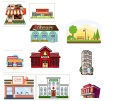
Introducing new words
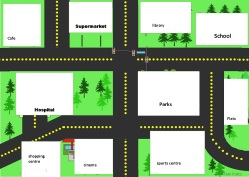
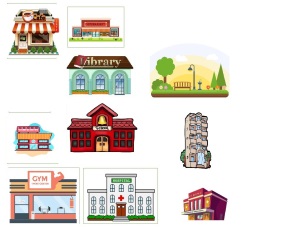
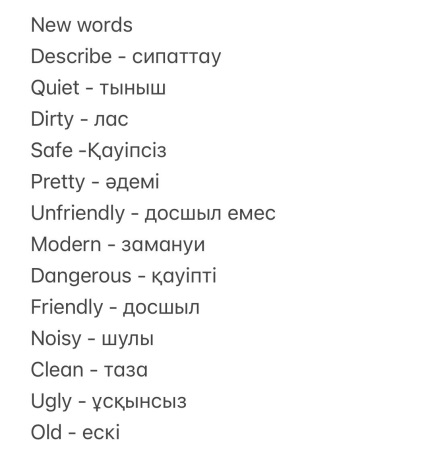
Ex: 1 P:96 • Students look at the pictures. Explain that the adjective below each picture describes that image, and that the words in the box are the opposites of these. • When students have checked their answers, use the recording to drill the pronunciation of any words that are new to students. Descriptor: - match adjectives with their opposites. Answers: 1 safe 2 unfriendly 3 quiet 4 dirty 5 pretty 6 modern Differentiation: «Verbal support» method is used to help Students use new words in the text. Ex: 2 P:96 • Look at the example with the class. Check understanding of quite: it is used to modify the adjective and make it less strong. Then look at the word really in items 2 and 3. Elicit that this makes an adjective stronger. • Students complete the sentences using information that is true about their own town. • Ask students to compare their sentences in pairs. • Ask some students to read their sentences to the class, and ask the class if they agree Descriptor: - complete the sentences using information - Use the adjectives Answers: Students’ own answers. Ex: 4 P:96 • Allow students time to read the sentences. • Play the CD again. Students decide if the sentences are true or false. • Check that students are able to form the correct sentence where the sentence is false Descriptor: - write true or false Answers: 1 True 2 False 3 True 4 False 5 False 6 False Ex: 5 • Look at the Word Search and find seven more adjectives. Write the adjectives under positive or negative . Descriptor: - find 7 adjectives - Write the adjectives under positive or negative. Answers: Positive negative Quiet dirty Safe ugly Pretty dangerous Clean noisy |
Students will open their copybooks and write down new words. Students match adjectives with their opposites. Then listen and check. Students complete the sentences about where you live. Use the adjectives. . Students Tina is from Miami and Tom is Brighton. Listen to their conversation and quess if the statement true or false Students find seven adjectives and write the in positive and negative. |
“My neighbourhood”
Assessment criteria -can match adjectives with their opposites. Total: 2 point “My neighbourhood”
Assessment criteria -can Use the adjectives Total: 2 point “My neighbourhood”
Assessment criteria -can discuss about photos Total: 2 point “My neighbourhood”
Assessment criteria
|
Slide Slide Student’s book Black board Student’s book Interactive board Umaigra Platform Word Search worksheets |
|
End 5 min |
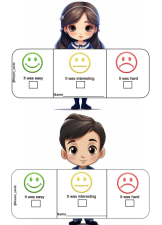
Homework: ex: 3 o page 66. workook FEEDBACK Learners provide feedback on what they have learned at the lesson. |
|
Students give feedback to today’s lesson Feedack “Go to school “
|
|




 Жүктеу


 Жүктеу
шағым қалдыра аласыз

 Бұл курс Қазақстан Республикасы Оқу-ағарту министрлігімен келісілген










