
 ЖИ көмекші


жүктеу мүмкіндігіне ие боласыз
Бұл материал сайт қолданушысы жариялаған. Материалдың ішінде жазылған барлық ақпаратқа жауапкершілікті жариялаған қолданушы жауап береді. Ұстаз тілегі тек ақпаратты таратуға қолдау көрсетеді. Егер материал сіздің авторлық құқығыңызды бұзған болса немесе басқа да себептермен сайттан өшіру керек деп ойласаңыз осында жазыңыз
 27 Қазан 2024
 146
146
«Enduring Nation – Enduring Language»
The language is revered
The language is revered in any country. It penetrates and forms in every person along with mother's milk. Linguistic wealth is the national pride of every country. This is an invaluable legacy that remains a legacy from grandfather to child. Therefore, everyone should protect their native language like the apple of their eye, no matter what it sounds like.Our native language is our main wealth. The mother tongue is the greatest and ideal language. My native language is Kazakh. Kazakh is the official language. This is a difficult language, but every honorary citizen needs to know it. The native language is a mirror of our soul since it became a nation, Baiterek, which continues to grow and transform, does not fall forever, - as Zhusupbek Aimautov said, in the chest of everyone who loves his country, his land, there should be a sense of pride in his native language. After all, the Kazakh language is the official language of the Republic of Kazakhstan. Language is the soul of a nation. And the future of the nation is its native language. Language lives and develops with the people, the language of each nation is their happiness and support. Deeply reflecting on the future of the people, said: "the main thing is not only wealth, but also the future of our native language."Since the state language is the language used throughout the territory of the state, in all spheres of public relations, all conducted documents and documents must be in the state language. Because the field of a country that will be destroyed by civilization will always be expanded by both a qualified and a conscious generation. The main goal of the population seeking to enter the category of countries of the world, such as pines with horns, is to educate a literate generation. The education of a literate generation is a generation that speaks its native language fluently and has a deep command of it. And without a good knowledge of the native language, literate speech, literate writing and abundant use of linguistic riches, it is impossible to become a truly cultured person.
Let's not forget that the fate of a language is the fate of a country. Everyone is obliged to know their native language and speak the state language. Kazakh is the native language of Kazakhs living in such countries as China, Mongolia, Iran, Afghanistan, Turkey, as well as in such CIS republics as Russia, Uzbekistan, Kyrgyzstan, Turkmenistan. The Kazakh language belongs to the Kipchak branch of the Western Turkic language. The languages included in this branch are Karakalpak, Nogai, Tatar, Bashkir, Kyrgyz, Crimean Tatar, Karaishai, Balkar, Kumyk and others. The Kazakh language is a rich language, which has its own literary, scientific and Political norm of writing. The history of the Kazakh language is inextricably linked with the history of the Kazakh people, who have experienced different historical periods. His path to formation began with the period of the birth of the Turkic Khaganate in the XI-XII centuries and was fully formed under the Kazakh Khanate in the XI century. In comparison with other Turkic languages, according to vocabulary, Kazakh is one of the languages that has preserved its primordial antiquity. Scientists believe that the Kazakh language has two sources: oral literature and written literature. Our native language, which has survived all the stages of formation, is the most mature national language. Literary works, mass scientific, technical, legal, pedagogical, political, and art history literature are published in their native language. Our language is not limited to being the language of interaction between the citizens of our country, it also has archival, informational properties. The Kazakh language is one of the richest and most fertile languages. The history, chronicle and diverse literary heritage of our ancient ancestors have reached today's generation thanks to our native language. The history of a language is similar to the history of a people. As society moves and changes, language also evolves and changes. There are objective reasons for various difficulties and crises that took place in the history of the Kazakh language. Firstly, the Kazakh people have been under pressure from Russian colonialism for almost three centuries and have gone through several stages of extinction as a nation. Secondly, the consequences of the Dzungarian invasion for our people were enormous. Thirdly, it is known that the Soviet government has been oppressing the languages of small nations for more than seventy years under the pretext of bringing nations closer together. The Law on Language, adopted on September 11, 1989, states that ”language is a great achievement of the people and its integral and indivisible feature." And in the first subparagraph of the first article it says:”the Kazakh language is the official language of the Republic of Kazakhstan." In subsequent years, when the issue of the Kazakh language was raised to the state level, the general public also actively advocates for the native language. But there are also key issues that have yet to be resolved. The main sign of a nation's independence is its native language and national culture. A country that does not have a native language or national culture cannot exist as a state by itself. All peoples of the world strive for independence in order to preserve national dignity, culture, and their native language. Therefore, any state especially protects its territorial customs and native language. To develop and protect one's native language means to speak one's native language purely and to know it well and to love it as one's own mother. I love my mother's native language, the language of my mother, the knowledge that I gave when I was lying in bed. For a minute, when I sat down on the ground, I heard a familiar voice," Uncle S. Toraigyrov sang. The power and might of the native language were oriented by our native people from the very beginning and considered the art of the word to be the beginning of the existing art. We admire the wisdom of Abai, the courage of Makhambet, compassion for the mind and people of Bukhara, the wisdom of Abylai, the exploits of Bogenbai and Kabanbai, and give food for spiritual life. The tool is dedicated not only to teachers and students, but also to educators of generations and their prospects.

 Жүктеу


 Жүктеу
шағым қалдыра аласыз
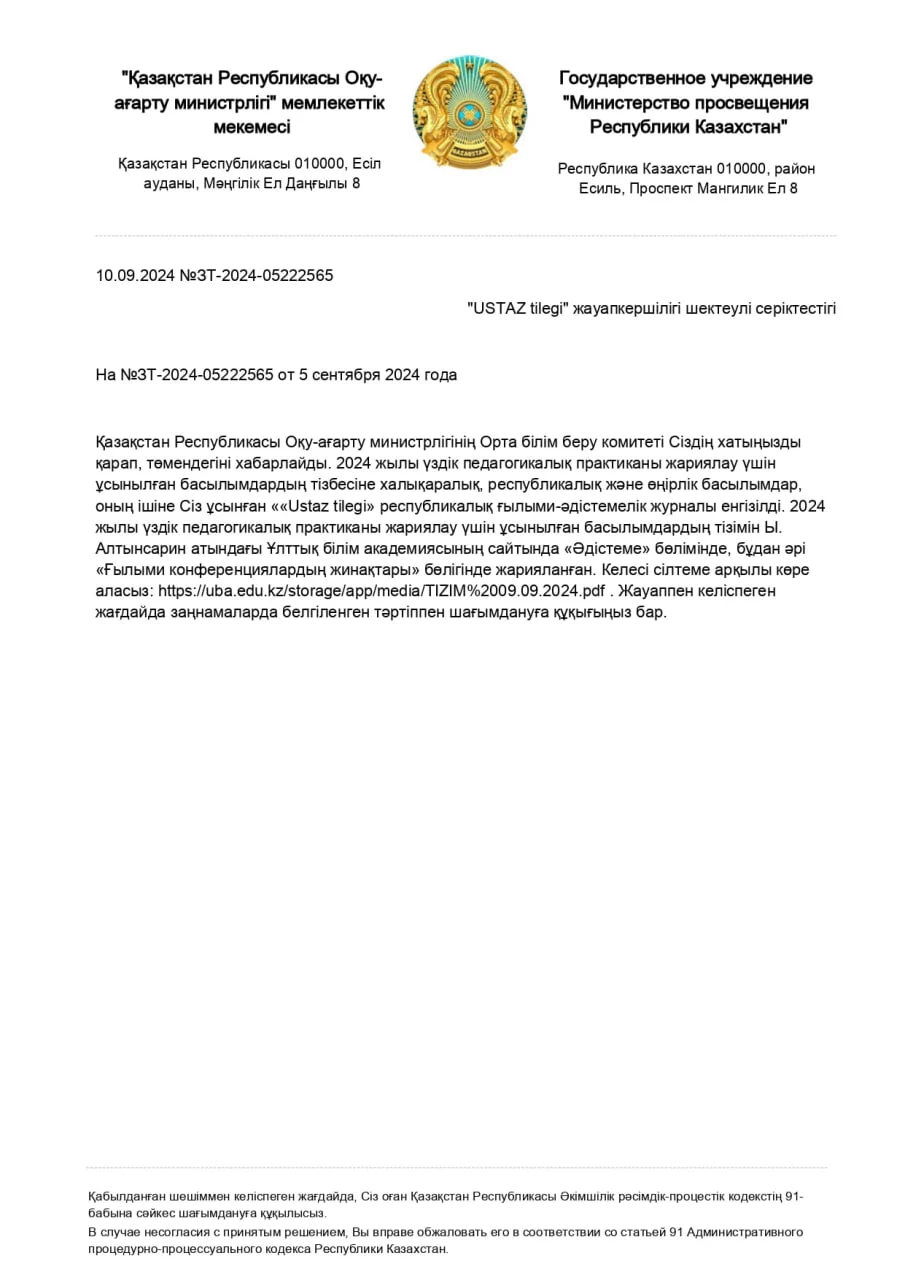
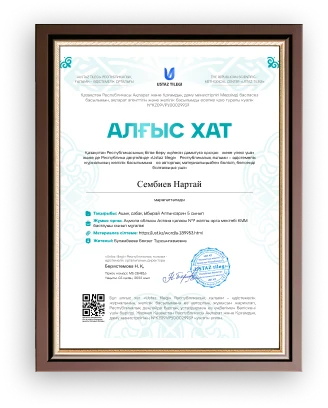
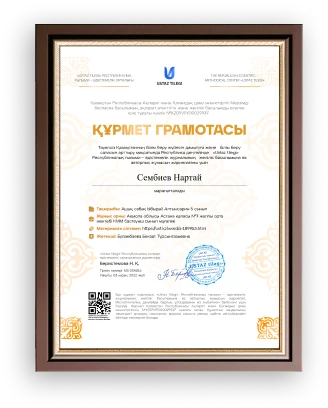

 Бұл курс Қазақстан Республикасы Оқу-ағарту министрлігімен келісілген










