
 ЖИ көмекші


 Қауіпсіз төлем

жүктеу мүмкіндігіне ие боласыз
Бұл материал сайт қолданушысы жариялаған. Материалдың ішінде жазылған барлық ақпаратқа жауапкершілікті жариялаған қолданушы жауап береді. Ұстаз тілегі тек ақпаратты таратуға қолдау көрсетеді. Егер материал сіздің авторлық құқығыңызды бұзған болса немесе басқа да себептермен сайттан өшіру керек деп ойласаңыз осында жазыңыз
 25 Тамыз 2025
 151
151
1 жыл бойы шексіз жүктеңіз
English Through Theatre: Role-play and Performance-Based Learning
Жамбыл облысы әкімдігінің білім басқармасы «Тараз қаласының білім бөлімінің Қаратай Тұрысов атындағы №53 мектеп- гимназия
English Through Theatre: Role-play and Performance-Based Learning
Сулейменова Гульфарида Рысдаулетовна
Тараз 2025ж
Content
Introduction...................................................2
Consolidation Content Section.....................8
Information section......................................12
Normation section........................................14
Educational-methodological section............17
Conclusion...................................................119
References....................................................120
Links.............................................................121
Introduction
The teaching of English in primary school is not only about building vocabulary and grammar, but also about creating meaningful experiences where children feel motivated to communicate. One of the most powerful tools to achieve this is theatre. Drama and performance turn language into action, making words come alive through voice, movement, and imagination. When children step into a role, they do not only memorize sentences—they embody them, feel their meaning, and communicate naturally with their peers.
Theatre-based learning is particularly effective with young learners because it matches their developmental needs. Children at the primary level learn best through play, creativity, and imitation. They often find abstract language exercises difficult, but role play gives them a real context: buying an ice cream at a shop, pretending to be animals in the jungle, or acting as explorers discovering a new land. These scenarios provide motivation, emotion, and purpose for using English. In addition, theatre activities reduce the fear of making mistakes, as the classroom becomes a stage for experimenting rather than a place for rigid correctness.
Another important advantage of using theatre in language teaching is the integration of the four skills. Role play and performance naturally combine speaking, listening, reading, and writing. For example, children might read a simple script, listen to their classmates’ lines, speak their own part, and write a short dialogue as preparation. This integrated approach helps them see language as a whole system rather than isolated parts.
Theatre also supports values education. Through role play, children practice cooperation, empathy, and respect. When they act out a story, they must listen to each other, share ideas, and support their partners. They learn to appreciate cultural stories and traditions, discovering that English is not only a subject, but a bridge to understand the world.
Finally, theatre develops confidence. Standing in front of others, even in a playful role, helps children overcome shyness. They discover the joy of self-expression, the excitement of storytelling, and the satisfaction of being understood. For many learners, their first “success” in English comes not from a test, but from a performance where they make their classmates laugh, clap, or respond.
In conclusion, English through theatre is more than an alternative method. It is a holistic approach that develops language skills, social values, and personal growth. By integrating role play and performance into the curriculum, we give children not just the ability to say words in English, but the courage to use them meaningfully. This program seeks to combine the best practices of language teaching with the creative power of theatre, offering young learners a joyful, engaging, and effective path to English.
2. Goals and Objectives
Goals:
-
To develop communicative competence in English through drama, role play, and performance.
-
To foster creativity, imagination, and self-confidence in learners.
-
To integrate language learning with social and emotional development.
Objectives:
-
Teach vocabulary and grammar in meaningful contexts.
-
Provide regular opportunities for spoken interaction and role play.
-
Develop listening comprehension through dialogue and performance.
-
Encourage collaborative learning through group rehearsals and performances.
-
Introduce children to simple cultural stories, fairy tales, and plays.
3. Relevance of the Program
This program responds to the increasing need for innovative teaching methods in primary education. Traditional textbook-based approaches often fail to capture children’s attention. Theatre creates a playful, interactive environment that supports natural language acquisition. Performance-based learning also prepares children for 21st-century skills: communication, collaboration, and creativity. By making English a medium of artistic expression, the program increases motivation and ensures long-term retention.
4. Scientific–Methodological Level
Compared to existing language programs, this curriculum introduces systematic role play and staged performance as central methods rather than supplementary activities. It restores the idea of “learning by doing,” aligning with drama pedagogy and experiential learning theories. The new element here is the integration of theatre with language objectives, ensuring that every performance is both a linguistic and personal development task.
5. Scientific Validity
The program is consistent with the new educational paradigm of learner-centered, activity-based teaching. It draws from psycholinguistics, which shows that embodied action improves memory; from pedagogy, which highlights the role of play in learning; and from psychology, which stresses the importance of confidence and social interaction. It reflects current achievements in ELT (English Language Teaching), drama education, and child development.
6. Orientation of the Program
The program aims not only at language skills but also at personal growth:
-
Supporting children’s psychophysiological and social well-being through play and creativity.
-
Promoting ecological, cultural, and social awareness through themed performances.
-
Ensuring humanistic, integrative, and innovative approaches in content.
-
Meeting scientific standards by defining problems, forming hypotheses, and testing them in classroom practice.
7. Methodological Unity
The program maintains internal coherence by linking methods (role play, rehearsal, performance) with outcomes (speaking, listening, confidence). Its system is cyclical: introduce → practice → perform → reflect. Results are systematically connected with theoretical foundations and classroom evidence.
8. Reliability of Results
The outcomes are reliable because they are based on observable performance. Success can be measured through clear descriptors: fluency, pronunciation, cooperation, creativity. The program’s principles are consistent with established educational research, making its results trustworthy and replicable.
9. Expected Results
The implementation of the program “English through Theatre: Role Play and Performance–based Learning” in primary school is designed to produce results on multiple levels: linguistic, personal, social, and cultural. The following section outlines in detail what students, teachers, and the learning process as a whole are expected to achieve by the end of the course.
Linguistic Outcomes
The central goal of the program is the development of communicative competence in English. By integrating role play and performance into lessons, learners will achieve the following:
-
Improved Speaking Fluency
Students will become more confident in speaking English spontaneously. Theatre encourages them to use phrases and expressions in real contexts. For example, instead of reciting isolated sentences, children will act out dialogues such as ordering food in a restaurant, introducing themselves at a party, or asking for directions. Repeated performance of these dialogues will develop fluency, rhythm, and natural intonation. -
Expanded Vocabulary
Each role play introduces thematic vocabulary: animals in a jungle play, food in a restaurant sketch, or emotions in a fairy tale. Children will retain words more effectively because they associate them with action, gesture, and story. Instead of memorizing lists, they will recall words from meaningful situations. -
Enhanced Listening Skills
Acting requires careful listening to partners’ lines. Students will practice understanding English in a dynamic, interactive way. By following cues and responding correctly, they will sharpen their ability to comprehend authentic speech, accents, and rhythms. -
Better Pronunciation and Intonation
Theatre emphasizes how words are spoken, not just what is said. Through choral reading, rehearsals, and performances, children will practice stress, rhythm, and intonation. Teachers can correct pronunciation naturally during rehearsals, while students imitate accurate models in scripts. -
Integration of Reading and Writing
While the focus is on speaking and listening, reading simple scripts and writing short dialogues also form part of the process. Learners will gain experience in reading for performance, understanding punctuation as cues for expression, and writing their own short role plays. This strengthens literacy in a purposeful context.
Personal Development Outcomes
Language learning is not the only aim; theatre develops the whole child.
-
Confidence and Self-Esteem
Standing on a “stage,” even in front of classmates, helps children overcome shyness. They learn that mistakes are acceptable, that trying is valuable, and that they have something worth saying. Their self-esteem grows as they receive applause, laughter, or smiles from peers. -
Creativity and Imagination
Performance tasks demand imagination. A child pretending to be a shopkeeper, a king, or a superhero uses English creatively, inventing dialogues and gestures. Over time, this nurtures divergent thinking and creative problem solving. -
Emotional Expression
Theatre allows children to express joy, sadness, surprise, or anger safely. They learn to use voice and body language to communicate emotions. This contributes to emotional intelligence, helping them understand both their own feelings and those of others. -
Resilience and Perseverance
Preparing for a performance requires rehearsal and repetition. Children experience the value of effort and the satisfaction of improvement. They learn that mistakes are not failures but steps toward mastery.
Social and Interpersonal Outcomes
Theatre is inherently collaborative, and therefore builds social skills.
-
Teamwork and Cooperation
Students work in groups to stage dialogues and plays. They must listen, take turns, share responsibilities, and respect each other’s contributions. This fosters a sense of community in the classroom. -
Empathy and Perspective-Taking
By playing roles different from themselves, children learn to see the world from other viewpoints. Acting as a character in a story develops empathy, tolerance, and respect for differences. -
Communication Skills Beyond Language
Non-verbal communication—gestures, facial expressions, posture—becomes part of learning. Students discover that communication is multimodal, strengthening both their language and social interaction abilities. -
Conflict Resolution and Negotiation
Group work sometimes brings disagreements. In preparing performances, children practice resolving conflicts peacefully, compromising, and negotiating roles. These are essential life skills.
Cultural Outcomes
Language is inseparable from culture. Through theatre, children are introduced to stories, traditions, and cultural values.
-
Awareness of English-Speaking Cultures
Short plays, fairy tales, and adapted stories (e.g., “Little Red Riding Hood” or “Goldilocks”) provide cultural knowledge alongside language practice. Students become familiar with typical characters, settings, and values in English-speaking societies. -
Respect for Diversity
When comparing stories from their own culture with English versions, learners see both similarities and differences. This cultivates appreciation for cultural variety and respect for other traditions. -
Intercultural Communication Skills
Acting out multicultural stories helps children practice how to communicate with people from different backgrounds. They learn that English is not only grammar but a bridge between cultures.
Pedagogical and Methodological Outcomes
For teachers, this program provides new tools and approaches:
-
Active Learning Methods
Teachers shift from a grammar-focused approach to a performance-based one. Lessons become more dynamic, interactive, and learner-centered. -
Formative Assessment Opportunities
Performances allow teachers to observe language use directly. Instead of testing through written exercises only, they can assess fluency, pronunciation, creativity, and cooperation. -
Integration with Other Subjects
Theatre can be linked with art (designing props), music (songs in plays), and social studies (cultural themes). This interdisciplinary approach enriches the curriculum. -
Professional Growth
Teachers gain experience in drama pedagogy, expanding their repertoire of techniques. They become facilitators, directors, and coaches, not only instructors.
Scientific and Educational Outcomes
The program will contribute to educational research and practice in several ways:
-
Validation of Drama Pedagogy
Results will provide evidence of the effectiveness of theatre in language learning at the primary level. -
New Insights into Child Development
Observations of confidence, creativity, and social growth will offer valuable data for psychology and pedagogy. -
Model for Innovative Curriculum
The program can serve as a model for integrating arts and language in other schools or regions.
Long-Term Outcomes for Students
-
Sustained Motivation for English
Children who enjoy learning through theatre are more likely to continue studying English enthusiastically in higher grades. -
Preparation for Real Communication
Role play mirrors real-life situations, preparing learners to use English outside the classroom. -
Foundation for Lifelong Learning
By discovering that language learning can be fun, creative, and social, students are more likely to see English as a valuable lifelong skill.
By the end of this program, learners will not only have improved their vocabulary, grammar, fluency, and pronunciation, but will also have grown as individuals and community members. They will be more confident, creative, empathetic, and collaborative. Teachers will benefit from richer classroom practices, and the school will foster a culture of innovation. In short, the program will demonstrate that English through theatre is not only effective for language learning but also transformative for personal and social development.
Consolidation Content Section
|
Lesson |
Topic |
Hours |
Key Concepts |
|
Unit 1: Introduction to Theatre and Role Play |
|||
|
1 |
Introduction to Theatre in English |
1 |
theatre, role play |
|
2 |
Classroom as a Stage |
1 |
stage, voice, movement |
|
3 |
Warm-up Games with English |
1 |
games, energy, focus |
|
4 |
Role Play: Greetings & Introductions |
1 |
greetings, dialogue |
|
5 |
Expressing Emotions |
1 |
feelings, expression |
|
Unit 2: Everyday Situations |
|||
|
6 |
Everyday Situations: At the Shop |
1 |
shopping, phrases |
|
7 |
Everyday Situations: At the Restaurant |
1 |
food, order |
|
8 |
Animals on Stage |
1 |
animals, actions |
|
9 |
Storytelling with Actions |
1 |
story, acting |
|
10 |
Fairy Tale Characters |
1 |
character, role |
|
11 |
Short Skit: Family Roles |
1 |
family, roles |
|
Unit 3: Performance Tools |
|||
|
12 |
Using Props in Performance |
1 |
props, object |
|
13 |
Costume and Identity |
1 |
costume, clothes |
|
14 |
Everyday Situations: At the School |
1 |
classroom, teacher |
|
15 |
Midterm Mini-Performance |
1 |
performance, teamwork |
|
16 |
Feedback and Reflection |
1 |
feedback, reflection |
|
Unit 4: Creativity and Improvisation |
|||
|
17 |
Imagination Game: Invent a Character |
1 |
imagination, invent |
|
18 |
Dialogue Practice: Asking & Answering |
1 |
question, answer |
|
19 |
Action Verbs on Stage |
1 |
verbs, action |
|
20 |
Everyday Situations: At the Doctor |
1 |
doctor, health |
|
21 |
Telling Short Jokes |
1 |
humor, joke |
|
22 |
Puppet Theatre |
1 |
puppet, dialogue |
|
23 |
Improvisation Games |
1 |
improvise, creativity |
|
24 |
Reading for Performance |
1 |
script, reading |
|
Unit 5: Group Work and Final Performance |
|||
|
25 |
Pair Performance: Dialogues |
1 |
pair work, lines |
|
26 |
Group Performance: Skits |
1 |
group, skit |
|
27 |
Story Adaptation |
1 |
fairy tale, adapt |
|
28 |
Voice and Pronunciation |
1 |
pronunciation, clarity |
|
29 |
Mime and Expression |
1 |
mime, gesture |
|
30 |
Everyday Situations: Traveling |
1 |
travel, directions |
|
31 |
Preparing Final Performance |
1 |
planning, script |
|
32 |
Rehearsal of Final Play |
1 |
rehearsal, timing |
|
33 |
Final Performance |
1 |
performance, audience |
|
34 |
Final Reflection & Celebration |
1 |
reflection, celebration |
Introduction to Theatre in English
Children are introduced to the idea of theatre as play and storytelling. They explore what theatre means, see examples, and discuss why acting can help them learn English.
Classroom as a Stage
Students learn to see the classroom as a stage. They practice using space, voice, and movement to make words more powerful.
Warm-up Games with English
Through simple theatre games, children practice listening carefully, repeating short English phrases, and building confidence in speaking.
Role Play: Greetings & Introductions
Students act out short dialogues where they introduce themselves, greet friends, and ask simple questions.
Expressing Emotions
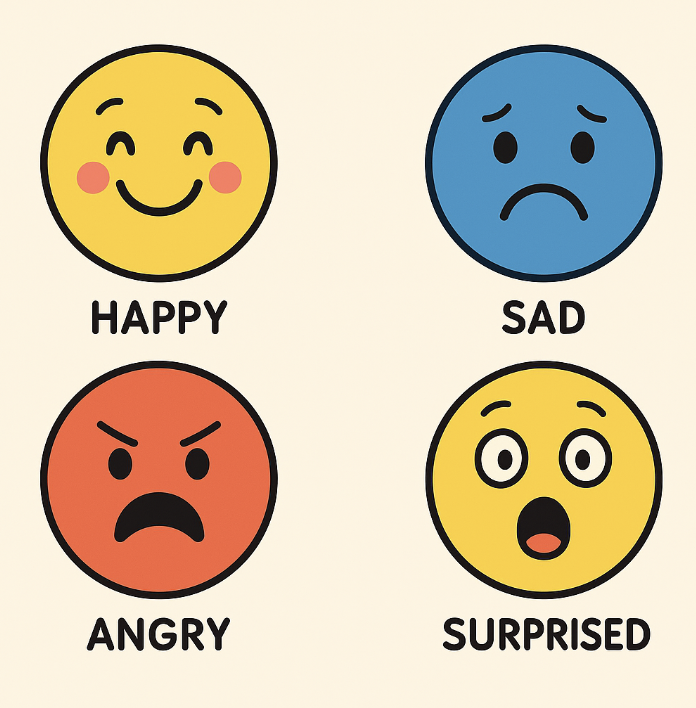
Learners use words, faces, and body language to show basic emotions such as happy, sad, angry, or surprised.
Everyday Situations: At the Shop
The class practices role play of buying and selling. One child plays the shopkeeper, another the customer, using phrases like “How much is it?”
Everyday Situations: At the Restaurant
Children take roles of waiters and customers, practicing polite phrases for ordering food and drinks.
Animals on Stage
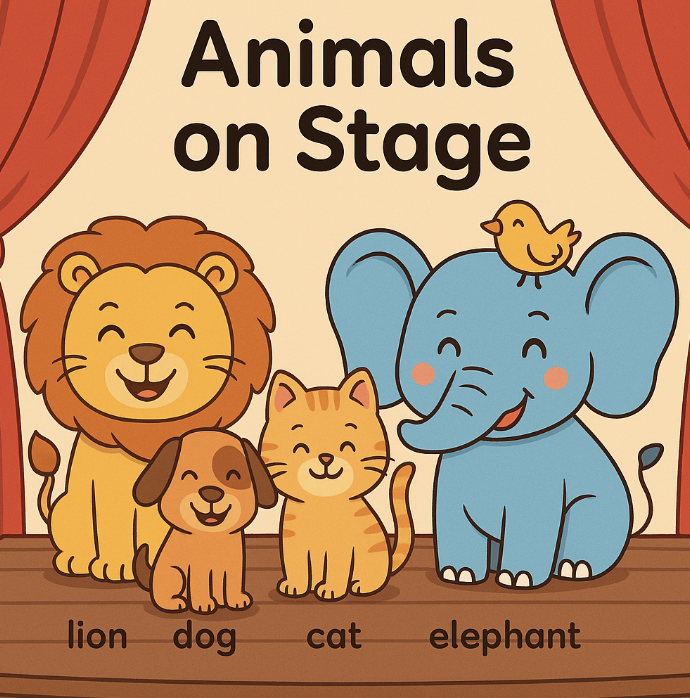
Students act as animals, making sounds and movements while using English words to describe them.
Storytelling with Actions
The class retells a simple story with actions, combining narration in English with gestures and short lines.
Fairy Tale Characters
Students explore familiar fairy tale roles such as princess, king, witch, or hero. They describe and perform simple scenes.
Short Skit: Family Roles
Children role play family members in everyday home situations, practicing family vocabulary.
Using Props in Performance
Students experiment with using simple classroom objects as props, learning how objects can tell part of a story.
Costume and Identity
Learners “dress up” with simple costumes or accessories and describe their appearance in English.
Everyday Situations: At the School
Role play focuses on classroom roles. Children act as teachers, students, and friends, practicing school-related expressions.
Midterm Mini-Performance
The class prepares and performs a short group play to show the skills learned so far.
Feedback and Reflection
Children share what they enjoyed and what was difficult. They use English to give and receive simple feedback.
Imagination Game: Invent a Character
Students create original characters, describe them in English, and act them out in small scenes.
Dialogue Practice: Asking & Answering
The focus is on short exchanges: asking questions and giving answers in role play form.
Action Verbs on Stage
Students practice movement words by acting them out on stage while saying the verbs aloud.
Everyday Situations: At the Doctor
Role play simulates a visit to the doctor. Children practice vocabulary for health and feelings.
Telling Short Jokes
The class learns and performs short jokes in English, practicing timing and humor.
Puppet Theatre
Students use puppets to perform simple dialogues, making speaking fun and less intimidating.
Improvisation Games
Children learn to act without a script, practicing spontaneous speaking and creativity.
Reading for Performance
Students read short adapted scripts, learning how punctuation and rhythm guide expression.
Pair Performance: Dialogues
Each pair prepares and performs a short memorized dialogue for the class.
Group Performance: Skits
Small groups prepare skits, practicing cooperation and collaborative performance.
Story Adaptation
Children take a known fairy tale and retell it as a short play in English.
Voice and Pronunciation
The class focuses on clear speech, practicing pronunciation, stress, and intonation.
Mime and Expression
Students use gestures and body language to communicate meaning without words, adding English phrases later.
Everyday Situations: Traveling
Role play situations such as buying a ticket or asking for directions during travel.
Preparing Final Performance
The class plans the final group play, assigning roles and organizing the script.
Rehearsal of Final Play
Students rehearse lines, actions, and timing to prepare for the performance.
Final Performance
The groups present their final plays in front of the class or a small audience.
Final Reflection & Celebration
Children reflect on their learning journey, celebrate their achievements, and share what they enjoyed most.
Information section
Assessment Criteria (10-point scale)
|
Criterion |
Max Points |
Descriptor (What is measured) |
|
1. Speaking Fluency |
10 |
9–10: Speaks smoothly with only minor pauses; 7–8: Generally fluent with some hesitation; 5–6: Limited fluency, frequent pauses; 3–4: Very slow, fragmented speech; 1–2: Cannot speak sentences. |
|
2. Pronunciation & Intonation |
10 |
9–10: Clear pronunciation and natural intonation; 7–8: Mostly clear with occasional mistakes; 5–6: Understandable but errors affect clarity; 3–4: Many mispronunciations; 1–2: Speech mostly unclear. |
|
3. Vocabulary Use |
10 |
9–10: Uses wide range of words correctly; 7–8: Good range with some errors; 5–6: Limited vocabulary, repeats words; 3–4: Very basic vocabulary only; 1–2: Cannot use target words. |
|
4. Grammar in Performance |
10 |
9–10: Correct basic grammar, errors rare; 7–8: Some errors but meaning clear; 5–6: Frequent errors, meaning sometimes unclear; 3–4: Major errors most of the time; 1–2: Cannot form sentences. |
|
5. Creativity & Imagination |
10 |
9–10: Very creative use of role and story; 7–8: Some creative ideas; 5–6: Few original ideas, relies on teacher; 3–4: Little creativity; 1–2: No attempt to be imaginative. |
|
6. Use of Body Language & Expression |
10 |
9–10: Excellent gestures, expressions match language; 7–8: Good effort with body language; 5–6: Some use of expression but limited; 3–4: Rare use of gestures; 1–2: No body language. |
|
7. Teamwork & Cooperation |
10 |
9–10: Works very well with group, helps others; 7–8: Usually works well, minor issues; 5–6: Sometimes cooperates, needs reminders; 3–4: Rarely cooperates; 1–2: Refuses to work with others. |
|
8. Performance Confidence |
10 |
9–10: Very confident, projects voice clearly; 7–8: Mostly confident with minor nervousness; 5–6: Some confidence but hesitates; 3–4: Very shy, struggles to perform; 1–2: Cannot perform in front of others. |
|
9. Understanding of Role/Script |
10 |
9–10: Fully understands and remembers lines; 7–8: Mostly remembers, minor errors; 5–6: Needs support to recall; 3–4: Forgets most lines; 1–2: Does not understand role. |
|
10. Overall Achievement |
10 |
9–10: Excellent performance meeting all goals; 7–8: Good performance with minor issues; 5–6: Average, needs more practice; 3–4: Below expectations; 1–2: Minimal achievement. |
Total Maximum Score: 100
points
Each child can be evaluated across these 10 criteria for
performances, role plays, and
activities.
Normative Section
Curricular Calendar Plan
1 hour per week. 34 hours per year
|
Lesson |
Topic |
Learning Objective |
Hours |
Expected Outcome |
||
|
All |
Practice |
Theory |
||||
|
1 |
Introduction to Theatre in English |
Understand what theatre is and why it is useful in learning English |
1 |
|
|
Students can explain theatre in simple English and show curiosity about role play |
|
2 |
Classroom as a Stage |
Learn to use space, voice, and movement in English |
1 |
|
|
Students can perform simple actions with English phrases confidently |
|
3 |
Warm-up Games with English |
Practice simple theatre games for speaking and listening |
1 |
|
|
Students can follow instructions and use short expressions during games |
|
4 |
Role Play: Greetings & Introductions |
Act out dialogues for meeting people |
1 |
|
|
Students can introduce themselves and greet others confidently |
|
5 |
Expressing Emotions |
Learn to say and show basic feelings (happy, sad, angry, etc.) |
1 |
|
|
Students can express emotions with voice, face, and gestures in English |
|
6 |
Everyday Situations: At the Shop |
Act out buying and selling items |
1 |
|
|
Students can use simple phrases for shopping situations |
|
7 |
Everyday Situations: At the Restaurant |
Role play ordering food and drinks |
1 |
|
|
Students can order politely in English using role play |
|
8 |
Animals on Stage |
Use animal vocabulary in performance |
1 |
|
|
Students can act as animals and describe them in English |
|
9 |
Storytelling with Actions |
Recreate a simple story through performance |
1 |
|
|
Students can retell a short story with words and actions |
|
10 |
Fairy Tale Characters |
Learn language for describing characters |
1 |
|
|
Students can describe a character and act in role |
|
11 |
Short Skit: Family Roles |
Role play simple family situations |
1 |
|
|
Students can use family vocabulary in a short play |
|
12 |
Using Props in Performance |
Practice performing with objects |
1 |
|
|
Students can use props and describe them in English |
|
13 |
Costume and Identity |
Use clothes vocabulary in role play |
1 |
|
|
Students can act out “dressing up” and describe costumes |
|
14 |
Everyday Situations: At the School |
Act out classroom roles (teacher, student) |
1 |
|
|
Students can use classroom English in a short sketch |
|
15 |
Midterm Mini-Performance |
Prepare and perform a short play |
1 |
|
|
Students can perform in front of peers with simple lines |
|
16 |
Feedback and Reflection |
Reflect on first performances |
1 |
|
|
Students can say what they liked and what was difficult in English |
|
17 |
Imagination Game: Invent a Character |
Create new characters and present them |
1 |
|
|
Students can invent and describe an imaginary role |
|
18 |
Dialogue Practice: Asking & Answering |
Practice short exchanges in role play |
1 |
|
|
Students can ask and answer basic questions fluently |
|
19 |
Action Verbs on Stage |
Use verbs through drama (run, jump, dance) |
1 |
|
|
Students can perform verbs and narrate actions |
|
20 |
Everyday Situations: At the Doctor |
Role play visiting a doctor |
1 |
|
|
Students can use health vocabulary in role play |
|
21 |
Telling Short Jokes |
Perform simple jokes in English |
1 |
|
|
Students can understand and present short jokes |
|
22 |
Puppet Theatre |
Use puppets for English dialogues |
1 |
|
|
Students can act a short dialogue with puppets |
|
23 |
Improvisation Games |
Practice speaking without preparation |
1 |
|
|
Students can improvise simple dialogues in English |
|
24 |
Reading for Performance |
Read a short adapted script |
1 |
|
|
Students can read lines aloud with correct intonation |
|
25 |
Pair Performance: Dialogues |
Perform a memorized dialogue in pairs |
1 |
|
|
Students can act out short dialogues clearly |
|
26 |
Group Performance: Skits |
Prepare and present group role play |
1 |
|
|
Students can collaborate in groups for performance |
|
27 |
Story Adaptation |
Adapt a known fairy tale into short play |
1 |
|
|
Students can retell a fairy tale in English through role play |
|
28 |
Voice and Pronunciation |
Practice clear pronunciation on stage |
1 |
|
|
Students can improve clarity and intonation |
|
29 |
Mime and Expression |
Use body language and gestures in role play |
1 |
|
|
Students can express meaning without words |
|
30 |
Everyday Situations: Traveling |
Role play travel situations (bus, station) |
1 |
|
|
Students can ask for and give directions in English |
|
31 |
Preparing Final Performance |
Plan a group play with roles |
1 |
|
|
Students can organize themselves and prepare a script |
|
32 |
Rehearsal of Final Play |
Practice lines, movements, and timing |
1 |
|
|
Students can rehearse effectively in English |
|
33 |
Final Performance |
Perform in front of class/school audience |
1 |
|
|
Students can present a complete play in English |
|
34 |
Final Reflection & Celebration |
Reflect on learning and achievements |
1 |
|
|
Students can talk about what they learned and how they grew |
|
All |
34 |
|
|
|
||
Educational-methodological section
Short-Term Lesson Plan №1
|
Name of the Educational Institution |
|
|||||
|
Subject: |
|
|||||
|
Unit: |
|
|||||
|
Teacher's Full Name: |
|
|||||
|
Date: |
|
|||||
|
Grade: |
Number of Participants: |
Number of Absentees: |
||||
|
Topic: |
Introduction to Theatre in English |
|||||
|
Lesson Objective: |
Students will recognize and use basic theatre-related words in English (actor, stage, play, audience, curtain) and apply them in short sentences and mini-dialogues |
|||||
|
Value education |
This lesson promotes respect and cooperation. Students learn to listen carefully, support each other during games, and appreciate theatre as a place where people work together (actors, audience, stage workers). |
|||||
|
Lesson Procedure |
||||||
|
Planned Lesson Stages |
Teacher's Actions |
Student's Actions |
Assessment |
Resources |
||
|
Organizational stage |
"Show Your Mood" Objective: Determine students' mood and assess their readiness for the lesson.
|
Follows Instructions |
Verbal Praise |
|
||
|
New lesson |
Task (Vocabulary in Context)
Teacher shows 5 theatre
pictures: stage, actor, play, audience, curtain.
Descriptor:
Game: Freeze like an Actor (Advanced) Teacher calls out both emotion + action (happy singing, sad sitting, angry running). Pupils must freeze in pose and say: “I am [emotion]. I am [action].”
Descriptor:
Exercise: Expand Sentences Teacher says word, pupils must use it in a short descriptive sentence with at least 6 words.
Descriptor:
Text-based Task Read aloud with teacher: "In the theatre, the actors stand on the stage. The curtain is red and very tall. The audience is big. They are watching the play and clapping." Questions:
Descriptor:
Mini-Test (End of Lesson) Choose the correct answer:
Descriptor:
|
Completes Tasks Completes Tasks Completes Tasks Completes Tasks Completes Tasks |
Descriptor
T Verbal Praise
|
|
||
|
Lesson consolidation |
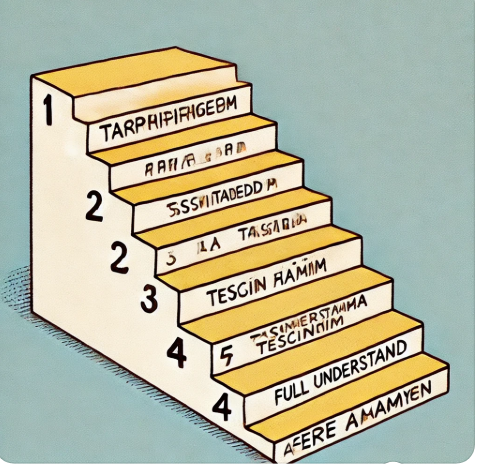
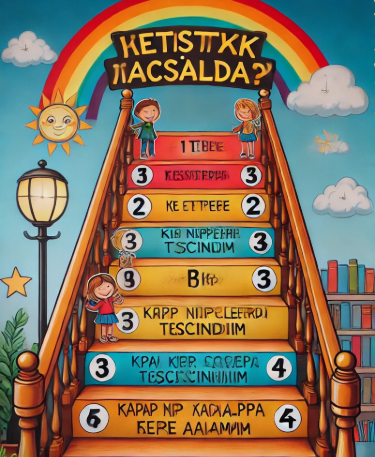
"Success Ladder"
1️⃣
I did not understand the
topic.
|
Follows Instructions |
Provides Feedback |
|
||



 raffic
Light
raffic
Light


Short-Term Lesson Plan №2
|
Name of the Educational Institution |
|
|||||
|
Subject: |
|
|||||
|
Unit: |
|
|||||
|
Teacher's Full Name: |
|
|||||
|
Date: |
|
|||||
|
Grade: |
Number of Participants: |
Number of Absentees: |
||||
|
Topic: |
Classroom as a Stage |
|||||
|
Lesson Objective: |
Students will use classroom space as a “stage,” practice greeting and addressing peers with different voice levels, and perform simple phrases in English confidently |
|||||
|
Value education |
Respect → listening quietly when classmates are speaking on “stage.” Confidence → practicing loud and clear speech in front of others. Cooperation → greeting friends and taking turns on stage. Creativity → experimenting with different voice levels and expressions. |
|||||
|
Lesson Procedure |
||||||
|
Planned Lesson Stages |
Teacher's Actions |
Student's Actions |
Assessment |
Resources |
||
|
Organizational stage |
"Secret Gift" Method Objective: Encourage students and increase their interest in the lesson.
|
Follows Instructions |
Verbal Praise |
|
||
|
New lesson |
Task (Stage Walk with Greetings) Pupils walk around the classroom as if it is a theatre stage. When they meet a classmate, they must stop, greet them, and add one more detail.
Descriptor:
Game: Big Voice, Small Voice (Advanced) Teacher gives pupils phrases with emotions. Pupils must say them loudly, softly, or in a funny voice while moving across the classroom.
Descriptor:
Exercise: Stage Phrases in Space Children practice moving to different corners of the classroom and using sentences. Each corner = one phrase.
Descriptor:
Text-based Task
Teacher
reads: Questions:
Descriptor:
Mini-Test (End of Lesson) Choose the correct answer:
Descriptor:
|
Completes Tasks Completes Tasks Completes Tasks Completes Tasks Completes Tasks |
Descriptor
T Verbal Praise
|
|
||
|
Lesson consolidation |
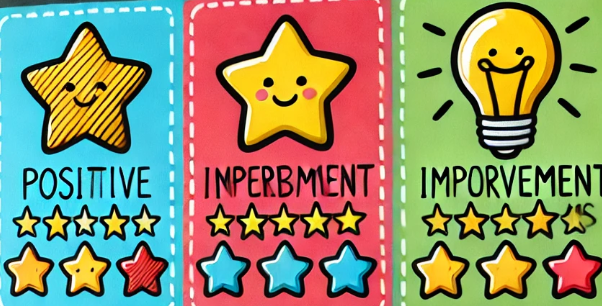
"Two Stars, One Wish"
|
Follows Instructions |
Provides Feedback |
|
||
Short-Term Lesson Plan №3
|
Name of the Educational Institution |
|
|||||
|
Subject: |
|
|||||
|
Unit: |
|
|||||
|
Teacher's Full Name: |
|
|||||
|
Date: |
|
|||||
|
Grade: |
Number of Participants: |
Number of Absentees: |
||||
|
Topic: |
Warm-up Games with English |
|||||
|
Lesson Objective: |
Students will practice active listening, repeat simple words and phrases with rhythm and movement, and perform short dialogues using greetings and action verbs |
|||||
|
Value education |
Respect → listening carefully while others clap and speak. Confidence → standing in a circle and speaking loudly in English. Teamwork → passing the clap game requires cooperation and memory. Joy in learning → linking English with fun actions and movement. |
|||||
|
Lesson Procedure |
||||||
|
Planned Lesson Stages |
Teacher's Actions |
Student's Actions |
Assessment |
Resources |
||
|
Organizational stage |
"Magic Word" Method Objective: Spark interest in the lesson topic and encourage teamwork.
|
Follows Instructions |
Verbal Praise |
|
||
|
New lesson |
Game: Pass the Clap with a Word (Advanced) Children stand in a circle. Each child claps once and says a word. The next child must clap and say a new word + repeat the first (memory chain).
Descriptor:
Task: Circle Role Play “Hello! How are you?” Children stand in a circle. Each pair greets and asks one another, but must add an emotion or action.
Descriptor:
Exercise: Action Verbs with Movement (Extended) Teacher calls action verbs (jump, run, dance, clap, spin). Pupils must do the action and say a sentence with “I am …ing.”
Descriptor:
Text-based Task
Teacher
reads: Questions:
Descriptor:
Mini-Test (End of Lesson) Choose the correct answer:
Descriptor:
|
Completes Tasks Completes Tasks Completes Tasks Completes Tasks Completes Tasks |
Descriptor
T Verbal Praise
|
|
||
|
Lesson consolidation |
"Traffic Light" Method
|
Follows Instructions |
Provides Feedback |
|
||

Short-Term Lesson Plan №4
|
Name of the Educational Institution |
|
|||||
|
Subject: |
|
|||||
|
Unit: |
|
|||||
|
Teacher's Full Name: |
|
|||||
|
Date: |
|
|||||
|
Grade: |
Number of Participants: |
Number of Absentees: |
||||
|
Topic: |
Role Play: Greetings & Introductions |
|||||
|
Lesson Objective: |
Students will greet others, introduce themselves using full sentences, and ask for a classmate’s name in English with confidence |
|||||
|
Value education |
Respect → greeting politely and listening carefully to others. Friendship → building social bonds through introductions. Confidence → speaking names and hobbies in front of peers. Cooperation → finding partners and completing activities together. |
|||||
|
Lesson Procedure |
||||||
|
Planned Lesson Stages |
Teacher's Actions |
Student's Actions |
Assessment |
Resources |
||
|
Organizational stage |
"Magic Box" Method Objective: Increase students' interest and motivation for the lesson.
|
Follows Instructions |
Verbal Praise |
|
||
|
New lesson |
Task: Pair Dialogue (Extended) Pupils work in pairs. They must introduce themselves and ask for the other’s name. Each child also adds one extra detail (age, feeling, or hobby).
Descriptor:
Game: Find Your Partner (Advanced) Each child receives a card with a name and hobby (e.g., “My name is Tom. I like football.”). Pupils walk around greeting classmates until they find the correct partner (pairs are made by matching hobbies or feelings).
Descriptor:
Exercise: Writing and Saying Names (Extended) Students practice writing their names in English on name cards, then stand up, show the card, and introduce themselves with one sentence.
Descriptor:
Text-based Task Teacher reads aloud: "Hello! My name is Sarah. I am nine years old. I like music. What is your name?" Questions:
Descriptor:
Mini-Test (End of Lesson)
Descriptor:
|
Completes Tasks Completes Tasks Completes Tasks Completes Tasks Completes Tasks |
Descriptor
T Verbal Praise
|
|
||
|
Lesson consolidation |
"Mood Emojis" Method ? Instructions:
|
Follows Instructions |
Provides Feedback |
|
||

Short-Term Lesson Plan №5
|
Name of the Educational Institution |
|
|||||
|
Subject: |
|
|||||
|
Unit: |
|
|||||
|
Teacher's Full Name: |
|
|||||
|
Date: |
|
|||||
|
Grade: |
Number of Participants: |
Number of Absentees: |
||||
|
Topic: |
Expressing Emotions |
|||||
|
Lesson Objective: |
Students will identify and express basic emotions in English (happy, sad, angry, scared, surprised), act them out with body language, and use them in short dialogues |
|||||
|
Value education |
Emotional awareness → recognizing and naming feelings. Respect and empathy → listening to others’ feelings with care. Confidence → expressing emotions through words, actions, and drawings. Creativity → using drama and art to show emotions. |
|||||
|
Lesson Procedure |
||||||
|
Planned Lesson Stages |
Teacher's Actions |
Student's Actions |
Assessment |
Resources |
||
|
Organizational stage |
"Circle of Kind Words" Method Objective: Boost students' mood and foster friendly relationships.
|
Follows Instructions |
Verbal Praise |
|
||
|
New lesson |
Game: Emotion Cards (Advanced) Teacher shows a card with an emotion (happy, sad, angry, scared, surprised). Pupils must:
Descriptor:
Task: Dialogue Practice “How are you?” (Extended) Pairs practice asking and answering. They must add emotion + reason.
Descriptor:
Exercise: Draw and Say (Emoji Task, Advanced) Each pupil draws an emoji showing one emotion. Then they must hold it up and say a sentence about themselves.
Descriptor:
Text-based Task Teacher reads aloud: "A boy is angry. He cannot find his book. A girl is happy. She is playing with her friends. The teacher is surprised. She sees a big dog." Questions:
Descriptor:
Mini-Test (End of Lesson)
Descriptor:
|
Completes Tasks Completes Tasks Completes Tasks Completes Tasks Completes Tasks |
Descriptor
T Verbal Praise
|
|
||
|
Lesson consolidation |
"What Did I Like? What Was Difficult? What Did I Learn?" ? Instructions:
✅ What did I
like? – What was the most
interesting part of the lesson? This method encourages reflection and helps students analyze their learning progress. |
Follows Instructions |
Provides Feedback |
|
||
Short-Term Lesson Plan №6
|
Name of the Educational Institution |
|
|||||
|
Subject: |
|
|||||
|
Unit: |
|
|||||
|
Teacher's Full Name: |
|
|||||
|
Date: |
|
|||||
|
Grade: |
Number of Participants: |
Number of Absentees: |
||||
|
Topic: |
At the Shop |
|||||
|
Lesson Objective: |
Students will role play shopping dialogues in English, use vocabulary for common items, ask and answer “How much is it?”, and match words with pictures confidently |
|||||
|
Value education |
Respect → using polite words “please” and “thank you.” Responsibility → practicing real-life shopping situations. Confidence → speaking in role play with partners. Cooperation → working together in pairs and groups. |
|||||
|
Lesson Procedure |
||||||
|
Planned Lesson Stages |
Teacher's Actions |
Student's Actions |
Assessment |
Resources |
||
|
Organizational stage |
"Compliment Bridge" Method Objective: Build friendly relationships and boost students' confidence.
|
Follows Instructions |
Verbal Praise |
|
||
|
New lesson |
Role Play: Shopkeeper + Customer (Extended) Pairs act out a short dialogue. Shopkeeper must say a full phrase, and customer must add one extra detail (please/thank you or number of items).
Descriptor:
Game: Shopping Basket (Advanced) A toy basket is passed around the circle. Each child adds an item, says it in English, and repeats the previous items (memory chain).
Descriptor:
Exercise: Match Items to Words (Extended) Teacher gives picture cards (apple, bread, milk, juice, banana). Pupils must match the picture with the correct word, then say: “This is a [word]. I buy [word].”
Descriptor:
Text-based Task Teacher reads aloud: "A boy goes to the shop. He buys milk and bread. The shopkeeper says, ‘It is two coins.’ The boy says, ‘Thank you!’" Questions:
Descriptor:
Mini-Test (End of Lesson)
Descriptor:
|
Completes Tasks Completes Tasks Completes Tasks Completes Tasks Completes Tasks |
Descriptor
T Verbal Praise
|
|
||
|
Lesson consolidation |
Success Ladder" Method ? Instructions:
|
Follows Instructions |
Provides Feedback |
|
||

Short-Term Lesson Plan №7
|
Name of the Educational Institution |
|
|||||||||||
|
Subject: |
|
|||||||||||
|
Unit: |
|
|||||||||||
|
Teacher's Full Name: |
|
|||||||||||
|
Date: |
|
|||||||||||
|
Grade: |
Number of Participants: |
Number of Absentees: |
||||||||||
|
Topic: |
At the Restaurant |
|||||||||||
|
Lesson Objective: |
Students will role play restaurant dialogues, use food vocabulary, and practice polite expressions (“please,” “thank you”) in real-life contexts |
|||||||||||
|
Value education |
Respect → using polite words “please” and “thank you.” Responsibility → behaving properly in real-life situations like restaurants. Confidence → ordering food in English with clear voice. Cooperation → waiter and customer working together in role play. |
|||||||||||
|
Lesson Procedure |
||||||||||||
|
Planned Lesson Stages |
Teacher's Actions |
Student's Actions |
Assessment |
Resources |
||||||||
|
Organizational stage |
"Circle of Kind Words" Method Objective: Boost students' mood and foster friendly relationships.
|
Follows Instructions |
Verbal Praise |
|
||||||||
|
New lesson |
Role Play: Waiter + Customer (Extended) Pairs act as waiter and customer. The customer must order one food and one drink politely. The waiter must answer with a phrase.
Descriptor:
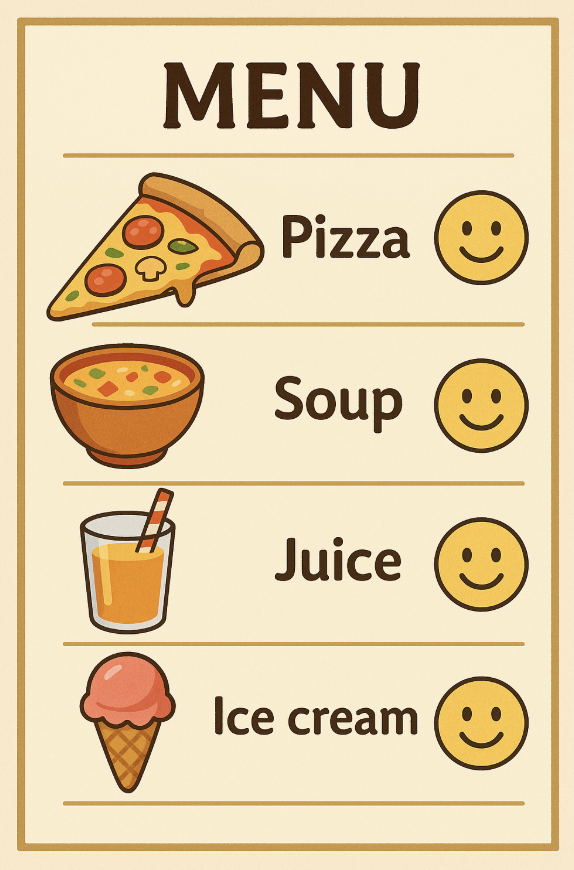
Game: Menu Game (Advanced) Teacher shows menu cards (pizza, soup, salad, chicken, juice, tea). Pupils must choose two items and order them as if in a restaurant.
Descriptor:
Exercise: Polite Words (Practice) Teacher writes on board: please, thank you, here you are, enjoy your meal. Pupils practice short exchanges using them.
Descriptor:
Text-based Task Teacher reads aloud: "A girl goes to the restaurant. She says, ‘I want soup and tea, please.’ The waiter brings the food. The girl says, ‘Thank you!’" Questions:
Descriptor:
Mini-Test (End of Lesson)
Descriptor:
|
Completes Tasks Completes Tasks Completes Tasks Completes Tasks Completes Tasks |
Descriptor
T Verbal Praise
|
|
||||||||
|
Lesson consolidation |
"Know – Want to Know – Learned" (KWL) Method ? Instructions:
|
Follows Instructions |
Provides Feedback |
|
||||||||
Short-Term Lesson Plan №8
|
Name of the Educational Institution |
|
|||||
|
Subject: |
|
|||||
|
Unit: |
|
|||||
|
Teacher's Full Name: |
|
|||||
|
Date: |
|
|||||
|
Grade: |
Number of Participants: |
Number of Absentees: |
||||
|
Topic: |
Animals on Stage |
|||||
|
Lesson Objective: |
Students will act out animals with movement and sound, name animals in English, and connect animal sounds with correct words |
|||||
|
Value education |
Respect for nature → learning about animals and their sounds. Creativity → acting as animals using movement and sound. Confidence → performing in front of peers. Cooperation → guessing animals and helping each other. |
|||||
|
Lesson Procedure |
||||||
|
Planned Lesson Stages |
Teacher's Actions |
Student's Actions |
Assessment |
Resources |
||
|
Organizational stage |
"One Word" Method ? Objective: Determine students' emotional readiness for the lesson.
|
Follows Instructions |
Verbal Praise |
|
||
|
New lesson |
Game: Guess the Animal (Advanced) One pupil acts as an animal, but must also make its sound. Others guess: “It is a …”
Descriptor:
Task: Animal Parade (Extended) Children form a parade line. Each pupil chooses an animal, walks like it, and says: “I am a [animal]. I can [action].”
Descriptor:
Exercise: Match Animal Sounds (Extended) Teacher gives sound cards (woof, meow, moo, neigh, quack). Pupils must match them to animal pictures and say: “The dog says woof.”
Descriptor:
Text-based Task Teacher reads aloud: "On the farm, the cow says moo. The duck says quack. The horse says neigh. The dog runs and says woof." Questions:
Descriptor:
Mini-Test (End of Lesson)
Descriptor:
|
Completes Tasks Completes Tasks Completes Tasks Completes Tasks Completes Tasks |
Descriptor
T Verbal Praise
|
|
||
|
Lesson consolidation |
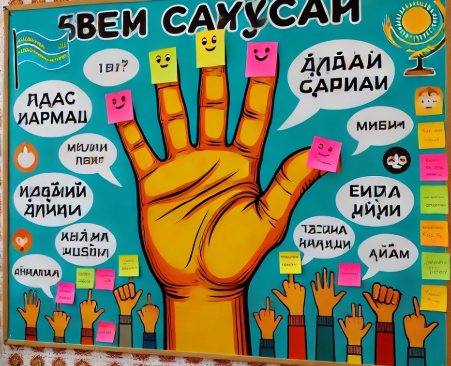
"Five Fingers" Method ? Instructions:
? Thumb – I liked
it.
|
Follows Instructions |
Provides Feedback |
|
||
Short-Term Lesson Plan №9
|
Name of the Educational Institution |
|
|||||
|
Subject: |
|
|||||
|
Unit: |
|
|||||
|
Teacher's Full Name: |
|
|||||
|
Date: |
|
|||||
|
Grade: |
Number of Participants: |
Number of Absentees: |
||||
|
Topic: |
Storytelling with Actions |
|||||
|
Lesson Objective: |
Students will listen to a short story, act out characters’ actions with gestures, practice action verbs in English, and retell parts of the story using 3–4 English words |
|||||
|
Value education |
Creativity → acting out stories with movement. Teamwork → building the story together in the chain game. Confidence → speaking short English sentences while performing. Respect → listening carefully to classmates during storytelling. |
|||||
|
Lesson Procedure |
||||||
|
Planned Lesson Stages |
Teacher's Actions |
Student's Actions |
Assessment |
Resources |
||
|
Organizational stage |
"Show Your Mood" Objective: Determine students' mood and assess their readiness for the lesson.
|
Follows Instructions |
Verbal Praise |
|
||
|
New lesson |
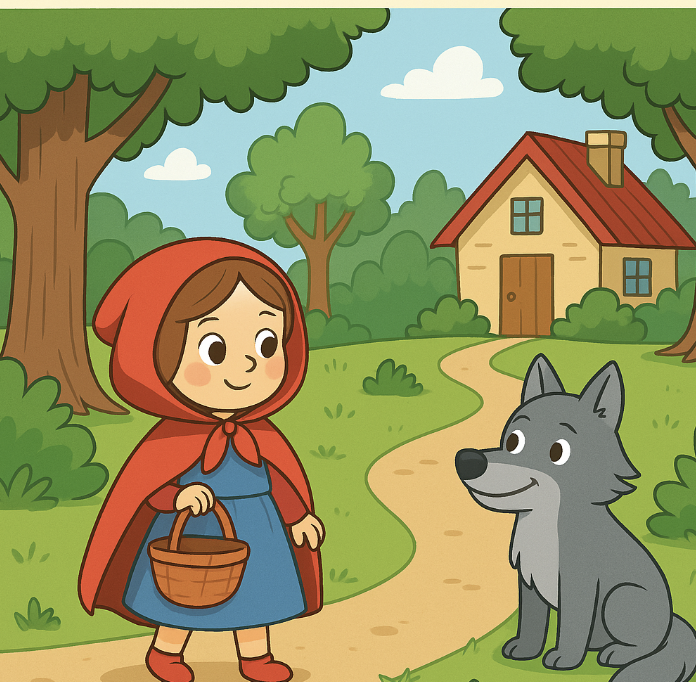
Task: Story with Actions (Extended) Teacher reads a short story slowly, pausing for children to act with gestures and say one phrase.
Mini story
example:
Descriptor:
Game: Action Chain (Advanced) Children stand in a circle. First child says one sentence with an action. Each next child repeats and adds a new action.
Descriptor:
Exercise: Retell with Key Words (Extended) Children retell the mini-story using only 3–4 English words.
Descriptor:
Text-based Task
Teacher reads
again: Questions:
Descriptor:
Mini-Test (End of Lesson)
Descriptor:
|
Completes Tasks Completes Tasks Completes Tasks Completes Tasks Completes Tasks |
Descriptor
T Verbal Praise
|
|
||
|
Lesson consolidation |
"Success Ladder"
1️⃣
I did not understand the
topic.
|
Follows Instructions |
Provides Feedback |
|
||
Short-Term Lesson Plan №10
|
Name of the Educational Institution |
|
|||||
|
Subject: |
|
|||||
|
Unit: |
|
|||||
|
Teacher's Full Name: |
|
|||||
|
Date: |
|
|||||
|
Grade: |
Number of Participants: |
Number of Absentees: |
||||
|
Topic: |
Fairy Tale Characters |
|||||
|
Lesson Objective: |
Students will identify and act out fairy-tale characters, introduce themselves using “I am …” sentences, and use gestures or simple props to show the role. |
|||||
|
Value education |
Creativity → acting and imagining themselves as fairy-tale characters. Confidence → performing role sentences with props and gestures. Respect → listening and guessing politely during the game. Teamwork → supporting classmates in role play |
|||||
|
Lesson Procedure |
||||||
|
Planned Lesson Stages |
Teacher's Actions |
Student's Actions |
Assessment |
Resources |
||
|
Organizational stage |
"Secret Gift" Method Objective: Encourage students and increase their interest in the lesson.
|
Follows Instructions |
Verbal Praise |
|
||
|
New lesson |
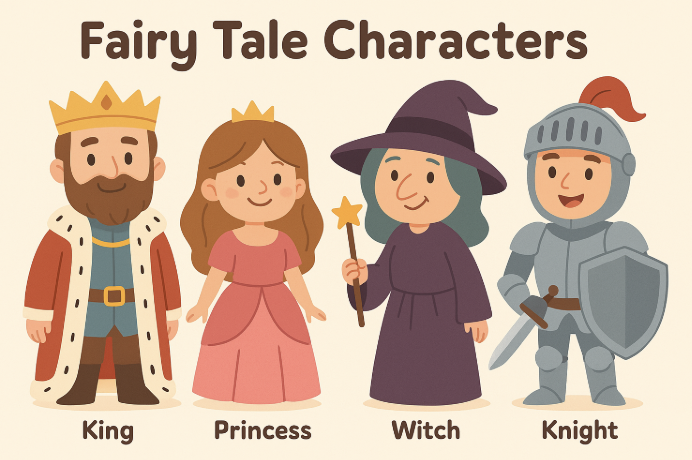
Task: Act a Fairy-Tale Character (Extended) Each child chooses a card (princess, king, witch, dragon, knight). They must act as the character and introduce themselves with one extra detail.
Descriptor:
Game: Who am I? (Advanced) Teacher gives simple costume props (crown, broom, sword, cape). Pupils wear one and classmates must guess by asking: “Are you a …?”
Descriptor:
Exercise: Role Sentence with Gesture (Extended) Children stand up and say a sentence with gesture:
Descriptor:
Text-based Task Teacher reads aloud: "The king has a crown. The princess is in the castle. The witch has a broom. The dragon is big. The knight is strong." Questions:
Descriptor:
Mini-Test (End of Lesson)
Descriptor:
|
Completes Tasks Completes Tasks Completes Tasks Completes Tasks Completes Tasks |
Descriptor
T Verbal Praise
|
|
||
|
Lesson consolidation |
"Two Stars, One Wish"
|
Follows Instructions |
Provides Feedback |
|
||
Short-Term Lesson Plan №11
|
Name of the Educational Institution |
|
|||||
|
Subject: |
|
|||||
|
Unit: |
|
|||||
|
Teacher's Full Name: |
|
|||||
|
Date: |
|
|||||
|
Grade: |
Number of Participants: |
Number of Absentees: |
||||
|
Topic: |
Family Roles |
|||||
|
Lesson Objective: |
Students will identify family members in English, act out short family dialogues, and group themselves according to family roles |
|||||
|
Value education |
Respect → appreciating family members and their roles. Responsibility → understanding that every family member has duties. Cooperation → working together in groups as “families.” Confidence → speaking about family roles in English. |
|||||
|
Lesson Procedure |
||||||
|
Planned Lesson Stages |
Teacher's Actions |
Student's Actions |
Assessment |
Resources |
||
|
Organizational stage |
"Magic Word" Method Objective: Spark interest in the lesson topic and encourage teamwork.
|
Follows Instructions |
Verbal Praise |
|
||
|
New lesson |
Role Play: Parent + Child Dialogue (Extended) Pairs act as parent and child. They must greet each other and add one more phrase (feeling or action).
Descriptor:
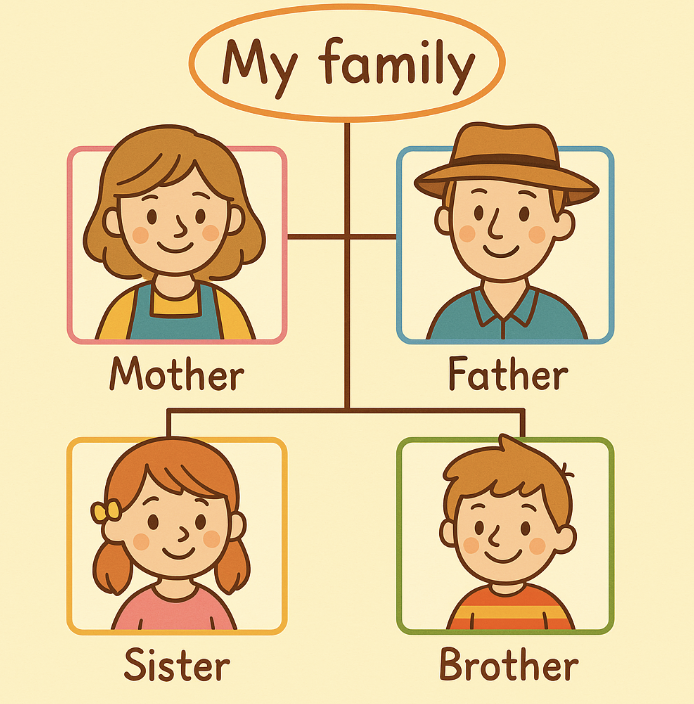
Game: Family Tree Game (Advanced) Teacher calls out: “Family group!” Children group themselves as “family” with labels: mother, father, sister, brother, baby. Each group must introduce themselves.
Descriptor:
Exercise: Match Pictures (Extended) Teacher shows flashcards (mother, father, sister, brother, grandmother, grandfather). Pupils must match and then make a sentence.
Descriptor:
Text-based Task Teacher reads aloud: "This is a family. The mother cooks. The father drives. The sister plays with a doll. The brother runs in the park." Questions:
Descriptor:
Mini-Test (End of Lesson)
Descriptor:
|
Completes Tasks Completes Tasks Completes Tasks Completes Tasks Completes Tasks |
Descriptor
T Verbal Praise
|
|
||
|
Lesson consolidation |
"Traffic Light" Method
|
Follows Instructions |
Provides Feedback |
|
||
Short-Term Lesson Plan№12
|
Name of the Educational Institution |
|
|||||
|
Subject: |
|
|||||
|
Unit: |
|
|||||
|
Teacher's Full Name: |
|
|||||
|
Date: |
|
|||||
|
Grade: |
Number of Participants: |
Number of Absentees: |
||||
|
Topic: |
Using Props |
|||||
|
Lesson Objective: |
Students will identify props in English, use them in short sentences, and apply them in a simple role play or mini-scene. |
|||||
|
Value education |
Creativity → using props to act out short scenes. Respect → listening to classmates’ scenes with attention. Confidence → speaking sentences while holding props. Teamwork → cooperating in pairs and groups to create mini-scenes |
|||||
|
Lesson Procedure |
||||||
|
Planned Lesson Stages |
Teacher's Actions |
Student's Actions |
Assessment |
Resources |
||
|
Organizational stage |
"Magic Box" Method Objective: Increase students' interest and motivation for the lesson.
|
Follows Instructions |
Verbal Praise |
|
||
|
New lesson |
Task: Props in a Mini-Scene (Extended) Children choose toy objects (hat, book, cup, bag, ball). In pairs they create a short mini-scene using the prop and speaking one sentence each.
Descriptor:
Game: Magic Box (Advanced) Teacher puts different toy props into a box. Pupils take one, name it in English, and make a sentence.
Descriptor:
Exercise: Prop Sentences (Extended) Teacher models: “This is a hat. I wear a hat.” Pupils repeat and create their own with different props.
Descriptor:
Text-based Task Teacher reads aloud: "The boy has a hat. He wears the hat. The girl has a bag. She carries the bag. The baby has a ball. He plays with the ball." Questions:
Descriptor:
Mini-Test (End of Lesson)
Descriptor:
|
Completes Tasks Completes Tasks Completes Tasks Completes Tasks Completes Tasks |
Descriptor
T Verbal Praise
|
|
||
|
Lesson consolidation |
"Mood Emojis" Method ? Instructions:
|
Follows Instructions |
Provides Feedback |
|
||

Short-Term Lesson Plan №13
|
Name of the Educational Institution |
|
|||||
|
Subject: |
|
|||||
|
Unit: |
|
|||||
|
Teacher's Full Name: |
|
|||||
|
Date: |
|
|||||
|
Grade: |
Number of Participants: |
Number of Absentees: |
||||
|
Topic: |
Costume and Identity |
|||||
|
Lesson Objective: |
Students will use costume items to identify characters, introduce themselves in role, and connect clothing vocabulary with simple actions |
|||||
|
Value education |
Creativity → using costumes to create identity. Confidence → speaking aloud in role. Respect → supporting and listening when others perform. Teamwork → playing group games with roles fairly. |
|||||
|
Lesson Procedure |
||||||
|
Planned Lesson Stages |
Teacher's Actions |
Student's Actions |
Assessment |
Resources |
||
|
Organizational stage |
"Circle of Kind Words" Method Objective: Boost students' mood and foster friendly relationships.
|
Follows Instructions |
Verbal Praise |
|
||
|
New lesson |
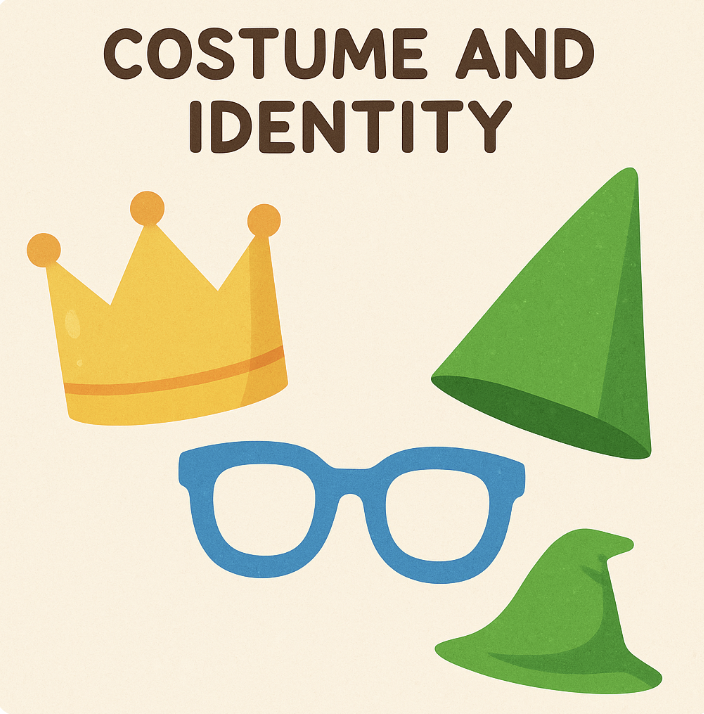
Task: Costume Role Sentence (Extended) Teacher gives children simple props (paper crown, glasses, hat, scarf). Each child wears/holds one and says:
Descriptor:
Game: Dress-up Race (Advanced) Teacher shows costume cards (king, doctor, teacher, clown). Pupils quickly choose one, act it with movement, and classmates guess:
Descriptor:
Exercise: Match Clothes to Words (Extended) Teacher shows picture cards (hat, shirt, shoes, coat). Pupils match and make a sentence:
Descriptor:
Text-based Task Teacher reads aloud: "The king has a crown. The teacher has glasses. The clown wears big shoes. The doctor has a white coat." Questions:
Descriptor:
Mini-Test (End of Lesson)
Descriptor:
|
Completes Tasks Completes Tasks Completes Tasks Completes Tasks Completes Tasks |
Descriptor
T Verbal Praise
|
|
||
|
Lesson consolidation |
"What Did I Like? What Was Difficult? What Did I Learn?" ? Instructions:
✅ What did I
like? – What was the most
interesting part of the lesson? This method encourages reflection and helps students analyze their learning progress. |
Follows Instructions |
Provides Feedback |
|
||
Short-Term Lesson Plan №14
|
Name of the Educational Institution |
|
|||||
|
Subject: |
|
|||||
|
Unit: |
|
|||||
|
Teacher's Full Name: |
|
|||||
|
Date: |
|
|||||
|
Grade: |
Number of Participants: |
Number of Absentees: |
||||
|
Topic: |
At the School |
|||||
|
Lesson Objective: |
Students will role play classroom commands, follow and give instructions in English, and recognize common school objects with simple sentences |
|||||
|
Value education |
Respect → following teacher’s commands politely. Responsibility → taking care of school objects. Cooperation → playing “Simon Says” fairly as a group. Confidence → giving commands and responding in English. |
|||||
|
Lesson Procedure |
||||||
|
Planned Lesson Stages |
Teacher's Actions |
Student's Actions |
Assessment |
Resources |
||
|
Organizational stage |
"Compliment Bridge" Method Objective: Build friendly relationships and boost students' confidence.
|
Follows Instructions |
Verbal Praise |
|
||
|
New lesson |
Role Play: Teacher + Student (Extended) Pairs act out a classroom dialogue. “Teacher” gives two different commands, “Student” follows and responds politely.
Descriptor:
Game: Classroom Simon Says (Advanced) Teacher plays “Simon Says” with classroom actions. To make it harder, pupils must also say the action while doing it.
Descriptor:
Exercise: School Objects (Extended) Pupils draw or write names of school objects (book, pen, desk, bag, board). Then say a sentence about each.
Descriptor:
Text-based Task Teacher reads aloud: "The student has a bag. He opens his book. The teacher says, ‘Sit down, please.’ The class listens." Questions:
Descriptor:
Mini-Test (End of Lesson)
Descriptor:
|
Completes Tasks Completes Tasks Completes Tasks Completes Tasks Completes Tasks |
Descriptor
T Verbal Praise
|
|
||
|
Lesson consolidation |
Success Ladder" Method ? Instructions:
|
Follows Instructions |
Provides Feedback |
|
||
Short-Term Lesson Plan №15
|
Name of the Educational Institution |
|
|||||||||||
|
Subject: |
|
|||||||||||
|
Unit: |
|
|||||||||||
|
Teacher's Full Name: |
|
|||||||||||
|
Date: |
|
|||||||||||
|
Grade: |
Number of Participants: |
Number of Absentees: |
||||||||||
|
Topic: |
Midterm Mini-Performance |
|||||||||||
|
Lesson Objective: |
Students will work in groups to prepare and perform a short play in English (2–3 lines per pupil), practice their lines with teacher guidance, and show confidence on stage |
|||||||||||
|
Value education |
Confidence → performing on stage with voice and gesture. Respect → listening and clapping for classmates. Teamwork → preparing and acting together as a group. Creativity → using imagination to create a play. |
|||||||||||
|
Lesson Procedure |
||||||||||||
|
Planned Lesson Stages |
Teacher's Actions |
Student's Actions |
Assessment |
Resources |
||||||||
|
Organizational stage |
"Circle of Kind Words" Method Objective: Boost students' mood and foster friendly relationships.
|
Follows Instructions |
Verbal Praise |
|
||||||||
|
New lesson |
Task: Group Play Preparation (Extended) Children are divided into small groups (3–5 pupils). Each group chooses a short scenario (at school, at the shop, at the restaurant, with animals). Every pupil must speak 2–3 lines in English.
Descriptor:
Exercise: Practice Lines (Rehearsal with Teacher) Groups repeat their dialogues with teacher support. Teacher corrects pronunciation, intonation, and helps with gestures. Each child must practice saying the line + acting it.
Descriptor:
Game: Applause Circle (Performance Time) After each group performs, the rest of the class claps in a circle. Each pupil says one sentence of praise.
Descriptor:
Text-based Task Teacher reads aloud: "The children make a play. The teacher helps them. They speak English and act on stage. The class claps after the play." Questions:
Descriptor:
Mini-Test (End of Lesson)
Descriptor:
|
Completes Tasks Completes Tasks Completes Tasks Completes Tasks Completes Tasks |
Descriptor
T Verbal Praise
|
|
||||||||
|
Lesson consolidation |
"Know – Want to Know – Learned" (KWL) Method ? Instructions:
|
Follows Instructions |
Provides Feedback |
|
||||||||
Short-Term Lesson Plan№16
|
Name of the Educational Institution |
|
|||||
|
Subject: |
|
|||||
|
Unit: |
|
|||||
|
Teacher's Full Name: |
|
|||||
|
Date: |
|
|||||
|
Grade: |
Number of Participants: |
Number of Absentees: |
||||
|
Topic: |
Feedback and Reflection |
|||||
|
Lesson Objective: |
Students will express opinions about class activities, use simple English phrases for feedback, and practice giving one positive point and one suggestion for improvement |
|||||
|
Value education |
Respect → giving polite feedback to classmates. Support → helping each other improve. Confidence → expressing own feelings in English. Responsibility → reflecting on learning and setting goals. |
|||||
|
Lesson Procedure |
||||||
|
Planned Lesson Stages |
Teacher's Actions |
Student's Actions |
Assessment |
Resources |
||
|
Organizational stage |
"One Word" Method ? Objective: Determine students' emotional readiness for the lesson.
|
Follows Instructions |
Verbal Praise |
|
||
|
New lesson |
Task: Feedback Sentences (Extended) Each child says one full sentence about the lesson or performance. Teacher encourages variety: “I liked… / It was easy… / It was hard…”
Descriptor:
Exercise: Smile/Frown Cards (Visual Feedback) Teacher gives each pupil two cards: ? (smile), ☹️ (frown). Teacher asks questions: “Was the play easy? Did you like the game?” Pupils hold up a card and say one word or sentence.
Descriptor:
Game: Star and Wish (Advanced) Each child gives feedback to a classmate: one star (good thing) and one wish (something to improve).
Descriptor:
Text-based Task Teacher reads aloud: "The children finish the play. They say, ‘I liked it.’ Some say, ‘It was easy.’ Some say, ‘It was hard.’ The teacher says, ‘Good job! Let’s try again next time.’" Questions:
Descriptor:
Mini-Test (End of Lesson)
Descriptor:
|
Completes Tasks Completes Tasks Completes Tasks Completes Tasks Completes Tasks |
Descriptor
T Verbal Praise
|
|
||
|
Lesson consolidation |
"Five Fingers" Method ? Instructions:
? Thumb – I liked
it.
|
Follows Instructions |
Provides Feedback |
|
||
Short-Term Lesson Plan №17
|
Name of the Educational Institution |
|
|||||
|
Subject: |
|
|||||
|
Unit: |
|
|||||
|
Teacher's Full Name: |
|
|||||
|
Date: |
|
|||||
|
Grade: |
Number of Participants: |
Number of Absentees: |
||||
|
Topic: |
Invent a Character |
|||||
|
Lesson Objective: |
Students will create and present an original character in English, describe its abilities in short sentences, and act it out for classmates |
|||||
|
Value education |
Creativity → inventing new characters with imagination. Confidence → presenting own drawing and sentences to the class. Respect → listening carefully and guessing politely. Teamwork → playing the guessing game together. |
|||||
|
Lesson Procedure |
||||||
|
Planned Lesson Stages |
Teacher's Actions |
Student's Actions |
Assessment |
Resources |
||
|
Organizational stage |
"Show Your Mood" Objective: Determine students' mood and assess their readiness for the lesson.
|
Follows Instructions |
Verbal Praise |
|
||
|
New lesson |
Task: Draw and Introduce a Character (Extended) Children draw their own invented character (e.g., Super Cat, Flying Dog, Magic Princess). Then they stand up and introduce it in English with 2 details.
Descriptor:
Game: Walk like Your Character (Advanced) Each child acts like their invented character with movements. Classmates must guess by asking: “Are you…?”
Descriptor:
Exercise: Short Ability Sentences (Extended) Children use their characters to make ability sentences with “can.”
Descriptor:
Text-based Task Teacher reads aloud: "This is Super Dog. He can run fast. He can jump high. He has a blue cape." Questions:
Descriptor:
Mini-Test (End of Lesson)
Descriptor:
|
Completes Tasks Completes Tasks Completes Tasks Completes Tasks Completes Tasks |
Descriptor
T Verbal Praise
|
|
||
|
Lesson consolidation |
"Success Ladder"
1️⃣
I did not understand the
topic.
|
Follows Instructions |
Provides Feedback |
|
||
Short-Term Lesson Plan 18
|
Name of the Educational Institution |
|
|||||
|
Subject: |
|
|||||
|
Unit: |
|
|||||
|
Teacher's Full Name: |
|
|||||
|
Date: |
|
|||||
|
Grade: |
Number of Participants: |
Number of Absentees: |
||||
|
Topic: |
Dialogue Practice: Asking & Answering |
|||||
|
Lesson Objective: |
Students will practice asking and answering simple personal questions in English, conduct pair dialogues, and give short Yes/No answers confidently |
|||||
|
Value education |
Respect → listening carefully when others speak. Confidence → asking and answering in front of peers. Friendship → learning about each other through questions. Responsibility → completing dialogue tasks honestly |
|||||
|
Lesson Procedure |
||||||
|
Planned Lesson Stages |
Teacher's Actions |
Student's Actions |
Assessment |
Resources |
||
|
Organizational stage |
"Secret Gift" Method Objective: Encourage students and increase their interest in the lesson.
|
Follows Instructions |
Verbal Praise |
|
||
|
New lesson |
Task: Pair Dialogue (Extended) Pupils work in pairs. Each asks and answers two questions: “What’s your name?” and “How old are you?” They must say both answers in full sentences.
Descriptor:
Game: Find Someone Who… (Advanced) Each pupil gets a short list (Find someone who is 7 / Find someone who has a brother / Find someone whose name starts with A). Pupils walk around and ask questions in English: “How old are you? Do you have a brother? What’s your name?”
Descriptor:
Exercise: Yes/No Answers (Extended) Teacher practices Yes/No questions with pupils.
Descriptor:
Text-based Task Teacher reads aloud: "A boy says, ‘My name is Omar. I am nine years old.’ His friend says, ‘My name is Alia. I am eight years old.’ They ask each other: ‘How old are you?’" Questions:
Descriptor:
Mini-Test (End of Lesson)
Descriptor:
|
Completes Tasks Completes Tasks Completes Tasks Completes Tasks Completes Tasks |
Descriptor
T Verbal Praise
|
|
||
|
Lesson consolidation |
"Two Stars, One Wish"
|
Follows Instructions |
Provides Feedback |
|
||
Short-Term Lesson Plan №19
|
Name of the Educational Institution |
|
|||||
|
Subject: |
|
|||||
|
Unit: |
|
|||||
|
Teacher's Full Name: |
|
|||||
|
Date: |
|
|||||
|
Grade: |
Number of Participants: |
Number of Absentees: |
||||
|
Topic: |
Action Verbs on Stage |
|||||
|
Lesson Objective: |
Students will recognize and use common action verbs in English through acting, speaking, and short writing/drawing tasks |
|||||
|
Value education |
Confidence → acting verbs with clear voice and movement. Creativity → using imagination in charades. Respect → listening and guessing politely. Teamwork → working together in guessing games. |
|||||
|
Lesson Procedure |
||||||
|
Planned Lesson Stages |
Teacher's Actions |
Student's Actions |
Assessment |
Resources |
||
|
Organizational stage |
"Magic Word" Method Objective: Spark interest in the lesson topic and encourage teamwork.
|
Follows Instructions |
Verbal Praise |
|
||
|
New lesson |
Game: Verb Charades (Advanced) One pupil acts an action verb, others must guess and say in a full sentence.
Descriptor:
Task: Listen, Do, and Say (Extended) Teacher says an action verb, pupils must do it and say aloud a short sentence: “I am [verb+ing].”
Descriptor:
Exercise: Write/Draw Action Verbs (Extended) Pupils write or draw 2–3 action verbs and present them in a sentence.
Descriptor:
Text-based Task Teacher reads aloud: "The girl is dancing. The boy is running. The dog is jumping." Questions:
Descriptor:
Mini-Test (End of Lesson)
Descriptor:
|
Completes Tasks Completes Tasks Completes Tasks Completes Tasks Completes Tasks |
Descriptor
T Verbal Praise
|
|
||
|
Lesson consolidation |
"Traffic Light" Method
|
Follows Instructions |
Provides Feedback |
|
||
Short-Term Lesson Plan №20
|
Name of the Educational Institution |
|
|||||
|
Subject: |
|
|||||
|
Unit: |
|
|||||
|
Teacher's Full Name: |
|
|||||
|
Date: |
|
|||||
|
Grade: |
Number of Participants: |
Number of Absentees: |
||||
|
Topic: |
At the Doctor |
|||||
|
Lesson Objective: |
Students will role play doctor–patient dialogues, use simple phrases to describe feelings or illnesses, and identify basic body parts in English |
|||||
|
Value education |
Respect → listening politely in doctor–patient roles. Responsibility → learning how to care for health. Confidence → speaking about body and health in English. Cooperation → acting and guessing together in group activities. |
|||||
|
Lesson Procedure |
||||||
|
Planned Lesson Stages |
Teacher's Actions |
Student's Actions |
Assessment |
Resources |
||
|
Organizational stage |
"Magic Box" Method Objective: Increase students' interest and motivation for the lesson.
|
Follows Instructions |
Verbal Praise |
|
||
|
New lesson |
Role Play: Doctor + Patient (Extended) Pairs act out a mini-scene. Patient says a problem, doctor responds with advice.
Descriptor:
Game: Doctor’s Bag (Advanced) Teacher shows toy tools or cards (thermometer, stethoscope, bandage). Pupils take one and act as doctor using a phrase.
Descriptor:
Exercise: Match Body Parts (Extended) Children match picture cards of body parts (head, hand, leg, stomach) with words. Then make a sentence.
Descriptor:
Text-based Task Teacher reads aloud: "A boy goes to the doctor. He says, ‘I have a stomachache.’ The doctor says, ‘Drink tea and rest.’ The boy says, ‘Thank you, doctor.’" Questions:
Descriptor:
Mini-Test (End of Lesson)
Descriptor:
|
Completes Tasks Completes Tasks Completes Tasks Completes Tasks Completes Tasks |
Descriptor
T Verbal Praise
|
|
||
|
Lesson consolidation |
"Mood Emojis" Method ? Instructions:
|
Follows Instructions |
Provides Feedback |
|
||

Short-Term Lesson Plan №21
|
Name of the Educational Institution |
|
|||||
|
Subject: |
|
|||||
|
Unit: |
|
|||||
|
Teacher's Full Name: |
|
|||||
|
Date: |
|
|||||
|
Grade: |
Number of Participants: |
Number of Absentees: |
||||
|
Topic: |
Telling Short Jokes |
|||||
|
Lesson Objective: |
Students will listen to, repeat, and perform simple jokes in English; practice saying funny words with expression; and create short punchlines of their own |
|||||
|
Value education |
oy and positivity → laughing together in class. Creativity → inventing and performing funny punchlines. Confidence → saying jokes aloud with expression. Respect → laughing with classmates, not at them. |
|||||
|
Lesson Procedure |
||||||
|
Planned Lesson Stages |
Teacher's Actions |
Student's Actions |
Assessment |
Resources |
||
|
Organizational stage |
"Circle of Kind Words" Method Objective: Boost students' mood and foster friendly relationships.
|
Follows Instructions |
Verbal Praise |
|
||
|
New lesson |
Task: Repeat Simple Jokes (Extended) Teacher shows 2–3 very short jokes on the board. Pupils repeat with gestures and expression.
Descriptor:
Game: Funny Face + Funny Word (Advanced) Each pupil says a funny English word (banana, chicken, jelly, moo) while making a silly face. The class votes whose joke is funniest.
Descriptor:
Exercise: Write 1–2 Word Punchline (Extended) Pupils finish a joke with their own short punchline (teacher gives setup).
Descriptor:
Text-based Task Teacher reads aloud: "The teacher tells a joke. The children laugh. One boy says a funny word. One girl makes a funny face." Questions:
Descriptor:
Mini-Test (End of Lesson)
Descriptor:
|
Completes Tasks Completes Tasks Completes Tasks Completes Tasks Completes Tasks |
Descriptor
T Verbal Praise
|
|
||
|
Lesson consolidation |
"What Did I Like? What Was Difficult? What Did I Learn?" ? Instructions:
✅ What did I
like? – What was the most
interesting part of the lesson? This method encourages reflection and helps students analyze their learning progress. |
Follows Instructions |
Provides Feedback |
|
||
Short-Term Lesson Plan №22
|
Name of the Educational Institution |
|
|||||
|
Subject: |
|
|||||
|
Unit: |
|
|||||
|
Teacher's Full Name: |
|
|||||
|
Date: |
|
|||||
|
Grade: |
Number of Participants: |
Number of Absentees: |
||||
|
Topic: |
Puppet Theatre |
|||||
|
Lesson Objective: |
Students will perform short dialogues with puppets, practice answering puppet questions in English, and create their own paper puppets with names |
|||||
|
Value education |
Creativity → designing and naming puppets. Confidence → speaking through a puppet on stage. Respect → listening to classmates’ puppet plays. Teamwork → cooperating in pair dialogues |
|||||
|
Lesson Procedure |
||||||
|
Planned Lesson Stages |
Teacher's Actions |
Student's Actions |
Assessment |
Resources |
||
|
Organizational stage |
"Compliment Bridge" Method Objective: Build friendly relationships and boost students' confidence.
|
Follows Instructions |
Verbal Praise |
|
||
|
New lesson |
Task: Puppet Dialogue (Extended) Children use teacher’s puppets (or paper puppets) in pairs. Each puppet must say 2–3 lines in dialogue.
Descriptor:
Game: Puppet Questions (Advanced) Teacher uses a puppet to ask Yes/No or Wh- questions. Children must answer in full sentences.
Descriptor:
Exercise: Make and Name Puppets (Extended) Children make simple paper puppets (stick puppets, finger puppets). Each child introduces their puppet with name and detail.
Descriptor:
Text-based Task Teacher reads aloud: "Two puppets are on stage. One says, ‘Hello! How are you?’ The other says, ‘I am fine, thank you.’ The class claps." Questions:
Descriptor:
Mini-Test (End of Lesson)
Descriptor:
|
Completes Tasks Completes Tasks Completes Tasks Completes Tasks Completes Tasks |
Descriptor
T Verbal Praise
|
|
||
|
Lesson consolidation |
Success Ladder" Method ? Instructions:
|
Follows Instructions |
Provides Feedback |
|
||
Short-Term Lesson Plan №23
|
Name of the Educational Institution |
|
|||||||||||
|
Subject: |
|
|||||||||||
|
Unit: |
|
|||||||||||
|
Teacher's Full Name: |
|
|||||||||||
|
Date: |
|
|||||||||||
|
Grade: |
Number of Participants: |
Number of Absentees: |
||||||||||
|
Topic: |
Improvisation Games |
|||||||||||
|
Lesson Objective: |
Students will practice improvisation in English by creating one-word stories, acting short unscripted scenes, and inventing simple dialogues |
|||||||||||
|
Value education |
Creativity → inventing new stories and scenes. Confidence → speaking English without a script. Respect → listening and waiting for classmates’ turn in story game. Teamwork → building one story together as a group |
|||||||||||
|
Lesson Procedure |
||||||||||||
|
Planned Lesson Stages |
Teacher's Actions |
Student's Actions |
Assessment |
Resources |
||||||||
|
Organizational stage |
"Circle of Kind Words" Method Objective: Boost students' mood and foster friendly relationships.
|
Follows Instructions |
Verbal Praise |
|
||||||||
|
New lesson |
Game: One-word Story (Advanced) Children sit in a circle. Each pupil adds one English word to continue the story. Teacher encourages use of verbs, adjectives, and fun nouns.
Descriptor:
Task: Act a Scene Without Script (Extended) Teacher gives 2–3 words (e.g., dog, ball, park). Children improvise a short scene using only those words in English.
Descriptor:
Exercise: Create 2-line Dialogue (Extended) Children work in pairs to create a mini dialogue with 2 lines each.
Descriptor:
Text-based Task Teacher reads aloud: "The children play a story game. One says ‘cat,’ one says ‘runs,’ one says ‘park.’ They act a funny scene together." Questions:
Descriptor:
Mini-Test (End of Lesson)
Descriptor:
|
Completes Tasks Completes Tasks Completes Tasks Completes Tasks Completes Tasks |
Descriptor
T Verbal Praise
|
|
||||||||
|
Lesson consolidation |
"Know – Want to Know – Learned" (KWL) Method ? Instructions:
|
Follows Instructions |
Provides Feedback |
|
||||||||
Short-Term Lesson Plan №24
|
Name of the Educational Institution |
|
|||||
|
Subject: |
|
|||||
|
Unit: |
|
|||||
|
Teacher's Full Name: |
|
|||||
|
Date: |
|
|||||
|
Grade: |
Number of Participants: |
Number of Absentees: |
||||
|
Topic: |
Reading for Performance |
|||||
|
Lesson Objective: |
Students will practice reading a short script aloud with correct intonation, identify role names and lines, and repeat lines in echo reading to build confidence in performance |
|||||
|
Value education |
Confidence → speaking lines loudly and clearly. Respect → listening to partners during reading. Creativity → using intonation to bring words to life. Teamwork → performing in pairs with cooperation |
|||||
|
Lesson Procedure |
||||||
|
Planned Lesson Stages |
Teacher's Actions |
Student's Actions |
Assessment |
Resources |
||
|
Organizational stage |
"One Word" Method ? Objective: Determine students' emotional readiness for the lesson.
|
Follows Instructions |
Verbal Praise |
|
||
|
New lesson |
Task: Read Short Script Aloud in Pairs (Extended) Children work in pairs with a short, simple script (e.g., “At the Shop” or “At the Zoo”). Each pupil takes one role and reads 2–3 lines aloud with expression.
Descriptor:
Game: Echo Reading (Advanced) Teacher reads a line with expression. Pupils repeat like “actors,” copying tone, rhythm, and volume.
Descriptor:
Exercise: Highlight Role Names and Lines (Extended) Pupils take a short script. They highlight role names (e.g., Teacher, Student, Dog, Cat) in one color and their lines in another. Then they practice saying their lines aloud.
Descriptor:
Text-based Task Teacher reads aloud: "The children read a play. One is the teacher, one is the student. They say the lines and act. The class listens and claps." Questions:
Descriptor:
Mini-Test (End of Lesson)
Descriptor:
|
Completes Tasks Completes Tasks Completes Tasks Completes Tasks Completes Tasks |
Descriptor
T Verbal Praise
|
|
||
|
Lesson consolidation |
"Five Fingers" Method ? Instructions:
? Thumb – I liked
it.
|
Follows Instructions |
Provides Feedback |
|
||
Short-Term Lesson Plan №25
|
Name of the Educational Institution |
|
|||||
|
Subject: |
|
|||||
|
Unit: |
|
|||||
|
Teacher's Full Name: |
|
|||||
|
Date: |
|
|||||
|
Grade: |
Number of Participants: |
Number of Absentees: |
||||
|
Topic: |
Pair Performance: Dialogues |
|||||
|
Lesson Objective: |
Students will memorize and perform short dialogues in pairs, switch roles to show understanding, and write simple dialogues with teacher support |
|||||
|
Value education |
Confidence → memorizing and performing without paper. Respect → listening and clapping for classmates. Responsibility → learning lines carefully. Teamwork → helping a partner during performance. |
|||||
|
Lesson Procedure |
||||||
|
Planned Lesson Stages |
Teacher's Actions |
Student's Actions |
Assessment |
Resources |
||
|
Organizational stage |
"Show Your Mood" Objective: Determine students' mood and assess their readiness for the lesson.
|
Follows Instructions |
Verbal Praise |
|
||
|
New lesson |
Task: Memorize and Perform Short Dialogue (Extended) Teacher gives pupils a short dialogue (e.g., “At the Restaurant”). Pupils memorize 2–3 lines each and perform in front of the class.
Descriptor:
Game: Switch Roles (Advanced) After the first performance, pupils swap roles and perform the same dialogue again. This tests memory and flexibility.
Descriptor:
Exercise: Write a Dialogue with Teacher’s Help (Extended) Pairs create a very short dialogue (2–3 lines each) on a familiar topic (at school, in the shop, at the zoo). Teacher supports with key words on the board.
Descriptor:
Text-based Task Teacher reads aloud: "Two pupils learn a dialogue. They say the lines. Then they change roles and act again. The class claps." Questions:
Descriptor:
Mini-Test (End of Lesson)
Descriptor:
|
Completes Tasks Completes Tasks Completes Tasks Completes Tasks Completes Tasks |
Descriptor
T Verbal Praise
|
|
||
|
Lesson consolidation |
"Success Ladder"
1️⃣
I did not understand the
topic.
|
Follows Instructions |
Provides Feedback |
|
||
Short-Term Lesson Plan №26
|
Name of the Educational Institution |
|
|||||
|
Subject: |
|
|||||
|
Unit: |
|
|||||
|
Teacher's Full Name: |
|
|||||
|
Date: |
|
|||||
|
Grade: |
Number of Participants: |
Number of Absentees: |
||||
|
Topic: |
Group Performance: Skits |
|||||
|
Lesson Objective: |
Students will collaborate in groups to prepare and perform a short skit in English, rehearse with simple props, and participate in positive feedback activities |
|||||
|
Value education |
Teamwork → preparing and performing together. Confidence → speaking lines on stage with props. Respect → clapping and praising classmates. Creativity → using imagination in group skits. |
|||||
|
Lesson Procedure |
||||||
|
Planned Lesson Stages |
Teacher's Actions |
Student's Actions |
Assessment |
Resources |
||
|
Organizational stage |
"Secret Gift" Method Objective: Encourage students and increase their interest in the lesson.
|
Follows Instructions |
Verbal Praise |
|
||
|
New lesson |
Task: Prepare Skit in Groups (Extended) Children work in groups of 4–5. Teacher provides a theme (e.g., At the Shop, At School, In the Park). Each child must say at least 2 lines in the skit.
Descriptor:
Exercise: Rehearse with Props (Advanced) Groups rehearse their skits using props (toy fruit, paper hats, bags, puppets). Pupils must use the prop while speaking English.
Descriptor:
Game: Applause Game (Feedback) After each group performs, the audience claps in different ways chosen by teacher: big clap, soft clap, fast clap. Pupils then say one short praise sentence.
Descriptor:
Text-based Task Teacher reads aloud: "Five children make a skit. They use a hat and a ball. They say their lines in English. The class claps loudly." Questions:
Descriptor:
Mini-Test (End of Lesson)
Descriptor:
|
Completes Tasks Completes Tasks Completes Tasks Completes Tasks Completes Tasks |
Descriptor
T Verbal Praise
|
|
||
|
Lesson consolidation |
"Two Stars, One Wish"
|
Follows Instructions |
Provides Feedback |
|
||
Short-Term Lesson Plan №27
|
Name of the Educational Institution |
|
|||||
|
Subject: |
|
|||||
|
Unit: |
|
|||||
|
Teacher's Full Name: |
|
|||||
|
Date: |
|
|||||
|
Grade: |
Number of Participants: |
Number of Absentees: |
||||
|
Topic: |
Story Adaptation |
|||||
|
Lesson Objective: |
Students will act out a familiar fairy tale with simple English lines, improvise alternative endings, and illustrate story scenes with English labels |
|||||
|
Value education |
Creativity → inventing new story endings. Confidence → acting as characters on stage. Respect → listening to friends’ versions. Imagination → drawing and labeling story scenes |
|||||
|
Lesson Procedure |
||||||
|
Planned Lesson Stages |
Teacher's Actions |
Student's Actions |
Assessment |
Resources |
||
|
Organizational stage |
"Magic Word" Method Objective: Spark interest in the lesson topic and encourage teamwork.
|
Follows Instructions |
Verbal Praise |
|
||
|
New lesson |
Task: Fairy Tale Acting (Extended) Children act a short version of Little Red Riding Hood. Each character says 2–3 lines in English.
Descriptor:
Game: Change the Ending (Advanced) Teacher stops the story before the end. Pupils improvise a new ending.
Descriptor:
Exercise: Draw and Label Story Scene (Extended) Children draw a scene (forest, house, wolf, girl) and label with simple English words.
Descriptor:
Text-based Task Teacher reads aloud: "Little Red Riding Hood goes to the forest. She meets the wolf. The wolf runs to Grandma’s house. The hunter comes to help." Questions:
Descriptor:
Mini-Test (End of Lesson)
Descriptor:
|
Completes Tasks Completes Tasks Completes Tasks Completes Tasks Completes Tasks |
Descriptor
T Verbal Praise
|
|
||
|
Lesson consolidation |
"Traffic Light" Method
|
Follows Instructions |
Provides Feedback |
|
||
Short-Term Lesson Plan №28
|
Name of the Educational Institution |
|
|||||
|
Subject: |
|
|||||
|
Unit: |
|
|||||
|
Teacher's Full Name: |
|
|||||
|
Date: |
|
|||||
|
Grade: |
Number of Participants: |
Number of Absentees: |
||||
|
Topic: |
Voice and Pronunciation |
|||||
|
Lesson Objective: |
Students will improve their pronunciation through tongue twisters, stress practice with rhythm, and repetition of challenging English sounds. |
|||||
|
Value education |
Confidence → speaking clearly in front of peers. Perseverance → practicing difficult sounds without giving up. Respect → listening carefully to classmates’ speech. Joy of learning → enjoying funny tongue twisters together. |
|||||
|
Lesson Procedure |
||||||
|
Planned Lesson Stages |
Teacher's Actions |
Student's Actions |
Assessment |
Resources |
||
|
Organizational stage |
"Magic Box" Method Objective: Increase students' interest and motivation for the lesson.
|
Follows Instructions |
Verbal Praise |
|
||
|
New lesson |
Game: Tongue Twister Challenge (Advanced) Children practice short tongue twisters, first slowly, then faster, trying to say clearly.
Teacher asks pupils to try twice: once slowly, once quickly. Descriptor:
Task: Stress Practice with Clapping (Extended) Teacher writes short sentences. Pupils clap on stressed words.
Descriptor:
Exercise: Repeat Difficult Sounds (Extended) Teacher gives sounds /θ/, /ð/, /ʃ/, /r/, /l/. Pupils repeat words and short phrases.
Challenge: Pupils say a short sentence:
Descriptor:
Text-based Task Teacher reads aloud: "The children say tongue twisters. They clap on words. They say ‘this,’ ‘fish,’ and ‘red rabbit.’ The class laughs and learns." Questions:
Descriptor:
Mini-Test (End of Lesson)
Descriptor:
|
Completes Tasks Completes Tasks Completes Tasks Completes Tasks Completes Tasks |
Descriptor
T Verbal Praise
|
|
||
|
Lesson consolidation |
"Mood Emojis" Method ? Instructions:
|
Follows Instructions |
Provides Feedback |
|
||
Short-Term Lesson Plan №29
|
Name of the Educational Institution |
|
|||||
|
Subject: |
|
|||||
|
Unit: |
|
|||||
|
Teacher's Full Name: |
|
|||||
|
Date: |
|
|||||
|
Grade: |
Number of Participants: |
Number of Absentees: |
||||
|
Topic: |
Mime and Expression |
|||||
|
Lesson Objective: |
Students will use mime to act out simple actions, add short English words or phrases to their movements, and write one action verb to connect physical expression with language |
|||||
|
Value education |
Creativity → expressing ideas through mime. Confidence → performing actions in front of classmates. Respect → supporting and applauding peers’ efforts. Teamwork → working together in guessing games. |
|||||
|
Lesson Procedure |
||||||
|
Planned Lesson Stages |
Teacher's Actions |
Student's Actions |
Assessment |
Resources |
||
|
Organizational stage |
"Circle of Kind Words" Method Objective: Boost students' mood and foster friendly relationships.
|
Follows Instructions |
Verbal Praise |
|
||
|
New lesson |
Game: Silent Acting (Advanced) One pupil mimes an action without speaking, classmates guess the word. After the first round, pupils must also say a sentence when they guess.
Descriptor:
Task: Add Words after Mime (Extended) After miming, the pupil who acted must say a short English word or phrase connected to the action.
Descriptor:
Exercise: Write 1 Action Word (Extended) Pupils choose one action verb from the lesson and write it in their notebook. Then, they read it aloud in a short sentence.
Descriptor:
Text-based Task Teacher reads aloud: "The boy mimes ‘sleep.’ The girl mimes ‘eat.’ The class says: ‘He is sleeping. She is eating.’" Questions:
Descriptor:
Mini-Test (End of Lesson)
Descriptor:
|
Completes Tasks Completes Tasks Completes Tasks Completes Tasks Completes Tasks |
Descriptor
T Verbal Praise
|
|
||
|
Lesson consolidation |
"What Did I Like? What Was Difficult? What Did I Learn?" ? Instructions:
✅ What did I
like? – What was the most
interesting part of the lesson? This method encourages reflection and helps students analyze their learning progress. |
Follows Instructions |
Provides Feedback |
|
||
Short-Term Lesson Plan №30
|
Name of the Educational Institution |
|
|||||
|
Subject: |
|
|||||
|
Unit: |
|
|||||
|
Teacher's Full Name: |
|
|||||
|
Date: |
|
|||||
|
Grade: |
Number of Participants: |
Number of Absentees: |
||||
|
Topic: |
Traveling |
|||||
|
Lesson Objective: |
Students will role play travel situations, practice giving simple directions, and label vehicles in English |
|||||
|
Value education |
Responsibility → following directions carefully. Respect → listening politely in role play. Confidence → speaking as passenger/driver. Creativity → drawing and labeling vehicles. |
|||||
|
Lesson Procedure |
||||||
|
Planned Lesson Stages |
Teacher's Actions |
Student's Actions |
Assessment |
Resources |
||
|
Organizational stage |
"Compliment Bridge" Method Objective: Build friendly relationships and boost students' confidence.
|
Follows Instructions |
Verbal Praise |
|
||
|
New lesson |
Role Play: Passenger + Driver (Extended) Pairs act out a mini travel dialogue.
Descriptor:
Game: Map Directions (Advanced) Teacher draws a simple classroom “map” (desk = station, board = park, door = shop). One pupil gives directions, the other follows by walking.
Descriptor:
Exercise: Draw and Label Vehicle (Extended) Pupils draw a bus, train, or taxi and label 3–4 parts in English.
Then, pupils say one short sentence:
Descriptor:
Text-based Task Teacher reads aloud: "A boy buys a bus ticket. The driver says: ‘Here you are.’ The bus goes left and right. The boy smiles." Questions:
Descriptor:
Mini-Test (End of Lesson)
Descriptor:
|
Completes Tasks Completes Tasks Completes Tasks Completes Tasks Completes Tasks |
Descriptor
T Verbal Praise
|
|
||
|
Lesson consolidation |
Success Ladder" Method ? Instructions:
|
Follows Instructions |
Provides Feedback |
|
||
Short-Term Lesson Plan №31
|
Name of the Educational Institution |
|
|||||||||||
|
Subject: |
|
|||||||||||
|
Unit: |
|
|||||||||||
|
Teacher's Full Name: |
|
|||||||||||
|
Date: |
|
|||||||||||
|
Grade: |
Number of Participants: |
Number of Absentees: |
||||||||||
|
Topic: |
Preparing Final Performance |
|||||||||||
|
Lesson Objective: |
Students will plan their final play in groups, assign roles and prepare lines with teacher support, and build team spirit through a motivational chant |
|||||||||||
|
Value education |
Teamwork → planning and preparing together. Responsibility → learning own role and lines. Confidence → saying lines loudly in rehearsal. Motivation → supporting peers with chants. |
|||||||||||
|
Lesson Procedure |
||||||||||||
|
Planned Lesson Stages |
Teacher's Actions |
Student's Actions |
Assessment |
Resources |
||||||||
|
Organizational stage |
"Circle of Kind Words" Method Objective: Boost students' mood and foster friendly relationships.
|
Follows Instructions |
Verbal Praise |
|
||||||||
|
New lesson |
Task: Plan Play in Groups (Extended) Children work in groups of 4–5. They choose a play (e.g., At the Zoo, Fairy Tale Scene, At the Restaurant). Each pupil must decide their role (character) and prepare at least 2–3 lines.
Descriptor:
Exercise: Write Roles with Teacher (Extended) Teacher helps groups write down each role and lines. Pupils copy into their notebooks and practice aloud.
Descriptor:
Game: Team Chant for Motivation (Advanced) Each group creates a simple chant (2–3 lines) to cheer for their play. They say it together loudly before rehearsal.
Descriptor:
Text-based Task Teacher reads aloud: "The children sit in groups. They plan a play. Each child has a role. They say a chant: ‘We can do it!’" Questions:
Descriptor:
Mini-Test (End of Lesson)
Descriptor:
|
Completes Tasks Completes Tasks Completes Tasks Completes Tasks Completes Tasks |
Descriptor
T Verbal Praise
|
|
||||||||
|
Lesson consolidation |
"Know – Want to Know – Learned" (KWL) Method ? Instructions:
|
Follows Instructions |
Provides Feedback |
|
||||||||
Short-Term Lesson Plan №32
|
Name of the Educational Institution |
|
|||||
|
Subject: |
|
|||||
|
Unit: |
|
|||||
|
Teacher's Full Name: |
|
|||||
|
Date: |
|
|||||
|
Grade: |
Number of Participants: |
Number of Absentees: |
||||
|
Topic: |
Rehearsal of Final Play |
|||||
|
Lesson Objective: |
Students will rehearse their final play by practicing lines in English with props, repeat dialogues quickly in a game format, and mark their stage positions for performance |
|||||
|
Value education |
Discipline → practicing lines carefully. Confidence → speaking louder and faster during rehearsal. Respect → waiting for turn in dialogue. Teamwork → standing in right positions for the play. |
|||||
|
Lesson Procedure |
||||||
|
Planned Lesson Stages |
Teacher's Actions |
Student's Actions |
Assessment |
Resources |
||
|
Organizational stage |
"One Word" Method ? Objective: Determine students' emotional readiness for the lesson.
|
Follows Instructions |
Verbal Praise |
|
||
|
New lesson |
Task: Practice Lines with Props (Extended) Groups rehearse full dialogues using props (e.g., hats, toy food, paper crowns). Each pupil must say at least 2–3 lines with expression while holding or using a prop.
Descriptor:
Game: Fast Rehearsal (Advanced) Teacher claps hands once. Pupils must repeat their lines quickly in order, like a chain. If teacher claps twice, pupils repeat again but faster.
Descriptor:
Exercise: Mark Stage Positions (Extended) Teacher shows stage plan. Pupils walk to positions (left, right, center). They practice moving while saying lines.
Descriptor:
Text-based Task Teacher reads aloud: "The children rehearse the play. They use hats and toys. They speak lines. They stand in the center and on the left. The teacher claps and they repeat faster." Questions:
Descriptor:
Mini-Test (End of Lesson)
Descriptor:
|
Completes Tasks Completes Tasks Completes Tasks Completes Tasks Completes Tasks |
Descriptor
T Verbal Praise
|
|
||
|
Lesson consolidation |
"Five Fingers" Method ? Instructions:
? Thumb – I liked
it.
|
Follows Instructions |
Provides Feedback |
|
||
Short-Term Lesson Plan №33
|
Name of the Educational Institution |
|
|||||
|
Subject: |
|
|||||
|
Unit: |
|
|||||
|
Teacher's Full Name: |
|
|||||
|
Date: |
|
|||||
|
Grade: |
Number of Participants: |
Number of Absentees: |
||||
|
Topic: |
Final Performance |
|||||
|
Lesson Objective: |
Students will perform their final play in front of an audience, receive feedback through applause and voting, and write a short reflection on what they liked |
|||||
|
Value education |
Confidence → performing in front of an audience. Respect → clapping and voting for classmates. Creativity → using costumes, props, and imagination. Reflection → thinking about what they enjoyed in the performance. |
|||||
|
Lesson Procedure |
||||||
|
Planned Lesson Stages |
Teacher's Actions |
Student's Actions |
Assessment |
Resources |
||
|
Organizational stage |
"Show Your Mood" Objective: Determine students' mood and assess their readiness for the lesson.
|
Follows Instructions |
Verbal Praise |
|
||
|
New lesson |
Task: Perform in Front of Audience (Extended) Groups present their prepared play (5–7 minutes). Each pupil must say at least 2–3 lines with clear voice, use props, and act with expression.
Descriptor:
Game: Audience Applause & Vote (Advanced) After each performance, the audience claps in different styles (soft, loud, fast). Then they “vote” by raising hands for categories:
Teacher ensures every group gets positive recognition. Descriptor:
Exercise: Write “I liked…” Sentence (Reflection) After the show, each child writes one sentence about the performance.
Descriptor:
Text-based Task Teacher reads aloud: "The children act their play. The audience claps. The class writes what they liked." Questions:
Descriptor:
Mini-Test (End of Lesson)
Descriptor:
|
Completes Tasks Completes Tasks Completes Tasks Completes Tasks Completes Tasks |
Descriptor
T Verbal Praise
|
|
||
|
Lesson consolidation |
"Success Ladder
1️⃣
I did not understand the
topic.
|
Follows Instructions |
Provides Feedback |
|
||
Short-Term Lesson Plan №34
|
Name of the Educational Institution |
|
|||||
|
Subject: |
|
|||||
|
Unit: |
|
|||||
|
Teacher's Full Name: |
|
|||||
|
Date: |
|
|||||
|
Grade: |
Number of Participants: |
Number of Absentees: |
||||
|
Topic: |
Final Reflection & Celebration |
|||||
|
Lesson Objective: |
Students will reflect on what they learned during the theatre course, recall vocabulary through a memory game, and express their learning through drawing and sharing |
|||||
|
Value education |
Reflection → thinking about what they learned. Confidence → sharing aloud in English. Joy → celebrating success together. Creativity → drawing and imagining themselves as performers. |
|||||
|
Lesson Procedure |
||||||
|
Planned Lesson Stages |
Teacher's Actions |
Student's Actions |
Assessment |
Resources |
||
|
Organizational stage |
"Secret Gift" Method Objective: Encourage students and increase their interest in the lesson.
|
Follows Instructions |
Verbal Praise |
|
||
|
New lesson |
Task: Circle Reflection – “I learned…” (Extended) Pupils sit in a circle. Each says one complete sentence starting with “I learned…”.
Descriptor:
Game: Memory Ball (Advanced) Pupils throw a soft ball around the circle. Each time they catch it, they must say one English word or phrase learned during the year. To make it harder, teacher asks them to add a short sentence.
Descriptor:
Exercise: Draw Themselves on Stage (Extended) Pupils draw themselves acting on stage in their favorite role. Under the picture, they write 1–2 sentences in English.
Descriptor:
Text-based Task Teacher reads aloud: "The children sit in a circle. They say: I learned English. They play with a ball and remember words. They draw themselves on stage." Questions:
Descriptor:
Mini-Test (End of Lesson)
Descriptor:
|
Completes Tasks Completes Tasks Completes Tasks Completes Tasks Completes Tasks |
Descriptor
T Verbal Praise
|
|
||
|
Lesson consolidation |
"Two Stars, One Wish"
|
Follows Instructions |
Provides Feedback |
|
||
Conclusion
The program English through Theatre: Role Play and Performance–based Learning for primary school has shown how theatre can become a powerful and enjoyable tool in language learning. Throughout the course, children did not simply memorize words or practice isolated grammar exercises, but instead engaged with the English language as living communication. By playing roles, acting out stories, using props, and performing together, pupils experienced English in meaningful, creative contexts that encouraged both confidence and joy in learning.
One of the main achievements of this program is its ability to integrate language with movement, imagination, and collaboration. Pupils who may normally feel shy in class discovered that through theatre they could speak louder, act braver, and use English more naturally. The stage became not only a place of performance but also a safe space for trying, experimenting, and making mistakes without fear. This is particularly important for primary learners, whose self-confidence can grow rapidly when supported in a playful environment.
The use of role play encouraged pupils to understand that language has a purpose. Saying “I want pizza, please” or “Go left, go right” was not an abstract sentence from a textbook, but part of a meaningful interaction. Theatre allowed them to practice politeness, expression of emotions, giving directions, and asking questions in real-world scenarios. These practical applications will help pupils remember and use English far beyond the classroom.
Another valuable element was the integration of values: teamwork, respect, creativity, and reflection. Pupils learned to listen to each other, clap for their friends, and give constructive praise. They also learned to be responsible for their roles and lines in performances. In this way, the program supported not only language development but also social, emotional, and personal growth.
The program also showed that theatre supports multiple learning styles. For visual learners, props and drawings made words easier to understand. For auditory learners, chants, songs, and echo reading strengthened pronunciation. For kinesthetic learners, mime, stage movements, and action games helped connect English with physical experience. This flexibility makes the program inclusive for diverse classrooms.
The final performances and reflections demonstrated that pupils were able to build short plays in English, remember and deliver lines with expression, and celebrate their progress. These achievements confirm that drama-based learning is not just entertaining but highly effective. Pupils leave the program with stronger vocabulary, clearer pronunciation, and more confidence to use English in real situations.
In conclusion, English through Theatre has proven to be a successful and innovative approach for primary education. It emphasizes learning through doing, speaking, and performing, ensuring that English becomes not just a school subject but a living skill.
References for Teachers
-
Maley, A., & Duff, A. (2005). Drama Techniques: A Resource Book of Communication Activities for Language Teachers.
-
Schewe, M. (2013). Taking Stock and Looking Ahead: Drama Pedagogy as a Gateway to a Performative Teaching and Learning Culture.
-
Winston, J., & Tandy, M. (2012). Beginning Drama 4–11.
-
Fleming, M. (2006). Drama and Language Teaching: The State of the Art.
-
Kao, S. M., & O’Neill, C. (1998). Words into Worlds: Learning a Second Language through Process Drama.
-
Zafeiriadou, N. (2009). Drama in Language Teaching. Scenario Journal.
-
Phillips, S. (1999). Drama with Children. Oxford University Press.
-
Heathcote, D., & Bolton, G. (1995). Drama for Learning: Dorothy Heathcote’s Mantle of the Expert Approach to Education.
-
Even, S. (2011). Drama Grammar: Towards a Performative and Pedagogical Grammar Teaching.
-
Stinson, M. (2009). Drama is like reversing everything. Research in Drama Education.
-
Via, R. A. (1987). English through Drama.
-
Holden, S. (1981). Drama in Language Teaching. Longman.
-
Morgan, J., & Rinvolucri, M. (1983). Once Upon a Time: Using Stories in the Classroom.
-
Miccoli, L. (2003). English through Drama: A Visual/Performative Approach.
-
Bräuer, G. (2002). Body and Language: Intercultural Learning through Drama.
References for Pupils
-
Oxford Picture Dictionary for Kids.
-
Usborne Young Readers: Fairy Tales in English.
-
Cambridge English Kids: Games and Activities Online.
-
British Council Kids – LearnEnglish Kids.
-
Super Simple Songs – English Songs for Children.
-
Fun with English – Activity Workbook.
-
English Adventure – Pupil’s Book.
-
Oxford Let’s Go! Series.
-
Cambridge Kid’s Box Series.
-
BBC Kids – English Games and Stories.
Online Resources
-
https://learnenglishkids.britishcouncil.org
-
https://supersimple.com
-
https://www.cambridge.org/kids
-
https://elt.oup.com/
-
https://www.fluentu.com/blog/english/esl-drama-activities
-
https://busyteacher.org
-
https://www.bbc.co.uk/learningenglish
-
https://www.readingrockets.org









 Бұл курс Қазақстан Республикасы Оқу-ағарту министрлігімен келісілген










