ЖИ көмекші


жүктеу мүмкіндігіне ие боласыз
Бұл материал сайт қолданушысы жариялаған. Материалдың ішінде жазылған барлық ақпаратқа жауапкершілікті жариялаған қолданушы жауап береді. Ұстаз тілегі тек ақпаратты таратуға қолдау көрсетеді. Егер материал сіздің авторлық құқығыңызды бұзған болса немесе басқа да себептермен сайттан өшіру керек деп ойласаңыз осында жазыңыз
 19 Қараша 2024
 257
257
Everyday English: Telling the time 5-сынып
Short term plan: term 2
|
Stages / Time |
Teachers actions |
Students actions |
Assessment criteria |
Resources |
|
Beginning of the lesson Warming-up 3 min Pre-learning «Brainstorming» method 7 min. |
Organization moment : 1.Greeting. Ask about the weather. The teacher sets the lesson objectives, letting students know what to anticipate from the lesson. Warming up Where are you from? How old are you? What color is it? How many students are there in class? What day of the week today?
|
The aim: To develop pupils speaking skills and create friendly atmosphere Efficiency: By wishing each other they feel better and feel the support of others Students of the class are listed. Students' attention is drawn to the lesson. Learners talk about favourite day previous lesson vocabulary Determines the topic and purpose of the lesson Students say different words from the picture |
The teacher to assess learners for their ability. “Good job! Well done!” Formative Assessment Descriptor: -know key phrases - can make sentence - know vocabulary of previous lesson Total: 1 point |
|
|
Middle of the lesson Presentation part. 30 min |
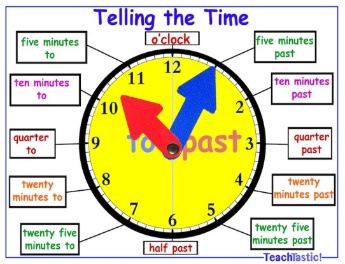
Ex:1 P:40 Read through the table eliciting/explaining any unknown words. Choose two Ss to read the example aloud. Allow Ss time to do the task in closed pairs. Ask some pairs to act out their exchanges Ex: 2 P: 40 Read the sentences aloud and elicit the L1 equivalents. (Ss' own answers) Elicit what the dialogue is about (making plans to play a sport). Play the recording. Ss listen and follow the text in their books and find out Ex: 3 P: 40 Allow Ss time to read the dialogue again and answer the questions. Check Ss' answers Ex: 4 P: 40 Read the phrases aloud. Refer Ss back to the dialogue and elicit the synonymous ones from various Ss around the class. |
Pupils use the table and the clock faces to ask each other the time. ANSWERS A: What's the time, please? B: It's four o'clock. A: Have you got the time, please? B: It's ten to four. A: What time is it, please? B: It's twenty to three. A: What's the time, please? B: It's half past eight. Pupils these sentences are from a dialogue between two friends. ANSWERS Student’s own answer Pupils read the dialogue again and answer these questions ANSWERS 1 Helen wants to practise basketball. 2 From half past three to seven o'clock. 3 At 4:30/half past four Pupils find phrases in the dialogue which mean: ANSWERS 1 Yes, that's fine. 2 I think so. 3 What time does the court open? 4 See you there! |
Descriptor: - use the table - ask each other the time Total: 2 point Descriptor: - read the sentences aloud Total: 3 point Descriptor: - read the dialogue again - answer the questions. Total: 3 point Descriptor: - find phrases in the dialogue which mean -Make CCQ questions Yes / No Total: 10 point |
|
|
End of the lesson 5 min |
FEEDBACK Learners provide feedback on what they have learned at the lesson. Ex: Home task: |
What worked well for you in today’s class? What could we have done differently to make today’s class better for you? What are you wondering about after today’s lesson? What did you find difficult about today’s lesson? |
Poster Success
|
|





 Жүктеу


 Жүктеу
шағым қалдыра аласыз

 Бұл курс Қазақстан Республикасы Оқу-ағарту министрлігімен келісілген