
 ЖИ көмекші


 Қауіпсіз төлем

жүктеу мүмкіндігіне ие боласыз
Бұл материал сайт қолданушысы жариялаған. Материалдың ішінде жазылған барлық ақпаратқа жауапкершілікті жариялаған қолданушы жауап береді. Ұстаз тілегі тек ақпаратты таратуға қолдау көрсетеді. Егер материал сіздің авторлық құқығыңызды бұзған болса немесе басқа да себептермен сайттан өшіру керек деп ойласаңыз осында жазыңыз
 14 Қаңтар 2025
 211
211
1 жыл бойы шексіз жүктеңіз
Excell 9 3 токсан КМЖ
Short term plan: term 3
|
Unit: 5 Reading for pleasure |
Lesson 49 |
||
|
Teacher name: |
|
||
|
Date: |
|
||
|
Grade: 9 |
Number present: |
absent: |
|
|
Lesson title |
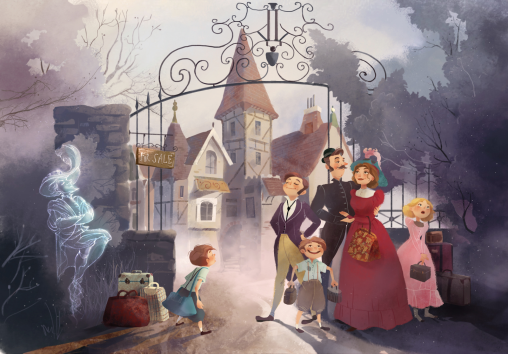
The Canterville Ghost |
||
|
Learning objectives |
9.1.9.1 use imagination to express thoughts, ideas, experiences and feelings 9.2.1.1 understand the main points in unsupported extended talk on a wide range of general and curricular topics, including talk on a limited range of unfamiliar topics 9.3.1.1 use formal and informal language registers in their talk on a range of general and curricular topics |
||
|
Lesson objectives |
Learners will be able to: - introduce the topic; to read for gist - listen and read for specific information - understand a character's feelings |
||
|
Value links |
Family – Family values are moral and ethical principles of typical family life, including sacrificing for loved ones, putting your loved ones first, and keeping your loved ones at the centre of your thoughts and actions. |
||
|
Plan |
|||
|
Stages / Time |
Teachers actions |
Students actions |
Assessment criteria |
Resources |
|
Beginning of the lesson Warming-up
3 min. Pre-learning «Brainstorming» method 7 min. |
Organization moment : 1.Greeting. Ask about the weather. The teacher sets the lesson objectives, letting students know what to anticipate from the lesson. Warming up Where are you from? How old are you? What color is it? How many students are there in class? What day of the week today? Lead – In
|
The aim: To develop pupils speaking skills and create friendly atmosphere Students of the class are listed. Students' attention is drawn to the lesson. Students say different words from the picture •Learners remember previous lesson vocabulary •Learners answer the questions |
The teacher to assess learners for their ability. “Good job! Well done!” Formative Assessment
Good job! Descriptor: - remembers the lesson passed Point 1 Assessment criteria make basic statements related to personal information, people and objects |
Pictures worksheet Picture |
|
Middle of the lesson Presentation part. 30 min |
Ex:1 P:54 • Elicit what, if anything, Ss know about Oscar Wilde and the stories he wrote. Direct Ss to the picture and the biography of Oscar Wilde and ask them to read the biography and answer the questions. Elicit answers from Ss around the class Ex: 2 P: 54 • Ask Ss to look at the pictures and elicit their guesses as to whether the people in the pictures are afraid of the ghost or not. Play the recording. Ss listen and read the text to find out. Check Ss' answers. Ex: 3 P: 54 • Give Ss time to read the text again and the sentences. Then, Ss mark them as true, false or doesn't say. Check Ss' answers. Ex: 5 P: 55 • Give Ss time to match the words in the column to form phrases from the text. Check Ss' answers. Ex: 6 P: 55 • Explain the task. Ss complete the task and check their answers in the text Ex: 7 P: 55 • Allow Ss time to look up the meanings of the words in the list in their dictionaries if necessary. Elicit definitions from Ss around the class. Then give Ss time to use them to complete the sentences. Check Ss answers. Conclusion during the lesson some tasks differentiated by outcomes of the students and by their abilities. |
• Learners read the biography. Answer the question. ANSWERS Oscar Wilde wrote a lot of literature: poems, articles for magazines and newspapers, collections of fairy tales, several funny plays and a novel. The Canterville Ghost is a novella with elements of both comedy and horror • Learners look at the pictures. Answer the question. ANSWERS The people in the pictures are not afraid of the Canterville Ghost. • Learners read the extract and mark the statements. ANSWERS 1F 2 F 3 F 4 DS 5 T • Learners match the columns ANSWERS 1 b 2 d 3 e 4a 5c • Learners choose the correct item ANSWERS 1 in 2 to 3 at 4 down 5 onto • Learners complete the sentences. Use the words in the box ANSWERS 1 rude 2 afraid 3 clank 4 insulted 5 sight |
Descriptor: - read the biography. - answer the question Total: 2 point
Self assessment Differentiation: «Verbal support» method is used to help Ss use new words in the sentences. Descriptor: - read the extract - mark the statements. Total: 2 point Descriptor: - match the columns Total: 1 point Descriptor: - choose the correct item Total: 1 point Descriptor: - complete the sentences. - Use the words in the box Total: 1 point -Make CCQ questions Yes / No |
Card Worksheet Students book |
|
End of the lesson 5 min |
FEEDBACK Learners provide feedback on what they have learned at the lesson. Ex: P: Home task: Write the days |
|
Poster Success
|
|




Short term plan: term 3
|
Unit 5 Reading for pleasure |
Lesson 50 |
||
|
Teacher name: |
|
||
|
Date: |
|
||
|
Grade: 9 |
Number present: |
absent: |
|
|
Lesson title |
Journey to the Centre of the Earth |
||
|
Learning objectives |
9.4.4.1 read a wide range of extended fiction and non-fiction texts on familiar and unfamiliar general and curricular topics 9.2.4.1 understand the main points of supported extended talk on a range of general and curricular topics 9.5.1.1 plan, write, edit and proofread work at text level with support on a limited range of general and curricular topics |
||
|
Lesson objectives |
Learners will be able to: - introduce the topic, to read for specific information - listen and read for specific information -consolidate new vocabulary |
||
|
Value links |
Loyalty – Loyalty might be a core personal value to you if you highly prize friends that are reliable and trustworthy. You might put your friends or chosen family first, always being there for them when they need you. |
||
|
Plan |
|||
|
Stages / Time |
Teachers actions |
Students actions |
Assessment criteria |
Resources |
|
Beginning of the lesson Warming-up
3 min Pre-learning «Brainstorming» method 7 min. |
Organization moment : 1.Greeting. Ask about the weather. The teacher sets the lesson objectives, letting students know what to anticipate from the lesson. Warming up Where are you from? How old are you? What color is it? How many students are there in class? What day of the week today? Ask a few pupils to stand up and stand in a row. Ask the rest of the class questions to revise the ordinals. Lead – In
|
The aim: To develop pupils speaking skills and create friendly atmosphere Students of the class are listed. Students' attention is drawn to the lesson. Determines the topic and purpose of the lesson •Learners remember previous lesson vocabulary Students say different words from the picture Answer the question. |
The teacher to assess learners for their ability. “Good job! Well done!” Formative Assessment
Good job! Descriptor: - know daily routines vocabulary Point 1 Assessment criteria - Learners have met the learning objectives if they can talk about Journey to the Centre of the Earth |
Pictures worksheet Student’s book |
|
Middle of the lesson Presentation part. 30 min |
Ex:1 P:56 • Elicit what, if anything, Ss know about Jules Verne and the stories he wrote. Direct Ss to the picture and the biography of Jules Verne and ask them to read the biography and answer the questions. Elicit answers from Ss around the class. Ex: 2 P: 56 • Read out the questions. Play the recording. Ss listen and read the text to find out the answers Differentiation: «Verbal support» method is used to help Ss use new words in the sentences. Differentiation: «Verbal support» method is used to help Ss use new words in the sentences. Ex: 3 P: 57 • Ask Ss to read the sentence stems. Give Ss time to read the extract and complete the task. Check Ss' answers. Ex: 4 P: 57 • Direct Ss to the words in the list and then give the time to find the adjectives the writer uses describe them. Check Ss' answers. Conclusion during the lesson some tasks differentiated by outcomes of the students and by their abilities. |
• Pupils read the biography. Answer the question. ANSWERS Jules Verne wrote adventure stories. The main characters in Journey to the Centre of the Earth are a scientist, the Professor, his nephew, Axel, and their guide, Hans. • Pupils look at the picture. Answer the question. ANSWERS The people in the picture are the Professor, Axel and Hans. They are under the Earth, inside something like a giant cave and the top of it is a few miles high. Axel is the one who narrates the story. • Pupils read the extract and complete the sentences. ANSWERS 1 the heat of the rocks 2 bones (of sth which looked like a huge elephant) 3 how deep the sea was 4 teeth • Pupils find the adjectives the writer uses in the story. ANSWERS the cave = giant the sea underground, strange the marks on the pickaxe = large the wind = strong the waves = huge the head of the pickaxe = meta |
Descriptor: - read the biography - answer the question. Total: 2 point
Self assessment Descriptor: - look at the picture - answer the question Total: 2 point Descriptor: - read the extract - complete the sentences. Total: 2 point Descriptor: - find the adjectives Total: 1point -Make CCQ questions Yes / No Total: 1 point Total: 10 point |
Card Worksheet Students book |
|
End of the lesson 5 min |
FEEDBACK Learners provide feedback on what they have learned at the lesson. Ex: P: Home task: Write the days |
|
Poster Success
|
|


Short term plan: term 3
|
Unit 5 Reading for pleasure |
Lesson 51 |
||
|
Teacher name: |
|
||
|
Date: |
|
||
|
Grade: 9 |
Number present: |
absent: |
|
|
Lesson title |
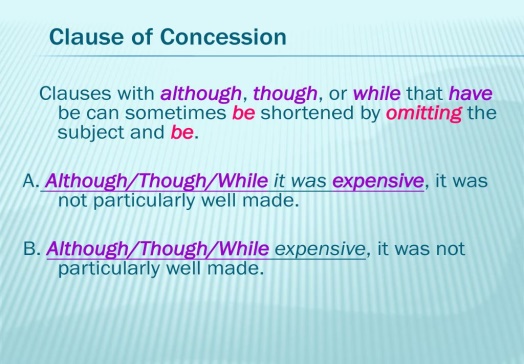
Clauses of concession |
||
|
Learning objectives |
9.3.7.1 use appropriate subject-specific vocabulary and syntax to talk about an increased range of general and curricular topics 9.6.5.1 use a wide variety of question types on a wide range of familiar general and curricular topics 9.5.8.1 spell most high-frequency vocabulary accurately for a wide range of familiar general and curricular topics |
||
|
Lesson objectives |
Learners will be able to: - |
||
|
Value links |
Fairness – If you value fairness, you might be highly sensitive to situations at school or in the workplace where a teacher or a peer has exhibited favoritism or allowed someone to get away with living by a different set of rules to everyone else. |
||
|
Plan |
|||
|
Stages / Time |
Teachers actions |
Students actions |
Assessment criteria |
Resources |
|
Beginning of the lesson Warming-up
3 min Pre-learning «Brainstorming» method 7 min. |
Organization moment : 1.Greeting. Ask about the weather. The teacher sets the lesson objectives, letting students know what to anticipate from the lesson. Warming up Where are you from? How old are you? What color is it? How many students are there in class? What day of the week today? revise the vocabulary from the previous Lead – In
|
. The aim: To develop pupils speaking skills and create friendly atmosphere Students of the class are listed. Students' attention is drawn to the lesson. • Learners remember previous lesson vocabulary Determines the topic and purpose of the lesson Students say different words from the picture |
The teacher to assess learners for their ability. “Good job! Well done!” Formative Assessment
Good job! Descriptor: - revise the vocabulary from the previous Point 1 Assessment criteria - Learners have met the learning objectives if they can talk about |
Pictures worksheet Picture |
|
Middle of the lesson Presentation part. 30 min |
Ex: 5 P: 57 • Read out the box and explain the task. Give Ss time to use them to complete the sentences. Check Ss' answers. Ex: 6 P: 57 • Go through the theory table and read the examples aloud. Elicit the L1 equivalents for the examples. Then, explain the task and give Ss time to complete it. Check Ss' answers around the class. Differentiation: «Verbal support» method is used to help Ss use new words in the sentences. Ex:7a P: 57 • Explain the task and give Ss time to complete it. Display the pictures on the classroom walls. Ex: 7b P: 57 • Ask Ss to imagine they are a character in the story and have them consider the questions and then tell their partner. Then ask various Ss around the class to share their answers with the rest of the class. Conclusion during the lesson some tasks differentiated by outcomes of the students and by their abilities. |
• Pupils read the box, then complete the sentences. ANSWERS 1 off 2 up 3 back 4 aside •Pupils read the theory. Complete the sentences. ANSWERS 1 though 2 but 3 Even though/Although/Though 4 while/whereas 5 though •Pupils read the Iast part of the extract. Use the descriptions to draw the monsters. ANSWERS Students own answer •Pupils look at the picture. Answer the question. ANSWERS I feel very excited. I have never seen any creatures like those before. I don't know what to expect and I am a little scared in case something terrible happens to me. |
Descriptor: - read the box - complete the sentences. Total: 2point
Self assessment Descriptor: - read the theory - Complete the sentences. Total: 2 point Descriptor: - read the Iast part of the extract - use the descriptions Total: 1 point Descriptor: - look at the picture. - answer the question. Total: 1 point -Make CCQ questions Yes / No |
Card Worksheet |
|
End of the lesson 5 min |
FEEDBACK Learners provide feedback on what they have learned at the lesson. Ex: Home task: |
|
Poster Success
|
|
Short term plan: term 3
|
Unit 5: Reading for pleasure |
Lesson 52 |
||
|
Teacher name: |
|
||
|
Date: |
|
||
|
Grade: 9 |
Number present: |
absent: |
|
|
Lesson title |
The Worth of Wealth |
||
|
Learning objectives |
9.2.6.1 deduce meaning from context in unsupported extended talk on a wide range of general and curricular topics, including talk on a limited range of unfamiliar topics 9.3.8.2 recount extended stories and events on a wide range of general and curricular topics 9.4.5.1 deduce meaning from context in short texts on a limited range of familiar general and curricular topics |
||
|
Lesson objectives |
Learners will be able to: - introduce the topic and key vocabulary -listen and read for gist - read for specific information (multiple choice) |
||
|
Value links |
Honesty – You may highly value telling people the truth. This one gets tricky when being honest can be hurtful to others. So, a person who really puts honesty first might be the sort of person who will tell the truth even if it hurts to do so. |
||
|
Plan |
|||
|
Stages / Time |
Teachers actions |
Students actions |
Assessment criteria |
Resources |
|
Beginning of the lesson Warming-up
3 min Pre-learning «Brainstorming» method 7 min. |
Organization moment : 1.Greeting. Ask about the weather. The teacher sets the lesson objectives, letting students know what to anticipate from the lesson. Warming up Where are you from? How old are you? What color is it? How many students are there in class? What day of the week today? revise the language from the previous lesson Lead – In
|
The aim: To develop pupils speaking skills and create friendly atmosphere Students of the class are listed. Students' attention is drawn to the lesson. • Learners talk about daily routines previous lesson vocabulary Determines the topic and purpose of the lesson Students say different words from the picture |
The teacher to assess learners for their ability. “Good job! Well done!” Formative Assessment
Good job! Descriptor: - talk about daily routines Point 1 Assessment criteria - Learners have met the learning objectives if they can talk about |
Pictures worksheet Student’s book |
|
Middle of the lesson Presentation part. 30 min |
Ex:1 P:58 • Ask Ss to look at the list of the Seven Deadly Sins. Elicit what, if anything, Ss know about them. Allow Ss time to check the words in their dictionaries. Elicit answers from Ss around the class. Ex: 2 P: 58 • Ask Ss to read the title and the first sentence in each paragraph. Elicit Ss' guesses as to what the folk tale is about and which of the Seven Deadly Sins it refers to. Play the recording. Ss listen and read the text to find out the answers Differentiation: «Verbal support» method is used to help Ss use new words in the sentences. Ex: 3 P: 59 • Ask Ss to read the questions (1-4) and answer choices A-C. Give Ss time to read the text and complete the task. Check Ss' answers around the class. Ex: 4 P: 59 •Direct Ss to the words in bold in the text and then give them time to match them to the definitions in the list. Check Ss' answers. Ex: 5 P: 59 •Give Ss time to consider the question. Then ask various Ss around the class to share their answers with the class. Ex: 7 P: 59 •Ask Ss to read the events and put them in the correct order referring back to the text as necessary. Check Ss' answers. Conclusion during the lesson some tasks differentiated by outcomes of the students and by their abilities. |
•Pupils look at the list of the Seven Deadly Sins. Use your dictionary to explain their meaning. ANSWERS Pride = a very high opinion of yourself Envy = jealousy of others Gluttony = being greedy with food Lust a strong desire to have sth Anger = strong negative feelings against sb Greed = having a selfish desire for wealth or power Sloth = being very lazy •Pupils read the title and the first sentence in each paragraph. Answer the question. ANSWERS I think the folk tale is about greed. •Pupils read the folk tale and for question choose the correct answer. ANSWERS 1 C 2 A 3 B 4 A •Pupils match the words in bold to their meaning. Use your dictionary. ANSWERS poverty = the state of not having enough exhausted = very tired starving = extremely hungry abandoned = with no one living there contented = the state of being happy with what you have eternal = lasting forever. •Pupils find the moral in the folk tale. ANSWERS I think the moral of the story is that if you are greedy nothing will ever be enough and you will never be happy •Pupils put the events in the order they happened. ANSWERS a 3 b 6 c 2 d 7 e 5 f 1 g 9 h 8 I 4 |
Descriptor: - look at the list - use your dictionary to explain their meaning. Total: 2 point
Descriptor: - read the title - answer the question. Total: 2 point Descriptor: - match the words - use your dictionary. Total: 2 point Descriptor: - read the folk tale -. choose the correct answer Total: 1 point Descriptor: - find the moral in the folk tale. Total: 1 point -Make CCQ questions Yes / No Total: 1 point Total: 10 point |
Card Worksheet Students book |
|
End of the lesson 5 min |
FEEDBACK Learners provide feedback on what they have learned at the lesson. Ex: Home task: |
|
Poster Success
|
|










 Бұл курс Қазақстан Республикасы Оқу-ағарту министрлігімен келісілген










