
 ЖИ көмекші


жүктеу мүмкіндігіне ие боласыз
Бұл материал сайт қолданушысы жариялаған. Материалдың ішінде жазылған барлық ақпаратқа жауапкершілікті жариялаған қолданушы жауап береді. Ұстаз тілегі тек ақпаратты таратуға қолдау көрсетеді. Егер материал сіздің авторлық құқығыңызды бұзған болса немесе басқа да себептермен сайттан өшіру керек деп ойласаңыз осында жазыңыз
 27 Мамыр 2026
 0
0
Food and Taste 4 сынып
Ministry of Education and Science of the Republic of Kazakhstan
Secondary School №115 by name Orazbay
(name of educational organization)
Short-term (lesson) plan
Food and Taste.
(lesson title)
Module 5. Food and Drinks
|
Lesson 2 |
||||
Date: 14.01.2026 |
Teacher name: Nakipbekova Bagila |
||||
Grade: 4 a` / 4 b |
Number present: |
absent: |
|||
Lesson theme |
Food and Taste |
||||
Learning objectives |
4.4.1.1 Spell accurately some high-frequency words. 4.5.1.4 Use common adjectives to describe things, use with considerable support simple one-syllable and some two-syllable adjectives (comparative and superlative) to make comparisons. 4.2.1.1 pronounce words, short phrases, and simple sentences using appropriate stress, rhythm, and intonation; |
||||
Lesson objectives Justification: instructions given by the head of State K. Tokayev at the II,III, IV meetings of the National kurultai, order of the Ministry of Education and science of the Republic of Kazakhstan No. 123
|
Learners will be able to:
Instilling values of the program “Adal Azamat”
|
||||
Plan |
|||||
Stages / Time |
Teachers actions |
Students’ actions |
Assessment criteria |
Resources |
Beginning of the lesson Warming-up 8 min
|
Organization moment: To revise the language of the previous lesson. Write vocabulary words from the previous lesson on the board with some letters missing. Ask some pupils to come to the board and write the missing letters. Ask the rest of the class for verification. Warming-up: Greet students warmly. “Hello, everyone! Are you hungry today?” Introduce the topic: “Today we’ll talk about food and how it tastes – sweet, sour, salty and bitter.” Show 4 taste cards: sweet , sour , salty , bitter . Use miming and facial expressions to demonstrate each taste. Ask: “Do you like sweet food? Sour food?” Get quick answers: Yes / No. |
Greet the teacher and peers Watch and listen Respond to taste questions using thumbs up/down
|
Pupils understand and name basic taste types Pupils engage with the lesson topic
The teacher assess learners for their ability. “Good job! Well done!”
|
Flashcards: food items, taste types Whiteboard
|
Middle of the lesson Presentationand practice. 30 min |
Activity 1: Listen, point and repeat. Say the words in your language. (Track 39). Present the new vocabulary. (See p. X of the Introduction for ways to present the new vocabulary.) Play the audio. The pupils listen and point to the food items. Play the audio a second time, pausing after each word. The pupils repeat, chorally and/ or individually. Then the pupils say the words in their own language. |
Listen and repeat the words Point to pictures Say some words in both English and their own language
The pupils listen and point to the pictures. |
Assessment through observation |
P.B.p.58, ex.1 Pictures
|
Activity2: Complete. Then circle the odd one out. Say. Point to the first row of pictures. Elicit the food items and what they taste like. Follow the same procedure with the remaining food items. Then allow the pupils some time to complete the activity. Check the pupils’ answers. Read the example aloud. Ask individual pupils to make similar sentences and tell the class. |
Answer key: 1 Cola and ice cream are sweet. A sausage is salty. 2 Vinegar and lemon are sour. A biscuit is sweet. 3 Pizza and crisps are salty. Sugar is sweet. 4 An olive and cocoa are bitter. A lollipop is sweet. |
Pupils recognise and write food names correctly Pupils classify taste types correctly
|
P.B.p.58, ex.2
|
|
|
Activity 3: Create new food! Make it taste different! Have the pupils tell you some food items they like eating and what these normally taste like. Then, brainstorm with the pupils to come up with unusual food combinations. Elicit suggestions from pupils around the class. |
Suggested answer key My crisps taste sweet and salty. They’ve got some sugar and salt on them. Say full sentences:
|
Pupils are evaluated with phrases like: Well done! Brilliant! Good job! I like it!
Pupils use taste words in original speaking. Pupils speak with confidence.
|
P.B.p.58, ex.3
|
Activity book. Activity 1: Break the code and write. Then circle the correct picture. The teacher explains how to use the number-to-letter code at the top of the page. Students must decode the words and then circle the picture that matches the word.
Activity 2: Read and choose. The teacher reads the sentences and the two options (e.g., "sweet" or "sour"). Students must choose the correct adjective to describe the taste of the food or drink. |
Students use the code to write the words and then circle the correct picture.
Students read the sentences and choose the correct option (a or b) to describe the taste of the items. |
The teacher assesses the students' ability to solve the code, recognize food vocabulary, and correctly use adjectives to describe tastes.
|
Activity book p.52 |
|
Consolidate the language of the lesson. Bring pictures of soft and hard toys and games to class. Show them to the pupils and ask them to tell you if they are soft or hard. Ask them to think of a soft and/ or hard item and draw a picture of it.
|
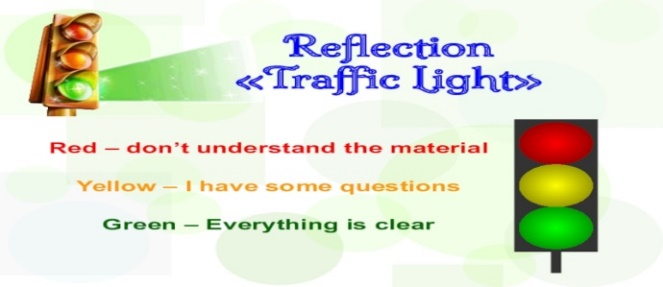
Traffic light method is used to find out was the lesson clear or not. Use the stickers.
|
Pictures
|
||
End of the lesson 7 min |
||||

ДОЖЖО:
Ж.Б.Ахтаева
_______________________

 Жүктеу


 Жүктеу
шағым қалдыра аласыз

 Бұл курс Қазақстан Республикасы Оқу-ағарту министрлігімен келісілген










