Summative assessment for the unit “Space and Earth”
Name:______________________________________ Grade: 7____
Date:_____________
Reading
Task 1. Read the text and answer the questions.
Example:0.Is Pluto no longer a planet? Yes, It
is
Is Pluto a Planet?
‘Dwarf’ is a very little star
Many people are saying that Pluto is no longer a planet. National
Geographic News says that, according to the International
Astronomical Union, a full planet is an object that orbits the sun
and is large enough to have become round due to the force of its
own gravity. Because Pluto doesn't meet these standards, the
International Astronomical Union classifies Pluto as a dwarf
planet. Not everyone agrees that this is a good way to decide,
though. Andy Cheng, a planetary scientist at Johns Hopkins
University, says that the new rules aren't clear enough and asks
the question “how round is round?” “...I'll still continue to
maintain that Pluto is a planet," he said.
Owen Gingerich is an astronomer and historian at Harvard University
in Cambridge. He favored a special distinction for Pluto. Gingerich
supported a proposal to call the big eight planets classical
planets—as opposed to just plain "planets"—and Pluto and the others
dwarf planets, so there would be two classes of planets. He
believes that reclassifying Pluto as a dwarf planet is not
"sensitive to the historical and cultural role that Pluto has
played." The argument continues. What do you think it is?
-
What planet is a full planet?

-
Is
Pluto the only dwarf planet?
-
How
many classes of planets are according to the astronomer?
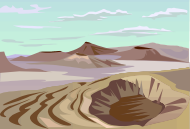
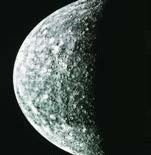 Task 2. Connect numbers and letters and find the
right pictures.
Task 2. Connect numbers and letters and find the
right pictures.
-
|
1.Comets
|
A.
It is
the largest object you can see in the night sky.
|
a
|
|
2.Craters
|
B.
A small, frozen mass of dust and gas revolving around the sun.
|
b.
|
|
3.Moon
|
C. They
are holes made when a large moving rock hit the moon.
|
c. 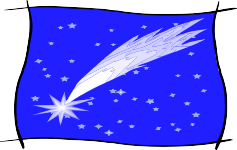
|
Speaking
Task 3: Work in a group of 3-4. Answer the questions below.
Teacher assesses the speaking skills of each learner while they are working in a group.
Names Date
-
|
Where are
you planning to travel to? Name the planet?
|
|
|
What will you do if you see aliens or some unusual
animals?
|
|
Group Assessment sheet
-
|
Criteria
|
Yes
|
No
|
|
Group answers all the questions.
|
|
|
|
It was very interesting to listen to group presentation
(name was unusual, animals were strange, etc.).
|
|
|
|
All learners have the chance to participate in the
discussion.
|
|
|
|
All learners present logically connected information.
|
|
|
Total:9/____
|
Assessment criteria
|
Task
|
Descriptor
|
Mark
|
Additional
information
|
|
A learner
|
|
Identify
the correct form of a word, appropriate sentence structure and text layout.
Identify
the meaning and details of the reading texts.
|
1
|
writes ‘A
full planet is an object that orbits the sun and is large
enough to have become round due
to the force of its own gravity’.
|
1
|
Answer can be shorter.
|
|
writes ‘No, it is not’;
|
1
|
|
|
writes ‘There are two classes of
planets’;
|
1
|
|
|
2
|
chooses 1 B-c;
|
1
|
|
|
chooses 2 C-a;
|
1
|
|
|
chooses 3 A-b;
|
1
|
|
|
Provide a
point of view in conversations and discussions. Interact in a pair, group and a
whole class work
presenting logically
connected information with ideas of other
people.
|
3
|
answers the questions;
|
1
|
|
|
participates in the discussion;
|
1
|
|
|
presents
logically connected information.
|
1
|
|
|
Total marks
|
9
|
|

 ЖИ көмекші


 Қауіпсіз төлем










 Бұл курс Қазақстан Республикасы Оқу-ағарту министрлігімен келісілген