
 ЖИ көмекші



Назарова Ақмарал Жеңісбекқызы
«Жас ерешелігіне қарай әдіс -тәсілдермен оқыту»
Алматы 2025
УДК 371.214
ББК 74.202
Пікір жазған:
С.С Жанибекова Қызылорда қаласы Болашақ университетінің «Арнайы педагогика және психология» кафедрасының аға оқытушысы, п.ғ.к., Облыстық білім басқармасының балалар оңалту орталығының түзету маманы, РЖА профессоры
Р.Д.Кульжанова «DARYN.ZERDE.ORTALYGY» Оқу-әдістемелік порталының директоры «ES London» оқу орталығының шәкірті педагогика ғылымдарының магистрі
Халықаралық ғылым мен білімді қолдау орталығы DARYN.ZERDE.ORTALYGY» оқу-әдістемелік кеңес мәжілісінде талқыланып, 2025 ж. «23» қаңтар №4032 хаттамасымен мақұлданған және баспаға ұсынылған.
Назарова Ақмарал Жеңісбекқызы ұсынған «Жас ерешелігіне қарай әдіс -тәсілдермен оқыту» Алматы: «ZIALY Baspasy», 2025. – 100 бет.
ISBN ________________________
Аталған авторлық жұмыс оқу бағдарламасына негізделе үлгілік бағдарламамен сабақтастықты ескере отырып құрастырылған.Білім –тәрбие беру кезеңінде саналы, дұрыс, коммуникативті оқу дағдыларын жетілдіру, логикалық қабылдауды дамыту, функционалдық сауаттылықтарын арттыру пәнге деген қызығушылықты, зерттеушілік қабілетті дамытып қалыптастыруға бағытталған авторлық жұмыс білім беру стандартының пәндік тақырыптарының мазмұнын, оқу сағаттарын курс бөлімдері арасында бөлуді, сонымен қатар пәнаралық байланыстарды ескере отырып, пәндер мен пән бөлімдерін зерделеудің ұсынылатын тәртібіне негізделе отырып құрастырылған.
УДК 371.214
ББК 74.202
ISBN ________________________
Introduction
In modern education, it is crucial to consider students' age characteristics when choosing effective teaching methods. This is particularly important in foreign language learning (English), where cognitive and psychological development varies across age groups. This program systematically explores age-appropriate teaching methods and strategies.
The program covers teaching methods for preschoolers, elementary, middle, and high school students. Since each age group has different memory capacities, cognitive abilities, and motivations, teaching strategies should be adapted accordingly.
The main goal of the program is to improve students' functional literacy, critical thinking, and creativity in language learning. By incorporating interactive teaching methods, game-based learning, project-based education, and active learning strategies, the program aims to enhance students' English language proficiency.
This program will help improve the efficiency and quality of English language instruction, reduce language barriers, and develop students' communication skills.
Program Objectives
To develop scientifically based teaching methods tailored to students' age characteristics, enhance their cognitive and linguistic skills, and foster creativity in English language learning.
Relevance of the Program
-
The necessity of age-appropriate teaching approaches;
-
The importance of applying modern teaching methods;
-
The growing need to develop functional literacy and communication skills;
-
The need to account for students' varying language acquisition characteristics.
Scientific Basis of the Program
The program is based on cognitive and psycholinguistic principles of language learning. It incorporates findings from global educational research, including theories from Piaget, Vygotsky, Bloom, and Bruner regarding age-based learning strategies.
Program Focus
The program is structured around the following key areas:
-
Preschool Education – Play-based learning, songs, and movement activities;
-
Elementary School – Visual learning, game-based teaching, communicative approaches;
-
Middle School – Interactive teaching, project-based learning, role-playing;
-
High School – Academic writing, presentations, research-based learning.
Program Tasks
-
Study students' language acquisition characteristics across different age groups.
-
Effectively utilize age-appropriate teaching methods in the learning process.
-
Integrate modern technologies into English language instruction.
-
Help students overcome language barriers.
-
Develop students' functional literacy.
Expected Outcomes
Upon completing the program, students will:
-
Master age-appropriate learning techniques;
-
Increase motivation for learning;
-
Acquire English language skills more effectively;
-
Improve communication competencies;
-
Develop independent learning skills.
Сабақ мазмұны
-
Introduction to Consonants
Дауыссыз дыбыстарға кіріспе дауысты және дауыссыз дыбыстардың айырмашылықтары, дауыссыз дыбыстардың маңызы. -
B Sound: /b/
/b/ дыбысының таныстырылуы, сөздерде қолданылуы. Мысалы: bat, bag, bus. -
C Sound: /k/
/k/ дыбысының таныстырылуы және қолданылуы. Мысалы: cat, cap, cup. -
D Sound: /d/
/d/ дыбысының таныстырылуы және қолданылуы. Мысалы: dog, door, duck. -
F Sound: /f/
/f/ дыбысының таныстырылуы және қолданылуы. Мысалы: fan, fish, fun. -
G Sound: /g/
/g/ дыбысының таныстырылуы және қолданылуы. Мысалы: go, gum, gate. -
H Sound: /h/
/h/ дыбысының таныстырылуы және қолданылуы. Мысалы: hat, hand, home. -
J Sound: /ʤ/
/ʤ/ дыбысының таныстырылуы және қолданылуы. Мысалы: jam, jump, jug. -
K Sound: /k/
/k/ дыбысының таныстырылуы және қолданылуы. Мысалы: kit, key, king. -
L Sound: /l/
/l/ дыбысының таныстырылуы және қолданылуы. Мысалы: log, lip, lip. -
M Sound: /m/
/m/ дыбысының таныстырылуы және қолданылуы. Мысалы: man, map, mat. -
N Sound: /n/
/n/ дыбысының таныстырылуы және қолданылуы. Мысалы: net, nap, nut. -
P Sound: /p/
/p/ дыбысының таныстырылуы және қолданылуы. Мысалы: pat, pen, pot. -
Q Sound: /kw/
/kw/ дыбысының таныстырылуы және қолданылуы. Мысалы: quick, queen, question. -
R Sound: /r/
/r/ дыбысының таныстырылуы және қолданылуы. Мысалы: rat, run, red. -
S Sound: /s/
/s/ дыбысының таныстырылуы және қолданылуы. Мысалы: sat, sun, sit. -
T Sound: /t/
/t/ дыбысының таныстырылуы және қолданылуы. Мысалы: tap, top, ten. -
V Sound: /v/
/v/ дыбысының таныстырылуы және қолданылуы. Мысалы: van, vet, vase. -
W Sound: /w/
/w/ дыбысының таныстырылуы және қолданылуы. Мысалы: win, wet, wig. -
X Sound: /ks/
/ks/ дыбысының таныстырылуы және қолданылуы. Мысалы: box, fox, mix. -
Y Sound: /j/
/j/ дыбысының таныстырылуы және қолданылуы. Мысалы: yes, yellow, yell. -
Z Sound: /z/
/z/ дыбысының таныстырылуы және қолданылуы. Мысалы: zip, zoo, zap. -
Blending Sounds: /bl/, /cl/, /fl/
Дыбыстарды қосу және олардың біріккен түрлерімен жұмыс. Мысалы: black, clap, flip. -
Short Vowel Sounds + Consonants
Қысқа дауысты дыбыстар мен дауыссыз дыбыстардың үйлесімі. Мысалы: bat, pen, dog. -
Simple Sentences with Consonants
Дауыссыз дыбыстармен қарапайым сөйлемдер құру. Мысалы: "The cat sits.". -
Rhyming Words with Consonants
Дауыссыз дыбыстармен рифмалық сөздермен жұмыс. Мысалы: bat - hat, log - dog. -
Reading Short Texts with Consonants
Қысқа мәтіндер оқып, дыбыстарды дұрыс тану және түсіну. -
Comprehension: Answering Simple Questions
Қарапайым сұрақтарға жауап беру арқылы түсінік дағдыларын дамыту. -
Writing Simple Sentences with Consonants
Дауыссыз дыбыстармен қарапайым сөйлемдер жазу. -
Listening and Identifying Consonants in Words
Сөздердегі дауыссыз дыбыстарды тыңдау және анықтау. -
Spelling with Consonants
Дауыссыз дыбыстармен дұрыс жазу дағдыларын дамыту. -
Word Games with Consonants
Дауыссыз дыбыстарды пайдалана отырып сөздермен ойындар ойнау. -
Reviewing and Consolidating Consonants
Барлық дауыссыз дыбыстарды қайталау және пысықтау. -
Final Assessment and Reading Test
Курсты қорытындылап, оқушылардың оқу мен түсіну дағдыларын бағалау.
Нормативтік бөлім
|
№ |
Тақырып |
Мақсаты |
Сағат саны |
Нәтиже |
|
1 |
Introduction to Consonants |
Оқушылар дауыссыз дыбыстарды танып, олардың қандай ерекшеліктері бар екенін түсінеді. |
1 |
Дауыссыз дыбыстардың анықтамасы мен мысалдарын білу. |
|
2 |
B Sound: /b/ |
Оқушылар /b/ дыбысын тыңдайды, айтады және жазады. Бір буынды сөздермен жұмыс істейді. |
1 |
/b/ дыбысын дұрыс айта білу және қысқа сөздерді оқу, жазу. |
|
3 |
C Sound: /k/ |
/k/ дыбысын танып, бір буынды сөздермен жұмыс істейді. |
1 |
/k/ дыбысын дұрыс айта білу және қысқа сөздерді оқу, жазу. |
|
4 |
D Sound: /d/ |
/d/ дыбысын тыңдап, оқып, жазып, бір буынды сөздермен жұмыс істейді. |
1 |
/d/ дыбысын дұрыс айта білу және қысқа сөздерді оқу, жазу. |
|
5 |
F Sound: /f/ |
/f/ дыбысын танып, бір буынды сөздермен жұмыс істейді. |
1 |
/f/ дыбысын дұрыс айта білу және қысқа сөздерді оқу, жазу. |
|
6 |
G Sound: /g/ |
/g/ дыбысын танып, бір буынды сөздермен жұмыс істейді. |
1 |
/g/ дыбысын дұрыс айта білу және қысқа сөздерді оқу, жазу. |
|
7 |
H Sound: /h/ |
/h/ дыбысын тыңдап, оқып, жазып, бір буынды сөздермен жұмыс істейді. |
1 |
/h/ дыбысын дұрыс айта білу және қысқа сөздерді оқу, жазу. |
|
8 |
J Sound: /ʤ/ |
/ʤ/ дыбысын танып, бір буынды сөздермен жұмыс істейді. |
1 |
/ʤ/ дыбысын дұрыс айта білу және қысқа сөздерді оқу, жазу. |
|
9 |
K Sound: /k/ |
/k/ дыбысын тыңдап, оқып, жазып, бір буынды сөздермен жұмыс істейді. |
1 |
/k/ дыбысын дұрыс айта білу және қысқа сөздерді оқу, жазу. |
|
10 |
L Sound: /l/ |
/l/ дыбысын танып, бір буынды сөздермен жұмыс істейді. |
1 |
/l/ дыбысын дұрыс айта білу және қысқа сөздерді оқу, жазу. |
|
11 |
M Sound: /m/ |
/m/ дыбысын танып, бір буынды сөздермен жұмыс істейді. |
1 |
/m/ дыбысын дұрыс айта білу және қысқа сөздерді оқу, жазу. |
|
12 |
N Sound: /n/ |
/n/ дыбысын танып, бір буынды сөздермен жұмыс істейді. |
1 |
/n/ дыбысын дұрыс айта білу және қысқа сөздерді оқу, жазу. |
|
13 |
P Sound: /p/ |
/p/ дыбысын танып, бір буынды сөздермен жұмыс істейді. |
1 |
/p/ дыбысын дұрыс айта білу және қысқа сөздерді оқу, жазу. |
|
14 |
Q Sound: /kw/ |
/kw/ дыбысын танып, бір буынды сөздермен жұмыс істейді. |
1 |
/kw/ дыбысын дұрыс айта білу және қысқа сөздерді оқу, жазу. |
|
15 |
R Sound: /r/ |
/r/ дыбысын танып, бір буынды сөздермен жұмыс істейді. |
1 |
/r/ дыбысын дұрыс айта білу және қысқа сөздерді оқу, жазу. |
|
16 |
S Sound: /s/ |
/s/ дыбысын танып, бір буынды сөздермен жұмыс істейді. |
1 |
/s/ дыбысын дұрыс айта білу және қысқа сөздерді оқу, жазу. |
|
17 |
T Sound: /t/ |
/t/ дыбысын танып, бір буынды сөздермен жұмыс істейді. |
1 |
/t/ дыбысын дұрыс айта білу және қысқа сөздерді оқу, жазу. |
|
18 |
V Sound: /v/ |
/v/ дыбысын танып, бір буынды сөздермен жұмыс істейді. |
1 |
/v/ дыбысын дұрыс айта білу және қысқа сөздерді оқу, жазу. |
|
19 |
W Sound: /w/ |
/w/ дыбысын танып, бір буынды сөздермен жұмыс істейді. |
1 |
/w/ дыбысын дұрыс айта білу және қысқа сөздерді оқу, жазу. |
|
20 |
X Sound: /ks/ |
/ks/ дыбысын танып, бір буынды сөздермен жұмыс істейді. |
1 |
/ks/ дыбысын дұрыс айта білу және қысқа сөздерді оқу, жазу. |
|
21 |
Y Sound: /j/ |
/j/ дыбысын танып, бір буынды сөздермен жұмыс істейді. |
1 |
/j/ дыбысын дұрыс айта білу және қысқа сөздерді оқу, жазу. |
|
22 |
Z Sound: /z/ |
/z/ дыбысын танып, бір буынды сөздермен жұмыс істейді. |
1 |
/z/ дыбысын дұрыс айта білу және қысқа сөздерді оқу, жазу. |
|
23 |
Blending Sounds: /bl/, /cl/, /fl/ |
Дауыссыз дыбыстарды біріктіріп айтуды үйрену. |
1 |
Қосымшалармен біріккен дыбыстарды дұрыс айта білу. |
|
24 |
Short Vowel Sounds + Consonants |
Қысқа дауысты дыбыстармен дауыссыз дыбыстарды біріктіру. |
1 |
Қысқа дауысты дыбыстармен қысқа сөздер құрастыру. |
|
25 |
Simple Sentences with Consonants |
Қысқа сөйлемдерде дауыссыз дыбыстарды қолдану. |
1 |
Қысқа сөйлемдер құрастыру және оқу. |
|
26 |
Rhyming Words with Consonants |
Дауыссыз дыбыстармен ұйқастыру. |
1 |
Ұйқас сөздер табу және оқу. |
|
27 |
Reading Short Texts with Consonants |
Қысқа мәтіндермен оқу және дауысыз дыбыстарды табу. |
1 |
Қысқа мәтіндерді оқу және дауысыз дыбыстарды табу. |
|
28 |
Comprehension: Answering Simple Questions |
Қысқа мәтіндер бойынша сұрақтарға жауап беру. |
1 |
Мәтіндер бойынша сұрақтарға дұрыс жауап беру. |
|
29 |
Writing Simple Sentences with Consonants |
Қысқа сөйлемдер жазу, дауысыз дыбыстарды қолдану. |
1 |
Қысқа сөйлемдер жазу және дұрыс қолдану. |
|
30 |
Listening and Identifying Consonants in Words |
Дауыссыз дыбыстарды сөздерден тыңдау және анықтау. |
1 |
Сөздердегі дауыссыз дыбыстарды тыңдап анықтау. |
|
31 |
Spelling with Consonants |
Дауыссыз дыбыстармен сөздерді дұрыс жазу. |
1 |
Дауыссыз дыбыстармен сөздерді дұрыс жазу дағдыларының дамуы. |
|
32 |
Word Games with Consonants |
Дауыссыз дыбыстармен сөздер ойнау, ойындар арқылы дағдыларды дамыту. |
1 |
Ойындар арқылы дауысыз дыбыстарды танып, қолдану. |
|
33 |
Reviewing and Consolidating Consonants |
Бүкіл оқу процесі бойынша дауысыз дыбыстарды қайталау. |
1 |
Барлық дауысыз дыбыстарды қайталап, дағдыларды бекіту. |
|
34 |
Final Assessment and Reading Test |
Дауысыз дыбыстарды және қысқа сөздерді оқу, жазу бойынша финалдық бағалау. |
1 |
Дауысыз дыбыстарды дұрыс оқу және жазу бойынша тест нәтижелері. |
Assessment Criteria
-
Development of students' language skills.
-
Expansion of vocabulary.
-
Mastery of grammatical structures.
-
Improvement of oral and written communication skills.
-
Increased student engagement and motivation.
Informational and Methodological Section
Consonant Sounds and Examples:
-
B /b/
-
Words: Bat, Bag, Bed
-
Sentence: "The bat flies at night."
-
-
C /k/
-
Words: Cat, Cup, Cap
-
Sentence: "The cat sits on the mat."
-
-
D /d/
-
Words: Dog, Dot, Den
-
Sentence: "The dog barks loudly."
-
-
F /f/
-
Words: Fan, Fox, Fit
-
Sentence: "The fan is on the table."
-
-
G /g/
-
Words: Go, Gun, Gap
-
Sentence: "I see a gun on the table."
-
-
H /h/
-
Words: Hat, Hot, Hop
-
Sentence: "She wears a hat on her head."
-
-
J /dʒ/
-
Words: Jam, Jet, Job
-
Sentence: "He eats jam with his bread."
-
-
K /k/
-
Words: Kit, King, Knee
-
Sentence: "The kit is on the floor."
-
-
L /l/
-
Words: Log, Lot, Lip
-
Sentence: "The log is in the yard."
-
-
M /m/
-
Words: Man, Map, Mud
-
Sentence: "The man carries a bag."
-
-
P /p/
-
Words: Pen, Pot, Pig
-
Sentence: "The pig plays in the mud."
-
-
R /r/
-
Words: Rat, Run, Red
-
Sentence: "The rat runs fast."
-
-
S /s/
-
Words: Sun, Sit, Sack
-
Sentence: "The sun is shining bright."
-
-
T /t/
-
Words: Top, Ten, Tip
-
Sentence: "The top spins fast."
-
-
V /v/
-
Words: Van, Vet, Vase
-
Sentence: "The van is big."
-
-
W /w/
-
Words: Win, Web, Wet
-
Sentence: "He wants to win the game."
-
-
Z /z/
-
Words: Zoo, Zip, Zap
-
Sentence: "The zoo has many animals."
-

Practice Sentences with Initial Consonants:
-
B: "The bat flies high."
-
C: "The cat is on the bed."
-
D: "The dog is fast."
-
F: "The fan spins."
-
G: "The goat eats grass."
-
H: "The hat is red."
-
J: "He eats jam."
-
K: "The kit is in the box."
-
L: "The log is big."
-
M: "The man has a map."
-
P: "The pen is blue."
-
R: "The rat runs fast."
-
S: "The sun is hot."
-
T: "The top is tall."
-
V: "The van is new."
-
W: "She is wet."
-
Z: "I saw a zoo."
Conclusion:
Learning consonants is important because they help form the sounds at the start of words. In this lesson, we've explored different consonants, and we've seen how each one helps to form simple, one-syllable words. Keep practicing these sounds and words to become more comfortable with consonants!
B Sound: /b/
-
Bat
-
Sentence: The bat flies at night.
-
-
Bag
-
Sentence: She carries a bag.
-
-
Bed
-
Sentence: I sleep in my bed.
-
-
Big
-
Sentence: The big dog runs fast.
-
-
Bus
-
Sentence: The bus is on time.
-
-
Bin
-
Sentence: The food goes in the bin.
-
-
Ball
-
Sentence: The ball bounces high.
-
-
Boat
-
Sentence: The boat floats on the water.
-
-
Bat
-
Sentence: The bat hangs upside down.
-
-
Boy
-
Sentence: The boy plays with his toy.
-
Practice Sentences with the /b/ Sound:
-
"The bat flies in the sky."
-
"I have a bag full of toys."
-
"She sleeps in a warm bed."
-
"The big dog barks loudly."
-
"The bus is yellow."
-
"Put the trash in the bin."
-
"The ball is red."
-
"The boat sails on the sea."
-
"A bat can see in the dark."
-
"The boy runs fast."
These simple sentences help reinforce the /b/ consonant sound at the beginning of each word.
C Sound: /k/
-
Cat
-
Sentence: The cat sleeps on the mat.
-
-
Cap
-
Sentence: He wears a red cap.
-
-
Cup
-
Sentence: She drinks from a blue cup.
-
-
Cot
-
Sentence: The baby sleeps in the cot.
-
-
Can
-
Sentence: I can run fast.
-
-
Car
-
Sentence: The car is parked outside.
-
-
Cut
-
Sentence: She will cut the paper.
-
-
Coin
-
Sentence: I found a shiny coin.
-
-
Camp
-
Sentence: We go to the camp every summer.
-
-
Clap
-
Sentence: Everyone claps after the show.
-
Practice Sentences with the /k/ Sound:
-
"The cat sits on the mat."
-
"He wears a red cap."
-
"I drink from a cup."
-
"The baby sleeps in the cot."
-
"I can jump high."
-
"The car is fast."
-
"She will cut the fruit."
-
"I found a coin on the floor."
-
"We will camp by the lake."
-
"Let’s clap for the singer."
These simple sentences help reinforce the /k/ consonant sound at the beginning of each word.
C Sound: /k/
-
Cat
-
Sentence: The cat is on the mat.
-
-
Cup
-
Sentence: I drink from my cup.
-
-
Car
-
Sentence: The car is red.
-
-
Cap
-
Sentence: He wears a cap.
-
-
Cot
-
Sentence: The baby sleeps in the cot.
-
-
Can
-
Sentence: I can jump.
-
-
Cut
-
Sentence: She will cut the cake.
-
-
Clap
-
Sentence: We clap for the singer.
-
-
Camp
-
Sentence: We go to the camp every summer.
-
-
Coin
-
Sentence: I found a coin on the ground.
-
Practice Sentences with the /k/ Sound:
-
"The cat sleeps in the sun."
-
"I drink from my cup every morning."
-
"The car is blue."
-
"He wears a cap on his head."
-
"The baby lies in the cot."
-
"I can run fast."
-
"She will cut the paper with scissors."
-
"We clap after the performance."
-
"Let’s go to camp next week."
-
"I found a shiny coin."
These short sentences emphasize the /k/ sound at the beginning of each word.
D Sound: /d/
-
Dog
-
Sentence: The dog runs fast.
-
-
Dot
-
Sentence: I see a red dot.
-
-
Den
-
Sentence: The fox lives in a den.
-
-
Dam
-
Sentence: The dam holds the water.
-
-
Dad
-
Sentence: My dad is tall.
-
-
Duck
-
Sentence: The duck swims in the pond.
-
-
Dig
-
Sentence: The dog likes to dig.
-
-
Dish
-
Sentence: I wash the dish.
-
-
Deck
-
Sentence: The ship has a wooden deck.
-
-
Drum
-
Sentence: She plays the drum.
-
Practice Sentences with the /d/ Sound:
-
"The dog runs in the yard."
-
"I see a blue dot."
-
"The fox sleeps in a den."
-
"The dam is big."
-
"My dad is kind."
-
"The duck quacks loudly."
-
"The dog loves to dig."
-
"I clean the dish."
-
"The deck is made of wood."
-
"She taps the drum."
These simple sentences help reinforce the /d/ consonant sound at the beginning of each word.
F Sound: /f/
-
Fan
-
Sentence: The fan is on.
-
-
Fish
-
Sentence: The fish swims fast.
-
-
Foot
-
Sentence: He hurt his foot.
-
-
Fun
-
Sentence: The game is fun.
-
-
Fat
-
Sentence: The cat is fat.
-
-
Fog
-
Sentence: The fog is thick.
-
-
Flag
-
Sentence: The flag flies high.
-
-
Fox
-
Sentence: The fox runs fast.
-
-
Fool
-
Sentence: Don’t be a fool.
-
-
Fall
-
Sentence: The leaves fall in autumn.
-
Practice Sentences with the /f/ Sound:
-
"The fan spins fast."
-
"The fish swims in the pond."
-
"He stepped on his foot."
-
"We had so much fun at the party."
-
"The fat cat sleeps all day."
-
"The fog covered the town."
-
"The flag is red and blue."
-
"The fox runs through the forest."
-
"Don’t be a fool."
-
"The leaves fall in the wind."
These simple sentences emphasize the /f/ consonant sound at the beginning of each word.
G Sound: /g/
-
Go
-
Sentence: I will go to the store.
-
-
Gap
-
Sentence: There is a gap in the wall.
-
-
Gun
-
Sentence: The gun is on the table.
-
-
Green
-
Sentence: The grass is green.
-
-
God
-
Sentence: He believes in God.
-
-
Get
-
Sentence: I need to get my book.
-
-
Gum
-
Sentence: She chews gum.
-
-
Give
-
Sentence: I will give you a gift.
-
-
Gate
-
Sentence: The gate is open.
-
-
Glass
-
Sentence: The glass is empty.
-
Practice Sentences with the /g/ Sound:
-
"I will go home now."
-
"There is a gap in the fence."
-
"He picked up the gun."
-
"The green tree is tall."
-
"She loves God."
-
"Can you get me a pen?"
-
"I eat gum after lunch."
-
"I will give you a hug."
-
"The gate is locked."
-
"The glass broke."
These simple sentences emphasize the /g/ consonant sound at the beginning of each word.
H Sound: /h/
-
Hat
-
Sentence: He wears a hat.
-
-
Hen
-
Sentence: The hen lays eggs.
-
-
Hot
-
Sentence: The soup is hot.
-
-
Hop
-
Sentence: The rabbit can hop.
-
-
Hill
-
Sentence: We climb the hill.
-
-
Hug
-
Sentence: I will give you a hug.
-
-
Hand
-
Sentence: Raise your hand.
-
-
House
-
Sentence: This is my house.
-
-
Hair
-
Sentence: She has long hair.
-
-
Ham
-
Sentence: I eat ham for lunch.
-
Practice Sentences with the /h/ Sound:
-
"He wears a hat in the sun."
-
"The hen is in the barn."
-
"The hot drink is spicy."
-
"The rabbit can hop fast."
-
"We sit on the hill and watch the sunset."
-
"I will hug my mom."
-
"Raise your hand if you know the answer."
-
"My house is on the corner."
-
"She has curly hair."
-
"I like to eat ham and cheese."
These simple sentences help reinforce the /h/ consonant sound at the beginning of each word.
J Sound: /ʤ/
-
Jam
-
Sentence: I like jam on my toast.
-
-
Jet
-
Sentence: The jet flies high.
-
-
Job
-
Sentence: She has a new job.
-
-
Jug
-
Sentence: He fills the jug with water.
-
-
Jack
-
Sentence: Jack plays with his toys.
-
-
Joke
-
Sentence: Tell me a funny joke.
-
-
Jump
-
Sentence: The kids jump in the pool.
-
-
Jill
-
Sentence: Jill is my best friend.
-
-
Jog
-
Sentence: I like to jog in the morning.
-
-
Jail
-
Sentence: The man is in jail.
-
Practice Sentences with the /ʤ/ Sound:
-
"I eat jam with my bread."
-
"The jet is fast."
-
"She has a good job."
-
"He drinks from the jug."
-
"Jack is playing outside."
-
"That was a funny joke."
-
"The kids jump on the trampoline."
-
"Jill loves to read books."
-
"I go for a jog every day."
-
"He was sent to jail for a crime."
These simple sentences help reinforce the /ʤ/ consonant sound at the beginning of each word.
K Sound: /k/
-
Cat
-
Sentence: The cat sleeps on the mat.
-
-
Can
-
Sentence: I can run fast.
-
-
Cup
-
Sentence: I drink from my cup.
-
-
Cut
-
Sentence: She will cut the cake.
-
-
Cot
-
Sentence: The baby sleeps in the cot.
-
-
Car
-
Sentence: The car is fast.
-
-
Cap
-
Sentence: He wears a cap.
-
-
Kite
-
Sentence: The kite flies high.
-
-
King
-
Sentence: The king sits on his throne.
-
-
Key
-
Sentence: I lost my key.
-
Practice Sentences with the /k/ Sound:
-
"The cat is on the mat."
-
"I can jump high."
-
"She drinks from her cup."
-
"She will cut the paper."
-
"The baby is in the cot."
-
"The car is red."
-
"He puts on his cap."
-
"The kite flies in the sky."
-
"The king is in the castle."
-
"I can't find my key."
These short sentences emphasize the /k/ consonant sound at the beginning of each word.
L Sound: /l/
-
Lip
-
Sentence: She has a red lip.
-
-
Leg
-
Sentence: He broke his leg.
-
-
Lamp
-
Sentence: The lamp is bright.
-
-
Log
-
Sentence: The log is heavy.
-
-
Let
-
Sentence: Let me help you.
-
-
Lid
-
Sentence: The lid is on the box.
-
-
Lake
-
Sentence: We swim in the lake.
-
-
Lock
-
Sentence: The lock is on the door.
-
-
Lace
-
Sentence: She ties her shoes with lace.
-
-
Love
-
Sentence: I love my family.
-
Practice Sentences with the /l/ Sound:
-
"She wears red lip gloss."
-
"He hurt his leg while playing."
-
"The lamp lights the room."
-
"The log floats in the water."
-
"Let me carry that bag."
-
"I closed the lid on the jar."
-
"We swim in the lake in summer."
-
"The lock is very strong."
-
"She tied the lace of her shoes."
-
"I love chocolate."
These simple sentences help reinforce the /l/ consonant sound at the beginning of each word.
M Sound: /m/
-
Man
-
Sentence: The man is tall.
-
-
Mud
-
Sentence: The dog is in the mud.
-
-
Map
-
Sentence: I have a new map.
-
-
Mat
-
Sentence: The cat sleeps on the mat.
-
-
Mug
-
Sentence: I drink tea from my mug.
-
-
Meat
-
Sentence: I eat meat for dinner.
-
-
Moon
-
Sentence: The moon is bright.
-
-
Men
-
Sentence: The men work hard.
-
-
Mice
-
Sentence: The mice run fast.
-
-
Money
-
Sentence: I saved some money.
-
Practice Sentences with the /m/ Sound:
-
"The man is walking."
-
"The dog jumped in the mud."
-
"Look at this old map."
-
"The cat is on the mat."
-
"I drink coffee from my mug."
-
"We eat meat at lunch."
-
"The moon is full tonight."
-
"The men are working together."
-
"The mice are in the field."
-
"I have some money in my pocket."
These simple sentences emphasize the /m/ consonant sound at the beginning of each word.
N Sound: /n/
-
Net
-
Sentence: The fish is in the net.
-
-
Nap
-
Sentence: I like to take a nap.
-
-
Nose
-
Sentence: She has a small nose.
-
-
Nut
-
Sentence: I eat a nut every day.
-
-
Now
-
Sentence: I need it now.
-
-
Not
-
Sentence: He is not happy.
-
-
Nail
-
Sentence: She painted her nail.
-
-
New
-
Sentence: I have a new book.
-
-
Night
-
Sentence: The stars shine at night.
-
-
Near
-
Sentence: The store is near.
-
Practice Sentences with the /n/ Sound:
-
"The fish is in the net."
-
"I want to take a nap."
-
"She touched her nose."
-
"I ate a nut for snack."
-
"I want it now!"
-
"He is not feeling well."
-
"She cut her nail."
-
"I have a new toy."
-
"It gets dark at night."
-
"The shop is near the park."
P Sound: /p/
-
Pat
-
Sentence: Pat the dog.
-
-
Pen
-
Sentence: I have a blue pen.
-
-
Pit
-
Sentence: The apple has a pit.
-
-
Pig
-
Sentence: The pig is muddy.
-
-
Pup
-
Sentence: The pup is small.
-
-
Pot
-
Sentence: The pot is on the stove.
-
-
Park
-
Sentence: We play in the park.
-
-
Pan
-
Sentence: The pan is hot.
-
-
Page
-
Sentence: Turn the page of the book.
-
-
Pail
-
Sentence: Fill the pail with water.
-
Practice Sentences with the /p/ Sound:
-
"Pat the cat gently."
-
"I write with my pen."
-
"The apple has a pit."
-
"The pig likes the mud."
-
"The pup runs fast."
-
"The pot is boiling."
-
"We sit in the park."
-
"The pan is on the stove."
-
"Turn the page to read more."
-
"Fill the pail with sand."
These simple sentences help reinforce the /p/ consonant sound at the beginning of each word.
Q Sound: /kw/.
Here are some short one-syllable words with the "kw" sound at the beginning, followed by short texts:
-
Queen
The queen is kind and wise. -
Quick
The quick fox jumped over the log. -
Quiet
Please be quiet in the library. -
Quilt
She made a quilt with colorful patterns. -
Question
He asked a question about the story.
These words all start with the "kw" sound and are followed by simple, short sentences.
R Sound: /r
Here are some short one-syllable words with the "r" sound at the beginning, followed by short texts:
-
Rain
The rain falls softly on the roof. -
Run
I run every morning for exercise. -
Red
She wore a red dress to the party. -
Rock
The rock is large and heavy. -
Rice
He eats rice with his lunch every day.
These words all start with the "r" sound and are followed by simple, short sentences.
S Sound: /s/
Here are some short one-syllable words with the "s" sound at the beginning, followed by short texts:
-
Sun
The sun shines brightly in the sky. -
Sit
Please sit on the chair. -
Sock
I lost my sock after the game. -
Soup
She made soup for dinner. -
Sky
The sky is clear and blue today.
These words all start with the "s" sound and are followed by simple, short sentences.
T Sound: /t/.
Here are some short one-syllable words with the "t" sound at the beginning, followed by short texts:
-
Tap
I hear a tap on the door. -
Top
The top of the mountain is snowy. -
Ten
She has ten apples in her basket. -
Tug
He gave the rope a strong tug. -
Tame
The dog is tame and friendly.
These words all start with the "t" sound and are followed by simple, short sentences.
V Sound: /v/.
Here are some short one-syllable words with the "v" sound at the beginning, followed by short texts:
-
Van
The van drove down the street. -
Vase
She put flowers in the vase. -
Vet
The vet checked the dog's health. -
Vine
The vine climbs up the wall. -
Vow
They made a vow to be friends forever.
These words all start with the "v" sound and are followed by simple, short sentences.
W Sound: /w/.
Here are some short one-syllable words with the "w" sound at the beginning, followed by short texts:
-
Win
She will win the race tomorrow. -
Wet
My shoes are wet from the rain. -
Wall
The picture is hanging on the wall. -
Worm
The worm crawled across the soil. -
Wake
I wake up early every morning.
These words all start with the "w" sound and are followed by simple, short sentences.
X Sound: /ks/
Here are some short one-syllable words with the "x" sound (/ks/) at the beginning, followed by short texts:
-
Box
I found a box in the attic. -
Mix
She will mix the ingredients for the cake. -
Fix
Can you fix the broken chair? -
Tax
He has to pay the tax on time. -
Ex
My ex-friend moved to another city.
These words all start with the "ks" sound and are followed by simple, short sentences.
Y Sound: /j/.
Here are some short one-syllable words with the "y" sound (/j/) at the beginning, followed by short texts:
-
Yes
She said "yes" to the invitation. -
Yell
Don't yell in the library. -
Yet
We haven't finished the task yet. -
Yolk
The yolk of the egg is yellow. -
Yarn
She used the yarn to knit a scarf.
These words all start with the "y" sound and are followed by simple, short sentences.
Z Sound: /z/.
Here are some short one-syllable words with the "z" sound (/z/) at the beginning, followed by short texts:
-
Zeb
Zeb is a good dog. -
Zip
She will zip her coat. -
Zit
He got a zit on his face. -
Zoo
We went to the zoo yesterday. -
Zone
This is a quiet zone.
These words all start with the "z" sound and are followed by simple, short sentences.
Blending Sounds: /bl/, /cl/, /fl/.
Here are some short one-syllable words with the blended sounds /bl/, /cl/, and /fl/ at the beginning, followed by short texts:
/bl/ Sound
-
Black
The black cat is sitting on the mat. -
Blow
He will blow out the candles. -
Blue
She wears a blue dress today.
/cl/ Sound
-
Clap
We all clap after the performance. -
Click
I can hear the click of the pen. -
Clue
The clue helped us find the answer.
/fl/ Sound
-
Flat
The tire is flat, we need to fix it. -
Fly
The bird will fly high in the sky. -
Flock
A flock of birds flew past us.
These words all start with blended consonant sounds and are followed by simple, short sentences.
Short Vowel Sounds + Consonants.
Short "a" Sound
-
Cat
The cat sleeps on the couch. -
Hat
He wears a big hat. -
Bat
A bat flew out of the cave.
Short "e" Sound
-
Red
She wore a red shirt. -
Pen
He writes with a blue pen. -
Bed
The bed is very comfortable.
Short "i" Sound
-
Sit
Please sit on the chair. -
Pig
The pig rolls in the mud. -
Hit
He can hit the ball very far.
Short "o" Sound
-
Dog
The dog barked at the stranger. -
Box
The box is full of toys. -
Pot
She put water in the pot.
Short "u" Sound
-
Sun
The sun is shining bright. -
Cup
She drinks tea from a cup. -
Bug
A bug crawled on the leaf.
These words each have a consonant at the beginning and a short vowel sound, followed by simple sentences.
Simple Sentences with Consonants.
Here are some simple sentences with one-syllable words that start with different consonants:
B Sound
-
Bus
The bus stops here. -
Bag
She carries a bag to school.
C Sound
-
Cup
I have tea in my cup. -
Cap
He wears a blue cap.
D Sound
-
Dog
The dog runs fast. -
Dot
There is a dot on the map.
F Sound
-
Fan
The fan keeps me cool. -
Fox
A fox is hiding in the bushes.
G Sound
-
Gas
The car needs gas. -
Gun
The gun made a loud sound.
H Sound
-
Hat
She put on her hat. -
Hen
The hen laid an egg.
J Sound
-
Jet
The jet flies high. -
Jam
I like jam on my toast.
K Sound
-
Kid
The kid is very happy. -
Kit
He brought his first aid kit.
L Sound
-
Leg
My leg hurts after running. -
Lip
She put on red lipstick.
M Sound
-
Man
The man is very tall. -
Map
The map shows the way.
P Sound
-
Pen
I lost my pen. -
Pan
She cooked in a pan.
R Sound
-
Rat
The rat ran away quickly. -
Red
She painted the wall red.
S Sound
-
Sun
The sun rises in the morning. -
Sit
Please sit here.
T Sound
-
Top
The toy is on top of the shelf. -
Ten
He counted to ten.
V Sound
-
Vet
The vet cares for animals. -
Van
The van parked outside.
W Sound
-
Web
A spider made a web. -
Win
I hope to win the game.
Z Sound
-
Zip
Please zip up your jacket. -
Zoo
They went to the zoo yesterday.
Each sentence is short and simple, focusing on words with one syllable that start with different consonant sounds.
Reading Short Texts with Consonants.
Here are short texts with one-syllable words that start with different consonant sounds:
B Sound
-
Bag
She put her book in the bag. The bag is big and black.
C Sound
-
Cat
The cat is on the mat. It has a soft, gray coat.
D Sound
-
Dog
The dog runs fast. It likes to play in the yard.
F Sound
-
Fox
A fox hid in the tall grass. It watched the birds fly by.
G Sound
-
Gas
The car needs gas. We will stop at the gas station.
H Sound
-
Hat
He wears a red hat. The hat keeps him warm.
J Sound
-
Jam
She put jam on her toast. The jam is sweet and red.
K Sound
-
Kid
The kid plays with the ball. He is happy and laughs.
L Sound
-
Lip
She put balm on her lip. It is dry from the cold.
M Sound
-
Map
The map shows the path. They follow it through the woods.
P Sound
-
Pen
I have a blue pen. I use it to write my notes.
R Sound
-
Rat
The rat hides in the dark. It is small and gray.
S Sound
-
Sun
The sun is bright today. It shines over the hills.
T Sound
-
Top
The toy spins on top of the table. It is fun to watch.
V Sound
-
Van
The van is full of boxes. It will bring them to the store.
W Sound
-
Web
A spider made a web in the corner. The web is thin and shiny.
Z Sound
-
Zoo
They saw a bear at the zoo. It was big and furry.
These short texts each use one-syllable words with different consonant sounds at the beginning, providing simple, clear sentences for easy reading.
Comprehension: Answering Simple Questions.
B Sound
-
Text: The bag is big and black.
-
Question: What color is the bag?
Answer: The bag is black. -
Question: Is the bag big or small?
Answer: The bag is big.
C Sound
-
Text: The cat is on the mat.
-
Question: Where is the cat?
Answer: The cat is on the mat. -
Question: What animal is on the mat?
Answer: The cat is on the mat.
D Sound
-
Text: The dog runs fast.
-
Question: Does the dog run fast or slow?
Answer: The dog runs fast. -
Question: What does the dog do?
Answer: The dog runs.
F Sound
-
Text: A fox hid in the grass.
-
Question: What animal hid in the grass?
Answer: The fox hid in the grass. -
Question: Where did the fox hide?
Answer: In the grass.
G Sound
-
Text: The car needs gas.
-
Question: What does the car need?
Answer: The car needs gas. -
Question: Where will they stop?
Answer: At the gas station.
H Sound
-
Text: He wears a red hat.
-
Question: What color is the hat?
Answer: The hat is red. -
Question: What does he wear?
Answer: He wears a hat.
J Sound
-
Text: She put jam on her toast.
-
Question: What did she put on her toast?
Answer: She put jam on her toast. -
Question: Is the jam sweet or sour?
Answer: The jam is sweet.
K Sound
-
Text: The kid plays with the ball.
-
Question: Who plays with the ball?
Answer: The kid plays with the ball. -
Question: What does the kid play with?
Answer: The kid plays with a ball.
L Sound
-
Text: She put balm on her lip.
-
Question: Where did she put the balm?
Answer: She put it on her lip. -
Question: Why did she put on balm?
Answer: Her lip is dry.
M Sound
-
Text: The map shows the path.
-
Question: What does the map show?
Answer: The map shows the path. -
Question: Where do they follow the map?
Answer: Through the woods.
P Sound
-
Text: I have a blue pen.
-
Question: What color is the pen?
Answer: The pen is blue. -
Question: What do I use to write?
Answer: I use a pen.
R Sound
-
Text: The rat hides in the dark.
-
Question: Where does the rat hide?
Answer: The rat hides in the dark. -
Question: What color might the rat be?
Answer: The rat is gray.
S Sound
-
Text: The sun is bright today.
-
Question: What is bright today?
Answer: The sun is bright. -
Question: Where does the sun shine?
Answer: In the sky.
T Sound
-
Text: The toy spins on top of the table.
-
Question: Where is the toy?
Answer: The toy is on top of the table. -
Question: What does the toy do?
Answer: It spins.
V Sound
-
Text: The van is full of boxes.
-
Question: What is full of boxes?
Answer: The van is full of boxes. -
Question: Where will the boxes go?
Answer: To the store.
W Sound
-
Text: A spider made a web.
-
Question: Who made the web?
Answer: The spider made the web. -
Question: Where is the web?
Answer: In the corner.
Z Sound
-
Text: They saw a bear at the zoo.
-
Question: Where did they see the bear?
Answer: At the zoo. -
Question: What animal did they see at the zoo?
Answer: They saw a bear.
These questions and answers help with comprehension of short, simple texts using one-syllable words with initial consonants.
Writing Simple Sentences with Consonants.
B Sound
-
Boy
The boy runs fast. -
Bat
A bat flies at night.
C Sound
-
Cup
She drinks from the cup. -
Car
The car is red.
D Sound
-
Dot
There is a dot on the paper. -
Dog
The dog barks loudly.
F Sound
-
Fan
The fan spins quickly. -
Fox
A fox hides in the grass.
G Sound
-
Goat
The goat eats grass. -
Gas
The car needs gas.
H Sound
-
Hat
He wears a blue hat. -
Hen
The hen lays an egg.
J Sound
-
Jam
She spreads jam on her bread. -
Jet
The jet flies high.
K Sound
-
Kid
The kid jumps in the yard. -
Key
I lost my key.
L Sound
-
Log
The log is in the river. -
Lip
Her lip is red from the cold.
M Sound
-
Map
The map shows the way. -
Man
The man walks quickly.
P Sound
-
Pig
The pig rolls in the mud. -
Pen
She writes with a blue pen.
R Sound
-
Rat
The rat runs under the bed. -
Red
The apple is red.
S Sound
-
Sun
The sun rises early. -
Sit
Please sit here.
T Sound
-
Top
The top spins on the table. -
Ten
She can count to ten.
V Sound
-
Van
The van is parked outside. -
Vet
The vet helps animals.
W Sound
-
Web
A spider spins a web. -
Win
She wants to win the game.
Z Sound
-
Zip
Please zip up your coat. -
Zoo
They visit the zoo every week.
Each sentence is simple and includes a one-syllable word with an initial consonant sound for easy reading and understanding.
Listening and Identifying Consonants in Words.
B Sound
-
Bag
I carry my books in a bag.
Listen for the "b" sound at the start of "bag." -
Bed
She sleeps on a soft bed.
Listen for the "b" sound at the start of "bed."
C Sound
-
Cap
He wears a cap on his head.
Listen for the "c" sound at the start of "cap." -
Cat
The cat sits on the mat.
Listen for the "c" sound at the start of "cat."
D Sound
-
Dog
The dog barks at the mailman.
Listen for the "d" sound at the start of "dog." -
Dot
There is a small dot on the paper.
Listen for the "d" sound at the start of "dot."
F Sound
-
Fan
The fan keeps the room cool.
Listen for the "f" sound at the start of "fan." -
Fox
A fox lives in the forest.
Listen for the "f" sound at the start of "fox."
G Sound
-
Goat
The goat eats grass in the field.
Listen for the "g" sound at the start of "goat." -
Gas
We fill the car with gas.
Listen for the "g" sound at the start of "gas."
H Sound
-
Hat
She wears a warm hat.
Listen for the "h" sound at the start of "hat." -
Hen
The hen lays an egg every day.
Listen for the "h" sound at the start of "hen."
J Sound
-
Jet
The jet flies across the sky.
Listen for the "j" sound at the start of "jet." -
Jam
I spread jam on my toast.
Listen for the "j" sound at the start of "jam."
K Sound
-
Kid
The kid plays in the park.
Listen for the "k" sound at the start of "kid." -
Key
She lost her key.
Listen for the "k" sound at the start of "key."
L Sound
-
Log
The log floats in the river.
Listen for the "l" sound at the start of "log." -
Lip
Her lip is chapped from the wind.
Listen for the "l" sound at the start of "lip."
M Sound
-
Map
The map shows the way to the park.
Listen for the "m" sound at the start of "map." -
Man
The man walks down the street.
Listen for the "m" sound at the start of "man."
P Sound
-
Pen
I use a pen to write.
Listen for the "p" sound at the start of "pen." -
Pig
The pig rolls in the mud.
Listen for the "p" sound at the start of "pig."
R Sound
-
Rat
A rat hides in the dark.
Listen for the "r" sound at the start of "rat." -
Red
The apple is red.
Listen for the "r" sound at the start of "red."
S Sound
-
Sit
Please sit on the chair.
Listen for the "s" sound at the start of "sit." -
Sun
The sun shines brightly.
Listen for the "s" sound at the start of "sun."
T Sound
-
Top
The toy spins on top of the table.
Listen for the "t" sound at the start of "top." -
Ten
She can count to ten.
Listen for the "t" sound at the start of "ten."
V Sound
-
Van
The van is parked outside.
Listen for the "v" sound at the start of "van." -
Vet
The vet takes care of animals.
Listen for the "v" sound at the start of "vet."
W Sound
-
Web
A spider spins a web.
Listen for the "w" sound at the start of "web." -
Win
She wants to win the race.
Listen for the "w" sound at the start of "win."
Z Sound
-
Zip
Zip up your jacket.
Listen for the "z" sound at the start of "zip." -
Zoo
They saw animals at the zoo.
Listen for the "z" sound at the start of "zoo."
Each sentence is crafted to help listeners focus on and identify the initial consonant sound of the main word.
Spelling with Consonants.
B Sound
-
Word: Bag
Sentence: I have a red bag.
Spelling practice: B-A-G -
Word: Bed
Sentence: The bed is soft.
Spelling practice: B-E-D
C Sound
-
Word: Cat
Sentence: The cat sleeps.
Spelling practice: C-A-T -
Word: Cup
Sentence: She drinks from a cup.
Spelling practice: C-U-P
D Sound
-
Word: Dot
Sentence: There is a dot on the page.
Spelling practice: D-O-T -
Word: Dog
Sentence: The dog barks.
Spelling practice: D-O-G
F Sound
-
Word: Fan
Sentence: The fan is on.
Spelling practice: F-A-N -
Word: Fox
Sentence: A fox runs in the forest.
Spelling practice: F-O-X
G Sound
-
Word: Goat
Sentence: The goat eats grass.
Spelling practice: G-O-A-T -
Word: Gas
Sentence: We need gas for the car.
Spelling practice: G-A-S
H Sound
-
Word: Hat
Sentence: He wears a hat.
Spelling practice: H-A-T -
Word: Hen
Sentence: The hen lays eggs.
Spelling practice: H-E-N
J Sound
-
Word: Jet
Sentence: A jet flies high.
Spelling practice: J-E-T -
Word: Jam
Sentence: She eats jam on toast.
Spelling practice: J-A-M
K Sound
-
Word: Kid
Sentence: The kid plays in the yard.
Spelling practice: K-I-D -
Word: Key
Sentence: I lost my key.
Spelling practice: K-E-Y
L Sound
-
Word: Log
Sentence: The log floats in the river.
Spelling practice: L-O-G -
Word: Lip
Sentence: Her lip is dry.
Spelling practice: L-I-P
M Sound
-
Word: Map
Sentence: The map shows the way.
Spelling practice: M-A-P -
Word: Man
Sentence: The man walks quickly.
Spelling practice: M-A-N
P Sound
-
Word: Pen
Sentence: I write with a pen.
Spelling practice: P-E-N -
Word: Pig
Sentence: The pig rolls in the mud.
Spelling practice: P-I-G
R Sound
-
Word: Rat
Sentence: The rat runs away.
Spelling practice: R-A-T -
Word: Red
Sentence: The apple is red.
Spelling practice: R-E-D
S Sound
-
Word: Sun
Sentence: The sun shines.
Spelling practice: S-U-N -
Word: Sit
Sentence: Please sit here.
Spelling practice: S-I-T
T Sound
-
Word: Top
Sentence: The toy spins on the top.
Spelling practice: T-O-P -
Word: Ten
Sentence: He can count to ten.
Spelling practice: T-E-N
V Sound
-
Word: Van
Sentence: The van is full of boxes.
Spelling practice: V-A-N -
Word: Vet
Sentence: The vet helps animals.
Spelling practice: V-E-T
W Sound
-
Word: Web
Sentence: A spider spins a web.
Spelling practice: W-E-B -
Word: Win
Sentence: She wants to win the race.
Spelling practice: W-I-N
Z Sound
-
Word: Zip
Sentence: Zip up your coat.
Spelling practice: Z-I-P -
Word: Zoo
Sentence: They go to the zoo.
Spelling practice: Z-O-O
Each of these simple sentences provides context for the word while reinforcing its spelling and pronunciation.
Word Games with Consonants.
1. "Guess the Word" Game
-
Instructions: Describe a one-syllable word with an initial consonant sound, and ask the learner to guess the word based on the description.
-
Example:
-
Clue: "It’s an animal that barks and has a short name starting with ‘D’."
-
Answer: Dog
-
More Clues:
-
"It’s something you wear on your head and starts with ‘H’." (Hat)
-
"It’s round, you bounce it, and it starts with ‘B’." (Ball)
2. "Rhyme Time" Game
-
Instructions: Say a one-syllable word with an initial consonant sound and ask the learner to find words that rhyme with it.
-
Example:
-
Word: Cat
-
Possible Rhymes: Bat, Hat, Rat
-
-
More Words:
-
Dog – Log, Fog, Bog
-
Sun – Fun, Run, Bun
-
Top – Hop, Pop, Mop
3. "Sound Change" Game
-
Instructions: Start with one word and change the initial consonant to make new words.
-
Example:
-
Starting Word: Bat
-
Change the B to C → Cat
-
Change the B to H → Hat
-
Change the B to R → Rat
-
-
More Starting Words:
-
Pin – Tin, Win, Fin
-
Pan – Fan, Man, Can
-
Tap – Map, Lap, Cap
4. "Which One Doesn’t Belong?" Game
-
Instructions: Say a set of three or four one-syllable words, and ask the learner to identify which word doesn’t belong based on the initial consonant sound.
-
Example:
-
Words: Bat, Bag, Mat, Bad
-
Answer: Mat (doesn’t start with B)
-
-
More Sets:
-
Set 1: Hat, Hen, Cat, Hit (Answer: Cat – doesn’t start with H)
-
Set 2: Top, Tap, Cup, Tip (Answer: Cup – doesn’t start with T)
5. "Find the Word in the Sentence" Game
-
Instructions: Give a sentence and ask the learner to find the word that begins with a specific consonant sound.
-
Example:
-
Sentence: "The cat sits on the mat."
-
Question: "Find the word that starts with ‘C’."
-
Answer: Cat
-
-
More Sentences:
-
Sentence: "The dog runs fast." (Find the word with ‘D’ → Dog)
-
Sentence: "He has a big hat." (Find the word with ‘H’ → Hat)
-
Sentence: "The sun is hot." (Find the word with ‘S’ → Sun)
6. "Complete the Word" Game
-
Instructions: Say the last part of a word and ask the learner to add an initial consonant to complete it.
-
Example:
-
Ending Sound: -at
-
Possible Words: Cat, Bat, Rat
-
-
More Endings:
-
-og → Dog, Log, Fog
-
-en → Hen, Pen, Men
-
-ap → Tap, Map, Lap
7. "I Spy with My Little Eye" Game (Consonant Focus)
-
Instructions: Describe an object around the room that starts with a consonant sound. Let the learner guess what it is by listening for the initial sound.
-
Example:
-
Clue: "I spy something that starts with the ‘B’ sound and you can bounce it."
-
Answer: Ball
-
More Clues:
-
"I spy something that starts with ‘H’ and you wear it on your head." (Hat)
-
"I spy something that starts with ‘D’ and it has four legs and barks." (Dog)
These games are easy and fun ways to practice identifying and using consonant sounds at the start of one-syllable words!
Reviewing and Consolidating Consonants.
1. Word Lists for Review
Ask learners to read these lists of one-syllable words organized by consonant sounds. Each list reinforces a specific sound.
-
B: bat, bag, bun, bug
-
C: cat, cup, cap, cob
-
D: dog, dig, dot, den
-
F: fan, fig, fat, fit
-
G: gap, gas, got, gum
-
H: hat, hip, hop, hug
-
J: jam, job, jet, jog
-
K: kit, kid, kin, keg
-
L: lip, log, lot, lap
-
M: mat, map, men, mug
-
P: pat, pin, pit, pop
-
R: rat, rug, run, rip
-
S: sit, sun, sap, sip
-
T: tap, tip, tin, top
-
V: van, vet, vat, vim
-
W: win, wet, wag, wig
-
Z: zip, zap, zag, zen
2. Short Sentence Practice
Use simple sentences that include target consonant words to reinforce initial sounds. These sentences are great for reading practice.
-
B: "The bat flies at night."
-
C: "The cat sits on the mat."
-
D: "The dog barks at the moon."
-
F: "The fan is on the table."
-
G: "The goat eats grass."
-
H: "He wears a hat."
-
J: "The jet flies high."
-
K: "The kid runs fast."
-
L: "A log floats in the lake."
-
M: "The man has a map."
-
P: "The pig plays in the mud."
-
R: "The rat is in the rug."
-
S: "The sun is bright."
-
T: "The top spins on the floor."
-
V: "The van stops by the store."
-
W: "The web catches bugs."
-
Z: "The zoo is full of animals."
3. Consonant Matching
Write down a list of initial consonants on one side and a list of word endings on the other. Have learners match consonants with endings to form real words.
-
Consonants: B, C, D, F, H, J, K, M, P, S, T
-
Endings: -at, -og, -un, -et, -op, -it
Example Answers:
-
B + -at → Bat
-
C + -at → Cat
-
D + -og → Dog
-
F + -un → Fun
-
T + -op → Top
4. Fill-in-the-Blank Sentences
Provide sentences with blanks for key consonant words, asking learners to fill in the missing words.
-
"The ___ (dog) barks loudly."
-
"She wears a ___ (cap) on her head."
-
"The ___ (sun) is in the sky."
-
"A ___ (fox) lives in the woods."
-
"He lost his ___ (key)."
5. Picture Match
Show pictures of objects that start with different consonants, and ask learners to say or write the correct word for each picture.
Pictures:
-
Cat
-
Bag
-
Sun
-
Hat
-
Dog
Learners identify the words and initial consonants:
-
Picture of a cat → "C" sound
-
Picture of a bag → "B" sound
6. Word Sorting by Consonants
Give learners a list of mixed words and ask them to sort them by initial consonant sounds. This activity can reinforce understanding of each consonant.
Word List: bat, cap, dog, fan, mat, log, pig, sun, top, van, zip
Sorted Example:
-
B: bat
-
C: cap
-
D: dog
-
F: fan
-
M: mat
-
L: log
-
P: pig
-
S: sun
-
T: top
-
V: van
-
Z: zip
7. Find and Circle the Consonant Sound
Create sentences where learners must identify and circle words with specific consonant sounds. This exercise strengthens letter and sound recognition.
-
"The cat is on the mat." (Circle C and M sounds)
-
"The sun is in the sky." (Circle S sound)
-
"The dog and cat play together." (Circle D and C sounds)
These activities offer various ways to reinforce
consonant recognition, spelling, and sound association. They are
designed to be interactive and engaging, making it easier for
learners to consolidate their understanding of
consonants.
Final Assessment and Reading Test
.Part 1: Word Recognition
Instructions: Read each word out loud. Then, circle the word that starts with the same sound as the example word.
-
Bag: bat, sun, cat
-
Dog: fan, dot, lip
-
Cat: cup, sun, log
-
Pig: fig, rat, ten
-
Sun: pot, bun, sap
-
Top: mop, net, fan
-
Hat: bat, ran, pen
-
Jam: ram, ham, log
Part 2: Fill in the Missing Letter
Instructions: Fill in the missing initial consonant to complete each word.
-
___at (Answer: C for Cat)
-
___ig (Answer: P for Pig)
-
___op (Answer: T for Top)
-
___un (Answer: S for Sun)
-
___og (Answer: D for Dog)
-
___en (Answer: H for Hen)
-
___an (Answer: V for Van)
-
___ug (Answer: B for Bug)
Part 3: Sentence Reading and Identification
Instructions: Read each sentence. Then, underline the word that starts with the given consonant sound.
-
"The cat sits on the mat." (Underline the word that starts with C: Cat)
-
"He wears a big hat." (Underline the word that starts with H: Hat)
-
"The sun is bright." (Underline the word that starts with S: Sun)
-
"The pig plays in the mud." (Underline the word that starts with P: Pig)
-
"The dog runs fast." (Underline the word that starts with D: Dog)
-
"The fox jumps over the log." (Underline the word that starts with F: Fox)
-
"She eats jam on toast." (Underline the word that starts with J: Jam)
-
"The van stops at the light." (Underline the word that starts with V: Van)
Part 4: Word Matching
Instructions: Match each initial consonant sound to the word that starts with it. Write the letter of the correct answer in the blank.
-
B → a) cat, b) bat, c) hat
Answer: ___ (Answer: b) -
H → a) hat, b) rat, c) sun
Answer: ___ (Answer: a) -
F → a) top, b) fan, c) pig
Answer: ___ (Answer: b) -
D → a) dog, b) bat, c) cat
Answer: ___ (Answer: a) -
L → a) log, b) top, c) sun
Answer: ___ (Answer: a) -
P → a) fig, b) pig, c) van
Answer: ___ (Answer: b)
Part 5: Reading Passage and Comprehension
Instructions: Read the short passage below, then answer the questions based on it.
Passage:
"The cat sits by the mat. A big dog walks past. The dog barks, but
the cat does not move. The sun shines, and the cat feels
warm."
Questions:
-
What animal sits by the mat?
-
Answer: The cat sits by the mat.
-
-
What does the dog do when it walks past?
-
Answer: The dog barks.
-
-
How does the cat feel?
-
Answer: The cat feels warm.
-
-
Does the cat move when the dog barks?
-
Answer: No, the cat does not move.
-
Part 6: Picture Description Test
Instructions: Look at a picture and choose the word that best describes the object.
-
Picture of a hat
-
Options: cat, bat, hat
-
Answer: Hat
-
-
Picture of a sun
-
Options: sun, run, van
-
Answer: Sun
-
-
Picture of a dog
-
Options: dog, fog, log
-
Answer: Dog
-
-
Picture of a cup
-
Options: cap, cup, map
-
Answer: Cup
-
This final assessment provides a comprehensive review of initial consonant sounds, reading comprehension, and word recognition skills using simple, one-syllable words. The activities will reinforce learners' understanding of consonants and their usage in short sentences and contexts.
Conclusion
Age-appropriate teaching methods are a crucial factor in increasing the effectiveness of language learning. Since students' language acquisition abilities vary at different stages of development, their cognitive, psychological, and social characteristics must be considered in the teaching process.
The program provides structured methodologies for preschool, elementary, middle, and high school students. For preschool learners, play-based approaches, songs, and movement activities are emphasized, while elementary students benefit from interactive and communicative methods. Middle school students focus on grammar and vocabulary integration, whereas high school students develop academic writing, essay composition, and presentation skills.
The program aims to eliminate language barriers, boost student motivation, and enhance communication skills. By applying teaching techniques tailored to each age group, it ensures improved learning outcomes. Additionally, the program introduces innovative approaches such as modern technologies, gamification, and interdisciplinary teaching, creating an engaging and efficient learning environment.
Thus, age-sensitive teaching is the key to effective language learning. By implementing this program, students will significantly improve their linguistic abilities, communication skills, and functional literacy.
References and Citations
-
Akhmetova G. “Methodology of Teaching Foreign Languages,” Almaty, 2019, p. 145.
-
Nurpeisova L. “Game Elements in English Lessons,” Nur-Sultan, 2020, p. 98.
-
Smith J. "Teaching English to Young Learners," Cambridge Press, 2021.
-
Doe J. "Interactive Methods for Language Learning," Oxford University Press, 2020.
-
Richards J. "Approaches and Methods in Language Teaching," Cambridge University Press, 2019.
-
Brown H. D. "Principles of Language Learning and Teaching," Pearson, 2021.
-
Harmer J. "The Practice of English Language Teaching," Longman, 2020.
-
Larsen-Freeman D. "Techniques and Principles in Language Teaching," Oxford, 2021.
-
Ellis R. "Understanding Second Language Acquisition," Oxford University Press, 2020.
-
Urmanova A. “Innovative Methods in Teaching Foreign Languages,” Astana, 2021, p. 112.
-
Cambridge Assessment. "Young Learners English Tests," Cambridge, 2020.
-
Crystal D. "The English Language: A Guide," Oxford, 2019.
-
Thornbury S. "How to Teach Vocabulary," Longman, 2021.
-
Littlewood W. "Communicative Language Teaching," Cambridge University Press, 2019.
-
Scrivener J. "Learning Teaching," Macmillan, 2021.
-
Zhankalieva R. “Teaching English in Primary School,” Almaty, 2020, p. 89.
-
Burns A., Richards J. C. "The Cambridge Guide to Teaching English," Cambridge University Press, 2020.
-
Kukulska-Hulme A. "Mobile Learning: A Handbook for Educators and Trainers," Routledge, 2021.
-
Nation I.S.P. "Learning Vocabulary in Another Language," Cambridge University Press, 2020.
-
Lightbown P. M., Spada N. "How Languages are Learned," Oxford University Press, 2021..
 Жүктеу
жүктеу мүмкіндігіне ие боласыз
Бұл материал сайт қолданушысы жариялаған. Материалдың ішінде жазылған барлық ақпаратқа жауапкершілікті жариялаған қолданушы жауап береді. Ұстаз тілегі тек ақпаратты таратуға қолдау көрсетеді. Егер материал сіздің авторлық құқығыңызды бұзған болса немесе басқа да себептермен сайттан өшіру керек деп ойласаңыз осында жазыңыз
 21 Ақпан 2025
 499
499Жас ерекшелігіне қарай әдіс -тәсілдермен оқыту
Назарова Ақмарал Жеңісбекқызы
«Жас ерешелігіне қарай әдіс -тәсілдермен оқыту»
Алматы 2025
УДК 371.214
ББК 74.202
Пікір жазған:
С.С Жанибекова Қызылорда қаласы Болашақ университетінің «Арнайы педагогика және психология» кафедрасының аға оқытушысы, п.ғ.к., Облыстық білім басқармасының балалар оңалту орталығының түзету маманы, РЖА профессоры
Р.Д.Кульжанова «DARYN.ZERDE.ORTALYGY» Оқу-әдістемелік порталының директоры «ES London» оқу орталығының шәкірті педагогика ғылымдарының магистрі
Халықаралық ғылым мен білімді қолдау орталығы DARYN.ZERDE.ORTALYGY» оқу-әдістемелік кеңес мәжілісінде талқыланып, 2025 ж. «23» қаңтар №4032 хаттамасымен мақұлданған және баспаға ұсынылған.
Назарова Ақмарал Жеңісбекқызы ұсынған «Жас ерешелігіне қарай әдіс -тәсілдермен оқыту» Алматы: «ZIALY Baspasy», 2025. – 100 бет.
ISBN ________________________
Аталған авторлық жұмыс оқу бағдарламасына негізделе үлгілік бағдарламамен сабақтастықты ескере отырып құрастырылған.Білім –тәрбие беру кезеңінде саналы, дұрыс, коммуникативті оқу дағдыларын жетілдіру, логикалық қабылдауды дамыту, функционалдық сауаттылықтарын арттыру пәнге деген қызығушылықты, зерттеушілік қабілетті дамытып қалыптастыруға бағытталған авторлық жұмыс білім беру стандартының пәндік тақырыптарының мазмұнын, оқу сағаттарын курс бөлімдері арасында бөлуді, сонымен қатар пәнаралық байланыстарды ескере отырып, пәндер мен пән бөлімдерін зерделеудің ұсынылатын тәртібіне негізделе отырып құрастырылған.
УДК 371.214
ББК 74.202
ISBN ________________________
Introduction
In modern education, it is crucial to consider students' age characteristics when choosing effective teaching methods. This is particularly important in foreign language learning (English), where cognitive and psychological development varies across age groups. This program systematically explores age-appropriate teaching methods and strategies.
The program covers teaching methods for preschoolers, elementary, middle, and high school students. Since each age group has different memory capacities, cognitive abilities, and motivations, teaching strategies should be adapted accordingly.
The main goal of the program is to improve students' functional literacy, critical thinking, and creativity in language learning. By incorporating interactive teaching methods, game-based learning, project-based education, and active learning strategies, the program aims to enhance students' English language proficiency.
This program will help improve the efficiency and quality of English language instruction, reduce language barriers, and develop students' communication skills.
Program Objectives
To develop scientifically based teaching methods tailored to students' age characteristics, enhance their cognitive and linguistic skills, and foster creativity in English language learning.
Relevance of the Program
-
The necessity of age-appropriate teaching approaches;
-
The importance of applying modern teaching methods;
-
The growing need to develop functional literacy and communication skills;
-
The need to account for students' varying language acquisition characteristics.
Scientific Basis of the Program
The program is based on cognitive and psycholinguistic principles of language learning. It incorporates findings from global educational research, including theories from Piaget, Vygotsky, Bloom, and Bruner regarding age-based learning strategies.
Program Focus
The program is structured around the following key areas:
-
Preschool Education – Play-based learning, songs, and movement activities;
-
Elementary School – Visual learning, game-based teaching, communicative approaches;
-
Middle School – Interactive teaching, project-based learning, role-playing;
-
High School – Academic writing, presentations, research-based learning.
Program Tasks
-
Study students' language acquisition characteristics across different age groups.
-
Effectively utilize age-appropriate teaching methods in the learning process.
-
Integrate modern technologies into English language instruction.
-
Help students overcome language barriers.
-
Develop students' functional literacy.
Expected Outcomes
Upon completing the program, students will:
-
Master age-appropriate learning techniques;
-
Increase motivation for learning;
-
Acquire English language skills more effectively;
-
Improve communication competencies;
-
Develop independent learning skills.
Сабақ мазмұны
-
Introduction to Consonants
Дауыссыз дыбыстарға кіріспе дауысты және дауыссыз дыбыстардың айырмашылықтары, дауыссыз дыбыстардың маңызы. -
B Sound: /b/
/b/ дыбысының таныстырылуы, сөздерде қолданылуы. Мысалы: bat, bag, bus. -
C Sound: /k/
/k/ дыбысының таныстырылуы және қолданылуы. Мысалы: cat, cap, cup. -
D Sound: /d/
/d/ дыбысының таныстырылуы және қолданылуы. Мысалы: dog, door, duck. -
F Sound: /f/
/f/ дыбысының таныстырылуы және қолданылуы. Мысалы: fan, fish, fun. -
G Sound: /g/
/g/ дыбысының таныстырылуы және қолданылуы. Мысалы: go, gum, gate. -
H Sound: /h/
/h/ дыбысының таныстырылуы және қолданылуы. Мысалы: hat, hand, home. -
J Sound: /ʤ/
/ʤ/ дыбысының таныстырылуы және қолданылуы. Мысалы: jam, jump, jug. -
K Sound: /k/
/k/ дыбысының таныстырылуы және қолданылуы. Мысалы: kit, key, king. -
L Sound: /l/
/l/ дыбысының таныстырылуы және қолданылуы. Мысалы: log, lip, lip. -
M Sound: /m/
/m/ дыбысының таныстырылуы және қолданылуы. Мысалы: man, map, mat. -
N Sound: /n/
/n/ дыбысының таныстырылуы және қолданылуы. Мысалы: net, nap, nut. -
P Sound: /p/
/p/ дыбысының таныстырылуы және қолданылуы. Мысалы: pat, pen, pot. -
Q Sound: /kw/
/kw/ дыбысының таныстырылуы және қолданылуы. Мысалы: quick, queen, question. -
R Sound: /r/
/r/ дыбысының таныстырылуы және қолданылуы. Мысалы: rat, run, red. -
S Sound: /s/
/s/ дыбысының таныстырылуы және қолданылуы. Мысалы: sat, sun, sit. -
T Sound: /t/
/t/ дыбысының таныстырылуы және қолданылуы. Мысалы: tap, top, ten. -
V Sound: /v/
/v/ дыбысының таныстырылуы және қолданылуы. Мысалы: van, vet, vase. -
W Sound: /w/
/w/ дыбысының таныстырылуы және қолданылуы. Мысалы: win, wet, wig. -
X Sound: /ks/
/ks/ дыбысының таныстырылуы және қолданылуы. Мысалы: box, fox, mix. -
Y Sound: /j/
/j/ дыбысының таныстырылуы және қолданылуы. Мысалы: yes, yellow, yell. -
Z Sound: /z/
/z/ дыбысының таныстырылуы және қолданылуы. Мысалы: zip, zoo, zap. -
Blending Sounds: /bl/, /cl/, /fl/
Дыбыстарды қосу және олардың біріккен түрлерімен жұмыс. Мысалы: black, clap, flip. -
Short Vowel Sounds + Consonants
Қысқа дауысты дыбыстар мен дауыссыз дыбыстардың үйлесімі. Мысалы: bat, pen, dog. -
Simple Sentences with Consonants
Дауыссыз дыбыстармен қарапайым сөйлемдер құру. Мысалы: "The cat sits.". -
Rhyming Words with Consonants
Дауыссыз дыбыстармен рифмалық сөздермен жұмыс. Мысалы: bat - hat, log - dog. -
Reading Short Texts with Consonants
Қысқа мәтіндер оқып, дыбыстарды дұрыс тану және түсіну. -
Comprehension: Answering Simple Questions
Қарапайым сұрақтарға жауап беру арқылы түсінік дағдыларын дамыту. -
Writing Simple Sentences with Consonants
Дауыссыз дыбыстармен қарапайым сөйлемдер жазу. -
Listening and Identifying Consonants in Words
Сөздердегі дауыссыз дыбыстарды тыңдау және анықтау. -
Spelling with Consonants
Дауыссыз дыбыстармен дұрыс жазу дағдыларын дамыту. -
Word Games with Consonants
Дауыссыз дыбыстарды пайдалана отырып сөздермен ойындар ойнау. -
Reviewing and Consolidating Consonants
Барлық дауыссыз дыбыстарды қайталау және пысықтау. -
Final Assessment and Reading Test
Курсты қорытындылап, оқушылардың оқу мен түсіну дағдыларын бағалау.
Нормативтік бөлім
|
№ |
Тақырып |
Мақсаты |
Сағат саны |
Нәтиже |
|
1 |
Introduction to Consonants |
Оқушылар дауыссыз дыбыстарды танып, олардың қандай ерекшеліктері бар екенін түсінеді. |
1 |
Дауыссыз дыбыстардың анықтамасы мен мысалдарын білу. |
|
2 |
B Sound: /b/ |
Оқушылар /b/ дыбысын тыңдайды, айтады және жазады. Бір буынды сөздермен жұмыс істейді. |
1 |
/b/ дыбысын дұрыс айта білу және қысқа сөздерді оқу, жазу. |
|
3 |
C Sound: /k/ |
/k/ дыбысын танып, бір буынды сөздермен жұмыс істейді. |
1 |
/k/ дыбысын дұрыс айта білу және қысқа сөздерді оқу, жазу. |
|
4 |
D Sound: /d/ |
/d/ дыбысын тыңдап, оқып, жазып, бір буынды сөздермен жұмыс істейді. |
1 |
/d/ дыбысын дұрыс айта білу және қысқа сөздерді оқу, жазу. |
|
5 |
F Sound: /f/ |
/f/ дыбысын танып, бір буынды сөздермен жұмыс істейді. |
1 |
/f/ дыбысын дұрыс айта білу және қысқа сөздерді оқу, жазу. |
|
6 |
G Sound: /g/ |
/g/ дыбысын танып, бір буынды сөздермен жұмыс істейді. |
1 |
/g/ дыбысын дұрыс айта білу және қысқа сөздерді оқу, жазу. |
|
7 |
H Sound: /h/ |
/h/ дыбысын тыңдап, оқып, жазып, бір буынды сөздермен жұмыс істейді. |
1 |
/h/ дыбысын дұрыс айта білу және қысқа сөздерді оқу, жазу. |
|
8 |
J Sound: /ʤ/ |
/ʤ/ дыбысын танып, бір буынды сөздермен жұмыс істейді. |
1 |
/ʤ/ дыбысын дұрыс айта білу және қысқа сөздерді оқу, жазу. |
|
9 |
K Sound: /k/ |
/k/ дыбысын тыңдап, оқып, жазып, бір буынды сөздермен жұмыс істейді. |
1 |
/k/ дыбысын дұрыс айта білу және қысқа сөздерді оқу, жазу. |
|
10 |
L Sound: /l/ |
/l/ дыбысын танып, бір буынды сөздермен жұмыс істейді. |
1 |
/l/ дыбысын дұрыс айта білу және қысқа сөздерді оқу, жазу. |
|
11 |
M Sound: /m/ |
/m/ дыбысын танып, бір буынды сөздермен жұмыс істейді. |
1 |
/m/ дыбысын дұрыс айта білу және қысқа сөздерді оқу, жазу. |
|
12 |
N Sound: /n/ |
/n/ дыбысын танып, бір буынды сөздермен жұмыс істейді. |
1 |
/n/ дыбысын дұрыс айта білу және қысқа сөздерді оқу, жазу. |
|
13 |
P Sound: /p/ |
/p/ дыбысын танып, бір буынды сөздермен жұмыс істейді. |
1 |
/p/ дыбысын дұрыс айта білу және қысқа сөздерді оқу, жазу. |
|
14 |
Q Sound: /kw/ |
/kw/ дыбысын танып, бір буынды сөздермен жұмыс істейді. |
1 |
/kw/ дыбысын дұрыс айта білу және қысқа сөздерді оқу, жазу. |
|
15 |
R Sound: /r/ |
/r/ дыбысын танып, бір буынды сөздермен жұмыс істейді. |
1 |
/r/ дыбысын дұрыс айта білу және қысқа сөздерді оқу, жазу. |
|
16 |
S Sound: /s/ |
/s/ дыбысын танып, бір буынды сөздермен жұмыс істейді. |
1 |
/s/ дыбысын дұрыс айта білу және қысқа сөздерді оқу, жазу. |
|
17 |
T Sound: /t/ |
/t/ дыбысын танып, бір буынды сөздермен жұмыс істейді. |
1 |
/t/ дыбысын дұрыс айта білу және қысқа сөздерді оқу, жазу. |
|
18 |
V Sound: /v/ |
/v/ дыбысын танып, бір буынды сөздермен жұмыс істейді. |
1 |
/v/ дыбысын дұрыс айта білу және қысқа сөздерді оқу, жазу. |
|
19 |
W Sound: /w/ |
/w/ дыбысын танып, бір буынды сөздермен жұмыс істейді. |
1 |
/w/ дыбысын дұрыс айта білу және қысқа сөздерді оқу, жазу. |
|
20 |
X Sound: /ks/ |
/ks/ дыбысын танып, бір буынды сөздермен жұмыс істейді. |
1 |
/ks/ дыбысын дұрыс айта білу және қысқа сөздерді оқу, жазу. |
|
21 |
Y Sound: /j/ |
/j/ дыбысын танып, бір буынды сөздермен жұмыс істейді. |
1 |
/j/ дыбысын дұрыс айта білу және қысқа сөздерді оқу, жазу. |
|
22 |
Z Sound: /z/ |
/z/ дыбысын танып, бір буынды сөздермен жұмыс істейді. |
1 |
/z/ дыбысын дұрыс айта білу және қысқа сөздерді оқу, жазу. |
|
23 |
Blending Sounds: /bl/, /cl/, /fl/ |
Дауыссыз дыбыстарды біріктіріп айтуды үйрену. |
1 |
Қосымшалармен біріккен дыбыстарды дұрыс айта білу. |
|
24 |
Short Vowel Sounds + Consonants |
Қысқа дауысты дыбыстармен дауыссыз дыбыстарды біріктіру. |
1 |
Қысқа дауысты дыбыстармен қысқа сөздер құрастыру. |
|
25 |
Simple Sentences with Consonants |
Қысқа сөйлемдерде дауыссыз дыбыстарды қолдану. |
1 |
Қысқа сөйлемдер құрастыру және оқу. |
|
26 |
Rhyming Words with Consonants |
Дауыссыз дыбыстармен ұйқастыру. |
1 |
Ұйқас сөздер табу және оқу. |
|
27 |
Reading Short Texts with Consonants |
Қысқа мәтіндермен оқу және дауысыз дыбыстарды табу. |
1 |
Қысқа мәтіндерді оқу және дауысыз дыбыстарды табу. |
|
28 |
Comprehension: Answering Simple Questions |
Қысқа мәтіндер бойынша сұрақтарға жауап беру. |
1 |
Мәтіндер бойынша сұрақтарға дұрыс жауап беру. |
|
29 |
Writing Simple Sentences with Consonants |
Қысқа сөйлемдер жазу, дауысыз дыбыстарды қолдану. |
1 |
Қысқа сөйлемдер жазу және дұрыс қолдану. |
|
30 |
Listening and Identifying Consonants in Words |
Дауыссыз дыбыстарды сөздерден тыңдау және анықтау. |
1 |
Сөздердегі дауыссыз дыбыстарды тыңдап анықтау. |
|
31 |
Spelling with Consonants |
Дауыссыз дыбыстармен сөздерді дұрыс жазу. |
1 |
Дауыссыз дыбыстармен сөздерді дұрыс жазу дағдыларының дамуы. |
|
32 |
Word Games with Consonants |
Дауыссыз дыбыстармен сөздер ойнау, ойындар арқылы дағдыларды дамыту. |
1 |
Ойындар арқылы дауысыз дыбыстарды танып, қолдану. |
|
33 |
Reviewing and Consolidating Consonants |
Бүкіл оқу процесі бойынша дауысыз дыбыстарды қайталау. |
1 |
Барлық дауысыз дыбыстарды қайталап, дағдыларды бекіту. |
|
34 |
Final Assessment and Reading Test |
Дауысыз дыбыстарды және қысқа сөздерді оқу, жазу бойынша финалдық бағалау. |
1 |
Дауысыз дыбыстарды дұрыс оқу және жазу бойынша тест нәтижелері. |
Assessment Criteria
-
Development of students' language skills.
-
Expansion of vocabulary.
-
Mastery of grammatical structures.
-
Improvement of oral and written communication skills.
-
Increased student engagement and motivation.
Informational and Methodological Section
Consonant Sounds and Examples:
-
B /b/
-
Words: Bat, Bag, Bed
-
Sentence: "The bat flies at night."
-
-
C /k/
-
Words: Cat, Cup, Cap
-
Sentence: "The cat sits on the mat."
-
-
D /d/
-
Words: Dog, Dot, Den
-
Sentence: "The dog barks loudly."
-
-
F /f/
-
Words: Fan, Fox, Fit
-
Sentence: "The fan is on the table."
-
-
G /g/
-
Words: Go, Gun, Gap
-
Sentence: "I see a gun on the table."
-
-
H /h/
-
Words: Hat, Hot, Hop
-
Sentence: "She wears a hat on her head."
-
-
J /dʒ/
-
Words: Jam, Jet, Job
-
Sentence: "He eats jam with his bread."
-
-
K /k/
-
Words: Kit, King, Knee
-
Sentence: "The kit is on the floor."
-
-
L /l/
-
Words: Log, Lot, Lip
-
Sentence: "The log is in the yard."
-
-
M /m/
-
Words: Man, Map, Mud
-
Sentence: "The man carries a bag."
-
-
P /p/
-
Words: Pen, Pot, Pig
-
Sentence: "The pig plays in the mud."
-
-
R /r/
-
Words: Rat, Run, Red
-
Sentence: "The rat runs fast."
-
-
S /s/
-
Words: Sun, Sit, Sack
-
Sentence: "The sun is shining bright."
-
-
T /t/
-
Words: Top, Ten, Tip
-
Sentence: "The top spins fast."
-
-
V /v/
-
Words: Van, Vet, Vase
-
Sentence: "The van is big."
-
-
W /w/
-
Words: Win, Web, Wet
-
Sentence: "He wants to win the game."
-
-
Z /z/
-
Words: Zoo, Zip, Zap
-
Sentence: "The zoo has many animals."
-
Practice Sentences with Initial Consonants:
-
B: "The bat flies high."
-
C: "The cat is on the bed."
-
D: "The dog is fast."
-
F: "The fan spins."
-
G: "The goat eats grass."
-
H: "The hat is red."
-
J: "He eats jam."
-
K: "The kit is in the box."
-
L: "The log is big."
-
M: "The man has a map."
-
P: "The pen is blue."
-
R: "The rat runs fast."
-
S: "The sun is hot."
-
T: "The top is tall."
-
V: "The van is new."
-
W: "She is wet."
-
Z: "I saw a zoo."
Conclusion:
Learning consonants is important because they help form the sounds at the start of words. In this lesson, we've explored different consonants, and we've seen how each one helps to form simple, one-syllable words. Keep practicing these sounds and words to become more comfortable with consonants!
B Sound: /b/
-
Bat
-
Sentence: The bat flies at night.
-
-
Bag
-
Sentence: She carries a bag.
-
-
Bed
-
Sentence: I sleep in my bed.
-
-
Big
-
Sentence: The big dog runs fast.
-
-
Bus
-
Sentence: The bus is on time.
-
-
Bin
-
Sentence: The food goes in the bin.
-
-
Ball
-
Sentence: The ball bounces high.
-
-
Boat
-
Sentence: The boat floats on the water.
-
-
Bat
-
Sentence: The bat hangs upside down.
-
-
Boy
-
Sentence: The boy plays with his toy.
-
Practice Sentences with the /b/ Sound:
-
"The bat flies in the sky."
-
"I have a bag full of toys."
-
"She sleeps in a warm bed."
-
"The big dog barks loudly."
-
"The bus is yellow."
-
"Put the trash in the bin."
-
"The ball is red."
-
"The boat sails on the sea."
-
"A bat can see in the dark."
-
"The boy runs fast."
These simple sentences help reinforce the /b/ consonant sound at the beginning of each word.
C Sound: /k/
-
Cat
-
Sentence: The cat sleeps on the mat.
-
-
Cap
-
Sentence: He wears a red cap.
-
-
Cup
-
Sentence: She drinks from a blue cup.
-
-
Cot
-
Sentence: The baby sleeps in the cot.
-
-
Can
-
Sentence: I can run fast.
-
-
Car
-
Sentence: The car is parked outside.
-
-
Cut
-
Sentence: She will cut the paper.
-
-
Coin
-
Sentence: I found a shiny coin.
-
-
Camp
-
Sentence: We go to the camp every summer.
-
-
Clap
-
Sentence: Everyone claps after the show.
-
Practice Sentences with the /k/ Sound:
-
"The cat sits on the mat."
-
"He wears a red cap."
-
"I drink from a cup."
-
"The baby sleeps in the cot."
-
"I can jump high."
-
"The car is fast."
-
"She will cut the fruit."
-
"I found a coin on the floor."
-
"We will camp by the lake."
-
"Let’s clap for the singer."
These simple sentences help reinforce the /k/ consonant sound at the beginning of each word.
C Sound: /k/
-
Cat
-
Sentence: The cat is on the mat.
-
-
Cup
-
Sentence: I drink from my cup.
-
-
Car
-
Sentence: The car is red.
-
-
Cap
-
Sentence: He wears a cap.
-
-
Cot
-
Sentence: The baby sleeps in the cot.
-
-
Can
-
Sentence: I can jump.
-
-
Cut
-
Sentence: She will cut the cake.
-
-
Clap
-
Sentence: We clap for the singer.
-
-
Camp
-
Sentence: We go to the camp every summer.
-
-
Coin
-
Sentence: I found a coin on the ground.
-
Practice Sentences with the /k/ Sound:
-
"The cat sleeps in the sun."
-
"I drink from my cup every morning."
-
"The car is blue."
-
"He wears a cap on his head."
-
"The baby lies in the cot."
-
"I can run fast."
-
"She will cut the paper with scissors."
-
"We clap after the performance."
-
"Let’s go to camp next week."
-
"I found a shiny coin."
These short sentences emphasize the /k/ sound at the beginning of each word.
D Sound: /d/
-
Dog
-
Sentence: The dog runs fast.
-
-
Dot
-
Sentence: I see a red dot.
-
-
Den
-
Sentence: The fox lives in a den.
-
-
Dam
-
Sentence: The dam holds the water.
-
-
Dad
-
Sentence: My dad is tall.
-
-
Duck
-
Sentence: The duck swims in the pond.
-
-
Dig
-
Sentence: The dog likes to dig.
-
-
Dish
-
Sentence: I wash the dish.
-
-
Deck
-
Sentence: The ship has a wooden deck.
-
-
Drum
-
Sentence: She plays the drum.
-
Practice Sentences with the /d/ Sound:
-
"The dog runs in the yard."
-
"I see a blue dot."
-
"The fox sleeps in a den."
-
"The dam is big."
-
"My dad is kind."
-
"The duck quacks loudly."
-
"The dog loves to dig."
-
"I clean the dish."
-
"The deck is made of wood."
-
"She taps the drum."
These simple sentences help reinforce the /d/ consonant sound at the beginning of each word.
F Sound: /f/
-
Fan
-
Sentence: The fan is on.
-
-
Fish
-
Sentence: The fish swims fast.
-
-
Foot
-
Sentence: He hurt his foot.
-
-
Fun
-
Sentence: The game is fun.
-
-
Fat
-
Sentence: The cat is fat.
-
-
Fog
-
Sentence: The fog is thick.
-
-
Flag
-
Sentence: The flag flies high.
-
-
Fox
-
Sentence: The fox runs fast.
-
-
Fool
-
Sentence: Don’t be a fool.
-
-
Fall
-
Sentence: The leaves fall in autumn.
-
Practice Sentences with the /f/ Sound:
-
"The fan spins fast."
-
"The fish swims in the pond."
-
"He stepped on his foot."
-
"We had so much fun at the party."
-
"The fat cat sleeps all day."
-
"The fog covered the town."
-
"The flag is red and blue."
-
"The fox runs through the forest."
-
"Don’t be a fool."
-
"The leaves fall in the wind."
These simple sentences emphasize the /f/ consonant sound at the beginning of each word.
G Sound: /g/
-
Go
-
Sentence: I will go to the store.
-
-
Gap
-
Sentence: There is a gap in the wall.
-
-
Gun
-
Sentence: The gun is on the table.
-
-
Green
-
Sentence: The grass is green.
-
-
God
-
Sentence: He believes in God.
-
-
Get
-
Sentence: I need to get my book.
-
-
Gum
-
Sentence: She chews gum.
-
-
Give
-
Sentence: I will give you a gift.
-
-
Gate
-
Sentence: The gate is open.
-
-
Glass
-
Sentence: The glass is empty.
-
Practice Sentences with the /g/ Sound:
-
"I will go home now."
-
"There is a gap in the fence."
-
"He picked up the gun."
-
"The green tree is tall."
-
"She loves God."
-
"Can you get me a pen?"
-
"I eat gum after lunch."
-
"I will give you a hug."
-
"The gate is locked."
-
"The glass broke."
These simple sentences emphasize the /g/ consonant sound at the beginning of each word.
H Sound: /h/
-
Hat
-
Sentence: He wears a hat.
-
-
Hen
-
Sentence: The hen lays eggs.
-
-
Hot
-
Sentence: The soup is hot.
-
-
Hop
-
Sentence: The rabbit can hop.
-
-
Hill
-
Sentence: We climb the hill.
-
-
Hug
-
Sentence: I will give you a hug.
-
-
Hand
-
Sentence: Raise your hand.
-
-
House
-
Sentence: This is my house.
-
-
Hair
-
Sentence: She has long hair.
-
-
Ham
-
Sentence: I eat ham for lunch.
-
Practice Sentences with the /h/ Sound:
-
"He wears a hat in the sun."
-
"The hen is in the barn."
-
"The hot drink is spicy."
-
"The rabbit can hop fast."
-
"We sit on the hill and watch the sunset."
-
"I will hug my mom."
-
"Raise your hand if you know the answer."
-
"My house is on the corner."
-
"She has curly hair."
-
"I like to eat ham and cheese."
These simple sentences help reinforce the /h/ consonant sound at the beginning of each word.
J Sound: /ʤ/
-
Jam
-
Sentence: I like jam on my toast.
-
-
Jet
-
Sentence: The jet flies high.
-
-
Job
-
Sentence: She has a new job.
-
-
Jug
-
Sentence: He fills the jug with water.
-
-
Jack
-
Sentence: Jack plays with his toys.
-
-
Joke
-
Sentence: Tell me a funny joke.
-
-
Jump
-
Sentence: The kids jump in the pool.
-
-
Jill
-
Sentence: Jill is my best friend.
-
-
Jog
-
Sentence: I like to jog in the morning.
-
-
Jail
-
Sentence: The man is in jail.
-
Practice Sentences with the /ʤ/ Sound:
-
"I eat jam with my bread."
-
"The jet is fast."
-
"She has a good job."
-
"He drinks from the jug."
-
"Jack is playing outside."
-
"That was a funny joke."
-
"The kids jump on the trampoline."
-
"Jill loves to read books."
-
"I go for a jog every day."
-
"He was sent to jail for a crime."
These simple sentences help reinforce the /ʤ/ consonant sound at the beginning of each word.
K Sound: /k/
-
Cat
-
Sentence: The cat sleeps on the mat.
-
-
Can
-
Sentence: I can run fast.
-
-
Cup
-
Sentence: I drink from my cup.
-
-
Cut
-
Sentence: She will cut the cake.
-
-
Cot
-
Sentence: The baby sleeps in the cot.
-
-
Car
-
Sentence: The car is fast.
-
-
Cap
-
Sentence: He wears a cap.
-
-
Kite
-
Sentence: The kite flies high.
-
-
King
-
Sentence: The king sits on his throne.
-
-
Key
-
Sentence: I lost my key.
-
Practice Sentences with the /k/ Sound:
-
"The cat is on the mat."
-
"I can jump high."
-
"She drinks from her cup."
-
"She will cut the paper."
-
"The baby is in the cot."
-
"The car is red."
-
"He puts on his cap."
-
"The kite flies in the sky."
-
"The king is in the castle."
-
"I can't find my key."
These short sentences emphasize the /k/ consonant sound at the beginning of each word.
L Sound: /l/
-
Lip
-
Sentence: She has a red lip.
-
-
Leg
-
Sentence: He broke his leg.
-
-
Lamp
-
Sentence: The lamp is bright.
-
-
Log
-
Sentence: The log is heavy.
-
-
Let
-
Sentence: Let me help you.
-
-
Lid
-
Sentence: The lid is on the box.
-
-
Lake
-
Sentence: We swim in the lake.
-
-
Lock
-
Sentence: The lock is on the door.
-
-
Lace
-
Sentence: She ties her shoes with lace.
-
-
Love
-
Sentence: I love my family.
-
Practice Sentences with the /l/ Sound:
-
"She wears red lip gloss."
-
"He hurt his leg while playing."
-
"The lamp lights the room."
-
"The log floats in the water."
-
"Let me carry that bag."
-
"I closed the lid on the jar."
-
"We swim in the lake in summer."
-
"The lock is very strong."
-
"She tied the lace of her shoes."
-
"I love chocolate."
These simple sentences help reinforce the /l/ consonant sound at the beginning of each word.
M Sound: /m/
-
Man
-
Sentence: The man is tall.
-
-
Mud
-
Sentence: The dog is in the mud.
-
-
Map
-
Sentence: I have a new map.
-
-
Mat
-
Sentence: The cat sleeps on the mat.
-
-
Mug
-
Sentence: I drink tea from my mug.
-
-
Meat
-
Sentence: I eat meat for dinner.
-
-
Moon
-
Sentence: The moon is bright.
-
-
Men
-
Sentence: The men work hard.
-
-
Mice
-
Sentence: The mice run fast.
-
-
Money
-
Sentence: I saved some money.
-
Practice Sentences with the /m/ Sound:
-
"The man is walking."
-
"The dog jumped in the mud."
-
"Look at this old map."
-
"The cat is on the mat."
-
"I drink coffee from my mug."
-
"We eat meat at lunch."
-
"The moon is full tonight."
-
"The men are working together."
-
"The mice are in the field."
-
"I have some money in my pocket."
These simple sentences emphasize the /m/ consonant sound at the beginning of each word.
N Sound: /n/
-
Net
-
Sentence: The fish is in the net.
-
-
Nap
-
Sentence: I like to take a nap.
-
-
Nose
-
Sentence: She has a small nose.
-
-
Nut
-
Sentence: I eat a nut every day.
-
-
Now
-
Sentence: I need it now.
-
-
Not
-
Sentence: He is not happy.
-
-
Nail
-
Sentence: She painted her nail.
-
-
New
-
Sentence: I have a new book.
-
-
Night
-
Sentence: The stars shine at night.
-
-
Near
-
Sentence: The store is near.
-
Practice Sentences with the /n/ Sound:
-
"The fish is in the net."
-
"I want to take a nap."
-
"She touched her nose."
-
"I ate a nut for snack."
-
"I want it now!"
-
"He is not feeling well."
-
"She cut her nail."
-
"I have a new toy."
-
"It gets dark at night."
-
"The shop is near the park."
P Sound: /p/
-
Pat
-
Sentence: Pat the dog.
-
-
Pen
-
Sentence: I have a blue pen.
-
-
Pit
-
Sentence: The apple has a pit.
-
-
Pig
-
Sentence: The pig is muddy.
-
-
Pup
-
Sentence: The pup is small.
-
-
Pot
-
Sentence: The pot is on the stove.
-
-
Park
-
Sentence: We play in the park.
-
-
Pan
-
Sentence: The pan is hot.
-
-
Page
-
Sentence: Turn the page of the book.
-
-
Pail
-
Sentence: Fill the pail with water.
-
Practice Sentences with the /p/ Sound:
-
"Pat the cat gently."
-
"I write with my pen."
-
"The apple has a pit."
-
"The pig likes the mud."
-
"The pup runs fast."
-
"The pot is boiling."
-
"We sit in the park."
-
"The pan is on the stove."
-
"Turn the page to read more."
-
"Fill the pail with sand."
These simple sentences help reinforce the /p/ consonant sound at the beginning of each word.
Q Sound: /kw/.
Here are some short one-syllable words with the "kw" sound at the beginning, followed by short texts:
-
Queen
The queen is kind and wise. -
Quick
The quick fox jumped over the log. -
Quiet
Please be quiet in the library. -
Quilt
She made a quilt with colorful patterns. -
Question
He asked a question about the story.
These words all start with the "kw" sound and are followed by simple, short sentences.
R Sound: /r
Here are some short one-syllable words with the "r" sound at the beginning, followed by short texts:
-
Rain
The rain falls softly on the roof. -
Run
I run every morning for exercise. -
Red
She wore a red dress to the party. -
Rock
The rock is large and heavy. -
Rice
He eats rice with his lunch every day.
These words all start with the "r" sound and are followed by simple, short sentences.
S Sound: /s/
Here are some short one-syllable words with the "s" sound at the beginning, followed by short texts:
-
Sun
The sun shines brightly in the sky. -
Sit
Please sit on the chair. -
Sock
I lost my sock after the game. -
Soup
She made soup for dinner. -
Sky
The sky is clear and blue today.
These words all start with the "s" sound and are followed by simple, short sentences.
T Sound: /t/.
Here are some short one-syllable words with the "t" sound at the beginning, followed by short texts:
-
Tap
I hear a tap on the door. -
Top
The top of the mountain is snowy. -
Ten
She has ten apples in her basket. -
Tug
He gave the rope a strong tug. -
Tame
The dog is tame and friendly.
These words all start with the "t" sound and are followed by simple, short sentences.
V Sound: /v/.
Here are some short one-syllable words with the "v" sound at the beginning, followed by short texts:
-
Van
The van drove down the street. -
Vase
She put flowers in the vase. -
Vet
The vet checked the dog's health. -
Vine
The vine climbs up the wall. -
Vow
They made a vow to be friends forever.
These words all start with the "v" sound and are followed by simple, short sentences.
W Sound: /w/.
Here are some short one-syllable words with the "w" sound at the beginning, followed by short texts:
-
Win
She will win the race tomorrow. -
Wet
My shoes are wet from the rain. -
Wall
The picture is hanging on the wall. -
Worm
The worm crawled across the soil. -
Wake
I wake up early every morning.
These words all start with the "w" sound and are followed by simple, short sentences.
X Sound: /ks/
Here are some short one-syllable words with the "x" sound (/ks/) at the beginning, followed by short texts:
-
Box
I found a box in the attic. -
Mix
She will mix the ingredients for the cake. -
Fix
Can you fix the broken chair? -
Tax
He has to pay the tax on time. -
Ex
My ex-friend moved to another city.
These words all start with the "ks" sound and are followed by simple, short sentences.
Y Sound: /j/.
Here are some short one-syllable words with the "y" sound (/j/) at the beginning, followed by short texts:
-
Yes
She said "yes" to the invitation. -
Yell
Don't yell in the library. -
Yet
We haven't finished the task yet. -
Yolk
The yolk of the egg is yellow. -
Yarn
She used the yarn to knit a scarf.
These words all start with the "y" sound and are followed by simple, short sentences.
Z Sound: /z/.
Here are some short one-syllable words with the "z" sound (/z/) at the beginning, followed by short texts:
-
Zeb
Zeb is a good dog. -
Zip
She will zip her coat. -
Zit
He got a zit on his face. -
Zoo
We went to the zoo yesterday. -
Zone
This is a quiet zone.
These words all start with the "z" sound and are followed by simple, short sentences.
Blending Sounds: /bl/, /cl/, /fl/.
Here are some short one-syllable words with the blended sounds /bl/, /cl/, and /fl/ at the beginning, followed by short texts:
/bl/ Sound
-
Black
The black cat is sitting on the mat. -
Blow
He will blow out the candles. -
Blue
She wears a blue dress today.
/cl/ Sound
-
Clap
We all clap after the performance. -
Click
I can hear the click of the pen. -
Clue
The clue helped us find the answer.
/fl/ Sound
-
Flat
The tire is flat, we need to fix it. -
Fly
The bird will fly high in the sky. -
Flock
A flock of birds flew past us.
These words all start with blended consonant sounds and are followed by simple, short sentences.
Short Vowel Sounds + Consonants.
Short "a" Sound
-
Cat
The cat sleeps on the couch. -
Hat
He wears a big hat. -
Bat
A bat flew out of the cave.
Short "e" Sound
-
Red
She wore a red shirt. -
Pen
He writes with a blue pen. -
Bed
The bed is very comfortable.
Short "i" Sound
-
Sit
Please sit on the chair. -
Pig
The pig rolls in the mud. -
Hit
He can hit the ball very far.
Short "o" Sound
-
Dog
The dog barked at the stranger. -
Box
The box is full of toys. -
Pot
She put water in the pot.
Short "u" Sound
-
Sun
The sun is shining bright. -
Cup
She drinks tea from a cup. -
Bug
A bug crawled on the leaf.
These words each have a consonant at the beginning and a short vowel sound, followed by simple sentences.
Simple Sentences with Consonants.
Here are some simple sentences with one-syllable words that start with different consonants:
B Sound
-
Bus
The bus stops here. -
Bag
She carries a bag to school.
C Sound
-
Cup
I have tea in my cup. -
Cap
He wears a blue cap.
D Sound
-
Dog
The dog runs fast. -
Dot
There is a dot on the map.
F Sound
-
Fan
The fan keeps me cool. -
Fox
A fox is hiding in the bushes.
G Sound
-
Gas
The car needs gas. -
Gun
The gun made a loud sound.
H Sound
-
Hat
She put on her hat. -
Hen
The hen laid an egg.
J Sound
-
Jet
The jet flies high. -
Jam
I like jam on my toast.
K Sound
-
Kid
The kid is very happy. -
Kit
He brought his first aid kit.
L Sound
-
Leg
My leg hurts after running. -
Lip
She put on red lipstick.
M Sound
-
Man
The man is very tall. -
Map
The map shows the way.
P Sound
-
Pen
I lost my pen. -
Pan
She cooked in a pan.
R Sound
-
Rat
The rat ran away quickly. -
Red
She painted the wall red.
S Sound
-
Sun
The sun rises in the morning. -
Sit
Please sit here.
T Sound
-
Top
The toy is on top of the shelf. -
Ten
He counted to ten.
V Sound
-
Vet
The vet cares for animals. -
Van
The van parked outside.
W Sound
-
Web
A spider made a web. -
Win
I hope to win the game.
Z Sound
-
Zip
Please zip up your jacket. -
Zoo
They went to the zoo yesterday.
Each sentence is short and simple, focusing on words with one syllable that start with different consonant sounds.
Reading Short Texts with Consonants.
Here are short texts with one-syllable words that start with different consonant sounds:
B Sound
-
Bag
She put her book in the bag. The bag is big and black.
C Sound
-
Cat
The cat is on the mat. It has a soft, gray coat.
D Sound
-
Dog
The dog runs fast. It likes to play in the yard.
F Sound
-
Fox
A fox hid in the tall grass. It watched the birds fly by.
G Sound
-
Gas
The car needs gas. We will stop at the gas station.
H Sound
-
Hat
He wears a red hat. The hat keeps him warm.
J Sound
-
Jam
She put jam on her toast. The jam is sweet and red.
K Sound
-
Kid
The kid plays with the ball. He is happy and laughs.
L Sound
-
Lip
She put balm on her lip. It is dry from the cold.
M Sound
-
Map
The map shows the path. They follow it through the woods.
P Sound
-
Pen
I have a blue pen. I use it to write my notes.
R Sound
-
Rat
The rat hides in the dark. It is small and gray.
S Sound
-
Sun
The sun is bright today. It shines over the hills.
T Sound
-
Top
The toy spins on top of the table. It is fun to watch.
V Sound
-
Van
The van is full of boxes. It will bring them to the store.
W Sound
-
Web
A spider made a web in the corner. The web is thin and shiny.
Z Sound
-
Zoo
They saw a bear at the zoo. It was big and furry.
These short texts each use one-syllable words with different consonant sounds at the beginning, providing simple, clear sentences for easy reading.
Comprehension: Answering Simple Questions.
B Sound
-
Text: The bag is big and black.
-
Question: What color is the bag?
Answer: The bag is black. -
Question: Is the bag big or small?
Answer: The bag is big.
C Sound
-
Text: The cat is on the mat.
-
Question: Where is the cat?
Answer: The cat is on the mat. -
Question: What animal is on the mat?
Answer: The cat is on the mat.
D Sound
-
Text: The dog runs fast.
-
Question: Does the dog run fast or slow?
Answer: The dog runs fast. -
Question: What does the dog do?
Answer: The dog runs.
F Sound
-
Text: A fox hid in the grass.
-
Question: What animal hid in the grass?
Answer: The fox hid in the grass. -
Question: Where did the fox hide?
Answer: In the grass.
G Sound
-
Text: The car needs gas.
-
Question: What does the car need?
Answer: The car needs gas. -
Question: Where will they stop?
Answer: At the gas station.
H Sound
-
Text: He wears a red hat.
-
Question: What color is the hat?
Answer: The hat is red. -
Question: What does he wear?
Answer: He wears a hat.
J Sound
-
Text: She put jam on her toast.
-
Question: What did she put on her toast?
Answer: She put jam on her toast. -
Question: Is the jam sweet or sour?
Answer: The jam is sweet.
K Sound
-
Text: The kid plays with the ball.
-
Question: Who plays with the ball?
Answer: The kid plays with the ball. -
Question: What does the kid play with?
Answer: The kid plays with a ball.
L Sound
-
Text: She put balm on her lip.
-
Question: Where did she put the balm?
Answer: She put it on her lip. -
Question: Why did she put on balm?
Answer: Her lip is dry.
M Sound
-
Text: The map shows the path.
-
Question: What does the map show?
Answer: The map shows the path. -
Question: Where do they follow the map?
Answer: Through the woods.
P Sound
-
Text: I have a blue pen.
-
Question: What color is the pen?
Answer: The pen is blue. -
Question: What do I use to write?
Answer: I use a pen.
R Sound
-
Text: The rat hides in the dark.
-
Question: Where does the rat hide?
Answer: The rat hides in the dark. -
Question: What color might the rat be?
Answer: The rat is gray.
S Sound
-
Text: The sun is bright today.
-
Question: What is bright today?
Answer: The sun is bright. -
Question: Where does the sun shine?
Answer: In the sky.
T Sound
-
Text: The toy spins on top of the table.
-
Question: Where is the toy?
Answer: The toy is on top of the table. -
Question: What does the toy do?
Answer: It spins.
V Sound
-
Text: The van is full of boxes.
-
Question: What is full of boxes?
Answer: The van is full of boxes. -
Question: Where will the boxes go?
Answer: To the store.
W Sound
-
Text: A spider made a web.
-
Question: Who made the web?
Answer: The spider made the web. -
Question: Where is the web?
Answer: In the corner.
Z Sound
-
Text: They saw a bear at the zoo.
-
Question: Where did they see the bear?
Answer: At the zoo. -
Question: What animal did they see at the zoo?
Answer: They saw a bear.
These questions and answers help with comprehension of short, simple texts using one-syllable words with initial consonants.
Writing Simple Sentences with Consonants.
B Sound
-
Boy
The boy runs fast. -
Bat
A bat flies at night.
C Sound
-
Cup
She drinks from the cup. -
Car
The car is red.
D Sound
-
Dot
There is a dot on the paper. -
Dog
The dog barks loudly.
F Sound
-
Fan
The fan spins quickly. -
Fox
A fox hides in the grass.
G Sound
-
Goat
The goat eats grass. -
Gas
The car needs gas.
H Sound
-
Hat
He wears a blue hat. -
Hen
The hen lays an egg.
J Sound
-
Jam
She spreads jam on her bread. -
Jet
The jet flies high.
K Sound
-
Kid
The kid jumps in the yard. -
Key
I lost my key.
L Sound
-
Log
The log is in the river. -
Lip
Her lip is red from the cold.
M Sound
-
Map
The map shows the way. -
Man
The man walks quickly.
P Sound
-
Pig
The pig rolls in the mud. -
Pen
She writes with a blue pen.
R Sound
-
Rat
The rat runs under the bed. -
Red
The apple is red.
S Sound
-
Sun
The sun rises early. -
Sit
Please sit here.
T Sound
-
Top
The top spins on the table. -
Ten
She can count to ten.
V Sound
-
Van
The van is parked outside. -
Vet
The vet helps animals.
W Sound
-
Web
A spider spins a web. -
Win
She wants to win the game.
Z Sound
-
Zip
Please zip up your coat. -
Zoo
They visit the zoo every week.
Each sentence is simple and includes a one-syllable word with an initial consonant sound for easy reading and understanding.
Listening and Identifying Consonants in Words.
B Sound
-
Bag
I carry my books in a bag.
Listen for the "b" sound at the start of "bag." -
Bed
She sleeps on a soft bed.
Listen for the "b" sound at the start of "bed."
C Sound
-
Cap
He wears a cap on his head.
Listen for the "c" sound at the start of "cap." -
Cat
The cat sits on the mat.
Listen for the "c" sound at the start of "cat."
D Sound
-
Dog
The dog barks at the mailman.
Listen for the "d" sound at the start of "dog." -
Dot
There is a small dot on the paper.
Listen for the "d" sound at the start of "dot."
F Sound
-
Fan
The fan keeps the room cool.
Listen for the "f" sound at the start of "fan." -
Fox
A fox lives in the forest.
Listen for the "f" sound at the start of "fox."
G Sound
-
Goat
The goat eats grass in the field.
Listen for the "g" sound at the start of "goat." -
Gas
We fill the car with gas.
Listen for the "g" sound at the start of "gas."
H Sound
-
Hat
She wears a warm hat.
Listen for the "h" sound at the start of "hat." -
Hen
The hen lays an egg every day.
Listen for the "h" sound at the start of "hen."
J Sound
-
Jet
The jet flies across the sky.
Listen for the "j" sound at the start of "jet." -
Jam
I spread jam on my toast.
Listen for the "j" sound at the start of "jam."
K Sound
-
Kid
The kid plays in the park.
Listen for the "k" sound at the start of "kid." -
Key
She lost her key.
Listen for the "k" sound at the start of "key."
L Sound
-
Log
The log floats in the river.
Listen for the "l" sound at the start of "log." -
Lip
Her lip is chapped from the wind.
Listen for the "l" sound at the start of "lip."
M Sound
-
Map
The map shows the way to the park.
Listen for the "m" sound at the start of "map." -
Man
The man walks down the street.
Listen for the "m" sound at the start of "man."
P Sound
-
Pen
I use a pen to write.
Listen for the "p" sound at the start of "pen." -
Pig
The pig rolls in the mud.
Listen for the "p" sound at the start of "pig."
R Sound
-
Rat
A rat hides in the dark.
Listen for the "r" sound at the start of "rat." -
Red
The apple is red.
Listen for the "r" sound at the start of "red."
S Sound
-
Sit
Please sit on the chair.
Listen for the "s" sound at the start of "sit." -
Sun
The sun shines brightly.
Listen for the "s" sound at the start of "sun."
T Sound
-
Top
The toy spins on top of the table.
Listen for the "t" sound at the start of "top." -
Ten
She can count to ten.
Listen for the "t" sound at the start of "ten."
V Sound
-
Van
The van is parked outside.
Listen for the "v" sound at the start of "van." -
Vet
The vet takes care of animals.
Listen for the "v" sound at the start of "vet."
W Sound
-
Web
A spider spins a web.
Listen for the "w" sound at the start of "web." -
Win
She wants to win the race.
Listen for the "w" sound at the start of "win."
Z Sound
-
Zip
Zip up your jacket.
Listen for the "z" sound at the start of "zip." -
Zoo
They saw animals at the zoo.
Listen for the "z" sound at the start of "zoo."
Each sentence is crafted to help listeners focus on and identify the initial consonant sound of the main word.
Spelling with Consonants.
B Sound
-
Word: Bag
Sentence: I have a red bag.
Spelling practice: B-A-G -
Word: Bed
Sentence: The bed is soft.
Spelling practice: B-E-D
C Sound
-
Word: Cat
Sentence: The cat sleeps.
Spelling practice: C-A-T -
Word: Cup
Sentence: She drinks from a cup.
Spelling practice: C-U-P
D Sound
-
Word: Dot
Sentence: There is a dot on the page.
Spelling practice: D-O-T -
Word: Dog
Sentence: The dog barks.
Spelling practice: D-O-G
F Sound
-
Word: Fan
Sentence: The fan is on.
Spelling practice: F-A-N -
Word: Fox
Sentence: A fox runs in the forest.
Spelling practice: F-O-X
G Sound
-
Word: Goat
Sentence: The goat eats grass.
Spelling practice: G-O-A-T -
Word: Gas
Sentence: We need gas for the car.
Spelling practice: G-A-S
H Sound
-
Word: Hat
Sentence: He wears a hat.
Spelling practice: H-A-T -
Word: Hen
Sentence: The hen lays eggs.
Spelling practice: H-E-N
J Sound
-
Word: Jet
Sentence: A jet flies high.
Spelling practice: J-E-T -
Word: Jam
Sentence: She eats jam on toast.
Spelling practice: J-A-M
K Sound
-
Word: Kid
Sentence: The kid plays in the yard.
Spelling practice: K-I-D -
Word: Key
Sentence: I lost my key.
Spelling practice: K-E-Y
L Sound
-
Word: Log
Sentence: The log floats in the river.
Spelling practice: L-O-G -
Word: Lip
Sentence: Her lip is dry.
Spelling practice: L-I-P
M Sound
-
Word: Map
Sentence: The map shows the way.
Spelling practice: M-A-P -
Word: Man
Sentence: The man walks quickly.
Spelling practice: M-A-N
P Sound
-
Word: Pen
Sentence: I write with a pen.
Spelling practice: P-E-N -
Word: Pig
Sentence: The pig rolls in the mud.
Spelling practice: P-I-G
R Sound
-
Word: Rat
Sentence: The rat runs away.
Spelling practice: R-A-T -
Word: Red
Sentence: The apple is red.
Spelling practice: R-E-D
S Sound
-
Word: Sun
Sentence: The sun shines.
Spelling practice: S-U-N -
Word: Sit
Sentence: Please sit here.
Spelling practice: S-I-T
T Sound
-
Word: Top
Sentence: The toy spins on the top.
Spelling practice: T-O-P -
Word: Ten
Sentence: He can count to ten.
Spelling practice: T-E-N
V Sound
-
Word: Van
Sentence: The van is full of boxes.
Spelling practice: V-A-N -
Word: Vet
Sentence: The vet helps animals.
Spelling practice: V-E-T
W Sound
-
Word: Web
Sentence: A spider spins a web.
Spelling practice: W-E-B -
Word: Win
Sentence: She wants to win the race.
Spelling practice: W-I-N
Z Sound
-
Word: Zip
Sentence: Zip up your coat.
Spelling practice: Z-I-P -
Word: Zoo
Sentence: They go to the zoo.
Spelling practice: Z-O-O
Each of these simple sentences provides context for the word while reinforcing its spelling and pronunciation.
Word Games with Consonants.
1. "Guess the Word" Game
-
Instructions: Describe a one-syllable word with an initial consonant sound, and ask the learner to guess the word based on the description.
-
Example:
-
Clue: "It’s an animal that barks and has a short name starting with ‘D’."
-
Answer: Dog
-
More Clues:
-
"It’s something you wear on your head and starts with ‘H’." (Hat)
-
"It’s round, you bounce it, and it starts with ‘B’." (Ball)
2. "Rhyme Time" Game
-
Instructions: Say a one-syllable word with an initial consonant sound and ask the learner to find words that rhyme with it.
-
Example:
-
Word: Cat
-
Possible Rhymes: Bat, Hat, Rat
-
-
More Words:
-
Dog – Log, Fog, Bog
-
Sun – Fun, Run, Bun
-
Top – Hop, Pop, Mop
3. "Sound Change" Game
-
Instructions: Start with one word and change the initial consonant to make new words.
-
Example:
-
Starting Word: Bat
-
Change the B to C → Cat
-
Change the B to H → Hat
-
Change the B to R → Rat
-
-
More Starting Words:
-
Pin – Tin, Win, Fin
-
Pan – Fan, Man, Can
-
Tap – Map, Lap, Cap
4. "Which One Doesn’t Belong?" Game
-
Instructions: Say a set of three or four one-syllable words, and ask the learner to identify which word doesn’t belong based on the initial consonant sound.
-
Example:
-
Words: Bat, Bag, Mat, Bad
-
Answer: Mat (doesn’t start with B)
-
-
More Sets:
-
Set 1: Hat, Hen, Cat, Hit (Answer: Cat – doesn’t start with H)
-
Set 2: Top, Tap, Cup, Tip (Answer: Cup – doesn’t start with T)
5. "Find the Word in the Sentence" Game
-
Instructions: Give a sentence and ask the learner to find the word that begins with a specific consonant sound.
-
Example:
-
Sentence: "The cat sits on the mat."
-
Question: "Find the word that starts with ‘C’."
-
Answer: Cat
-
-
More Sentences:
-
Sentence: "The dog runs fast." (Find the word with ‘D’ → Dog)
-
Sentence: "He has a big hat." (Find the word with ‘H’ → Hat)
-
Sentence: "The sun is hot." (Find the word with ‘S’ → Sun)
6. "Complete the Word" Game
-
Instructions: Say the last part of a word and ask the learner to add an initial consonant to complete it.
-
Example:
-
Ending Sound: -at
-
Possible Words: Cat, Bat, Rat
-
-
More Endings:
-
-og → Dog, Log, Fog
-
-en → Hen, Pen, Men
-
-ap → Tap, Map, Lap
7. "I Spy with My Little Eye" Game (Consonant Focus)
-
Instructions: Describe an object around the room that starts with a consonant sound. Let the learner guess what it is by listening for the initial sound.
-
Example:
-
Clue: "I spy something that starts with the ‘B’ sound and you can bounce it."
-
Answer: Ball
-
More Clues:
-
"I spy something that starts with ‘H’ and you wear it on your head." (Hat)
-
"I spy something that starts with ‘D’ and it has four legs and barks." (Dog)
These games are easy and fun ways to practice identifying and using consonant sounds at the start of one-syllable words!
Reviewing and Consolidating Consonants.
1. Word Lists for Review
Ask learners to read these lists of one-syllable words organized by consonant sounds. Each list reinforces a specific sound.
-
B: bat, bag, bun, bug
-
C: cat, cup, cap, cob
-
D: dog, dig, dot, den
-
F: fan, fig, fat, fit
-
G: gap, gas, got, gum
-
H: hat, hip, hop, hug
-
J: jam, job, jet, jog
-
K: kit, kid, kin, keg
-
L: lip, log, lot, lap
-
M: mat, map, men, mug
-
P: pat, pin, pit, pop
-
R: rat, rug, run, rip
-
S: sit, sun, sap, sip
-
T: tap, tip, tin, top
-
V: van, vet, vat, vim
-
W: win, wet, wag, wig
-
Z: zip, zap, zag, zen
2. Short Sentence Practice
Use simple sentences that include target consonant words to reinforce initial sounds. These sentences are great for reading practice.
-
B: "The bat flies at night."
-
C: "The cat sits on the mat."
-
D: "The dog barks at the moon."
-
F: "The fan is on the table."
-
G: "The goat eats grass."
-
H: "He wears a hat."
-
J: "The jet flies high."
-
K: "The kid runs fast."
-
L: "A log floats in the lake."
-
M: "The man has a map."
-
P: "The pig plays in the mud."
-
R: "The rat is in the rug."
-
S: "The sun is bright."
-
T: "The top spins on the floor."
-
V: "The van stops by the store."
-
W: "The web catches bugs."
-
Z: "The zoo is full of animals."
3. Consonant Matching
Write down a list of initial consonants on one side and a list of word endings on the other. Have learners match consonants with endings to form real words.
-
Consonants: B, C, D, F, H, J, K, M, P, S, T
-
Endings: -at, -og, -un, -et, -op, -it
Example Answers:
-
B + -at → Bat
-
C + -at → Cat
-
D + -og → Dog
-
F + -un → Fun
-
T + -op → Top
4. Fill-in-the-Blank Sentences
Provide sentences with blanks for key consonant words, asking learners to fill in the missing words.
-
"The ___ (dog) barks loudly."
-
"She wears a ___ (cap) on her head."
-
"The ___ (sun) is in the sky."
-
"A ___ (fox) lives in the woods."
-
"He lost his ___ (key)."
5. Picture Match
Show pictures of objects that start with different consonants, and ask learners to say or write the correct word for each picture.
Pictures:
-
Cat
-
Bag
-
Sun
-
Hat
-
Dog
Learners identify the words and initial consonants:
-
Picture of a cat → "C" sound
-
Picture of a bag → "B" sound
6. Word Sorting by Consonants
Give learners a list of mixed words and ask them to sort them by initial consonant sounds. This activity can reinforce understanding of each consonant.
Word List: bat, cap, dog, fan, mat, log, pig, sun, top, van, zip
Sorted Example:
-
B: bat
-
C: cap
-
D: dog
-
F: fan
-
M: mat
-
L: log
-
P: pig
-
S: sun
-
T: top
-
V: van
-
Z: zip
7. Find and Circle the Consonant Sound
Create sentences where learners must identify and circle words with specific consonant sounds. This exercise strengthens letter and sound recognition.
-
"The cat is on the mat." (Circle C and M sounds)
-
"The sun is in the sky." (Circle S sound)
-
"The dog and cat play together." (Circle D and C sounds)
These activities offer various ways to reinforce
consonant recognition, spelling, and sound association. They are
designed to be interactive and engaging, making it easier for
learners to consolidate their understanding of
consonants.
Final Assessment and Reading Test
.Part 1: Word Recognition
Instructions: Read each word out loud. Then, circle the word that starts with the same sound as the example word.
-
Bag: bat, sun, cat
-
Dog: fan, dot, lip
-
Cat: cup, sun, log
-
Pig: fig, rat, ten
-
Sun: pot, bun, sap
-
Top: mop, net, fan
-
Hat: bat, ran, pen
-
Jam: ram, ham, log
Part 2: Fill in the Missing Letter
Instructions: Fill in the missing initial consonant to complete each word.
-
___at (Answer: C for Cat)
-
___ig (Answer: P for Pig)
-
___op (Answer: T for Top)
-
___un (Answer: S for Sun)
-
___og (Answer: D for Dog)
-
___en (Answer: H for Hen)
-
___an (Answer: V for Van)
-
___ug (Answer: B for Bug)
Part 3: Sentence Reading and Identification
Instructions: Read each sentence. Then, underline the word that starts with the given consonant sound.
-
"The cat sits on the mat." (Underline the word that starts with C: Cat)
-
"He wears a big hat." (Underline the word that starts with H: Hat)
-
"The sun is bright." (Underline the word that starts with S: Sun)
-
"The pig plays in the mud." (Underline the word that starts with P: Pig)
-
"The dog runs fast." (Underline the word that starts with D: Dog)
-
"The fox jumps over the log." (Underline the word that starts with F: Fox)
-
"She eats jam on toast." (Underline the word that starts with J: Jam)
-
"The van stops at the light." (Underline the word that starts with V: Van)
Part 4: Word Matching
Instructions: Match each initial consonant sound to the word that starts with it. Write the letter of the correct answer in the blank.
-
B → a) cat, b) bat, c) hat
Answer: ___ (Answer: b) -
H → a) hat, b) rat, c) sun
Answer: ___ (Answer: a) -
F → a) top, b) fan, c) pig
Answer: ___ (Answer: b) -
D → a) dog, b) bat, c) cat
Answer: ___ (Answer: a) -
L → a) log, b) top, c) sun
Answer: ___ (Answer: a) -
P → a) fig, b) pig, c) van
Answer: ___ (Answer: b)
Part 5: Reading Passage and Comprehension
Instructions: Read the short passage below, then answer the questions based on it.
Passage:
"The cat sits by the mat. A big dog walks past. The dog barks, but
the cat does not move. The sun shines, and the cat feels
warm."
Questions:
-
What animal sits by the mat?
-
Answer: The cat sits by the mat.
-
-
What does the dog do when it walks past?
-
Answer: The dog barks.
-
-
How does the cat feel?
-
Answer: The cat feels warm.
-
-
Does the cat move when the dog barks?
-
Answer: No, the cat does not move.
-
Part 6: Picture Description Test
Instructions: Look at a picture and choose the word that best describes the object.
-
Picture of a hat
-
Options: cat, bat, hat
-
Answer: Hat
-
-
Picture of a sun
-
Options: sun, run, van
-
Answer: Sun
-
-
Picture of a dog
-
Options: dog, fog, log
-
Answer: Dog
-
-
Picture of a cup
-
Options: cap, cup, map
-
Answer: Cup
-
This final assessment provides a comprehensive review of initial consonant sounds, reading comprehension, and word recognition skills using simple, one-syllable words. The activities will reinforce learners' understanding of consonants and their usage in short sentences and contexts.
Conclusion
Age-appropriate teaching methods are a crucial factor in increasing the effectiveness of language learning. Since students' language acquisition abilities vary at different stages of development, their cognitive, psychological, and social characteristics must be considered in the teaching process.
The program provides structured methodologies for preschool, elementary, middle, and high school students. For preschool learners, play-based approaches, songs, and movement activities are emphasized, while elementary students benefit from interactive and communicative methods. Middle school students focus on grammar and vocabulary integration, whereas high school students develop academic writing, essay composition, and presentation skills.
The program aims to eliminate language barriers, boost student motivation, and enhance communication skills. By applying teaching techniques tailored to each age group, it ensures improved learning outcomes. Additionally, the program introduces innovative approaches such as modern technologies, gamification, and interdisciplinary teaching, creating an engaging and efficient learning environment.
Thus, age-sensitive teaching is the key to effective language learning. By implementing this program, students will significantly improve their linguistic abilities, communication skills, and functional literacy.
References and Citations
-
Akhmetova G. “Methodology of Teaching Foreign Languages,” Almaty, 2019, p. 145.
-
Nurpeisova L. “Game Elements in English Lessons,” Nur-Sultan, 2020, p. 98.
-
Smith J. "Teaching English to Young Learners," Cambridge Press, 2021.
-
Doe J. "Interactive Methods for Language Learning," Oxford University Press, 2020.
-
Richards J. "Approaches and Methods in Language Teaching," Cambridge University Press, 2019.
-
Brown H. D. "Principles of Language Learning and Teaching," Pearson, 2021.
-
Harmer J. "The Practice of English Language Teaching," Longman, 2020.
-
Larsen-Freeman D. "Techniques and Principles in Language Teaching," Oxford, 2021.
-
Ellis R. "Understanding Second Language Acquisition," Oxford University Press, 2020.
-
Urmanova A. “Innovative Methods in Teaching Foreign Languages,” Astana, 2021, p. 112.
-
Cambridge Assessment. "Young Learners English Tests," Cambridge, 2020.
-
Crystal D. "The English Language: A Guide," Oxford, 2019.
-
Thornbury S. "How to Teach Vocabulary," Longman, 2021.
-
Littlewood W. "Communicative Language Teaching," Cambridge University Press, 2019.
-
Scrivener J. "Learning Teaching," Macmillan, 2021.
-
Zhankalieva R. “Teaching English in Primary School,” Almaty, 2020, p. 89.
-
Burns A., Richards J. C. "The Cambridge Guide to Teaching English," Cambridge University Press, 2020.
-
Kukulska-Hulme A. "Mobile Learning: A Handbook for Educators and Trainers," Routledge, 2021.
-
Nation I.S.P. "Learning Vocabulary in Another Language," Cambridge University Press, 2020.
-
Lightbown P. M., Spada N. "How Languages are Learned," Oxford University Press, 2021..
 Жүктеу

 Жүктеу
шағым қалдыра аласыз
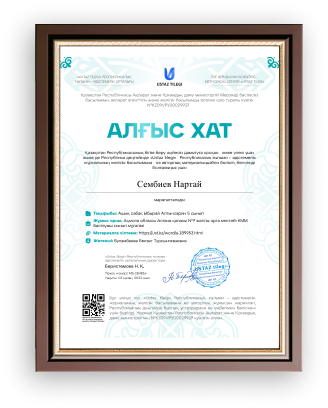


 Бұл курс Қазақстан Республикасы Оқу-ағарту министрлігімен келісілген


