
 ЖИ көмекші


 Қауіпсіз төлем

жүктеу мүмкіндігіне ие боласыз
Бұл материал сайт қолданушысы жариялаған. Материалдың ішінде жазылған барлық ақпаратқа жауапкершілікті жариялаған қолданушы жауап береді. Ұстаз тілегі тек ақпаратты таратуға қолдау көрсетеді. Егер материал сіздің авторлық құқығыңызды бұзған болса немесе басқа да себептермен сайттан өшіру керек деп ойласаңыз осында жазыңыз
 29 Наурыз 2026
 20
20
1 жыл бойы шексіз жүктеңіз
кмж
|
Unit 6 The world of professions |
lesson 39 |
||
|
School: |
|
||
|
Teachername: |
|
||
|
Date: |
|
||
|
Grade: 5 |
Number present: |
absent: |
|
|
Lesson title |
A day at school |
||
|
Learning objectives |
5. 2. 1.1 Understand with support the sequence of instructions in class 1; 5. 3. 3. 1express an opinion in a sentence within the framework of a number of general and educational topics; 5. 4. 6. 1 identify the author's opinion or point of view in short texts on some general and educational topics; |
||
|
Lesson objectives (assessment criteria) |
Learners will be able to: - Learn and practise verbs talking about school subjects. - Understand an article about school. - the value based on the integrated educational program is to educate students for unity and solidarity |
||
|
Stages/ Time |
Teachers actions |
Students actions |
Assessment |
Resources |
|
Beginning 5 min |
Greeting. (Whole class, Individually) T tells the class to make groups of 2. Warm up: Books closed. Write three true or false sentences on the board about the school. For example: Classes always start at 9 a.m. We never have English class on Wednesday. We sometimes watch films in class. In pairs, students decide if the sentences are true or false. If they are false, ask them to correct them. Setting the aim of the lesson.
|
Learners read the given sentences on the board and guess the topic and share with their ideas. Remember and recognize the main vocabulary. |
Teacher controles the process, gives feedback and asks additional questions if it’s nessasery. Teacher evaluate pupils with phrases like: “Good job! Well done!” Formative Assessment
|
Sheets of peppers Pictures of to be
|
|
Middle 35 min |
Task. I (Wh, I) (pair dicsussion) Ex: 1 P: 70 Refer students to page 82 of the Workbook and ask them to look through the school subjects. Check for understanding, and ask students to translate the subjects into their own language |
Learners look at the school subjects and discuss. ANSWERS: Students own answers
|
Pair assessment
Descriptor: -look at the school subjects and discuss. Total: 2 point |
Student’s book |
|
|
Task. II (Wh, I) (Task for location) Ex: 2 P: 70 Draw students’ attention to the photo and ask them what they can see. Elicit that there are students in a classroom, and that one of the students looks older. • Explain the task. Focus students on the text and play the recording. |
Learners read and listen to the text. Which subjects are difficult for Paul. ANSWERS: ICT and French are difficult for Paul. |
Descriptor: -read and listen to the text. - answer the question. Total: 2 point |
Student’s book |
|
|
Task. III (Task for understanding) Ex: 3 P: 70 • Refer students to the sentences 1–5. • Explain the task. In a weaker class, ask students to underline the parts of the text that helped them find their answers. • Students check answers in pairs. Check answers as a class. Ask fast finishers to correct the false sentences. |
Learners read the text again and write true or false for each sentense ANSWERS: 1 False: Paul is Matt’s father. 2 False: Mrs Murphy teaches maths. 3 True 4 True 5 False: The French teacher doesn’t speak English in class. |
Teacher’s comment Descriptor: - read the text again - write true or false Total: 2 point |
|
|
|
Task. IV Ex: 4 P: 70 Read the questions with the class and check for understanding. You might want to revise school subjects by eliciting from the class all the names of the subjects that they know in English and writing them on the board. This will allow you to fill in any gaps for school subjects that the students might want to talk about, but don’t know the English word for Build trusting relationships and enjoy working in a team being able to maintain the situation If you’d like your organization to succeed, you must foster mutual trust between all team members. |
Learners ask and answer the questions ANSWERS : Students’ own answers
|
Descriptor: -read the questions - ask and answer Total: 2 point |
|
|
End 5 min |
FEEDBACK Learners provide feedback on what they have learned at the lesson. Ex: Home task: |
What worked well for you in today’s class? What could we have done differently to make today’s class better for you? What are you wondering about after today’s lesson? What did you find difficult about today’s lesson? |
Poster Success Ladder |
|
|
Additional information |
|
|||



|
Unit 4 Charities and conflict |
Lesson38 |
||
|
School |
|
||
|
Teachername: |
|
||
|
Date: |
|
||
|
Grade: 9 |
Numberpresent: |
absent: |
|
|
Lessontitle |
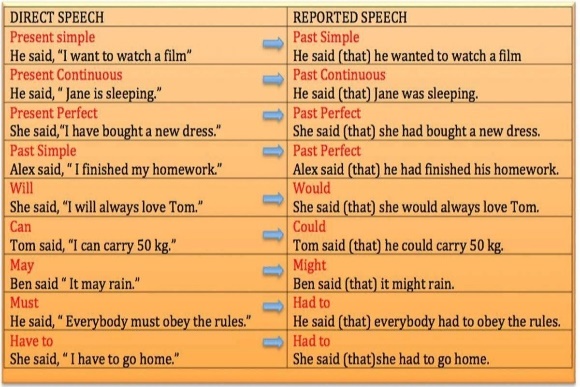
Reported speech: tense changes |
||
|
Learningobjectives |
9. 3. 6. 1 in pair, group and whole class work to explain what others said in sentences or reasoning with a certain level of flexibility; 9. 5. 3. 1 write familiar general and study topics with uniform grammatical competence; 9.6.9.1 use appropriately an increased variety of active and passive simple present and past forms and past perfect simple forms in narrative and reported speech on a range of familiar general and curricular topics; |
||
|
Lesson objectives |
Learners will be able to: - Learn about tense changes in reported speech. -Practise transforming direct speech to reported speech. - the value based on the integrated educational program is to educate students for unity and solidarity |
||
|
Plan |
|||
|
Stages / Time |
Teachers’ actions |
Students’ actions |
Assessment criteria |
Resources |
|
Beginning of the lesson Warming-up 3 min |
1.Greeting. Ask about the weather. Warm-up With books closed, ask students to think again about the text about a charity. Ask students how some of the injured soldier mentioned in the text felt about the games Lead – In
|
The wish flower” method helps to start the lesson with good wishes to each other. The aim:To develop Ss speaking skills and create friendly atmosphere Efficiency:By telling the wishes they show their appreciations .
Students express their ideas |
At the organization moment T tries to award active Ss. «The praise» method is used to evaluate Ss with phrases like: “Good job! Well done!”
Goodjob! |
Pictures
|
|
Middle of the lesson Presentation part. 37 min |
Ex:1 P:47 Write on the board: Many soldiers said they couldn’t find the motivation to take part in everyday activities. Refer students to paragraph 1 of the text on page 46 Ex: 2 P:47 Focus on the example and remind students that pronouns also often change in reported speech. In a weaker class, get volunteers to stand up and be the characters (Jane, Pete, Pete’s friend and Liz) and the reporter. Have the reporter stand to one side of the group. Elicit how they would describe each other, e.g. Pete says Differentiation: «Verbal support» method is used to help Students use new words in the text. Ex: 3 P:47 • In a weaker class, ask students to underline the words that will change, and talk them through if necessary. In a stronger class, refer students back to the rules, and encourage them to rewrite the sentences |
Studentsstudy sentences. Find these sentences in reported speech in the text. How do the verbs change? Choose the correct words in the rules. ANSWERS: Rules: 1 past simple 2 past perfect 3 past perfect 4 had to Students read the dialogue and complete the summary with the correct pronouns. ANSWERS: 1 his 2 he 3 him 4 her 5 she 6 him 7 they 8 him Students rewrite the sentences using reported speech. ANSWERS: 1 The man said that he didn’t feel guilty. 2 My brother said that I was making a big mistake. 3 Phil’s father said that Phil had to stay at home. 4 John said that he would keep quiet about the crime. 5 The children said that their teacher could be quite strict. 6 The teacher said that some students hadn’t done much revision. 7 His friends said that they had already seen that film. |
Descriptor: - Find reported speech in the text. -choose the correct words -Make CCQ questions Yes / No Descriptor: - read the dialogue - complete the summary Point 2 Descriptor: - rewrite the sentences - use reported speech. Point 2 |
Cards Student’s book Worksheets Student’s book |
|
End of the lesson 5 min |
Giving the hometask. Ex: 1 P:31 wb Self-reflection
|
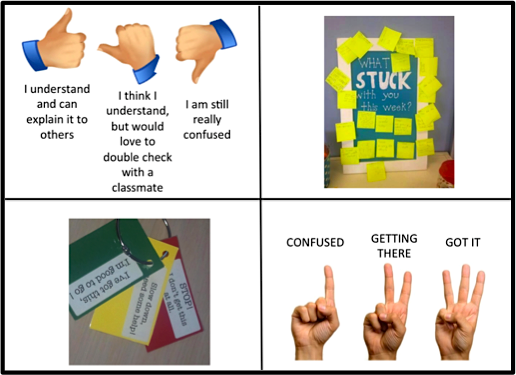
Peer-assessment. Two stars and a wish.
Maybe you could ... |
Students use their stickers to show their knowledge according to the lesson. |
Poster Success |
|
Unit 4 SPACE & EARTH |
Lesson 37 |
||
|
Teacher name: |
|
||
|
Date: |
|
||
|
Grade: 7 |
Number present: |
absent: |
|
|
Lesson title |
Reading: Monuments in danger |
||
|
Learning objectives |
7.1.1.10 use talk or writing as a means of reflecting on and exploring a range of perspectives on the world 7.4.1.1 understand the main points in texts on a limited range of unfamiliar general and curricular topics 7.3.3.1 give an opinion at discourse level on a growing range of general and curricular topics |
||
|
Lesson objectives |
Learners will be able to: - identify the intended audience - give a short response showing their opinion, agreement or disagreement -the value based on the integrated educational program is to educate students for justice and responsibility |
||
|
Plan |
|||
|
Stages / Time |
Teachers actions |
Students actions |
Assessment criteria |
Resources |
|
Beginning of the lesson Warming-up
3 min Pre-learning «Brainstorming» method 7 min. |
Organization moment : 1.Greeting. Ask about the weather. The teacher sets the lesson objectives, letting students know what to anticipate from the lesson. Warming up Where are you from? How old are you? What color is it? How many students are there in class? What day of the week today? Revise the vocabulary of the previous lesson Lead – In
|
The aim: To develop pupils speaking skills and create friendly atmosphere Efficiency: By wishing each other they feel better and feel the support of others Students of the class are listed. Students' attention is drawn to the lesson. Determines the topic and purpose of the lesson Students say different words from the picture How old are these Stonehenge? Where are their places? |
The teacher to assess learners for their ability. “Good job! Well done!” Formative Assessment
Good job! Assessment criteria - Learners have met the learning objectives if they can: explore other subject areas (Geography) talk about places around the world. |
Pictures worksheet Student’s book |
|
Middle of the lesson Presentation part. 30 min |
Ex:1 P:42 a) Introduce the topic and elicit prior knowledge Elicit any monuments Ss know of from their own country that are threatened by pollution. b) Direct Ss' attention to the pictures and elicit questions about the places from Ss around the class and write three on the board. Play the recording. Ss listen and follow the text in their books and check if they can answer the questions Ex: 2 P: 42 • Read for specific information Allow Ss some time to read the texts and answer the questions. Go through the Check these words box with Ss and tell them to look up the meanings of any words they don't know. Check Ss' answers Ex: 3 P: 42 • Consolidate and expand on information in a text Allow Ss time to read the text again and prepare their answers. Elicit answers to the questions from various Ss around the class. Justice and Responsibility For the preservation and prosperity of the state feel responsible The Republic of Kazakhstan is a unitary state with the presidential system of government. Under the Constitution, Kazakhstan is a democratic, secular, legal and social state which recognizes the man, his life, rights and freedoms as the supreme values of the country. |
Pupils answer the question ANSWERS Students own answer Pupils look at the pictures in the text. Write three questions about these places ANSWERS old are these placesStonehenge5,000 years old Temples early 12th century many people visit them each year? Stonehenge800,000the Temples600,000 are they in danger Stonehenge visitors traffic pollution temples the weather vegetation and tourists Pupils read the text and answer the question ANSWERS 1 5,000 years old 2 Possibly as a place for sun worship - we don't know. 3 Visitors have damaged it and the stones are threatened because of traffic pollution. 4 Wet, humid weather, vegetation and tourists are damaging the temples. 5 Yes, they are because 600,000 tourists come to see them every year. 6 Conservationists Pupils answer the question ANSWERS 1 I didn't know how old the two places are and what is causing the damage to these places. 2 I would like to visit the temples of Angkor Wat. They look very interesting and there is a lot to see./I would like to visit Stonehenge. It looks very beautiful and mysterious |
Descriptor: - answer the question Total: 2 point Self assessment Descriptor: - look at the pictures - write three questions Total: 3 point Descriptor: - Pupils read the text - answer the question Total: 3 point Descriptor: - answer the question -Make CCQ questions Yes / No Total: 10 point |
Card Worksheet Students book |
|
End of the lesson 5 min |
FEEDBACK Learners provide feedback on what they have learned at the lesson. Ex: Home task: |
What worked well for you in today’s class? What could we have done differently to make today’s class better for you? What are you wondering about after today’s lesson? What did you find difficult about today’s lesson? |
Poster Success
|
|




|
Unit 4 Sport, health and exercise |
Lesson 39 |
||
|
School |
|
||
|
Teacher name: |
|
||
|
Date: |
|
||
|
Grade: 8 |
Number present: |
absent: |
|
|
Lesson title |
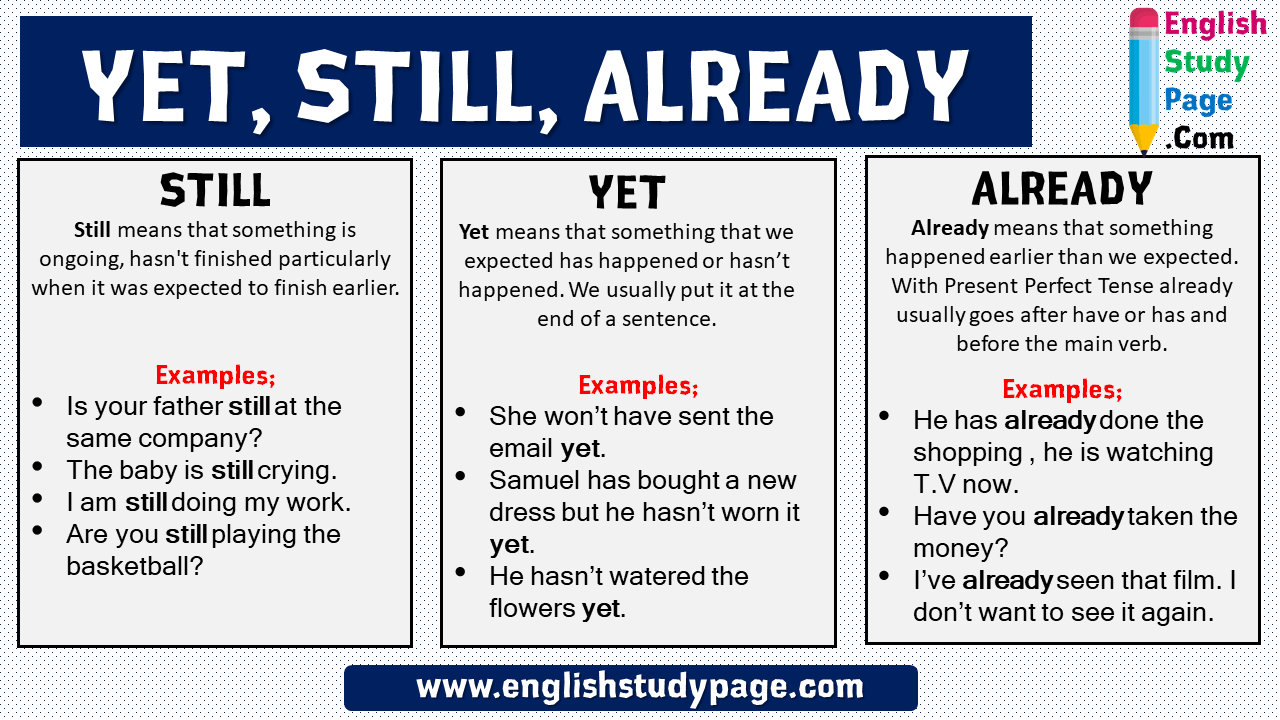
Language focus: Present perfect + still, yet, just and already Language focus: Present perfect and past simple |
||
|
Learning objectives |
8. 2. 2. 1 understand some specific information on a wide range of general and academic topics in an extended conversation with little support from the teacher or independently; 8. 3. 5. 1 communicate with classmates to plan and create priorities, partner, discuss, and agree on educational tasks; 8. 5. 3. 1 write various familiar general and academic topics with uniform grammatical competence; |
||
|
Lesson objectives |
Learners will be able to: - identify the central idea, the intended audience and the author’s purpose - formulate a simple summary or character outline - identify specific information in a variety of situations and contexts - the value based on the integrated educational program is to educate students for unity and solidarity |
||
|
Plan |
|||
|
Stages / Time |
Teachers actions |
Students actions |
Assessment criteria |
Resources |
|
Beginning of the lesson Warming-up
3 min Pre-learning «Brainstorming» method 7 min. |
Organization moment : 1.Greeting. Ask about the weather. The teacher sets the lesson objectives, letting students know what to anticipate from the lesson. Warm - up With books closed, revise the content of the Instant fame text. Ask: Was Craig outside the building at 9 a.m.? (Yes, he was.) Was Craig inside the building at 11 a.m.? (No, he wasn’t.) Has Craig auditioned for talent shows before? (Yes, he has.) Has he ever been successful in getting on them? (No, he hasn’t.) Discuss ideas and find out how much students have remembered correctly about the text. Write some of the words from the previous lesson Lead – In
|
Learners read the given sentences on the board and guess the topic and share with their ideas. Students' attention is drawn to the lesson. Learners talk about rooms previous lesson vocabulary Determines the topic and purpose of the lesson Students say different words from the picture |
Teacher controles the process, gives feedback and asks additional questions if it’s nessasery. Teacher evaluate pupils with phrases like: “Good job! Well done!” Formative Assessment
Good job! |
Pictures worksheet Student’s book |
|
Middle of the lesson Presentation part. 30 min |
Ex:1 P:47 In pairs, students complete the sentences then match them with explanations a or b. Students check their answers in the text. Ex:2 P: 47 Students read through the rules and complete them with reference to the sentences in exercise 1. In a weaker class, ask students to do this in pairs. Ex: 3 P: 47 • Tell students to use the rules and the examples in exercise 1 to help them order the words. Ex: 4 P: 47 Read the example with the class and explain that students should use their own ideas to answer each question. In a stronger class, students write their answers individually. In a weaker class, ask them to write in pairs. • Ask all students to compare their answers in pairs and correct any mistakes. Tell them to pay particular attention to the meaning and position of still, yet, just and already Ex: 5 P: 47 Allow students time to read the words in the box and the prompts. Pause the CD after each dialogue for students to write their sentences individually. Ask students to prepare questions and answers, then compare their answers in pairs and help their partner correct any mistakes. Students then practise asking and answering their questions with their partner while you monitor the accuracy |
Pupils complete the sentences from the text. Then match sentences with a or b ANSWERS 1 just, b 2 still, a 3 already, b 4 yet, a Pupils complete the rules with still, just, yet and already. ANSWERS 2 just, already 3 yet Pupils order the words to make sentences. ANSWERS 1 They still haven’t made the video. 2 We have already seen the talent show. 3 They’ve already had two hits. 4 She has just won a talent show. 5 Have you signed a contract yet? 6 I’ve just seen a really good film. 7 The actor still hasn’t found a job. Pupils write answers for the questions with still, yet, just and already ANSWERS Students’ own answers. Pupils listen to six dialogues and write sentences with the verbs in the box. Use still, yet, just and already ANSWERS 1 Tom still hasn’t made dinner. 2 Simon has just arrived at school. 3 Polly hasn’t written her essay yet. 4 Jonny still hasn’t finished the test. 5 Jane has already seen the film. 6 Joe hasn’t got a job yet. Students’ own answers. |
Descriptor: - complete the sentences from the text - match sentences with a or b Total: 2 point Descriptor: - complete the rules with still, just, yet and already. Total: 2 point Descriptor: - order the words to make sentences Total: 2 point Descriptor: - write answers for the questions with still, yet, just and already Total: 2 point -Make CCQ questions Yes / No Total: 10 point Descriptor: - listen to six dialogues - use still, yet, just and already Total: 2 point |
Card Worksheet Students book |
|
End of the lesson 5 min |
Ss use their stickers to show their knowledge according to the lesson Green- I understood Yellow-I have some questions Red-I need a help. Home task: |
Ss evaluate each other and encourage classmate with phrases like: Well done! Brilliant! Good job! I like it! |
Poster Success
|
|










 Бұл курс Қазақстан Республикасы Оқу-ағарту министрлігімен келісілген










