Short term plan: term 3
|
Unit of a long term plan: Our health |
Lesson 53 |
||
|
Teacher name: Рахым Ш. |
|
||
|
Date: 23.01.2025 |
|
||
|
Grade: 6 Б |
Number present: |
absent: |
|
|
Lesson title |
Language Focus. Countable and uncountable nouns. |
||
|
Learning objectives |
6.1.1.1 use speaking and listening skills to solve problems creatively and cooperatively in groups 6.6.2.1 use quantifiers many, much, a lot of ,a few on a limited range of familiar general and curricular topics 6.3.2.1 ask simple questions to get information about a limited range of general topics |
||
|
Lesson objectives |
Learners will be able to: • Learn about countable and uncountable nouns. • Learn the difference between a / an, the, some, any, much, many and a lot of. • Write about what you usually eat and drink. |
||
|
Value links |
Generosity – This may be a core value of yours if you cherish people who will give their time and resources to people in need. You may consider yourself to be a generous person if you find joy and meaning in giving to others. |
||
|
Plan |
|||
|
Stages / Time |
Teachers actions |
Students actions |
Assessment criteria |
Resources |
|
Beginning of the lesson 5 min |
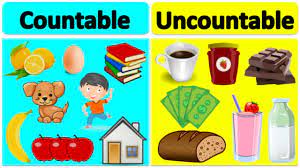
Organization moment 1.Greeting. Ask about the weather. Warm-up • Ask students what kinds of foods they like. Elicit some words and write them on the board, for example: bread, chips, vegetables, fish, meat. • Point out that some words are in the singular and some are plural. Elicit that some are countable nouns and some are uncountable Lead - In
It's important to distinguish between countable and uncountable nouns in English because their usage is different in regards to both determiners and verbs. |
The wish flower” method helps to start the lesson with good wishes to each other. The aim: To develop Ss speaking skills and create friendly atmosphere Efficiency: By telling the wishes they show their appreciations . Describe and imagine the pictures Students say different words from the picture |
At the organization moment T tries to award active Ss. «The praise» method is used to evaluate Ss with phrases like: “Good job! Well done!” Formative Assessment Good job! |
CD 1 Pictures PPT |
|
Middle of the lesson Presentation part. 35 min |
Ex: 1 P: 61 • Read the rules with the class, and allow students time to read through the text quietly. • Students work individually to match the words from the text to the rules, then compare their answers in pairs. Differentiation: «Verbal support» method is used to help Students use new words in the text. Ex: 2 P: 61 • Students now put the rules into practice by completing the text. • In a weaker class, allow students to do this in pairs. • Check answers with the class. Encourage students to explain their choices, making reference to the rules. Ex: 3 P: 61 • Refer students to the pictures and elicit that they are made of different foods. Identify some of the foods as a class before they start. • Students complete the table. In a stronger class, ask if students can think of more food for each category |
Students study the rules and match the words in blue. ANSWERS: a shop rule 1 a sandwich rule 2 the school cafeteria rule 3 the shop rule 4 Students complete the text with a / an and the ANSWERS: 1 a 2 the 3 a 4 a 5 a 6 a 7 the 8 the Students look at the pictures and complete the table with the words in the box. ANSWERS: 1 rice 2 cheese 3 water 4 vegetables 5 pears 6 crisps |
Assessment criteria - Learn about countable and uncountable nouns. Descriptor: - study the rules and match the words in blue. Peer assessment: answer key Assessment criteria: - Write about what you usually eat and drink. Descriptor: - look at the pictures and complete the table with the words in the box. -Make CCQ questions Yes / No |
Cards Student’s book Workshets |
|
End of the lesson 5 min |
Home task: Ex: 2 P: 43 WB |
|
Poster Success
|
|


жүктеу мүмкіндігіне ие боласыз
Бұл материал сайт қолданушысы жариялаған. Материалдың ішінде жазылған барлық ақпаратқа жауапкершілікті жариялаған қолданушы жауап береді. Ұстаз тілегі тек ақпаратты таратуға қолдау көрсетеді. Егер материал сіздің авторлық құқығыңызды бұзған болса немесе басқа да себептермен сайттан өшіру керек деп ойласаңыз осында жазыңыз
Language Focus. Countable and uncountable nouns.
Short term plan: term 3
|
Unit of a long term plan: Our health |
Lesson 53 |
||
|
Teacher name: Рахым Ш. |
|
||
|
Date: 23.01.2025 |
|
||
|
Grade: 6 Б |
Number present: |
absent: |
|
|
Lesson title |
Language Focus. Countable and uncountable nouns. |
||
|
Learning objectives |
6.1.1.1 use speaking and listening skills to solve problems creatively and cooperatively in groups 6.6.2.1 use quantifiers many, much, a lot of ,a few on a limited range of familiar general and curricular topics 6.3.2.1 ask simple questions to get information about a limited range of general topics |
||
|
Lesson objectives |
Learners will be able to: • Learn about countable and uncountable nouns. • Learn the difference between a / an, the, some, any, much, many and a lot of. • Write about what you usually eat and drink. |
||
|
Value links |
Generosity – This may be a core value of yours if you cherish people who will give their time and resources to people in need. You may consider yourself to be a generous person if you find joy and meaning in giving to others. |
||
|
Plan |
|||
|
Stages / Time |
Teachers actions |
Students actions |
Assessment criteria |
Resources |
|
Beginning of the lesson 5 min |
Organization moment 1.Greeting. Ask about the weather. Warm-up • Ask students what kinds of foods they like. Elicit some words and write them on the board, for example: bread, chips, vegetables, fish, meat. • Point out that some words are in the singular and some are plural. Elicit that some are countable nouns and some are uncountable Lead - In
It's important to distinguish between countable and uncountable nouns in English because their usage is different in regards to both determiners and verbs. |
The wish flower” method helps to start the lesson with good wishes to each other. The aim: To develop Ss speaking skills and create friendly atmosphere Efficiency: By telling the wishes they show their appreciations . Describe and imagine the pictures Students say different words from the picture |
At the organization moment T tries to award active Ss. «The praise» method is used to evaluate Ss with phrases like: “Good job! Well done!” Formative Assessment Good job! |
CD 1 Pictures PPT |
|
Middle of the lesson Presentation part. 35 min |
Ex: 1 P: 61 • Read the rules with the class, and allow students time to read through the text quietly. • Students work individually to match the words from the text to the rules, then compare their answers in pairs. Differentiation: «Verbal support» method is used to help Students use new words in the text. Ex: 2 P: 61 • Students now put the rules into practice by completing the text. • In a weaker class, allow students to do this in pairs. • Check answers with the class. Encourage students to explain their choices, making reference to the rules. Ex: 3 P: 61 • Refer students to the pictures and elicit that they are made of different foods. Identify some of the foods as a class before they start. • Students complete the table. In a stronger class, ask if students can think of more food for each category |
Students study the rules and match the words in blue. ANSWERS: a shop rule 1 a sandwich rule 2 the school cafeteria rule 3 the shop rule 4 Students complete the text with a / an and the ANSWERS: 1 a 2 the 3 a 4 a 5 a 6 a 7 the 8 the Students look at the pictures and complete the table with the words in the box. ANSWERS: 1 rice 2 cheese 3 water 4 vegetables 5 pears 6 crisps |
Assessment criteria - Learn about countable and uncountable nouns. Descriptor: - study the rules and match the words in blue. Peer assessment: answer key Assessment criteria: - Write about what you usually eat and drink. Descriptor: - look at the pictures and complete the table with the words in the box. -Make CCQ questions Yes / No |
Cards Student’s book Workshets |
|
End of the lesson 5 min |
Home task: Ex: 2 P: 43 WB |
|
Poster Success
|
|


шағым қалдыра аласыз