
 ЖИ көмекші

 Көп таңдалатын


 Ең тиімді
15 890₸ үнемдейсіз


жүктеу мүмкіндігіне ие боласыз
Бұл материал сайт қолданушысы жариялаған. Материалдың ішінде жазылған барлық ақпаратқа жауапкершілікті жариялаған қолданушы жауап береді. Ұстаз тілегі тек ақпаратты таратуға қолдау көрсетеді. Егер материал сіздің авторлық құқығыңызды бұзған болса немесе басқа да себептермен сайттан өшіру керек деп ойласаңыз осында жазыңыз
 27 Қырқүйек 2023
 643
643
Lesson plan 5 grade Homes 1
Lesson plan 2
|
Date 05.09.2023 |
|
||
|
Grade 5 |
Number present: |
absent: |
|
|
Theme of the lesson: |
Homes 1 |
||
|
Learning objectives that this lesson is contributing to: |
5.S1 provide basic information about themselves and others at sentence level on an increasing range of general topics 5.S6 communicate meaning clearly at sentence level during, pair, group and whole class exchanges 5.UE11 use be/look/smell like and use be made of on a limited range of familiar general and curricular topics |
||
|
Lesson objectives |
All learners will be able to:
Most learners will be able to:
Some learners will be able to:
Explain their choice using examples and details to support the answers. |
||
|
Plan |
|||
|
Planned activities/ Planned timings |
Teacher activities |
Pupils activities |
Assessment |
|
Starter 10 min |
Show learners a picture. Ask learners to guess the topic of the lesson ( Homes) Introduce lesson objectives. PPT (slide 1)
Hang up three different pictures (example - one of a flat, one of a skyscraper, one of a cottage) in the three corners of the classroom. Tell students to choose one corner to stand in, and talk about why they chose that poster. |
In pairs, learners discuss the following questions:
PPT (slide 2) Elicit learners to explain their choice. |
|
|
Middle 10 min 15 min 5 min |
Speaking. Draw a house on the board. Teacher shows pair pictures of different houses on the active board. Ask learners to describe the houses and compare them. Encourage learners to use conjunctions ‘and’, ‘but’ to describe similarities and differences. PPT (slide 3) If necessary teacher can support less able learners by giving them a word bank. (differentiation by teacher support) Word bank (worksheet 1)
Writing. Teacher asks pre-writing questions: (W)
(wood, metal, glass, stone, brick, felt, twigs) Word bank (worksheet 1) Ask learners about yurts.
Tell learners: what yurts are made of; their shape; the different types; and show pictures. (Teacher provides learners with some words related to yurts: room with a fireplace, hole in the roof, warm in winter and cool in summer.)
|
Brainstorm words learners know about houses. How many words do learners know? (rooms, garden, garage) (W, I) Ex: The first house has two floors and the second one. The first house is big but the second is small. The first house has four windows but the second has three. (f) PPT (slide 4)
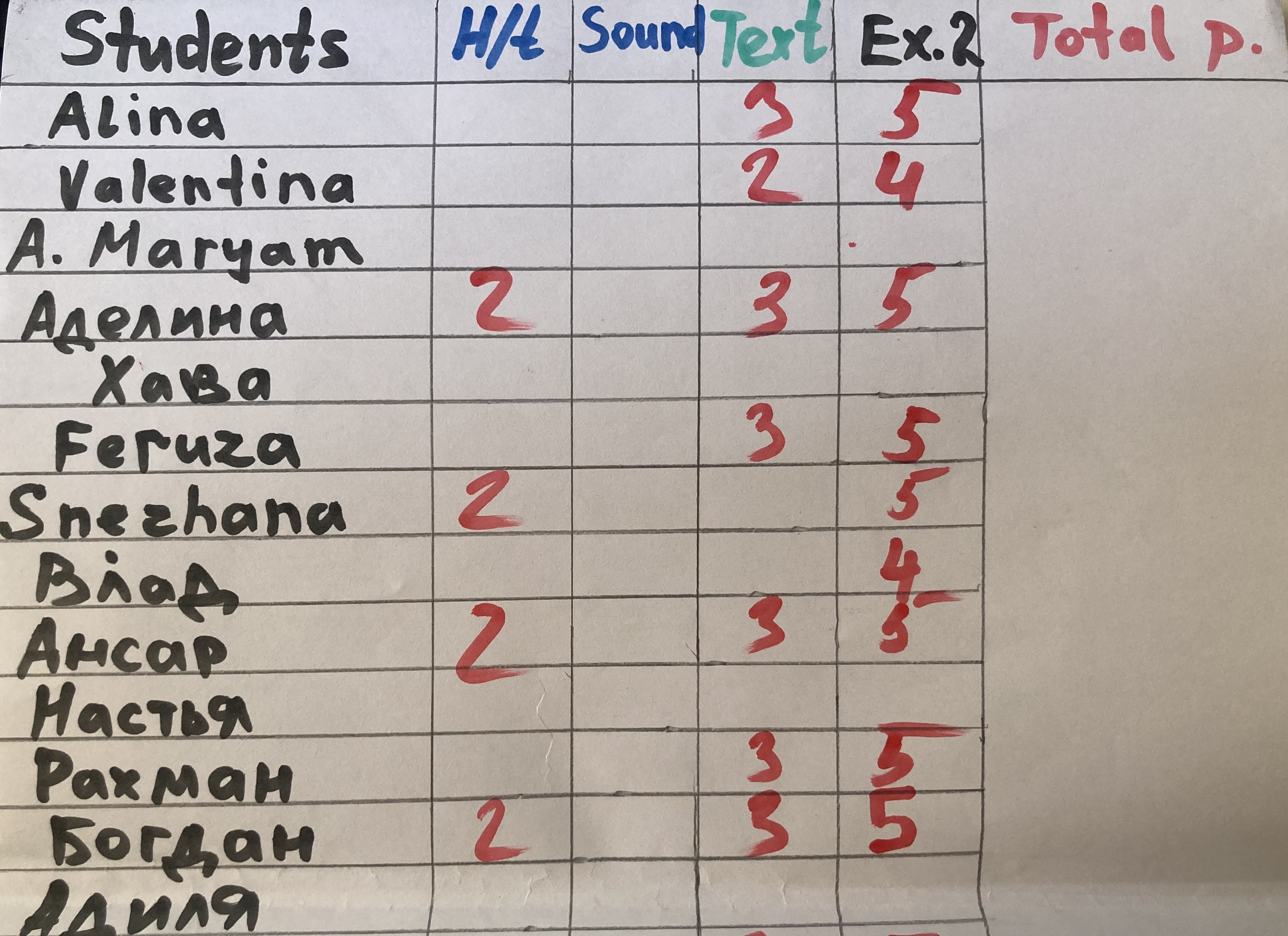
(Peer assessment) Learners assess each other following the descriptors:
Demonstrate two pictures of a yurt and a house. Elicit learners point to and say the materials. Then ask to speak about differences of shape and material. Ex: The yurt is a circle shape but the house is a square shape. The yurt has felt walls but the new house has stone walls. Provide with new phrases on the board: It is made of / It looks/ It / It smells (e.g. Yurt is made of wood. It looks comfortable. It smells wool.) Learners in pairs complete a chart to show differences between two types of homes. They compare charts with another pair. (peer assessment) Encourage learners to share ideas and collaborate. One can write notes on the left side of the chart (yurt) one on the right side (new homes) (in the copybooks) More-able learners, write a sentence about which home they prefer or like and why. (differentiation by task) Ex: I like the yurt because it looks warm. |
5 points 3 points 2 points |
|
Plenary\ Reflection 5 min |
Method “Traffic lights” Ask learners what the most interesting/ difficult part of the lesson was. Name two words you practiced today. |
|
|








 Бұл курс Қазақстан Республикасы Оқу-ағарту министрлігімен келісілген










