Short term plan: term 2
|
Unit: 3 Virtual reality |
Lesson 25 |
||
|
School |
|
||
|
Teacher name: |
|
||
|
Date: |
|
||
|
Grade: 10 |
Number present: |
absent: |
|
|
Lesson title |
Virtual reality; Application of virtual reality |
||
|
Learning objectives |
10.2.1.1 - understand the main points in unsupported extended talk on a wide range of general and curricular topics, including talk on a limited range of unfamiliar topics; 10.3.7.1 - use appropriate subject-specific vocabulary and syntax to talk about a range of general and curricular topics; 10.4.2.1 - understand specific information and detail in extended texts on a range of familiar general and curricular topics, and some unfamiliar topics; |
||
|
Lesson objectives |
Learners will be able to: - introduce the topic of virtual reality - practise vocabulary relating to applications of virtual reality |
||
|
Value links |
The value based on the integrated educational program is to educate students for justice and responsibility One of the most effective ways to help students take responsibility for their learning is through goal setting |
||
|
Plan |
|||
|
Stages / Time |
Teachers actions |
Students actions |
Assessment criteria |
Resources |
|
Beginning of the lesson Warming-up 5 min. Middle of the lesson Presentation part. 35 min |
Organization moment : 1.Greeting. Ask about the weather. The teacher sets the lesson objectives, letting students know what to anticipate from the lesson. Warm-Up Students talk about different things. Lead – In
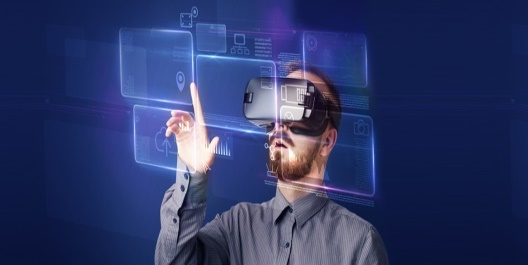
What do you imagine about VR? Ex:1 P:35 • Read the definition aloud and explain/elicit the meanings of any unknown words. Then ask what Ss know about VR and what we use it for. Ask Ss to discuss in pairs and then ask some Ss to share their answers with the class. |
Students of the class are listed. Students' attention is drawn to the lesson. Students say different words from the picture •Learners remember previous lesson vocabulary •Learners answer the questions Learners read the following definition. Answer the question. ANSWERS VR uses computer technology to create realistic images and sounds that allows someone through a headset to feel like they are in a virtual or imaginary environment. We use VR for entertainment, healthcare, art and education purposes. |
The teacher to assess learners for their ability. “Good job! Well done!” Formative Assessment Descriptor: - remembers the lesson passed Point 1 Descriptor: - read the following definition -answer the question Total: 3 point |
|
|
|
Ex: 2 P: 35 Ask Ss to work in pairs or small groups and match the pictures to the applications. Elicit answers from around the class. Conclusion during the lesson some tasks differentiated by outcomes of the students and by their abilities. |
Learners match the applications of VR to the pictures. ANSWERS 1 B 2 F 3 E 4 A 5 C 6 D |
Descriptor: - match the applications of VR to the pictures. Total: 3 point -Make CCQ questions Yes / No |
|
|
End of the lesson 5 min |
FEEDBACK Learners provide feedback on what they have learned at the lesson. Ex: P: Home task: Write the days |
What worked well for you in today’s class? What could we have done differently to make today’s class better for you? What are you wondering about after today’s lesson? What did you find difficult about today’s lesson? |
Poster Success
|
|
жүктеу мүмкіндігіне ие боласыз
Бұл материал сайт қолданушысы жариялаған. Материалдың ішінде жазылған барлық ақпаратқа жауапкершілікті жариялаған қолданушы жауап береді. Ұстаз тілегі тек ақпаратты таратуға қолдау көрсетеді. Егер материал сіздің авторлық құқығыңызды бұзған болса немесе басқа да себептермен сайттан өшіру керек деп ойласаңыз осында жазыңыз
lesson plan for 10 grade "Virtual reality; Application of virtual reality"
Short term plan: term 2
|
Unit: 3 Virtual reality |
Lesson 25 |
||
|
School |
|
||
|
Teacher name: |
|
||
|
Date: |
|
||
|
Grade: 10 |
Number present: |
absent: |
|
|
Lesson title |
Virtual reality; Application of virtual reality |
||
|
Learning objectives |
10.2.1.1 - understand the main points in unsupported extended talk on a wide range of general and curricular topics, including talk on a limited range of unfamiliar topics; 10.3.7.1 - use appropriate subject-specific vocabulary and syntax to talk about a range of general and curricular topics; 10.4.2.1 - understand specific information and detail in extended texts on a range of familiar general and curricular topics, and some unfamiliar topics; |
||
|
Lesson objectives |
Learners will be able to: - introduce the topic of virtual reality - practise vocabulary relating to applications of virtual reality |
||
|
Value links |
The value based on the integrated educational program is to educate students for justice and responsibility One of the most effective ways to help students take responsibility for their learning is through goal setting |
||
|
Plan |
|||
|
Stages / Time |
Teachers actions |
Students actions |
Assessment criteria |
Resources |
|
Beginning of the lesson Warming-up 5 min. Middle of the lesson Presentation part. 35 min |
Organization moment : 1.Greeting. Ask about the weather. The teacher sets the lesson objectives, letting students know what to anticipate from the lesson. Warm-Up Students talk about different things. Lead – In
What do you imagine about VR? Ex:1 P:35 • Read the definition aloud and explain/elicit the meanings of any unknown words. Then ask what Ss know about VR and what we use it for. Ask Ss to discuss in pairs and then ask some Ss to share their answers with the class. |
Students of the class are listed. Students' attention is drawn to the lesson. Students say different words from the picture •Learners remember previous lesson vocabulary •Learners answer the questions Learners read the following definition. Answer the question. ANSWERS VR uses computer technology to create realistic images and sounds that allows someone through a headset to feel like they are in a virtual or imaginary environment. We use VR for entertainment, healthcare, art and education purposes. |
The teacher to assess learners for their ability. “Good job! Well done!” Formative Assessment Descriptor: - remembers the lesson passed Point 1 Descriptor: - read the following definition -answer the question Total: 3 point |
|
|
|
Ex: 2 P: 35 Ask Ss to work in pairs or small groups and match the pictures to the applications. Elicit answers from around the class. Conclusion during the lesson some tasks differentiated by outcomes of the students and by their abilities. |
Learners match the applications of VR to the pictures. ANSWERS 1 B 2 F 3 E 4 A 5 C 6 D |
Descriptor: - match the applications of VR to the pictures. Total: 3 point -Make CCQ questions Yes / No |
|
|
End of the lesson 5 min |
FEEDBACK Learners provide feedback on what they have learned at the lesson. Ex: P: Home task: Write the days |
What worked well for you in today’s class? What could we have done differently to make today’s class better for you? What are you wondering about after today’s lesson? What did you find difficult about today’s lesson? |
Poster Success
|
|
шағым қалдыра аласыз