
 ЖИ көмекші


жүктеу мүмкіндігіне ие боласыз
Бұл материал сайт қолданушысы жариялаған. Материалдың ішінде жазылған барлық ақпаратқа жауапкершілікті жариялаған қолданушы жауап береді. Ұстаз тілегі тек ақпаратты таратуға қолдау көрсетеді. Егер материал сіздің авторлық құқығыңызды бұзған болса немесе басқа да себептермен сайттан өшіру керек деп ойласаңыз осында жазыңыз
 15 Қараша 2024
 206
206
My country, national parks 6 grade lesson plan
Short term plan
|
Unit 3 |
|
||
|
School: |
|
||
|
Teacher name: |
|
||
|
Date: |
|
||
|
Grade: 6 |
Number present: |
absent: |
|
|
Lesson title |
My country: National parks. |
||
|
Learning objectives |
6. 3. 2. 1 ask simple questions to get information on general topics 6. 4. 5. 1 identify the main idea from the context within some familiar general and reading topics, including long texts; |
||
|
Lesson objectives (assessment criteria) |
Learners will be able to: - Learn about the flora and fauna in one of Kazakhstan’s national parks - Identify numbers in a text - Learn and revise prepositions of place |
||
|
Value links |
The value based on the integrated educational program is to educate students for justice and responsibility Ability to finish what you started Being able to follow through and finish the things you start is a valuable life skill |
||
|
Stages/ Time |
Teachers actions |
Students actions |
Assessment |
Resources |
|
Beginning 5 min |
Greeting. T tells the class to make groups of 2. Warm up: Ask students if they have visited any of Kazakhstan’s national parks. Ask them the name of the park and what they saw there. Ask students why countries have national parks (to preserve landscapes and the habitats they contain for plants (flora) and animals (fauna)), and if they can think of any benefits (helping maintain species, preserving beautiful areas and important habitats for future generations). Setting the aim of the lesson. What do you know about Karkaraly National Park?
|
Learners read the given sentences on the board and guess the topic and share with their ideas. Remember and recognize the main vocabulary. |
Teacher controles the process, gives feedback and asks additional questions if it’s nessasery. Teacher evaluate pupils with phrases like: “Good job! Well done!” |
|
|
Middle 35 min |
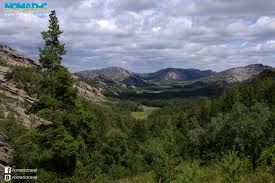
Task. I (Wh, I) (pair dicsussion) Ex: 1|2 P: 40 Focus students’ attention on the text. If you have access to the internet, you can bring up a map of the Park’s location. Ask students what sort of landscape they think the park has (mountains, desert, steppe, etc.). Tell them to read the questions first, then read the text. Students answer the questions individually, before checking in pairs 1 The name of the park is Altyn-Emel. 2 It is in the south-east of Kazakhstan, between the Aktau Mountains and the River Ili. 3 The landscape is dry, there are mountains and sand dunes. 4 You can find fish, 260 species of vertebrates, birds, including four types of eagle, Przewalski’s horses and eagle owls. 5 You can see singing sand dunes and rocks with very old paintings on them. 6 There are imperial eagles, eagle owls, Przewalski’s horse and 11 species on Kazakhstan’s red list and Turanga trees |
Learners look at the photo and describe what can they see? |
Pair assessment Descriptor: - look at the photo Total: 2 point |
Student’s book
|
|
|
Task. II (Wh, I) (Task for location) Ex: 3 P: 40 Students complete the table in pairs. Animals (fauna) 1 fish 3 vertebrates 4 imperial eagles 6 golden eagles 7 eagle owls 8 Przewalski’s horse Plants (flora) 2 willows 3 honeysuckles 5 turanga trees |
Learners put the words in blue from the text in the correct column. |
Descriptor: - put the words in blue - complete the table in pairs Total: 2 point |
|
|
|
Task. III (Task for understanding) Ex: 4 P: 40 With books closed ask students if they can remember any of the numbers in the text. Accept all answers. Focus students’ attention on the questions and tell them to look for the answers in the text. Students work individually, then check their answers in pairs. Go through the answers with the class. Make sure they say the answers correctly, especially 260 (two hundred and sixty). Point out that we only use and after hundreds not thousands, so 2650 is two thousand, six hundred and fifty NOT two thousand and six hundred and fifty 1 4,600km2 2 1,800 3 11 4 500m 5 3,000 6 26 7 13 |
Learners read the text again. Find the numbers in the text. ANSWERS |
Self assessment Descriptor: - read the text again. - find the numbers Total: 2 point |
|
|
|
Task. IV (Task for understanding) Ex: 5 P: 40 Students complete the exercise individually before checking their answer in pairs. Revise prepositions of place using an object such as a ball and items in the classroom, to check students have understood the meanings 1 in 2 between 3 on 4 along, next to 5 above 6 under 7 behind 8 in front of /opposite |
Learners complete the sentences with the correct prepositions. Use your dictionary to help you. |
Descriptor: - complete the sentences - use your dictionary Total: 2 point |
|
|
End 5 min |
FEEDBACK Learners provide feedback on what they have learned at the lesson. Ex: Home task: |
What worked well for you in today’s class? What could we have done differently to make today’s class better for you? What are you wondering about after today’s lesson? What did you find difficult about today’s lesson? |
||

 Жүктеу


 Жүктеу
шағым қалдыра аласыз

 Бұл курс Қазақстан Республикасы Оқу-ағарту министрлігімен келісілген










