
 ЖИ көмекші


жүктеу мүмкіндігіне ие боласыз
Бұл материал сайт қолданушысы жариялаған. Материалдың ішінде жазылған барлық ақпаратқа жауапкершілікті жариялаған қолданушы жауап береді. Ұстаз тілегі тек ақпаратты таратуға қолдау көрсетеді. Егер материал сіздің авторлық құқығыңызды бұзған болса немесе басқа да себептермен сайттан өшіру керек деп ойласаңыз осында жазыңыз
 22 Желтоқсан 2025
 22
22
Open lesson. Endangered Species aroud the World. Grade 7
|
School |
Turar Ryskulov school-luceum |
||||
|
Date |
15.12.2025y |
||||
|
Teacher’s name |
Aziretova A |
||||
|
Grade |
7 “A” |
||||
|
Number present |
11 |
||||
|
Number absent |
|
||||
|
Theme of the lesson |
Across cultures\ Reading & Speaking: Endangered Species around the World. |
||||
|
Learning objectives(s) that this lesson is contributing to |
7.1.10.1 use talk or writing as a means of reflecting on and exploring a range of perspectives on the world 7.4.2.1 understand specific information and detail in texts on a range of familiar general and curricular topics 7.5.1.1 plan, write, edit and proofread work at text level with some support on a range of general and curricular topics |
||||
|
Lesson objectives |
All learners will be able to: Name at least two endangered species mentioned in the text. Most learners will be able to: Read the text and identify the reasons why species are becoming endangered. Some learners will be able to: Discuss the problem of endangered species and propose solutions, as well as collect and present information about a local endangered species. |
||||
|
Language objective |
Pupils will use vocabulary related to endangered species and their habitats (e.g., endangered, habitat, survive, pollution, deforestation) to discuss the topic. |
||||
|
Value links |
Environmental protection, empathy for animals, and global responsibility. |
||||
|
Cross curricular links |
Biology, Geography. |
||||
|
Previous learning |
Vocabulary and grammar from Module 4. |
||||
|
Use of ICT |
Interactive whiteboard, projector, short video about endangered species. |
||||
|
Intercultural awareness |
Learning about endangered species in different countries. |
||||
|
Kazakh culture |
Discussing endangered species in Kazakhstan (e.g., snow leopard, saiga). |
||||
|
Pastoral Care |
Promoting a sense of responsibility and compassion towards the environment and wildlife. |
||||
|
Health and Safety |
General classroom safety rules. |
||||
|
Planned timings |
Teacher’s activities |
Pupil’s activities |
Marks |
Resources |
|
|
Beginning the lesson |
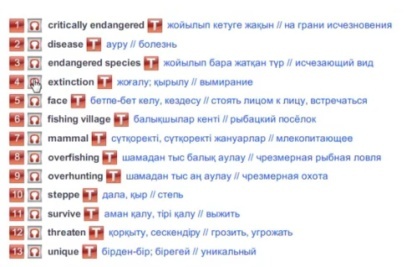
Organization moment: 1.Greeting. Ask about the weather. Divide class into two teams: Methods of : “Clap and Stomp.” Come to the center and take one balloon. Look at the picture on your paper, but don’t say the name of the animal. If you are in the Panda team, clap your hands and sit first group. If you are in the Dolphin team, stomp your feet and sit second group. Let’s repeat the previous lesson: https://wordwall.net/ru/resource/64851095 Watch the video. https://youtu.be/hfIZdumPFmk?si=4ENIvUl6jSqZqgJa "Each correct answer earns 1 asyk, which counts as 2 points." [traditional token] Lead-in: Teacher asks pupils to look at the title "Endangered Species" and the pictures. Asks: What does 'endangered' mean? Can you name any animals that are endangered? New words:
|
Increasing students` psychological motivation. “Students come one by one and take a word from the board. They read it and think: ‘Who does this word match?’ Then they give the word to that student. The student who receives the word will also take another word and give it to someone else. This continues until all the words are given to the right people.”
|
At the organization moment T tries to award active Ss. «The praise» method is used to evaluate Ss with phrases like: “Good job! Well done!”. |
Whiteboard, projector, Pupils Book page 49. |
|
|
Warming-up |
|||||
|
10 min. |
|||||
|
Main activities 25 min. |
Activity 1 (Listening & Reading): Teacher directs pupils to the text. Teacher plays the audio. Pupils listen and read along. Asks pupils to read the text silently and find the main reasons for species becoming endangered. |
Pupils listen, read the text, and identify the main problems Descriptor: -understands the main idea of the text -identifies the main reasons why species become endangered |
Teacher's feedback. |
Audio track, Pupils Book page 49. |
|
|
Activity 2 (Individual work): Methods of “Bingo” T |
Pupils read the text carefully to find specific details and mark the sentences. Descriptor: -understands specific information from the text -can correctly identify True/False statements -can justify their choices using information from the text Answer:
|
Peer assessment. Perfect! Clever! |
Pupils Book page 49. |
||
|
|
|
|
|
||
|
Activity 3 (Group work): Poster I give you into two groups 5-6 photos of endangered spaces animals and you write about this animals. |
Pupils discuss the questions in pairs and suggest other ways to help. Descriptor: -understands specific information from the text
- -can justify their choices using information from the text Answer: Ss own opinion |
Teacher's feedback. Very good! Excellent! |
|
||
|
Ending the lesson |
Activity 5 (Research & Writing): Pair work: MATCHING TASK – Endangered Animals Metods “Worldwall”
A. Lives in cold regions; the melting sea ice is the biggest threat. B. Disappearing because forests are cut down for palm oil plantations. C. Hunted for its ivory; habitat loss also threatens this species. D. Suffers from plastic pollution and fishing nets in the ocean. E. Lives in mountains; threatened by climate change and poaching. F. Endangered because of poaching and habitat destruction in forests. |
Descriptor: -Read the animals -Find the descriptions below that match them Answer: 1 — F 2 — E 3 — C 4 — D 5 — B 6 — A |
Self-assessment. |
notebooks, internet access. |
|
|
Reflection |
|||||
|
10 min. |
|||||
|
Feedback
|
|
|
|
|
|
|
Homework |
Teacher gives pupils homework: Write a short sentenses about how people can help endangered species. Use ideas from the lesson. |
Pupils write down the homework assignment. |
|
Notebooks. |
|

 eacher directs pupils
to Exercise 2. Pupils read the text again to mark the sentences as
true (T) or false (F).
eacher directs pupils
to Exercise 2. Pupils read the text again to mark the sentences as
true (T) or false (F).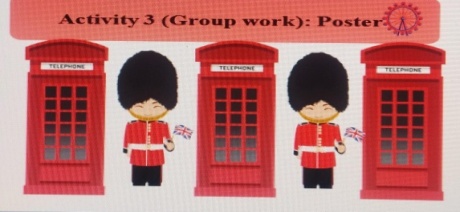 can correctly identify
True/False statements
can correctly identify
True/False statements
1. You can find the Baiji dolphin in many parts of China.
F (False) – Baiji dolphin тек Yangtze River-де кездеседі. Көп бөлігінде емес.
2. Fishermen catch large numbers of this dolphin.
T (True) – Олар бұрын көптеп аулағаны туралы жиі жазылады.
3. The saiga’s nose helps it to keep cool.
T (True) – Сағаның тұмсығы оның дене температурасын реттеуге көмектеседі.
4. The number of saiga antelope is increasing.
F (False) – Олардың саны керісінше азаюда, жойылып барады.
5. There are 500 species of kangaroo in Australia.
DS (Doesn’t Say) – Бұл нақты мәтінде айтылмауы мүмкін.
6. The Baiji dolphin is now extinct.
T (True) – Бұл дельфин түрі жойылып кеткен деп есептеледі.
7. Saiga antelopes live in cold areas.
DS (Doesn’t Say) – Мұндай ақпарат мәтінде нақты айтылмауы мүмкін.
8. Kangaroos are endangered animals.
F (False) – Кенгуру жойылу қаупінде емес, Австралияда олар көптеп кездеседі.
|
1. You can find the Baiji dolphin in many parts of China. |
||||||||
|
2. Fishermen catch large numbers of this dolphin. |
||||||||
|
3. The saiga’s nose helps it to keep cool. |
||||||||
|
4. The number of saiga antelope is increasing. |
||||||||
|
5. There are 500 species of kangaroo in Australia. |
||||||||
|
6. The Baiji dolphin is now extinct. |
||||||||
|
7. Saiga antelopes live in cold areas. |
||||||||
|
8. Kangaroos are endangered animals. |
||||||||
|
1 |
2 |
3 |
4 |
5 |
6 |
7 |
8 |
|
|
1 |
2 |
3 |
4 |
5 |
6 |
7 |
8 |
|

 Жүктеу


 Жүктеу
шағым қалдыра аласыз

 Бұл курс Қазақстан Республикасы Оқу-ағарту министрлігімен келісілген










