
 ЖИ көмекші




ОСНОВЫ
КОМПЬЮТЕРНОЙ
ГРАМОТНОСТИ

ДК 811.111(07) ББК81.2Англ-9 КТК
8032 Р 15
Научный консультант:
Соколов С. В., доктор технических наук, профессор, действительный
член Академии образования и Академии Военных наук
Рецензент:
Понкратова Ю. Г — зам. директора гимназии № 14 г. Ростова н/Д,
председатель методобъединения учителей английского языка
Радовель В. А.
Р 15 Английский язык. Основы компьютерной грамотности: Учебное пособие
/ Радовель В. А. — Изд. 3-е. — Ростов н/Д: Феникс, 2006. — 224 с. —
(Сам себе репетитор).
ISBN 5-222-09193-7
Данное пособие предназначено для расширенного изучения английского языка в
области информационных технологий. Представленный материал позволяет не
только углубить свои знания в английском языке, но и овладеть основами
компьютерной грамотности. Пособие содержит тексты из оригинальной
литературы, посвященные теме «Компьютеры и информационные системы»;
учебные задания, способствующие усвоению и запоминанию специальных
терминов по компьютерным технологиям; задания для развития навыков чтения,
свертывания и развертывания информации при составлении аннотаций и рефератов
на русском и английском языках и др.
Пособие рассчитано на учащихся средних школ, лицеев, гимназий, колледжей и
студентов высших учебных заведений — всех, кто интересуется английским языком
и увлекается компьютером.
УДК 811.111(07) ББК81.2Англ-9
ISBN 5-222-09193-7 © Радовель В. А., 2006
© Оформление, изд-во «Феникс», 2006

Моим дорогим мужчинам: супругу Михаилу и
сыновьям Владиславу и Валерию
Предисловие
Предлагаемое учебное пособие составлено в соответствии с «Концепцией
модернизации российского образования на период до 2010 года» и введением
профильного обучения.
В современном информационном мире владение ком пьютерными
технологиями является абсолютно необходимым для каждого грамотного
человека. Неотъемлемым компонентом компьютерной грамотности следует
признать должный уровень владения определенным корпусом понятий и
терминов языка компьютерных технологий. По существу, речь идет об
изучении специального, функционального аспекта английского языка. Такого
рода языковые знания весьма полезны для уверенной ориентировки
пользователя в мире информации и повышения его техно логических
возможностей при работе с компьютером в перспективе.
Цель данного курса обучить языковым средствам для эффективного
общения с компьютером; пониманию спе циальных научно-технических
текстов в области компьютерных технологий; умению свернуть и развернуть
информацию при подготовке рефератов и аннотаций на русском и
английском языках.
Учебное пособие содержит:
— тексты из оригинальной литературы, посвященные
теме «Компьютеры и информационные системы»;
— учебные задания, способствующие усвоению и запо
минанию специальных терминов по компьютерным
технологиям;
— задания для развития навыков чтения, свертывания
и развертывания информации, составления аннота
ций и рефератов как на русском, так и на англий
ском языке;

Английский язык. Основы компьютерной грамотности 4
— задания по совершенствованию навыков письмен
ного перевода;
— упражнения по усвоению грамматических явлений,
характерных для научно-технических текстов;
— диагностический тест в начале курса, а также конт
рольные тесты в конце каждого раздела;
— игровые материалы (викторины, лексические игры,
кроссворды), способствующие закреплению полу
ченных знаний и повышению интереса к учебному
курсу;
— англо-русский словарь специальных технических тер
минов, в состав которого включен лексический ми
нимум, необходимый для изучения курса информа
тики;
— краткий словарь сокращений и условных обозначений с
элементами толкования.
Данное пособие, находясь на пересечении двух культур, технической и
гуманитарной, будет способствовать как углубленному изучению
английского языка, так и повышению грамотности учащихся в области
информационных технологий.
Часть предлагаемого материала прошла апробацию при обучении
техническому переводу в Ростовском государственном военно-техническом
лицее в течение десяти лет и была издана в ряде методических пособий для
курсантов Ростовского военно-технического института.
Учебное пособие рассчитано на учащихся средних школ, лицеев,
гимназий, колледжей и студентов высших учебных заведений — всех, кто
интересуется английским языком и увлекается компьютером

Unit 1
INFORMATION-DEPENDENT SOCIETY
1. Ознакомьтесь с терминами текста 1.
computer literacy [ksm'pjute 'litsrasi] — компьютерная
грамотность problem-solving device — устройство, обеспечивающее
решение задачи
be aware of [bi a'wesr ov] — понимать, сознавать opportunity [opa'tjirniti]
— возможность basics ['beisiks] — основы
application [apli'keijn] — применение; использование to restate [n'steit] —
пересмотреть, переосмыслить significant [sig'mfikant] — значительный
achievements [a'tfrvmsnts] — достижения computing [kam'pjuitin] —
вычисление; счет; работа на
компьютере
to embrace [imb'reis] — охватывать dimension [di'menjn] — измерение
instruction [m'strAkfn] — команда, инструкция, указание to direct the
operation — направлять работу to process [prou'ses] — обрабатывать
subscription magazine [ssb'sknpjh iruegs'zhi]— журнал по
подлиске data processing system ['deits prs'sesin 'sistsm] — система
обработки данных
store manager ['sta 'm^n3d33] — директор магазина to have much in common
— иметь много общего
2. Прочтите текст и скажите, как вы понимаете термины «информационное
общество» и «компьютерная грамотность».

11 Unit I. Information-Dependent Society
Text 1. COMPUTER LITERACY
Informed citizens of our information-dependent society shoud be computer-
literate, which means that they should be able to use computers as everyday problem-
solving devices. They should be aware of the potential of computers to influence the
quality of life.
There was a time when only priviliged people had an opportunity to learn the
basics, called the three R's: reading, writing, and arithmetics. Now, as we are quickly
becoming an information-becoming society, it is time to restate this right as the right
to learn reading, writing and computing. There is little doubt that computers and their
many applications are among the most significant technical achievements of the
century. They bring with them both economic and social changes. "Computing" is a
concept that embraces not only the old third R, arithmetics, but also a new idea —
computer literacy.
In an information society a person who is computer-literate need not be an
expert on the design of computers. He needn't even know much about how to
prepare programs which are the instructions that direct the operations of computers.
All of us are already on the way to becoming computer-literate. Just think of your
everyday life. If you receive a subscription magazine in the post-office, it is probably
addressed to you by a computer. If you buy something with a bank credit card or
pay a bill by check, computers help you process the information. When you check
out at the counter of your store, a computer assists the checkout clerk and the store
manager. When you visit your doctor, your schedules and bills and special services,
such as laboratory tests, are prepared by computer. Many actions that you have
taken or observed have much in common. Each relates to some aspect of a data
processing system.
3. Просмотрите текст 1 еще раз. Ответьте на вопросы, используя
информацию текста.
1. What does "a computer-literate person" mean? 2. Are you aware of the
potential of computers to influence your life? 3. What do the people mean by "the
basics"? 4. What is the role of computers in our society? 5. What is "computing'? 6.
What is a program? 7. Prove that we all are on the way to becoming

Английский язык. Основы компьютерной грамотности 12
computer-literate. 8. Give examples of using computers in everyday life.
4. Прочтите, переведите и запомните следующие выраже
ния:
An information-dependent society; a computer-literate citizen; an everyday
problem-solving device; to be aware; to influence the quality of life; to have an
opportunity; to learn the basics; to learn computing; the most significant
technical achievements; to embrace computer literacy; to prepare programs; to
direct the operations of a computer; to be on the way of becoming computer-literate;
to process information; to have much in common; a data processing system.
5. Вспомните образование и случаи употребления The Past
Simple Tense.
А. Назовите три формы следующих неправильных глаголов:
То be; to have; to mean; to learn; to become; to bring; to know; to think; to buy;
to pay; to take; to do; to begin; to give; to make;, to keep; to get; to read; to show.
Б. Преобразуйте следующие предложения в Bast Simple.
1. Many people have an opportunity to use computers.
2. There is no doubt that computers solve problems very quickly.
3. Instructions direct the operation of a computer. 4. Computers
bring with them both economic and social changes. 5. Comput
ing embraces not only arithmetics, but also computer literacy.
6. It is well known that computers prepare laboratory tests.
7. Those persons are computer literate and think of buying a new
computer. 8. They receive a subscription magazine once a
month. 9. My mother is ill and visits her doctor every other day.
10. Experts know much about how to prepare programs.
6. Ознакомьтесь с терминами текста 2
intricate ['mtnkit] — сложный, запутанный, electronic circuit [sbkt'romk
'sa:kit] — электронная цепь, схема
to operate switches [ops'reit 'switfiz] — приводить в действие переключатели
to store numbers ['sto: 'плтЬзг] — запоминать числа

Unit 1. Information-Dependent Society
to manipulate [ms'nipjuleit] — управлять; обращаться; преобразовывать
to input / to feed in — вводить (информацию)
to turn on = to switch on — включать
to turn off = to switch off— выключать
to process data [prou'ses 'delta] — обрабатывать данные
to supply [sa'plai] — подавать, вводить, снабжать, обеспечивать
addition [s'difn] — сложение
subtraction [sAb'trajkJh] — вычитание
division [di'vrjn] —деление
multiplication ['тлИгрп'кег/п] — умножение
exponentiation [eksps'nenji'eijn] — возведение в степень
user ['juzs] — пользователь
input device ['input di'vais] — устройство ввода
disk drive ['disk 'draiv] — дисковое запоминающее устройство, дисковод
tape drive ['teip 'draiv] — запоминающее устройство на магнитной ленте
cathode-ray tube ['kseOsd rei 4ju:b] — электроннолучевая трубка
to make decisions — принимать решения
instantaneously [jnstan'teinjssli] — мгновенно, немедленно
7. Прочтите текст 2 и скажите, что такое компьютер и каковы его основные
функции.
Text 2. WHAT IS A COMPUTER?
A computer is a machine with an intricate network of electronic circuits that
operate switches or magnetize tiny metal cores. The switches, like the cores, are
capable of being in one or two possible states, that is, on or off; magnetized or
demagnetized. The machine is capable of storing and manipulating numbers,
letters, and characters (symbols).

Английский язык. Основы компьютерной грамотности 14
The basic idea of a computer is that we can make the machine do what we want
by inputting signals that turn certain switches on and turn others off, or magnetize or
do not magnetize the cores.
The basic job of computers is processing of information. For this reason computers
can be defined as devices which accept information in the form of instructions,
called a program, and characters, called data, perform mathematical and / or logical
operations on the information, and then supply results of these operations. The
program, or part of it, which tells the computers what to do and the data, which
provide the information needed to solve the problem, are kept inside the computer
in a place called memory.
It is considered that computers have many remarkable powers. However most
computers, whether large or small, have three basic capabilities.
First, computers have circuits for performing arithmetic operations, such as:
addition, subtraction, division, multiplication and exponentiation.
Second, computers have a means of communicating with the user. After all, if we
couldn't feed information in and get results back, these machines wouldn't be of
much use. Some of the most common methods of inputting information are to use
terminals, diskettes, disks and magnetic tapes. The computer's input device (a disk
drive or tape drive) reads the information into the computer. For outputting
information two common devices used are: a printer, printing the new
information on paper, and a cathode-ray-tube display, which shows the results on a
TV-like screen.
Third, computers have circuits which can make decisions. The kinds of
decisions which computer circuits can make are not of the type: "Who would win
the war between two countries?" or "Who is the richest person in the world?"
Unfortunately, the computer can only decide three things, namely: Is one number
less than another? Are two numbers equal? and, Is one number greater than another?
A computer can solve a series of problems and make thousands of logical
decisions without becoming tired. It can find the solution to a problem in a fraction
of the time it takes a human being to do the job.

15 Unit 1. Information-Dependent Society
A computer can replace people in dull, routine tasks, but it
works according to the instructions given to it. There are times
when a computer seems to operate like a mechanical 'brain',
but its achievements are limited by the minds of human beings.
A computer cannot do anything unless a person tells it what to
do and gives it the necessary information; but because electric
pulses can move at the speed of light, a computer can carry out
great numbers of arithmetic-logical operations almost instan-
taneously. A person can do the same, but in many cases that
person would be dead long before the job was finished.
8. Переведите текст. Ответьте на вопросы, используя ин
формацию текста.
1. What is a computer? 2. What are the two possible states
of the switches? 3. What are the main functions of a computer?
4. In what way can we make the computer do what we want? 5.
What is the basic task of a computer? 6. In what form does a
computer accept information? 7. What is a program? 8. What
are data? 9. What is memory? 10. What three basic capabilities
have computers? 11. What are the ways of inputting informa-
tion into the computer? 12. What is the function of an input
device? 13. What devices are used for outputting information?
14. What decisions can the computer make? 15. What are the
computer's achievements limited by?
9. Найдите в тексте 2 английские эквиваленты следующих
словосочетаний:
Сложная сеть электронных цепей; управлять (приво-
дить в действие) переключателями; возможные состояния;
хранить (запоминать) числа; обрабатывать символы; по-
средством ввода сигналов; включать; выключать; размаг-
ничивать сердечники; обработка информации; информа-
ция в виде команд; символы, называемые данными;
выполнять математические операции; выдавать результа-
ты; обеспечивать необходимую информацию; иметь заме-
чательные возможности; основные свойства; сложение,
вычитание, деление, умножение; возведение в степень;
средства для общения с пользователем; устройство ввода;
дисковод; считывать информацию; вывод информации;
катоднолучевая трубка; принимать решения; выполнять
тысячи логических операций; без устали; находить реше-

Английский язык. Основы компьютерной грамотности 16
ние задачи; значительно меньший промежуток времени; человек; нудная
рутинная работа; в соответствии с введенной программой; вырабатывать свои
суждения; возможности ограничены программой, заложенной в него челове-
ком; дать требуемую информацию; электрические импульсы; со
скоростью света; мгновенно производить огромное количество
математических операций; человеку может не хватить всей жизни, чтобы
закончить работу.
10. Составьте пары или группы близких по значению слов
из перечня, приведенного ниже.
Например: A. to perform, to exercise, to carry out; B. a man, a person, a human
being;
Verbs: to turn on, to provide, to type, to accept, to help, to learn, to observe, to
call, to tell, to keep, to feed, to solve, to relate, to switch off, to communicate, to
receive, to supply, to switch on, to assist, to print, to study, to input, to turn off, to
decide, to store, to say, to name, to watch.
Nouns: work, machine, fundamentals, display, application, capabilities, job,
storage, screen, state, basics, use, concept, specialist, journal, character, memory,
idea, expert, magazine, position, symbol, command, data, solution, device,
instruction, powers, information, decision.
Adjectives: basic, tiny, common, small, main, significant, routine, general,
remarkable, uninterested, intricate, important, wonderful, complex, little.
Adverbs: rapidly, probably, instantaneously, in a moment, quickly, perhaps.
11. Выполните письменный перевод текста 3 по вариантам.
Text3. APPLICATION OF COMPUTERS
1. At present a great deal of the work force of most countries is engaged in
creating, processing, storing, communicating and just working with information.
Computers have become commonplace in homes, offices, stores, schools, research
institutes, plants.
The use of computers in business, industry and communication services is
widespread today. Computer-controlled robots are able to improve the quality of
manufactured products and

17 Unit 1. Information-Dependent Society
to increase the productivity of industry. Computers can control the work of power
stations, plants and docks. They help in making different decisions and in
management of economy.
The work of banks depends upon computer terminals for millions of daily
operations. Without these terminals, records of deposits and withdrawals would be
difficult to maintain, and it would be impossible to make inquiries about the current
status of customer accounts.
Computers form a part of many military systems including communication and
fire control. They are applied for automatic piloting and automatic navigation. Space
exploration depends on computers for guidance, on-board environment and re-
search.
2. Computers find application in astronomy and upper atmosphere research.
Weather forecasting, library information services can benefit from computers too.
It is interesting to note that computers are widely used in medicine. They
became valuable medical diagnostic tools. Computers are used for optical scanning
and image processing, ranging from pattern recognition to image processing. Techni-
cians can operate computer tomography scanners which combine x-rays with
computer technology to give sectional views of the body of patients. The views then
can be combined into a single image shown on the screen.
It should be noticed that learning on a computer can be fun. Students spend more
time with computer-aided instruction performing the assigned task, as compared with
conventional classroom.
At last air traffic control is impossible without computer application. It fully
depends upon computer-generated information.
Many other uses of computers that we cannot imagine at present will become
commonplace in the transition from an industrial to post industrial, or information
society.
Notes ____________________________________________
to maintain records — вести учет
deposits and withdrawal — вклады и изъятие (выемка)
guidance — наведение (на цель); управление; руководство

on-board environment — бортовое окружение pattern recognition —
распознавание образов
TESTS
1. Выберите вариант, который лучше всего выражает глав
ную идею текста 2.
a) Computers are devices that accept information in the form of instructions.
в) The switches are usualy in one of two states: magnetized or demagnetized.
c) Computers are remarkable devices serving for processing and storage the
information and for solving problems.
2. Вставьте необходимые слова вместо пропусков.
1. Information is given into the computer in the form of
a) ideas; b) characters; c) rules
2. The basic function of a computer is _______ information.
a) to switch; b) to keep; c) to process
3. The data needed for solving problems are kept in the
a) memory; b) input device; c) output device
4. Inputting information into the computer is realized by
means of _____ .
a) a printer; b) letters; c) diskettes
5. A computer can carry out arithmetic-logical operations
a) quickly; b) instantaneously; c) during some minutes
6. Computers have become _____ in homes, offices, research
institutes.
a) commonwealth; b) commonplace; c) common room
7. Space _____ uses computers widely.
a) information; b) production; c) exploration
8. Computers are used for image ______ .
a) processing; b) operating; c) producing
9. Computers help in _____ of economy.
a) invironment; b) management; c) government

19 Unit 1. Information-Dependent Society
10. Air traffic control depends on computer- _____ informa
tion.
a) generated; b) instructed; c) combined
3. Подберите к терминам, данным в левой колонке, определения,
представленные справа.
1. Computer a) a machine by which information is re-
ceived from the computer;
2. Data b) a device capable of storing and manip-
ulating numbers, letters and characters;
3. Input device c) an electronic machine that processes
data under the control of a stored program;
4. Memory d) a disk drive reading the information
into the computer;
5. Output device e) information given in the form of char-
acters.
 Жүктеу
жүктеу мүмкіндігіне ие боласыз
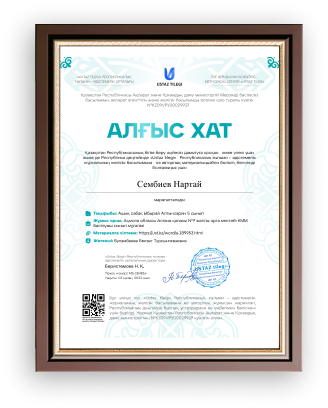
Бұл материал сайт қолданушысы жариялаған. Материалдың ішінде жазылған барлық ақпаратқа жауапкершілікті жариялаған қолданушы жауап береді. Ұстаз тілегі тек ақпаратты таратуға қолдау көрсетеді. Егер материал сіздің авторлық құқығыңызды бұзған болса немесе басқа да себептермен сайттан өшіру керек деп ойласаңыз осында жазыңыз
 19 Қаңтар 2018
 284
284Основы компьютерной грамоcности
ОСНОВЫ
КОМПЬЮТЕРНОЙ
ГРАМОТНОСТИ
ДК 811.111(07) ББК81.2Англ-9 КТК
8032 Р 15
Научный консультант:
Соколов С. В., доктор технических наук, профессор, действительный
член Академии образования и Академии Военных наук
Рецензент:
Понкратова Ю. Г — зам. директора гимназии № 14 г. Ростова н/Д,
председатель методобъединения учителей английского языка
Радовель В. А.
Р 15 Английский язык. Основы компьютерной грамотности: Учебное пособие
/ Радовель В. А. — Изд. 3-е. — Ростов н/Д: Феникс, 2006. — 224 с. —
(Сам себе репетитор).
ISBN 5-222-09193-7
Данное пособие предназначено для расширенного изучения английского языка в
области информационных технологий. Представленный материал позволяет не
только углубить свои знания в английском языке, но и овладеть основами
компьютерной грамотности. Пособие содержит тексты из оригинальной
литературы, посвященные теме «Компьютеры и информационные системы»;
учебные задания, способствующие усвоению и запоминанию специальных
терминов по компьютерным технологиям; задания для развития навыков чтения,
свертывания и развертывания информации при составлении аннотаций и рефератов
на русском и английском языках и др.
Пособие рассчитано на учащихся средних школ, лицеев, гимназий, колледжей и
студентов высших учебных заведений — всех, кто интересуется английским языком
и увлекается компьютером.
УДК 811.111(07) ББК81.2Англ-9
ISBN 5-222-09193-7 © Радовель В. А., 2006
© Оформление, изд-во «Феникс», 2006
Моим дорогим мужчинам: супругу Михаилу и
сыновьям Владиславу и Валерию
Предисловие
Предлагаемое учебное пособие составлено в соответствии с «Концепцией
модернизации российского образования на период до 2010 года» и введением
профильного обучения.
В современном информационном мире владение ком пьютерными
технологиями является абсолютно необходимым для каждого грамотного
человека. Неотъемлемым компонентом компьютерной грамотности следует
признать должный уровень владения определенным корпусом понятий и
терминов языка компьютерных технологий. По существу, речь идет об
изучении специального, функционального аспекта английского языка. Такого
рода языковые знания весьма полезны для уверенной ориентировки
пользователя в мире информации и повышения его техно логических
возможностей при работе с компьютером в перспективе.
Цель данного курса обучить языковым средствам для эффективного
общения с компьютером; пониманию спе циальных научно-технических
текстов в области компьютерных технологий; умению свернуть и развернуть
информацию при подготовке рефератов и аннотаций на русском и
английском языках.
Учебное пособие содержит:
— тексты из оригинальной литературы, посвященные
теме «Компьютеры и информационные системы»;
— учебные задания, способствующие усвоению и запо
минанию специальных терминов по компьютерным
технологиям;
— задания для развития навыков чтения, свертывания
и развертывания информации, составления аннота
ций и рефератов как на русском, так и на англий
ском языке;
Английский язык. Основы компьютерной грамотности 4
— задания по совершенствованию навыков письмен
ного перевода;
— упражнения по усвоению грамматических явлений,
характерных для научно-технических текстов;
— диагностический тест в начале курса, а также конт
рольные тесты в конце каждого раздела;
— игровые материалы (викторины, лексические игры,
кроссворды), способствующие закреплению полу
ченных знаний и повышению интереса к учебному
курсу;
— англо-русский словарь специальных технических тер
минов, в состав которого включен лексический ми
нимум, необходимый для изучения курса информа
тики;
— краткий словарь сокращений и условных обозначений с
элементами толкования.
Данное пособие, находясь на пересечении двух культур, технической и
гуманитарной, будет способствовать как углубленному изучению
английского языка, так и повышению грамотности учащихся в области
информационных технологий.
Часть предлагаемого материала прошла апробацию при обучении
техническому переводу в Ростовском государственном военно-техническом
лицее в течение десяти лет и была издана в ряде методических пособий для
курсантов Ростовского военно-технического института.
Учебное пособие рассчитано на учащихся средних школ, лицеев,
гимназий, колледжей и студентов высших учебных заведений — всех, кто
интересуется английским языком и увлекается компьютером
Unit 1
INFORMATION-DEPENDENT SOCIETY
1. Ознакомьтесь с терминами текста 1.
computer literacy [ksm'pjute 'litsrasi] — компьютерная
грамотность problem-solving device — устройство, обеспечивающее
решение задачи
be aware of [bi a'wesr ov] — понимать, сознавать opportunity [opa'tjirniti]
— возможность basics ['beisiks] — основы
application [apli'keijn] — применение; использование to restate [n'steit] —
пересмотреть, переосмыслить significant [sig'mfikant] — значительный
achievements [a'tfrvmsnts] — достижения computing [kam'pjuitin] —
вычисление; счет; работа на
компьютере
to embrace [imb'reis] — охватывать dimension [di'menjn] — измерение
instruction [m'strAkfn] — команда, инструкция, указание to direct the
operation — направлять работу to process [prou'ses] — обрабатывать
subscription magazine [ssb'sknpjh iruegs'zhi]— журнал по
подлиске data processing system ['deits prs'sesin 'sistsm] — система
обработки данных
store manager ['sta 'm^n3d33] — директор магазина to have much in common
— иметь много общего
2. Прочтите текст и скажите, как вы понимаете термины «информационное
общество» и «компьютерная грамотность».
11 Unit I. Information-Dependent Society
Text 1. COMPUTER LITERACY
Informed citizens of our information-dependent society shoud be computer-
literate, which means that they should be able to use computers as everyday problem-
solving devices. They should be aware of the potential of computers to influence the
quality of life.
There was a time when only priviliged people had an opportunity to learn the
basics, called the three R's: reading, writing, and arithmetics. Now, as we are quickly
becoming an information-becoming society, it is time to restate this right as the right
to learn reading, writing and computing. There is little doubt that computers and their
many applications are among the most significant technical achievements of the
century. They bring with them both economic and social changes. "Computing" is a
concept that embraces not only the old third R, arithmetics, but also a new idea —
computer literacy.
In an information society a person who is computer-literate need not be an
expert on the design of computers. He needn't even know much about how to
prepare programs which are the instructions that direct the operations of computers.
All of us are already on the way to becoming computer-literate. Just think of your
everyday life. If you receive a subscription magazine in the post-office, it is probably
addressed to you by a computer. If you buy something with a bank credit card or
pay a bill by check, computers help you process the information. When you check
out at the counter of your store, a computer assists the checkout clerk and the store
manager. When you visit your doctor, your schedules and bills and special services,
such as laboratory tests, are prepared by computer. Many actions that you have
taken or observed have much in common. Each relates to some aspect of a data
processing system.
3. Просмотрите текст 1 еще раз. Ответьте на вопросы, используя
информацию текста.
1. What does "a computer-literate person" mean? 2. Are you aware of the
potential of computers to influence your life? 3. What do the people mean by "the
basics"? 4. What is the role of computers in our society? 5. What is "computing'? 6.
What is a program? 7. Prove that we all are on the way to becoming
Английский язык. Основы компьютерной грамотности 12
computer-literate. 8. Give examples of using computers in everyday life.
4. Прочтите, переведите и запомните следующие выраже
ния:
An information-dependent society; a computer-literate citizen; an everyday
problem-solving device; to be aware; to influence the quality of life; to have an
opportunity; to learn the basics; to learn computing; the most significant
technical achievements; to embrace computer literacy; to prepare programs; to
direct the operations of a computer; to be on the way of becoming computer-literate;
to process information; to have much in common; a data processing system.
5. Вспомните образование и случаи употребления The Past
Simple Tense.
А. Назовите три формы следующих неправильных глаголов:
То be; to have; to mean; to learn; to become; to bring; to know; to think; to buy;
to pay; to take; to do; to begin; to give; to make;, to keep; to get; to read; to show.
Б. Преобразуйте следующие предложения в Bast Simple.
1. Many people have an opportunity to use computers.
2. There is no doubt that computers solve problems very quickly.
3. Instructions direct the operation of a computer. 4. Computers
bring with them both economic and social changes. 5. Comput
ing embraces not only arithmetics, but also computer literacy.
6. It is well known that computers prepare laboratory tests.
7. Those persons are computer literate and think of buying a new
computer. 8. They receive a subscription magazine once a
month. 9. My mother is ill and visits her doctor every other day.
10. Experts know much about how to prepare programs.
6. Ознакомьтесь с терминами текста 2
intricate ['mtnkit] — сложный, запутанный, electronic circuit [sbkt'romk
'sa:kit] — электронная цепь, схема
to operate switches [ops'reit 'switfiz] — приводить в действие переключатели
to store numbers ['sto: 'плтЬзг] — запоминать числа
Unit 1. Information-Dependent Society
to manipulate [ms'nipjuleit] — управлять; обращаться; преобразовывать
to input / to feed in — вводить (информацию)
to turn on = to switch on — включать
to turn off = to switch off— выключать
to process data [prou'ses 'delta] — обрабатывать данные
to supply [sa'plai] — подавать, вводить, снабжать, обеспечивать
addition [s'difn] — сложение
subtraction [sAb'trajkJh] — вычитание
division [di'vrjn] —деление
multiplication ['тлИгрп'кег/п] — умножение
exponentiation [eksps'nenji'eijn] — возведение в степень
user ['juzs] — пользователь
input device ['input di'vais] — устройство ввода
disk drive ['disk 'draiv] — дисковое запоминающее устройство, дисковод
tape drive ['teip 'draiv] — запоминающее устройство на магнитной ленте
cathode-ray tube ['kseOsd rei 4ju:b] — электроннолучевая трубка
to make decisions — принимать решения
instantaneously [jnstan'teinjssli] — мгновенно, немедленно
7. Прочтите текст 2 и скажите, что такое компьютер и каковы его основные
функции.
Text 2. WHAT IS A COMPUTER?
A computer is a machine with an intricate network of electronic circuits that
operate switches or magnetize tiny metal cores. The switches, like the cores, are
capable of being in one or two possible states, that is, on or off; magnetized or
demagnetized. The machine is capable of storing and manipulating numbers,
letters, and characters (symbols).
Английский язык. Основы компьютерной грамотности 14
The basic idea of a computer is that we can make the machine do what we want
by inputting signals that turn certain switches on and turn others off, or magnetize or
do not magnetize the cores.
The basic job of computers is processing of information. For this reason computers
can be defined as devices which accept information in the form of instructions,
called a program, and characters, called data, perform mathematical and / or logical
operations on the information, and then supply results of these operations. The
program, or part of it, which tells the computers what to do and the data, which
provide the information needed to solve the problem, are kept inside the computer
in a place called memory.
It is considered that computers have many remarkable powers. However most
computers, whether large or small, have three basic capabilities.
First, computers have circuits for performing arithmetic operations, such as:
addition, subtraction, division, multiplication and exponentiation.
Second, computers have a means of communicating with the user. After all, if we
couldn't feed information in and get results back, these machines wouldn't be of
much use. Some of the most common methods of inputting information are to use
terminals, diskettes, disks and magnetic tapes. The computer's input device (a disk
drive or tape drive) reads the information into the computer. For outputting
information two common devices used are: a printer, printing the new
information on paper, and a cathode-ray-tube display, which shows the results on a
TV-like screen.
Third, computers have circuits which can make decisions. The kinds of
decisions which computer circuits can make are not of the type: "Who would win
the war between two countries?" or "Who is the richest person in the world?"
Unfortunately, the computer can only decide three things, namely: Is one number
less than another? Are two numbers equal? and, Is one number greater than another?
A computer can solve a series of problems and make thousands of logical
decisions without becoming tired. It can find the solution to a problem in a fraction
of the time it takes a human being to do the job.
15 Unit 1. Information-Dependent Society
A computer can replace people in dull, routine tasks, but it
works according to the instructions given to it. There are times
when a computer seems to operate like a mechanical 'brain',
but its achievements are limited by the minds of human beings.
A computer cannot do anything unless a person tells it what to
do and gives it the necessary information; but because electric
pulses can move at the speed of light, a computer can carry out
great numbers of arithmetic-logical operations almost instan-
taneously. A person can do the same, but in many cases that
person would be dead long before the job was finished.
8. Переведите текст. Ответьте на вопросы, используя ин
формацию текста.
1. What is a computer? 2. What are the two possible states
of the switches? 3. What are the main functions of a computer?
4. In what way can we make the computer do what we want? 5.
What is the basic task of a computer? 6. In what form does a
computer accept information? 7. What is a program? 8. What
are data? 9. What is memory? 10. What three basic capabilities
have computers? 11. What are the ways of inputting informa-
tion into the computer? 12. What is the function of an input
device? 13. What devices are used for outputting information?
14. What decisions can the computer make? 15. What are the
computer's achievements limited by?
9. Найдите в тексте 2 английские эквиваленты следующих
словосочетаний:
Сложная сеть электронных цепей; управлять (приво-
дить в действие) переключателями; возможные состояния;
хранить (запоминать) числа; обрабатывать символы; по-
средством ввода сигналов; включать; выключать; размаг-
ничивать сердечники; обработка информации; информа-
ция в виде команд; символы, называемые данными;
выполнять математические операции; выдавать результа-
ты; обеспечивать необходимую информацию; иметь заме-
чательные возможности; основные свойства; сложение,
вычитание, деление, умножение; возведение в степень;
средства для общения с пользователем; устройство ввода;
дисковод; считывать информацию; вывод информации;
катоднолучевая трубка; принимать решения; выполнять
тысячи логических операций; без устали; находить реше-
Английский язык. Основы компьютерной грамотности 16
ние задачи; значительно меньший промежуток времени; человек; нудная
рутинная работа; в соответствии с введенной программой; вырабатывать свои
суждения; возможности ограничены программой, заложенной в него челове-
ком; дать требуемую информацию; электрические импульсы; со
скоростью света; мгновенно производить огромное количество
математических операций; человеку может не хватить всей жизни, чтобы
закончить работу.
10. Составьте пары или группы близких по значению слов
из перечня, приведенного ниже.
Например: A. to perform, to exercise, to carry out; B. a man, a person, a human
being;
Verbs: to turn on, to provide, to type, to accept, to help, to learn, to observe, to
call, to tell, to keep, to feed, to solve, to relate, to switch off, to communicate, to
receive, to supply, to switch on, to assist, to print, to study, to input, to turn off, to
decide, to store, to say, to name, to watch.
Nouns: work, machine, fundamentals, display, application, capabilities, job,
storage, screen, state, basics, use, concept, specialist, journal, character, memory,
idea, expert, magazine, position, symbol, command, data, solution, device,
instruction, powers, information, decision.
Adjectives: basic, tiny, common, small, main, significant, routine, general,
remarkable, uninterested, intricate, important, wonderful, complex, little.
Adverbs: rapidly, probably, instantaneously, in a moment, quickly, perhaps.
11. Выполните письменный перевод текста 3 по вариантам.
Text3. APPLICATION OF COMPUTERS
1. At present a great deal of the work force of most countries is engaged in
creating, processing, storing, communicating and just working with information.
Computers have become commonplace in homes, offices, stores, schools, research
institutes, plants.
The use of computers in business, industry and communication services is
widespread today. Computer-controlled robots are able to improve the quality of
manufactured products and
17 Unit 1. Information-Dependent Society
to increase the productivity of industry. Computers can control the work of power
stations, plants and docks. They help in making different decisions and in
management of economy.
The work of banks depends upon computer terminals for millions of daily
operations. Without these terminals, records of deposits and withdrawals would be
difficult to maintain, and it would be impossible to make inquiries about the current
status of customer accounts.
Computers form a part of many military systems including communication and
fire control. They are applied for automatic piloting and automatic navigation. Space
exploration depends on computers for guidance, on-board environment and re-
search.
2. Computers find application in astronomy and upper atmosphere research.
Weather forecasting, library information services can benefit from computers too.
It is interesting to note that computers are widely used in medicine. They
became valuable medical diagnostic tools. Computers are used for optical scanning
and image processing, ranging from pattern recognition to image processing. Techni-
cians can operate computer tomography scanners which combine x-rays with
computer technology to give sectional views of the body of patients. The views then
can be combined into a single image shown on the screen.
It should be noticed that learning on a computer can be fun. Students spend more
time with computer-aided instruction performing the assigned task, as compared with
conventional classroom.
At last air traffic control is impossible without computer application. It fully
depends upon computer-generated information.
Many other uses of computers that we cannot imagine at present will become
commonplace in the transition from an industrial to post industrial, or information
society.
Notes ____________________________________________
to maintain records — вести учет
deposits and withdrawal — вклады и изъятие (выемка)
guidance — наведение (на цель); управление; руководство
on-board environment — бортовое окружение pattern recognition —
распознавание образов
TESTS
1. Выберите вариант, который лучше всего выражает глав
ную идею текста 2.
a) Computers are devices that accept information in the form of instructions.
в) The switches are usualy in one of two states: magnetized or demagnetized.
c) Computers are remarkable devices serving for processing and storage the
information and for solving problems.
2. Вставьте необходимые слова вместо пропусков.
1. Information is given into the computer in the form of
a) ideas; b) characters; c) rules
2. The basic function of a computer is _______ information.
a) to switch; b) to keep; c) to process
3. The data needed for solving problems are kept in the
a) memory; b) input device; c) output device
4. Inputting information into the computer is realized by
means of _____ .
a) a printer; b) letters; c) diskettes
5. A computer can carry out arithmetic-logical operations
a) quickly; b) instantaneously; c) during some minutes
6. Computers have become _____ in homes, offices, research
institutes.
a) commonwealth; b) commonplace; c) common room
7. Space _____ uses computers widely.
a) information; b) production; c) exploration
8. Computers are used for image ______ .
a) processing; b) operating; c) producing
9. Computers help in _____ of economy.
a) invironment; b) management; c) government
19 Unit 1. Information-Dependent Society
10. Air traffic control depends on computer- _____ informa
tion.
a) generated; b) instructed; c) combined
3. Подберите к терминам, данным в левой колонке, определения,
представленные справа.
1. Computer a) a machine by which information is re-
ceived from the computer;
2. Data b) a device capable of storing and manip-
ulating numbers, letters and characters;
3. Input device c) an electronic machine that processes
data under the control of a stored program;
4. Memory d) a disk drive reading the information
into the computer;
5. Output device e) information given in the form of char-
acters.
 Жүктеу

 Жүктеу
шағым қалдыра аласыз


 Бұл курс Қазақстан Республикасы Оқу-ағарту министрлігімен келісілген


