
 ЖИ көмекші


жүктеу мүмкіндігіне ие боласыз
Бұл материал сайт қолданушысы жариялаған. Материалдың ішінде жазылған барлық ақпаратқа жауапкершілікті жариялаған қолданушы жауап береді. Ұстаз тілегі тек ақпаратты таратуға қолдау көрсетеді. Егер материал сіздің авторлық құқығыңызды бұзған болса немесе басқа да себептермен сайттан өшіру керек деп ойласаңыз осында жазыңыз
 28 Мамыр 2026
 0
0
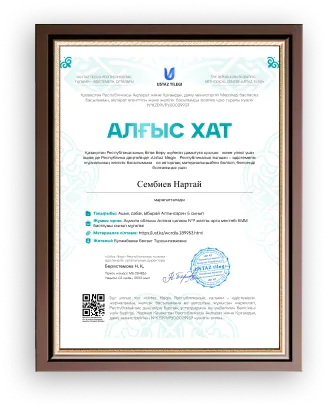
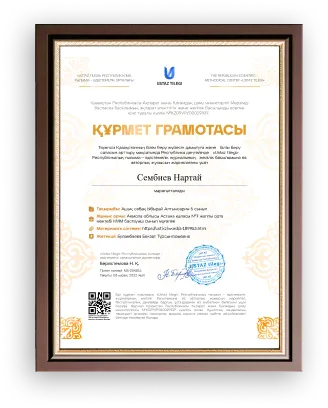
Psychological and Pedagogical Basis for Interactive English Teaching in High School
Калиева Айнара Болатовна
. Әл-Фараби атындағы №21 мамандандырылған гимназия ағылшын тілі пәні мұғалімі
Aktobe, the Republic of Kazakhstan
Psychological and Pedagogical Basis for Interactive English Teaching in High School
Abstract
This article explores the psychological and pedagogical foundations of teaching English in high schools using interactive methods. It examines key psychological theories, including constructivism, sociocultural theory, and cognitive load theory, which support the effectiveness of interactive approaches in language learning. The article also discusses pedagogical strategies such as student-centered learning, task-based language teaching, and scaffolding, highlighting their role in fostering student engagement, language acquisition, and cognitive development. Interactive methods are shown to enhance communication skills, critical thinking, and cultural awareness, providing a holistic approach to language education.
Key words
English Language Teaching, High School Education, Interactive Methods, Psychological Foundations, Pedagogical Approaches, Constructivism, Sociocultural Theory, Cognitive Load Theory, Student-Centered Learning, Task-Based Learning, Scaffolding, Communication Skills, Critical Thinking, Social Awareness, Language Acquisition
The teaching of the English language in high schools has evolved significantly over the years, adapting to new educational theories, psychological insights, and technological advancements. In contemporary pedagogy, the emphasis has shifted from traditional, teacher-centered approaches to more interactive and student-centered methods that engage learners actively in the learning process. Interactive teaching methods, such as group discussions, role plays, project work, and the use of digital technologies, play a crucial role in fostering language skills and enhancing students’ cognitive, emotional, and social development. This article explores the psychological and pedagogical foundations of teaching English in high school, specifically focusing on the role of interactive teaching methods in promoting language acquisition and overall student growth.
Psychological Foundations of Interactive Teaching Methods
To understand the effectiveness of interactive methods, it is essential to examine the psychological theories that inform these practices. Human cognition, behavior, and motivation are central to the learning process. Psychological research provides valuable insights into how students process language and engage with new material, which has direct implications for teaching strategies.
1. Constructivist Theory
Constructivist theory, particularly as espoused by theorists such as Piaget and Vygotsky, is central to the design of interactive language teaching methods. According to constructivism, learners actively construct their own understanding and knowledge through experiences and interactions. This view contrasts with the traditional "banking" model of education, where teachers deposit knowledge into passive students.
In the context of teaching English, interactive methods align with constructivist principles by encouraging students to engage with the language in a meaningful way. For instance, activities like group work, debates, and problem-solving tasks help students construct their understanding of language rules and usage through real-life contexts. These activities promote active learning, where students collaborate, discuss, and share ideas, all of which contribute to deeper cognitive processing and more lasting retention of information.
2. Sociocultural Theory
Vygotsky’s sociocultural theory emphasizes the importance of social interaction in learning. He proposed that cognitive development is deeply influenced by social context and that language is a tool for thinking and communicating within social environments. In a high school English classroom, interactive methods that promote communication and collaboration align with this theory. For example, pair and group activities, where students practice speaking and listening, mirror the ways in which language is learned in authentic social settings.
Vygotsky also introduced the concept of the Zone of Proximal Development (ZPD), which refers to the difference between what a learner can do independently and what they can do with guidance from a more knowledgeable peer or teacher. Interactive methods, such as collaborative learning and peer teaching, capitalize on the ZPD by providing students with the support they need to tackle more complex tasks, thus promoting higher-order thinking and language proficiency.
3. Cognitive Load Theory
Cognitive Load Theory, proposed by John Sweller, posits that learners have a limited amount of cognitive resources available at any given time. If these resources are overloaded with too much information, learning can be hindered. Interactive methods help manage cognitive load by promoting learning that is focused, structured, and engaging. For example, rather than presenting students with long lectures or extensive readings, teachers can use techniques such as multimedia presentations, role-playing, or problem-solving tasks, which allow students to process smaller, more digestible chunks of information.
By engaging students in interactive activities, teachers reduce the cognitive load and provide opportunities for students to practice and apply what they’ve learned in real-world contexts. These methods encourage active engagement, which helps to avoid overloading students with unnecessary information and enables them to retain and recall the material more effectively.
Pedagogical Foundations of Interactive Teaching Methods
Pedagogical approaches guide how teachers design and implement teaching strategies to achieve desired learning outcomes. Interactive methods are grounded in pedagogical principles that promote student engagement, critical thinking, and the development of language skills. These principles are rooted in educational philosophy, curriculum theory, and instructional design.
1. Student-Centered Learning
One of the core tenets of modern pedagogy is student-centered learning, which focuses on the needs, interests, and abilities of students rather than on the teacher as the sole source of knowledge. In an interactive English classroom, students are active participants in the learning process, taking responsibility for their own learning while the teacher acts as a facilitator and guide. This approach allows for a more personalized learning experience, where students can pursue topics of interest, work at their own pace, and engage in activities that align with their learning styles.
Interactive methods such as pair work, group discussions, and task-based learning allow students to interact with peers, thereby creating an environment where students’ ideas, questions, and experiences contribute to the learning process. This type of pedagogical approach fosters autonomy, creativity, and critical thinking, all of which are essential for language acquisition.
2. Task-Based Language Teaching (TBLT)
Task-Based Language Teaching (TBLT) is an approach that centers around the completion of real-world tasks as the primary focus of learning. In the context of high school English, tasks could include writing emails, giving presentations, participating in debates, or conducting interviews. TBLT emphasizes the importance of language use in context and encourages students to practice English in meaningful, real-life situations.
This approach allows students to apply their language skills in a practical setting, thus reinforcing their learning. TBLT also encourages collaboration, as students often work in pairs or groups to complete tasks. These interactions provide ample opportunities for students to practice listening, speaking, and negotiating meaning, all of which contribute to language development.
3. Scaffolding
Scaffolding is a pedagogical technique that involves providing temporary support to students as they develop new skills or understanding. The teacher provides guidance, feedback, and resources, gradually removing this support as the student becomes more proficient. In the case of English language teaching, scaffolding can be seen in activities such as guided reading, structured writing exercises, and sentence-building tasks.
Interactive teaching methods often incorporate scaffolding to ensure that students have the necessary support to succeed. For example, a teacher might begin with a structured activity such as a vocabulary exercise, then progress to a more complex activity such as a group discussion where students can apply the vocabulary in context. As students gain confidence and competence, the teacher reduces the level of support, allowing the students to take on more independent learning tasks.
Benefits of Interactive Methods for English Language Teaching
The use of interactive teaching methods in the high school English classroom offers several benefits, both for students and teachers. These methods foster the development of language skills, cognitive abilities, and social competencies.
1. Enhanced Engagement and Motivation
Interactive teaching methods increase student engagement by providing opportunities for active participation. When students are involved in their learning, they are more likely to be motivated to learn and retain new information. Activities such as games, role-playing, and peer interactions make learning more enjoyable and less monotonous, which in turn boosts students' motivation to learn English.
2. Development of Communication Skills
Interactive methods emphasize communication, both verbal and non-verbal. Activities such as debates, interviews, and group discussions provide students with the opportunity to practice speaking and listening in real-life contexts. These activities enhance students’ ability to communicate effectively in English, a skill that is crucial for both academic success and social interactions.
3. Critical Thinking and Problem-Solving
By engaging in tasks that require collaboration, debate, and decision-making, students develop critical thinking and problem-solving skills. Interactive methods encourage students to analyze information, weigh different perspectives, and come to well-reasoned conclusions. These cognitive skills are essential not only for language acquisition but also for students' overall academic and personal growth.
4. Cultural and Social Awareness
Many interactive teaching methods involve working with peers from diverse backgrounds. This exposure to different perspectives fosters cultural awareness and social understanding. In an increasingly globalized world, these competencies are essential for effective communication and collaboration in English, which is a global lingua franca.
Conclusion
Interactive teaching methods are rooted in sound psychological and pedagogical principles that promote student engagement, language acquisition, and personal development. By incorporating interactive activities into the English curriculum, teachers can create a dynamic and supportive learning environment that caters to students' diverse needs and learning styles. These methods not only improve students' linguistic abilities but also foster critical thinking, collaboration, and social awareness. In this way, interactive teaching methods represent an effective and holistic approach to teaching English in high school, preparing students for both academic success and real-world challenges.
List of used literature
Vygotsky, L. S. (1978).
Mind in Society: The Development of Higher Psychological Processes.
Cambridge, MA: Harvard University Press. pp. 79–91.
Description: This work lays the foundation for the sociocultural theory of learning, emphasizing the importance of social interaction and language in cognitive development.Piaget, J. (1976).
The Child and Reality: Problems of Genetic Psychology.
New York, NY: Viking Press. pp. 42–55.
Description: Piaget’s work is essential for understanding constructivism in education, where learners actively construct knowledge through their experiences.Sweller, J. (1988).
Cognitive Load During Problem Solving: Effects on Learning.
Cognitive Science, 12(2), pp. 257–285.
Description: This paper introduces the concept of Cognitive Load Theory, discussing how learning can be hindered if cognitive resources are overloaded, thus highlighting the importance of structured interactive methods.Brown, H. D. (2000).
Principles of Language Learning and Teaching.
White Plains, NY: Pearson Education. pp. 112–130.
Description: Brown's work offers foundational concepts in second language acquisition and pedagogical approaches, including task-based learning and communicative language teaching.Richards, J. C., & Rodgers, T. S. (2014).
Approaches and Methods in Language Teaching.
Cambridge: Cambridge University Press. pp. 96–115.
Description: This book outlines various language teaching methods, including communicative language teaching and task-based approaches, and examines their pedagogical foundations.Woolfolk, A. (2016).
Educational Psychology (12th ed.).
Boston, MA: Pearson. pp. 273–290.
Description: Woolfolk provides a comprehensive overview of psychological theories that influence educational practices, including motivation, cognitive development, and the role of social interactions in learning.Harmer, J. (2007).
The Practice of English Language Teaching (4th ed.).
Harlow, UK: Pearson Longman. pp. 68–88.
Description: Harmer's work focuses on practical approaches to teaching English as a foreign language, emphasizing interactive and communicative methods that foster student engagement.Ellis, R. (2003).
Task-Based Language Learning and Teaching.
Oxford: Oxford University Press. pp. 45–67.
Description: Ellis explores the task-based approach in language learning, emphasizing real-world tasks as central to language acquisition, supporting the use of interactive methods.Johnson, K. (2008).
An Introduction to Foreign Language Learning and Teaching.
Harlow, UK: Pearson Longman. pp. 154–172.
Description: This book provides insights into effective foreign language teaching methods, including communicative, task-based, and interactive approaches that engage students.Gardner, H. (1993).
Frames of Mind: The Theory of Multiple Intelligences.
New York, NY: Basic Books. pp. 201–215.
Description: Gardner’s theory of multiple intelligences supports the use of diverse interactive teaching methods, recognizing that learners have different strengths and can be engaged in various ways.Shulman, L. S. (1987).
Knowledge and Teaching: Foundations of the New Reform.
Harvard Educational Review, 57(1), pp. 1–22.
Description: Shulman’s work is critical in understanding pedagogical content knowledge (PCK), which highlights the integration of subject matter knowledge, teaching methods, and learner psychology.

 Жүктеу


 Жүктеу
шағым қалдыра аласыз


 Бұл курс Қазақстан Республикасы Оқу-ағарту министрлігімен келісілген










