
 ЖИ көмекші


жүктеу мүмкіндігіне ие боласыз
Бұл материал сайт қолданушысы жариялаған. Материалдың ішінде жазылған барлық ақпаратқа жауапкершілікті жариялаған қолданушы жауап береді. Ұстаз тілегі тек ақпаратты таратуға қолдау көрсетеді. Егер материал сіздің авторлық құқығыңызды бұзған болса немесе басқа да себептермен сайттан өшіру керек деп ойласаңыз осында жазыңыз
 03 Ақпан 2025
 94
94
The Role of Teacher Feedback in English Language Development
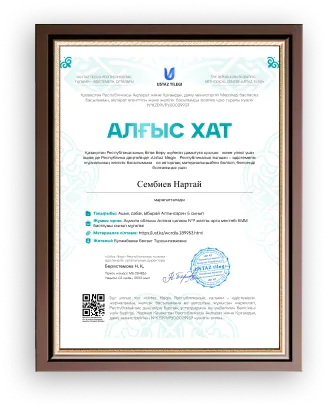
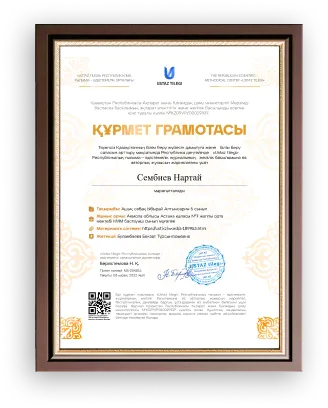
Тақырыбы: The Role of Teacher Feedback
in English Language Development
Introduction
Feedback is widely regarded as one of the most crucial components of effective language learning, particularly in the acquisition of English as a second language. For English learners, receiving timely, constructive, and clear feedback from teachers plays an essential role in their language development. Feedback offers learners an opportunity to reflect on their progress, identify areas for improvement, and develop a deeper understanding of language rules and usage. This article examines the role of teacher feedback in English language development, exploring its different types, impact on language acquisition, and practical strategies for effective feedback delivery.
Types of Teacher Feedback
-
Formative Feedback
Formative feedback is integral to the learning process as it provides continuous assessment throughout the course or lesson. Unlike summative feedback, which evaluates performance at the end of a learning period, formative feedback is designed to inform students of their current progress and guide them toward improvement. In English language classrooms, formative feedback may focus on specific language skills, such as grammar, vocabulary, pronunciation, and fluency. For example, teachers might provide immediate correction during a speaking activity or offer suggestions for improvement in writing tasks. This ongoing feedback process ensures that students are continuously adjusting and improving their skills.
-
Summative Feedback
Summative feedback, on the other hand, is typically provided at the end of an assessment or learning period. It is often used for evaluation purposes, offering a comprehensive view of a learner’s overall performance. While summative feedback can include grades, scores, or marks, it is also an opportunity for teachers to give more detailed reflections on a student’s strengths and areas for improvement. In English language development, summative feedback can help students understand the overall quality of their language use, but it may not offer as much detailed, actionable guidance as formative feedback.
-
Corrective Feedback
Corrective feedback is perhaps the most widely recognized form of feedback in language learning. It specifically targets language errors and aims to help learners produce accurate language forms. In English, corrective feedback may focus on grammar mistakes (e.g., tense errors), lexical issues (e.g., improper word choice), pronunciation, or sentence structure. There are several approaches to providing corrective feedback:
-
Direct feedback: The teacher explicitly corrects the error by providing the correct form.
-
Indirect feedback: The teacher highlights the error, often with a question or a symbol, encouraging the learner to self-correct.
-
Recasts: The teacher repeats the learner's incorrect sentence but in the correct form, without drawing attention to the mistake.
-
Clarification requests: The teacher asks the learner to clarify or repeat the sentence, signaling that there may be an error without directly pointing it out.
Research suggests that corrective feedback is most effective when delivered promptly and clearly. Students benefit from immediate feedback as it allows them to notice the mistake and understand how to correct it in real time.
-
Praise and Encouragement
While much of the focus on teacher feedback is on error correction, praise and encouragement are equally important components of feedback. Positive reinforcement motivates students to continue learning and boosts their self-confidence. In the context of English language learning, praise can highlight a learner's correct use of new vocabulary, accurate pronunciation, or fluent speech. Encouragement is essential, especially when students feel uncertain or frustrated with their language progress. A teacher who praises effort and persistence, even if mistakes are made, can create a more positive and supportive classroom atmosphere, which encourages active participation and risk-taking in language use.
Effectiveness of Teacher Feedback
The effectiveness of teacher feedback depends on several factors, including the timing, clarity, and relevance of the feedback. First, feedback must be timely. Immediate feedback, especially in oral interactions, ensures that students understand the error while they are still processing the language. Delayed feedback, on the other hand, may lead to confusion or make it harder for the student to associate the feedback with the specific error.
Clarity and specificity also play a crucial role in the effectiveness of feedback. Vague comments like "good job" or "try harder" offer little insight into what the learner is doing well or where improvements are needed. Instead, feedback should be specific, such as “You correctly used the past tense here, but make sure to add an article in this sentence,” which gives the learner clear guidance on how to improve.
Another important factor is the emotional and psychological impact of feedback. Research shows that learners are more likely to accept and act upon feedback when it is delivered in a supportive and non-threatening manner. Positive feedback, coupled with constructive criticism, helps maintain the learner’s motivation and willingness to engage with the learning process. On the contrary, overly critical or harsh feedback can lead to frustration and demotivation, which may hinder the learning process.
Finally, feedback is most effective when it encourages learners to take an active role in their own development. Feedback that focuses on self-reflection and strategies for improvement empowers students to become more autonomous and responsible for their language learning. This type of feedback encourages learners to identify their own mistakes, understand why they occur, and apply the correct form in future situations.
Impact of Teacher Feedback on English Language Development
Teacher feedback directly impacts the development of a variety of language skills. For example:
-
Speaking: Feedback on pronunciation, fluency, and vocabulary usage helps students improve their spoken language skills. Teachers can correct specific pronunciation errors, suggest more natural ways to express ideas, and encourage students to practice speaking in a more confident and fluid manner.
-
Writing: In written tasks, feedback helps students refine their writing, focusing on areas such as grammar, sentence structure, coherence, and organization. Writing feedback is particularly effective when teachers provide examples of how to correct mistakes and offer suggestions for improving writing style.
-
Reading: Feedback on reading comprehension can help students recognize strategies to better understand texts. Teachers can guide students on how to infer meaning from context, highlight important details, and analyze texts critically.
-
Listening: Feedback on listening tasks can assist learners in developing better listening strategies, such as identifying key words, recognizing speech patterns, or distinguishing between different accents. Teachers can offer feedback on specific difficulties learners face, such as misinterpreting words or phrases, and suggest ways to improve listening skills.
In addition to these skills, teacher feedback also contributes to learners' cognitive and metacognitive development. Learners who receive detailed feedback gain insight into the strategies they can use to correct their mistakes. This encourages deeper thinking about the language and how it functions, leading to better retention and use of language.
Challenges of Providing Effective Feedback
Despite its benefits, providing effective feedback in language classrooms presents challenges. One major issue is time constraints. In large classrooms, teachers may struggle to provide individual feedback to each student. To overcome this, teachers can utilize peer feedback, group work, and self-assessment, allowing students to support each other in the feedback process.
Another challenge is cultural differences in how feedback is perceived. In some cultures, direct corrective feedback may be seen as confrontational or disrespectful. Teachers need to be aware of cultural norms and adjust their feedback delivery accordingly. For example, in some Asian cultures, students may feel uncomfortable receiving direct corrections in front of their peers. In these cases, private feedback sessions or more subtle methods of correction may be more appropriate.
Moreover, feedback overload is a common issue. Providing too much feedback at once can overwhelm learners and make it difficult for them to focus on specific areas of improvement. Teachers should prioritize key areas for development and offer manageable amounts of feedback to avoid overwhelming students.
Conclusion
In conclusion, teacher feedback plays a vital role in English language development. Whether through formative or summative assessments, corrective feedback, or praise and encouragement, feedback helps learners refine their skills, build confidence, and improve language proficiency. For feedback to be effective, it must be timely, specific, constructive, and supportive. Teachers who are skilled in providing clear and actionable feedback can significantly enhance the learning experience and empower students to become more autonomous learners. However, challenges such as time constraints, cultural differences, and feedback overload must be addressed to maximize the effectiveness of feedback. Ultimately, when used properly, teacher feedback fosters a positive learning environment, encourages students to take risks, and helps them progress on their language learning journey.
References
-
Ellis, R. (2009). Corrective Feedback in Second Language Teaching and Learning. Cambridge University Press.
-
Hattie, J., & Timperley, H. (2007). The Power of Feedback. Review of Educational Research, 77(1), 81-112.
-
Lyster, R., & Saito, K. (2010). Oral Corrective Feedback in Second Language Classrooms. Studies in Second Language Acquisition, 32(2), 265-302.
-
Black, P., & Wiliam, D. (1998). Assessment and Classroom Learning. Assessment in Education: Principles, Policy & Practice, 5(1), 7-74.
-
Shute, V. J. (2008). Focus on Formative Feedback. Review of Educational Research, 78(1), 153-189.
-
Brookhart, S. M. (2008). How to Give Effective Feedback to Your Students. ASCD.

 Жүктеу


 Жүктеу
шағым қалдыра аласыз


 Бұл курс Қазақстан Республикасы Оқу-ағарту министрлігімен келісілген










