
 ЖИ көмекші


 Қауіпсіз төлем

жүктеу мүмкіндігіне ие боласыз
Бұл материал сайт қолданушысы жариялаған. Материалдың ішінде жазылған барлық ақпаратқа жауапкершілікті жариялаған қолданушы жауап береді. Ұстаз тілегі тек ақпаратты таратуға қолдау көрсетеді. Егер материал сіздің авторлық құқығыңызды бұзған болса немесе басқа да себептермен сайттан өшіру керек деп ойласаңыз осында жазыңыз
 13 Сәуір 2026
 31
31
1 жыл бойы шексіз жүктеңіз
Use comparative and superlative adjectives
|
Unit 6 |
lesson 62 |
||
|
School: |
|
||
|
Teacher name: |
|
||
|
Date: |
February, 2026 |
||
|
Grade: 7 |
Number present: |
absent: |
|
|
Lesson title |
Use comparative and superlative adjectives |
||
|
Learning objectives |
7. 5. 3. 1 write some familiar general and academic topics with consistent grammatical competence; 7.6.3.1 use common participles as adjectives and order adjectives correctly in front of nouns on a growing range of familiar general and curricular topics |
||
|
Lesson objectives
|
Students will be able to: Learn comparative and superlative forms of adjectives. Make sentences using comparative and superlative adjectives. |
||
|
Stages/ Time |
Teacher’s actions |
Student’s actions |
Assessment |
Resources |
|
Beginning 5 min |
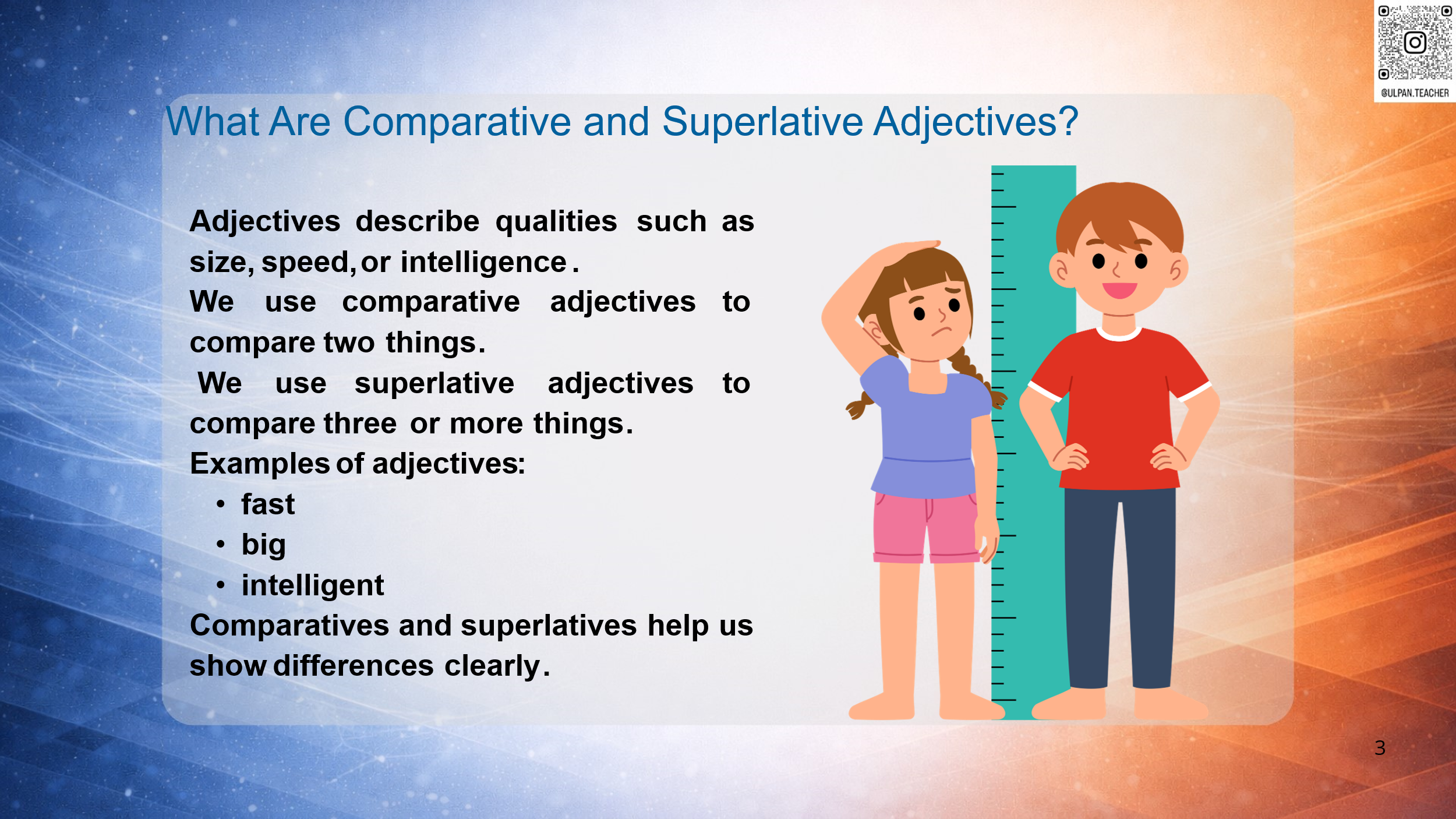
Greeting. Warm up: Word rebus Teacher tells the class to make groups of 2. Students sing a song “We are the champions”. Then they divided into two groups by method “ticket”. There are lyrics of the song “We are the champions” at the back side of the airplane tickets. And who has red lyrics is one team, who has blue lyrics is other team. After dividing into two team, provide students with traditional Kazakh foods like baursak, kurt, and irimshik, and ask them to identify which one is tastier, and which one is their favorite and the saltiest. Elicit that we use comparatives when we are comparing two things, and we use superlatives when we are talking about how one thing stands out in a group. The aim of this activity is to promote and appreciate national traditions and values. |
Students work in groups, Students try national kazakh foods and describe which is the saltiest, which tastes better, and which is their favorite, share ideas, and guess the lesson topic. |
Teacher provide constructive feedback to students through encouraging remarks such as “Excellent work,” “Well done,” or other supportive phrases that recognize effort and achievement. |
|
|
Middle 10 min |
Ex:1 P:73 - Explain students rules of the comparative and superlative adjectives and ask students to copy the table into their notebooks. - Point out that comparative and superlative adjectives are missing and need to be completed. - Give students time to complete the missing forms individually. - Monitor the class and support where necessary. - Check answers as a class, asking students to spell the completed forms aloud. Values of the program “Birtutas tarbiye” – Justice and responsibility Understanding the need and importance of performing important tasks for others. |
Students complete the table with comparative and superlative adjectives. ANSWERS 1 faster 2 bigger 3 noisiest 4 more artistic 5 the most intelligent |
Descriptor: - complete the table with comparative and superlative adjectives. - point out that only regular forms are gapped
Excellent (3): Accurately completed the table with correct comparative and superlative forms. Good (2): Completed most forms correctly with some spelling mistakes. |
|
|
7 min |
Ex:2 - Give students time to look carefully at the pictures. - Teacher presents two products with prices and gives instructions for comparison task. - Monitor and support students as they work. - Check answers as a class, asking students to read out the completed sentences of their team. - Clarify any difficulties giving examples. Functional Literacy: real-life shopping decision. Values of the program “Birtutas tarbiye” – Diligence and professional competence Showing respect for work and working people |
Students compare the prices of two products using comparative/superlative adjectives and make a justified choice. Students work as a team. Students give their own answers. |
Descriptor: - correct use of adjectives - logical comparison of prices Excellent (2): Correctly compared more than 5 products. Good (1): Correctly compared 2-4 products. |
|
|
10 min |
Ex: 4 P: 73 - Read through the table with the class. - Make sure students understand the words dolphin and marlin. Point out that the plural of marlin is marlin (not marlins). - Before students write the sentences, demonstrate how the headings in the table relate to the adjectives used in the sentences. - Look at the example with the class and elicit that the heading Speed matches the adjective fast. - With lower-level students, match all the headings with the adjectives together as a class before students begin the exercise. - Ask students to write the sentences using the information from the table. - Monitor and support students as they work. - Check answers as a class, correcting language and pronunciation where necessary. Differentiation Weaker student: Match headings and adjectives as a whole class first. Stronger student: Ask them to write an extra comparative or superlative sentence. |
Students study the information. Then make sentences using comparative and superlative forms. They complete tasks using mobile phones on ‘Wayground.com’. ANSWERS 1 The Atlantic marlin is more aggressive than the blue whale. 2 The common dolphin is the shortest. 3 The Atlantic marlin is heavier than the common dolphin. 4 The blue whale is rarer than the Atlantic marlin. 5 The blue whale is the slowest. 6 The blue whale is more intelligent than the Atlantic marlin. |
Descriptor: - reads all options carefully before answering. - gives complete and detailed answers using correct grammar and vocabulary. Excellent (2): Wrote clear and grammatically correct sentences using comparative and superlative adjectives. 4-6 correct sentences Good (1): Wrote sentences using comparatives and superlatives with some mistakes. 1-3 correct sentences |
https://wayground.com/admin/my-library/createdByMe |
|
8 min |
Ex: - Refer students pay attention to the monitor. - Teacher Launches Kahoot quiz. - Ask students to complete the adjectives based on the forms they have studied. - Monitor and support students as they work. |
Students play Kahoot, choose correct answers using their mobile phones. Complete individually/in pairs. ANSWERS 1. Faster 2. Bigger 3. The rarest 4. Noisier 5. The most artistic 6. The best 7. More intelligent |
Descriptor: - can choose comparative and superlative adjectives correctly - can compare pictures/objects correctly Excellent (3): 6-7 correct answers. Good (2): 2-5 correct answers. |
|
|
EББҚБ |
Draw student’s attention to the words and pictures. Explain the task. Let them to match words (adjectives) with pictures.
|
Student repeats the words after teacher and identify the characters of pictures, then match words (adjectives) with pictures. |
Descriptor: - can repeat and match correctly. 4 p. - Can identify pictures and words. 4 p. Total: 8 points |
|
|
End 5 min |
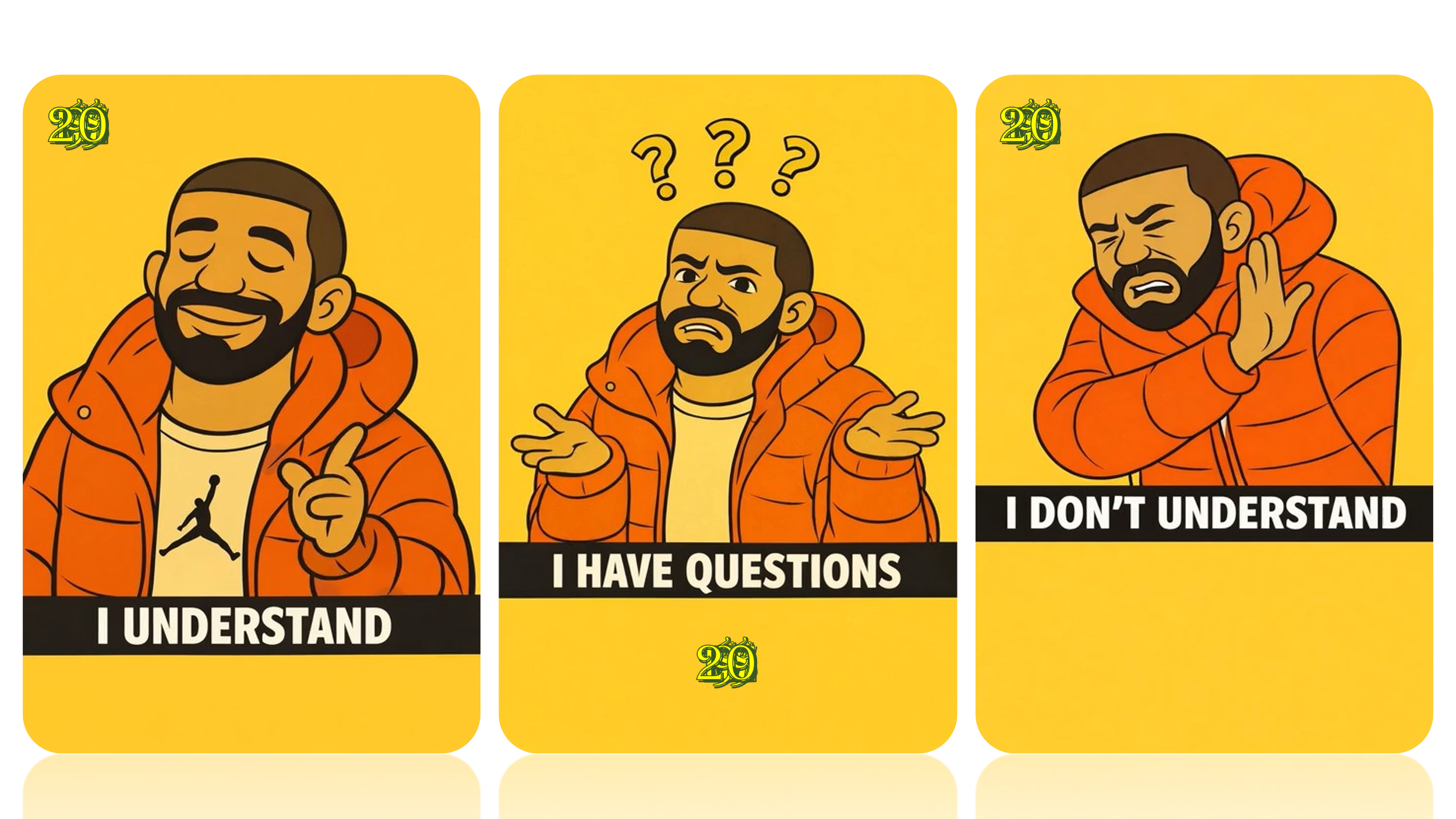
The “Can-Do” Tree: Ask students to name one thing they learned today about comparative or superlative adjectives. Give stickers or high-fives for “Hard Work and Perseverance” observed during the lesson. Traffic Light Technique: Ask students to color a small circle in their notebook: ? I can use comparative and superlative adjectives correctly. ? I understand the topic but need more practice. ? I need help with comparatives and superlatives. Homework |
Students say: “Now I can compare animals,” or “I can use the superlative form.” Students reflect on their confidence level and color their traffic light. |
|
|


















 Бұл курс Қазақстан Республикасы Оқу-ағарту министрлігімен келісілген










