
 ЖИ көмекші





Abai Qunanbaiuly

 Жүктеу
#1 слайд
Abai Qunanbaiuly
Abdiraman Erkenaz 11 R
1 слайд
Abai Qunanbaiuly Abdiraman Erkenaz 11 R
#2 слайд
2 слайд
#3 слайд
Ibrahim (Abai) Qunanbaiuly ( Абай Құнанбайұлы ; 10
August 1845 – 6 July 1904) was a Kazakh poet, composer
and Hanafi Maturidi theologian philosopher. [2]
He was also
a cultural reformer toward European and Russian cultures
on the basis of enlightened Islam . His name is also
transliterated as Abay Kunanbayev ( Абай Кунанбаев);
among Kazakhs he is known as Abai.
3 слайд
Ibrahim (Abai) Qunanbaiuly ( Абай Құнанбайұлы ; 10 August 1845 – 6 July 1904) was a Kazakh poet, composer and Hanafi Maturidi theologian philosopher. [2] He was also a cultural reformer toward European and Russian cultures on the basis of enlightened Islam . His name is also transliterated as Abay Kunanbayev ( Абай Кунанбаев); among Kazakhs he is known as Abai.
#4 слайд
Early life and education
Abai was born in Karauyl village in Chingiz volost of Semipalatinsk
uyezd of the Russian Empire (this is now in Abay District of
East Kazakhstan ). He was the son of Qunanbai and Uljan, his
father's second wife. They named him Ibrahim, as the family was
Muslim, and he stuck with the name for the first few years of his
life.
Ibrahim first studied at a local madrasah under Mullah Ahmed
Ryza. During his early childhood years in Ryza’s tutelage, he
received the nickname “Abai” (which means “careful”), a nickname
that stayed with him for the rest of his life. His father was wealthy
enough to send Abai to a Russian secondary school in Semipalatinsk
. There he read the writings of Mikhail Lermontov and
Alexander Pushkin , which were influential to his own development
as a writer. Moreover, he was fond of reading eastern poetry,
including Shahname and 1000 and 1 night. [ citation needed ]
4 слайд
Early life and education Abai was born in Karauyl village in Chingiz volost of Semipalatinsk uyezd of the Russian Empire (this is now in Abay District of East Kazakhstan ). He was the son of Qunanbai and Uljan, his father's second wife. They named him Ibrahim, as the family was Muslim, and he stuck with the name for the first few years of his life. Ibrahim first studied at a local madrasah under Mullah Ahmed Ryza. During his early childhood years in Ryza’s tutelage, he received the nickname “Abai” (which means “careful”), a nickname that stayed with him for the rest of his life. His father was wealthy enough to send Abai to a Russian secondary school in Semipalatinsk . There he read the writings of Mikhail Lermontov and Alexander Pushkin , which were influential to his own development as a writer. Moreover, he was fond of reading eastern poetry, including Shahname and 1000 and 1 night. [ citation needed ]
#5 слайд
5 слайд
#6 слайд
Legacy
The leaders of the Alash Orda movement saw him as their
inspiration and spiritual predecessor.
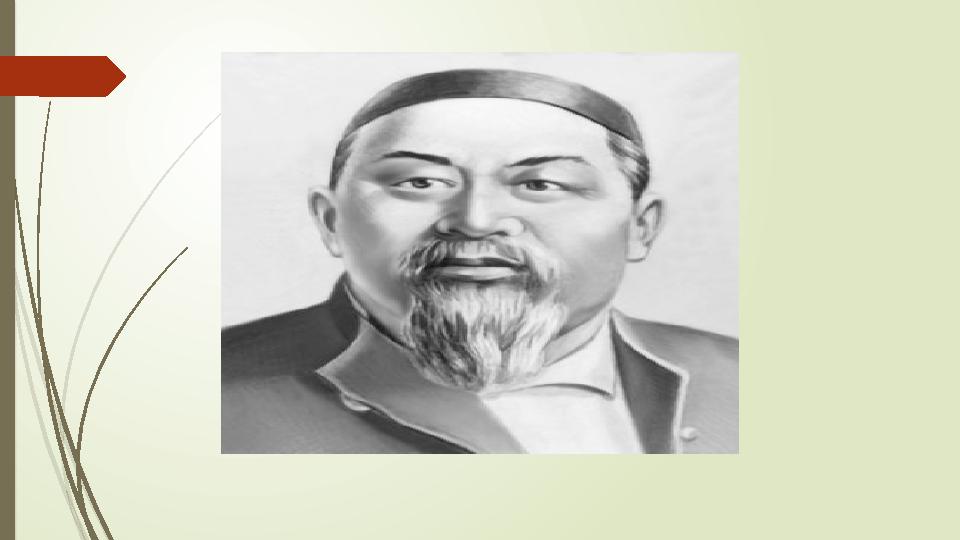
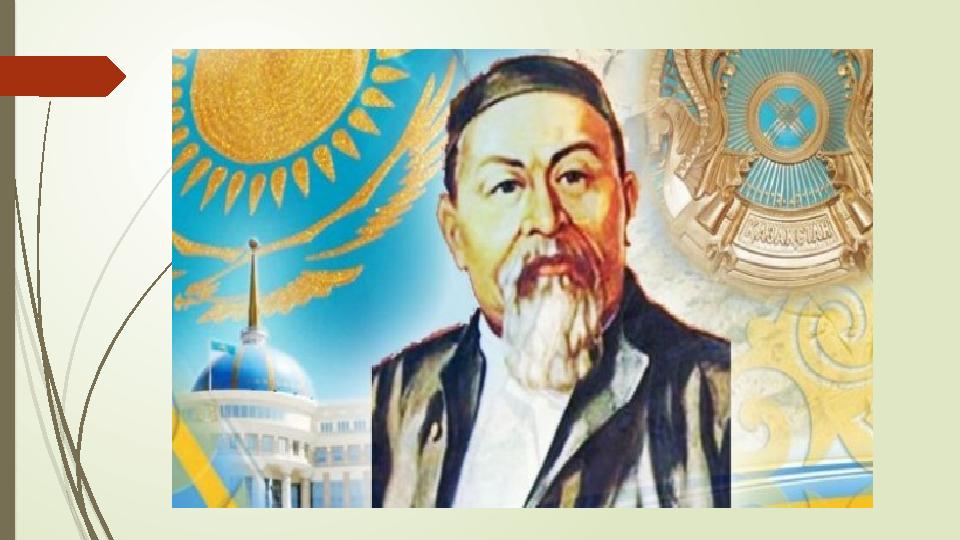
Contemporary Kazakh images of Abay generally depict him in full
traditional dress holding a dombra (the Kazakh national instrument).
Today, Kazakhs revere Abay as one of the first folk heroes to enter
into the national consciousness of his people. Kazakh National
Pedagogical University is named after Abay, so is one of the main
avenues in the city of Almaty. There are also public schools with his
name. Abay is featured on postal stamps of Kazakhstan, Soviet
Union, and India.
The Kazakh city of Abay is named after him.
Among Abay's students was his nephew, a historian, philosopher,
and poet Shakarim Qudayberdiuli (1858–1931).
6 слайд
Legacy The leaders of the Alash Orda movement saw him as their inspiration and spiritual predecessor. Contemporary Kazakh images of Abay generally depict him in full traditional dress holding a dombra (the Kazakh national instrument). Today, Kazakhs revere Abay as one of the first folk heroes to enter into the national consciousness of his people. Kazakh National Pedagogical University is named after Abay, so is one of the main avenues in the city of Almaty. There are also public schools with his name. Abay is featured on postal stamps of Kazakhstan, Soviet Union, and India. The Kazakh city of Abay is named after him. Among Abay's students was his nephew, a historian, philosopher, and poet Shakarim Qudayberdiuli (1858–1931).
#7 слайд
Works
Abay also translated into Kazakh the works of Russian and
European authors, mostly for the first time. Translations made by
him include poems by Mikhail Lermontov ,
Johann Wolfgang von Goethe , Lord Byron , Ivan Krylov
's Fables and Alexander Pushkin 's Eugene Onegin .
Abay's major work is The Book of Words (« қара сөздері», Qara
sózderi ), a theologic philosophic treatise and collection of poems
where he encourages his fellow Kazakhs to embrace education,
literacy, and good moral character in order to escape poverty,
enslavement and corruption. In Word Twenty Five , he discusses the
importance of Russian culture, as a way for Kazakhs to be exposed
to the world's cultural treasures.
7 слайд
Works Abay also translated into Kazakh the works of Russian and European authors, mostly for the first time. Translations made by him include poems by Mikhail Lermontov , Johann Wolfgang von Goethe , Lord Byron , Ivan Krylov 's Fables and Alexander Pushkin 's Eugene Onegin . Abay's major work is The Book of Words (« қара сөздері», Qara sózderi ), a theologic philosophic treatise and collection of poems where he encourages his fellow Kazakhs to embrace education, literacy, and good moral character in order to escape poverty, enslavement and corruption. In Word Twenty Five , he discusses the importance of Russian culture, as a way for Kazakhs to be exposed to the world's cultural treasures.


 Жүктеу
шағым қалдыра аласыз

 Бұл курс Қазақстан Республикасы Оқу-ағарту министрлігімен келісілген










