ЖИ көмекші





Modal Verbs
Тақырып бойынша 11 материал табылды
Modal Verbs
Материал туралы қысқаша түсінік
мұғалімдерге modal verbs тақырыбын түсіндіргенле қажет болады
Материалдың қысқаша нұсқасы
1 / 12

 Жүктеу
Бөлісу
ЖИ арқылы жасау
Слайдтың жеке беттері
#1 слайд
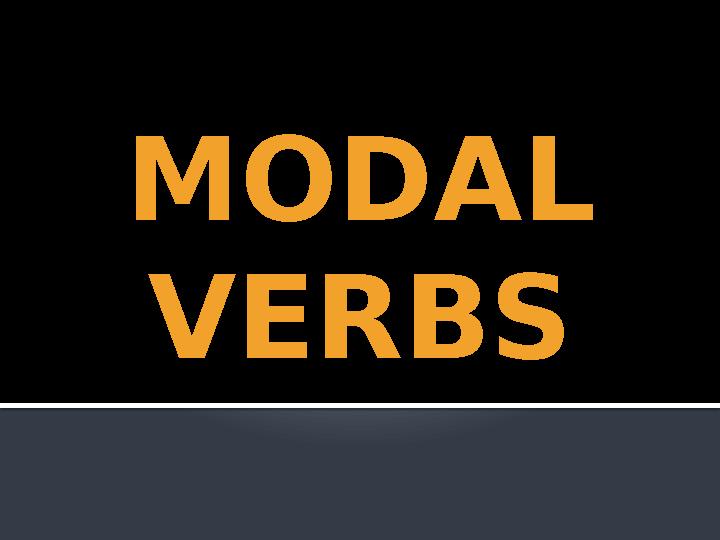
MODAL
VERBS
1 слайд
MODAL VERBS
#2 слайд
A modal verb (also modal, modal
auxiliary verb, modal auxiliary) is a
type of auxiliary verb that is used to
indicate modality – that is, likelihood,
ability, permission, and obligation.
Examples include the English verbs
can/could, may/might, must,
will/would, and shall/should.
2 слайд
A modal verb (also modal, modal auxiliary verb, modal auxiliary) is a type of auxiliary verb that is used to indicate modality – that is, likelihood, ability, permission, and obligation. Examples include the English verbs can/could, may/might, must, will/would, and shall/should.
#3 слайд
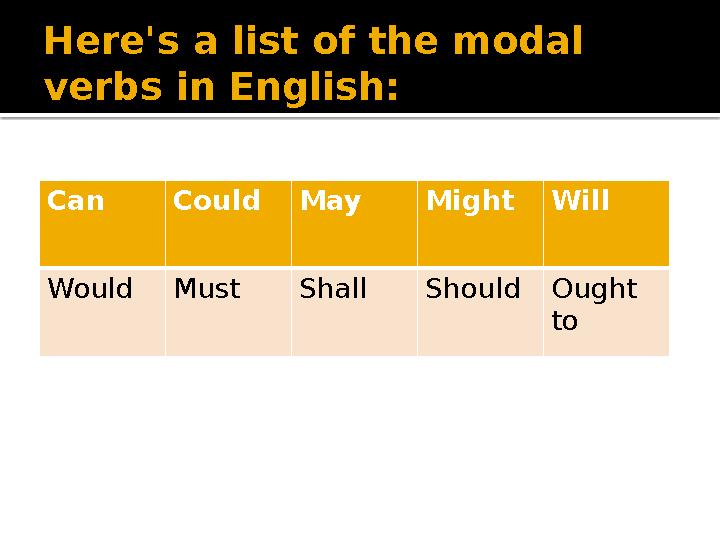
Here's a list of the modal
verbs in English:
Can Could May Might Will
Would Must Shall Should Ought
to
3 слайд
Here's a list of the modal verbs in English: Can Could May Might Will Would Must Shall Should Ought to
#4 слайд
Modals are different from normal
verbs:
1: They don't use an 's' for the third
person singular.
2: They make questions by inversion
('she can go' becomes 'can she go?').
3: They are followed directly by the
infinitive of another verb (without
'to').
4 слайд
Modals are different from normal verbs: 1: They don't use an 's' for the third person singular. 2: They make questions by inversion ('she can go' becomes 'can she go?'). 3: They are followed directly by the infinitive of another verb (without 'to').
#5 слайд
Probability:
First, they can be used when we want to say how
sure we are that something happened / is
happening / will happen. We often call these
'modals of deduction' or 'speculation' or
'certainty' or 'probability'.
For example:
It's snowing, so it must be very cold outside.
I don't know where John is. He could have
missed the train.
This bill can't be right. £200 for two cups of
coffee!
5 слайд
Probability: First, they can be used when we want to say how sure we are that something happened / is happening / will happen. We often call these 'modals of deduction' or 'speculation' or 'certainty' or 'probability'. For example: It's snowing, so it must be very cold outside. I don't know where John is. He could have missed the train. This bill can't be right. £200 for two cups of coffee!
#6 слайд
Ability
We use 'can' and 'could' to talk about
a skill or ability.
For example:
She can speak six languages.
My grandfather could play golf very
well.
I can't drive.
6 слайд
Ability We use 'can' and 'could' to talk about a skill or ability. For example: She can speak six languages. My grandfather could play golf very well. I can't drive.
#7 слайд
Obligation and Advice
We can use verbs such as 'must' or
'should' to say when something is
necessary or unnecessary, or to give
advice.
For example:
Children must do their homework.
We have to wear a uniform at work.
You should stop smoking.
7 слайд
Obligation and Advice We can use verbs such as 'must' or 'should' to say when something is necessary or unnecessary, or to give advice. For example: Children must do their homework. We have to wear a uniform at work. You should stop smoking.
#8 слайд
Permission
We can use verbs such as 'can',
'could' and 'may' to ask for and give
permission. We also use modal verbs
to say something is not allowed.
For example:
Could I leave early today, please?
You may not use the car tonight.
Can we swim in the lake?
8 слайд
Permission We can use verbs such as 'can', 'could' and 'may' to ask for and give permission. We also use modal verbs to say something is not allowed. For example: Could I leave early today, please? You may not use the car tonight. Can we swim in the lake?
#9 слайд
Habits
We can use 'will' and 'would' to talk
about habits or things we usually do,
or did in the past.
For example:
When I lived in Italy,
we would often eat in the
restaurant next to my flat.
John will always be late!
9 слайд
Habits We can use 'will' and 'would' to talk about habits or things we usually do, or did in the past. For example: When I lived in Italy, we would often eat in the restaurant next to my flat. John will always be late!
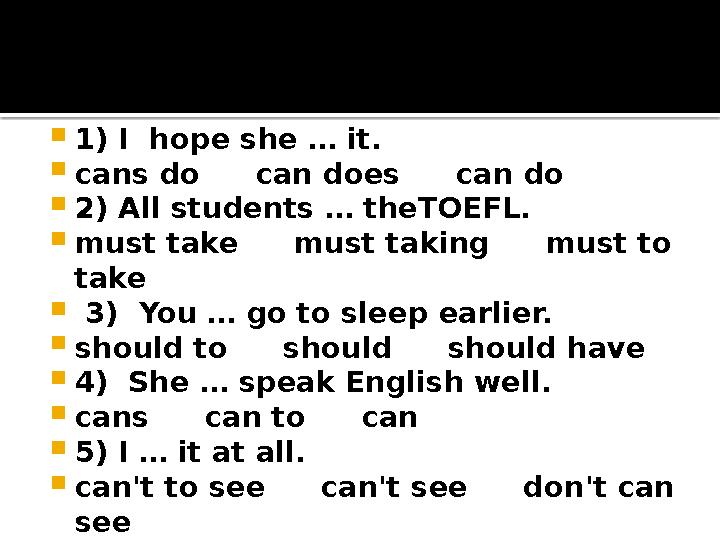
#10 слайд
1) I hope she … it.
cans do can does can do
2) All students … theTOEFL.
must take must taking must to
take
3) You … go to sleep earlier.
should to should should have
4) She … speak English well.
cans can to can
5) I … it at all.
can't to see can't see don't can
see
10 слайд
1) I hope she … it. cans do can does can do 2) All students … theTOEFL. must take must taking must to take 3) You … go to sleep earlier. should to should should have 4) She … speak English well. cans can to can 5) I … it at all. can't to see can't see don't can see
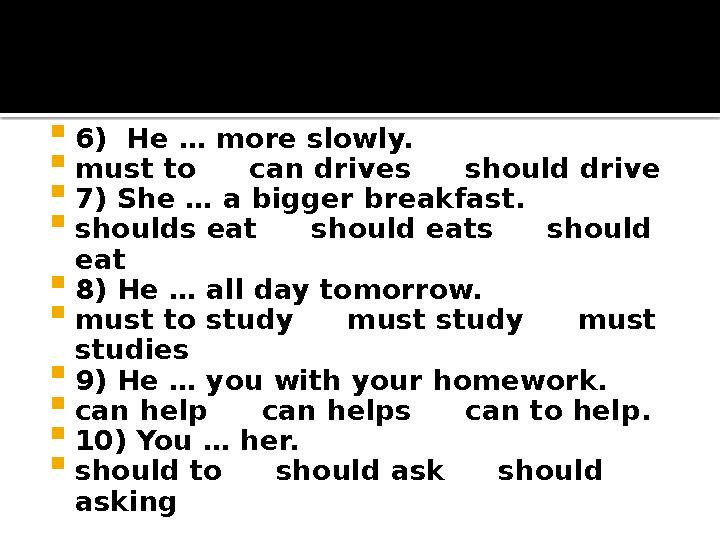
#11 слайд
6) He … more slowly.
must to can drives should drive
7) She … a bigger breakfast.
shoulds eat should eats should
eat
8) He … all day tomorrow.
must to study must study must
studies
9) He … you with your homework.
can help can helps can to help.
10) You … her.
should to should ask should
asking
11 слайд
6) He … more slowly. must to can drives should drive 7) She … a bigger breakfast. shoulds eat should eats should eat 8) He … all day tomorrow. must to study must study must studies 9) He … you with your homework. can help can helps can to help. 10) You … her. should to should ask should asking
Файл форматы:

pptx

09.04.2019

810
Жүктеу
ЖИ арқылы жасау
Жариялаған:
Бұл материалды қолданушы жариялаған. Ustaz Tilegi ақпаратты жеткізуші ғана болып табылады. Жарияланған материалдың мазмұны мен авторлық құқық толықтай автордың жауапкершілігінде. Егер материал авторлық құқықты бұзады немесе сайттан алынуы тиіс деп есептесеңіз,
шағым қалдыра аласыз
шағым қалдыра аласыз