
 ЖИ көмекші





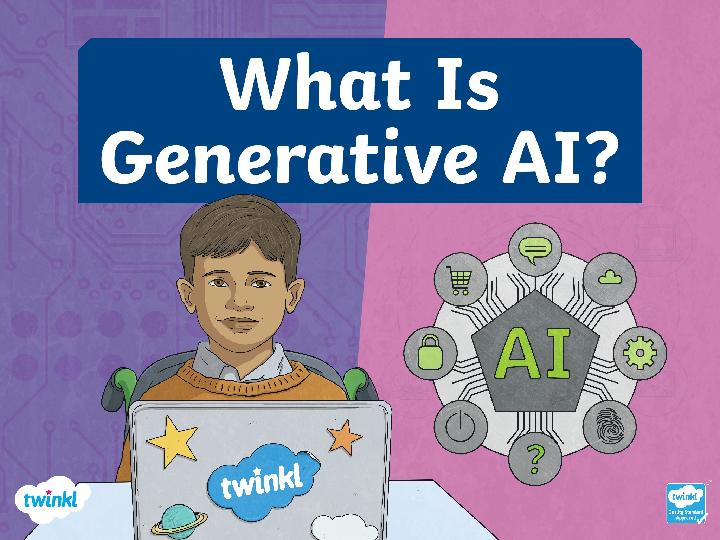
What is the AI?

 Жүктеу
#1 слайд
1 слайд
#2 слайд
What Is Generative
AI?
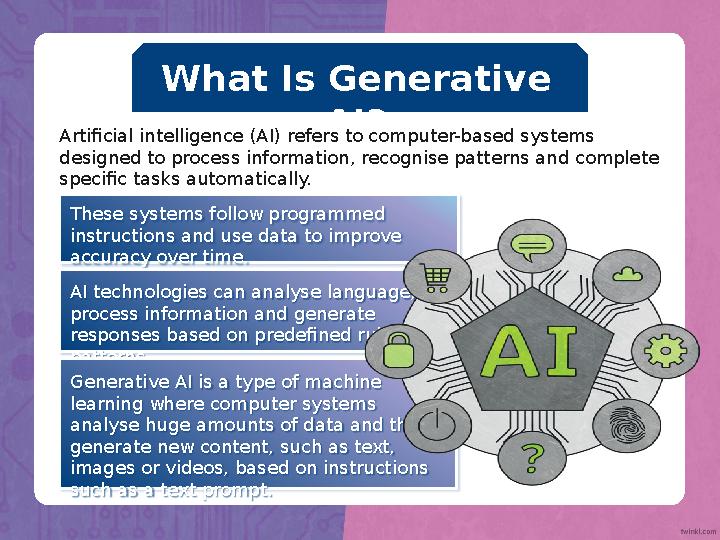
These systems follow programmed
instructions and use data to improve
accuracy over time.
Artificial intelligence (AI) refers to computer-based systems
designed to process information, recognise patterns and complete
specific tasks automatically.
AI technologies can analyse language,
process information and generate
responses based on predefined rules and
patterns.
Generative AI is a type of machine
learning where computer systems
analyse huge amounts of data and then
generate new content, such as text,
images or videos, based on instructions
such as a text prompt.
2 слайд
What Is Generative AI? These systems follow programmed instructions and use data to improve accuracy over time. Artificial intelligence (AI) refers to computer-based systems designed to process information, recognise patterns and complete specific tasks automatically. AI technologies can analyse language, process information and generate responses based on predefined rules and patterns. Generative AI is a type of machine learning where computer systems analyse huge amounts of data and then generate new content, such as text, images or videos, based on instructions such as a text prompt.
#3 слайд
How Does Generative AI
Work?
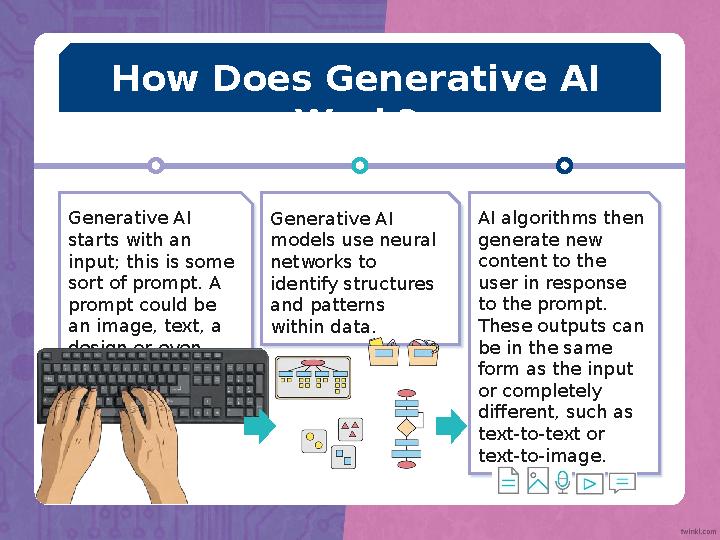
Generative AI
starts with an
input; this is some
sort of prompt. A
prompt could be
an image, text, a
design or even
musical notes.
Generative AI
models use neural
networks to
identify structures
and patterns
within data.
AI algorithms then
generate new
content to the
user in response
to the prompt.
These outputs can
be in the same
form as the input
or completely
different, such as
text-to-text or
text-to-image.
3 слайд
How Does Generative AI Work? Generative AI starts with an input; this is some sort of prompt. A prompt could be an image, text, a design or even musical notes. Generative AI models use neural networks to identify structures and patterns within data. AI algorithms then generate new content to the user in response to the prompt. These outputs can be in the same form as the input or completely different, such as text-to-text or text-to-image.
#4 слайд
History of Generative AI
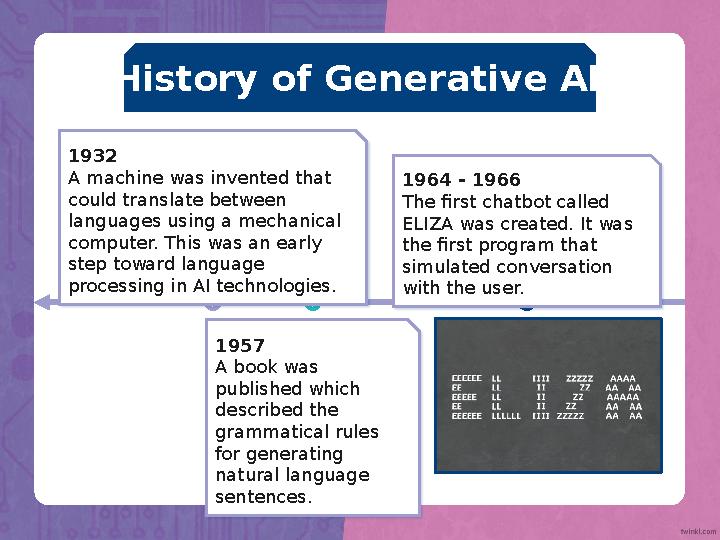
1957
A book was
published which
described the
grammatical rules
for generating
natural language
sentences.
1932
A machine was invented that
could translate between
languages using a mechanical
computer. This was an early
step toward language
processing in AI technologies.
1964 - 1966
The first chatbot called
ELIZA was created. It was
the first program that
simulated conversation
with the user.
4 слайд
History of Generative AI 1957 A book was published which described the grammatical rules for generating natural language sentences. 1932 A machine was invented that could translate between languages using a mechanical computer. This was an early step toward language processing in AI technologies. 1964 - 1966 The first chatbot called ELIZA was created. It was the first program that simulated conversation with the user.
#5 слайд
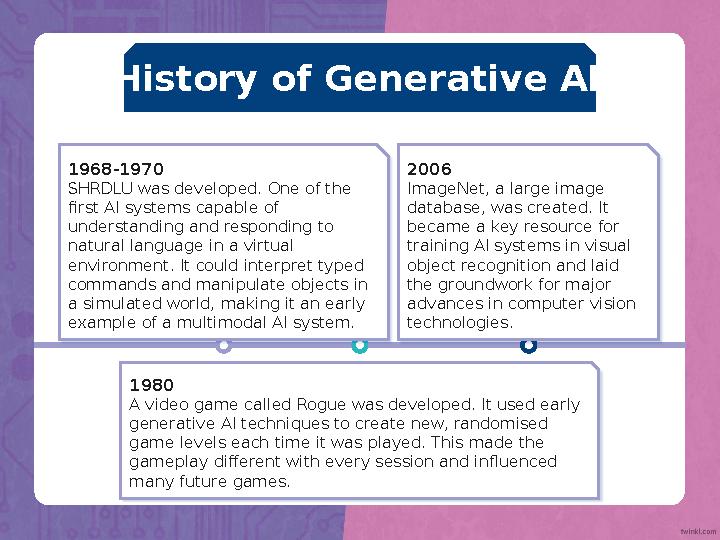
History of Generative AI
1980
A video game called Rogue was developed. It used early
generative AI techniques to create new, randomised
game levels each time it was played. This made the
gameplay different with every session and influenced
many future games.
1968-1970
SHRDLU was developed. One of the
first AI systems capable of
understanding and responding to
natural language in a virtual
environment. It could interpret typed
commands and manipulate objects in
a simulated world, making it an early
example of a multimodal AI system.
2006
ImageNet, a large image
database, was created. It
became a key resource for
training AI systems in visual
object recognition and laid
the groundwork for major
advances in computer vision
technologies.
5 слайд
History of Generative AI 1980 A video game called Rogue was developed. It used early generative AI techniques to create new, randomised game levels each time it was played. This made the gameplay different with every session and influenced many future games. 1968-1970 SHRDLU was developed. One of the first AI systems capable of understanding and responding to natural language in a virtual environment. It could interpret typed commands and manipulate objects in a simulated world, making it an early example of a multimodal AI system. 2006 ImageNet, a large image database, was created. It became a key resource for training AI systems in visual object recognition and laid the groundwork for major advances in computer vision technologies.
#6 слайд
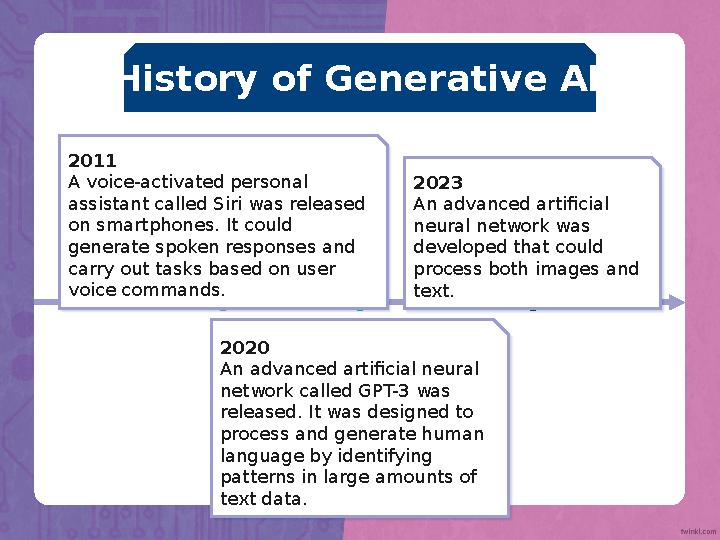
History of Generative AI
2020
An advanced artificial neural
network called GPT-3 was
released. It was designed to
process and generate human
language by identifying
patterns in large amounts of
text data.
2011
A voice-activated personal
assistant called Siri was released
on smartphones. It could
generate spoken responses and
carry out tasks based on user
voice commands.
2023
An advanced artificial
neural network was
developed that could
process both images and
text.
6 слайд
History of Generative AI 2020 An advanced artificial neural network called GPT-3 was released. It was designed to process and generate human language by identifying patterns in large amounts of text data. 2011 A voice-activated personal assistant called Siri was released on smartphones. It could generate spoken responses and carry out tasks based on user voice commands. 2023 An advanced artificial neural network was developed that could process both images and text.
#7 слайд
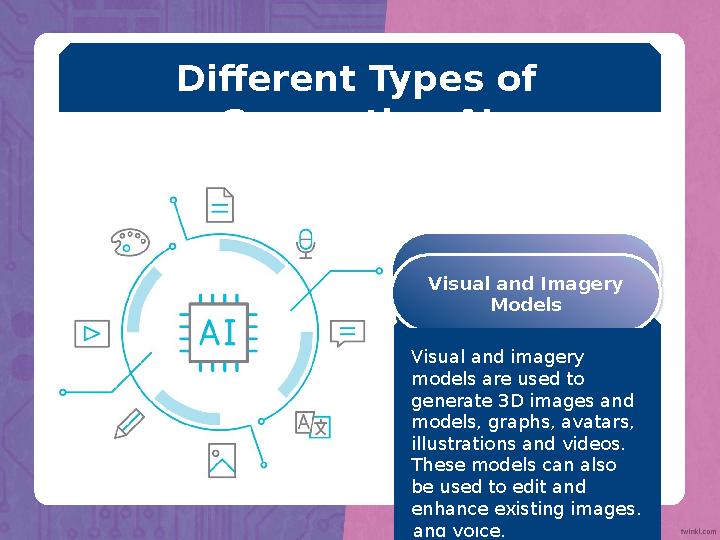
Different Types of
Generative AI
Language Models
Language models are
used for a wide range of
tasks, such as
translation, academic
writing, code writing,
grammar correction and
even genetic sequencing.
Audio and Speech
Models
Audio and speech
models are able to
develop and edit songs,
support dictation and
transcription, create
accompanying sounds or
noises for video footage,
add dubbing to videos
and recognise speech
and voice.
Visual and Imagery
Models
Visual and imagery
models are used to
generate 3D images and
models, graphs, avatars,
illustrations and videos.
These models can also
be used to edit and
enhance existing images.
7 слайд
Different Types of Generative AI Language Models Language models are used for a wide range of tasks, such as translation, academic writing, code writing, grammar correction and even genetic sequencing. Audio and Speech Models Audio and speech models are able to develop and edit songs, support dictation and transcription, create accompanying sounds or noises for video footage, add dubbing to videos and recognise speech and voice. Visual and Imagery Models Visual and imagery models are used to generate 3D images and models, graphs, avatars, illustrations and videos. These models can also be used to edit and enhance existing images.
#8 слайд
Advantages of
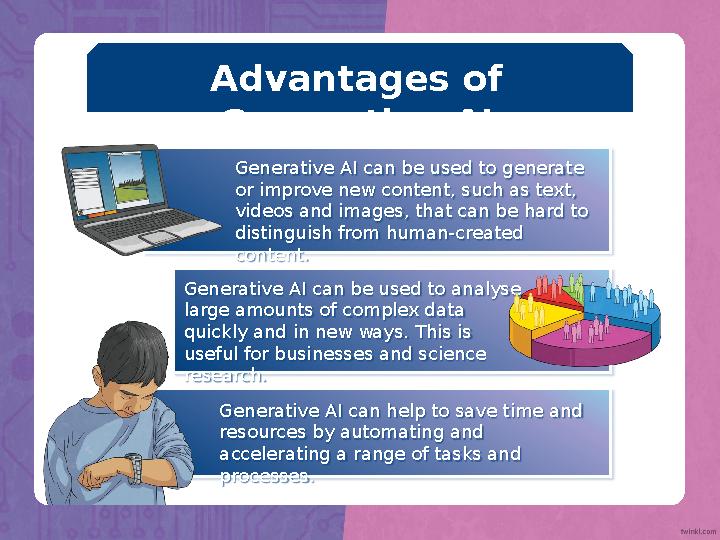
Generative AI
Generative AI can be used to generate
or improve new content, such as text,
videos and images, that can be hard to
distinguish from human-created
content.
Generative AI can be used to analyse
large amounts of complex data
quickly and in new ways. This is
useful for businesses and science
research.
Generative AI can help to save time and
resources by automating and
accelerating a range of tasks and
processes.
8 слайд
Advantages of Generative AI Generative AI can be used to generate or improve new content, such as text, videos and images, that can be hard to distinguish from human-created content. Generative AI can be used to analyse large amounts of complex data quickly and in new ways. This is useful for businesses and science research. Generative AI can help to save time and resources by automating and accelerating a range of tasks and processes.
#9 слайд
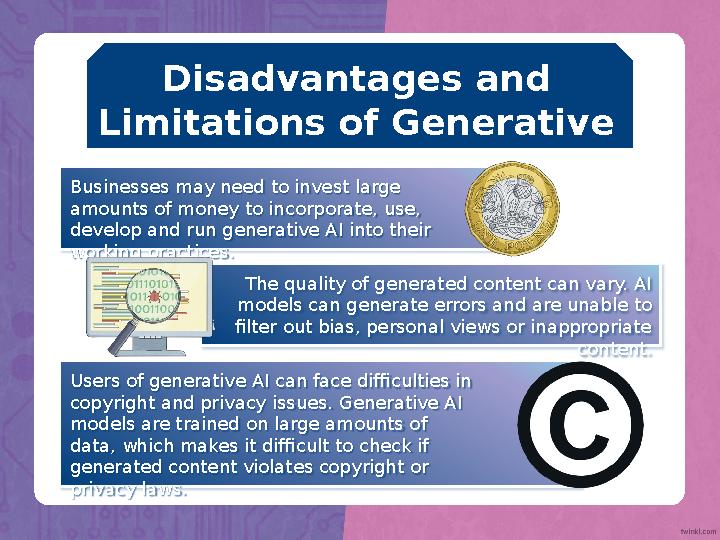
Disadvantages and
Limitations of Generative
AI
Businesses may need to invest large
amounts of money to incorporate, use,
develop and run generative AI into their
working practices.
The quality of generated content can vary. AI
models can generate errors and are unable to
filter out bias, personal views or inappropriate
content.
Users of generative AI can face difficulties in
copyright and privacy issues. Generative AI
models are trained on large amounts of
data, which makes it difficult to check if
generated content violates copyright or
privacy laws.
9 слайд
Disadvantages and Limitations of Generative AI Businesses may need to invest large amounts of money to incorporate, use, develop and run generative AI into their working practices. The quality of generated content can vary. AI models can generate errors and are unable to filter out bias, personal views or inappropriate content. Users of generative AI can face difficulties in copyright and privacy issues. Generative AI models are trained on large amounts of data, which makes it difficult to check if generated content violates copyright or privacy laws.
#10 слайд
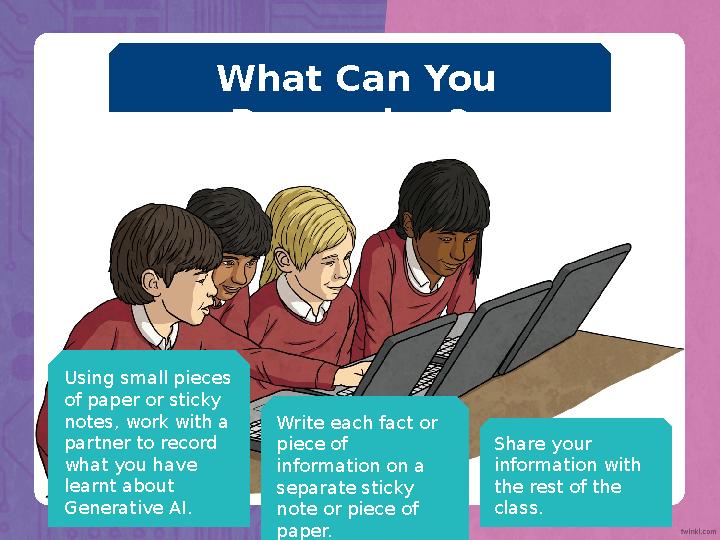
What Can You
Remember?
Using small pieces
of paper or sticky
notes, work with a
partner to record
what you have
learnt about
Generative AI.
Write each fact or
piece of
information on a
separate sticky
note or piece of
paper.
Share your
information with
the rest of the
class.
10 слайд
What Can You Remember? Using small pieces of paper or sticky notes, work with a partner to record what you have learnt about Generative AI. Write each fact or piece of information on a separate sticky note or piece of paper. Share your information with the rest of the class.
#11 слайд
11 слайд


 Жүктеу
шағым қалдыра аласыз
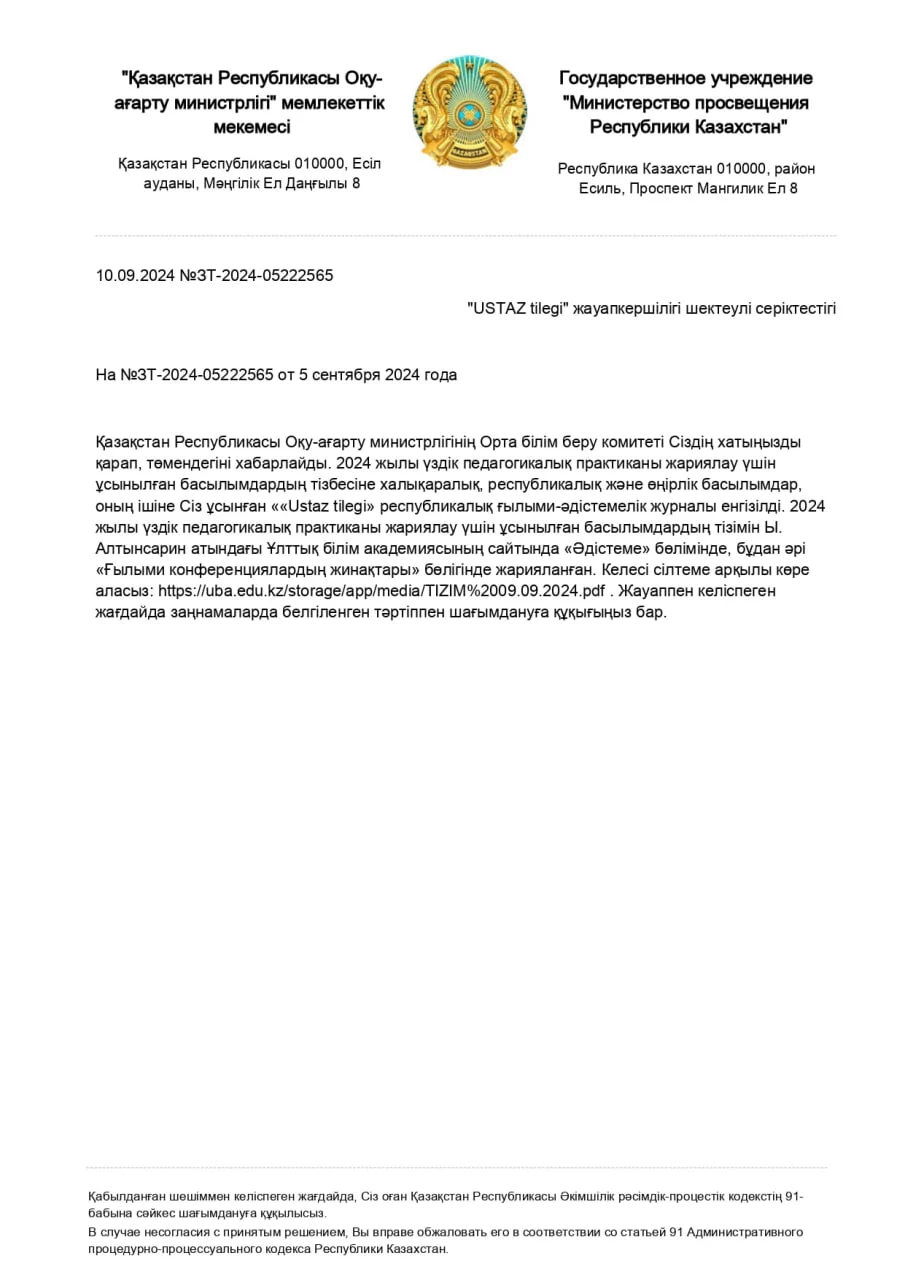

 Бұл курс Қазақстан Республикасы Оқу-ағарту министрлігімен келісілген










