4 сынып қмж ағылшын 3 тоқсандыкы

Тақырып бойынша 29 материал табылды

4 сынып қмж ағылшын 3 тоқсандыкы

Материал туралы қысқаша түсінік
Қмж
Материалдың қысқаша нұсқасы

Unit 5: Hot and Cold

School:


Date:

Teacher name:

Grade: 4

Number present:

Number absent:

Theme of the lesson:

Hot and Cold

Learning objectives

4.L9 recognise words that are spelt out from a limited rung of general and curricular topics

4.S1 make basic statements which provide information on an increasing range of general and some curricular topics

4.R5 understand the main points of short simple texts on a limited range of familiar general and some curricular topics by using contextual clues

objectives

All learners will be able to:

recognise and use some target language correctly and show comprehension of some written and spoken familiar words in simple sentences, talk about the weather; to talk about summer and winter activities

Most learners will be able to:

recognise and use most target language correctly and show comprehension of most written and spoken familiar words in simple sentences talk about the weather; to talk about summer and winter activities

Some learners will be able to:

recognise and use target language correctly with clear pronunciation and good comprehension of written and spoken familiar words in simple sentences talk about the weather; to talk about summer and winter activities

Criteria

Learners will need to be familiar with/ Structures: comparisons; the verb 'have got'; there is/are. Target vocabulary

Previous learning

Unit revision

Plan

Planned timings


Planned activities


Learners’ activities

Evaluation

Resources

Begining

5 min

GREETINGS. INTRODUCE THE OBJECTIVES.

Warm up

Teacher greets learners and asks questions about the day, date and the weather:

  • What is the weather like today?

  • What season is it now? Is it hot or cold in winter?

Teacher elicits the topic of the from learners and write the topic on the board “Weather”

Greeting


Learners answer


Middle

30 min

Step 1 Look at the picture

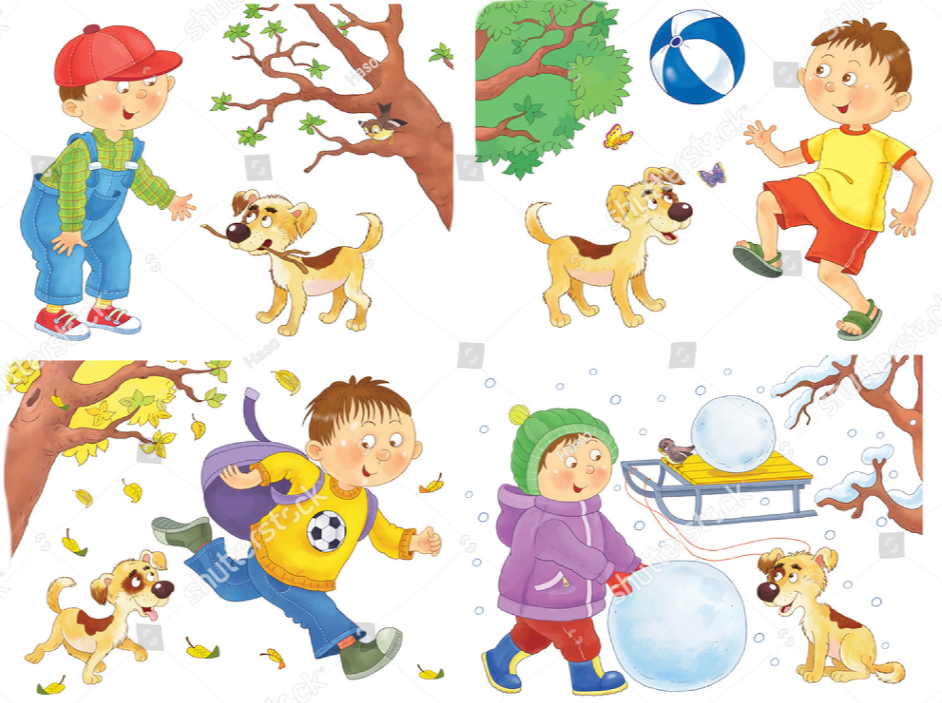
Refer the pupils to the pictures and have a picture discussion. Elicit what season it is, what's the weather like, what the children are doing and what they're wearing (e.g. Is it winter or summer? Is it cold or hot? etc).

Explain the activity. Go through the questions and elicit/explain any unknown vocabulary.


Step 2 Listen, point and repeat. Answer the questions.

Pupils' books closed. Put the flashcards up on the board. Point to the flashcards, one at a time, and say the corresponding phrases. The pupils repeat, chorally and/or individually. Point to them in random order. Ask individual pupils to name them. Ask the rest of the class for verification.

Pupils' books open. Play the CD.The pupils listen, point to the words and repeat.


Step 3 Read and match. Then say.

Pupils' books closed. Write on the board a summer activity and a winter activity. Ask the pupils What do you do in summer? Elicit answers (e.g. I go swimming.). Give verification to the pupils by saying (Swimming) is a summer activity. Repeat the same in order to elicit winter activities.

Pupils' books open. Explain the activity. Go through the prompts and elicit/explain any unknown words.


Learners look ans discuss


Learners listen, point and repeat. Then answer the questions


Learners read and match


Verbal evaluation


Mutual avaluatio


Individual avaluation


Pupils book

(Track 1 CD2)


FLASHCARDS (29-36)


Pupils book 65 CB Ex. 3


End

10 min

REFLECTION

Put the flashcards on the board. Point to a picture and say a type of weather condition, sometimes saying the correct one and sometimes not. Ask the pupils to say yes or no. e.g.

Home task: learn the new vocabulary

Saying goodbye


Self-assessment


Unit 5: Hot and Cold

School:


Date:

Teacher name:

Grade: 4

Number present:

Number absent:

Theme of the lesson:

Weather 1


Learning objectives

4.L9 recognise words that are spelt out from a limited rung of general and curricular topics

4.W5 link with some support sentences using basic coordinating connectors

4.UE16 use conjunctions and, or, but, because to link words and phrases

objectives

All learners will be able to:

Do reading tasks with support;

Fill in the gaps with 80% of correct words in writing task;

Answer the questions giving a short answer;

Most learners will be able to:

Do reading tasks without support;

Fill in the gaps with 90% of correct words in writing task;

Give a full answer to the questions;

Some learners will be able to:

Do reading tasks independently and support other ss;

Fill in the gaps with 100% of correct words in writing task;

Give an extended answer to the question;

Criteria

Learners will need to be familiar with/ Structures: comparisons; the verb 'have got'; there is/are.

Previous learning

Weather 1

Plan

Planned timings


Planned activities


Learners’ activities

Evaluation

Resources

Begining

5 min

GREETINGS. INTRODUCE THE OBJECTIVES.

Teacher greets learners and asks questions about the day, date and the weather

Have learners write the date and topic of the lesson.

Draw learners’ attention to the objectives and make sure they all understand them.

Greeting


White board/ markers


Middle

30 min

Pre-learning activities:

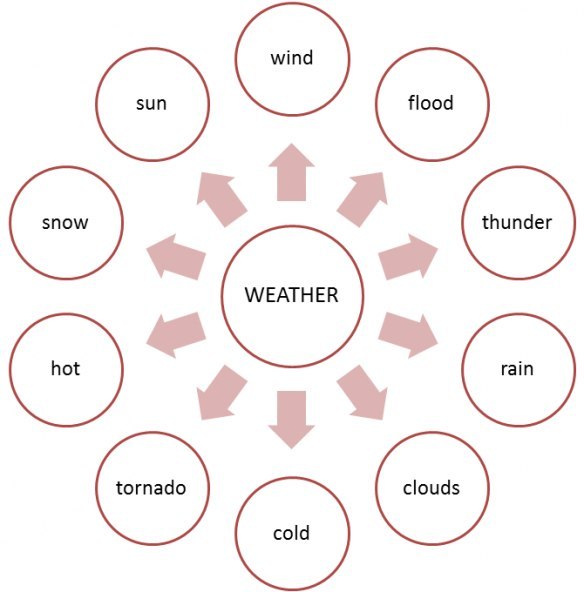
Teacher divides the class into 2-3 groups, hands in a sheet of blank paper and asks them draw a mind map with the weather words they know from their prior learning.

Ask groups present their findings before the class and compare their knowledge of words. Whole class discussion.


Listening and writing practice

Ask learners make two columns in copybooks and write two headings “Country” and “Weather”. For listening practice.. Video is played 3rd time for learners to check.


Match the words to the pictures. Then listen and check?

Pupils' books closed. Put up the Camping poster on the board. Point to the items, one at a time, and say the corresponding words. The pupils repeat, chorally and/or individually. Point to each item in random order. Ask individual pupils to name them.

Pupils' books open. Play the CD. The pupils listen and repeat. If you wish, play the CD again pausing after each word.The pupils repeat, chorally and/or individually.

Allow the pupils some time to complete the activity.Then they listen again and check their answers.


Learners follow the instructions


Learners swap copybooks and peer check each other


Leasrners match the words to the pictures, then listen and check


Learners read the words and match them to the pictures.


Verbal evaluation


Individual avaluation


Mutual avaluatio


A blank sheet of paper, magnets, white board.


End

10 min

REFLECTION

What have you learnt today? Name the words you learnt.

What task was easy and hard for you?

Home task: Ex: 1 at page 48

Saying goodbye


Self-assessment


Unit 5: Hot and Cold

School:


Date:

Teacher name:

Grade: 4

Number present:

Number absent:

Theme of the lesson:

Weather 1


Learning objectives

4.R5 understand the main points of short simple texts on a limited range of familiar general and some curricular topics by using contextual clues

4.W7 spell most familiar high-frequency words accurately when writing independently

4.UE10 use common present continuous forms, including short answers and contractions, to talk about what is happening now and future arrangements on a limited range of personal and familiar topics/ using –ing forms swimming, spelling as nouns to describe familiar and classroom activities

objectives

All learners will be able to:

recognise and use some target language correctly and show comprehension of some written and spoken familiar words in simple sentences to talk about camping and camping safety

Most learners will be able to:

recognise and use most target language correctly and show comprehension of most written and spoken familiar words in simple sentences to talk about camping and camping safety

Some learners will be able to:

recognise and use target language correctly with clear pronunciation and good comprehension of written and spoken familiar words in simple sentences to talk about camping and camping safety

Criteria

Learners will need to be familiar with/ Structures: present continuous; -ing form; conjunctions. Swimming is usually a summer activity but skiing is a winter activity. What am I doing? You're swimming. It's summer! Target vocabulary Weather

Previous learning

Weather 1

Plan

Planned timings


Planned activities

Learners’ activities

Evaluation

Resources

Begining

5 min

GREETINGS.

Introduce the objectives.

Invite a pupil to come to the front of the classroom. Ask him/her to think of a weather condition and mime it. The rest of the class has to guess the weather condition.The pupil that guesses correctly first, comes to the front of the classroom and the game continues.

Greeting


Learners mime weather condition


Verbal evaluation


Middle

30 min

STUDY SPOT (Activities to present and practise 'have to/don't have to'and 'must/mustn't’.)

Complete the sentences. Use: must or mustn't.

Pupils' books closed. Say and write on the board: You must do your homework. You mustn't throw rubbish. The pupils repeat, chorally and/or individually. Underline the words in bold and explain/elicit that these are modal verbs. Explain that we use must for obligation and mustn't for prohibition. Then say and write on the board: You have to study for the test. You don't have to wear a jacket. The pupils repeat, chorally and/or individually. Underline the words in bold and explain that we use have to for necessity and don't have to for lack of necessity. Explain that the modal verbs are the same for all persons.

Complete the questions. Then answer them. Ex 8

Explain the activity. Allow the pupils some time to complete the activity. Then ask individual pupils to report back to the class.


Let’s Play ex 9

Read the example and explain the game. Go through the pictures and elicit the activities. Divide the pupils into pairs or teams.


Learners complete the sentences. Use: must or mustn't.


Learners complete the questions. Then they answer the questions about themselves.


Learners take turns making sentences


Individual avaluation


Mutual avaluatio


End

10 min

REFLECTION

(An activity to consolidate the language of the lesson.)

Write on the board a word from Ex. 5 with scrambled letters. Ask a pupil to come to the board and write the word. Ask the rest of the pupils for verification. Repeat with other pupils.

Home task: Ex: 6 at page 49 (Activity book)

Saying goodbye


Self-assessment


Unit 5: Hot and Cold

School:


Date:

Teacher name:

Grade: 4

Number present:

Number absent:

Theme of the lesson:

Weather 2


Learning objectives

4.L4 understand a limited range of short supported questions on general and some curricular topics

4.R6 understand with some support, some specific information and detail in short, simple texts on a growing range of general and some curricular topics

4.S2 ask questions to find out about present and possibly past experiences on an increasing range of general and some curricular topics

4.W7 spell most familiar high-frequency words accurately when writing independently

objectives

All learners will be able to:

To develop listening and reading comprehension skills through a story; to practise talking about camping; to learn how to distinguish between

Most learners will be able to:

To develop listening and reading comprehension skills through a story; to practise talking about camping; to learn how to distinguish between

Some learners will be able to:

To develop listening and reading comprehension skills through a story; to practise talking about camping; to learn how to distinguish between

Criteria

Learners will need to be familiar with Structures: have to/don't have to,

must/mustn't.

Language in use: You must have warm, clothes. You mustn't drop litter. Do I have to g bring a tent? No, you don't have to.Target vocabulary |

Camping items: campfire, firewood, rope. fishing rod, first-aid kit, blanket, camp stove, . cool box, whistle, penknife, safety, campsite, sleeping bag, tent

Previous learning

Weather 1

Plan

Planned timings


Planned activities


Learners’ activities

Evaluation

Resources

Begining

5 min

GREETINGS.

INTRODUCE THE OBJECTIVES.

Ask individual pupils to talk about camping safety using must or mustn't.

e.g. Pupil 1: You mustn't feed the animals.

Pupil 2: You must keep your food in a cool box. et

Greeting


POSTER

Middle

30 min

Step 1 Listen and read.

Go through the pictures of the story and set the scene by asking the pupils questions about what they can see in the pictures.

Step 2 Read the story again and say if the sentences are True or False.

Allow the pupils some time to read the story again silently and complete the activity. Check their answers.

Step 3 Read the story again and answer. Read the story again and match.

Allow the pupils some time to read the story again. Then they complete the activity. Check their answers.

Step 4 Talking point. Listen and read. Make a new dialogue with your friend.

Refer the pupils to the picture and the dialogue. Play the CD.The pupils listen and follow along. The pupils, in pairs, act out similar dialogues about themselves. Go around the classroom providing any necessary help. Ask some pairs to come to the front of the classroom and act out the dialogue. If you wish, write the following on the board so the pupils can refer to it while they are completing the activity.

Step 5 Listen, point and repeat.

Refer the pupils to the picture. Elicit knight, light, spy and sky. Draw the pupils' attention again to the /ах/ sound. Remind them of the different spellings (-igh, -y). Allow the pupils some time to complete the missing letters. Play the CD for the pupils to listen and check their answers.

Learners listen and read


Learners say if the sentences are True or False


Learners read and match


Learners make a new dialogue with your friend.


Learners complete, then listen and repeat.

Individual avaluation


Verbal evaluation


Mutual avaluatio


End

10 min

REFLECTION PAPER

Red stars – you had many mistakes today. Yellow stars- it was difficult, but you did it well, Green stars – you did everything correctly.

Home task: to write a title for the story and report back to the class for the next lesson.

Saying goodbye

Learners put the stars into the night sky.

Self-assessment


Unit 5: Hot and Cold

School:


Date:

Teacher name:

Grade: 4

Number present:

Number absent:

Theme of the lesson:

Weather 2

Learning objectives

4.S4 respond to questions on an increasing range of general and some curricular topics

4.S7 contribute a growing range of suitable words, phrases, and sentences including giving opinions during short pair, group and whole class exchanges

4.W4 write with support short basic sentences with appropriate spaces between words

4.W8 to include appropriate use of a full stops and question marks, as sentence level with some accuracy when writing independently

objectives

All learners will be able to:

recognise and use some target language correctly and show comprehension of some written and spoken familiar words in simple sentences

Most learners will be able to:

recognise and use most target language correctly and show comprehension of most written and spoken familiar words in simple sentences

Some learners will be able to:

recognise and use target language correctly with clear pronunciation and good comprehension of written and spoken familiar words in simple sentences

Criteria

To talk about weather and natural disasters.

Previous learning

Weather 2

Plan

Planned timings


Planned activities


Learners’ activities

Evaluation

Resources

Begining

5 min

GREETINGS. INTRODUCE THE OBJECTIVES.

Ask two pupils to come to the front of the classroom and act out the dialogue from the previous (Ex. 13). Repeat the activity with other pupils.

Greeting


Middle

30 min

Step 1 Listen, point and repeat.

Pupils' books closed. Put the Weather poster up on the board. Point to the items, one at a time, and say the corresponding words. Point to each item in random order. Ask individual pupils to name them.

Pupils' books open. Play the CD. The pupils listen, point to the words and repeat. If you wish, play the Step 2 STUDY SPOT. Make sentences.

Pupils' books closed. Briefly revise the modal can. Explain that it is the same for all persons. Then, say and write on the board: Can you close the door, please? Yes, I can. The pupils repeat chorally and/or individually. Underline the word in bold and explain that we use can for requests. Then, say and write on the board: Can I go out, dad? No, you can't. Underline the word in bold and explain that we also use can to ask for permission.

Step 3 STUDY SPOT. Complete. Then act out.

Read aloud the example and explain the activity, Allow the pupils some time to complete it. Check their answers.

Step 4 What does the teacher have the children do when there is a fire drill? Listen and number. Then say. Elicit/explain what a fire drill is. Read the instructions and explain the activity. Play the CD.The Check their answers.Then, read aloud the example and ask individual pupils to tell you what the teacher has the children do when there is a fire drill.

Learners look, choose and write. Then listen and check.


Learners complete the activity


Learners complete. Then act out.


Learners listen and number the prompts.

Verbal evaluation


Individual avaluation


Mutual avaluatio


Individual avaluation


End

10 min

An activity to consolidate the language of the lesson.

Write the prompts on the board. If you wish, you can use your own prompts.

Ask two pupils to come to the front of the classroom. Repeat with other pupils.

Home task: Ex: 12 at page 51

Saying goodbye


One pupil asks a question using can and one of the prompts. The other pupil replies according to the prompts.

Self-assessment


Unit 5: Hot and Cold

School:


Date:

Teacher name:

Grade: 4

Number present:

Number absent:

Theme of the lesson:

Volcanoes


Learning objectives

4.L3 understand the main points of short supported talk on an increasing range of general and some curricular topics

4.R5 understand the main points of short simple texts on a limited range of familiar general and some curricular topics by using contextual clues

4.W2 begin to use joined-up handwriting in a limited range of written work

objectives

All learners will be able to:

recognise and use some target language correctly and show comprehension of some written and spoken familiar words in simple sentences To revise weather and camping; to talk about I I volcanoes; to write about a campsite in my country; to develop the pupils' listening skills through a song.

Criteria

Learners will need to be familiar with/reminded of the formation and use of Structures: can (request/permission). use: Can you open the window, please? Can I use your phone? Yes, you can. No, you can't. The teacher has the children walk to the main door. Target vocabulary Weather: flood, storm, thunder and I lightning, avalanche, tornado, hail

Previous learning

Weather 2

Plan

Planned timings


Planned activities

Learners’ activities

Evaluation

Resources

Begining

5 min

GREETINGS.

INTRODUCE THE OBJECTIVES.

Ask the pupils to make up 3 sentences about a weather condition or natural disaster from the previous without saying what it is.Then in pairs, the pupils say their sentences to their partner and see if they can guess the correct answer.

Greeting


Learners make up sentences


Verbal evaluation


Middle

30 min

Step 1 Read and underline. Then listen and check.

Explain the activity. Allow the pupils some time to read the text and underline the correct words. Play the CD. The pupils listen and check their answers.

Step 2 Listen and circle.

Read aloud the title and elicit from the pupils what they know about volcanoes. Explain the activity. Go through the sentences and elicit/explain any unknown words. Play the CD.. Check their answers.


AUDIOSCRIPT

And now let's talk about volcanoes. Did you know that the word Volcano comes from the word Vulcan, the Roman god of fire? Yes, that's right. As for the largest active volcano, that's Mauna Loa and it's in Hawaii. So if you want to see it up dose, then you have to visit Hawaii. And when you are in Hawaii, you can visit other volcanoes, too. Why? Because most volcanoes are in the Pacific Ocean. There are more than 1,000 volcanoes, but there aren't any volcanoes in the UK. And did you know that


Step 3 PORTFOLIO: Portfolio: Talk with your friends. Then write a small text about a campsite in your country.

The pupils, in pairs or in groups, talk about a campsite in their country. For homework, tell the pupils to write about the campsite using the text in Ex. 21 as a model. Then help them file their writing activities in their Language Portfolios.


Learners read the text and underline the correct words


Learners listen and circle the correct word/phrase


Learners listen and discuss


Learners

write a small text about a campsite in your country


Individual avaluation


Mutual avaluatio


Verbal evaluation


Individual avaluation


End

10 min

Reflection paper

Put the stars into the night sky.

  • Red stars – you had many mistakes today.

  • Yellow stars- it was difficult, but you did it well,

  • Green stars – you did everything correctly.

Home task: Ex: 13 at page 52

Saying goodbye

Learners put the stars into the night sky

Self-assessment


Unit 5: Hot and Cold

School:


Date:

Teacher name:

Grade: 4

Number present:

Number absent:

Theme of the lesson:

Volcanoes


Learning objectives

4L6 understand some specific information and detail of short,

supported talk on an increasing range of general and some curricular topics

4L7 use contextual clues to predict content in short, supported talk on an increasing range of general and some curricular topics

4.S6 take turns when speaking with others in a growing range of short, basic exchanges

4.R3 recognise basic opinions in short, simple texts on an increasing range of general range of general and some curricular topics

objectives

All learners will be able to:

recognise and use some target language correctly and show comprehension of some written and spoken familiar words in simple sentences To revise weather and camping; to talk about I I volcanoes; to write about a campsite in my country; to develop the pupils' listening skills through a song.

Criteria

Learners will need to be familiar with/reminded of the formation and use of Structures: can (request/permission).

Previous learning

Volcanoes

Plan

Planned timings


Planned activities


Learners’ activities

Evaluation

Resources

Begining

5 min

GREETINGS.

INTRODUCE THE OBJECTIVES.

Warm-up

Teacher tells the learners any words and mix them with the words related to the topic, when they hear topic words, learners tap their desks with the hand.

Greeting


Middle

35 min

Volcano Vocabulary

Intro with Volcano Video

Before students watch, ask:

What natural disasters do we have in Kazakhstan?

Do we have volcanoes? What countries have volcanoes? Etc.


As students watch – ask them to think about 2 questions:

1) What is a volcano? 2) What are lava and magma? What is the difference?


Let's sing!

Refer the pupils to the picture. Ask: What's the weather like in London Town? Elicit: It's windy and rainy. Then say as you mime: It's a windy day in London Town, a windy, windy day. The pupils repeat,chorally and/or individually. Repeat with rainy.

Play the CD.The pupils listen and follow along in their books. Divide the class into two groups. Assign a verse to each group. Play the CD.The pupils listen and sing the corresponding verse.Time permitting play the CD a third time for the pupils to sing the song as a class.


Extension activity (Optional)

Demonstrate the movements below. Play the song. The pupils listen and perform the actions, windy (hands above the head and move from side to side)

rainy (hands in the air, move fingers and bring hands down).

(See the Introduction for further ideas on how to exploit the songs.)

Explain the activity. Allow the pupils 3 minutes to w their answers. Ask individual pupils to report back the class.


Learners answer


Learners

listen and sing the corresponding verse


Learners listen and perform the actions


Individual avaluation


Verbal evaluation


Mutual avaluatio


https://www.youtube.com/watch?v=lAmqsMQG3RM

End

5 min

REFLECTION

  • I had many mistakes because I …

  • I did everything well because I …

Home task: to draw a picture of town/city when it's sunny, windy, snowy and present it to the class.

Saying goodbye


Self-assessment


Unit 5: Hot and Cold

School:


Date:

Teacher name:

Grade: 4

Number present:

Number absent:

Theme of the lesson:

Snow and ice


Learning objectives

4.R6 understand with some support, some specific

information and detail in short, simple texts on a growing range of general and some curricular topics

4.UE13 use can to make requests and ask permission, use must / mustn’t / have to to talk about obligation, use have to +object + infinitive to talk about obligations

4.UE16 use conjunctions and, or, but, because to link words and phrases

objectives

All learners will be able to:

recognise and use some target language correctly and show comprehension of some written and spoken familiar words in simple sentences To explore other subject areas (Geography); to talk about snow and ice

Criteria

Structures: Consolidation.

Language in use: It's a place you have to see to believe. There are lots of fun activities for all the family. Book now for an amazing experience. It's a windy day in London Town.

Previous learning

Volcanoes

Plan

Planned timings


Planned activities


Learners’ activities

Evaluation

Resources

Begining

5 min

GREETINGS.

INTRODUCE THE OBJECTIVES.

An activity to revise the language of the previous lesson.

Play the song from the previous and ask the pupils to sing along.

Greeting

Learners sing a song


Middle

30 min

Step 1 : Choose and write on the igloo the words that have to do with snow and ice.

Say and write on the board snow and ice. Have a brief class discussion. Read aloud the words and elicit/explain any unknown vocabulary. Explain the activity. Allow the pupils some time to complete it. Check their answers.


Step 2 Listen and read.

Refer the pupils to the pictures, one at a time, and have a class discussion. Play the CD.The pupils listen and follow in their books.


Read again. Correct the sentences

Explain the activity. Allow the pupils some time to read the text again silently and correct the sentences

Then individual pupils read out the texts.


Step 3 Read, choose and complete.

Explain the activity. Go through the text and elicit/explain any unknown words.. Check their answers.


Step 4 This is the flag of Antarctica. In pairs, draw and make a new flag with new colours. Present it to the class.

Read the instructions and explain the activity. The pupils, in pairs, draw their flags. Ask pairs of pupils to present their flag to the class.

Suggested answer key

This is the flag of Antarctica. It's white. There's a penguin on the flag.

ACTIVITY BOOK (Optional)

Pupils' books closed. Ask pupils to write in the notebook two things they remember about Antarctic Allow the pupils some time to write their sentences.

Suggested answer key

Antarctica is bigger than the USA. There's a lot of … in Antarctica.

Learners choose and write on the igloo the words that have to do with snow and ice.


Learners read and discuss


Learners read the text and correct the sentences


Learners complete the activity


Learners draw their flags and present their flag to the class.


Learners write in the notebook two things they remember about Antarctic


Individual avaluation


Verbal evaluation


Individual avaluation


Mutual avaluatio


Verbal evaluation


End

10 min

REFLECTION

What did you learn today?

What was easy/difficult?

What was the most interesting/boring thing for you today?

Home task: Ex: 16 at page 54

Saying goodbye


Self-assessment


Unit 5: Hot and Cold

School:


Date:

Teacher name:

Grade: 4

Number present:

Number absent:

Theme of the lesson:

Snow and ice


Learning objectives

4.1.7.1 Use contextual clues to predict content and meaning in short supported talk on an increasing range of general and some curricular topics

4.2.1.1 Make basic statements which provide information on an increasing range of general and some curricular topics

4.5.10.1 Use common present continuous forms, including short answers and contractions, to talk about what is happening now and future arrangements on a limited range of personal and familiar topics; use –ing forms swimming, spelling as nouns to describe familiar and classroom activities

objectives

All learners will be able to:

recognise and use some target language correctly and show comprehension of some written and spoken familiar words in simple sentences

Most learners will be able to:

recognise and use most target language correctly and show comprehension of most written and spoken familiar words in simple sentences

Some learners will be able to:

recognise and use target language correctly with clear pronunciation and good comprehension of written and spoken familiar words in simple sentences

Criteria

Identify the content and meaning of a supported talk with the help of contextual clues

Provide information about people and objects

Use present continuous forms, including short answers and contractions, to talk about what is happening now

Previous learning

Snow and ice


Plan

Planned timings


Planned activities


Learners’ activities

Evaluation

Resources

Begining

5 min

GREETINGS. INTRODUCE THE OBJECTIVES.

An activity to revise the language of the previous lesson.)

Play the song from the previous and ask the pupils to sing along.

Greeting


Middle

30 min


FUNTIME!

Read aloud the joke for the pupils. Alternatively, you can ask one of the pupils to read it.


LISTENING

Task 1. Listen to the talk and write the word in the sentence you hear.

Transcript for listening task (audio)

1. In Canada it is _______

2. In Mexico it is _______

3. In England it is _______

4. In France it is _______

5. In Russia it is _______

6. In Australia it is _______

7. In Japan it is _______


SPEAKING

Task 2. Look at the pictures. Talk to a partner about what is happening (seasons, weather, clothes, activities). Ask and answer the questions.

- What season is it now?

-What is the weather like?

-Is it raining/snowing now?

-What is the boy wearing?

-What is the boy

doing/going to do?


Learners listen to the talk and write the word in the sentence you hear.


Learners look at the pictures and answer the questions.


Individual avaluation


Mutual avaluatio


End

10 min

REFLECTION

Say two things, which you have understood?

Say two things which you have not understood?

Home task: revise the grammar theme

Saying goodbye


Self-assessment


Unit 5: Hot and Cold

School:


Date:

Teacher name:

Grade: 4

Number present:

Number absent:

Theme of the lesson:

Unit revision

Learning objectives

4.R6 understand with some support, some specific

information and detail in short, simple texts on a growing range of general and some curricular topics

4.UE14 use prepositions of location and position and direction: at, in, on, behind, between, in front of, near, next to, opposite, up, down, under, above, on the right, on the left, use prepositions of time: on, in, at, before, after, use with/ without to indicate, accompaniment with for instrument and for indicate recipient

objectives

All learners will be able to:

recognise and use some target language correctly and show comprehension of some written and spoken familiar words in simple sentences To revise talking about snow and ice.

Most learners will be able to:

recognise and use most target language correctly and show comprehension of most written and spoken familiar words in simple sentences To revise talking about snow and ice.

Some learners will be able to:

recognise and use target language correctly with clear pronunciation and good comprehension of written and spoken familiar words in simple sentences To revise talking about snow and ice.

Criteria

talk about snow and ice. Language focus Structures: prepositions of place;prepositions of time; conjunctions. Language in use: This is the flag ofAntarctica.Target vocabulary, Snow and ice: igloo, scarf, snowflake, penguin, ice crystal whale, dark, light, polar bears, temperature, stick, point

Previous learning

Snow and ice

Plan

Planned timings


Planned activities


Learners’ activities

Evaluation

Resources

Begining

5 min

GREETINGS. INTRODUCE THE OBJECTIVES.

(An activity to revise the language of the previous lesson.)

Ask the pupils, in pairs, to write in three minutes as many words as they can that have to do with ice and snow. Each correct word wins a point. The pair with the most points wins.

Greeting

Learners write in three minutes as many words as they can that have to do with ice and snow.


Individual avaluation


Middle

30 min

Step 1 Listen and read.

Ask the pupils to look at the pictures. Have a picture discussion.

e.g. Teacher: (pointing to the Bayterek Tower) What's this?

Pupil: The Bayterek Tower.

Teacher: It's a sculpture that looks like the Bayterek Tower. What is it a made of?

Pupil: Ice. etc

Ask the pupils to tell you if they know any other puppet shows. If not you can ask them to go online and find one or provide them with the name of a puppet show they can research.


Step 2 Read and answer.

Explain the activity. Check their answers.

Then individual pupils read out the texts.


Step 3 Extension activity

Project: An ice festival.

Ask the pupils to search online for another ice festival and write a small paragraph about it using the texts in Ex. 30 as models.They can draw or look for pictures on the Internet and attach them.


4 Make sentences.

The pupils make sentences by putting the words the correct order.


Learners read and discuss


Learners read again the texts and complete the activity.


Learners write a small paragraph about another ice festival using the texts in Ex. 30 as models


Learners make sentences


Verbal evaluation


Individual avaluation


Mutual avaluatio


End

10 min

FEEDBACK

There smiley faces are on the board. (happy and sad)

Well what did we do in our lesson?

Hometask: revise the words from the units

Saying goodbye

Learners choose one and put on their desks.

Self-assessment


Unit 6: Healthy world

School:


Date:

Teacher name:

Grade: 4

Number present:

Number absent:

Theme of the lesson:

Healthy bodies 1


Learning objectives

4.S5 pronounce an increasing range of words and short phrases and imple sentences intelligibly

4.W7 spell most familiar high-frequency words accurately when writing independently

4.UE9 use common present simple forms including short answer forms and contraction, to give personal information and talk about habitual actions, facts and future timetabled events continue to use common past simple forms [regular and irregular]to describe actions and feelings and narrate simple events including short answer forms and contractions

objectives

All learners will be able to:

recognise and use some target language correctly and show comprehension of some written and spoken familiar words in simple sentences To talk about healthy bodies.

Most learners will be able to:

recognise and use most target language correctly and show comprehension of most written and spoken familiar words in simple sentences To talk about healthy bodies.

Some learners will be able to:

recognise and use target language correctly with clear pronunciation and good comprehension of written and spoken familiar words in simple sentences To talk about healthy bodies.

Previous learning

Unit revision

Plan

Planned timings


Planned activities


Learners’ activities

Evaluation

Resources

Begining

5 min

GREETINGS.

INTRODUCE THE OBJECTIVES.

Hand out the completed Progress Report Cards for the previous module and ask the pupils to file them in their Language Portfolios.

Greeting


Middle

30 min

Step 1 Look at the picture. Answer the questions.

Say and write on the board: healthy eating. Elicit/explain what healthy eating means. Refer the pupils to the picture and have a picture discussion.

Use the questions in the activity to elicit from the pupils orally where the children are, what they are doing, what they are eating and if the food is healthy. Then ask the pupils what they usually eat at school and elicit answers from individual pupils.

Step 2 Make sentences to complete the poster.

Refer the pupils to the pictures. Explain that these are all ways to a healthy body. Read the example and explain the activity. Go through the prompts and elicit/explain any unknown words. Allow the pupils some time to complete the activity. Check their answers.

Step 3 In pairs, write two more ways to a healthy body. Draw pictures. Present them to the class.

Explain that they can use the sentences in Ex.3 as models..

Learners answer the questions


Learners make sentences to complete the poster.


Learners write two more ways to a healthy body and draw pictures.

Verbal evaluation


Individual avaluation


Mutual avaluatio


End

10 min

REFLECTION

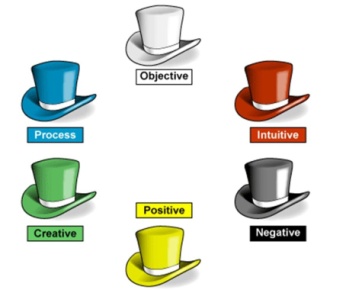
Students express their attitude to the and give self-assessment using the method: “Six thinking hats”:

Green: How can you use today's learning in different subjects?

Red: How do you feel about your work today?

White: What have you leant today?

Black: What were the weaknesses of your work?

Blue: How much progress have you made in this lesson? (Now I can, I still need to work on, I've improved in, Today I learnt... )

Yellow: What did you like about today's lesson?

Hometask: to make a poster “4 ways to a healthy body”

Saying goodbye


Self-assessment


Unit 6: Healthy world

School:


Date:

Teacher name:

Grade: 4

Number present:

Number absent:

Theme of the lesson:

Healthy bodies 1


Learning objectives

4.W7 spell most familiar high-frequency words accurately when writing independently 4.UE9 use common present simple forms including short answer forms and contraction, to give personal information and talk about habitual actions, facts and future timetabled events continue to use common past simple forms [regular and irregular]to describe actions and feelings and narrate simple events including short answer forms and contractions

4.UE10 use common present continuous forms, including short answers and contractions, to talk about what is happening now and future arrangements on a limited range of personal and familiar topics/ using –ing forms swimming, spelling as nouns to describe familiar and classroom activities

objectives

Learners will be able to:

recognise and use most target language correctly and show comprehension of most written and spoken familiar words in simple sentences To talk about food and drinks.


Previous learning

Healthy bodies 1

Plan

Planned timings


Planned activities


Learners’ activities

Evaluation

Resources

Begining

5 min

GREETINGS.

INTRODUCE THE OBJECTIVES.

Ask individual pupils what to do to have a healthy body. Elicit answers. Ask the rest of the class for verification.

Greeting


Learners answer


Middle

30 min

Step 1 POSTER

5 Listen, point and repeat. Then match.

Pupils' books closed. Put the Time to eat poster up on the board. Point to the items, one at a time, and say the corresponding phrases. The pupils repeat, chorally and/or individually. Point to each item in random order. Ask individual pupils to name the item.

Explain to the pupils that in today's you'll talk about food and drinks. Ask them to tell you their favourite food and drink.

Step 2 You want to make a salad. In pairs, decide what to include.

Refer the pupils to the pictures and elicit the names of the food items. Read the dialogue aloud and explain the activity. The pupils, in pairs, ask and answer questions, as in the example. Go around the classroom providing any necessary help. Ask some pairs to report back to the class.

Step 3 STUDY SPOT Match. Then talk with your friend.

Pupils' books closed. Say, then write on the board: / am playing chess now. Underline the words in bold.The pupils repeat, chorally and/or individually. Then say and write on the board: / am having a piano this evening. Underline the words in bold. Elicit/Explain that we use the present continuous for temporary actions, actions happening at the time of speaking or for fixed arrangements in the near future. Point out that we use words like at the moment, now, these days, at present, tonight, this evening, etc with the present continuous. Revise/Elicit the interrogative, negative and the short answers.

Drill your pupils:

e.g. Teacher: play video games (now)

Pupil 1: I am playing video games (now), etc


Learners match the pictures to the words


Learners write how to make a salad ans what to include


Learners make you own sentences using gtrammar theme


Individual avaluation


Mutual avaluatio


Verbal evaluation


End

10 min

REFLECTION

What have you learnt today? Name the words you learnt.

What task was easy and hard for you?

Hometask: to wtite the reception of healthy ftuits salad

Saying goodbye


Self-assessment


Unit 6: Healthy world

School:


Date:

Teacher name:

Grade: 4

Number present:

Number absent:

Theme of the lesson:

Healthy bodies 2


Learning objectives

4.W7 spell most familiar high-frequency words accurately when writing independently

4.UE10 use common present continuous forms, including short answers and contractions, to talk about what is happening now and future arrangements on a limited range of personal and familiar topics/ using –ing forms swimming, spelling as nouns to describe familiar and classroom activities

objectives

Most learners will be able to:

Ask questions about illnesses and use adverbs of time and frequency sometimes, often, always, never

Some learners will be able to:

Complete the task with should and shouldn’t correctly

A few learners will be able to:

Use Present simple forms to talk about health problems

Previous learning

Healthy bodies 1

Plan

Planned timings


Planned activities


Learners’ activities

Evaluation

Resources

Begining

5 min

GREETINGS. INTRODUCE THE OBJECTIVES.

The teacher greets pupils and introduces them with the topic of the unit. The teacher asks them to look at the first slide and think of the topic. Students elicit their ideas.

Greeting


Middle

30 min

Pre teach vocabulary.

The teacher introduces new vocabulary by demonstrating flashcards “health problems”.

Which words are difficult to spell?

They read these new words all together.

Headache- головная боль

Tummy ache- боль в животе

Earache- ушная боль

Toothache- зубная боль

Cold - простуда

Cough -кашель

Sore throat – воспаленное горло

Fever –озноб жар

Dizzy-головокружение

Cut - порез

Broken leg – сломанная нога

Flu- грипп


Writing task

Students write 4 - 6 sentences about themselves and their family using always, sometimes and never


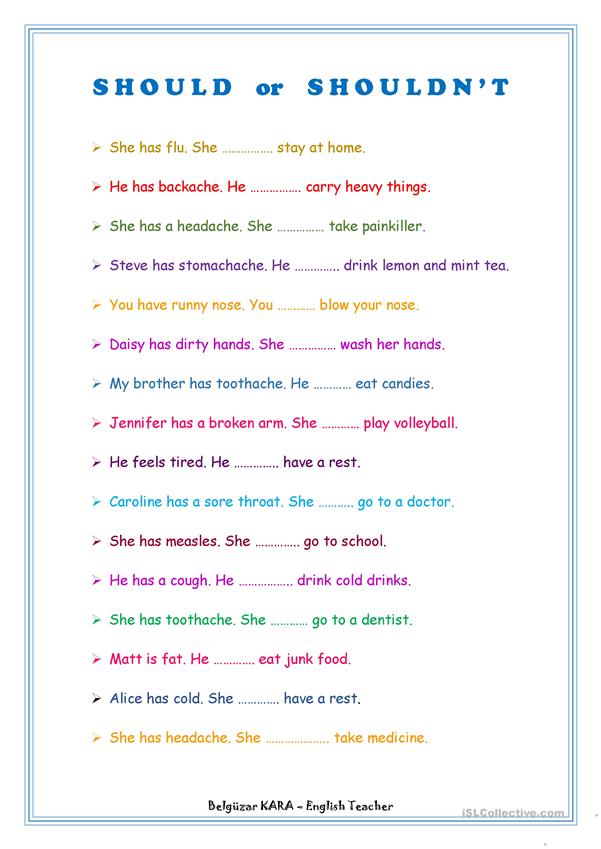
Should/shouldn’t worksheet

The teacher monitors them and provides help if needed.


Learners drill pronunciation, they repeat the words after the teacher or after the announcer.


Learners write sentences


Learners read sentences and complete them with should or shouldn’t.

Verbal evaluation


Individual avaluation


Mutual avaluatio


End

10 min

REFLECTION

Have the teacher helper re-read the learning goals for the day

Ask students to reflect on the ‘think’ question and if they feel they have achieved the learning goals& why

Remember to check with questions relating back to the learning goals to ensure that students have assessed their progress fairly


Hometask: to learn new vocabulary

Saying goodbye


Self-assessment


Unit 6: Healthy world

School:


Date:

Teacher name:

Grade: 4

Number present:

Number absent:

Theme of the lesson:

Healthy bodies 2


Learning objectives

4.S6 take turns when speaking with others in a growing range of short, basic exchanges

4.W2 begin to use joined-up handwriting in a limited range of written work

4.UE3 use adjectives, including possessive adjectives, on a growing range of general and some curricular topics to

describe things, use simple one- syllable and some two-syllable adjectives [comparative form] to make comparisons

objectives

Most learners will be able to:

Ask questions about illnesses and use adverbs of time and frequency sometimes, often, always, never

Some learners will be able to:

Make sentences using adverbs of frequency

A few learners will be able to:

Use Present simple forms to talk about health problems

Previous learning

Healthy bodies 2

Plan

Planned timings


Planned activities


Learners’ activities

Evaluation

Resources

Begining

5 min

GREETINGS.

INTRODUCE THE OBJECTIVES.

Warm up activity.

Pupils are to match discriptions with the illnesses.


Learners

match discriptions with the illnesses.


Verbal evaluation


Middle

30 min

Pair work

Students in pair read the dialogue. They role play the dialogue. The teacher monitors their work and helps.


Group work or pair work.

Students in small groups or in pairs conduct a questionnaire. They ask questions to their peers about illnesses. They practise adverbs of frequency.


How often do you have

Seldom

Always

Sometimes

Often

Never

A cold?


How often do you feel


Sick/ill?


After this task the may write some examples in their copy books. Encourage them to read the sentences first and remind to use correct simple Present forms.

For example: She always has a cold.


Read the symptoms and write the illness.

……sick tired, body hurts,

……headache head hurts, can’t sit up

……… cold runny nose, tired, headache,

……cough sore throat, coughing, hurts to swallow

……fever your body feels cold or very hot, chills,

sweating

stomachache stomach ache, nausea, vomiting, a fever


Learners role play the dialogue


Learners conduct a questionnaire


Learners make you own sentences


Learners read the symptoms and write the illness


Mutual avaluatio


Verbal evaluation


Individual avaluation


End

10 min

FEEDBACK

There smiley faces are on the board. (happy and sad) T. suggests choosing any smiley face..

Well what did we do in our lesson?

Hometask: to finish your writing

Saying goodbye


Learners choose one and put on their desks


Self-assessment


Unit 6: Healthy world

School:


Date:

Teacher name:

Grade: 4

Number present:

Number absent:

Theme of the lesson:

Save our animals 1


Learning objectives

4.S7 contribute a growing range of suitable words, phrases, and sentences including giving opinions during short pair, group and whole class exchanges

4.W1 plan, write and check sentences with support on a range of basic personal, general and some curricular topics

4.UE5 use interrogative pronouns including: who, what, which, where, whose, how many, how much, how often, how big, what kind of … to ask questions on growing range of familiar topics

objectives

All learners will be able to:

recognise and use some target language correctly and show comprehension of some written and spoken familiar words in simple sentences

To talk about food and drinks.

Most learners will be able to:

recognise and use most target language correctly and show comprehension of most written and spoken familiar words in simple sentences

To talk about food and drinks.

Some learners will be able to:

recognise and use target language correctly with clear pronunciation and good comprehension of written and spoken familiar words in simple sentences

To talk about food and drinks.

Previous learning

Healthy bodies 2

Plan

Planned timings


Planned activities


Learners’ activities

Evaluation

Resources

Begining

5 min

GREETINGS.

INTRODUCE THE OBJECTIVES.

(An activity to revise the language of the previous lesson.)

Ask individual pupils to say one thing they're doing and one thing they're not doing at the weekend. e.g. Pupil 1: I'm playing football with my friends. I'm not studying English, etc

Greeting


Learners make sentences


Verbal evaluation


Flashcards

(41- 47)

Middle

30 min

Step 1 (Activities to develop the pupils'listening and reading skills.)

Go through the pictures of the story and set the scene by asking the pupils questions about what they can see in the pictures.

e.g. Teacher: (pointing to Daisy in picture 1) Who's this? Class: Daisy!

Teacher: (pointing to picture 1) What is Liam going to buy?

Class: Potatoes! etc

Play the CD.The pupils listen and follow the story in their books.

Step 2 Read the story and complete the summary.

Explain the activity. Refer the pupils to the summary and read the example aloud. Allow the pupils some time to read the story again silently and complete the summary. Check their answers.

Step 3 Act out the story.

Assign roles to the pupils. Allow them enough time to rehearse their roles in groups. Encourage them to come to the front and act out the story.

Step 4 Talking point. Listen and read. Make a new dialogue with your friend.

Refer the pupils to the picture and the dialogue. Play the CD.The pupils listen and follow along. Pause the CD for the pupils to repeat, chorally and/or individually.. Go around the classroom providing any necessary help. Ask some pairs to come to the front of the classroom and act out the dialogue.

Learners listen and read.


Learners listen and follow the story in their books.


Learners read the story again silently and complete the summary


Learners act out the story


Learners, in pairs, act out similar dialogues

Individual avaluation


Mutual avaluatio


Play the CD.


End

10 min

Reflection paper

Red stars – you had many mistakes today.

Yellow stars- it was difficult, but you did it well,

Green stars – you did everything correctly.

Hometask: Ex:15 at page 64 Activity book

Saying goodbye

Learners put the stars into the night sky.


Self-assessment


Unit 6: Healthy world

School:


Date:

Teacher name:

Grade: 4

Number present:

Number absent:

Theme of the lesson:

Save our animals 2


SA 2

Learning objectives

4.3.5.1 Understand the main points of short simple texts on a growing range general and some curricular topics by using contextual clues

4.4.4.1 Write with support a sequence of short sentences in a paragraph to give basic personal information

objectives

Learners will be able to:

recognise and use some target language correctly and show comprehension of some written and spoken familiar words in simple sentences

Criteria

Identify the main points of a short simple text using contextual clues;

Write simple sentences in a paragraph to give some personal information.

Previous learning

Save our animals 1

Plan

Planned timings


Planned activities


Learners’ activities

Evaluation

Resources

Begining

5 min

GREETINGS. INTRODUCE THE OBJECTIVES.

Ask two pupils to come to the front of the classroom and act out the dialogue from the previous (Ex. 14). Repeat the activity with other pupils.


Greeting


Middle

10 min

Step 1 POSTER

Which of these do you like? Which don't you like?

Pupils' books closed. Put the Snack Time poster up on the board. Point to the items, one at a time, and say the corresponding words. The pupils repeat, chorally and/or individually. Point to each item in random order. Ask individual pupils to name them.

Pupils' books open. Play the CD. The pupils listen, point to the words and repeat.


Learners listen, point and repeat.


Verbal evaluation


SA

20 min

READING

Task 1. Read the story about Nina and mark the sentences True or False.

1. Nina feels very sick today.

2. Nina has a strong backache and a sore throat.

3. She can go to school.

4. She feels better tomorrow.


WRITING

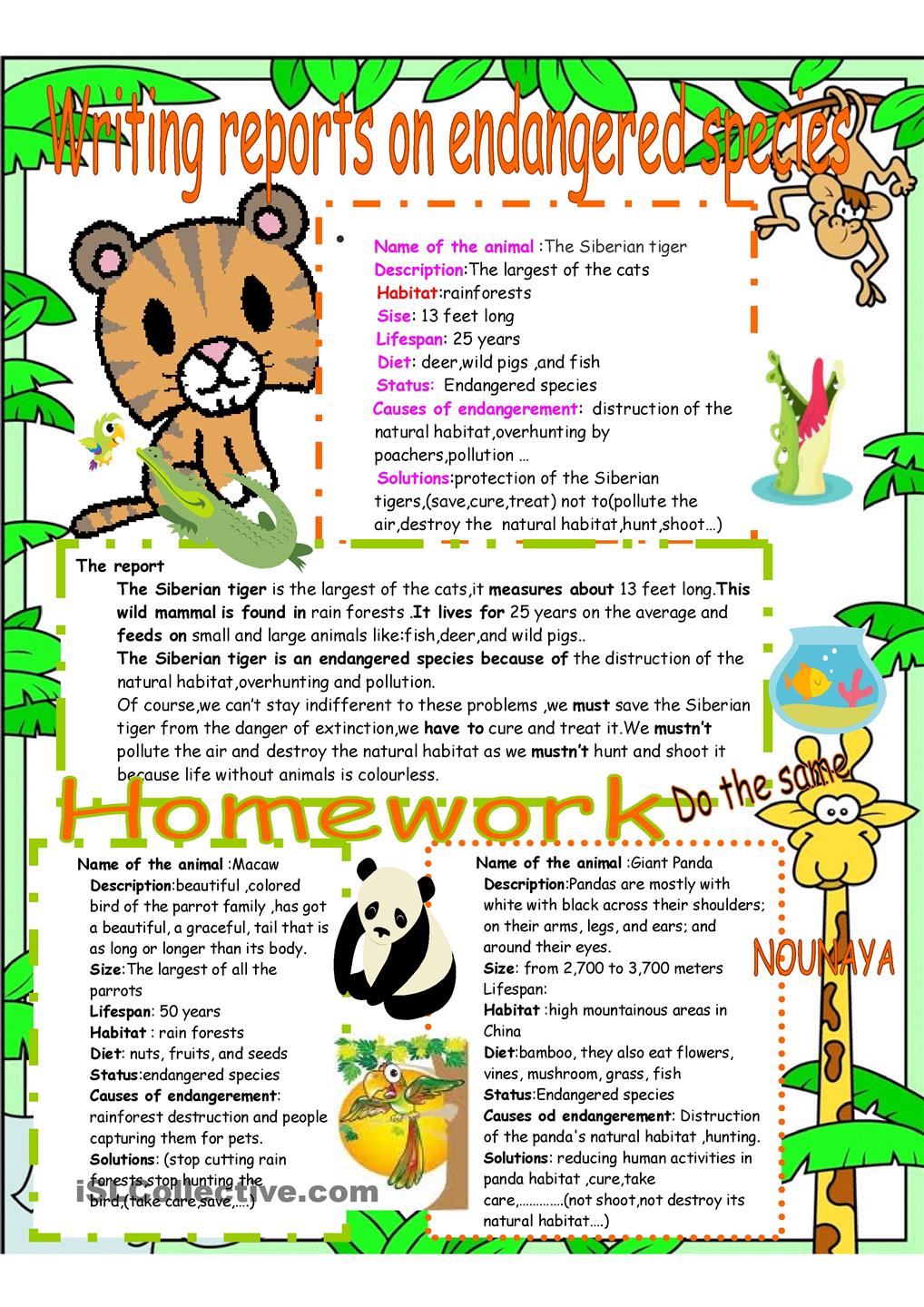
Task 2. Write the report about Siberian tiger using fact file information.

The Siberian tiger is the largest of the cats, it measures about 13 feet long. This wild mammal is found in rain forests. It lives for 25 years on the average and eat small and large animals like: fish, deer and wild pigs.

The Siberian tiger is an endangered species because there are between 5000-7500 left. They are at risk of distinction because of the destruction of the natural habitat, overhunting and pollution.

Of course, we can’t stay indifferent to these problems, we must save the Siberian tiger from the danger of extinction, we have to cure and treat it. We mustn’t pollute air and destroy natural habitats, we mustn’t hunt and shoot it, because life without animals is colorless.

This animal is a:

Size:

Where it lives:

What it eats:

What we must do to protect this animal.

What we mustn’t do to protect this animal.


Learners read the story about Nina and mark the sentences True or False.


Learners write the report about Siberian tiger using fact file information.


Individual avaluation


End

10 min

REFLECTION PAPER

Red stars – you had many mistakes today.

Yellow stars- it was difficult, but you did it well,

Green stars – you did everything correctly.

Hometask:

Saying goodbye


Learners put the stars into the night sky.


elf-assessment


Unit 6: Healthy world

School:


Date:

Teacher name:

Grade: 4

Number present:

Number absent:

Theme of the lesson:

Help the planet 1

Learning objectives

4.S3 give short, basic description of people and objects on a limited range of general and some curricular topics, begin to describe past experiences on an increasing range of general and some curricular topics 4.R2 read and understand with some support short simple fiction and non-fiction texts

4.W5 link with some support sentences using basic coordinating connectors

objectives

All learners will be able to:

to talk about endangered animals;

to make a poster for the protection of the rainforests.

Most learners will be able to:

to talk about endangered animals;

to make a poster for the protection of the rainforests.

Some learners will be able to:

to talk about endangered animals;

to make a poster for the protection of the rainforests.

Previous learning

Save our animals 2

Plan

Planned timings


Planned activities


Learners’ activities

Evaluation

Resources

Begining

5 min

GREETINGS.

INTRODUCE THE OBJECTIVES.

Read the title of the lesson. Ask the pupils if they have heard about endangered animals, and what they mean to them. Explain to the pupils, in LI if necessary, that some animals are in danger of becoming extinct for various reasons. Some animals are hunted by men. Other animals lose their homes and some others cannot find food any more.


Learners think about what we can do to protect endangered animals.


Verbal evaluation


Middle

30 min

Step 1 What animal am I? Read and write.

Explain the activity. The pupils look at the pictures, read the sentences and say the names of the animals. Allow the pupils some time to complete the activity.

Step 2 Listen and read. Then act out similar dialogues. (Track 24 CD2)

Refer the pupils to the dialogue. Play the CD.The pupils listen and follow along. Pause the CD for the pupils to repeat, chorally and/or individually. Refer the pupils to the pictures and elicit the names of the animals and what the pupils know about them. Read aloud the fact files. Go around the classroom providing any necessary help. Ask some pairs to come to the front of the classroom and act out their dialogues.

Read and circle. Then listen and check. (Track 25 CD2)

Explain the activity. Go through the sentences and elicit/explain any unknown words. Play the CD. Check their answers.

Extension activity (Optional)

Ask the pupils to write guestions based on sentences 1 -5.Then the pupils, in pairs, ask and answer questions. Go around the class providing any necessary help. Ask some pairs to report back to the class.

Read aloud the title of the poster and have a class discussion about why we must save the rainforests. Read the instructions and explain the activity. Allow the pupils some time to prepare their posters. Ask individual pupils to present their poster to the class.

Learners look at the pictures, read the sentences and say the names of the animals.

Learners

in pairs, act out similar dialogues using the information in the fact files


Learners listen and circle the correct words.


Learners write questions then, in pairs, ask and answer questions.


Individual avaluation


Mutual avaluatio


Individual avaluation


Verbal evaluation


End

10 min

REFLECTION

What have you learnt today? Name the words you learnt.

What task was easy and hard for you?

Hometask: Design your own Save the rainforests! poster. Present it to the class for the next lesson.

Saying goodbye


Self-assessment


Unit 6: Healthy world

School:


Date:

Teacher name:

Grade: 4

Number present:

Number absent:

Theme of the lesson:

Help the planet 2

Learning objectives

4.L5 identify initial, middle and final phonemes and blends

4.S8 express basic likes and dislikes, recount short, basic stories and events on a limited range of general and some curricular topics

4.R5 understand the main points of short simple texts on a limited range of familiar general and some curricular topics by using contextual clues

4.UE8 use imperative forms [positive and negative] to give short instructions on growing range of familiar topics

objectives

Learners will be able to:

recognise and use some target language correctly and show comprehension of some written and spoken familiar words in simple sentences

To talk about animals and places that are in danger.

Previous learning

Help the planet 1

Plan

Planned timings


Planned activities


Learners’ activities

Evaluation

Resources

Begining

5 min

GREETINGS.

INTRODUCE THE OBJECTIVES. Ask two pupils to come to the front of the classroom and act out the dialogue from the previous (Ex. 29). Repeat the activity with other pupils.

Greeting


Middle

30 min

Step 1 Read and complete. Then listen and check. Do you know other places/ animals that are in danger? Tell the class.

Ask the pupils to look at the pictures. Have a picture discussion.

Explain the activity. Allow the pupils some time to complete it. Play the CD. The pupils listen and check their answers.Then ask the pupils if they know any other place or animal that is in danger. Elicit answers. Ask the pupils to say why this place/animal is in danger.

Argali are in danger because people hunt them for their horns.

Step 2 Read and complete.

Explain the activity. Check their answers.


Step 3 CHECKPOINT 6

Number.

The pupils read and number the pictures.


Read and underline.

The pupils read and underline the correct words.


Read and write. Use: some, any, a and an.


Read and complete the sentences.

The pupils read and complete the sentences with the present continuous of the verbs in brackets.


Complete the sentences to be true about yourself.

The pupils read and complete the sentences to t true about themselves.


Project: An endangered place/animal.

Ask the pupils to write a small paragraph about a place/animal that is in danger. They can use ideas from Ex. 32 and the texts as models. They can draw or look for pictures on the Internet and attach them.


Learners complete the activity, tell if they know any other place or animal that is in danger


Learners read the texts and complete the activity.


Learneres follow the intruction.


Verbal evaluation


Individual avaluation


Mutual avaluatio


End

10 min

REFLECTION

Learners reflect on their learning:

What has been learned?

What remained unclear?

The smiley faces are on the board. (happy, sad, angry, etc) Teacher suggests to choose any smiley face.

Hometask: to finish your project work and then present the projects to the class on the next lesson.

Saying goodbye

Learners choose any smiley face

Self-assessment


Unit 6: Healthy world

School:


Date:

Teacher name:

Grade: 4

Number present:

Number absent:

Theme of the lesson:

Summative control work for the 3d term

Learning objectives

4.1.9.1 Recognise words that are spelt out from a limited range of general and curriculum topics

4.3.5.1 Understand the main points of short simple texts on a limited range of familiar general and some curricular topics by using contextual clues.

4.4.5.1 Link with some support sentences using basic coordinating connectors

4.5.16.1 Use conjunctions and, or, but, because to link words and phrases

4.2.6.1 Take turns when speaking with others in a growing range of short, basic exchanges

objectives

Most learners

listen to the talk, identify the appropriate word and complete the sentences; read the text to identify the main points in it;

use the parts of the sentences and match them to make up a sentence with the correct conjunction;

tell about one of the engaged animals of Kazakhstan using the questions below.

Criteria

Listen to the conversation carefully and complete the sentences

Read the text and mark True or False sentence.

Use the words from the table to complete the sentences.

Choose one of the animals from the pictures. Use these questions for a plan and tell about the animal. Use and, or, but to link sentences.

Previous learning

Help the planet 2

Plan

Planned timings


Planned activities


Learners’ activities

Evaluation

Resources

Begining

5 min

GREETINGS. INTRODUCE THE OBJECTIVES.

Greeting


Middle

35 min

LISTENING

Task 1. Listen to the conversation carefully and complete the sentences. You will listen to the recording twice.

Dave ate _____ food for every meal of the day.

Dave started to feel _____and lazy and decided to go to a doctor.

At school, everyone began to call him “fatty” because he became _________.

Dave had a balanced died, exercised daily and soon he was back into _______ shape.

READING

Task 2. Read the text Planet Earth and mark True or False sentence.

Trees produce oxygen for us to breathe.

Forests are home to millions of marine animals.

Turtles die when they eat plastic bags.

The climate gets colder.

Farms and factories don’t pollute the rivers.

WRITING

Task 3. Use the words from the table to complete the sentences.

and

because

or

but

In the North of Kazakhstan it is cold ____ windy in winter. In Astana the weather is hot in summer ____ it is cold in winter. In the West of Kazakhstan the weather is warm and rainy____ windy and hot in summer.

In Almaty the weather is warm and sunny______it is in the South of Kazakhstan.

SPEAKING

Task 4. Choose one of the animals from the pictures and tell about the animal. Use and, or, but to link sentences.

What is the name of the animal?

Where does it live?

What does the animal eat?

What can it do well?

What kind of animal is it?

Learners listen to the conversation and complete the sentences.


Learners read the text mark True or False sentence


Learners use the words from the table to complete the sentences


Learners choose one of the animals from the pictures and tell about the animal.

Individual avaluation


End

5 min

REFLECTION

Learners reflect on their learning:

What has been learned?

What remained unclear?

What is necessary to work on?

Hometask: Ask the pupils to draw and colour their month.Tell them to write the reason why tb is their favourite.

Saying goodbye


Self-assessment


Unit 6: Healthy world

School:


Date:

Teacher name:

Grade: 4

Number present:

Number absent:

Theme of the lesson:

Unit revision

Learning objectives

4.L5 identify initial, middle and final phonemes and blends

4.S4 respond to questions on an increasing range of general and some curricular topics

4.S8 express basic likes and dislikes, recount short, basic stories and events on a limited range of general and some curricular topics

4.R5 understand the main points of short simple texts on a limited range of familiar general and some curricular topics by using contextual clues

objectives

Learners will be able to:

recognise and use some target language correctly and show comprehension of some written and spoken familiar words in simple sentences

Previous learning

Summative control work for the 3d term

Plan

Planned timings


Planned activities


Learners’ activities

Evaluation

Resources

Begining

5 min

GREETINGS. INTRODUCE THE OBJECTIVES.

Ask learners to remember some endangered animal. Ask learners why it is important to save them

Back to board” game. Ls are divided into 5 pairs. Ls sit in 2 lines back to board and face to board. Teacher writes the words on the board. 1 line has to explain their partners words from the board using words and gestures:

Grey wolf, panda, tiger, gorilla, elephant, whale, leopard …


Middle

30 min

Teacher shows the picture and asks

Do they know this animal?

Learners will read the notes about Siberian tiger and try to make sentences using the notes. Give them time to think and discuss in a class.

Show them the next slide with the report about tiger. Explain them if they have any questions.

Teacher introduces learners with new vocabulary from the text and focuses on spelling practice.

Teacher introduces the new vocabulary and explains their meanings. Learners should listen to the teacher and repeat, also

Ask learners how they can protect animals? Let them think and discuss.


Learners read and try to make sentences, then discuss in a class.


Learners may choose one of the animals and write a report

Verbal evaluation


Individual avaluation


End

10 min

FEEDBACK

There smiley faces are on the board.

Well what did we do in our lesson?

Hometask: revise the words from the units

Saying goodbye

Learners choose one and put on their desks.

Self-assessment


Жүктеу
bolisu
Бөлісу
ЖИ арқылы жасау
Файл форматы:
doc
09.02.2025
198
Жүктеу
ЖИ арқылы жасау
Жариялаған:
Бұл материалды қолданушы жариялаған. Ustaz Tilegi ақпаратты жеткізуші ғана болып табылады. Жарияланған материалдың мазмұны мен авторлық құқық толықтай автордың жауапкершілігінде. Егер материал авторлық құқықты бұзады немесе сайттан алынуы тиіс деп есептесеңіз,
шағым қалдыра аласыз
Қазақстандағы ең үлкен материалдар базасынан іздеу
Сіз үшін 400 000 ұстаздардың еңбегі мен тәжірибесін біріктіріп, ең үлкен материалдар базасын жасадық. Төменде керек материалды іздеп, жүктеп алып сабағыңызға қолдана аласыз
Материал жариялап, аттестацияға 100% жарамды сертификатты тегін алыңыз!
Ustaz tilegi журналы министірліктің тізіміне енген. Qr коды мен тіркеу номері беріледі. Материал жариялаған соң сертификат тегін бірден беріледі.
Оқу-ағарту министірлігінің ресми жауабы
Сайтқа 5 материал жариялап, тегін АЛҒЫС ХАТ алыңыз!
Қазақстан Республикасының білім беру жүйесін дамытуға қосқан жеке үлесі үшін және де Республика деңгейінде «Ustaz tilegi» Республикалық ғылыми – әдістемелік журналының желілік басылымына өз авторлық материалыңызбен бөлісіп, белсенді болғаныңыз үшін алғыс білдіреміз!
Сайтқа 25 материал жариялап, тегін ҚҰРМЕТ ГРОМАТАСЫН алыңыз!
Тәуелсіз Қазақстанның білім беру жүйесін дамытуға және білім беру сапасын арттыру мақсатында Республика деңгейінде «Ustaz tilegi» Республикалық ғылыми – әдістемелік журналының желілік басылымына өз авторлық жұмысын жариялағаны үшін марапатталасыз!
Министірлікпен келісілген курстар тізімі