
 ЖИ көмекші


 Қауіпсіз төлем

жүктеу мүмкіндігіне ие боласыз
Бұл материал сайт қолданушысы жариялаған. Материалдың ішінде жазылған барлық ақпаратқа жауапкершілікті жариялаған қолданушы жауап береді. Ұстаз тілегі тек ақпаратты таратуға қолдау көрсетеді. Егер материал сіздің авторлық құқығыңызды бұзған болса немесе басқа да себептермен сайттан өшіру керек деп ойласаңыз осында жазыңыз
 19 Желтоқсан 2024
 178
178
1 жыл бойы шексіз жүктеңіз
5 grade Short lesson plan 1-2 term
Short term plan
|
Unit 1: Home and away lesson 1 |
School: |
||
|
Date: |
Teacher name: |
||
|
Grade: 5 |
Number present: |
absent: |
|
|
Lesson title |
Familiar Words |
||
|
Learning objectives |
5. 1. 9. 1 use imagination to express thoughts, ideas, experiences and feelings 5. 2. 3.
1 5. 3. 1. 1 provide basic information about oneself and others at the sentence level within a number of general topics; |
||
|
Learning objectives (assessment criteria) |
Learners will be able to: -Identifying the basic keywords of classroom instructions -Learn vocabulary for everyday objects. -Ask about the meaning of words |
||
|
Values and its purpose: |
Creativity and innovation The Education Day! "School is a place of kindness!" |
||
|
Stages/ Time |
Teachers actions |
Students actions |
Assessment |
Resources |
|
Beginning 5 min |
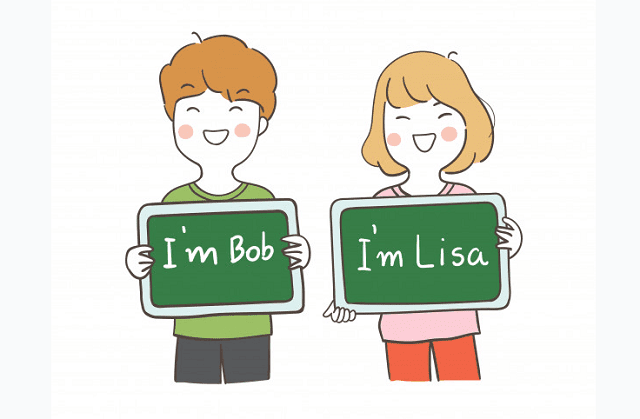
Greeting. (Whale class, Individually) T tells the class to make groups of 2. Warm up: • Books closed. Say to the class: I’m Liza. Choose a student and repeat: I’m Bob. What’s your name? Elicit the response I’m (student’s name) from the student. • Write the short exchange on the board. Then move around the class, asking each student their name. Finally ask the students to mingle and ask each other their names. -What’s your name? - I am Dina - What’s your name? - I am Jack Setting the aim of the lesson.
|
Learners read the given sentences on the board and guess the topic and share with their ideas. Remember and recognize the main vocabulary. |
Teacher controles the process, gives feedback and asks additional questions if it’s nessasery. Teacher evaluate pupils with phrases like: “Good job! Well done!” Formative Assessment
|
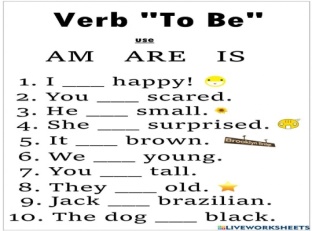
Sheets of peppers Pictures of to be
https://images.app.goo.gl/YRZebMmpXri54PQE8
|
|
Middle 30 min |
Task. I (Wh, I) (pair dicsussion) Ex: 1 P:4 • Focus on the pictures and ask the students what they can see in each one. Elicit the words teacher, student, boy, girl and pencil model and drill pronunciation. • Instruct students to follow the dialogues and play the recording. Ask them to try to name the people in the pictures and elicit any acceptable answers Differentiation: We will repeat simple words from the dialogue for a less motivated student and discuss with more motivated students |
Students listen and read the dialogues. Then choose the correct words in 1-3 ANSWERS 1 student 2 friends 3 teacher |
T’s feedback
Descriptor: -Identify the basic key words Total: 2 point |
Student’s book |
|
|
Task. II (Wh, I) (Task for location) Ex: 2 P:4 • Choose three stronger students from the class and give them the roles of Sally, Tom and Rosa. Act out the dialogues with the students, playing the role of teacher yourself. • Play the recording a second time. Divide students into groups of four, if possible, and explain the task. • Circulate and monitor as they act out the dialogue, helping with pronunciation issues where necessary. TAPESCRIPTS T Hello, Sally. How are you? S I’m fine, thanks. And you? T Good thanks, Sally. See you later. S OK. Bye. S Hi, Tom. T Hi. This is my friend Rosa. She’s from Italy. S Hi, Rosa. R What’s this in English? T It’s a pencil. R Oh, yes. Thanks T asks some CCQs:
|
Learners answers Yes or No in CCQ ANSWERS -No -Yes -No |
Self -assessment T’s CCQs
Descriptor: - read the theory box - complete the gaps Total: 2 point Descriptor: - answers Yes or No |
Worksheets Stickers |
|
|
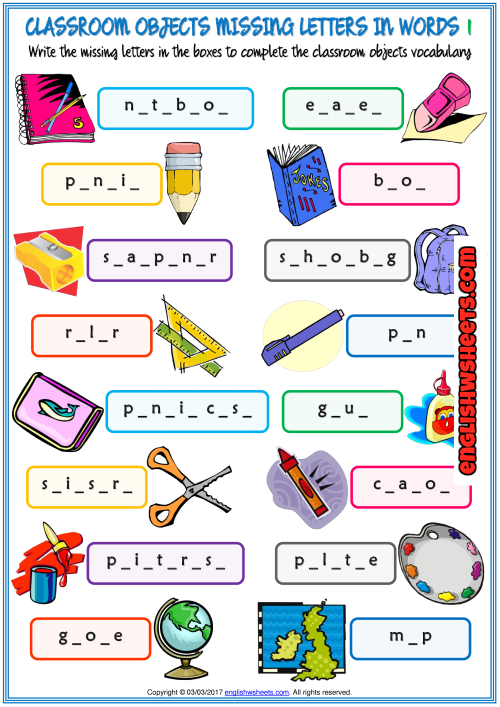
Task. III (Task for understanding) Ex: 3 P:4 • Hold up a pencil to the class and ask: What’s this in English? Elicit the response It’s a pencil, referring students to the dialogue in exercise 1 if they cannot remember. • Focus students on pictures 1–12 and explain the task. Draw their attention to the example and to the first picture. In pairs, students do the task. A learner with individual needs: will be supported by teacher and by helpers from his class. Task: A learner write missing letter individually.
Differentiation: A less motivated student completes the sentences with support |
Learners ask and answer questions. What are objects 1-12 in English? Use the words in box. What’s this in English? It is a book ANSWERS 1 book 2 pen 3 bag 4 computer 5 car 6 poster 7 table 8 boy 9 teacher 10 bicycle 11 phone 12 girl D* a learner: - A learner tick the correct answer individually. |
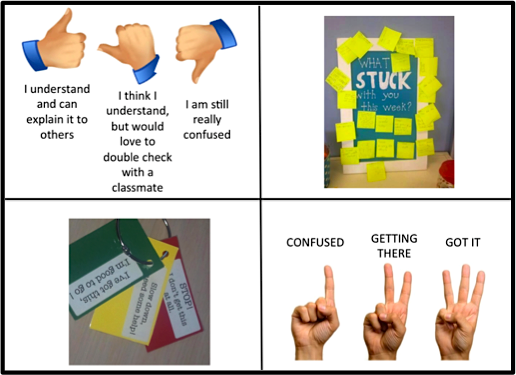
Feedback: “Thumbs up, thumbs down” After correct answer teacher shows thumbs up, if there are some mistakes thumbs down with comments |
Pictures Worksheet https://images.app.goo.gl/UNXjZsdLYwNrLF7p6 |
|
End 5 min |
The Ladder method was used as a reflection. T asks Ss to stick their stickers to the Success Ladder. Green- I understood Yellow-I have some questions Red-I need a help. Ex: P: Home task |
Ss use their stickers to show their knowledge according to the lesson
|
Poster Success Ladder |
|


Short term plan
|
Unit 1: Home and away lesson 2 |
School: |
||
|
Date: |
Teacher name: |
||
|
Grade: 5 |
Number present: |
absent: |
|
|
Lesson title |
Introduce and say good bye! |
||
|
Learning objectives |
5. 3. 1. 1 provide basic information about oneself and others at the sentence level within a number of general topics; 5. 5. 2. 1 systematic writing of sentences in a paragraph on some general and educational topics with the support of the teacher; 5. 6. 11. 1 limited familiar general reading and use of be / look / sound / feel / taste / smell like and be made of; |
||
|
Learning objectives (assessment criteria) |
Learners will be able to: - answer the questions and complete the short forms of the verb “be” - complete the sentences with words in the box - use all structures correctly |
||
|
Values and its purpose: |
Independence and Patriotism Day of the Languages of the People of Kazakhstan |
||
|
Stages/ Time |
Teachers actions |
Students actions |
Assessment |
Resources |
|
Beginning 5 min |
Greeting. (Whale class, Individually) T tells the class to make groups of 2. Warm up: • Books closed. Say to the class: I’m (your name). I’m from (name of your town or city). • Ask a student to repeat and then move around the rest of the class. Write the sentences on the board for a weaker class Setting the aim of the lesson.
T gives opportunity to show learners finished tasks and find out new words to try them use in their speech. |
Learners read the given sentences on the board and guess the topic and share with their ideas. Remember and recognize the main vocabulary. |
Teacher controles the process, gives feedback and asks additional questions if it’s nessasery. Teacher evaluate pupils with phrases like: “Good job! Well done!” Formative Assessment
|
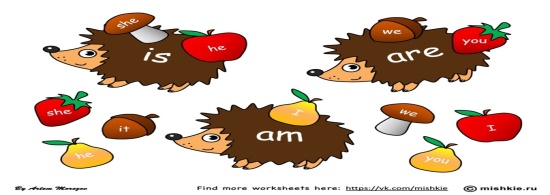
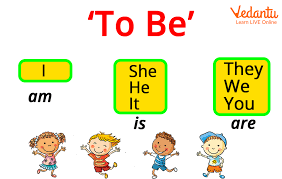
Sheets of peppers Pictures of to be
https://images.app.goo.gl/mMphRyAuRKap6aX48 |
|
Middle 30 min |
Task. I (Wh, I) (pair dicsussion) Ex: 1 P: 5 Focus on the four pictures and ask the students what they can see in each one. Elicit that there is a boy, a girl and an alien. Write alien on the board and check pronunciation. In a stronger class, students work in pairs to do the task themselves. Differentiation: Modelling- teacher gives clear description of the task with examples By task – less motivated learners can do task with support |
Learners repeat the words
D* a learner: Model the words for the students and encourage them to repeat after you before they do the task. |
T’s feedback
Descriptor: - work in pairs to do the task themselves Total: 2 point |
Student’s book |
|
|
Task. II (Wh, I) (Task for location) Ex: 2 P: 5 Focus students on the left hand column of the table and read each form of the verb be aloud, asking them to repeat. • Write I am and He is on the board. Ask students to repeat. |
Students look at the table and complete the shorts forms with words in the dialogue ANSWERS 1 I’m 2 She’s 3 It’s |
Self -assessment
Descriptor: - repeat the words Total: 2 point |
Worksheets |
|
|
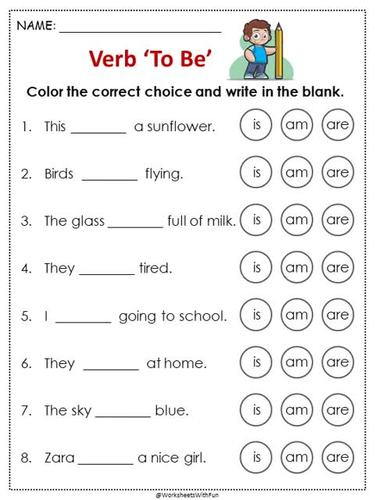
Task. III (Task for understanding) Ex: 3 P: 5 • In a stronger class, ask students to do the activity individually. • In a weaker class, do the first one together as an example, eliciting why am is the correct answer. Students then continue with the task on their own. A learner with individual needs: will be supported by teacher and by helpers from his class. Task: A learner color the correct answer individually.
Differentiation: A less motivated student completes the sentences with support |
Learners choose the correct words ANSWERS 1 am 2 It’s 3 is 4 ’re 5 ’s 6 She’s D* a learner: - A learner color the correct answer individually. ANSWERS 1 is 2 are 3 is 4 are 5 am 6 are 7 is 8 is |
Feedback: “Thumbs up, thumbs down” After correct answer teacher shows thumbs up, if there are some mistakes thumbs down with comments Descriptor: - choose the correct words Total: 2 point |
Pictures Worksheet https://images.app.goo.gl/YkF4byohJZrqN6ns6 |
|
|
Task. IV Ex: 4 P: 5 • Students work individually and complete the sentences. Point out that each item in the box can only be used once, so students should start with the ones they know before attempting ones they find more difficult. |
Learners work individually and complete the sentences with words in the box. ANSWERS 1 It’s 2 is 3 you 4 is 5 I’m 6 What’s |
Self -assessment
Descriptor: - choose the correct words Total: 2 point |
|
|
|
Task. V Ex: 5 P: 5 • Focus on the photo and ask students what they think the people in it are doing. Elicit that they are introducing each other. In a stronger class, ask students to go ahead and complete the dialogue by themselves, then play the recording for them to check their answers. TAPESCRIPTS R = Rosa, T = Tom, M = Mario R Hi, Tom. This is my friend, Mario. T Oh, hi Mario. How are you? M Fine, thanks. R OK. See you later. T Bye, Rosa. M See you later Differentiation: Allow learners time to read through the key phrases, and the dialogue, helping them with vocabulary with support by helpers. |
Learners complete the dialogue with three of the key phrases. ANSWERS 1 This is my friend 2 Fine, thanks. 3 See you later. D* a learner: Allow students time to read through the key phrases and the dialogue, helping them with vocabulary. |
Feedback: “Thumbs up, thumbs down” After correct answer teacher shows thumbs up, if there are some mistakes thumbs down with comments Descriptor: - complete the dialogue Total: 2 point |
|
|
End 5 min |
The Ladder method was used as a reflection. T asks Ss to stick their stickers to the Success Ladder. Green- I understood Yellow-I have some questions Red-I need a help. Home task Ex: P: |
Ss use their stickers to show their knowledge according to the lesson
|
Poster Success Ladder |
|

Short term plan
|
Unit 1: Home and away lesson 3 |
School: |
||
|
Date: |
Teacher name: |
||
|
Grade: 5 |
Number present: |
absent: |
|
|
Lesson title |
Countries |
||
|
Learning objectives |
5. 2. 6. 1 to determine a number of general and educational topics with the support of meaning from the context of a short conversation; 5. 5. 3. 1 write specific details with the support of the teacher, describing people, places and objects at the text level; |
||
|
Learning objectives (assessment criteria) |
Learners will be able to: - Introduce themselves and tell about their friends - Match the countries to the capitals - Make true and false sentences about cities, countries and capitals |
||
|
Values and its purpose: |
Independence and Patriotism to make students understand the value of three languages |
||
|
Stages/ Time |
Teachers actions |
Students actions |
Assessment |
Resources |
|
Beginning 5 min |
Greeting. (Whale class, Individually) T tells the class to make groups of 2. Warm up: • Books closed. Ask the students, in their own language, if they have been to any other countries. Elicit the names of these countries. You could put them on the board. • Ask the class if they know the names of these countries in English. Elicit any names they give you and put them on the board. Translate the names of any countries the students do not know into English. Setting the aim of the lesson.
In what country do you live? Which country is the biggest in the world? |
Learners read the given sentences on the board and guess the topic and share with their ideas. Remember and recognize the main vocabulary. |
Teacher controles the process, gives feedback and asks additional questions if it’s nessasery. Teacher evaluate pupils with phrases like: “Good job! Well done!” Formative Assessment
|
Sheets of peppers Pictures of to be
https://images.app.goo.gl/miMmf2NK6vyDcdac9 |
|
Middle 30 min |
Task. I (Wh, I) (pair dicsussion) Ex: 1 P: 6 Draw students’ attention to the flags in the pictures and ask if anybody knows them. Elicit any ideas. TAPESCRIPTS 1 Hi. My name’s Lucas and this is a poster of my favourite basketball player. He’s from the United States. 2 Hello. I’m Jeremy. These are my friends Vendula and Dana. They’re from the Czech Republic. 3 Hi. I’m Yerzhan and I’m 10 years old. I’m from Astana. It’s the capital of Kazakhstan. 4 Hello. My name’s Even and this is my friend Yetis. We’re from Istanbul in Turkey. 5 Hi. I’m Clara. I’m 11 and I’m from Sao Paolo in Brazil. It’s a very big city. 6 Hello. My name’s Kati and I’m from Budapest. It’s the capital of Hungary T asks some CCQs:
|
Learners read and listen. Match 1-6 with pictures A-F ANSWERS 1 F 2 D 3 A 4 C 5 B 6 E Learners answers Yes or No in CCQ ANSWERS -Yes -No -No |
T’s feedback Descriptor: - read and listen then match Total: 2 point Descriptor: - answers Yes or No |
Student’s book |
|
|
Task. II (Wh, I) (Task for location) Ex: 2 P: 6 Remind the students about Yerzhan from exercise
TAPESCRIPTS 1 Prague is the capital of the Czech Republic. 2 Brasilia is the capital of Brazil. 3 Astana is the capital of Kazakhstan. 4 Moscow is the capital of Russia. 5 Washington DC is the capital of the United States. 6 Ankara is the capital of Turkey. 7 London is the capital of Great Britain. 8 Tokyo is the capital of Japan. Differentiation: «Verbal support» method is used to help Students use new words in the text. |
Learners match the countries to the capitals. Write sentences. Then listen and check your answers. ANSWERS 1 Prague 2 Brasilia 3 Astana 4 Moscow 5 Washington DC 6 Ankara 7 London 8 Tokyo |
Feedback: “Thumbs up, thumbs down” After correct answer teacher shows thumbs up, if there are some mistakes thumbs down with comments Descriptor: - match the countries to the capitals Total: 2 point |
Worksheets PPP Text New Inside out by Macmillan SB p.12 ex.1 |
|
|
Task. III (Task for understanding) Ex: 3 P: 6 • Remind the students about the countries they mentioned in the Warm-up. Ask them to work in pairs to see if they can identify their capital cities. You could make this more competitive by turning it into a race, with the first pair to find all capitals winning
Extend the activity by asking students to work in small groups to brainstorm more countries and capitals. Allow about 4–5 minutes for this. Monitor as they work together, encouraging them to speak in English as much as they can. |
Learners think of more countries and capitals ANSWERS Student’s own answer |
Feedback: “Thumbs up, thumbs down” After correct answer teacher shows thumbs up, if there are some mistakes thumbs down with comments Descriptor: - match the countries to the capitals Total: 2 point |
Pictures Worksheet |
|
End 5 min |
The Ladder method was used as a reflection. T asks Ss to stick their stickers to the Success Ladder. Green- I understood Yellow-I have some questions Red-I need a help. Ex: P: Home task |
Ss use their stickers to show their knowledge according to the lesson
|
Poster Success Ladder |
|

Short term plan
|
Unit 1: Home and away lesson 4 |
School: |
||
|
Date: |
Teacher name: |
||
|
Grade: 5 |
Number present: |
absent: |
|
|
Lesson title |
People’s ages and where they are from |
||
|
Learning objectives |
5. 2. 1.1 Understand with support the sequence of instructions in class ; 5. 5. 3. 1 write specific details with the support of the teacher, describing people, places and objects at the text level; |
||
|
Learning objectives (assessment criteria) |
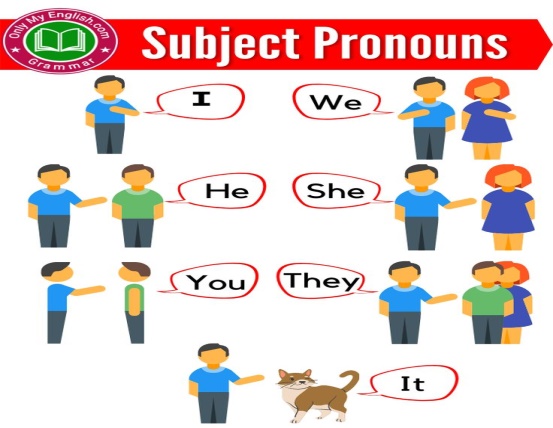
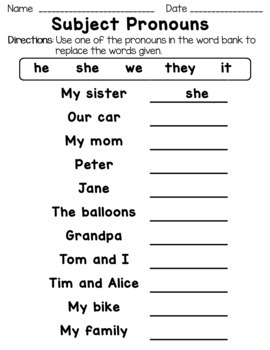
Learners will be able to: - Learn and use subject pronouns. - Learn and practise the verb be in singular and plural. - Learn and practise basic phrases to describe cities. |
||
|
Values and its purpose: |
Justice and Responsibility Family day! "Family is the golden cradle of education" |
||
|
Stages/ Time |
Teachers actions |
Students actions |
Assessment |
Resources |
|
Beginning 5 min |
Greeting. (Whale class, Individually) T tells the class to make groups of 2. Warm up: Books closed. Say something true about the size of your town or city, e.g. I’m (your name). I’m from Budapest. Budapest is big. Use your hands to gesture big to the class. • Ask a student to repeat then go around the rest of the class. Write the sentences on the board for a weaker class Setting the aim of the lesson.
I am Liza You are a pupil He is a student |
Learners read the given sentences on the board and guess the topic and share with their ideas. Remember and recognize the main vocabulary. |
Teacher controles the process, gives feedback and asks additional questions if it’s nessasery. Teacher evaluate pupils with phrases like: “Good job! Well done!” Formative Assessment
|
Sheets of peppers Pictures of to be
https://images.app.goo.gl/62eRTJsRMnCinDAb9
|
|
Middle 30 min |
Task. I (Wh, I) (pair dicsussion) Ex: 1 P: 7 Focus on the pictures A–D and ask the students what they can see in each one. Elicit that there are is more than one child in each picture Differentiation: Learners will be supported by teacher and by helpers from his class. |
Students listen and repeat the words. How do they say we, you and they in L1 ANSWERS |
T’s feedback Descriptor: - read and listen then match Total: 2 point |
Student’s book |
|
|
Task. II (Wh, I) (Task for location) Ex: 2 P: 7 • Focus students on the left-hand column of the table and remind them of the singular subject pronouns and singular forms of the verb be. Explain the meaning of singular and then elicit the meaning of plural. • Go through the verb forms in the plural column asking students to repeat after you. Remind them about short forms and explain the task. A learner with individual needs: will be supported by teacher and by helpers from his class. Task circle the correct subject pronouns
Differentiation: A less motivated student completes the sentences with support |
Learners complete the table with plural forms in the text. ANSWERS 1 ’re 2 ’re D* a learner: circle the correct subject pronouns individually |
Feedback: “Thumbs up, thumbs down” After correct answer teacher shows thumbs up, if there are some mistakes thumbs down with comments Descriptor: - match the countries to the capitals Total: 2 point |
Worksheets https://images.app.goo.gl/MD7doPVsVXaC935X6 |
|
|
Task. III (Task for understanding) Ex: 3 P: 7 Explain to the class that we can use subject pronouns to talk about something that we have alre ady talked about or that is obvious. • In a stronger class, ask students to do the activity individually. In a weaker class, look at the example together, pointing out that it refers to London. Students then continue with the task on their own before checking their answers in pairs T asks some CCQs:
|
Students replace the words in blue with words in the box. ANSWERS 1 She 2 We 3 They 4 He 5 You Learners answers Yes or No in CCQ ANSWERS -Yes -No -Yes |
Descriptor: - match the countries to the capitals Total: 2 point Descriptor: - answers Yes or No |
Pictures Worksheet |
|
End 5 min |
The Ladder method was used as a reflection. T asks Ss to stick their stickers to the Success Ladder. Green- I understood Yellow-I have some questions Red-I need a help. Ex: P: Home task |
Ss use their stickers to show their knowledge according to the lesson
|
Poster Success Ladder |
|
Short term plan
|
Unit 1: Home and away lesson 5 |
School: |
||
|
Date: |
Teacher name: |
||
|
Grade: 5 |
Number present: |
absent: |
|
|
Lesson title |
People’s ages and where they are from |
||
|
Learning objectives |
5. 2. 1.1 Understand with support the sequence of instructions in class ; 5. 5. 3. 1 write specific details with the support of the teacher, describing people, places and objects at the text level; |
||
|
Learning objectives (assessment criteria) |
Learners will be able to: - use and practise the verb be in singular and plural. - talk about people’s ages and where they come from. |
||
|
Values and its purpose: |
Independence and Patriotism to make students understand the value of three languages |
||
|
Stages/ Time |
Teachers actions |
Students actions |
Assessment |
Resources |
|
Beginning 5 min |
Greeting. (Whale class, Individually) T tells the class to make groups of 2. Warm up: • Ask a student to repeat then go around the rest of the class. Write the sentences on the board for a weaker class Dias and Duman go to the swimming pool. They like swimming. Setting the aim of the lesson.
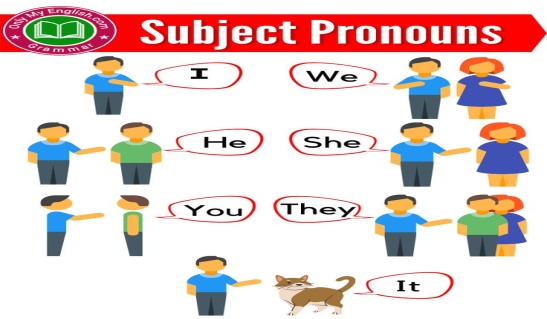
I and Liza = we are Jack and Dina=They are |
Learners read the given sentences on the board and guess the topic and share with their ideas. Remember and recognize the main vocabulary. |
Teacher controles the process, gives feedback and asks additional questions if it’s nessasery. Teacher evaluate pupils with phrases like: “Good job! Well done!” Formative Assessment
|
Sheets of peppers Pictures of to be
https://images.app.goo.gl/62eRTJsRMnCinDAb9 |
|
Middle 30 min |
Task. I (Wh, I) (pair dicsussion) Ex: 4 P: 7 • Books closed. Test the class on the verb be. Say I and elicit I am or I’m. Say You and elicit You are or You’re. Continue with the rest of the subject pronouns. • Students complete the activity individually and check their answers in pairs. Check answers as a class. Differentiation: Learners will be supported by teacher and by helpers from his class. |
Learners match parts of sentences. complete the activity individually and check their answers in pairs ANSWERS 1 d 2 c 3 e 4 b 5 a |
T’s feedback
Descriptor: - match parts of sentences Total: 2 point |
Student’s book |
|
|
Task. II (Wh, I) (Task for location) Ex: 5 P: 7 • In a stronger class, tell students to complete the sentences by themselves using the correct form of the verb be. Ask them to use the long form of the verb in their answers. • Ask fast finishers to change the verbs to the short form where it is possible. • Check answers as a class. Go through any new vocabulary A learner with individual needs: will be supported by teacher and by helpers from his class. Task. Use the correct form of to be Differentiation: A less motivated student completes the sentences with support |
Learners complete the sentences with the correct form of to be ANSWERS 1 are 2 are 3 is / ’s 4 are 5 is / ’s 6 am / ’m 7 are / ’re
D* a learner: Use the correct form of to be |
Self -assessment
Descriptor: - complete the sentences Total: 2 point |
Worksheets Student’s book |
|
|
Task. III (Task for understanding) Ex: 6 P: 7 • Focus students on the photo and elicit that they are in a school. Students listen and read. • Tell students to change the words in blue to their own words and to practise the dialogue in pairs. Circulate, helping out with pronunciation where necessary. Choose one or two pairs to act out the dialogue for the class. TAPESCRIPTS E Hello. What’s your name? J I’m Jack. And you? E My name’s Edita. Where are you from? J I’m from Manchester in England. E And how old are you? J I’m eleven. |
Learners read and listen. Then practice the dialogue. Change the words in blue |
Feedback: “Thumbs up, thumbs down” After correct answer teacher shows thumbs up, if there are some mistakes thumbs down with comments Descriptor: - read and listen - practice the dialogue. Total: 2 point |
Pictures Worksheet |
|
|
Task. IV Ex: 7 P: 7 Students complete the activity in pairs and check answers as a class. Encourage students in a weaker class to think of the equivalent phrases in their own language. |
Learners complete the key phrases with words from ex 6 ANSWERS 1name 2 old 3 Where |
T’s feedback
|
|
|
End 5 min |
The Ladder method was used as a reflection. T asks Ss to stick their stickers to the Success Ladder. Green- I understood Yellow-I have some questions Red-I need a help. Ex: P: Home task |
Ss use their stickers to show their knowledge according to the lesson
|
Poster Success Ladder |
|
Short term plan
|
Unit 1: Home and away lesson 6 |
School: |
||
|
Date: |
Teacher name: |
||
|
Grade: 5 |
Number present: |
absent: |
|
|
Lesson title |
Numbers 1 -20. |
||
|
Learning objectives |
5. 2. 3. 1 unaided understanding of simple questions of general and study topics; 5. 3. 2. 1 asking simple questions to obtain information on a number of general topics; |
||
|
Learning objectives (assessment criteria) |
Learners will be able to: - Learn and practise numbers 1–20. - Practise talking about people’s ages. |
||
|
Values and its purpose: |
Justice and Responsibility Family day! "Family is the golden cradle of education" |
||
|
Stages/ Time |
Teachers actions |
Students actions |
Assessment |
Resources |
|
Beginning 5 min |
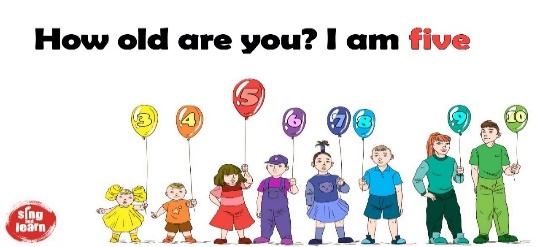
Greeting. (Whale class, Individually) T tells the class to make groups of 2. Warm up: • Books closed. Ask a student How old are you? and elicit I’m (student’s age) from the student. Remind students that they learned this phrase in exercise 6 on page 7. Write it on the board if you think it is necessary. • Students ask each other the question in a chain going around the classroom. Correct pronunciation where necessary I am Liza. I’m three. I am Jack. I am four. I am Susan. I am five. Setting the aim of the lesson.
|
Learners read the given sentences on the board and guess the topic and share with their ideas. Remember and recognize the main vocabulary. |
Teacher controles the process, gives feedback and asks additional questions if it’s nessasery. Teacher evaluate pupils with phrases like: “Good job! Well done!” Formative Assessment
|
Sheets of peppers Pictures of to be
https://images.app.goo.gl/H7fvWWgga3uk7eLx8
|
|
Middle 30 min |
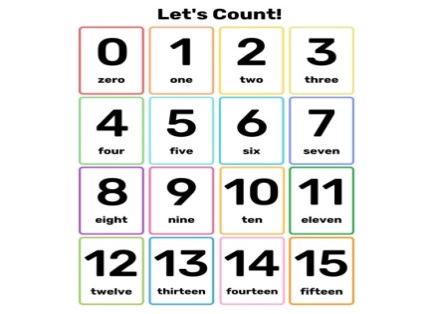
Task. I (Wh, I) (pair dicsussion) Ex: 1 P: 8 Play the recording, pausing after each number. Students point to the correct number on the page. Ask them to repeat the number before moving on to the next one. • Write the words for the numbers 1–20 on the board. Practise them with the class. Ask the students to stand up. Starting at one end of the classroom, students take turns saying each of the numbers 1–20, e.g. the first students says one, the next says two and so on around the room. Help with pronunciation where necessary TAPESCRIPTS 1 2 3 4 5 6 7 8 9 10 11 12 13 14 15 16 17 18 19 20 Differentiation: Learners will be supported by teacher and by helpers from his class. |
Learners listen and repeat point the numbers.
|
T’s feedback
Descriptor: - repeat the number - pronounces the words correctly Total: 2 point |
Student’s book |
|
|
Task. II (Wh, I) (Task for location) Ex: 2 P: 8 Focus students on the first photo and discuss the boy’s age with the class. Ask: How old is he? and elicit I think he’s (student’s opinion) TAPESCRIPTS 1 He’s 5. 2 They’re 9. 3 She’s 15. 4 She’s 18. 5 He’s 16. 6 He’s 3 months. 7 She’s 1. 8 He’s 2. 9 He’s 20. 10 They’re 13 11 They’re 4 weeks. 12 She’s 12. |
Learners work in pairs. How old are the people and the animals in the picture? Play guess the age. ANSWERS 1 He’s 5. 2 They’re 9. 3 She’s 15. 4 She’s 18. 5 He’s 16. 6 He’s 3 months. 7 She’s 1. 8 He’s 2. 9 He’s 20. 1 0 They’re 13. 11 They’re 4 weeks. 12 She’s 12. |
Pair -assessment
Descriptor: - work in pairs -answer the question Total: 2 point |
Worksheets PPP Text New Inside out by Macmillan SB p.12 ex.1 |
|
|
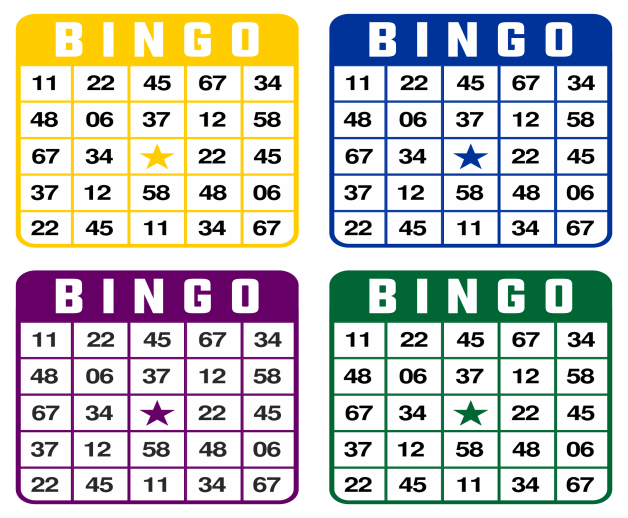
Task. III Ex: 3 P: 8 Draw students’ attention to the picture of the bingo card. Ask them if they have ever heard of this game or if they know anybody who plays it. Write Bingo on the board. Tell the students to draw a grid with nine empty boxes in their exercise books. Ask them to fill each box with any number between one and twenty. It is important that they do this correctly, so circulate and monitor to check they are doing so Ask students to swap exercise book with a partner so that each student has a new grid in front of them. Explain how the game works: (1) You are going to read out numbers between one and twenty at random. (2) If a student hears a number on their bingo card, they cross out that number. (3) The first student to cross out all of the numbers on their card and to shout Bingo! is the winner |
Learners play Bingo. Follow your teacher’s instruction.
|
Feedback: “Thumbs up, thumbs down” After correct answer teacher shows thumbs up, if there are some mistakes thumbs down with comments Descriptor: - play bingo Total: 2 point |
|
|
|
Task. IV Ex: 4 P: 8 Write talent show on the board. Say the names of some famous talent shows that the students would recognize from their country and elicit that a talent show is a show where people try to show how good they are at singing, acting, dancing, etc. To make the activity more realistic, divide students into groups of three or four and tell them they are a judging panel. Explain that after each singer they listen to they have to decide on a score out of twenty. Refer them to the example speech bubbles in the book or write Our score for number one is ten out of twenty, briefly explaining that they should use our if they are working as a panel. Play the recording, pausing after each singer to allow students time to agree on a score. If you like, play the recording a second time so they can change their opinion if necessary TAPESCRIPTS 1 ‘Ooh baby, I love you, I really do, really really love you, yes I do.’ 2 ‘One day, yes one day, it will be my day.’ 3 ‘You and me, you and me, are going to be, yeah you and me. 4 [opera] 5 ‘I think about you every day, in every way. |
Learners listen to five people sing in a TV talent show. Give scores out of twenty for each person |
Feedback: “Thumbs up, thumbs down” After correct answer teacher shows thumbs up, if there are some mistakes thumbs down with comments |
|
|
End 5 min |
The Ladder method was used as a reflection. T asks Ss to stick their stickers to the Success Ladder. Green- I understood Yellow-I have some questions Red-I need a help. Ex: P: Home task |
Ss use their stickers to show their knowledge according to the lesson
|
Poster Success Ladder |
|
Short term plan
|
Unit 1: Home and away lesson 7 |
School: |
||
|
Date: |
Teacher name: |
||
|
Grade: 5 |
Number present: |
absent: |
|
|
Lesson title |
What’s in my classroom? |
||
|
Learning objectives |
5. 2. 1.1 Understand with support the sequence of instructions in class ; 5. 5. 3. 1 write specific details with the support of the teacher, describing people, places and objects at the text level; 5. 6. 6. 1 use of basic participle pronouns, relative pronouns and numerical pronouns some, any, something, nothing anything on general familiar and study topics |
||
|
Learning objectives (assessment criteria) |
Learners will be able to: - Use and practise there is, there are, some and a lot of. - Learn and practise using numbers when counting things. - Learn and practise describing the number of things in different places. |
||
|
Values and its purpose: |
Justice and Responsibility Mother's Day! "Family is the golden cradle of education" |
||
|
Stages/ Time |
Teachers actions |
Students actions |
Assessment |
Resources |
|
Beginning 5 min |
Greeting. (Whale class, Individually) T tells the class to make groups of 2. Warm up: Books closed. Revise numbers 1–20 from the previous lesson by doing some basic addition with the class. Write 2 + 5 = ? on the board. Say: Two plus five equals and elicit the correct response Setting the aim of the lesson.
|
Learners read the given sentences on the board and guess the topic and share with their ideas. Remember and recognize the main vocabulary. |
Teacher controles the process, gives feedback and asks additional questions if it’s nessasery. Teacher evaluate pupils with phrases like: “Good job! Well done!” Formative Assessment |
Sheets of peppers Pictures of to be
https://images.app.goo.gl/bp1H1mtaa81BSJ3XA
|
|
Middle 30 min |
Task. I (Wh, I) (pair dicsussion) Ex: 1 P: 9 Focus on the illustration and explain the task. Students complete the activity individually. They check their answers in pairs. Check as a class. Ask fast finishers to do the same activity for their own classroom. Differentiation: Learners will be supported by teacher and by helpers from his class. |
Learners complete the picture 1-5 with numbers. Then compare your answers with your partner. ANSWERS 1 7 2 1 3 9 4 3 5 22 |
Pair assessment
Descriptor: - use numbers with counting things - complete the activity individually Total: 2 point |
Student’s book |
|
|
Task. II (Wh, I) (Task for location) Ex: 2 P: 9 Play the recording for the class to listen to Tara. Don’t ask the students to do the task at this stage. After the recording, ask the students if they like Tara’s school and elicit any answers. TAPESCRIPTS Hi my name’s Tara and I’m at school in Miami, Florida. In my class at school there’s a teacher and there are 16 students. There are seven boys and nine girls. There are some posters in the class and there’s a computer. There are a lot of books |
Learners listen to Tara talk about her class. Choose the correct words. ANSWERS 1 a 2 There are 3 There are nine 4 There are 5 a 6 a lot of Differentiation: A less motivated student will be supported by teacher and by helpers. |
T’s ffedback
Descriptor: - listen to Tara. - choose the correct words Total: 2 point |
Worksheets Student’s book |
|
|
Task. III (Task for understanding) Ex: 3 P: 9 Go through the rules with the class. Highlight the use of the verb be in the singular and plural form. Point out that the singular form is followed by either a or one. In a stronger class, ask students to translate the example sentences by themselves. |
Learners look at the rules. Use of the verb be in the singular and plural form Differentiation: A less motivated learner translate the sentences with by helpers |
Self assessment Descriptor: - listen to Tara. - choose the correct words Total: 2 point |
|
|
|
Task. IV Ex: 4 P: 9 Focus on the circles and explain the task. In a weaker class, do the first one together as an example. Students complete the activity individually and check their answers in pairs. Check answers as a class T asks some CCQs:
|
Learners make six sentences with words from the circles. ANSWERS 1 There are a lot of cars in New York. 2 There’s a teacher in this class. 3 There are some books in my bag. 4 There are some / a lot of girls in this class. 5 There are a lot of phones in Japan. 6 There’s a dog on page 33. Learners answers Yes or No in CCQ ANSWERS -No -No -Yes |
Pair assessment
Descriptor: - make six sentences - complete the activity individually Total: 2 point Descriptor: - answers Yes or No |
|
|
End 5 min |
The Ladder method was used as a reflection. T asks Ss to stick their stickers to the Success Ladder. Green- I understood Yellow-I have some questions Red-I need a help. Ex: P: Home task |
Ss use their stickers to show their knowledge according to the lesson
|
Poster Success Ladder |
|

Short term plan
|
Unit 1: Home and away lesson 8 |
School: |
||
|
Date: |
Teacher name: |
||
|
Grade: 5 |
Number present: |
absent: |
|
|
Lesson title |
Review Unit 1. |
||
|
Learning objectives |
5. 5. 3. 1 write specific details with the support of the teacher, describing people, places and objects at the text level; 5. 6. 1. 1 appropriate use of appropriate countable and uncountable nouns, including common phrases describing time and location, on a number of familiar general and educational topics; |
||
|
Learning objectives (assessment criteria) |
Learners will be able to: - Identifying the basic keywords of classroom instructions - Match the countries to the capitals - Match the words with numbers |
||
|
Values and its purpose: |
Justice and Responsibility Mother's Day! "Family is the golden cradle of education" |
||
|
Stages/ Time |
Teachers actions |
Students actions |
Assessment |
Resources |
|
Beginning 5 min |
Greeting. (Whale class, Individually) T tells the class to make groups of 2. Warm up: Books closed. Revise numbers 1–20 from the previous lesson by doing some basic addition with the class. Write 2 + 5 = ? on the board. Say: Two plus five equals and elicit the correct response Setting the aim of the lesson.
Hello. What’s your name? I’m Jack. And you? My name’s Edita. Where are you from? I’m from Manchester in England. And how old are you? I’m eleven |
Learners read the given sentences on the board and guess the topic and share with their ideas. Remember and recognize the main vocabulary. |
Teacher controles the process, gives feedback and asks additional questions if it’s nessasery. Teacher evaluate pupils with phrases like: “Good job! Well done!” Formative Assessment
|
Sheets of peppers Pictures of to be
https://images.app.goo.gl/7dfC1SdLnaunxzWL6 |
|
Middle 30 min |
Task. I (Wh, I) (pair dicsussion) Ex: 1 P: 10 Focus students on pictures 1–8 and explain the task. Draw their attention to the example and to the first picture. In pairs, students do the task. Monitor as they work, helping out where necessary. Check answers by pointing to each picture asking What’s this in English? And eliciting the correct responses. Differentiation: Learners will be supported by teacher and by helpers from his class. |
Learners match words with pictures. ANSWERS 1 b 2 a 3 c 4 h 5 e 6 d 7 f 8 g |
Pair assessment
Descriptor: - use numbers with counting things - complete the activity individually Total: 2 point |
Student’s book |
|
|
Task. II (Wh, I) (Task for location) Ex: 2 P: 10 Focus students on numbers 1–7 and explain the task. In pairs, students do the task. Monitor as they work, helping out where necessary. Check answers by pointing to each numbers asking. Differentiation: A less motivated student will be supported by teacher and by helpers. |
Learners match the words to the numbers ANSWERS 1 c 2 e 3 f 4 g 5 d 6 b 7 a |
T’s ffedback
Descriptor: - listen to Tara. - choose the correct words Total: 2 point |
Worksheets Student’s book |
|
|
Task. III (Task for understanding) Ex: 3 P: 10 Ask students to complete the activity in pairs. Reorder the letters and write the countries. Differentiation: A less motivated learner translate the sentences with by helpers |
Learners reorder the letters and write the countries ANSWERS 1 Brazil 2 Japan 3 Great Britain 4 Russia 5 Turkey 6 The USA |
Self assessment Descriptor: - listen to Tara. - choose the correct words Total: 2 point |
|
|
End 5 min |
The Ladder method was used as a reflection. T asks Ss to stick their stickers to the Success Ladder. Green- I understood Yellow-I have some questions Red-I need a help. Ex: P: Home task |
Ss use their stickers to show their knowledge according to the lesson
|
Poster Success Ladder |
|

Short term plan
|
Unit 1: Home and away lesson 9 |
School: |
||
|
Date: |
Teacher name: |
||
|
Grade: 5 |
Number present: |
absent: |
|
|
Lesson title |
Review Unit 1. Summative assessment for the unit “Home and away |
||
|
Learning objectives |
5. 2. 3. 1 unaided understanding of simple questions of general and study topics; 5. 3. 1. 1 provide basic information about oneself and others at the sentence level within a number of general topics; 5. 5. 3. 1 write specific details with the support of the teacher, describing people, places and objects at the text level; |
||
|
Learning objectives (assessment criteria) |
Learners will be able to: - Use and practise the verb be in singular and plural. - Use subject pronouns - Use and practise there is, there are, some and a lot of. |
||
|
Values and its purpose: |
Justice and Responsibility Labor day! Be Honesty and justice |
||
|
Stages/ Time |
Teachers actions |
Students actions |
Assessment |
Resources |
|
Beginning 5 min |
Greeting. (Whale class, Individually) T tells the class to make groups of 2. Warm up: Books closed. Revise numbers 1–20 from the previous lesson by doing some basic addition with the class. Write 2 + 5 = ? on the board. Say: Two plus five equals and elicit the correct response Setting the aim of the lesson. Hello. What’s your name? I’m Jack. And you? My name’s Edita. Where are you from? I’m from Manchester in England. And how old are you? I’m eleven |
Learners read the given sentences on the board and guess the topic and share with their ideas. Remember and recognize the main vocabulary. |
Teacher controles the process, gives feedback and asks additional questions if it’s nessasery. Teacher evaluate pupils with phrases like: “Good job! Well done!” Formative Assessment |
Sheets of peppers Pictures of to be |
|
Middle 30 min |
Task. I (Wh, I) (pair dicsussion) Ex: 4 P: 10 Ask students to complete the activity in pairs. Complete the sentences with the correct form of to be. Differentiation: Learners will be supported by teacher and by helpers from his class. |
Learners Complete the sentences with the correct form of to be. ANSWERS 1 ’m / am 2 ’re / are 3 ’re / are 4 are 5 ’s / is 6 ’s / is 7 ’re / are |
Pair assessment
Descriptor: - use verb be in singular and plural - complete the activity individually Total: 2 point |
Student’s book |
|
|
Task. II (Wh, I) (Task for location) Ex: 5 P: 10 Ask students to complete the activity in pairs. Complete the sentences with the words in the box. Differentiation: A less motivated student will be supported by teacher and by helpers. |
Learners complete the sentences with the words in the box ANSWERS 1 you 2 She 3 I 4 It 5 We 6 They |
T’s ffedback
Descriptor: - Use subject pronouns - complete the sentences Total: 2 point |
Worksheets Student’s book |
|
|
Task. III (Task for understanding) Ex: 6 P: 10 Ask students to complete the activity in pairs. Choose the correct answers Differentiation: A less motivated learner translate the sentences with by helpers Summative assessment for the unit “Home and away |
Learners choose the correct answers ANSWERS 1 a lot of 2 a 3 are 4 a lot of 5 a lot of 6 are |
Self assessment Descriptor: - use there is, there are, some and a lot of. - choose the correct words Total: 2 point |
|
|
End 5 min |
The Ladder method was used as a reflection. T asks Ss to stick their stickers to the Success Ladder. Green- I understood Yellow-I have some questions Red-I need a help. Ex: P: Home task |
Ss use their stickers to show their knowledge according to the lesson
|
Poster Success Ladder |
|
Short term plan
|
Unit 1: Home and away lesson 10 |
School: |
||
|
Date: |
Teacher name: |
||
|
Grade: 5 |
Number present: |
absent: |
|
|
Lesson title |
Reading for pleasure |
||
|
Learning objectives |
5. 2. 3. 1 unaided understanding of simple questions of general and study topics; 5. 4. 2. 1 understand specific information in simple, short texts on a number of general and educational topics with little help from the teacher; |
||
|
Learning objectives (assessment criteria) |
Learners will be able to: - Identify details in a text with little support - Talk about aliens |
||
|
Values and its purpose: |
Justice and Responsibility Labor day! Be Honesty and justice |
||
|
Stages/ Time |
Teachers actions |
Students actions |
Assessment |
Resources |
|
Beginning 5 min |
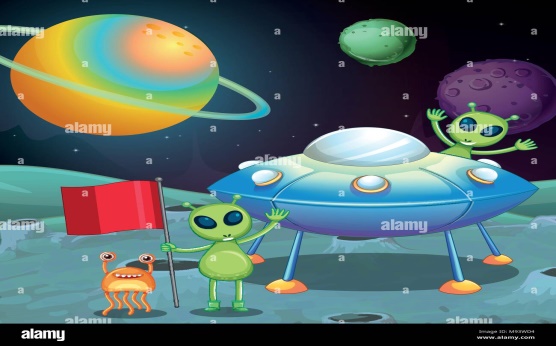
Greeting. (Whale class, Individually) T tells the class to make groups of 2. Warm up: Books closed. Write the word alien on the board. Ask if anybody remembers this word from the unit. Elicit that an alien is a strange creature, usually from a different planet. What do you see in this picture? Do you know about aliens? Do aliens live in another planet? Setting the aim of the lesson.
|
Learners read the given sentences on the board and guess the topic and share with their ideas. Remember and recognize the main vocabulary. |
Teacher controles the process, gives feedback and asks additional questions if it’s nessasery. Teacher evaluate pupils with phrases like: “Good job! Well done!” Formative Assessment
|
Sheets of peppers Pictures of to be |
|
Middle 30 min |
Task. I (Wh, I) (pair dicsussion) Ex: 1 P: 11 In pairs, students find the items 1–6 in the pictures in the comic strip. Encourage them to use There is / There’s when they are locating the items. Monitor, helping out where necessary. Get feedback from each of the pairs Differentiation: A less motivated learner find these things in the comic with by helpers |
Learners find these things in the comic and say where they are. ANSWERS |
Pair assessment
Descriptor: - understand a text with little support Total: 2 point |
Student’s book |
|
|
Task. II (Wh, I) (Task for location) Ex: 2 P: 11 Draw their attention to the questions. In a weaker class, ask students to work together in pairs. In a stronger class, students can do the questions individually TAPESCRIPTS B Excellent! It’s finished Betty, look! T What is it? B The Alien Detector. It’s my new invention. A ALIEN ALERT! ALIEN ALERT! D Woof, woof, woof! B This animal is from another planet. T Are you sure? A ALIEN ALERT! ALIEN ALERT! D Woof, woof, woof! M Have you got a problem? T Sorry. My brother is an inventor. A ALIEN ALERT! ALIEN ALERT! D Woof, woof! M You’re mad! A ALIEN ALERT! ALIEN ALERT! B HELP! T Are you OK? B Fine, thank you. T asks some CCQs:
|
Learners listen and read the story ANSWERS 1 Bob’s new invention is the Alien Detector. 2 There is a dog in the car. 3 No, the animal is not an alien. 4 Betty is Bob’s sister Learners answers Yes or No in CCQ ANSWERS -No -No -Yes |
T’s ffedback
Descriptor: - work together in pairs - read the story Total: 2 point Descriptor: - answers Yes or No |
Worksheets Student’s book |
|
|
Task. III (Task for understanding) Ex: 3 P: 11 Ask the students to find and highlight the words 1–4 in the comic strip. In pairs they discuss what they think they mean. Play the recording, pausing after each word to allow students time to repeat. Check they are pronouncing the words correctly. Students translate the sentences into their own language. In a weaker class, do this as a whole class activity to ensure everybody has the correct translation. TAPESCRIPTS 1 Look!, 2 Are you sure? 3 Sorry 4 Help! |
Learners listen and repeat. Find and highlight the words. Differentiation: A less motivated learner do this as a whole class activity to ensure everybody has the correct translation |
Feedback: “Thumbs up, thumbs down” After correct answer teacher shows thumbs up, if there are some mistakes thumbs down with comments Descriptor: - find and highlight the words - translate the sentences Total: 2 point |
|
|
End 5 min |
The Ladder method was used as a reflection. T asks Ss to stick their stickers to the Success Ladder. Green- I understood Yellow-I have some questions Red-I need a help. Ex: P: Home task |
Ss use their stickers to show their knowledge according to the lesson
|
Poster Success Ladder |
|
Short term plan
|
Unit 4 Living things lesson 11 |
School: |
||
|
Date: |
Teacher name: |
||
|
Grade: 5 |
Number present: |
absent: |
|
|
Lesson title |
Families |
||
|
Learning objectives |
5. 2. 1. Understand with support the sequence of instructions in class 1; 5. 3. 1. 1 provide basic information about oneself and others at the sentence level within a number of general topics; 5. 5. 1. 1 plan, write, correct and check text-level works on some general and academic topics; |
||
|
Learning objectives (assessment criteria) |
Learners will be able to: - Learn how to talk about members of the family. - Learn and practise the possessive -s. - Practise talking about families. |
||
|
Values and its purpose: |
Justice and Responsibility Labor day! Be Honesty and justice |
||
|
Stages/ Time |
Teachers actions |
Students actions |
Assessment |
Resources |
|
Beginning 5 min |
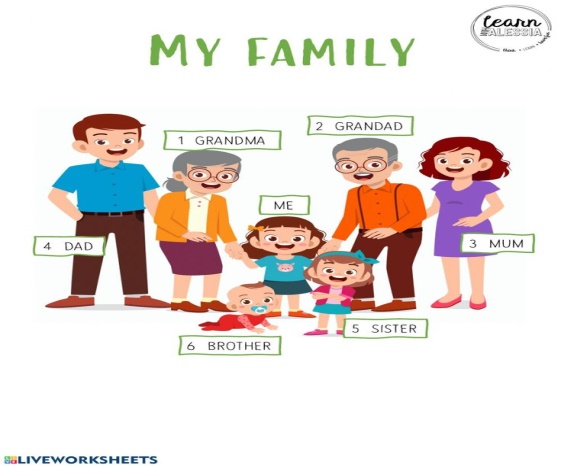
Greeting. (Whale class, Individually) T tells the class to make groups of 2. Warm up: Books closed. To get the students thinking about the theme of family, ask them to think about the last family party or special occasion they attended and to tell their partners about it. T asks students to think about topic that going to conduct. T: What do you think about today’s theme? What’s your grandmother’s name? How old is she? Where’s she from? Setting the aim of the lesson.
|
Learners read the given sentences on the board and guess the topic and share with their ideas. Remember and recognize the main vocabulary. |
Teacher controles the process, gives feedback and asks additional questions if it’s nessasery. Teacher evaluate pupils with phrases like: “Good job! Well done!” Formative Assessment
|
Sheets of peppers Pictures of to be
https://images.app.goo.gl/rH6zUQYaVERhKa23A |
|
Middle 30 min |
Task. I (Wh, I) (pair dicsussion) Ex: 1 P: 40 Focus students’ attention on the family photo on page 41. Allow students 1–2 minutes to look at the photo and ask: How many girls, boys, women and men there are in the photo? Elicit that there are two girls, two boys, three women and three men Differentiation: A less motivated learner listen and write the names of family with support by teacher |
Learners look at the family puzzle. Listen and write the names of family. ANSWERS: 1 Sophie 2 Mark 3 Paul 4 Sarah 5 Becky 6 Matt 7 Emily |
Pair assessment
Descriptor: - look at the family puzzle - identify the names Total: 2 point |
Student’s book |
|
|
Task. II (Wh, I) (Task for location) Ex: 2 P: 40 Draw students’ attention to the table and elicit the meaning of male and female. Point out that brother is the opposite of sister in this way Differentiation: A less motivated learner match words with opposite gender with support by helpers |
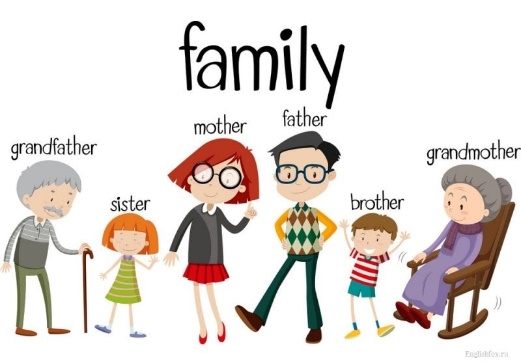
Students match words with opposite gender ANSWERS Male: Brother Grandfather Father Uncle Female: Grandmother Mother Sister Aunt |
T’s ffedback
Descriptor: - identify the family’s gender - match words with opposite Total: 2 point |
Worksheets Student’s book |
|
|
Task. III (Task for understanding) Ex: 3 P: 40 Look at the photos with the students. Ask students in a stronger class to discuss them together in pairs, while in a weaker class you could discuss them together. Get feedback from the class about the people and animals in the photos by asking them if they can name them. Elicit that the photos show Barack Obama and his family (President of the USA 2009–2017), Prince Charles (The son of Queen Elizabeth II of the UK), a snake, rabbits and Serena Williams (world famous tennis champion). Have a brief discussion with the class about the people and elicit any information that they know about them. Students then do the task in pairs. Check answers. Differentiation: A less motivated learner discuss them together in pairs. |
Learners look at the photos and discuss them together in pairs. Match the photos to the sentences. ANSWERS 1 Prince Charles 2The Obama sisters 3 snake 4 rabbits 5 Serena Williams |
Pair assessment
Descriptor: - look at the photos - discuss in pairs - match photos Total: 2 point |
|
|
|
Task. IV Ex: 4 P: 40 Focus students on the examples from the text on page 33. In a stronger class, ask students to use them to complete the rules. Differentiation: A less motivated learner complete the rules together with the students. |
Learners complete the rules with singular and plural ANSWERS 1 singular 2 plural |
Descriptor: - complete the rules Total: 2 point |
|
|
|
Task. V Ex: 5 P: 40 Explain the task and tell students to use the text and photo on page 33 to help them. In pairs, students complete the activity. Monitor, helping out where necessary. Check answers as a class. • Round off the activity by asking the class some questions, e.g. Who is Emily’s grandmother. Encourage students to give full answers, e.g. Emily’s grandmother is Sophie. Make sure they are pronouncing the possessive -s. T asks some CCQs:
|
Learners write sentences about the people in the Mitchel family. ANSWERS 1 Fiona is William’s wife. 2 Matt is Becky’s brother. 3 David is Paul’s nephew. 4 Sophie is Becky’s grandmother. 5 Emily is Sophie’s granddaughter. 6 William and Fiona are Emily’s parents Learners answers Yes or No in CCQ ANSWERS -No -Yes -No - Yes |
Descriptor: - use the text and photo - write sentences about the people Total: 2 point Feedback: “Thumbs up, thumbs down” After correct answer teacher shows thumbs up, if there are some mistakes thumbs down with comments Descriptor: - answers Yes or No |
|
|
End 5 min |
The Ladder method was used as a reflection. T asks Ss to stick their stickers to the Success Ladder. Green- I understood Yellow-I have some questions Red-I need a help. Ex: P: Home task |
Ss use their stickers to show their knowledge according to the lesson
|
Poster Success Ladder |
|
Short term plan
|
Unit 4 Living things lesson 12 |
School: |
||
|
Date: |
Teacher name: |
||
|
Grade: 5 |
Number present: |
absent: |
|
|
Lesson title |
Twins Festival |
||
|
Learning objectives |
5. 2. 3. 1 unaided understanding of simple questions of general and study topics; 5. 4. 1. 1 understand the main idea of some simple short texts on general and educational topics; |
||
|
Learning objectives (assessment criteria) |
Learners will be able to: - Understand an article about a festival for twins. - Learn and use new basic time expressions. - Practise speaking about family similarities |
||
|
Values and its purpose: |
Justice and Responsibility Labor day! Be Honesty and justice |
||
|
Stages/ Time |
Teachers actions |
Students actions |
Assessment |
Resources |
|
Beginning 5 min |
Greeting. (Whale class, Individually) T tells the class to make groups of 2. Warm up: Books closed. Ask the students if they can remember who the famous people were in the photos on page 32. Elicit that they were the Obama family, Prince Charles and Serena Williams. T asks students to think about topic that going to conduct. T: What do you think about today’s theme? Who has got twins at the family? How old are they? Are they similar in character? Setting the aim of the lesson.
|
Learners read the given sentences on the board and guess the topic and share with their ideas. Remember and recognize the main vocabulary. |
Teacher controles the process, gives feedback and asks additional questions if it’s nessasery. Teacher evaluate pupils with phrases like: “Good job! Well done!” Formative Assessment
|
Sheets of peppers Pictures of to be
https://images.app.goo.gl/QrB9M8PoZDRWwysM9 |
|
Middle 30 min |
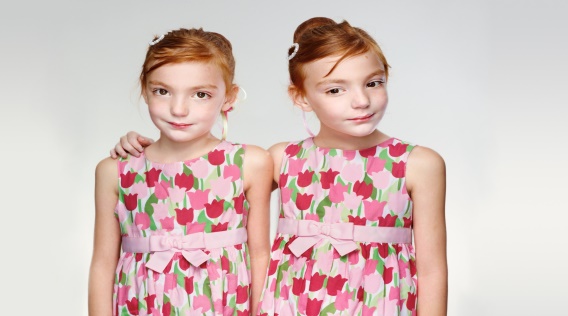
Task. I (Wh, I) (pair dicsussion) Ex: 1 P: 42 Focus on the pictures of the twins. Ask the students if they look similar and elicit that yes, they do look similar. Ask the class if they think they have similar personalities and elicit any feedback. |
Learners read the text and say. Who are the girls in the photos? ANSWERS: The girls in the photo are twin sisters Lauren and Amy Shaw |
Pair assessment Descriptor: - look at the picture - identify the girls in the photos Total: 2 point |
Student’s book |
|
|
Task. II (Wh, I) (Task for location) Ex: 2 P: 42 Draw students’ attention to the questions. In a stronger class, ask the students to complete the activity individually. T asks some CCQs:
|
learners read the text again and answer the questions ANSWERS 1 The festival is in a small town in Ohio called Twinsburg. 2 This year there are 4,000 people at the festival. 3 Amy and Lauren are from Chicago. 4 They are with their father. 5 It’s interesting because there are different activities every day Learners answers Yes or No in CCQ ANSWERS -No -No -Yes - Yes |
T’s ffedback
Descriptor: -read the text - answer the question Total: 2 point Descriptor: - answers Yes or No |
Worksheets Student’s book |
|
|
Task. III (Task for understanding) Ex: 3 P: 42 Refer students to the time expressions in blue. Read through them with the class and check for understanding. They find the words in the text in pairs before completing the sentences individually. When they have completed sentences, ask them to compare what they have written with a partner. Monitor, checking students’ ideas as you circulate and helping with vocabulary as necessary. Close the activity by asking a few students to read out their sentences for the rest of the class. Differentiation: A less motivated learner find the phrases in blue in the text with support. |
Learners find the phrases in blue in the text and complete the sentences. |
Feedback: “Thumbs up, thumbs down” After correct answer teacher shows thumbs up, if there are some mistakes thumbs down with comments Descriptor: - find the phrases in blue - complete the sentences Total: 2 point |
|
|
End 5 min |
The Ladder method was used as a reflection. T asks Ss to stick their stickers to the Success Ladder. Green- I understood Yellow-I have some questions Red-I need a help. Ex: P: Home task |
Ss use their stickers to show their knowledge according to the lesson
|
Poster Success Ladder |
|
Short term plan
|
Unit 4 Living things lesson 13 |
School: |
||
|
Date: |
Teacher name: |
||
|
Grade: 5 |
Number present: |
absent: |
|
|
Lesson title |
My family and their possessions |
||
|
Learning objectives |
5. 2. 6. 1 to determine a number of general and educational topics with the support of meaning from the context of a short conversation; 5. 3. 7. 1 using subject-specific vocabulary and syntax within a range of general topics 5. 6. 3. 1 in general and educational topics, the use of descriptive nouns, including dependent adjectives, the use of simple one-syllable and two-syllable adjectives (relative and selective) for comparison; |
||
|
Learning objectives (assessment criteria) |
Learners will be able to: - Learn and practise the affirmative form of have got. - use and practise using possessive adjectives. |
||
|
Values and its purpose: |
Unity and solidarity International Day of the Elderly! |
||
|
Stages/ Time |
Teachers actions |
Students actions |
Assessment |
Resources |
|
Beginning 5 min |
Greeting. (Whale class, Individually) T tells the class to make groups of 2. Warm up: -Divide students into pairs and allow them 1 minute to tell each other three things about their families. -After 1 minute, ask each student to tell the class one or two things about their partner’s family, e.g. Francisco’s brother is a student at university. T asks students to think about topic that going to conduct. T: What do you think about today’s theme? Have you got a grandfather? Have you got a sister? Has she got a brother? Setting the aim of the lesson.
|
Learners read the given sentences on the board and guess the topic and share with their ideas. Remember and recognize the main vocabulary. |
Teacher controles the process, gives feedback and asks additional questions if it’s nessasery. Teacher evaluate pupils with phrases like: “Good job! Well done!” Formative Assessment
|
Sheets of peppers Pictures of to be
https://images.app.goo.gl/XiUGCjFo8HwmfAcW6
|
|
Middle 30 min |
Task. I (Wh, I) (pair dicsussion) Ex: 1 P: 43 Draw students’ attention to the two girls and ask them to compare them in pairs. Get some feedback from the class and elicit that the two girls in the cartoon look identical and are wearing identical clothes. Elicit that they might be twins. T asks some CCQs:
|
Learners complete the sentences with forms of have got ANSWERS: 1 ’ve got 2 ’s got 3 ’ve got 4 have got Learners answers Yes or No in CCQ ANSWERS -Yes -No |
Pair assessment
Descriptor: - use affirmative form of have got - complete the sentences Total: 2 point Descriptor: - answers Yes or No |
Student’s book |
|
|
Task. II (Wh, I) (Task for location) Ex: 2 P: 43 Allow students some time to read the rules and to complete them, using the sentences in exercise 1 to help them Differentiation: define the rules and complete them from the text. |
learners choose the correct answers ANSWERS 1 have 2 has 3 ’ve got 4 ’s got |
T’s ffedback
Descriptor: -read the rules - choose the correct answers Total: 2 point |
Student’s book |
|
|
Task. III (Task for understanding) Ex: 3 P: 43 Explain the task. In a stronger class, ask students to go ahead and do the task by themselves. Do the first one together in a weaker class as an example and ask the students to continue in pairs A learner with individual needs: will be supported by teacher and by helpers from his class. |
Learners write sentences. Include the correct form of have got. ANSWERS : 1 I’ve got an uncle in the USA. 2 One of my cousins has got a dog. 3 We’ve got English classes every day. 4 My grandparents have got a Ferrari. 5 Daulet’s sister’s got a new bicycle. 6 My friend and I have got identical clothes. |
Feedback: “Thumbs up, thumbs down” After correct answer teacher shows thumbs up, if there are some mistakes thumbs down with comments Descriptor: -write sentences Total: 2 point |
|
|
|
Task. IV Ex: 4 P: 43 Focus students on the table and draw their attention to the left-hand column. Point out that these are subject pronouns. Ask them to look at the right-hand column and look at the first possessive adjective, my, together. Explain that my is an adjective we use to show belonging to me, e.g. This bag belongs to me = This is my bag. Allow students some time to work in pairs to complete the rest of the table with the possessive adjectives from the box. Check answers as a class. |
Learners complete the rest of the table with the possessive adjectives from the box ANSWERS : 1 Your 2 Her 3 Our 4 Their |
Pair assessment
Descriptor: - work in pairs - complete the table Total: 2 point |
|
|
|
Task. V Ex: 5 P: 43 Explain the task. Remind students to think about the people or things in the sentence before they choose their possessive adjectives. In a weaker class, ask the students to underline the subject(s) in each sentence to help them. Monitor, helping out where necessary. Ask students to compare their answers in pairs. Check answers as a class A learner with less motivated: will be supported by teacher and by helpers from his class. Task: Gap filling. Write my, your, his, her
|
Learners choose the correct possessive adjectives. ANSWERS : 1 her 2 Their 3 Her 4 our 5 Its 6 my Learner with less motivated do the task individually. ANSWERS : 1 his 2 my 3 her 4 your 5 my 6 my 7 his 8 your 9 her 10 her |
Self assessment Descriptor: - choose the correct possessive adjectives - to underline the subject to underline the subject Total: 2 point Descriptor: - write possessive adjectives |
Worksheets https://images.app.goo.gl/rdoxKJ23hsztbWsE6 |
|
End 5 min |
The Ladder method was used as a reflection. T asks Ss to stick their stickers to the Success Ladder. Green- I understood Yellow-I have some questions Red-I need a help. Ex: P: Home task |
Ss use their stickers to show their knowledge according to the lesson
|
Poster Success Ladder |
|
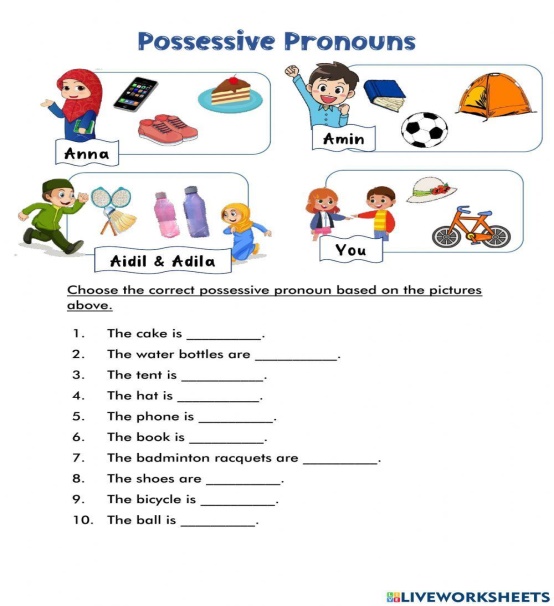
Short term plan
|
Unit 4 The world of work |
School: |
||
|
Date: |
Teacher name: |
||
|
Grade: 5 |
Number present: |
absent: |
|
|
Lesson title |
|
||
|
Learning objectives |
5. 2. 3. 1 unaided understanding of simple questions of general and study topics; 5. 3. 1. 1 provide basic information about oneself and others at the sentence level within a number of general topics; 5. 6. 3. 1 in general and educational topics, the use of descriptive nouns, including dependent |
||
|
Learning objectives (assessment criteria) |
Learners will be able to: - Identify most high-frequency words accurately for a limited range of general topics; - Use adjectives to describe people. Practise describing people and families. |
||
|
Values and its purpose: |
Unity and solidarity Let's protect our old people |
||
|
Stages/ Time |
Teachers actions |
Students actions |
Assessment |
Resources |
|
Beginning 5 min |
Greeting. (Whale class, Individually) T tells the class to make groups of 2. Warm up: Books closed. Ask students to work in pairs and to describe their families using have got. Allow them about 1–2 minutes for this. • Get some feedback from the class by asking a few students to describe their partner’s family using have got, e.g. Martin’s got one brother and two sisters. T asks students to think about topic that going to conduct. T: What do you think about today’s theme? This is Bob. He is fat. His hair is black. This is Jack. He is thin. His hair is brown. Setting the aim of the lesson.
|
Learners read the given sentences on the board and guess the topic and share with their ideas. Remember and recognize the main vocabulary. |
Teacher controles the process, gives feedback and asks additional questions if it’s nessasery. Teacher evaluate pupils with phrases like: “Good job! Well done!” Formative Assessment
|
Sheets of peppers Pictures of to be
https://images.app.goo.gl/78DCDtU2bshSWQkC9 |
|
Middle 30 min |
Task. I (Wh, I) (pair dicsussion) Ex: 1 P: 44 Draw students’ attention to the words in the box. Explain the task and refer them to pages 79–80 of the Workbook. • Students check their answers in pairs. Check answers as a class |
Learners check the meaning of the adjectives which four words describe appearance ANSWERS: Appearance: fair, dark, short, tall Opposites: horrible / nice, young / old, friendly / unfriendly, fair / dark, short / tall, noisy / quiet |
Pair assessment
Descriptor: - check the meaning of the adjectives - describe appearance Total: 2 point |
Student’s book |
|
|
Task. II (Wh, I) (Task for location) Ex: 2 P: 44 Look at the photos with the class. Ask them which person they like the most and elicit some feedback, encouraging students to try to explain their answer Differentiation with individual need learners: *Define a picture of the people and choose with the words with support. |
learners choose two adjectives for each of the people ANSWERS 2 old and nice 3 friendly and dark 4 tall and fair 5 young and noisy 6 quiet and good-looking |
T’s ffedback
Descriptor: Total: 2 point |
Student’s book |
|
|
Task. III (Task for understanding) Ex: 3 P: 44 Write Interview on the board and ask the class if they know what it is. Elicit any feedback they can give before explaining what an interview is. Ask them if they have ever seen a TV interview and elicit some feedback T asks some CCQs:
|
Learners look at the information about the TV programme and answer to the question ANSWERS : Students’ own answers Learners answers Yes or No in CCQ ANSWERS -Yes -No - No |
Teacher’s comment Descriptor: -write sentences Total: 2 point Descriptor: - answers Yes or No |
|
|
|
Task. IV Ex: 4 P: 44 Play the recording. Students should tick the questions they hear being asked. In a weaker class, you could pause the recording to give students a chance to note which questions are being asked. Students check answers in pairs. Check answers as a class |
Learners listen to the programme and tick the questions they hear. ANSWERS : 2, 4, 5, 6, 8 |
Pair assessment
Descriptor: - work in pairs - listen and tick the questions Total: 2 point |
|
|
|
Task. V Ex: 5 P: 44 In a stronger class, tell students to try to answer the questions by themselves first before playing the recording to check their answers. In a weaker class, allow students time to read the questions again before playing the recording, pausing at the relevant parts to allow them to check their answers. Play the recording straight through for students to check their answers. Put the answers on the board in full sentences so that students have a good model to copy A learner with less motivated: will be supported by teacher and by helpers from his class. |
Learners listen again and write the answers to the questions. ANSWERS : 2 They’ve got thirteen children. 4 Yes, he has. 5 No, they haven’t. 6 No, they haven’t got different rooms but they’ve all got different beds. 8 The baby is one month old and the oldest is nineteen |
Feedback: “Thumbs up, thumbs down” After correct answer teacher shows thumbs up, if there are some mistakes thumbs down with comments Descriptor: -listen and write the answers Total: 2 point |
Worksheets |
|
End 5 min |
The Ladder method was used as a reflection. T asks Ss to stick their stickers to the Success Ladder. Green- I understood Yellow-I have some questions Red-I need a help. Ex: P: Home task |
Ss use their stickers to show their knowledge according to the lesson
|
Poster Success Ladder |
|
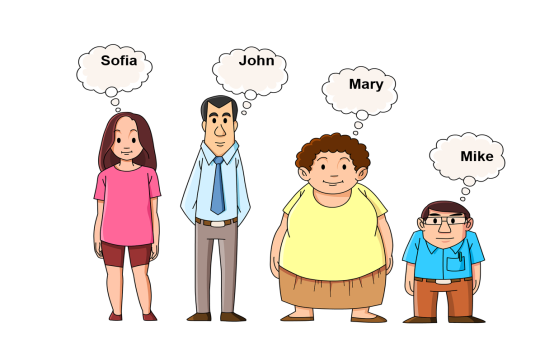
Short term plan
|
Unit 4 Living things lesson 15 |
School: |
||
|
Date: |
Teacher name: |
||
|
Grade: 5 |
Number present: |
absent: |
|
|
Lesson title |
People’s appearance and possessions |
||
|
Learning objectives |
5. 3. 1. 1 provide basic information about oneself and others at the sentence level within a number of general topics; 5. 5. 3. 1 write specific details with the support of the teacher, describing people, places and objects at the text level; 5. 6. 3. 1 in general and educational topics, the use of descriptive nouns, including dependent adjectives, the use of simple one-syllable and two-syllable adjectives (relative and selective) for comparison; |
||
|
Learning objectives (assessment criteria) |
Learners will be able to: -Apply how to use have got in the affirmative, negative, questions and short answers. - Learn and practise asking questions about people’s appearance and possessions. - Learn and practise answering questions about people’s appearance and possessions. |
||
|
Values and its purpose: |
Diligence and Professional Qualification! Teachers' Day |
||
|
Stages/ Time |
Teachers actions |
Students actions |
Assessment |
Resources |
|
Beginning 5 min |
Greeting. (Whale class, Individually) T tells the class to make groups of 2. Warm up: Books closed. Remind students about the adjectives from page 36 to describe people. Tell them to work in pairs. Each pair should choose a student from the class and try to describe that student using some of the adjectives. -Ask each pair to tell the rest of the class their description of their chosen student. The rest of the class have to guess who it is. T asks students to think about topic that going to conduct. T: What do you think about today’s theme? Setting the aim of the lesson.
|
Learners read the given sentences on the board and guess the topic and share with their ideas. Remember and recognize the main vocabulary. |
Teacher controles the process, gives feedback and asks additional questions if it’s nessasery. Teacher evaluate pupils with phrases like: “Good job! Well done!” Formative Assessment
|
Sheets of peppers Pictures of to be
https://images.app.goo.gl/TV2N7NyrHq88J3oH6
|
|
Middle 30 min |
Task. I (Wh, I) (pair dicsussion) Ex: 1 P: 45 -In a stronger class, ask students to complete the task individually. In a weaker class, students complete the task in pairs -Check answers as a class. Point out that we do not use the short forms ‘s or ‘ve in short answers, but that we can use short forms in the negative short answers: hasn’t and haven’t Differentiation with individual need learners: *Define the task in pairs and complete the columns with support. |
Learners complete the columns with examples from the TV programme. ANSWERS: Affirmative: They’ve got twelve children; Charles has got his own room. Negative: The boy hasn’t got fair hair; They haven’t got different rooms. Question: Have they got any pets?; Has Mr Lewis got a job? Short answer: Yes, he has; No, they haven’t. |
Pair assessment
Descriptor: - complete the task individually - use short form’s or ‘ve Total: 2 point |
Student’s book |
|
|
Task. II (Wh, I) (Task for location) Ex: 2 P: 45 Refer students to the sentences and explain the task. They complete the activity individually. In a weaker class, do the first one together as an example. Differentiation with individual need learners: *Define a picture about Philip and choose the correct option with support.
|
Learners make the sentences negative. Use the words in the box. ANSWERS 1 My brother hasn’t got a car. 2 Mrs Hubert hasn’t got a dog. 3 I haven’t got a big family. 4 My parents haven’t got a big house. 5 You haven’t got a big bedroom. 6 My friends and I haven’t got bicycles. |
T’s ffedback
Descriptor: - complete the activity individually. - make the sentences negative Total: 2 point |
Student’s book https://images.app.goo.gl/yWi5fceLFn7EdyVz5 |
|
|
Task. III (Task for understanding) Ex: 3 P: 45 Refer students to the sentences. Tell them to look through them quickly and ask them how many of them are affirmative, negative and questions. |
Learners choose the correct words ANSWERS : 1 hasn’t 2 Have you got 3 have 4 Has 5 haven’t 6 has she got |
Teacher’s comment Descriptor: - choose the correct words Total: 2 point |
|
|
|
Task. IV Ex: 4 P: 45 Tell the class they are going to play a game called Spot the difference. Write this on the board and explain how the game works (students have to find differences between two almost identical pictures). Ask the students to work individually to find the differences first. Stop the activity when the first student has found all eight and point them out to the rest of the class. Working in pairs, students make sentences describing the differences. Circulate, offering vocabulary help where necessary and checking that students are forming the sentences correctly. Check answers as a class. T asks some CCQs:
|
Learners look at the two pictures of a family and find eight differences. ANSWERS : In picture A, the girl has got fair hair and she hasn’t got a mobile phone. In picture B, she hasn’t got fair hair and she’s got a mobile phone. In picture A, the boy’s got a friendly dog and a bag. In picture B, the boy’s got an unfriendly dog and he hasn’t got a bag. In picture A, the boy hasn’t got a cap on his head. In picture B, the boy’s got a cap on his head. In picture A, the baby’s got a teddy bear. In picture B, the baby’s got a bottle. Learners answers Yes or No in CCQ ANSWERS -No -Yes - No - No |
Descriptor: - work in pairs - find eight differences Total: 2 point Feedback: “Thumbs up, thumbs down” After correct answer teacher shows thumbs up, if there are some mistakes thumbs down with comments Descriptor: - answers Yes or No |
|
|
|
Task. V Ex: 5 P: 45 Explain the task and allow students time to form the questions. Circulate to help if needed. When they are ready, tell students to work in pairs to ask and answer the questions. Monitor, checking they are using the questions correctly and that they are responding appropriately. Get some feedback from each pair A learner with less motivated: will be supported by teacher and by helpers from his class. |
Learners make questions with have got. Then ask and answer the questions with partner. ANSWERS : 1 Has your Mum got a Ferrari? 2 Have we got English every day? 3 Have you got a dog? 4 Have you got any brothers and sisters? 5 How many uncles and aunts have you got? 6 Have your friends got computers? |
Self assessment Teachers comment Descriptor: - work in pairs - make questions - ask and answer the questions Total: 2 point |
Worksheets |
|
End 5 min |
The Ladder method was used as a reflection. T asks Ss to stick their stickers to the Success Ladder. Green- I understood Yellow-I have some questions Red-I need a help. Ex: P: Home task |
Ss use their stickers to show their knowledge according to the lesson
|
Poster Success Ladder |
|
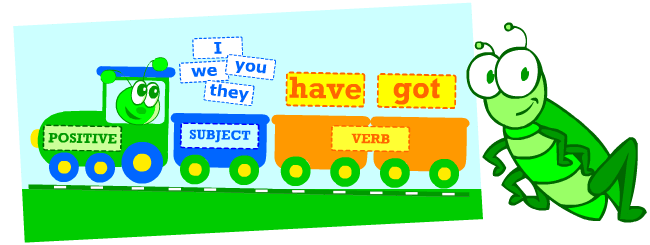
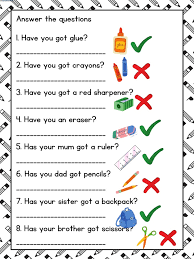
Short term plan
|
Unit 4 Living things lesson 16 |
School: |
||
|
Date: |
Teacher name: |
||
|
Grade: 5 |
Number present: |
absent: |
|
|
Lesson title |
Describe people in a photo |
||
|
Learning objectives |
5. 2. 3. 1 unaided understanding of simple questions of general and study topics; 5. 3. 1. 1 provide basic information about oneself and others at the sentence level within a number of general topics; |
||
|
Learning objectives (assessment criteria) |
Learners will be able to: - Practise describing people in photos. - Apply and practise phrases for describing people |
||
|
Values and its purpose: |
Low and Order "Victim in the life of a child" |
||
|
Stages/ Time |
Teachers actions |
Students actions |
Assessment |
Resources |
|
Beginning 5 min |
Greeting. (Whale class, Individually) T tells the class to make groups of 2. Warm up: Books closed. Ask students to work in pairs to tell each other about their favourite photos at home or on their computers. • Get feedback from a few pairs by asking a few students to describe their partner’s photos. T asks students to think about topic that going to conduct. T: What do you think about today’s theme? Setting the aim of the lesson.
|
Learners read the given sentences on the board and guess the topic and share with their ideas. Remember and recognize the main vocabulary. |
Teacher controles the process, gives feedback and asks additional questions if it’s nessasery. Teacher evaluate pupils with phrases like: “Good job! Well done!” Formative Assessment
|
Sheets of peppers Pictures of to be
https://images.app.goo.gl/CgJh5E4gu5nRuHWf6
|
|
Middle 30 min |
Task. I (Wh, I) (pair dicsussion) Ex: 1 P: 46 Focus on the photo and discuss it with the class. Ask the students what they can see and elicit that there are two girls and two boys in the photo Differentiation with individual need learners: *Define the photo in pairs and discuss it with support. |
Learners look at the photo. What has Sally got on her computer? ANSWERS: She has got some photos of her cousins. |
Pair assessment
Descriptor: - look at the photo - answer the question Total: 2 point |
Student’s book |
|
|
Task. II (Wh, I) (Task for location) Ex: 2 P: 46 Explain the task. In a stronger class, ask students to cover the dialogue before they listen. In a weaker class, ask students to follow it to help them. Remind them to use the adjectives to describe people to help them. Differentiation with individual need will be supported by teacher and by helpers from his class. |
Learners listen to the dialogue. Which people in the photo are Leo and Livia? ANSWERS: A Vicky B Livia C Leo D Jake |
T’s ffedback
Descriptor: - listen to the dialogue. - use the adjectives to describe Total: 2 point |
Student’s book |
|
|
Task. III (Task for understanding) Ex: 3 P: 46 Divide students into pairs to practise the dialogue, allocating each student in a pair the role of Tom and Sally. Monitor as they practise. If necessary, play the recording once again to remind them. Encourage stronger students to try to act out the dialogue from memory |
Learners work pairs to practise the dialogue, allocating each student in a pair the role of Tom and Sally. |
Teacher’s comment Descriptor: - work pairs - practise the dialogue Total: 2 point |
|
|
|
Task. IV Ex: 4 P: 46 • Refer students to the phrases in the box and read through them together. Ask them to repeat after you and encourage them to copy your intonation. Students do the task and check their answers in pairs. Play the recording for students to check their answers. |
Learners study the key phrases. Identify the phrases. ANSWERS : Tom: That’s a nice photo; Which one is Vicky? She looks nice. Sally: She’s the one with fair hair. |
Pair assessment
Descriptor: - work in pairs - identify the phrases Total: 2 point |
|
|
|
Task. V Ex: 5 P: 46 Focus on the photos and the vocabulary in the box and check for understanding. Explain the task and refer students to the examples. Divide students into pairs. Circulate as students ask and answer questions about the photos. Check they are describing the people accurately. Check answers as a class by asking a few students to describe each person. A learner with less motivated: will be supported by teacher and by helpers from his class. T asks some CCQs:
|
Learners look at the photos below and the phrases in the box. Practice mini-dialogues. ANSWERS : Which one is Max? He’s the boy with the short, fair hair and blue eyes. Which one is Hassan? He’s the boy with the short, dark hair and brown eyes. Which one is Ruth? She’s the one with the long, fair hair and green eye Learners answers Yes or No in CCQ ANSWERS -Yes -No - Yes - No |
Descriptor: - look at the photos - practice mini-dialogues Total: 2 point Feedback: “Thumbs up, thumbs down” After correct answer teacher shows thumbs up, if there are some mistakes thumbs down with comments Descriptor: - answers Yes or No |
Worksheets |
|
End 5 min |
The Ladder method was used as a reflection. T asks Ss to stick their stickers to the Success Ladder. Green- I understood Yellow-I have some questions Red-I need a help. Ex: P: Home task |
Ss use their stickers to show their knowledge according to the lesson
|
Poster Success Ladder |
|
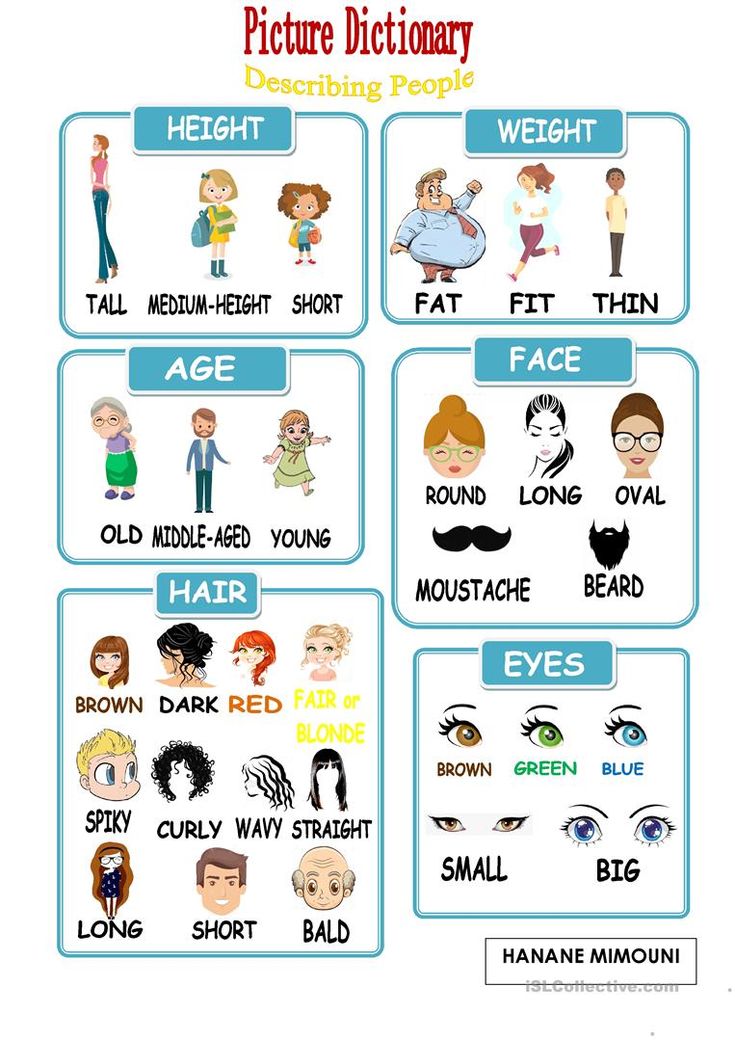
Short term plan
|
Unit 5 Values |
School: Small general secondary school named by Lashkar Tazhybayev |
||
|
Date: 21.11.2024 year |
Teacher’s name: Bukharbay Zhanar Bolatkyzy |
||
|
Grade: 5 |
Number present: |
absent: |
|
|
Lesson title |
Describing people for a blog Summative assessment for the unit “Values” |
||
|
Learning objectives |
5. 4. 5. 1 identify the main idea from the context of short texts within the framework of some familiar general and reading topics 5. 5. 3. 1 write specific details with the support of the teacher, describing people, places and objects at the text level; |
||
|
Learning objectives |
Learners will be able to: - Learn the structure of a simple blog. - Learn and practise how to use and, but, and or. |
||
|
Stages/ Time |
Teachers actions |
Students actions |
Assessment |
Resources |
|
Beginning 5 min |
Greeting. (Whal4e class, Individually) T tells the class to make groups of 2. Warm up: • Books closed. Divide students into pairs. Ask them to tell each other how often they use the internet and what they use it for. • After about 1 minute, stop the students and get some feedback from each pair by asking a student to describe their partner’s use of the internet. T: What do you think about today’s theme? Setting the aim of the lesson.
To make your business stand out, you must have a good-looking website that’ll wow all your visitors |
Learners read the given sentences on the board and guess the topic and share with their ideas. Remember and recognize the main vocabulary. |
Teacher controles the process, gives feedback and asks additional questions if it’s nessasery. Teacher evaluate pupils with phrases like: “Good job! Well done!” Formative Assessment
|
Sheets of peppers Pictures of to be
https://images.app.goo.gl/MckYLgX9hBj3hAMy5
|
|
Middle 30 min |
Task. I (Wh, I) (pair dicsussion) Ex: 1 P: 47 Draw students’ attention to the model text and ask them where they might see it. Elicit that they would see it on the internet. Explain that this is a blog: a blog is like an online diary or journal where people write about their life and experience. |
Learners read the model text and write their names ANSWERS: 1 grandmother 2 mother 3 sister (Becky) 4 uncle 5 cousin (Alex) |
Pair assessment
Descriptor: - read the model text -write their names Total: 2 point |
Student’s book |
|
|
Task. II (Wh, I) (Task for location) Ex: 2 P: 47 Refer students to the incomplete sentences and explain that they need to be completed with and, but, or. Ask them to find and underline examples of and, but, and or in the text. Differentiation with individual need learners: *Complete the task, find and underline examples of and, but, and or in the text with support. |
Learners complete the sentences with and, but and or. Then look at the model text and check. ANSWERS: 1 and 2 but 3 or There is a comma (,) before but. |
T’s ffedback
Descriptor: - complete with and, but and or - find and underline Total: 2 point |
Student’s book |
|
|
Task. III (Task for understanding) Ex: 3 P: 47 Refer students to the sentences and explain the task. In a weaker class, do the first one as an example for the students and ask them to continue the activity in pairs. Students check answers in pairs. Check answers as a class. |
Learners complete the sentences with but, and, or. ANSWERS: 1 and 2 but 3 or 4 but 5 and 6 and |
Teacher’s comment Descriptor: - work pairs - complete the sentences Total: 2 point |
|
|
|
Task. IV Ex: 4 P: 47 Draw students’ attention to the key phrases. Read through them with the class and check for understanding. Tell students to think about the students in their classroom and to make six sentences using each of the phrases. Check answers as a class. Summative assessment for the unit “Living things” |
Learners study the key phrases and write six sentences about the position of people in your class. |
Pair assessment
Descriptor: - study the key phrases - write six sentences Total: 2 point |
|
|
End 5 min |
The Ladder method was used as a reflection. T asks Ss to stick their stickers to the Success Ladder. Green- I understood Yellow-I have some questions Red-I need a help. Ex: P: Home task |
Ss use their stickers to show their knowledge according to the lesson
|
Poster Success Ladder |
|

Short term plan
|
Unit 4 Living things lesson 18 |
School: |
||
|
Date: |
Teacher name: |
||
|
Grade: 5 |
Number present: |
absent: |
|
|
Lesson title |
My Country. Living things. |
||
|
Learning objectives |
5. 3. 1. 1 provide basic information about oneself and others at the sentence level within a number of general topics; 5. 5. 7. 1 use a format appropriate to the level of the text in some written genres on a familiar general and a number of reading topics with some support |
||
|
Learning objectives (assessment criteria) |
Learners will be able to: - Learn vocabulary for talking about animals. - Do a quiz about animals in Kazakhstan. - Learn how to use comparative and superlative adjectives. - Learn and practise using interrogative pronouns. |
||
|
Values and its purpose: |
Diligence and Professional Qualification! Day of librarians |
||
|
Stages/ Time |
Teachers actions |
Students actions |
Assessment |
Resources |
|
Beginning 5 min |
Greeting. (Whale class, Individually) T tells the class to make groups of 2. Warm up: Books closed. Divide students into groups and write the word animals on the board. Allow students about 1 minute to brainstorm the names of as many animals as they can. Elicit ideas, then write mountain, forest, river, desert, steppe and lake on the board. Ask students to put the animals they brainstormed in the correct category. Tell students they are going to do a quiz about animals in Kazakhstan T: What do you think about today’s theme?
|
Learners read the given sentences on the board and guess the topic and share with their ideas. Remember and recognize the main vocabulary. |
Teacher controles the process, gives feedback and asks additional questions if it’s nessasery. Teacher evaluate pupils with phrases like: “Good job! Well done!” Formative Assessment
|
Sheets of peppers Pictures of to be
https://images.app.goo.gl/kReGUZqZ2BjHsbCu5 |
|
Middle 30 min |
Task. I (Wh, I) (pair dicsussion) Ex: 1 P: 48 Invite individual students to draw pictures of the other animals for their classmates to guess. If you have access to the internet, you can show students photos of the animals instead. • In pairs, students do the animals quiz A learner with less motivated: will be supported by teacher and by helpers from his class. Task: Color the animals that live on a farm.
|
Learners check the meaning of the words. ANSWERS: Student’s own answers |
Feedback: “Thumbs up, thumbs down” After correct answer teacher shows thumbs up, if there are some mistakes thumbs down with comments Descriptor: - work in pairs - draw pictures of the other animals Total: 2 point |
Student’s book
https://images.app.goo.gl/hLmigvcFXtRQ9gYT6 |
|
|
Task. II (Wh, I) (Task for location) Ex: 2 P: 48 Ask students if they have seen any of the animals mentioned in the quiz and if they know any other interesting facts about them. Elicit some ideas . |
Learners listen and check your answers ANSWERS: 1 b 2 a 3 c 4 c 5 a 6 c 7 b 8 c 9 a |
T’s ffedback
Descriptor: - listen and check Total: 2 point |
Student’s book |
|
|
Task. III (Task for understanding) Ex: 3 P: 48 Draw students’ attention to the table and the words in blue in the quiz. Explain the task. Students complete the table and check their answers in pairs. Check answers as a class. Point out that there are some spelling rules for -er and -est. Highlight the spelling of bigger / biggest and heavier / heaviest and explain or elicit that we double the final consonant in adjectives like big, hot, sad, etc. and we change y to i in adjectives like heavy, happy, ugly, etc. |
Learners complete the table with the words in blue in the quiz. Identify the rules. ANSWERS : 1 bigger 2 the biggest 3 smaller 4 heavier 5 the most popular 6 the most beautiful 7 more dangerous |
Teacher’s comment Descriptor: - complete the table - check their answers in pairs. Total: 2 point |
|
|
|
Task. IV Ex: 4 P: 48 Explain the task and ask students to do it individually. Check answers as a class. T asks some CCQs:
|
Learners choose the correct words ANSWERS : 1 faster 2 the smallest 3 more intelligent 4 than 5 the Learners answers Yes or No in CCQ ANSWERS -No - Yes - No |
Self ssessment Descriptor: - do the task individually - choose the correct words Total: 2 point Descriptor: - answers Yes or No |
|
|
|
Task. V Ex: 5 P: 48 Read through the instructions together and make sure students know the meaning of the words in the box. In a weaker class, you could ask students to translate the words. In pairs, students complete the questions, then ask and answer. Check answers as a class. Point out that we can use how with different adjectives to ask about size (how big / tall / long), age (how old), weight (how heavy), distance (how far), speed (how fast), etc. Differentiation with individual need learners: will be supported by teacher and by helpers from his class. *Complete the task in pairs. |
Work in pairs. Complete the questions with these words. Then ask and answer. ANSWERS : 1 What 2 How 3 Which 4 Where 5 How 6 Who 7 How |
Pair assessment
Descriptor: - work in pairs - complete the questions Total: 2 point |
|
|
End 5 min |
The Ladder method was used as a reflection. T asks Ss to stick their stickers to the Success Ladder. Green- I understood Yellow-I have some questions Red-I need a help. Ex: P: Home task |
Ss use their stickers to show their knowledge according to the lesson
|
Poster Success Ladder |
|
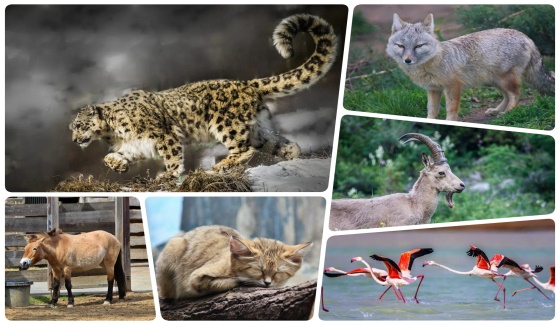
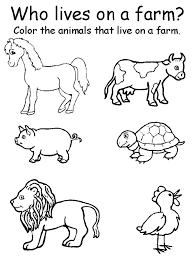
Short term plan
|
Unit 4 Living things lesson 19 |
School: |
||
|
Date: |
Teacher name: |
||
|
Grade: 5 |
Number present: |
absent: |
|
|
Lesson title |
Communication. Asking friends for things and describing where they are |
||
|
Learning objectives |
5. 1. 6. 1 organize and present information in a way that is understandable to others; 5. 2. 3. 1 unaided understanding of simple questions of general and study topics; 5. 3. 7. 1 using subject-specific vocabulary and syntax within a range of general topics |
||
|
Learning objectives (assessment criteria) |
Learners will be able to: - Learn phrases for borrowing and asking where things are. - Understand a conversation between students. - Practise asking for things and saying where they are. |
||
|
Values and its purpose: |
Low and Order "Victim in the life of a child" |
||
|
Stages/ Time |
Teachers actions |
Students actions |
Assessment |
Resources |
|
Beginning 5 min |
Greeting. (Whale class, Individually) T tells the class to make groups of 2. Warm up: Books closed. Draw students’ attention to your desk (ask them to stand up and look at it if necessary). Ask them what they can see on it, e.g. There’s a dictionary. There’s a book. There are some pens. • Put any new vocabulary on the board and model for pronunciation. T: What do you think about today’s theme?
|
Learners read the given sentences on the board and guess the topic and share with their ideas. Remember and recognize the main vocabulary. |
Teacher controles the process, gives feedback and asks additional questions if it’s nessasery. Teacher evaluate pupils with phrases like: “Good job! Well done!” Formative Assessment
|
Sheets of peppers Pictures of to be
https://images.app.goo.gl/pbEEYEtKeCQ6XBnf9 |
|
Middle 30 min |
Task. I (Wh, I) (pair dicsussion) Ex: 1 P: 49 Focus students’ attention on the illustration and ask them what it is. Elicit it is a classroom. • Draw their attention to the words in the box and explain the task. Differentiation with individual need learners: will be supported by teacher and by helpers from his class. Match classroom objects with the words in the box. |
Learners match classroom objects with the words in the box ANSWERS: 1 calendar 2 scissors 3 ruler 4 dictionary 5 glue stick 6 Sellotape |
Pair assessment
Descriptor: - match classroom objects - complete the task Total: 2 point |
Student’s book |
|
|
Task. II (Wh, I) (Task for location) Ex: 2 P: 49 Explain the task and draw students’ attention to the incomplete sentences. Using the illustration, they complete the sentences individually before checking their answers in pairs. |
Learners complete the sentences. Listen and check. ANSWERS: 1 ruler 2 calculator 3 scissors 4 Sellotape |
T’s ffedback Descriptor: - complete the sentences individually Total: 2 point |
Student’s book |
|
|
Task. III (Task for understanding) Ex: 3 P: 49 Explain the task and draw students’ attention to the question. Say that they are going to hear three people – Tom, Helen and Lucy – talking about various objects and they have to decide which of them has got a calculator. |
Learners listen to a conversation. Answer the question. ANSWERS : Lucy’s got a calculator. |
Teacher’s comment Descriptor: - listen to a conversation Total: 2 point |
|
|
|
Task. IV Ex: 4 P: 49 • Refer students to the key phrases and read through them together as a class. Check for understanding. If necessary, remind students of the meaning of borrow. Explain the task. • Play the recording. Students check their answers in pairs. Check answers as a class. A learner with less motivated: will be supported by teacher and by helpers from his class. |
Learners study the key phrases. Then listen to the conversation again. Number the phrases in the order you hear. ANSWERS : 1 Have you got a / some … ? 2 I think he / she’s got one / some. 3 Can I borrow it? 4 Yes, go ahead. 5 Where is it? 6 It’s / They’re in / on … |
Pair assessment
Descriptor: - study the key phrases - choose the correct words Total: 2 point |
|
|
|
Task. V Ex: 5 P: 49 Ask students to close their books and play the recording. Ask them to identify who has got some scissors and elicit that Max has. Instruct students to open their books again and draw their attention to the conversation. T asks some CCQs:
|
Work in pairs. Complete the questions with these words. Then ask and answer. ANSWERS : Learners answers Yes or No in CCQ ANSWERS -No - Yes - No |
Descriptor: - work in pairs - complete the questions Total: 2 point Descriptor: - answers Yes or No |
|
|
End 5 min |
The Ladder method was used as a reflection. T asks Ss to stick their stickers to the Success Ladder. Green- I understood Yellow-I have some questions Red-I need a help. Ex: P: Home task |
Ss use their stickers to show their knowledge according to the lesson
|
Poster Success Ladder |
|
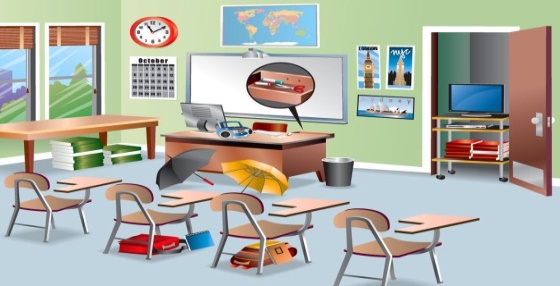
Short term plan
|
Unit 4 Living things lesson 20 |
School: |
||
|
Date: |
Teacher name: |
||
|
Grade: 5 |
Number present: |
absent: |
|
|
Lesson title |
My Family. Project |
||
|
Learning objectives |
5.3.7.1 use appropriate subject-specific vocabulary and syntax to talk about a limited range of general topics; 5.4.3.1 understand the detail of an argument on a limited range of familiar general and curricular topics; |
||
|
Learning objectives (assessment criteria) |
Learners will be able to: - Learn how to read a family tree. - Make a family profile. |
||
|
Values and its purpose: |
Diligence and Professional Qualification! Labor in human life, family, society understand the value |
||
|
Stages/ Time |
Teachers actions |
Students actions |
Assessment |
Resources |
|
Beginning 5 min |
Greeting. (Whale class, Individually) T tells the class to make groups of 2. Warm up: Books closed. Write family on the board and tell students they have 1 minute to brainstorm different members of a family. • Put the different family members on the board as students shout them out. This is my grandfather. He is my father’s father. He is 85 years old. His name is Askhat. T: What do you think about today’s theme?
|
Learners read the given sentences on the board and guess the topic and share with their ideas. Remember and recognize the main vocabulary. |
Teacher controles the process, gives feedback and asks additional questions if it’s nessasery. Teacher evaluate pupils with phrases like: “Good job! Well done!” Formative Assessment
|
Sheets of peppers Pictures of to be
https://images.app.goo.gl/RdHBt7TSDvcK3tmT9
|
|
Middle 30 min |
Task. I (Wh, I) (pair dicsussion) Ex: 1 P: 50 Ask students to look at the family tree and ask them how many people they can see. Elicit that they can see six people in the photos. |
Learners complete sentences about Akbota’s family tree ANSWERS: 2 Assel 3 Mikhail 4 Nuraly and Alen 5 Talgat |
Pair assessment Descriptor: - look at the family tree - complete sentences about Akbota’s family tree Total: 2 point |
Student’s book |
|
|
Task. II (Wh, I) (Task for location) Ex: 2 P: 50 Explain the task. In a stronger class, ask students to go ahead and complete the activity individually before checking answers in pairs. Differentiation with individual need learners: Ask students to do the activity in pairs and encourage them to underline the parts of the text where they find their answers. |
Learners read the text and write true or false. ANSWERS: 1 False: Emily’s grandmother Olga is Russian. 2 True 3 True 4 False: Her uncle isn’t married. 5 False: Mikhail isn’t a pop star. |
T’s ffedback Descriptor: - read the text - write true or false. Total: 2 point |
Student’s book |
|
|
Task. III (Task for understanding) Ex: 3 P: 50 Working individually, students draw their family tree. You could give them some A4 paper to work on, along with markers. Ask student to focus on their immediate families and to include no more than about ten or twelve people as it will get too complicated. Make sure they draw their family trees clearly so that they can be easily understood |
Learners make a poster of their family. ANSWERS : Student’s own answer |
Teacher’s comment Descriptor: - work individually - make a poster Total: 2 point |
|
|
End 5 min |
The Ladder method was used as a reflection. T asks Ss to stick their stickers to the Success Ladder. Green- I understood Yellow-I have some questions Red-I need a help. Ex: P: Home task |
Ss use their stickers to show their knowledge according to the lesson
|
Poster Success Ladder |
|
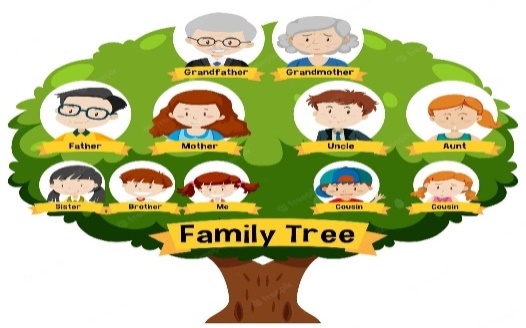
Short term plan
|
Unit 4 Living things lesson 21 |
School: |
||
|
Date: |
Teacher name: |
||
|
Grade: 5 |
Number present: |
absent: |
|
|
Lesson title |
Vocabulary puzzles: Family. Adjectives |
||
|
Learning objectives |
5.3.1.1 provide basic information about a family and a family tree other at sentence level on an increasing range of general topics; 5.4.3.1 understand the detail of an argument on a limited range of familiar general and curricular topics; |
||
|
Learning objectives (assessment criteria) |
Learners will be able to: - Learn how to read a family tree. - Do vocabulary puzzles. |
||
|
Values and its purpose: |
Independence and Patriotism National interest: expanding the scope of the Kazakh language |
||
|
Stages/ Time |
Teachers actions |
Students actions |
Assessment |
Resources |
|
Beginning 5 min |
Greeting. (Whale class, Individually) T tells the class to make groups of 2. Warm up: Put the different family members on the board as students shout them out. T: What do you think about today’s theme?
|
Learners read the given sentences on the board and guess the topic and share with their ideas. Remember and recognize the main vocabulary. |
Teacher controles the process, gives feedback and asks additional questions if it’s nessasery. Teacher evaluate pupils with phrases like: “Good job! Well done!” Formative Assessment
|
Sheets of peppers Pictures of to be
https://images.app.goo.gl/EfiHrqT1ABz8RwWK9
|
|
Middle 30 min |
Task. I (Wh, I) (pair dicsussion) Ex: 1 P: 51 If students are already familiar with a family tree, ask them to complete the vocabulary puzzles by themselves. Check answers as a class. |
Learners use the code to write family words ANSWERS: son niece cousin uncle |
Pair assessment Descriptor: - complete the vocabulary puzzles - use the code Total: 2 point |
Student’s book |
|
|
Task. II (Wh, I) (Task for location) Ex: 2 P: 51 Draw students’ attention to the sentences and read through them together with the class. Check for understanding. Differentiation with individual need learners: Ask students to find five more family words in the puzzle with support |
Learners find five more family words in the puzzle ANSWERS: 1 doughter 2 mother 3 sister 4 brother 5 aunt |
T’s ffedback Descriptor: - find five more family words Total: 2 point |
Student’s book |
|
|
Task. III (Task for understanding) Ex: 3 P: 51 Explain the task and draw students’ attention to the incomplete sentences. Using the illustration, they complete the sentences individually before checking their answers in pairs |
Learners unscramble the letters to make adjectives. ANSWERS : Old, tall, short, small, nice |
Teacher’s comment Descriptor: - unscramble the letters - make adjectives. Total: 2 point |
|
|
End 5 min |
The Ladder method was used as a reflection. T asks Ss to stick their stickers to the Success Ladder. Green- I understood Yellow-I have some questions Red-I need a help. Ex: P: Home task |
Ss use their stickers to show their knowledge according to the lesson
|
Poster Success Ladder |
|
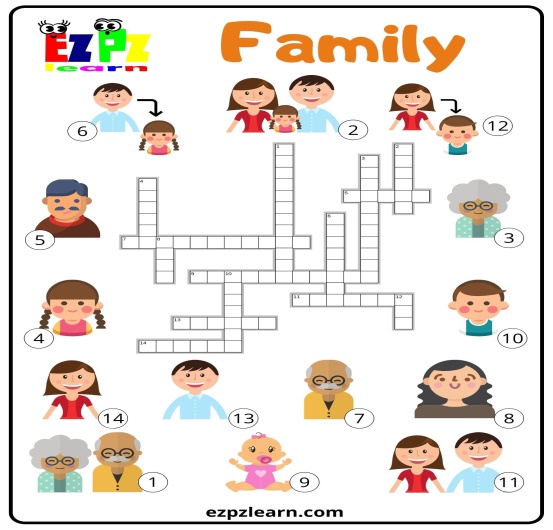
Short term plan
|
Unit 4 Living things lesson 22 |
School: |
||
|
Date: |
Teacher name: |
||
|
Grade: 5 |
Number present: |
absent: |
|
|
Lesson title |
Review. Unit 4 |
||
|
Learning objectives |
5.3.7.1 use appropriate subject-specific vocabulary and syntax to talk about a limited range of general topics; 5.5.2.1 write with support a sequence of short sentences in a paragraph on a limited range of familiar general topics; 5.6.3.1 use a growing variety of adjectives and regular and irregular comparative and superlative adjectives on a limited range of familiar general and curricular topics |
||
|
Learning objectives (assessment criteria) |
Learners will be able to: - Learn how to talk about members of the family. - Learn and practise the possessive -s. - Practise describing people and families - Learn and practise the affirmative form of have got |
||
|
Values and its purpose: |
Independence and Patriotism National interest: expanding the scope of the Kazakh language |
||
|
Stages/ Time |
Teachers actions |
Students actions |
Assessment |
Resources |
|
Beginning 5 min |
Greeting. (Whale class, Individually) T tells the class to make groups of 2. Warm up: Divide students into pairs and allow them 1 minute to tell each other three things about their families. • After 1 minute, ask each student to tell the class one or two things about their partner’s family, e.g. Francisco’s brother is a student at university. T: What do you think about today’s theme?
My father’s sister is my aunt . My doughter’s brother is my son. My grandmother’s pink dress. |
Learners read the given sentences on the board and guess the topic and share with their ideas. Remember and recognize the main vocabulary. |
Teacher controles the process, gives feedback and asks additional questions if it’s nessasery. Teacher evaluate pupils with phrases like: “Good job! Well done!” Formative Assessment
|
Sheets of peppers Pictures of to be
https://images.app.goo.gl/WdyYunv3S3CS11uU6 |
|
Middle 30 min |
Task. I (Wh, I) (pair dicsussion) Ex: 1 P: 52 Students complete the activity. Round off the activity by asking the class some questions, e.g. Who is who’s grandmother. Encourage students to give full answers, e.g. My grandmother is Sophie. Make sure they are pronouncing the possessive -s |
Learners complete the sentences with the words in the box. ANSWERS: 1 grandmother 2 cousin 3 aunt 4 daughter 5 uncle 6 sister 7 grandfather 8 grandson |
Pair assessment Descriptor: - complete the sentences Total: 2 point |
Student’s book |
|
|
Task. II (Wh, I) (Task for location) Ex: 2 P: 52 Now focus students on the words. Explain that each word is the opposite of one of the adjectives below. When they have matched the adjectives, allow students to compare their answers in pairs. Differentiation with individual need learners: Ask students to match the pairs of opposite adjectives. |
Learners match the pairs of opposite adjectives. ANSWERS : 1 c 2 a 3 e 4 f 5 d 6 b |
T’s ffedback Descriptor: - match the pairs of opposite adjectives Total: 2 point |
Student’s book |
|
|
Task. III (Task for understanding) Ex: 3 P: 52 Refer students to the sentences and explain the task. They complete the activity individually. • In a weaker class, do the first one together as an example |
Learners write sentences with have got, has got or haven’t, hasn’t got ANSWERS : 1 I haven’t got a pet. 2 My cousins have got dark hair. 3 My brother and I haven’t got a computer. 4 Steve’s got a new bicycle. 5 Lydia hasn’t got a cat and a dog. 6 My grandmother hasn’t got a car. |
Feedback: “Thumbs up, thumbs down” After correct answer teacher shows thumbs up, if there are some mistakes thumbs down with comments Descriptor: - match the pairs of opposite adjectives Total: 2 point |
|
|
|
Task. IV Ex: 4 P: 52 • Refer students to the sentences and explain the task. They complete the activity individually. Complete the sentences with the correct possessive adjectives. |
Learners complete the sentences with the correct possessive adjectives. ANSWERS : 1 her 2 their 3 Its 4 my 5 your 6 our |
Descriptor: - complete the sentences Total: 2 point |
|
|
|
Task. V Ex: 5 P: 52 • Refer students to the sentences and explain the task. They complete the activity individually. complete the questions with have or has. Then match the questions and answers |
Learners complete the questions with have or has. Then match the questions and answers ANSWERS : 1 c: Have 2 f: Has 3 a: Has 4 e: Have 5 b: Has 6 d: Have |
|
|
|
End 5 min |
The Ladder method was used as a reflection. T asks Ss to stick their stickers to the Success Ladder. Green- I understood Yellow-I have some questions Red-I need a help. Ex: P: Home task |
Ss use their stickers to show their knowledge according to the lesson
|
Poster Success Ladder |
|
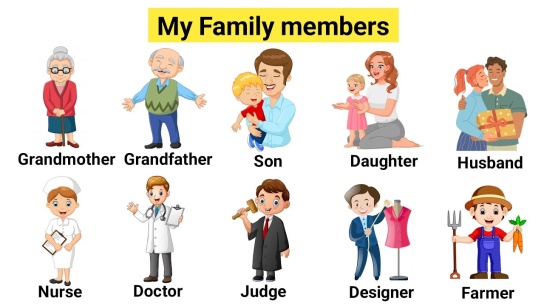
Short term plan
|
Unit 4 Living things lesson 23 |
School: |
||
|
Date: |
Teacher name: |
||
|
Grade: 5 |
Number present: |
absent: |
|
|
Lesson title |
Summative control work for the 1st term |
||
|
Learning objectives |
5. 2. 6. 1 identify a range of general and learning topics with support for meaning from a short conversational context 5. 3. 1. 1 provide basic information about oneself and others at the sentence level within a number of general topics; 5. 4. 1. 1 understand the main idea of some simple short texts on general and educational topics; 5. 5. 1. 1 plan, write, correct and check text-level works on some general and academic topics; |
||
|
Learning objectives (assessment criteria) |
Learners will be able to: - Uses a range of everyday vocabulary appropriately; attempts to use less common lexical items, but may make frequent errors. - Responds relevantly and at length which makes frequent prompting unnecessary, resulting in a competent conversation |
||
|
Values and its purpose: |
Independence and Patriotism Republic Day! |
||
Short term plan
|
Unit 4 Living things lesson 24 |
School: |
||
|
Date: |
Teacher name: |
||
|
Grade: 5 |
Number present: |
absent: |
|
|
Lesson title |
Reading for pleasure. |
||
|
Learning objectives |
5. 3. 6. 1 to express one's thoughts clearly and concretely in sentences in pairs, groups and with the whole class; 5. 4. 2. 1 understand specific information in simple, short texts on a number of general and educational topics with little help from the teacher; |
||
|
Learning objectives (assessment criteria) |
Learners will be able to: - Identify details in a text with little support - Talk about street party |
||
|
Values and its purpose: |
Independence and Patriotism National interest: expanding the scope of the Kazakh language |
||
|
Stages/ Time |
Teachers actions |
Students actions |
Assessment |
Resources |
|
Beginning 5 min |
Greeting. (Whale class, Individually) T tells the class to make groups of 2. Warm up: • Books closed. Write music on the board. Ask the class if they listen to music and get some brief feedback. Ask students to brainstorm other words associated with music and to shout them out. Put their ideas on the board, but try to elicit dancing and singing. If the students don’t suggest these, you could mime them. T: What do you think about today’s theme?
|
Learners read the given sentences on the board and guess the topic and share with their ideas. Remember and recognize the main vocabulary. |
Teacher controles the process, gives feedback and asks additional questions if it’s nessasery. Teacher evaluate pupils with phrases like: “Good job! Well done!” Formative Assessment
|
Sheets of peppers Pictures of to be |
|
Middle 30 min |
Task. I (Wh, I) (pair dicsussion) Ex: 1 P: 53 Draw students’ attention to the pictures and ask them to discuss them in pairs for 1–2 minutes. When they are ready, get some feedback from the class. What can they see in the photos? Can they describe the people in them? |
Learners match phrases with pictures. ANSWERS: a 2 b 4 c 1 d 3 e 5 |
Pair assessment Descriptor: - discuss in pairs - match phrases Total: 2 point |
Student’s book |
|
|
Task. II (Wh, I) (Task for location) Ex: 2 P: 53 Focus students on the song. Tell them to have a quick look through it, ignoring any new vocabulary for now, to see if they can insert any of the phrases in the right places. You should point out that it is common, in informal English or in songs, to drop the -g and the end of words ending in -ing Differentiation with individual need learners: Ask students to complete the song with the phrase |
Learners complete the song with the phrase ANSWERS: 1 d 2 a 3 e 4 c 5 b |
Feedback: “Thumbs up, thumbs down” After correct answer teacher shows thumbs up, if there are some mistakes thumbs down with comments Descriptor: - complete the song Total: 2 point |
Student’s book |
|
|
Task. III (Task for understanding) Ex: 3 P: 53 Read through the titles with the class and check for understanding. Students decide on a title and compare their ideas in pairs. |
Learners choose a title for the song. ANSWERS: C |
Teacher’s comment Descriptor: - read the titles - choose a title Total: 2 point |
|
|
End 5 min |
The Ladder method was used as a reflection. T asks Ss to stick their stickers to the Success Ladder. Green- I understood Yellow-I have some questions Red-I need a help. Ex: P: Home task |
Ss use their stickers to show their knowledge according to the lesson
|
Poster Success Ladder |
|










 Бұл курс Қазақстан Республикасы Оқу-ағарту министрлігімен келісілген










