ЖИ көмекші


 Қауіпсіз төлем

жүктеу мүмкіндігіне ие боласыз
Бұл материал сайт қолданушысы жариялаған. Материалдың ішінде жазылған барлық ақпаратқа жауапкершілікті жариялаған қолданушы жауап береді. Ұстаз тілегі тек ақпаратты таратуға қолдау көрсетеді. Егер материал сіздің авторлық құқығыңызды бұзған болса немесе басқа да себептермен сайттан өшіру керек деп ойласаңыз осында жазыңыз
 03 Маусым 2018
 434
434
1 жыл бойы шексіз жүктеңіз
5 сынып Fruit and vegetables
«Болашақ» жалпы орта мектебі»
коммуналдық мемлекеттік мекемесі
Ашық сабақ
Сабақтың тақырыбы:
“Fruit and vegetables”
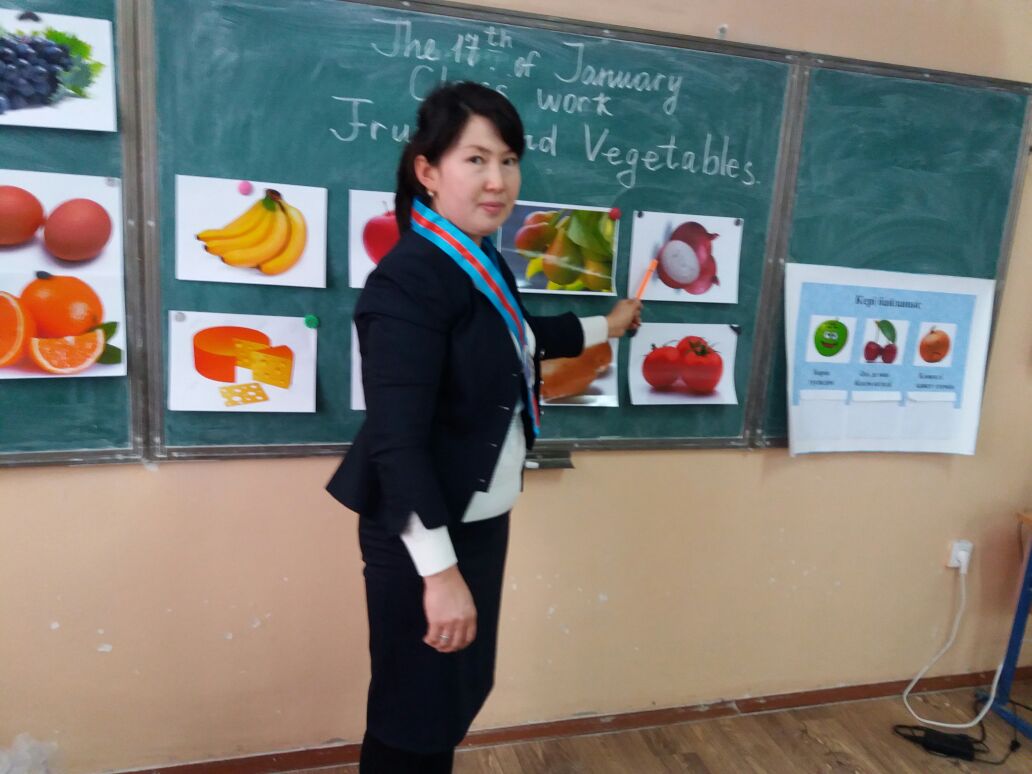
Күні: 17.01.2018
Пәні: Ағылшын тілі
Сыныбы: 1 «Ә»
Пән мұғалімі: Касымбекова Б
2018 оқу жылы
Тексердім:
Оқу ісінің меңгерушісі: Ахмурзаев Ж.
-
Long term plan module: Module 5 My Food
Lesson №37 Fruit and vegetables
School: Bolashak
Date: 17.01.2018.
Teacher’s name: Kassymbekova B
Class:1 “ә”
Number of present:
Absent:-
Learning objective(s) that this lesson is contributing to:
1.L4 recognize with support short basic questions about what something is
1.S2 ask questions in basic exchanges about people, objects and classroom routines
1.UE1 use singular nouns, plural nouns – to talk about people and places
1.UE5 use interrogative pronouns which, what, where, how to ask basic questions
Lesson objectives:
All learners will be able to:
use topic words, pronounces words and expressions clearly.
Most learners will be able to:
Ask question, use hmm, nice, yuk, urghhh appropriately
Some learners will be able to:
identify fruit and vegetables, make up dialogues using pictures
Language objectives:
Learners can:
By the end of the lesson learners will be able to
- identify fruit and vegetables, make up dialogues using pictures;
- question, use hmm, nice, yuk, urghhh appropriately
- use topic words;
- pronounce words and expressions clearly.
Key words and phrases: Fruit: apples, pears, tomatoes, pears
Vegetables: carrots, onions, basket What’s in your basket? Your basket, your basket. Apples! What’s in your basket? ……..\
Useful classroom language for dialogue/writing: oral
Discussion points:
Can you say why we like fruit and vegetables?
Writing prompts:
Assessment for Teaching
Criteria based assessment
Assessment criteria: Identifying fruit and vegetables, making up dialogues using pictures.
Descriptor: A learner
asks questions using pictures;
answer the questions, use hmm, nice, yuk, urghhh appropriately.
uses topic words;
pronounces words and expressions clearly
Peer assessment: Oral comments
How to overcome barriers in learning English
Challenge and extend learners through carefully scaffolding assignments and activities
Use miming, gestures
Previous learning
Lesson №36 Food
Plan
Planned timing
Planned activities (replace the notes below with your planned activities)
What will the pupils learn? How will they learn it?
Suggested Teaching Activities
Active Learning activities
Resources
Start (Beginning of the lesson)
Greeting: Teacher greets learners; learners respond to greeting and take their places.
Dividing into two groups: fruits and vegetables
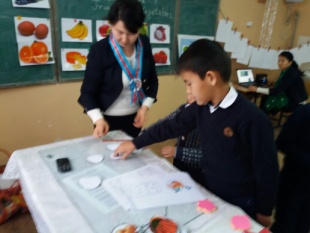
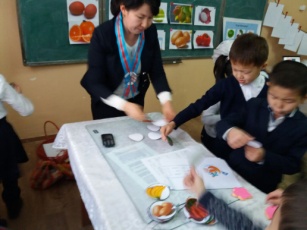
Warming up: Around the world game: One learner stands behind the other. The teacher holds up a flashcard of a picture and shows it to the first pair. The first of those two learners to say its English equivalent moves on to stand behind the next learner. The goal is for the learner to make it all the way around the class, or “around the world”, saying more distinctly and quickly than other learners.
Teacher shows a short cartoon about the family and asks:
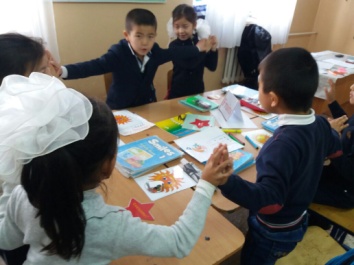 How do you think
what theme we have for today? Teacher introduces
lesson objectives to the learners.
How do you think
what theme we have for today? Teacher introduces
lesson objectives to the learners.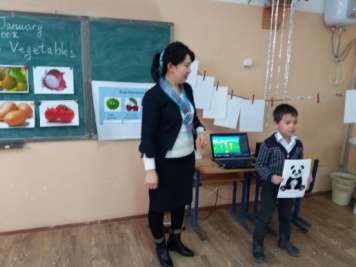
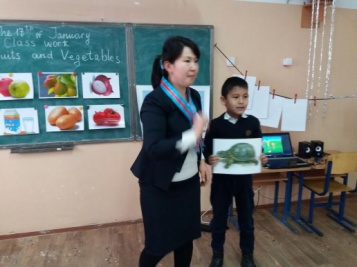 Revising the
previous lesson: Listen and do. Repeat
after your teacher.1. Stand up, please! 2. Hands up! Clap -
clap!
Revising the
previous lesson: Listen and do. Repeat
after your teacher.1. Stand up, please! 2. Hands up! Clap -
clap!3. Hands down! Shake - shake! 4. Hands on the hips! Jump – jump!5. Sit down, please!
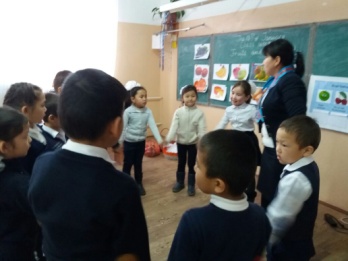
http://www.dreamenglish.com/englishkidsvideo
Pictures
Middle (of the lesson)
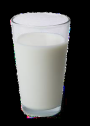

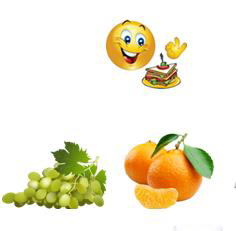

D) Teacher pre-teaches the words fruit, apples, pears, tomatoes, pears, vegetables: carrots, onions, using flashcards, simple mimes and gestures.
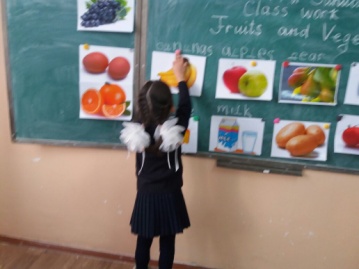
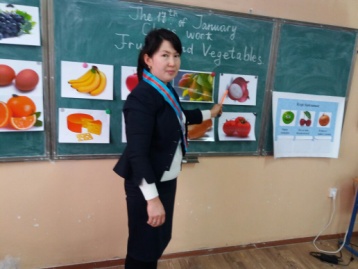
D) Vidеo Teacher uses total physical response to teach sounds, letters and words. Ex: “apple” pretends to chew an apple. Learners have to say what it is.
I) Who is quicker: Learners are given a worksheet with fruit and vegetables. They have to colour them and say: I like .... I don’t like .....
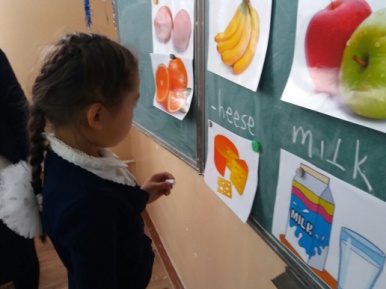

P) Ask and answer the questions. Use hmm, nice, yuk, urghhh. Example: Do you like grapes? Hmm, yes.
W) Game: “What is in your basket?”
Learners are divided fruits and vegetables in your basket.
1,2,3
What is in your basket, Liam? Apples.
What is in your basket, Lily? Carrots.
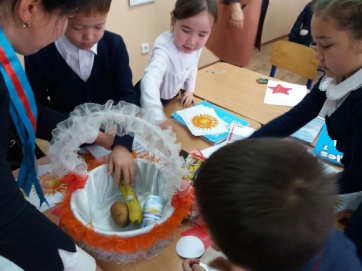
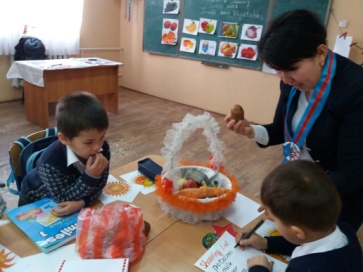
W)Кітаппен жұмыс.Learners doing an exercise
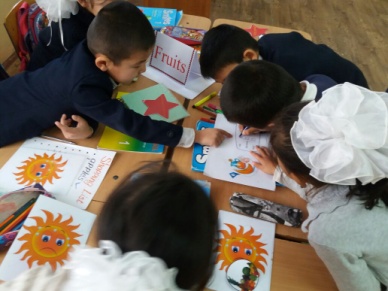
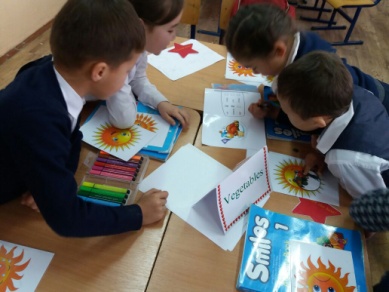
Empty worksheets and cut-outs of many colourful room objects and toys, toys, grammar cards cars and room object pictures, flip charts. posters
End (of the lesson)
Reflection Peer assessment: Oral comments
Technique of FA: Oral feedback Learners make comments about the lesson orally.Ask students to look at lesson objectives they set at the beginning of the lesson and think and say what they did well in the lesson and what needs improvement.
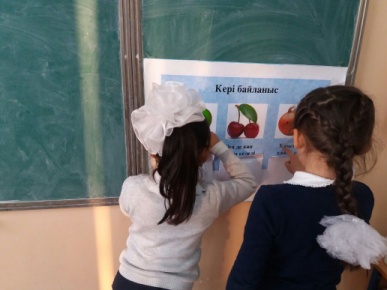
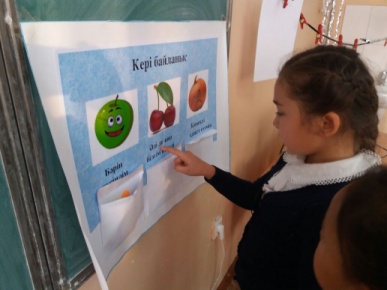
Peer assessment: Oral comments
Additional information:
Differentiation - how do you plan to give more support? How do you plan to challenge the more able learners?
Assessment - how are you planning to check learners’ learning?
Cross – curricular links health and safety check ICT links
Values links
Reflection
Were the lesson objectives / learning objectives realistic?
What did the learners learn today?
What was the learning atmosphere like?
Did my planned differentiation work well?
Did I stick to timings? What changes did I make from my plan and why?
Use the space below to reflect on your lesson. Answer the most relevant questions from the books on the left about your lesson.
Summary evaluation What two things went really well (consider both teaching and learning)?
1.
2.
What two things would have improved the lessons (consider both teachings and learning)?
1.
2.
What have learned from his lesson about this lesson about the class or individuals that will inform my next lesson?









 Бұл курс Қазақстан Республикасы Оқу-ағарту министрлігімен келісілген