Department: “Foreign languages”
Presentation
Theme: Accessible transportation for all
Shymkent 2024
Prepared by:
Group:
Checked by:
Plan
-
Introduction
-
Main part
-
What is a transportation
-
Types of transport
-
Propose improvements transportation
-
Conclusion
-
Used literature
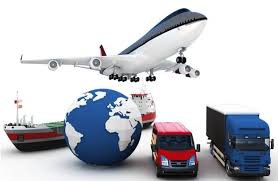 Introduction Transport (in British English) or transportation (in American English) is the intentional movement of
humans, animals, and goods from one location to
another. The field can be divided into infrastructure, vehicles, and operations. Transport enables human trade, which
is essential for the development of civilizations.
Transport infrastructure consists of both
fixed installations, including roads, railways, airways, waterways, canals, and pipelines, and terminals such as airports, railway stations, bus stations, warehouses, trucking terminals, refueling depots (including fuel docks and fuel stations), and seaports. Terminals may be used both
for the interchange of passengers and cargo
and for maintenance.
 Main
part
Main
part
Transport
facilitates
trade activities by
creating utilization places for goods by removing
distance barriers between production and
consumption.
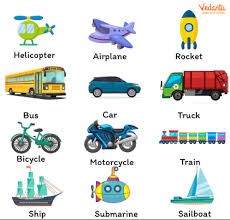
 There are four
modes of Transportation: Roads
Transport
There are four
modes of Transportation: Roads
Transport
Rails Transport
Air Transport
Water Transport
 Importance of Transportation
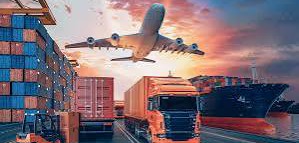
 Transport is a key component in the distribution of goods within and beyond a country’s borders.
 Transport is a way to ensure stable prices in different markets and It allows traders to regulate the supply of goods at various locations based on changing demand.
 Consumers enjoy the convenience of getting their goods delivered right to their homes and having a more comprehensive selection of goods at affordable prices.
It provides a steady supply of raw materials for the industry.
 It promotes the inflow and discharge of finished products, which contributes to the growth of large-scale industries.
The highly developed transport system is driving international competition and this allows buyers and sellers of different countries to have access to global markets.
 Road
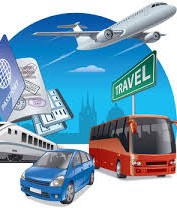
transport is
usually done
by animals (horses, camels, and
donkeys), animal-drawn vehicles (bullock-carts), or
motor vehicles (vans, trucks, etc.). Nowadays, animals and
vehicles drawn from
animals are
only used
in rural areas and
vans are
only used
for local transport within the
city and
trucks are
convenient, safe, and
inexpensive for
goods transport.
Road
transport is
usually done
by animals (horses, camels, and
donkeys), animal-drawn vehicles (bullock-carts), or
motor vehicles (vans, trucks, etc.). Nowadays, animals and
vehicles drawn from
animals are
only used
in rural areas and
vans are
only used
for local transport within the
city and
trucks are
convenient, safe, and
inexpensive for
goods transport.
Rail
transport refers primarily to
the movement of
passengers and
goods by
train on
rail tracks. Rails and
Trains can
transport large quantities of
goods and
high-capacity goods over
long distances and
is safe
and affordable and
is the
most used
mode of
goods traffic.
Water transport is
the transportation of
goods and
people on
waterways by
various modes such
as boats, steamers, or
launches. This
may be
done within the
country or
between countries.
To
transport goods and
people on
rivers and
canals, inland water transport uses
boats, barges, launchers, streamers, and
barges. These routes are
known as
inland waterways and
they carry bulky goods and
can be
used for
domestic or
home trade.
Ocean transport is
the movement of
goods or
passengers via
ships using ocean waterways. It
plays an
essential role
in international trade growth and
transporting goods and
passengers to
and from
coastal areas.
Modes
A mode of transport is a solution that makes use of a certain type of vehicle, infrastructure, and operation. The transport of a person or of cargo may involve one mode or several of the modes, with the latter case being called inter-modal or multi-modal transport. Each mode has its own advantage

 ЖИ көмекші


 Қауіпсіз төлем











 Бұл курс Қазақстан Республикасы Оқу-ағарту министрлігімен келісілген










