ЖИ көмекші


 Қауіпсіз төлем

жүктеу мүмкіндігіне ие боласыз
Бұл материал сайт қолданушысы жариялаған. Материалдың ішінде жазылған барлық ақпаратқа жауапкершілікті жариялаған қолданушы жауап береді. Ұстаз тілегі тек ақпаратты таратуға қолдау көрсетеді. Егер материал сіздің авторлық құқығыңызды бұзған болса немесе басқа да себептермен сайттан өшіру керек деп ойласаңыз осында жазыңыз
 27 Қаңтар 2019
 1815
1815
1 жыл бойы шексіз жүктеңіз
Ашық сабақ"Healthy and unhealthy habits" 7сынып
Lessonplan
|
Unit of a short term plan“Healthy habits” |
School: S.Kozhanov. |
||||||
|
Date: |
Teacher name: Moldabaeva A. |
||||||
|
CLASS:7 |
Number present: 12 |
absent: |
|||||
|
Lesson title |
Healthy and Unhealthy habits. |
||||||
|
Learning objective(s) that this lesson is contributing to: |
7.L4understand with little supportsome of theimplied meaning in extended talk on a limited range of general and curricular topics 7.S7 use appropriate subject-specific vocabulary and syntax to talk about a range of general topics, and some curricular topics 7.UE8 use a growing variety of future forms including present continuous with future meaning on a range of familiar general and curricular topics |
||||||
|
Lessonobjectives |
All learners will be able to
|
||||||
|
Most learners will be able to
|
|||||||
|
Some learners will be able to
|
|||||||
|
Assessment criteria |
|
||||||
|
Values links |
Knowledge, understanding and application |
||||||
|
Cross-curricular links |
Sport |
||||||
|
Previous learning |
Names of healthy and unhealthy habits. |
||||||
|
Plan |
|||||||
|
Planned timings |
Planned activities (replace the notes below with your planned activities) |
Resources |
|||||
|
Start 7 min |
The students are divides into two groups according to the stikers which they choose, “healthy and unhealthy habits” . The teacher introduces the objectives of today's lesson and assessment criteria. Students watch the video and listen to the song.Teacher asks some question to elicit the topic of the lesson.
|
Pictures of healthy and unhealthy foods. Video-Song Healthy habits. |
|||||
|
5min
6min
6min |
I.Task: Choose the picture cards and findhealthy and unhealthy habits. Make the sentences withshould, shouldn’t modal verbs and say. What should/shouldn’t we do to have a healthy lifestyle? I team “Healthy”II team “Unhealthy”
Example: We should get a good night’s sleep. We shouldn’t eat too much junk food. Descriptor a learner:
AFL- “Numbers speak” activities .Task:2Listen and asking for /giving advice. The sentences above are from the dialogue between two friends. Read and listen, roleplay it. Prepare 5 questions and give advice. Diana: What’s wrong, Rita? Rita: I want to play in basketball team, but the coach says I have to improve my level of fitness first. What should I do? Diana:Why don’t you around the park? I often go there. Rita:That’s good idea. Diana: You should also eat lots of fruit and vegetables and drink plenty of water. And make sure you avoid snacks and fizzy drinks. They’re no good for you.
R What is Rita’s problem? What is Diana’s advice? Descriptor a learner:
AFL- Self–assessment papertick “Wordplay” activities I/W 3.Task.Knowledge tree. Look at the blackboard and make up sentences with keywords and students must hang the stickers to the tree. More able learners will be given a task to make their own sentences . Less able learners will be given more support by given them keywords:eat, do morning exercises, go, run, drink Descriptor a leaner:
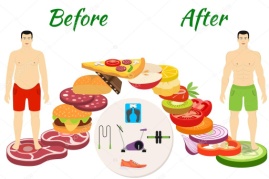
Relax time.Lets come and dance. “Conversation pyramids” activities 4.Task: Watch the video about healthy and unhealthy food .Then do poster and complete the pyramid and talk about their food pyramid. Which food/drinks give us a lot of energy? Which ones keep our muscles strong? Which food/drinks give us a lot ofHarmful? What is the damage to the body?
F
AFL- “Auction” |
Picture cards healthy and unhealthy habits with №
Leaves and tree
Pyramid puzzle
Video about healthy food. |
|||||
|
End 4 min |
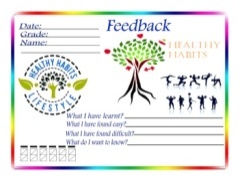
Conclusion of the lesson. Test yourself about your healthy habits. Reflection.Writing feedback.
Giving marks.S1 S2 S3. Giving homework. Ex.3 p.100. So, the lesson is over. Goodbye |
Post
L |
|||||
|
Additional information |
|||||||
|
Differentiation – how do you plan to give more support? How do you plan to challenge the more able learners? |
Assessment – how are you planning to check Learner’s learning? |
Health and safety check |
|||||
|
Differentiation by outcome: more able learners will be given a task to make their own sentences about their future plans. Differentiation by support: less able learners will be given more support by given them key words: eat, do morning exercises, go, run, drink Descriptor a leaner:
|
“Brain storm”, “Self - assessment paper”, “Post it”, “Number speaks”, “Auction”, “Knowledge tree”, “Letter stickers” “Conversation pyramids” |
P |
|||||
|
Reflection Were the lesson objectives/learning objectives realistic? Did all the learners achieve the lesson objectives/ learning objectives? If not, why? Did my planned differentiation work well? Did I stick to timings? What changes did I make from my plan and why? |
|
||||||
|
|
|||||||
|
Summary evaluation What two things went really well (consider both teaching and learning)? 1: 2: What two things would have improved the lesson (consider both teaching and learning)? 1: 2: What have I learned from this lesson about the class or individuals that will inform my next lesson? |
|||||||
 ita:
ita: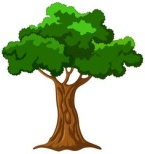
 evelophis/her personal objectives

 ill in
pyramids
ill in
pyramids

 etter
stickers
etter
stickers hysical
exercises
hysical
exercises








 Бұл курс Қазақстан Республикасы Оқу-ағарту министрлігімен келісілген