
 ЖИ көмекші


 Қауіпсіз төлем

жүктеу мүмкіндігіне ие боласыз
Бұл материал сайт қолданушысы жариялаған. Материалдың ішінде жазылған барлық ақпаратқа жауапкершілікті жариялаған қолданушы жауап береді. Ұстаз тілегі тек ақпаратты таратуға қолдау көрсетеді. Егер материал сіздің авторлық құқығыңызды бұзған болса немесе басқа да себептермен сайттан өшіру керек деп ойласаңыз осында жазыңыз
 03 Сәуір 2025
 273
273
1 жыл бойы шексіз жүктеңіз
drawing chairs,3 grade
Short term plan: term 3
|
Unit: 5 Art and Music |
Lesson 33 |
|
||||||
|
Teacher name: |
Aripzhanova Danagul |
|
||||||
|
Date: |
22.01 |
|
||||||
|
Grade: 3d |
Number present: |
absent: |
|
|||||
|
Lesson title |
Drawing chairs |
|
||||||
|
Learning objectives |
3.3.3.1 read short, uncomplicated fiction and popular science texts on a limited range of general and educational topics with standard support; 3.3.5.1 understand the main ideas of short simple texts on common familiar topics and some educational topics with the help of contextual hints; 3.3.6.1 understand with considerable support factual information and details in short uncomplicated texts on a limited range of general and educational topics; |
|
||||||
|
Lesson objectives |
Learners will be able to: To talk about and practise cool and warm colours; |
|
||||||
|
Value links |
Family – Family values are moral and ethical principles of typical family life, including sacrificing for loved ones, putting your loved ones first, and keeping your loved ones at the centre of your thoughts and actions. |
|
||||||
|
Plan |
|
|||||||
|
Stages / Time |
Teacher |
Students actions |
Assessment criteria |
Resources |
||||
|
Beginning of the lesson Warming-up 3 min. Pre-learning «Brainstorming» method 7 min.
Middle of the lesson Presentation part. 30 min End of the lesson 5 min |
Organization time: 1. Greetings. Ask about the weather. After a short dialogue, the children recite their daily rhymes: One, two, three, four, Time to go to school once more! Five six seven eight Get your school bag don't be late Nine ten get your pen Come with me it's school again
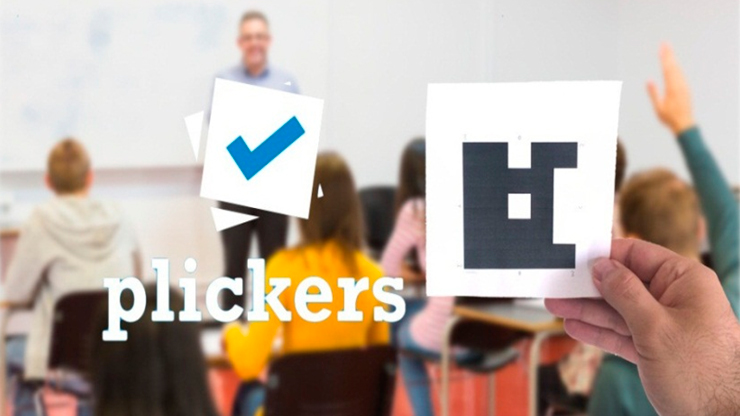
Homework check: "Plickers" method (program)
Code cards are distributed to students. There will be questions on the board, and children will answer those questions by raising the code. The teacher scans the code shown by the students over the phone and the students' answers appear on the board
Ex 22, page 72 Students will be shown a video. By watching the video, students will discover the topic of today's lesson by themselves. working with new words in the video: working with new words on the slide. Usually ride my bike to school. I go to the gym with my dad. I go to bed.
Ex:23
•
Students are given candies with questions on
them. Those questions should be answered correctly.
A moment of refreshment Ex: 25
•
Ex: 24 Home task: Memorizing the song (poem) Assessment: At the end of the lesson, the evaluation work is analyzed, each student calculates his own grade. It is evaluated between 1-10 points Feedback: Children share their feedback on how well they understood the lesson. |
Purpose: to develop students' speaking skills, to create a friendly atmosphere Effectiveness: Students learn and use new words through short rhymes. The children answers the questions and sings the poem in chorus. •Students remember the vocabulary of the previous lesson •Students answer the questions How is the weather today? How are you feeling today? Purpose: To teach students to work with modern teaching methods, to be versatile Efficiency: It allows to check all students at the same time, using time effectively. • Students check their homework •Students answer the questions
students watch the video, listen and discover the topic
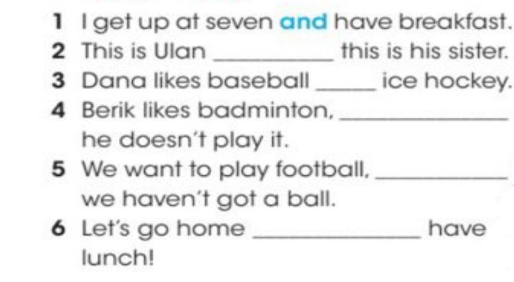
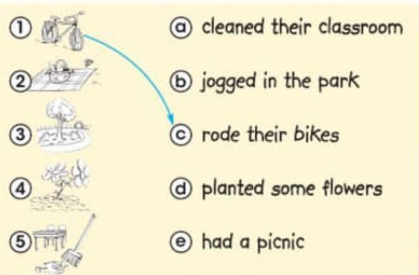
Students find the translation of the words on the slide using the picture. There will be 3 pictures in the answer, and they have to choose one of them. • The student must choose a candy and choose one of the and/but answers to the question behind it. They cleaned their classroom. They jogged in the park. They rode their bikes. They planted some flowers. They had a picnic.
They write their comments about the lesson on the given sticker and stick it on the poster. |
Descriptor: The teacher to assess learners for their ability. “Good job! Well done!” Formative Assessment The teacher to assess learners for their ability. “Good job! Well done!”
Good job! Descriptor: - remembers the lesson passed assessment: a poster with 10-step stars is posted on the board, and each student has a picture. Each task is given a certain score, thanks to which the student's picture rises up through the star ladder. 1-2 points for "Plickers" homework Assessment
Good job! Descriptor: - translate new words - find the correct answer Total: 2 points Differentiation: «Verbal support» method is used to help Ss use new words in the sentences. Descriptor: - answer the questions - translate the sentence Total: 3 point Descriptor: - proper connections Total: 3 point
|
Pictures Cards projector board
https://youtu.be/A0PYlFij5Yc?si=TUUC7xKGGDUHsjiR
presentation
candy
https://youtu.be/kT9Hn3IXLUE?feature=shared
poster
https://youtu.be/KjbOtUoByB4?si=Pjdyr2NjR3Q1ZOOr poster |
||||













 Бұл курс Қазақстан Республикасы Оқу-ағарту министрлігімен келісілген










