
 ЖИ көмекші


жүктеу мүмкіндігіне ие боласыз
Бұл материал сайт қолданушысы жариялаған. Материалдың ішінде жазылған барлық ақпаратқа жауапкершілікті жариялаған қолданушы жауап береді. Ұстаз тілегі тек ақпаратты таратуға қолдау көрсетеді. Егер материал сіздің авторлық құқығыңызды бұзған болса немесе басқа да себептермен сайттан өшіру керек деп ойласаңыз осында жазыңыз
 15 Сәуір 2024
 459
459
Excel 7 Unit Healthy habits Theme: Asking for / giving advice
Short term plan:
|
Unit 8: Healthy habits |
|||
|
Teacher name: |
|
||
|
Date: |
|
||
|
Grade: 7 |
Number present: |
absent: |
|
|
Lesson title |
Everyday English: Asking for / giving advice |
||
|
Learning objectives |
7.4.1.1 understand the main points in texts on a limited range of unfamiliar general and curricular topics 7.5.7.1 use with minimal support appropriate layout at text level for a growing range of written genres on familiar general and curricular topics 7.2.5.1 recognize the opinion of the speaker(s) in supported extended talk on a range of general and curricular topics |
||
|
Lesson objectives |
- present the situational language of asking for/giving advice - predict the context of a dialogue - learn synonymous phrases |
||
|
Value links |
Respect - treating people with respect, value and courtesy. Especially apologising to them where the situation calls for it. |
||
|
Plan |
|||
|
Stages / Time |
Students actions |
Assessment criteria |
Resources |
|
|
Beginning of the lesson Warming-up 3 min. Pre-learning «Brainstorming» method 7 min. |
Organization moment : 1.Greeting. Ask about the weather. The teacher sets the lesson objectives, letting students know what to anticipate from the lesson. Warming up Where are you from? How old are you? What color is it? How many students are there in class? What day of the week today? Lead – in: Playing a game Play in teams 'Fruit and Vegetable'. One team says 'fruit' or 'vegetable'. The other team says a word related to the theme. Each correct answer gets one point. Ss aren't allowed to repeat words said before. The team with the most points is the winner. Team AS1: fruit Team BS1: apple - vegetable |
The aim: To develop pupils speaking skills and create friendly atmosphere Efficiency: By wishing each other they feel better and feel the support of others Students of the class are listed. Learners remember previous lesson vocabulary Learners play a game |
The teacher to assess learners for their ability. “Good job! Well done!” Formative Assessment Good job! Assessment criteria make basic statements related to the literature |
|
|
Middle of the lesson Presentation part. 30 min |
Ex 1 P:94 Explain the task. Play the recording. Ss listen and repeat chorally and/or individually. Check Ss' intonation and pronunciation. Ex: 2 P: 94 • Explain the task. Play the recording. Ss listen and read to find the answers. Check Ss' answers. Ex: 3 P: 94 • Explain the task. Draw Ss' attention to the Check these words box, and ask them to look up any unknown words. Allow Ss time to read the text again and answer the questions. Check Ss' answers. Ex: 4 P: 94 • Draw Ss' attention to the box with synonymous phrases at the side of the page. Read the box and explain any unknown words. Explain the task. Allow Ss time to match the phrases. Check Ss' answers. . Ex: 5 P: 94 • Explain the task. Ask Ss to work in closed pairs and take roles to practise the dialogue. Monitor the activity around the class. Ask some pairs to read the dialogue aloud to the class. Conclusion during the lesson some tasks differentiated by outcomes of the students and by their abilities |
• Learners listen and repeat. ANSWERS Student’s own answer. • Learners listen a dialogue between two friends. Answer the question. ANSWERS The dialogue is about a girl who wants to play in the school basketball team. She asks her friend for advice on how to improve her level of fitness. • Learners read the dialogue again. Answer the question. ANSWERS Rita's problem: She has to improve her level of fitness because she wants to play in the school basketball team. Diana's advice: Try running around the park. Eat lots of fruit and vegetables and drink plenty of water. Avoid snacks and fizzy drinks • Learners find sentences in the dialogue. ANSWERS What's the matter? = What's wrong, Rita? Could you give me some advice? = What should I do? Thank you so much. Thanks (for the advice). • Learners take roles and read the dialogue aloud ANSWERS Student’s own answer. |
Descriptor: - listen and repeat. Total: 2 point
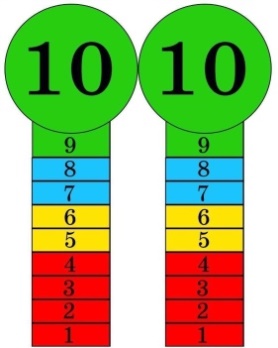
Self assessment Descriptor: - listen a dialogue - answer the question Total: 2 point Descriptor: - read the dialogue again - answer the question Total: 2 point Descriptor: - read the box - match the phrases Total: 2 point Descriptor: - read the dialogue - take roles to practice the dialogue Total: 2 point |
Students book |
|
End of the lesson 5 min |
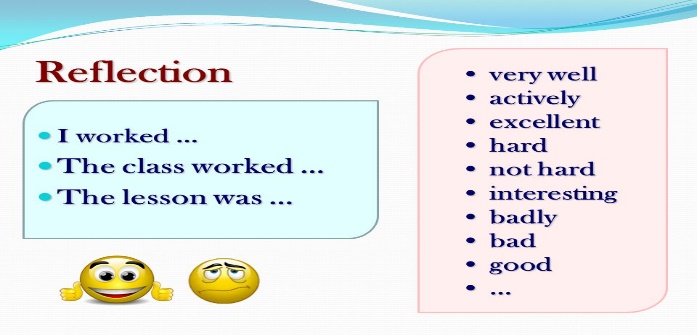
FEEDBACK Learners provide feedback on what they have learned at the lesson. |
|
|
|


 Жүктеу


 Жүктеу
шағым қалдыра аласыз

 Бұл курс Қазақстан Республикасы Оқу-ағарту министрлігімен келісілген










