|
Beginning
of the lesson
Warming-up

3
min.
Pre-learning
«Brainstorming»
method
7
min.
|
Organization moment
:
1.Greeting.
Ask about the
weather.
The teacher sets the lesson objectives, letting students
know what to anticipate from the
lesson.
Warming
up
Where are you from?
How old are you?
What color is it?
How many students are there in
class?
What day of the week today?
Lead –
In
Teacher tells
values of this month. Ability to build positive relationships with
others and contribute to community
life
|
The aim: To develop pupils speaking skills and
create friendly atmosphere
Efficiency: By wishing each other they feel better and
feel the support of others
Students of the class are
listed.
Students' attention is drawn to the
lesson.
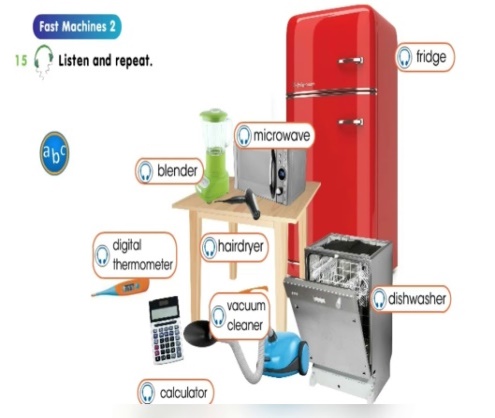
Students say different words from the
picture
•Learners remember
previous lesson vocabulary
•Learners answer the
questions
|
The teacher to assess learners for their
ability.
“Good job!
Well done!”
Formative
Assessment

Good job!
Descriptor:
- remembers the
lesson passed
Point
1
Assessment
criteria
make basic statements related to personal information,
peopleand objects
|
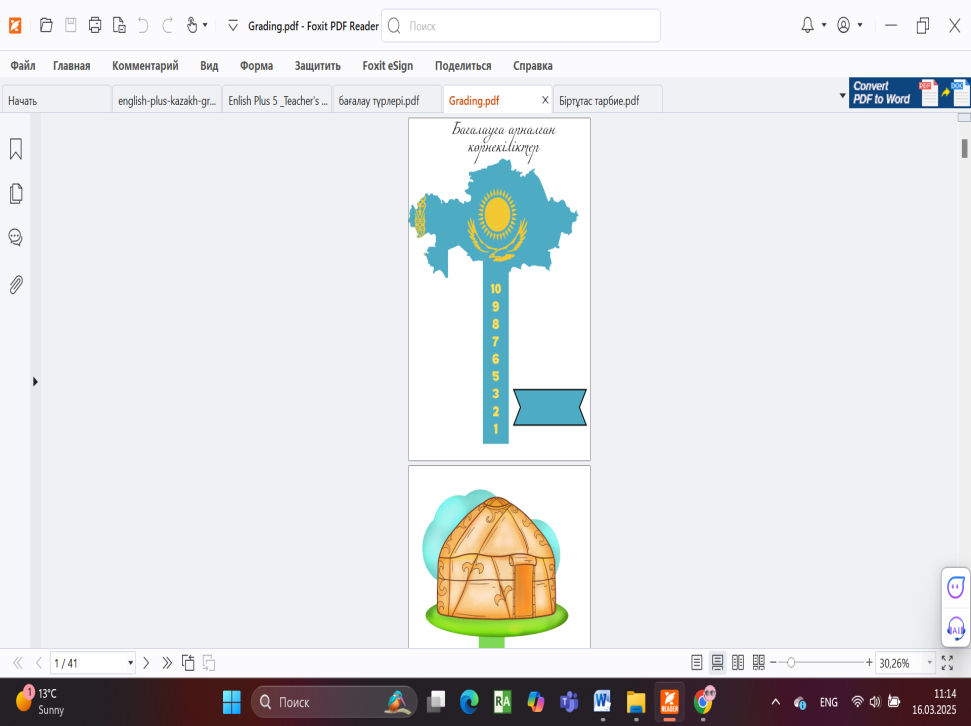
Assessment sheet Kazakh
map
|
|
Middle of
the lesson
Presentation
part.
30
min
|
Ex: 15 P: 120
•Put the Fast machines poster up on the
board. Point to the items, one at a time, and say the corresponding
words. The pupils repeat, chorally and/or individually. Point to
each item in random order. Ask individual pupils to name
them.
Ex: 16 P:
120
•Explain the activity.
Go through the questions and elicit/explain any unknown words.
Allow the pupils some time to answer the questions. Ask individual
pupils to report back to the class. Ask the rest of the class for
verification.
Ex: 17 P:
120
•Ask the pupils which of the machines are
important to them, which ones to their mums, and which one to their
dads. Elicit answers from individual
pupils.
Ex: 18 P:
121
•Explain that adjectives come before nouns.
Then say and write on the board: We bought a fantastic new big red
metal fridge. Underline the words in bold. The pupils repeat,
chorally and/or individually. Write opinion, age, size, colour,
material above the respective adjective. Explain that when we use
many adjectives to describe an object, we have to use a specific
order.
Ex: 19 P:
121
•Explain the activity. Go through the sentences and
elicit/explain any unknown words. Allow the pupils some time to
complete the activity. Check their
answers.
|
• learnerslisten and repeat. Then number the
pictures.
ANSWERS
2 C 3 B 4 H 5 G 6 E 7
D
8 A
• learnersanswer the
questions.
ANSWERS
1
calculator
2
hairdryer
3 vacuum
cleaner
4 microwave,
dishwasher, fridge, blender
5
microwave
6
fridge
• learners thinking: Which of these machines
are important to you? to your mum? to your
dad?
ANSWERS
The calculator is important to me. I use
it to do my maths homework.
The hairdryer is important to my mum. She
uses it to dry her hair.
The dishwasher is important to my dad. He
uses it to wash the dishes
• learnersread and
write.
ANSWERS
2 S 3 M
4 A 5 O 6 A
7 M 8 C
9 S
• learnerscomplete the sentences with words
from Ex. 20.
ANSWERS
1 fantastic
new
2 small
metal
3 small
plastic
4 old green
|
Descriptor:
-listen and repeat
-
number the
pictures.
Total: 2 point
Descriptor:
-answer
the questions.
Total: 2 point
Descriptor:
-answer the
questions.
Total: 2 point
Descriptor:
-read and write.
Total: 1 point
Descriptor:
-complete the sentences with
words
Total: 2 point
-Make CCQ questions Yes /
No
Total points
10
|
Students
book
|

 ЖИ көмекші


 Қауіпсіз төлем














 Бұл курс Қазақстан Республикасы Оқу-ағарту министрлігімен келісілген










