|
Unit: 1 Our World lesson 3 |
School: |
||
|
Date: 07.09.2023 |
Teacher name: |
||
|
Grade: 8 |
Number present: |
absent: |
|
|
Lesson title |
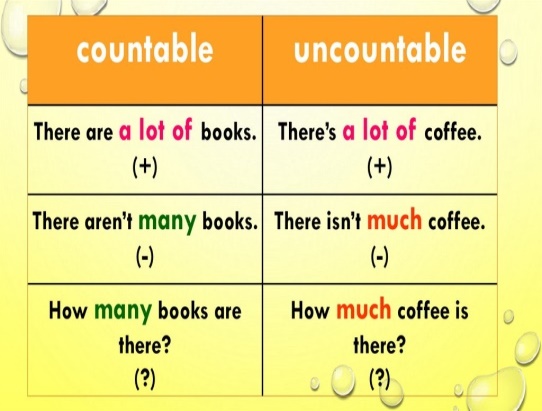
Grammar: much, many, a lot of |
||
|
Learning objectives |
8.1.9.1 use imagination to express thoughts, ideas, experiences and feelings 8.3.3.1 give an opinion at discourse level on a wide range of general and curricular topics 8.6.2.1 use a growing variety of quantifiers for countable and uncountable nouns including several, plenty, a large/small number/amount on a range of familiar general and curricular topics |
||
|
Lesson objectives |
Learners will be able to: • Learn expressions of quantity and practise using them. |
||
|
Value links |
Fairness – If you value fairness, you might be highly sensitive to situations at school or in the workplace where a teacher or a peer has exhibited favoritism or allowed someone to get away with living by a different set of rules to everyone else. |
||
|
Plan |
|||
|
Stages / Time |
Teachers’ actions |
Students’ actions |
Assessment criteria |
Resources |
|
Start |
Organization moment 1.Greeting. Ask about the weather. Warm-up • With books closed, write the words carbon footprint on the board and ask students what they understand by it. Ask if students think they have a big or small carbon footprint and why. • Ask what makes a person’s carbon footprint bigger, and elicit some ideas such as travelling by car, using energy in the home and buying lots of goods Lead - In
|
“The wish flower” method helps to start the lesson with good wishes to each other.
The aim: To develop Ss speaking skills and create friendly atmosphere Efficiency: By wishing each other they feel better and feel the support of others. Students introduce themselves Students say different words from the picture |
At the organization moment T tries to award active Ss. «The praise» method is used to evaluate Ss with phrases like: “Good job! Well done!” Formative Assessment

Good job! Assessment criteria -Learn vocabulary to do with television. |
Pictures
PPT Student’s book |
|
Main part |
Ex: 5 p:9 • Make sure that students understand the terms countable and uncountable. In a weaker class, give examples, such as Apples – can you count them? (Yes.) Water – can you count it? (No.) In a stronger class, ask students to give you examples. • Look at the sentences and ask students to identify the nouns. Ask students to work in pairs to decide whether the nouns are countable or uncountable and complete the table by putting the blue phrases in the correct columns. Ex: 6 p:9 • Students choose the correct words individually • In a stronger class, once you have checked answers, ask students to invent answers to the questions
Ex: 7 p:9 • Read through the task with the class, and make sure students understand what they have to do. • Recap the phrases in exercise 5, and remind students to refer to the completed version in their notebooks. • Go through the examples, then model the activity by asking one or two confident students the first few questions. • Students work in pairs to ask and answer the questions. • Ask some students to report back to the class on what they learnt about their partner |
Students read the sentences. Are the nouns countable or uncountable? Complete the table with the words in blue. ANSWERS : 1 uncountable 2 countable 3 countable 4 uncountable 5 uncountable 6uncountable, countable, uncountable . 7countable, uncountable 8countable, uncountable Uncountable nouns: 2 much 3 a lot of 4 some Countable nouns: 1 not many 5 not any Students choose the correct words ANSWERS : 1 much 2 many 3 some 4 much 5 any 6 any Students work in pairs. Ask and answer with your own ideas. Use the phrases in the table in ex.5 and numbers. ANSWERS: 1 Do you eat much pasta each week? How much? 2 Do you walk many kilometres every month? How many? 3 Are there many books in the school library? How many? 4 Do you use a lot of toothpaste each year? How much? 5 Do you drink much milk every week? How much? 6 Do you say many words every day? How many? Students’ own ans |
Descriptor: - Complete the table with the words in blue Total: 1 point Differentiation: Modelling- teacher gives clear description of the task with examples Descriptor: - choose the correct words Total: 1 point -Make CCQ questions Yes / No Descriptor: - work in pairs Total: 1 point |
Cards |
|
End |
Home task: Ex: P: |
|
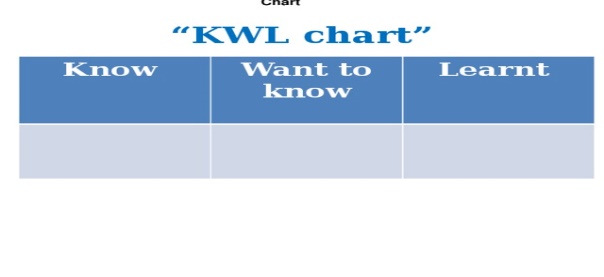
Poster KWL chart |
|
жүктеу мүмкіндігіне ие боласыз
Бұл материал сайт қолданушысы жариялаған. Материалдың ішінде жазылған барлық ақпаратқа жауапкершілікті жариялаған қолданушы жауап береді. Ұстаз тілегі тек ақпаратты таратуға қолдау көрсетеді. Егер материал сіздің авторлық құқығыңызды бұзған болса немесе басқа да себептермен сайттан өшіру керек деп ойласаңыз осында жазыңыз
Grammar: much, many, a lot of
|
Unit: 1 Our World lesson 3 |
School: |
||
|
Date: 07.09.2023 |
Teacher name: |
||
|
Grade: 8 |
Number present: |
absent: |
|
|
Lesson title |
Grammar: much, many, a lot of |
||
|
Learning objectives |
8.1.9.1 use imagination to express thoughts, ideas, experiences and feelings 8.3.3.1 give an opinion at discourse level on a wide range of general and curricular topics 8.6.2.1 use a growing variety of quantifiers for countable and uncountable nouns including several, plenty, a large/small number/amount on a range of familiar general and curricular topics |
||
|
Lesson objectives |
Learners will be able to: • Learn expressions of quantity and practise using them. |
||
|
Value links |
Fairness – If you value fairness, you might be highly sensitive to situations at school or in the workplace where a teacher or a peer has exhibited favoritism or allowed someone to get away with living by a different set of rules to everyone else. |
||
|
Plan |
|||
|
Stages / Time |
Teachers’ actions |
Students’ actions |
Assessment criteria |
Resources |
|
Start |
Organization moment 1.Greeting. Ask about the weather. Warm-up • With books closed, write the words carbon footprint on the board and ask students what they understand by it. Ask if students think they have a big or small carbon footprint and why. • Ask what makes a person’s carbon footprint bigger, and elicit some ideas such as travelling by car, using energy in the home and buying lots of goods Lead - In
|
“The wish flower” method helps to start the lesson with good wishes to each other.
The aim: To develop Ss speaking skills and create friendly atmosphere Efficiency: By wishing each other they feel better and feel the support of others. Students introduce themselves Students say different words from the picture |
At the organization moment T tries to award active Ss. «The praise» method is used to evaluate Ss with phrases like: “Good job! Well done!” Formative Assessment
Good job! Assessment criteria -Learn vocabulary to do with television. |
Pictures
PPT Student’s book |
|
Main part |
Ex: 5 p:9 • Make sure that students understand the terms countable and uncountable. In a weaker class, give examples, such as Apples – can you count them? (Yes.) Water – can you count it? (No.) In a stronger class, ask students to give you examples. • Look at the sentences and ask students to identify the nouns. Ask students to work in pairs to decide whether the nouns are countable or uncountable and complete the table by putting the blue phrases in the correct columns. Ex: 6 p:9 • Students choose the correct words individually • In a stronger class, once you have checked answers, ask students to invent answers to the questions
Ex: 7 p:9 • Read through the task with the class, and make sure students understand what they have to do. • Recap the phrases in exercise 5, and remind students to refer to the completed version in their notebooks. • Go through the examples, then model the activity by asking one or two confident students the first few questions. • Students work in pairs to ask and answer the questions. • Ask some students to report back to the class on what they learnt about their partner |
Students read the sentences. Are the nouns countable or uncountable? Complete the table with the words in blue. ANSWERS : 1 uncountable 2 countable 3 countable 4 uncountable 5 uncountable 6uncountable, countable, uncountable . 7countable, uncountable 8countable, uncountable Uncountable nouns: 2 much 3 a lot of 4 some Countable nouns: 1 not many 5 not any Students choose the correct words ANSWERS : 1 much 2 many 3 some 4 much 5 any 6 any Students work in pairs. Ask and answer with your own ideas. Use the phrases in the table in ex.5 and numbers. ANSWERS: 1 Do you eat much pasta each week? How much? 2 Do you walk many kilometres every month? How many? 3 Are there many books in the school library? How many? 4 Do you use a lot of toothpaste each year? How much? 5 Do you drink much milk every week? How much? 6 Do you say many words every day? How many? Students’ own ans |
Descriptor: - Complete the table with the words in blue Total: 1 point Differentiation: Modelling- teacher gives clear description of the task with examples Descriptor: - choose the correct words Total: 1 point -Make CCQ questions Yes / No Descriptor: - work in pairs Total: 1 point |
Cards |
|
End |
Home task: Ex: P: |
|
Poster KWL chart |
|
шағым қалдыра аласыз