
 ЖИ көмекші


 Қауіпсіз төлем

жүктеу мүмкіндігіне ие боласыз
Бұл материал сайт қолданушысы жариялаған. Материалдың ішінде жазылған барлық ақпаратқа жауапкершілікті жариялаған қолданушы жауап береді. Ұстаз тілегі тек ақпаратты таратуға қолдау көрсетеді. Егер материал сіздің авторлық құқығыңызды бұзған болса немесе басқа да себептермен сайттан өшіру керек деп ойласаңыз осында жазыңыз
 17 Маусым 2025
 140
140
1 жыл бойы шексіз жүктеңіз
Into Space 1
Short term plan: term 4
|
Unit 7: Journey into Space |
Lesson 54 |
||
|
Teacher name: |
Bakytzhanova G.S. |
||
|
Date: |
|||
|
Grade: 4 |
Number present: |
absent: |
|
|
Lesson title |
Into Space 1 |
||
|
Learning objectives |
4.1.5.1 identify initial, middle and final phonemes and their combination; 4.2.6.1 exchange replicas in simple dialogues on a wide range of topics; |
||
|
Lesson objectives |
Learners will be able to: - talk about space.
|
||
|
Plan |
|||
|
Stages / Time |
Teachers actions |
Students actions |
Assessment criteria |
Resources |
|
Beginning of the lesson Warming-up
3 min. Pre-learning «Brainstorming» method 7 min. |
Organization moment : 1.Greeting. Ask about the weather. The teacher sets the lesson objectives, letting students know what to anticipate from the lesson. Warming up Where are you from? How old are you? What color is it? How many students are there in class? What day of the week today? Lead – In.
Teacher tells values of this month. The ability to value work, the results of one’s own and others’ work, the ability to assess the contribution of work results to the development of the country and society. |
The aim: To develop pupils speaking skills and create friendly atmosphere Efficiency: By wishing each other they feel better and feel the support of others Students of the class are listed. Students' attention is drawn to the lesson. Students say different words from the picture •Learners remember previous lesson vocabulary •Learners answer the questions |
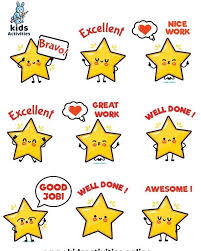
The teacher to assess learners for their ability. “Good job! Well done!” Formative Assessment
Good job! Descriptor: - remembers the lesson passed Point 1 Assessment criteria make basic statements related to personal information, people and objects |
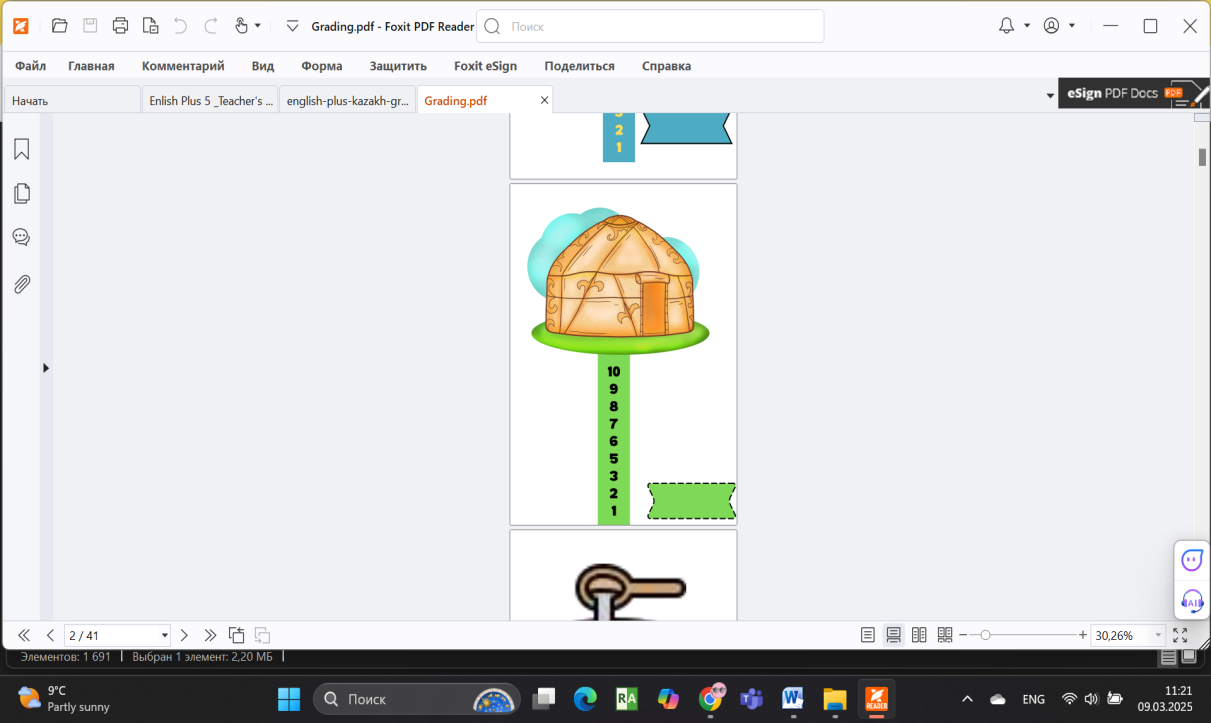
Assessment sheet Kazakh yurt
|
|
Middle of the lesson Presentation part. 30 min |
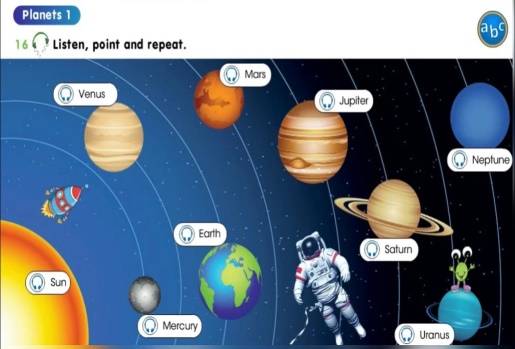
Ex:1 P:101 • Put the Journey into space poster up on the board. Point to the pictures, one at a time, and say the corresponding words. Elicit answers from individual pupils. Then say and write on the board: Earth. Explain to the pupils that Earth is. The pupils repeat, chorally and/or individually. Point to each picture in random order. Ask individual pupils to name them. Ex: 2 P: 101 • Explain the activity. Allow the pupils some time to match the pictures with the correct words. Play the CD. The pupils listen and check their answers. Ex: 3 P: 101 Look at the task. Read the statement and find correct answer. Teacher gives this task to check students general comprehension. Ex: 4 P: 101 Refer the pupils to the picture and have a picture discussion. Read the example aloud and explain the activity. Allow the pupils some time to look at the picture and complete the activity. Ask individual pupils to answer. Ask the rest of the class for verification. Conclusion during the lesson some tasks differentiated by outcomes of the students and by their abilities. |
• learners look at the picture. Would you like to travel into space? Why?/Why not? Do you know any planets bigger than Earth? ANSWERS I would like to travel onto space to visit other planets. Jupiter, Saturn, Uranus and Neptune are bigger than Eaarth. • learners can you find these in the picture on page 100? Match. Then listen and check ANSWERS 2 I 3 h 4 f 5 d 6 b 7 g 8 e 9 c • learners read and write ANSWERS 2 space ship 3 spacesuit 4 telescope 5 space station 6 alien • learners look and read. Write yes or no. ANSWERS 2 no 3 no 4 yes 5 no |
Descriptor: - look at the picture-1 - answer the question-1 Total: 2 point
Descriptor: - find these in the picture on page-2 - match the pictures with the correct words -2 Total: 3 point
Descriptor: - read and match Total: 2 point -Make CCQ questions Yes / No Total points 10 |
Students book |
|
End of the lesson 5 min |
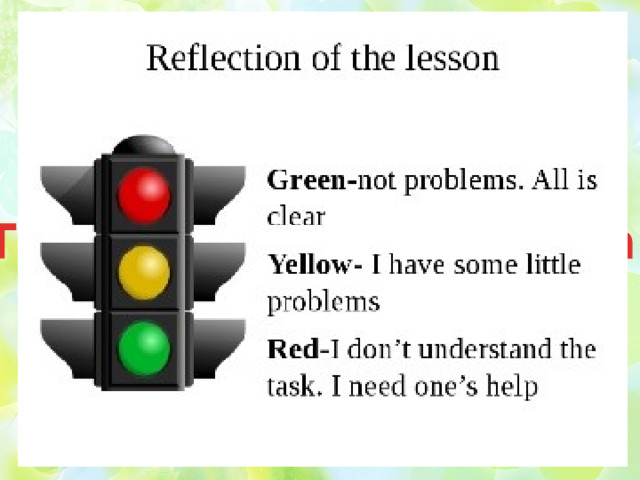
FEEDBACK Traffic light method is used to find out was the lesson clear or not. Use the stickers. |
|
Poster Success
|
|



Short term plan: term 4
|
Unit 7: Journey into Space |
Lesson 55 |
||
|
Teacher name: |
|
||
|
Date: |
|
||
|
Grade: 4 |
Number present: |
absent: |
|
|
Lesson title |
Into Space 2 |
||
|
Learning objectives |
4.1.5.1 identify initial, middle and final phonemes and their combination; 4.3.3.1 identify ideas in short simple texts related to a wide range of general and educational topics; 4.5.5.1 using question pronouns who, what and where, how many, how much, how often, how big, what kind of when asking questions on a wide range of familiar topics; |
||
|
Lesson objectives |
Learners will be able to: - to talk about holidays.
|
||
|
Plan |
|||
|
Stages / Time |
Teachers actions |
Students actions |
Assessment criteria |
Resources |
|
Beginning of the lesson Warming-up
3 min. Pre-learning «Brainstorming» method 7 min. |
Organization moment : 1.Greeting. Ask about the weather. The teacher sets the lesson objectives, letting students know what to anticipate from the lesson. Warming up Where are you from? How old are you? What color is it? How many students are there in class? What day of the week today? Lead – In .
Teacher tells values of this month. The ability to treat the results of other people's work with care. |
The aim: To develop pupils speaking skills and create friendly atmosphere Efficiency: By wishing each other they feel better and feel the support of others Students of the class are listed. Students' attention is drawn to the lesson. Students say different words from the picture •Learners remember previous lesson vocabulary •Learners answer the questions |
The teacher to assess learners for their ability. “Good job! Well done!” Formative Assessment
Good job! Descriptor: - remembers the lesson passed Point 1 Assessment criteria make basic statements related to personal information, people and objects |
Assessment sheet Kazakh yurt
|
|
Middle of the lesson Presentation part. 30 min |
Ex:5 P:102 • Put the picture flashcards up on the board. Point to them, one at a time, and name them. The pupils repeat, chorally and/or individually. Then point to the picture flashcards in random order. Ask individual pupils to name them. Ex: 6 P: 102 • Refer the pupils to the pictures and elicit the new vocabulary. Read the example aloud and explain the activity. Allow the pupils some time to complete it. Check their answers. Ex: 7 P: 103 Say, then write on the board: Who is he? Underline the word in bold. The pupils repeat, chorally and/or individually. Then point to a pupil and ask: Who is he? Elicit the name of the pupil, (e.g. Berik). Say, then write on the board: He's Berik. Underline the word in bold. Explain that we use the interrogative pronoun who to ask about people. Repeat to present the rest of the interrogative pronouns. Explain that we use how old to ask about age, why to ask for reason, what to ask about objects/actions, where to ask about position/ location, and when to ask about time. |
• learners listen, point and repeat. ANSWERS Student’s own answer. • learners the Zorby family is visiting Earth on holiday. What do they want to do? Read and complete. Then match the pictures to the aliens. ANSWERS 2 souvenirs - f 3 sightseeing – e 4 goggles – c 5 hiking – d 6 sunscreen, swimsuit, sunbathe - a • learners Flop is getting ready for holiday. Read and complete the dialogue. ANSWERS Where are you going? Who are you going with? How many days are you staying? What are you doing there? When are you leaving? |
Descriptor: - point to them-2 - repeat, chorally and/or individually -1 Total: 3 point
- read the example aloud -1 - match the pictures to the aliens-2 Total: 3 point Descriptor: - Read and complete the dialogue-1 - answer the question-2 Total: 3 point -Make CCQ questions Yes / No Total points 10 |
Students book |
|
End of the lesson 5 min |
FEEDBACK Traffic light method is used to find out was the lesson clear or not. Use the stickers. |
|
Poster Success
|
|
Short term plan: term 4
|
Unit 7: Journey into Space |
Lesson 56 |
||
|
Teacher name: |
|||
|
Date: |
|||
|
Grade: 4 |
Number present: |
absent: |
|
|
Lesson title |
Planets 1 |
||
|
Learning objectives |
4.3.4.1 with support - find books, worksheets and other printed materials in the school library or classroom according to classification; 4.4.4.1 write sentences in a logical sequence to provide personal information; |
||
|
Lesson objectives |
Learners will be able to: - develop listening skills to point correct answers - learn the spelling of the words intelligibly |
||
|
Plan |
|||
|
Stages / Time |
Teachers actions |
Students actions |
Assessment criteria |
Resources |
|
Beginning of the lesson Warming-up
3 min. Pre-learning «Brainstorming» method 7 min. |
Organization moment : 1.Greeting. Ask about the weather. The teacher sets the lesson objectives, letting students know what to anticipate from the lesson. Warming up Where are you from? How old are you? What color is it? How many students are there in class? What day of the week today? Lead – In Say where you are going on summer holidays and ask individual pupils to say what they are doing there. e.g. Teacher: We are going to Greece this summer. Pupil 1: I am going swimming. Pupil 2: I am going sightseeing, etc Teacher tells values of this month. The ability to effectively plan your time and invest efforts to achieve and improve the results of any activity. |
The aim: To develop pupils speaking skills and create friendly atmosphere Efficiency: By wishing each other they feel better and feel the support of others Students of the class are listed. Students' attention is drawn to the lesson. Students say different words from the picture •Learners remember previous lesson vocabulary •Learners answer the questions |
The teacher to assess learners for their ability. “Good job! Well done!” Formative Assessment
Good job! Descriptor: - remembers the lesson passed Point 1 Assessment criteria make basic statements related to personal information, people and objects |
Assessment sheet Kazakh dombra
|
|
Middle of the lesson Presentation part. 30 min |
Ex:9 P:104 • Go through the pictures of the story and set the scene by asking the pupils questions about what they can see in the pictures. e.g. Teacher: (pointing to picture 1) What are they doing? Class: They're packing their suitcases. Teacher: Yes. They're getting ready for their summer holidays, etc Play the CD. The pupils listen and follow the story in their books. Ex:10 P: 105 • Allow the Ss some time to read the story silently and complete the activity. Check their answers. Ex: 11 P: 105 Allow the pupils some time to read the story again. Then they choose a title. Allow them time to complete the activity. Check their answers. Ex: 13 P: 105 The pupils, in pairs, act out similar dialogues about themselves. Go around the classroom providing any necessary help. Ask some pairs to come to the front of the classroom and act out their dialogue. If you wish, write the following on the board so the pupils can refer to it while they are completing the activity. Ex: 14 P: 105 Refer the pupils to the pictures. Point to sheriff and say:/J/ sheriff. The pupils repeat, chorally and/or individually. Check their pronunciation. Repeat the procedure for cash. Point to cheque and say:/tf/- cheque. |
• learners listen and read ANSWERS Student’s own answer. learners read the story and correct the mistakes. ANSWERS Daisy wants to swim all day. Daisy's dad wants to go fishing every day. Daisy's sister wants to play on the beach all day. Bella is having • learners choose the best title for the story. ANSWERS C Holiday For All! • learners talking point. Listen and read. Make a new dialogue with your friend. ANSWERS Let's pack our suitcases. Berik: Hurray! I can't wait! I want to fish all day! Dana: Don't forget to take your fishing rod! Berik: I want to go sightseeing, tool Dana: Don't forget your camera! Berik: Thanks! Well, that's everything. We're ready for our holiday. Dana: Let's go • learners listen and repeat ANSWERS [ʃ] shoe, shell, wash [tʃ] chocolate, cheap |
Descriptor: - listen and read - answer the question Total: 2 poin
Descriptor: - read the story - correct the mistakes. Total: 2 point
Descriptor: - read the story again - choose a title Total: 2 point Descriptor: - listen and read - make a new dialogue Total: 2 point Descriptor: - pronounce words correctly Total: 1 point -Make CCQ questions Yes / No Total points 10 |
Students book |
|
End of the lesson 5 min |
FEEDBACK Traffic light method is used to find out was the lesson clear or not. Use the stickers. |
|
Poster Success
|
|

Short term plan: term 4
|
Unit 7: Journey into Space |
Lesson 57 |
||
|
Teacher name: |
|
||
|
Date: |
|
||
|
Grade: 4 |
Number present: |
absent: |
|
|
Lesson title |
Planets 2 |
||
|
Learning objectives |
4.3.5.1 understand the main points of short simple texts on a limited range of familiar general and some curricular topics by using contextual clues 4.4.2.1 begin to use joined-up handwriting in a limited range of written work 4.5.1.1 use singular nouns, plural nouns – including some common irregular plural – and uncountable nouns, possessive ‘s/s’ to name, describe and label things |
||
|
Lesson objectives |
Learners will be able to: - to talk about planets |
||
|
Plan |
|||
|
Stages / Time |
Teachers actions |
Students actions |
Assessment criteria |
Resources |
|
Beginning of the lesson Warming-up
3 min. Pre-learning «Brainstorming» method 7 min. |
Organization moment : 1.Greeting. Ask about the weather. The teacher sets the lesson objectives, letting students know what to anticipate from the lesson. Warming up Where are you from? How old are you? What color is it? How many students are there in class? What day of the week today? Lead – In
Teacher tells values of this month. The ability to value work, the results of one’s own and others’ work. |
The aim: To develop pupils speaking skills and create friendly atmosphere Efficiency: By wishing each other they feel better and feel the support of others Students of the class are listed. Students' attention is drawn to the lesson. Students say different words from the picture •Learners remember previous lesson vocabulary •Learners answer the questions |
The teacher to assess learners for their ability. “Good job! Well done!” Formative Assessment
Good job! Descriptor: - remembers the lesson passed Point 1 Assessment criteria make basic statements related to personal information, people and objects |
Assessment sheet Kazakh
|
|
Middle of the lesson Presentation part. 30 min |
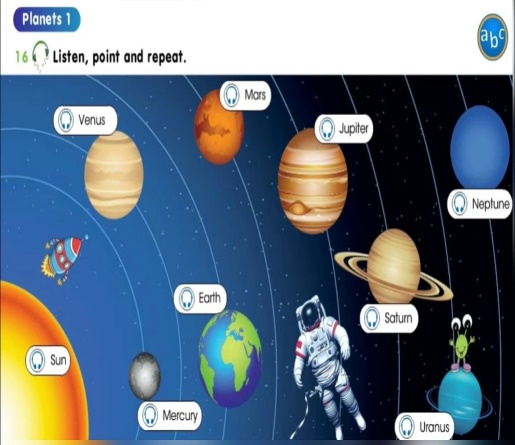
Ex:16 P:106 • Put the Planets poster up on the board. Point to the planets, one at a time, and say the corresponding words. The pupils repeat, chorally and/or individually. Point to each planet in random order. Ask individual pupils to name them Ex:17 P: 106 Explain to the pupils that they will do a quiz about planets. Go through the questions and the prompts and elicit/explain any unknown vocabulary. Allow the pupils some time to do the quiz. Check their answers. Ask the pupils to count how many planets they collected, write the number in their books and check their results. Ex: 18 P: 106 Underline the words in bold. The pupils repeat, chorally and/or individually. Explain the difference between the present simple (for repeated actions) and the present continuous (for temporary actions or future plans). Point out the use of key words (always, usually, today, every day, etc) to determine which tense is to be used. Revise/Elicit the interrogative, negative and the short answers. Ask the pupils to make sentences about what they usually do and what they are doing today Conclusion during the lesson some tasks differentiated by outcomes of the students and by their abilities. |
• learners listen, point and repeat ANSWERS Student’s own answer. learners do the quiz and collect planets. Check your answers with your teacher or online. ANSWERS 1 a 2 b 3b 4a 5a 6a • learners read and complete ANSWERS 1 called 2 are coming 3 are exploring 4 discovered 5 are leaving 6 travels 7 walked 8 used |
Descriptor: - point to each planet - listen and repeat Total: 3 point
- do the quiz - collect planets Total: 3 point Descriptor: - read and complete - make sentences Total: 3 point -Make CCQ questions Yes / No Total points 10 |
Students book |
|
End of the lesson 5 min |
FEEDBACK Traffic light method is used to find out was the lesson clear or not. Use the stickers. |
|
Poster Success
|
|
Short term plan: term 4
|
Unit 7: Journey into Space |
Lesson 58 |
||
|
Teacher name: |
|
||
|
Date: |
|
||
|
Grade: 4 |
Number present: |
absent: |
|
|
Lesson title |
Aliens 1-2 |
||
|
Learning objectives |
4.1.8.1 understand short, supported, narratives on an increasing range of general and some curricular topics 4.2.4.1 respond to questions on an increasing range of general and some curricular topics 4.4.7.1 spell most familiar high-frequency words accurately when writing independently; |
||
|
Lesson objectives |
Learners will be able to: - revise holidays and planets - write a blog entry about your dream holiday - develop the pupil’s listening through a song |
||
|
Plan |
|||
|
Stages / Time |
Teachers actions |
Students actions |
Assessment criteria |
Resources |
|
Beginning of the lesson Warming-up
3 min. Pre-learning «Brainstorming» method 7 min. |
Organization moment : 1.Greeting. Ask about the weather. The teacher sets the lesson objectives, letting students know what to anticipate from the lesson. Warming up Where are you from? How old are you? What color is it? How many students are there in class? What day of the week today? Teacher tells values of this month. Awareness of the importance of hard work, learning to work, and accumulating work skills for successful professional self-realization |
The aim: To develop pupils speaking skills and create friendly atmosphere Efficiency: By wishing each other they feel better and feel the support of others Students of the class are listed. Students' attention is drawn to the lesson. Students say different words from the picture •Learners remember previous lesson vocabulary •Learners answer the questions |
The teacher to assess learners for their ability. “Good job! Well done!” Formative Assessment
Good job! Descriptor: - remembers the lesson passed Point 1 Assessment criteria make basic statements related to personal information, people and objects |
Assessment sheet Kazakh
|
|
Middle of the lesson Presentation part. 30 min |
Ex:20 P:108 • Explain the activity. Allow the pupils some time to read and complete the texts. Play the CD. The pupils listen and check their answers. Ex:21 P: 108 • Explain the activity. Go through the text and elicit/explain any unknown words. Allow the pupils some time to complete it. Check their answers. Ex: 22 P: 109 Point to the song and say: Oh what a great world this will be! The pupils repeat, chorally and/or individually. Follow the same procedure and present the rest of the song. Ex: 23 P: 109 Refer the pupils to the pictures and have a picture discussion. Explain the activity. Allow the pupils some time to read the text and complete the activity. Check their answers. Conclusion during the lesson some tasks differentiated by outcomes of the students and by their abilities. |
• learners complete. Then listen and check ANSWERS 2 windows 3 fish 4 planet 5 aliens 6 spacesuit • learners read and circle. ANSWERS 2 - 3 any 4 but 5 a 6 – 7 the 8 an • learners sing a song. Let's sing! ANSWERS Student’s own answer. • learners read and write the aliens' names. 1 Bango 2 Dalo 3 Yonta 4 Floogle |
Descriptor: - read and complete the texts - listen and check Total: 2 point Descriptor: - explain any unknown words. - read and circle. Total: 3 point Descriptor: - repeat, chorally and/or individually - sing a song Total: 2 point Descriptor: - explain any unknown words. - read and circle. Total: 2 point Total points 10 |
Students book |
|
End of the lesson 5 min |
FEEDBACK Traffic light method is used to find out was the lesson clear or not. Use the stickers. |
|
Poster Success
|
|
Short term plan: term 4
|
Unit 7: Journey into Space |
Lesson 59 |
||
|
Teacher name: |
|
||
|
Date: |
|
||
|
Grade: 4 |
Number present: |
absent: |
|
|
Lesson title |
CLIL Science. Space facts |
||
|
Learning objectives |
4.1.8.1 comprehension of short stories related to a wide range of general and academic topics with support; 4.3.6.1 understand basic information and detail in short simple texts about a wide range of general and learning topics with little support; |
||
|
Lesson objectives |
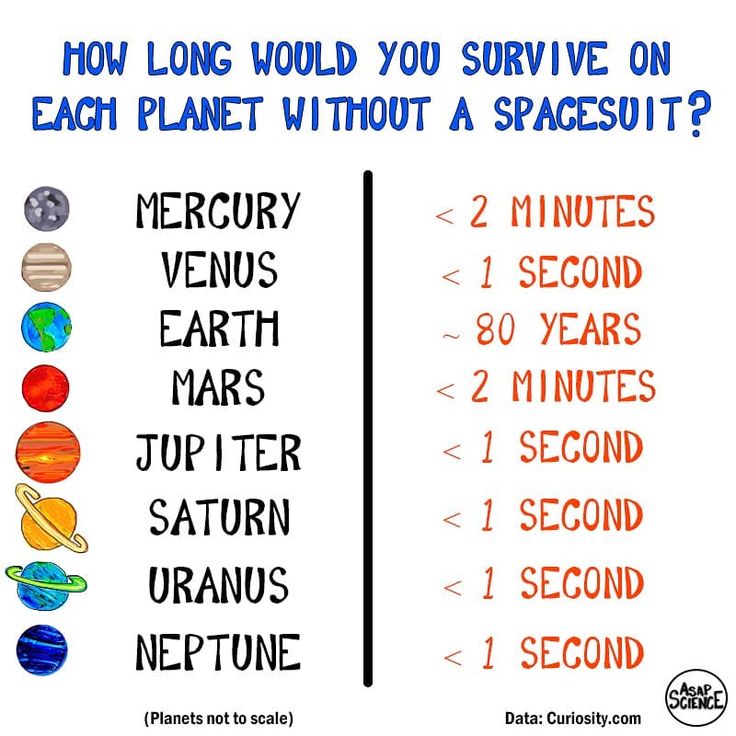
Learners will be able to: - identify the name of planets and their description. - remember the listening task correctly and complete the table correctly |
||
|
Plan |
|||
|
Stages / Time |
Teachers actions |
Students actions |
Assessment criteria |
Resources |
|
Beginning of the lesson Warming-up
3 min. Pre-learning «Brainstorming» method 7 min. |
Organization moment : 1.Greeting. Ask about the weather. The teacher sets the lesson objectives, letting students know what to anticipate from the lesson. Warming up Where are you from? How old are you? What color is it? How many students are there in class? What day of the week today? Lead – In
Teacher tells values of this month. The ability to value work, the results of one’s own and others’ work. The teacher says to work hard on knowledge yourself. |
The aim: To develop pupils speaking skills and create friendly atmosphere Efficiency: By wishing each other they feel better and feel the support of others Students of the class are listed. Students' attention is drawn to the lesson. Students say different words from the picture •Learners remember previous lesson vocabulary •Learners answer the questions |
The teacher to assess learners for their ability. “Good job! Well done!” Formative Assessment
Good job! Descriptor: - remembers the lesson passed Point 2 Assessment criteria make basic statements related to personal information, people and objects |
Assessment sheet Kazakh dombra
|
|
Middle of the lesson Presentation part. 30 min |
Ex:25 P:110 • Ss read about Space Facts and put the name of planets to the correct places. Then Ss present it to the class. Ex:26 P: 110 • Before giving this task T explains the numbers in the table. After that answer the questions. *near/the Sun? *far away/the Sun? *long/day? *short?day? |
• learners read and complete. Use: Astronauts, Moon, Sun, orbit, tourist, Earth. ANSWERS 2 Moon 3 Earth 4 Astronouts 5 orbit 6 tourist • learners listen and complete. Then talk with your friend. ANSWERS 2 10 3 225 4 84 5 14 |
Descriptor: - read and complete. - read and complete. Total: 4 point
Descriptor: - listen and complete - talk with your friend. Total: 4 point -Make CCQ questions Yes / No Total points 10 |
Students book |
|
End of the lesson 5 min |
FEEDBACK Traffic light method is used to find out was the lesson clear or not. Use the stickers. |
|
Poster Success
|
|
Short term plan: term 4
|
Unit 7: Journey into Space |
Lesson 60 |
||
|
Teacher name: |
|
||
|
Date: |
|
||
|
Grade: 4 |
Number present: |
absent: |
|
|
Lesson title |
All about Mars |
||
|
Learning objectives |
4.3.5.1 understand the main points of short simple texts on a limited range of familiar general and some curricular topics by using contextual clues 4.4.1.1 plan, write and check sentences with support on a range of basic personal, general and some curricular topics |
||
|
Lesson objectives |
Learners will be able to: - respond the questions of the topic - express thoughts and ideas clearly - present about planet to the class. |
||
|
Plan |
|||
|
Stages / Time |
Teachers actions |
Students actions |
Assessment criteria |
Resources |
|
Beginning of the lesson Warming-up
3 min. Pre-learning «Brainstorming» method 7 min. |
Organization moment : 1.Greeting. Ask about the weather. The teacher sets the lesson objectives, letting students know what to anticipate from the lesson. Warming up Where are you from? How old are you? What color is it? How many students are there in class? What day of the week today? Lead – In
Teacher tells values of this month. Willingness to participate in various types of age-appropriate work and work activities. The teacher says to work hard on knowledge yourself. |
The aim: To develop pupils speaking skills and create friendly atmosphere Efficiency: By wishing each other they feel better and feel the support of others Students of the class are listed. Students' attention is drawn to the lesson. Students say different words from the picture •Learners remember previous lesson vocabulary •Learners answer the questions |
The teacher to assess learners for their ability. “Good job! Well done!” Formative Assessment
Good job! Descriptor: - remembers the lesson passed Point 2 Assessment criteria make basic statements related to personal information, people and objects |
Assessment sheet Kazakh dombra
|
|
Middle of the lesson Presentation part. 30 min |
Ex: 27 P: 111 Teacher asks to read the information all about Mars. Then retell to the class. Ex:28 P:111 • Explain the activity. Allow the pupils some time to read again the text silently and complete the activity. Check their answers. Conclusion during the lesson some tasks differentiated by outcomes of the students and by their abilities. |
• learners listen and read. ANSWERS Student’s own answer. • learners read and match to make sentences. ANSWERS 2 c 3 a 4 b |
Descriptor: - read the information all about Mars Total: 4 point
- read again the text silently - complete the activity Total: 3 point -Make CCQ questions Yes / No Total: 1 Total points 10 |
Students book |
|
End of the lesson 5 min |
FEEDBACK Traffic light method is used to find out was the lesson clear or not. Use the stickers. |
|
Poster Success
|
|

Short term plan: term 4
|
Unit 7: Journey into Space |
Lesson 61 |
||
|
Teacher name: |
|
||
|
Date: |
|
||
|
Grade: 4 |
Number present: |
absent: |
|
|
Lesson title |
Our World Summative Assessment for the cross curricular unit «Journey into Space» |
||
|
Learning objectives |
4.1.5.1 identify initial, middle and final phonemes and their combination; 4.3.6.1 understand basic information and detail in short simple texts about a wide range of general and learning topics with little support; |
||
|
Lesson objectives |
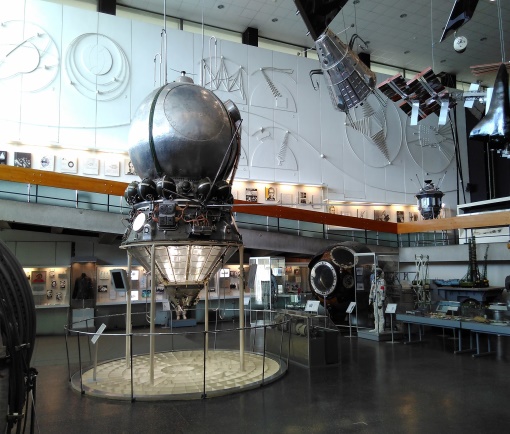
Learners will be able to: - to talk about space museums |
||
|
Plan |
|||
|
Stages / Time |
Teachers actions |
Students actions |
Assessment criteria |
Resources |
|
Beginning of the lesson Warming-up
3 min. Pre-learning «Brainstorming» method 7 min. |
Organization moment : 1.Greeting. Ask about the weather. The teacher sets the lesson objectives, letting students know what to anticipate from the lesson. Warming up Where are you from? How old are you? What color is it? How many students are there in class? What day of the week today? Lead – In
Teacher tells values of this month. The ability to develop strong relationships with others and actively participate in community life. |
The aim: To develop pupils speaking skills and create friendly atmosphere Efficiency: By wishing each other they feel better and feel the support of others Students of the class are listed. Students' attention is drawn to the lesson. Students say different words from the picture •Learners remember previous lesson vocabulary •Learners answer the questions |
The teacher to assess learners for their ability. “Good job! Well done!” Formative Assessment
Good job! Descriptor: - remembers the lesson passed Point 3 Assessment criteria make basic statements related to personal information, people and objects |
Assessment sheet Kazakh dombra
|
|
Middle of the lesson Presentation part. 30 min |
Ex: 30 P: 112 Ask the pupils to look at the pictures. Have a picture discussion. e.g. Teacher: (pointing to the astronaut) What's this? Pupil: It's an astronaut. Teacher: It's a statue of an astronaut. Where is it? Pupil: In the UK. etc Explain the activity. Go through the texts and elicit/explain any unknown words. Allow the pupils some time to read the texts and underline the correct words. Play the CD. The pupils listen and check their answers. Summative Assessment for the cross curricular unit «Journey into Space» Conclusion during the lesson some tasks differentiated by outcomes of the students and by their abilities. |
• learners read and underline. Then listen and check ANSWERS 1 largest 2 at 3 through 4 on 5 learning 6 of 7 explore 8 of |
Descriptor: - read the information all about Mars Total: 7 point
Self assessment -Make CCQ questions Yes / No |
Students book |
|
End of the lesson 5 min |
FEEDBACK Traffic light method is used to find out was the lesson clear or not. Use the stickers. |
|
Poster Success
|
|
Short term plan: term 4
|
Unit 7: Journey into Space |
Lesson 62 |
||
|
Teacher name: |
|
||
|
Date: |
|
||
|
Grade: 4 |
Number present: |
absent: |
|
|
Lesson title |
Check point |
||
|
Learning objectives |
4.3.6.1 understand basic information and detail in short simple texts about a wide range of general and learning topics with little support; 4.4.7.1 write many common words correctly when doing written work on their own; |
||
|
Lesson objectives |
Learners will be able to: - understand the content and give correct information limited - complete the main parts of the sentence correctly |
||
|
Plan |
|||
|
Stages / Time |
Teachers actions |
Students actions |
Assessment criteria |
Resources |
|
Beginning of the lesson Warming-up
3 min. Pre-learning «Brainstorming» method 7 min. |
Organization moment : 1.Greeting. Ask about the weather. The teacher sets the lesson objectives, letting students know what to anticipate from the lesson. Warming up Where are you from? How old are you? What color is it? How many students are there in class? What day of the week today? Lead – In
Teacher tells values of this month. Ability to build trusting relationships and maintain a positive climate in the team |
The aim: To develop pupils speaking skills and create friendly atmosphere Efficiency: By wishing each other they feel better and feel the support of others Students of the class are listed. Students' attention is drawn to the lesson. Students say different words from the picture •Learners remember previous lesson vocabulary •Learners answer the questions |
The teacher to assess learners for their ability. “Good job! Well done!” Formative Assessment
Good job! Descriptor: - remembers the lesson passed Point 1 Assessment criteria make basic statements related to personal information, people and objects |
Assessment sheet Kazakh map
|
|
Middle of the lesson Presentation part. 30 min |
Ex: 1 P: 113 Teacher explain the activity to Students. Ss follow the instruction of the teacher. And read the words to number the pictures. Ex: 2 P: 113 Ss read the words and complete the sentences with the key words. Ex: 3 P: 113 Teacher explains the instruction of the task. Teacher elicit if there are unknown words. Explain the meaning of the dialogue Conclusion during the lesson some tasks differentiated by outcomes of the students and by their abilities. |
• learners read and number. ANSWERS 0 Space station 1 Rocket 2 Astronaut 3 Planet 4 Spacesuit 5 Comet • learners look, choose and complete the sentences ANSWERS go fishing buy souvenirs go sightseeing pack suitcase go hiking • learners read and choose the best answer. ANSWERS 1 To White Waters Lake 2 This Friday afternoon 3 No, my brother is driving 4 Yes, of course. |
Descriptor: - read the words - number the pictures. Total: 3 point
Self assessment Descriptor: - read the words - complete the sentences Total: 3 point Descriptor: - read the words - choose the best answer Total: 3 point -Make CCQ questions Yes / No Total points 10 |
Students book |
|
End of the lesson 5 min |
FEEDBACK Traffic light method is used to find out was the lesson clear or not. Use the stickers. |
|
Poster Success
|
|

Short term plan: term 4
|
Unit 8: Machines |
Lesson 63 |
||
|
Teacher name: |
|
||
|
Date: |
|
||
|
Grade: 4 |
Number present: |
absent: |
|
|
Lesson title |
Slow machines 1 |
||
|
Learning objectives |
4.2.3.1 simple description of people and
objects related to a limited range of general and educational
topics, description of past experience related to a wide range of
general and educational
topics; |
||
|
Lesson objectives |
Learners will be able to: - understand the content of the theme and remember the topical words - list the types of machines that they know - complete the text with the correct form of Past Simple |
||
|
Plan |
|||
|
Stages / Time |
Teachers actions |
Students actions |
Assessment criteria |
Resources |
|
Beginning of the lesson Warming-up
3 min. Pre-learning «Brainstorming» method 7 min. |
Organization moment : 1.Greeting. Ask about the weather. The teacher sets the lesson objectives, letting students know what to anticipate from the lesson. Warming up Where are you from? How old are you? What color is it? How many students are there in class? What day of the week today? Lead – In
Teacher tells values of this month. The ability to listen and understand the interlocutor, to conduct a dialogue. |
The aim: To develop pupils speaking skills and create friendly atmosphere Efficiency: By wishing each other they feel better and feel the support of others Students of the class are listed. Students' attention is drawn to the lesson. Students say different words from the picture •Learners remember previous lesson vocabulary •Learners answer the questions |
The teacher to assess learners for their ability. “Good job! Well done!” Formative Assessment
Good job! Descriptor: - remembers the lesson passed Point 1 Assessment criteria make basic statements related to personal information, people and objects |
Assessment sheet Kazakh map
|
|
Middle of the lesson Presentation part. 30 min |
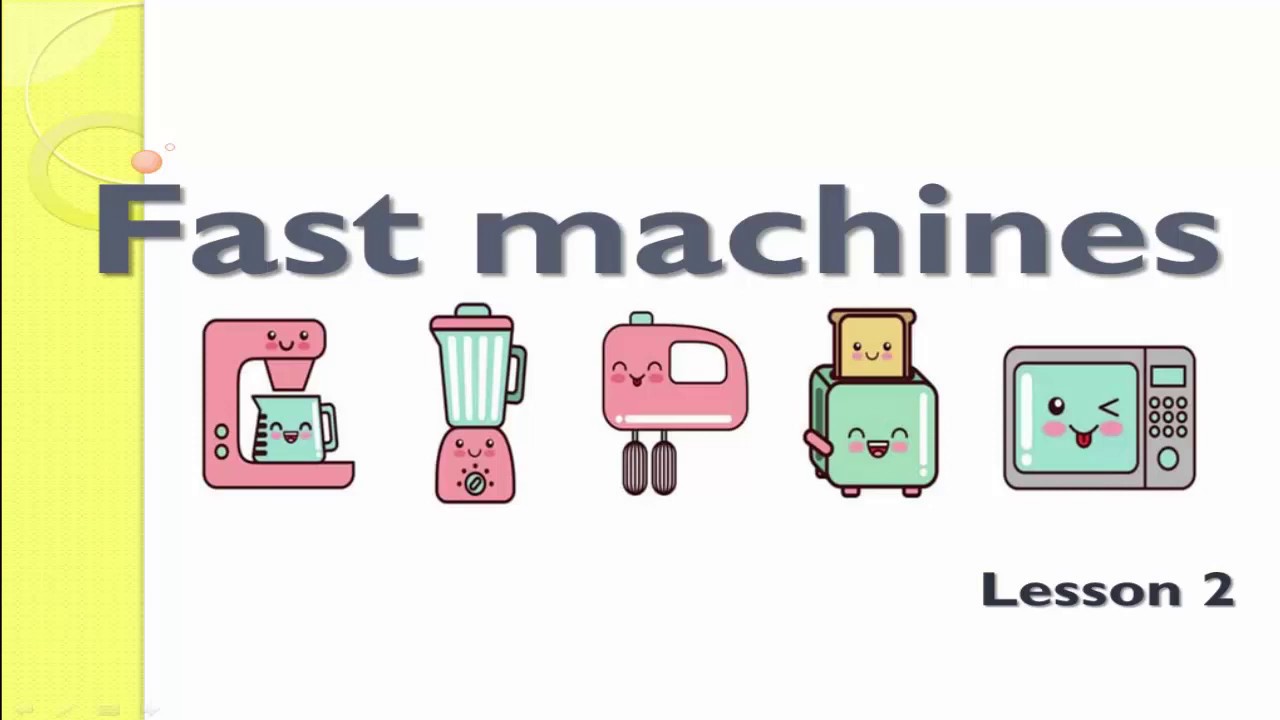
Ex: 1 P: 115 Say and write on the board: machine. Elicit/explain what a machine is. Refer the pupils to the picture and have a picture discussion. Elicit the names of the machines (A - photo booth, В - coffee machine, C - bicycle, D - computer). Then ask the pupils which of these machines they would use to take a photo, which one to make a drink, which one to go to school, and which one to do their homework. Elicit answers from individual pupils. Ask the rest of the class for verification. Ex: 2 P: 115 Refer the Ss to the picture of the computer. Ask: Is it a slow or a fast machine? Elicit: it's a slow machine. Then show the Ss a picture of a smartphone. Ask: Is it a slow or a fast machine? Elicit: It's a fast machine. Explain to the Ss, in LI if necessary what is the difference between slow and fast machines. Then ask Ss to write down 5 machines they use every day. Ex: 3 P: 115 Ask the Ss to complete the sentences by using the past simple of the verbs in brackets. Go through the sentences and elicit/explain any unknown words. Allow the Ss some time to complete the activity. Check their answers. Refer the Ss to the pictures. Read the words aloud, one at a time. The Ss repeat chorally and/or individually. Explain the activity. Ex: 4 P: 115 Refer the Ss to the pictures and elicit the names of the machines (A - sewing machine, В - phonograph, C - carriage, D - film projector). Refer the Ss to the picture of the sewing machine and ask them what people |
• learners look at the pictures. Which of the machines would you use to take a photo? to go to school? to do your homework? to make a drink? ANSWERS I would use a photo booth to take a photo. I would use a coffee machine to make a drink. I would use a bicycle to go to school. I would use a computer to do my homework. • learners make a list of 5 machines you use every day! ANSWERS tablet - fast machine, bicycle - slow machine, scissors - slow machine, microwave - fast machine, dishwasher - fast machine • learners read and complete. Use: Past Simple. Then match. ANSWERS
5 pressed 6 listened • learners listen and number. ANSWERS В 3 C 4 D 2 |
Descriptor: - look at the pictures. - answer the question. Total: 3 point
Descriptor: - look at the pictures. - complete the sentences Total: 2 point Descriptor: - look at the pictures. - use past simple Total: 2 point Descriptor: - names of the machines - listen and number. Total: 2 point -Make CCQ questions Yes / No Total points 10 |
Students book |
|
End of the lesson 5 min |
FEEDBACK Traffic light method is used to find out was the lesson clear or not. Use the stickers. |
|
Poster Success
|
|
Short term plan: term 4
|
Unit 8: Machines |
Lesson 64 |
||
|
Teacher name: |
|
||
|
Date: |
|
||
|
Grade: 4 |
Number present: |
absent: |
|
|
Lesson title |
Materials |
||
|
Learning objectives |
4.3.3.1 identify ideas in short simple texts
related to a wide range of general and educational
topics; |
||
|
Lesson objectives |
Learners will be able to: -To learn and talk about materials. |
||
|
Plan |
|||
|
Stages / Time |
Teachers actions |
Students actions |
Assessment criteria |
Resources |
|
Beginning of the lesson Warming-up
3 min. Pre-learning «Brainstorming» method 7 min. |
Organization moment : 1.Greeting. Ask about the weather. The teacher sets the lesson objectives, letting students know what to anticipate from the lesson. Warming up Where are you from? How old are you? What color is it? How many students are there in class? What day of the week today? Lead – In
Teacher tells values of this month. Ability to work effectively in a team, contributing to the achievement of common goals. |
The aim: To develop pupils speaking skills and create friendly atmosphere Efficiency: By wishing each other they feel better and feel the support of others Students of the class are listed. Students' attention is drawn to the lesson. Students say different words from the picture •Learners remember previous lesson vocabulary •Learners answer the questions |
The teacher to assess learners for their ability. “Good job! Well done!” Formative Assessment
Good job! Descriptor: - remembers the lesson passed Point 1 Assessment criteria make basic statements related to personal information, people and objects |
Assessment sheet Kazakh map
|
|
Middle of the lesson Presentation part. 30 min |
Ex: 5 P: 116 • Put the picture flashcards up on the board. Point to them one at a time and say the corresponding words. The pupils repeat chorally and/or individually. Point to the picture flashcards in random order. Ask individual pupils to name them. Ex: 6 P: 116 • Refer the pupils to the first dialogue and read it aloud. Explain the activity. Allow the pupils some time to complete the dialogues. Check their answers. Refer the pupils to the pictures. Explain the activity. Allow the pupils some time to match the pictures with the dialogues. Check their answers. Then the pupils, in pairs, act out the dialogues. Ex: 7 P: 117 • Say, then write on the board: A ruler is made of plastic. Underline the words in bold. The pupils repeat, chorally and/or individually. Then say and write on the board: It's used for drawing straight lines. Underline the words in bold. The pupils repeat, chorally and/or individually. Elicit/Explain that we use made of to talk about the material used to make an object and used for to talk about what we use the object for. Ex: 8 P: 117 • Explain the activity. Allow the pupils three minutes to complete it. Elicit answers for individual pupils. Ask the rest of the class for verification. |
• learners listen, point and repeat ANSWERS Student’s own answer • learners read and complete. Then match. ANSWERS 2 me 3 you 4 it 5 them A 3 B 5 C1 D 4 E 2 • learners look again at the items in Ex. 5. Read and match. ANSWERS B3 C2 D7 E5 F1 G8 H4 • learners in three minutes write cap ANSWERS 1 bottle, cool box, cassette player 2 pen, pencil 3 chair, table 4 coffee machine, bicycle, watch |
Descriptor: - repeat chorally and/or individually - point to the picture flashcards Total: 2 point
Descriptor: - read and complete - match the pictures with the dialogues Total: 2 point Descriptor: - underline the words in bold - repeat, chorally and/or individually Total: 3 point Descriptor: - in three minutes write cap - complete the task Total: 2 point -Make CCQ questions Yes / No Total points 10 |
Students book |
|
End of the lesson 5 min |
FEEDBACK Traffic light method is used to find out was the lesson clear or not. Use the stickers. |
|
Poster Success
|
|
Short term plan: term 4
|
Unit 8: Machines |
Lesson 65 |
||
|
Teacher name: |
|
||
|
Date: |
|
||
|
Grade: 4 |
Number present: |
absent: |
|
|
Lesson title |
Fast machines 1 Summative Assessment for the cross curricular unit «Machines» |
||
|
Learning objectives |
4.1.6.1 understand some specific information in short dialogues or passages of text related to a broad range of general and learning topics with support; 4.3.2.1 read and understand short simple literary and popular scientific texts with little support; |
||
|
Lesson objectives |
Learners will be able to: -To develop listening and reading comprehension skills through a story; to talk about playing a game |
||
|
Plan |
|||
|
Stages / Time |
Teachers actions |
Students actions |
Assessment criteria |
Resources |
|
Beginning of the lesson Warming-up
3 min. Pre-learning «Brainstorming» method 7 min. |
Organization moment : 1.Greeting. Ask about the weather. The teacher sets the lesson objectives, letting students know what to anticipate from the lesson. Warming up Where are you from? How old are you? What color is it? How many students are there in class? What day of the week today? Lead – In
|
The aim: To develop pupils speaking skills and create friendly atmosphere Efficiency: By wishing each other they feel better and feel the support of others Students of the class are listed. Students' attention is drawn to the lesson. Students say different words from the picture •Learners remember previous lesson vocabulary •Learners answer the questions |
The teacher to assess learners for their ability. “Good job! Well done!” Formative Assessment
Good job! Descriptor: - remembers the lesson passed Point 1 Assessment criteria make basic statements related to personal information, people and objects |
Assessment sheet Kazakh map
|
|
Middle of the lesson Presentation part. 30 min |
Ex: 10 P: 118 • Go through the pictures of the story and set the scene by asking the pupils questions about what they can see in the pictures. Teacher: (pointing to picture 1) What are the children doing? Class: They are watching a quiz programme on TV! Teacher: (pointing to Jake in picture 3) What is Jake holding behind his back? Class: A belt, etc Ex: 11 P: 119 • Explain the activity. Refer the pupils to the summary and read the example aloud. Allow the pupils some time to read the story again silently and complete the summary. Check their answers. Ex: 12 P: 119 • Explain the activity. The pupils read the sentences and find the answers in the story. Check their answers. Ex: 13 P: 119 • For stronger classes: Assign roles to the pupils. Allow them enough time to rehearse their roles in groups. Encourage them to come to the front and act out the story. For weaker classes: Select a short exchange from the story for the pupils to act out in pairs Ex: 14 P: 119 •Refer the pupils to the picture and the dialogue. Play the CD. The pupils listen and follow along. Pause the CD for the pupils to repeat, chorally and/or individually. The pupils, in pairs, act out similar dialogues. Go around the classroom providing any necessary help. Ask some pairs to come to the front of the classroom and act out the dialogue. If you wish, write the following on the board so the pupils can refer to it while they are completing the activity |
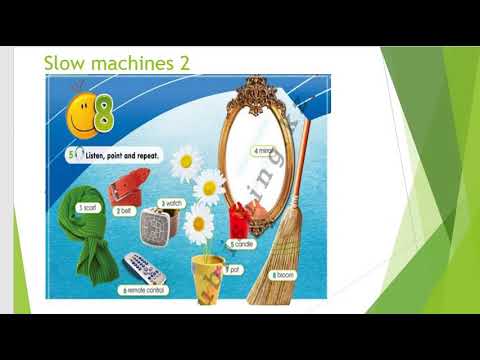
• learners listen and read ANSWERS Student’s own answer • learners read the story and complete the summary. ANSWERS 2 TV 3 Object 4 mum 5 Lilly 6 piano • learners read and answer. ANSWERS 1 scarf 2 watch 3 candle • learners act out the story. ANSWERS Student’s own answer • learners talking point. Listen and read. Make a new dialogue with your friend ANSWERS Marzhan: Ulan, do you want to play What's the Object'? Ulan: Yes, of course. I always get the right answers! Marzhan: OK. It's made of wood and straw. It's used for cleaning floors. Ulan: A broom? Marzhan: That's correct! Your turn now. Ulan: It's made of glass. It's used for checking your appearance. Marzhan: A mirror? Ulan: That's right |
Descriptor: - listen and read the text Total: 2 point Descriptor: - read the story - read the story Total: 2 point Descriptor: - find the answers in the story Total: 1 point Descriptor: - act out the story. Total: 2 point Descriptor: -read the dialogue - in pairs, act out similar dialogues Total: 2 point -Make CCQ questions Yes / No Total points 10 |
Students book |
|
End of the lesson 5 min |
FEEDBACK Traffic light method is used to find out was the lesson clear or not. Use the stickers. |
|
Poster Success
|
|
Short term plan: term 4
|
Unit 8: Machines |
Lesson 66 |
||
|
Teacher name: |
|
||
|
Date: |
|
||
|
Grade: 4 |
Number present: |
absent: |
|
|
Lesson title |
Fast machines 2 |
||
|
Learning objectives |
4.1.5.1 identify initial, middle and final phonemes and their combination; 4.2.4.1 answer questions related to a wide range of general and educational topics; |
||
|
Lesson objectives |
Learners will be able to: - talk about household objects |
||
|
Plan |
|||
|
Stages / Time |
Teachers actions |
Students actions |
Assessment criteria |
Resources |
|
Beginning of the lesson Warming-up
3 min. Pre-learning «Brainstorming» method 7 min. |
Organization moment : 1.Greeting. Ask about the weather. The teacher sets the lesson objectives, letting students know what to anticipate from the lesson. Warming up Where are you from? How old are you? What color is it? How many students are there in class? What day of the week today? Lead – In
Teacher tells values of this month. Ability to build positive relationships with others and contribute to community life |
The aim: To develop pupils speaking skills and create friendly atmosphere Efficiency: By wishing each other they feel better and feel the support of others Students of the class are listed. Students' attention is drawn to the lesson. Students say different words from the picture •Learners remember previous lesson vocabulary •Learners answer the questions |
The teacher to assess learners for their ability. “Good job! Well done!” Formative Assessment
Good job! Descriptor: - remembers the lesson passed Point 1 Assessment criteria make basic statements related to personal information, people and objects |
Assessment sheet Kazakh map
|
|
Middle of the lesson Presentation part. 30 min |
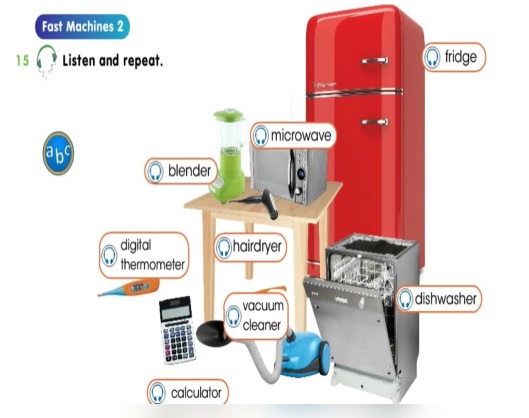
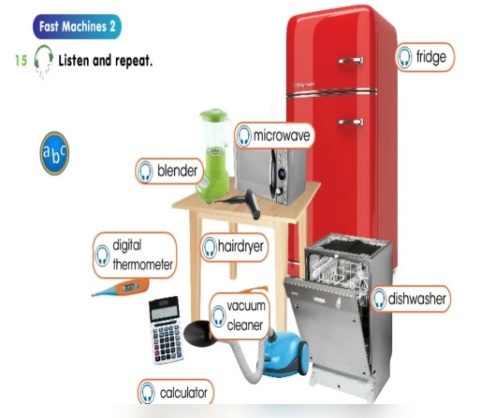
Ex: 15 P: 120 • Put the Fast machines poster up on the board. Point to the items, one at a time, and say the corresponding words. The pupils repeat, chorally and/or individually. Point to each item in random order. Ask individual pupils to name them. Ex: 16 P: 120 • Explain the activity. Go through the questions and elicit/explain any unknown words. Allow the pupils some time to answer the questions. Ask individual pupils to report back to the class. Ask the rest of the class for verification. Ex: 17 P: 120 • Ask the pupils which of the machines are important to them, which ones to their mums, and which one to their dads. Elicit answers from individual pupils. Ex: 18 P: 121 •Explain that adjectives come before nouns. Then say and write on the board: We bought a fantastic new big red metal fridge. Underline the words in bold. The pupils repeat, chorally and/or individually. Write opinion, age, size, colour, material above the respective adjective. Explain that when we use many adjectives to describe an object, we have to use a specific order. Ex: 19 P: 121 • Explain the activity. Go through the sentences and elicit/explain any unknown words. Allow the pupils some time to complete the activity. Check their answers. |
• learners listen and repeat. Then number the pictures. ANSWERS 2 C 3 B 4 H 5 G 6 E 7 D 8 A • learners answer the questions. ANSWERS 1 calculator 2 hairdryer 3 vacuum cleaner 4 microwave, dishwasher, fridge, blender 5 microwave 6 fridge • learners thinking: Which of these machines are important to you? to your mum? to your dad? ANSWERS The calculator is important to me. I use it to do my maths homework. The hairdryer is important to my mum. She uses it to dry her hair. The dishwasher is important to my dad. He uses it to wash the dishes • learners read and write. ANSWERS 2 S 3 M 4 A 5 O 6 A 7 M 8 C 9 S • learners complete the sentences with words from Ex. 20. ANSWERS 1 fantastic new 2 small metal 3 small plastic 4 old green |
Descriptor: - listen and repeat - number the pictures. Total: 2 point
Descriptor: - answer the questions. Total: 2 point Descriptor: - answer the questions. Total: 2 point Descriptor: - read and write. Total: 1 point Descriptor: - complete the sentences with words Total: 2 point -Make CCQ questions Yes / No Total points 10 |
Students book |
|
End of the lesson 5 min |
FEEDBACK Traffic light method is used to find out was the lesson clear or not. Use the stickers. |
|
Poster Success
|
|
Short term plan: term 4
|
Unit 8: Machines |
Lesson 67 |
||
|
Teacher name: |
|
||
|
Date: |
|
||
|
Grade: 4 |
Number present: |
absent: |
|
|
Lesson title |
Summative Assessment Term 4 |
||
|
Learning objectives |
4.2.6.1 take turns when speaking with others in a growing range of short, basic exchanges; 4.3.6.1 understand with some support some specific information and detail in short, simple texts on a growing range of general and some curricular topics; 4.4.5.1 link with some support sentences using basic coordinating connectors; |
||
|
Lesson objectives |
Learners will be able to: - listen to the story very carefully - write four sentences about Bob |
||
|
Plan |
|||
|
Stages / Time |
Teachers actions |
Students actions |
Assessment criteria |
Resources |
|
Beginning of the lesson Warming-up
3 min. Pre-learning «Brainstorming» method 7 min. |
Organization moment : 1.Greeting. Ask about the weather. The teacher sets the lesson objectives, letting students know what to anticipate from the lesson. Warming up Where are you from? How old are you? What color is it? How many students are there in class? What day of the week today? Teacher tells values of this month. The ability to express one's own views, showing mutual respect and solidarity Listening Task 1. Listen to the story very carefully. Write the missing words into the sentences. Go to the following link to listen information: |
The aim: To develop pupils speaking skills and create friendly atmosphere Efficiency: By wishing each other they feel better and feel the support of others Students of the class are listed. Students' attention is drawn to the lesson. Students say different words from the picture •Learners remember previous lesson vocabulary Learners listen to the story very carefully. |
The teacher to assess learners for their ability. “Good job! Well done!” Formative Assessment
Good job! Assessment criteria make basic statements related to personal information, people and objects Descriptor: - listen to the story very carefully |
|
|
Middle of the lesson Presentation part. 30 min |
Reading Task 2. Read the text. Circle 5 sentences relevant to the text. There are 3 EXTRA sentences. Writing Task 3. Write 4 sentences about Bob the astronaut’s daily routine. Put punctuation marks. Use questions and adverbs sometimes, often, always, never. Speaking Task 4. Choose ONE picture and tell about this machine. Name the machine, describe it, and tell what it can do, how it moves, where or how we can use it. |
Learners read the text Learners write 4 sentences about Bob the astronaut’s daily routine. Put punctuation marks. Learners choose ONE picture and tell about this machine. Name the machine, describe it |
Descriptor: - read the text - circle 5 sentences relevant Descriptor: - Write 4 sentences Descriptor: - choose ONE picture - tell about this machine Total: 18 point |
Students book |
|
End of the lesson 5 min |
FEEDBACK Traffic light method is used to find out was the lesson clear or not. Use the stickers. |
|
Poster Success
|
|
Short term plan: term 4
|
Unit 8: Machines |
Lesson 68 |
||
|
Teacher name: |
|
||
|
Date: |
|
||
|
Grade: 4 |
Number present: |
absent: |
|
|
Lesson title |
Time for CLIL |
||
|
Learning objectives |
4.1.8.1 understand short, supported, narratives on an increasing range of general and some curricular topics 4.3.6.1 understand with some support some specific information and detail in short, simple texts on a growing range of general and some curricular topics; |
||
|
Lesson objectives |
Learners will be able to: - To explore other subject areas (Design and Technology); - to talk about robots; to design a robot |
||
|
Plan |
|||
|
Stages / Time |
Teachers actions |
Students actions |
Assessment criteria |
Resources |
|
Beginning of the lesson Warming-up
3 min. Pre-learning «Brainstorming» method 7 min. |
Organization moment : 1.Greeting. Ask about the weather. The teacher sets the lesson objectives, letting students know what to anticipate from the lesson. Warming up Where are you from? How old are you? What color is it? How many students are there in class? What day of the week today? Lead – In
Teacher tells values of this month. The ability to express one's own views, showing mutual respect and solidarity |
The aim: To develop pupils speaking skills and create friendly atmosphere Efficiency: By wishing each other they feel better and feel the support of others Students of the class are listed. Students' attention is drawn to the lesson. Students say different words from the picture •Learners remember previous lesson vocabulary •Learners answer the questions |
The teacher to assess learners for their ability. “Good job! Well done!” Formative Assessment
Good job! Descriptor: - remembers the lesson passed Point 1 Assessment criteria make basic statements related to personal information, people and objects |
Assessment sheet Kazakh map
|
|
Middle of the lesson Presentation part. 30 min |
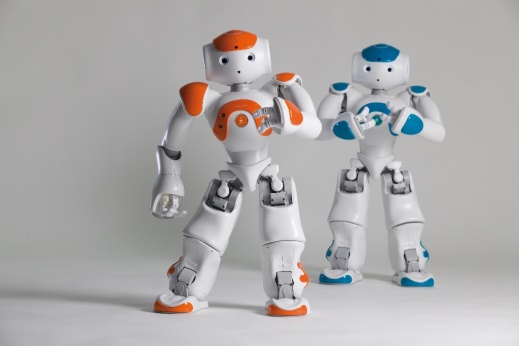
Ex: 26 P: 124 • Refer the pupils to the pictures and have a brief class discussion about the robots. Explain the activity. Allow the pupils some time to read the texts and complete the activity. Check their answers. Ex: 28 P: 124 • Refer the pupils to the pictures. Read the example aloud and explain the activity. Allow the pupils some time to complete it. Check their answers. Ex: 29 P: 125 • Ask the pupils to think of their own robot. Refer them to the questions and ask them to talk, in pairs or in groups, about the name of the robot, what it is made of, what it looks like, and what it can do. |
• learners read and write A or B. ANSWERS 2 A 3 B 4 B • learners look, read and circle. ANSWERS 2 Picture B 3 Picture A 4 Picture A 5 Picture B • learners think of your own robot. Talk with your friend. ANSWERS Pupil 1: What's your robot's name? Pupil 2: Combot! Pupil 1: What is it made of? Pupil 2: Pupil 1: It's made of plastic and metal. What does it look like? Pupil 2: It's a little blue robot. It's got arms and legs. Pupil 1: What can it do? Pupil 2: It can understand what you say and talk. It can help me with my homework, too! etc |
Descriptor: - read the texts - complete the activity Total: 3 point Descriptor: - read the example - complete the task Total: 3 point Descriptor: - think of their own robot. - name of the robot Total: 3 point -Make CCQ questions Yes / No |
|
|
End of the lesson 5 min |
FEEDBACK Traffic light method is used to find out was the lesson clear or not. Use the stickers. |
|
Poster Success
|
|









 Бұл курс Қазақстан Республикасы Оқу-ағарту министрлігімен келісілген










