
 ЖИ көмекші


 Қауіпсіз төлем

жүктеу мүмкіндігіне ие боласыз
Бұл материал сайт қолданушысы жариялаған. Материалдың ішінде жазылған барлық ақпаратқа жауапкершілікті жариялаған қолданушы жауап береді. Ұстаз тілегі тек ақпаратты таратуға қолдау көрсетеді. Егер материал сіздің авторлық құқығыңызды бұзған болса немесе басқа да себептермен сайттан өшіру керек деп ойласаңыз осында жазыңыз
 19 Ақпан 2026
 28
28
1 жыл бойы шексіз жүктеңіз
Introductory lesson
Short term plan
|
Unit 1: Making contact |
lesson 1 |
||
|
School: |
named after 120 B.Momyshuly |
||
|
Teacher name: |
Yesbolganova G.A |
||
|
Date: |
|
||
|
Number present: |
absent: |
||
|
Lesson title |
Introductory lessons Extreme weather condition |
||
|
Learning objectives |
11.3.2.1 - ask and respond with appropriate syntax and vocabulary to open-ended higher-order thinking questions on a range of general and curricular topics, including some unfamiliar topics 11.5.2.1 - use a wide range of vocabulary, which is appropriate to topic and genre, and which is spelt accurately |
||
|
Lesson objectives (assessment criteria) |
Learners will be able to: - Understand and use vocabulary related to extreme weather conditions. - Read and listen for gist and specific information about extreme weather. - Discuss personal experiences and express opinions about weather events. - Practice speaking fluently in pairs and groups. |
||
|
Instilling values of the program “Birtutas tarbiye” |
Independence and Patriotism Unity and Solidarity Justice and Responsibility |
||
|
Stages/ Time |
Teachers actions |
Students actions |
Assessment |
Resources |
|
Beginning 5 min |
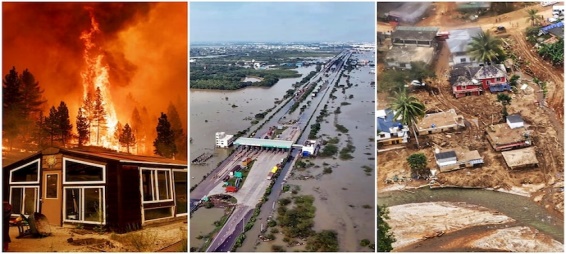
Greeting. T tells the class to make groups of 2. Warm up: -Show images of extreme weather events (hurricane, flood, wildfire, blizzard, tornado). -Ask students: What do you see? Have you ever experienced any of these? Which one do you think is the most dangerous? Why? Elicit responses and brainstorm vocabulary on the board.
Lead-in to Topic & Vocabulary Pre-teach key vocabulary: storm, flood, drought, hurricane, tornado, blizzard, heatwave, wildfire. Matching activity: Students match words with pictures/definitions. Quick pair activity: Students make one sentence each using the new words |
Learners read the given sentences on the board and guess the topic and share with their ideas. Remember and recognize the main vocabulary. |
Teacher evaluate pupils with phrases like: “Good job! Well done!” Formative Assessment
|
Projector / pictures of extreme weather (storms, hurricanes, droughts, floods, blizzards). Short audio/video clip or recording (news report on extreme weather). Handouts with vocabulary and a short text. Whiteboard & markers. |
|
Middle 8 min |
Ex:1 P:5 Lead-in / Elicitation Read aloud the list of extreme weather conditions (e.g. blizzard, drought, flood, hurricane, thunderstorm, tornado, heatwave, hailstorm, avalanche, etc.). Ask individual students to explain or give an example of each one in their own words. Provide additional clues, gestures, or pictures if needed (e.g. “What happens during a drought? Is it dry or wet?”). Task Practice Give Ss time to complete the task (matching, filling gaps, or categorising according to features such as hot/cold, wet/dry, windy/calm). Monitor and help weaker Ss by giving hints or rephrasing. Feedback / Checking Check answers as a class. Ask Ss to justify their answers by giving reasons or examples. Encourage them to paraphrase instead of copying definitions (e.g. “A flood happens when there’s too much rain and water covers the land.”). Extension (Optional) Pair work: Ss ask each other “Have you ever experienced ___? What happened?” Short writing: Ss write two or three sentences about an extreme weather event they know from the news or their own experience. Value Link (Birtutas Tarbiye): Highlight the importance of being prepared, helping others, and caring for the environment to reduce the damage caused by extreme weather. |
Students label the photos Answers: 1 thunderstorm 2 hurricane 3 drought 4 flood 5 heatwave 6 dust storm Descriptor: - identifies and explains extreme weather conditions - use vocabulary in meaningful sentences - Speaks/writes clearly, paraphrases definitions |
Excellent (2) - Correctly identifies and explains all/most extreme weather conditions in their own words. Good (1) - Identifies and explains some conditions with minor errors. |
Student’s book |
|
10 min |
Ex:2 P: 5 Task Explanation Explain the task (e.g. matching words to definitions, filling in gaps, categorising words like pollution types, renewable energy sources, natural resources, etc.). Clarify any new or difficult words with examples or visuals (e.g. “recycling – using things again instead of throwing them away”). Individual / Pair Work Give Ss time to complete the task individually or in pairs. Encourage them to think of real-life examples from their community or country (e.g. “water pollution – dirty rivers/lakes”). Extension (Optional) Pair discussion: Ss ask each other, “Which environmental problems are serious in our country?” Mini-poster: Ss create a quick slogan or drawing about saving the environment (e.g. “Save water, save life!”). Value Link (Birtutas Tarbiye): Emphasise responsibility for protecting nature, reducing waste, and working together for a clean and safe environment. |
Students fill the gaps Answers: 1 greenhouse 2 smog 3 waste 4 warming 5 spill 6 conservation 7 fuels 8 layer Descriptor: - understands and explains environment-related words - uses vocabulary in meaningful sentences or examples - expresses ideas clearly and confidently |
Excellent (3) - Correctly understands and explains all/most environment-related words in their own words. Good (2) - Understands some words but explanations are simple or partly incorrect. |
Worksheets |
|
7 min |
Ex: 3 P:5 Task Explanation Explain the task: Ss look at groups of words and circle the one that does not belong (the “odd word”). Give one example together as a class (e.g. car – bus – train – apple → odd word = apple). Individual / Pair Work Give Ss time to complete the task individually or in pairs. Encourage them to think about categories (land, air, water transport) to identify the odd one out. Feedback / Checking Check answers around the class by asking different Ss to explain why the word is odd. Encourage full-sentence answers (e.g. “Plane is the odd one out because the others are land transport, but a plane is air transport”). Value Link (Birtutas Tarbiye): Stress the importance of safe, responsible, and eco-friendly travel choices (e.g. using bicycles or public transport to reduce pollution). |
Students circle the odd one out Answers: MOTORBIKE – rails BUS – nose PLANE – license plate SHIP – pedal TRAIN – steering wheel Descriptor: - identifies and explains transport words and categories - circles the correct “odd” words and gives clear explanations - uses transport vocabulary in sentences or examples |
Excellent (2) - Correctly identifies and explains almost all transport words and categories (land/air/water). Good (1) - Identifies and explains some transport words correctly, but with a few mistakes. |
Student’s book |
|
10 min |
Ex: 4 P:5 Lead-in / Vocabulary Elicitation Read the vocabulary items aloud one by one (e.g. planet, orbit, asteroid, galaxy, satellite, constellation, comet, meteor). Ask different Ss to explain each word in their own words. Give simple clarifications or examples if needed (e.g. “A satellite goes around a planet. The Moon is Earth’s satellite.”). Task Practice Explain the task (e.g. matching words to definitions, filling gaps, categorising objects: planets, stars, satellites, etc.). Give Ss time to complete it individually or in pairs. Monitor and support weaker Ss by giving prompts or visuals. Feedback / Checking Check Ss’ answers around the class. Encourage explanations in full sentences (e.g. “A comet is made of ice and dust and travels around the Sun”). Ask stronger Ss to give extra examples (e.g. “Can you name a constellation?”). Value Link (Birtutas Tarbiye): Emphasise curiosity about science, respect for knowledge, and appreciation of the universe as part of human responsibility to explore and protect our planet Earth. |
Students label the pictures Answers: 1 Milky Way 2 meteorite 3 satellite 4 spacecraft 5 eclipse 6 constellation Descriptor: - identifies and explains Solar System terms - uses vocabulary in accurate sentences or examples |
Excellent (3) - Correctly identifies and explains almost all Solar System terms in own words. Good (2) - Understands some terms but explanations are simple or partly inaccurate. |
|
|
End 5 min |
Reflection: - Quick quiz: Teacher says a definition → Ss say the weather word (e.g., “Very little rain for a long time” → drought). - Exit ticket: Write 2 new words + 1 tip for staying safe in extreme weather. Homework Write a short report: “Extreme weather in my country – causes and effects” (8–10 sentences). Use at least 5 vocabulary words from today’s lesson. |
Ss use their stickers to show their knowledge according to the lesson |
Poster |
|










 Бұл курс Қазақстан Республикасы Оқу-ағарту министрлігімен келісілген










