
 ЖИ көмекші


 Қауіпсіз төлем

жүктеу мүмкіндігіне ие боласыз
Бұл материал сайт қолданушысы жариялаған. Материалдың ішінде жазылған барлық ақпаратқа жауапкершілікті жариялаған қолданушы жауап береді. Ұстаз тілегі тек ақпаратты таратуға қолдау көрсетеді. Егер материал сіздің авторлық құқығыңызды бұзған болса немесе басқа да себептермен сайттан өшіру керек деп ойласаңыз осында жазыңыз
 11 Ақпан 2025
 235
235
1 жыл бойы шексіз жүктеңіз
«LIVING LIGHT. LIVING RIGHT» SOCIAL ADVERTISEMENTS.
Name of the organization where the work was completed: KTL "Auzhan"
Topic of the project
work: «LIVING LIGHT. LIVING
RIGHT»
SOCIAL ADVERTISEMENTS.
Direction: Foreign languages
Executor: Batyrbekkyzy Nurai (7th grade student, KTL "Auzhan", Shymkent)
Scientific supervisor: Shirinova Marzhan Kaldybekovna (English teacher, KTL "Auzhan")
Year of work completion: 2024
Contents
1. Abstract 3
2. Introduction 4
3. Research part 5
4. Conclusion 8
5. List of used literature 9
6. Appendixes 10
1. Abstract
The project «Living Light. Living Right» Social advertisements Social advertisements is a research and practical work aimed at developing social advertising in English, covering three main topics: ecology, healthy lifestyle and social justice. This project was implemented by students as part of school research activities, combining educational, social and creative approaches.
The project is highly relevant because it solves two key problems:
• Drawing attention to pressing social problems through the use of visually and textually adapted social advertising.
• Developing language competencies necessary for intercultural communication through the creation of materials in English.
The work was carried out using the following methods:
• Analysis of existing successful social campaigns.
• Practical use of graphic and video editors to create advertising materials.
• Conducting a sociological survey to assess the effectiveness of the created materials.
• The experimental part of the project includes the development of three types of materials: posters, brochures and videos, which were successfully presented in the school environment and social networks. The results of the work demonstrate not only the creative potential of the participants, but also their ability to find solutions to current problems.
The project has practical significance, since the created materials can be used for educational and outreach purposes. Moreover, the use of English allows us to draw attention to problems at the international level, which makes this project an example of high-quality integration of educational, social and cultural elements.
I recommend this project for participation in scientific paper competitions and for further development as a model of project activities for educational institutions.
2. Introduction
2.1 Relevance
In today's world, social advertising plays an important role in raising awareness of key societal issues. Issues of ecology, health and equality require constant attention and involvement of young people.
Using English in the project not only helps to expand the audience, but also allows schoolchildren to integrate into the global discussion, improving their intercultural communication skills.
2.2 Project goal: To create effective social advertising in English aimed at raising awareness of schoolchildren and their environment about the importance of environmental sustainability, healthy lifestyle and social justice, with an emphasis on the practical use of language and the involvement of young people in solving global and local problems.
2.3 Location
The project was implemented on the basis of school classes and extracurricular activities. The main emphasis is on involving students in the creation of materials and their distribution through school presentations, exhibitions and social networks.
2.4 Practical Significance
The developed materials can be used in educational activities, at school exhibitions and events, and to draw attention to problems in social networks. The project helps to develop creative thinking and teamwork skills.
2.5 Literature Review
The analysis of literary sources revealed several key aspects related to social advertising:
2.6 Impact of social advertising:
Research shows that social advertising contributes to changing public behavior through the use of visually attractive materials and accessible slogans (Kotler & Zaltman, 1971).
2.7 Subject matter of social advertising:
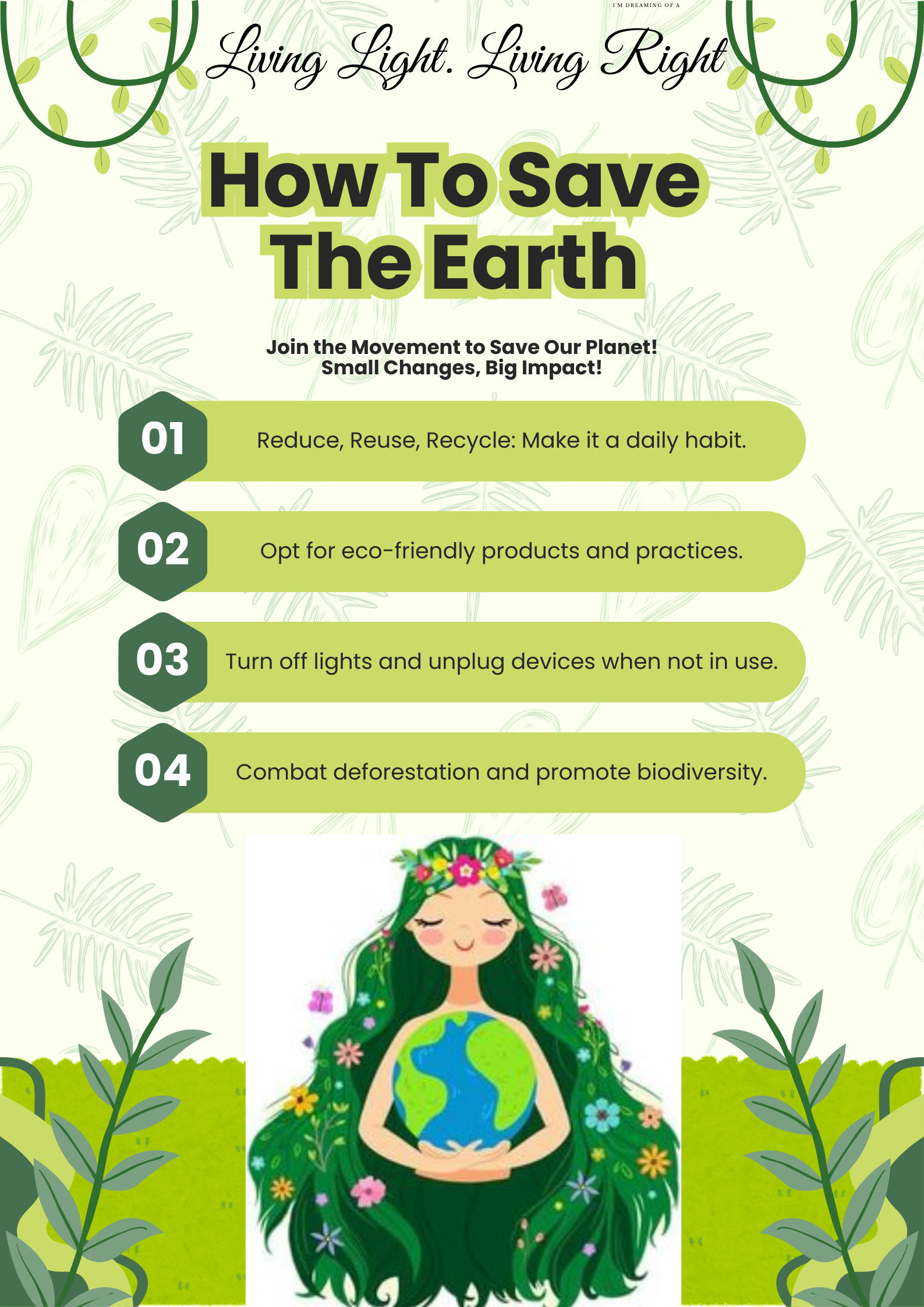
Environmental issues such as pollution and climate change are at the center of many successful campaigns (WWF Campaign Materials).
Promotion of a healthy lifestyle and the fight against bad habits is actively used in educational institutions (WHO Reports).
2.8 Use of English:
Use of English makes materials accessible to a wide international audience while improving the language skills of participants (UN Social Awareness Campaigns).
3. Research
The topic "Living Light. Living Right" Social advertisement was chosen due to its importance for society. Ecology, health and social justice are problems that require immediate solutions, and young people play a key role in their resolution.
3.1 Research materials and methods
3.1.2 Materials:
• Literary sources on social advertising and a healthy lifestyle.
• Online resources and examples of successful social campaigns.
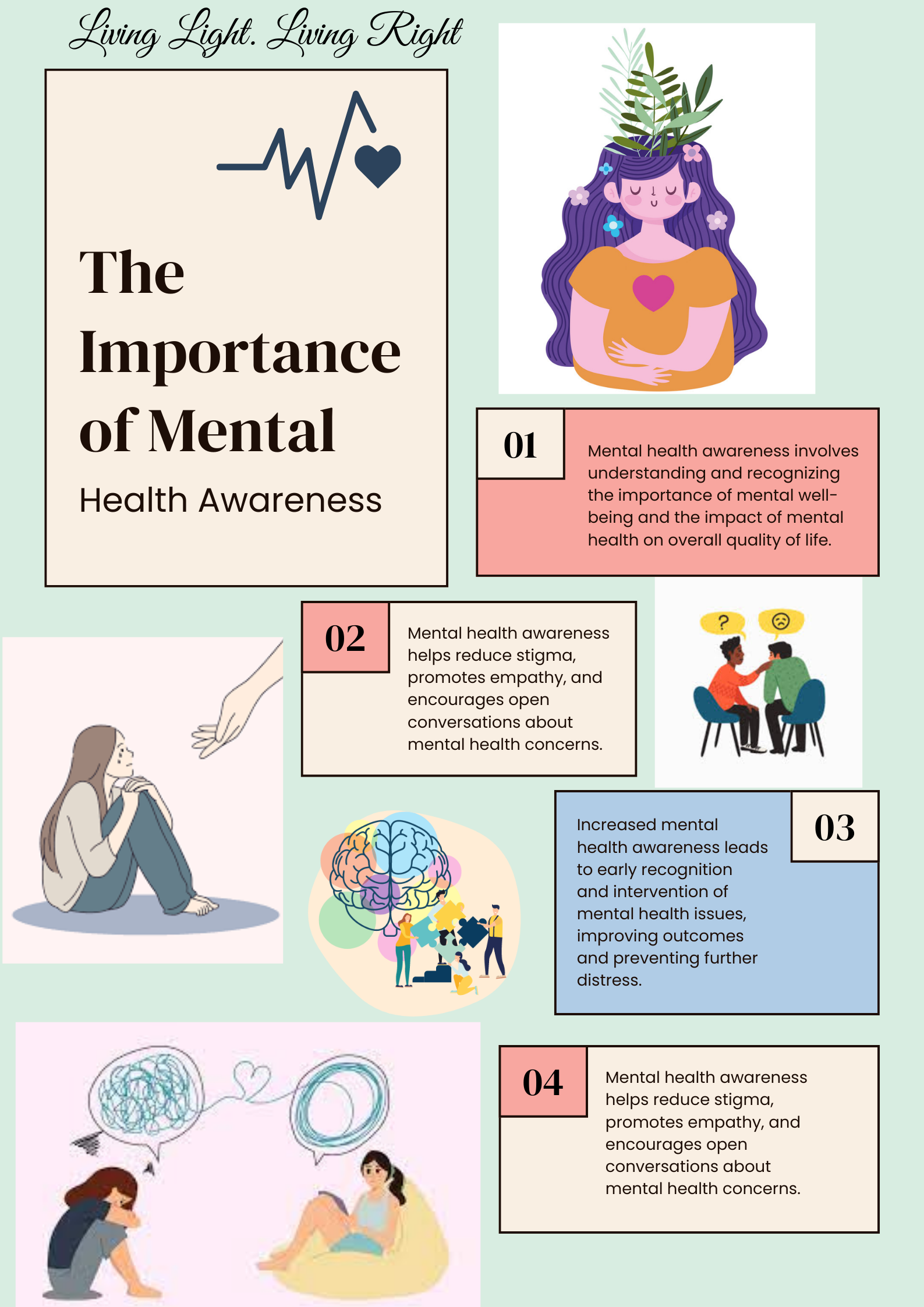
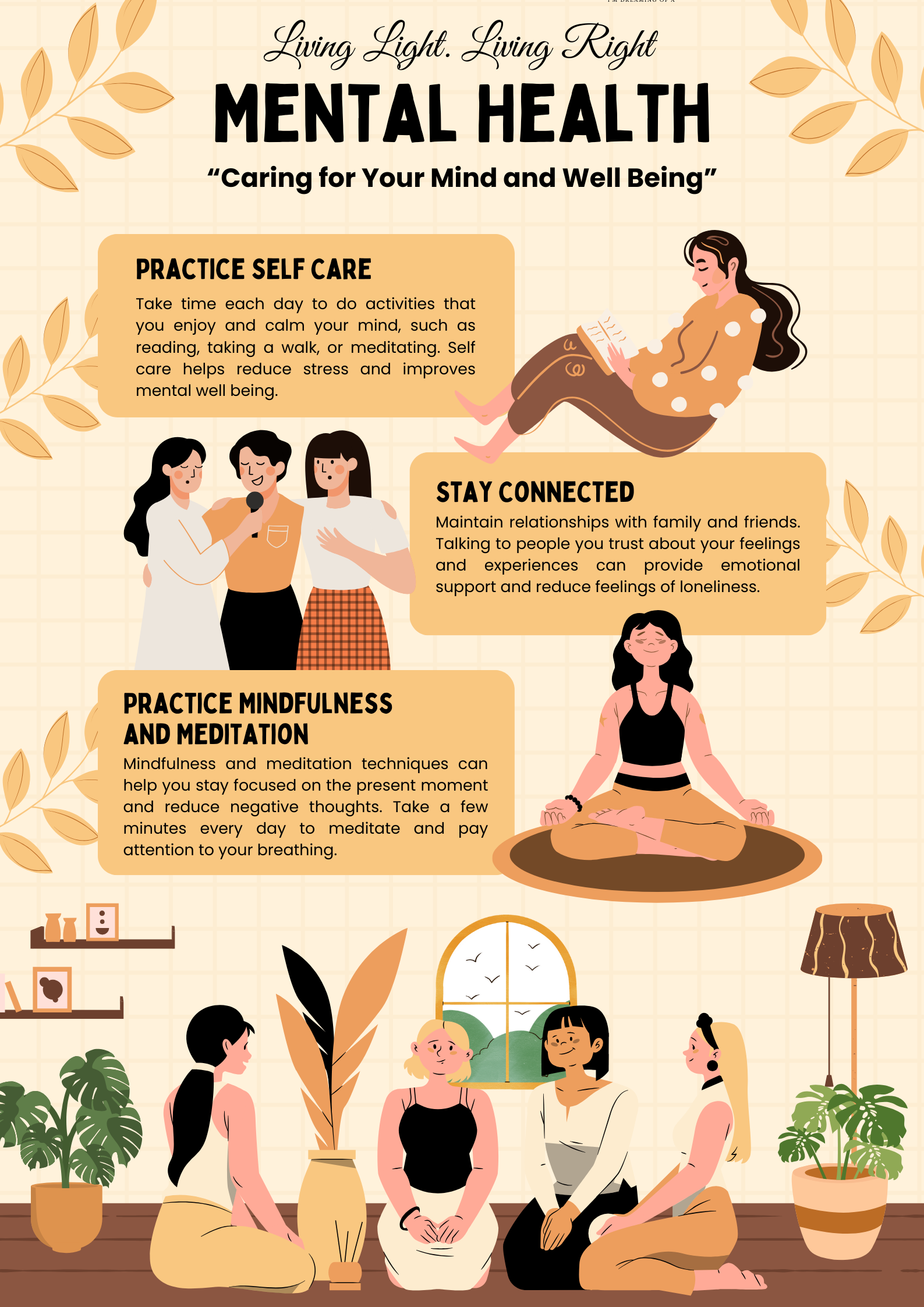
• Tools for creating advertising materials: graphic editors (Canva, Adobe Photoshop), video editors (Filmora, Adobe Premiere Pro), (see Appendix 2,3).
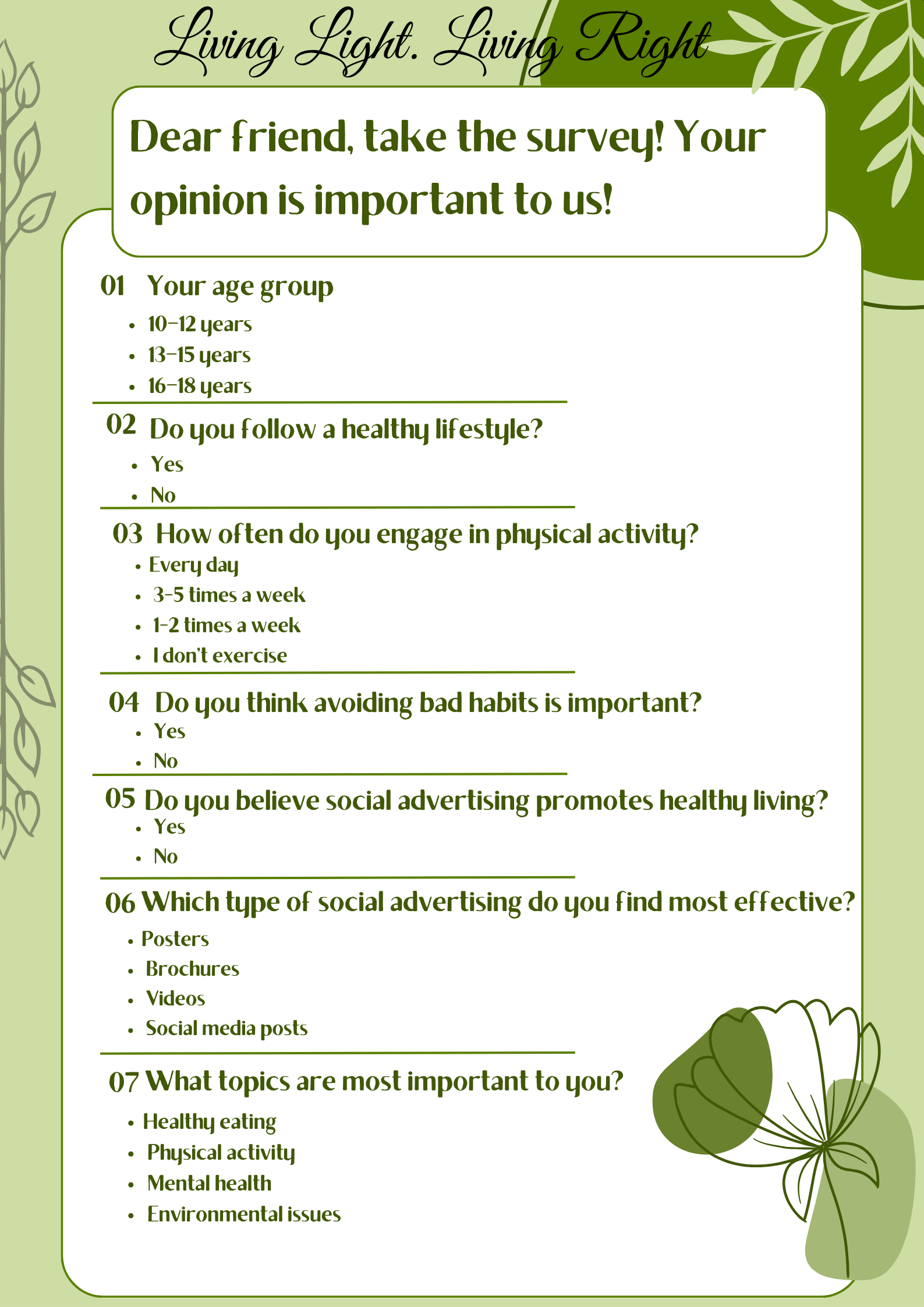
• Survey tools: questionnaires in paper and digital format (Google Forms), (see Appendix 1).
3.1.2 Research methods:
Analytical method:
• Study of successful examples of social advertising.
• Analysis of problems related to ecology, health and social justice.
Creative approach:
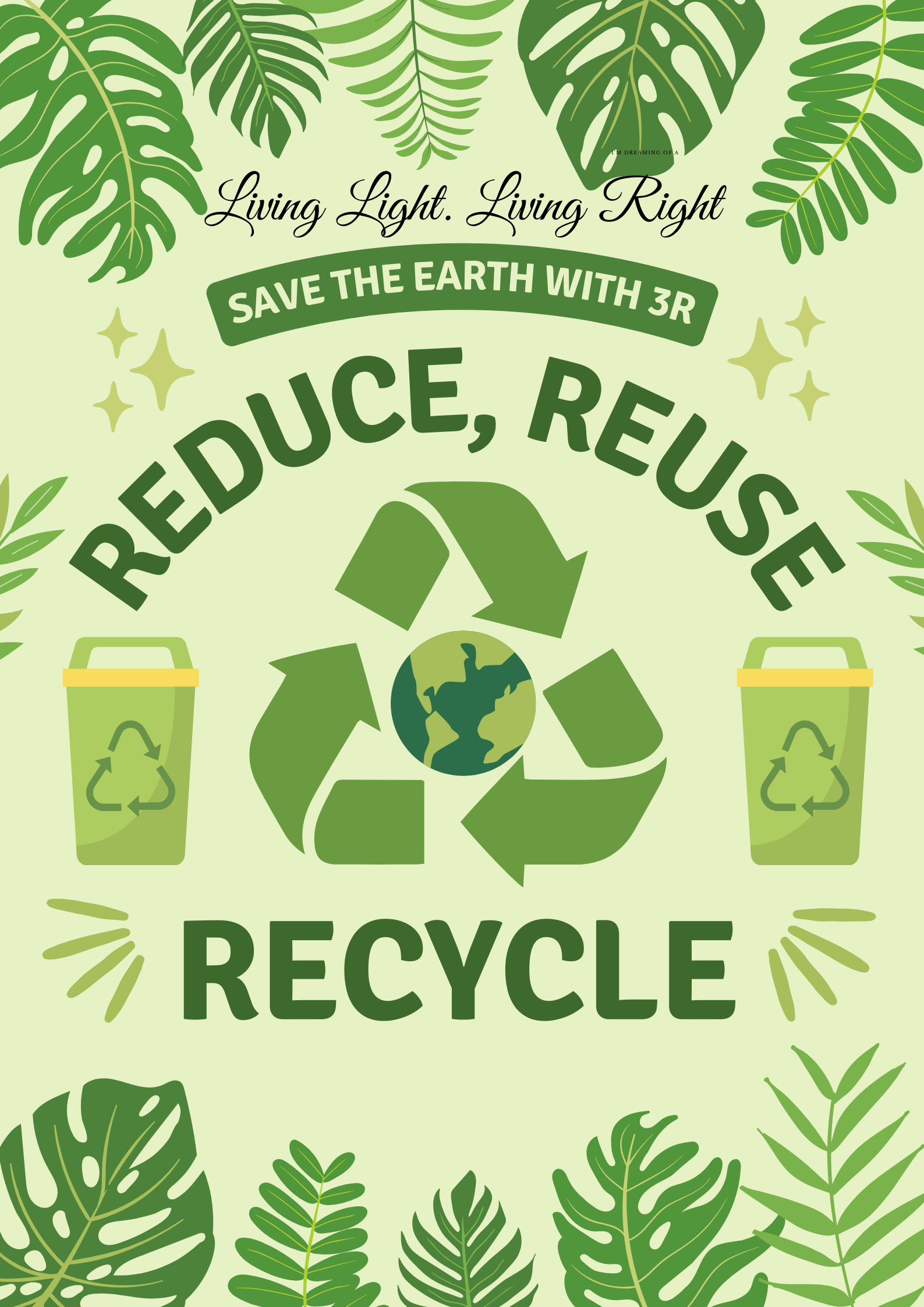
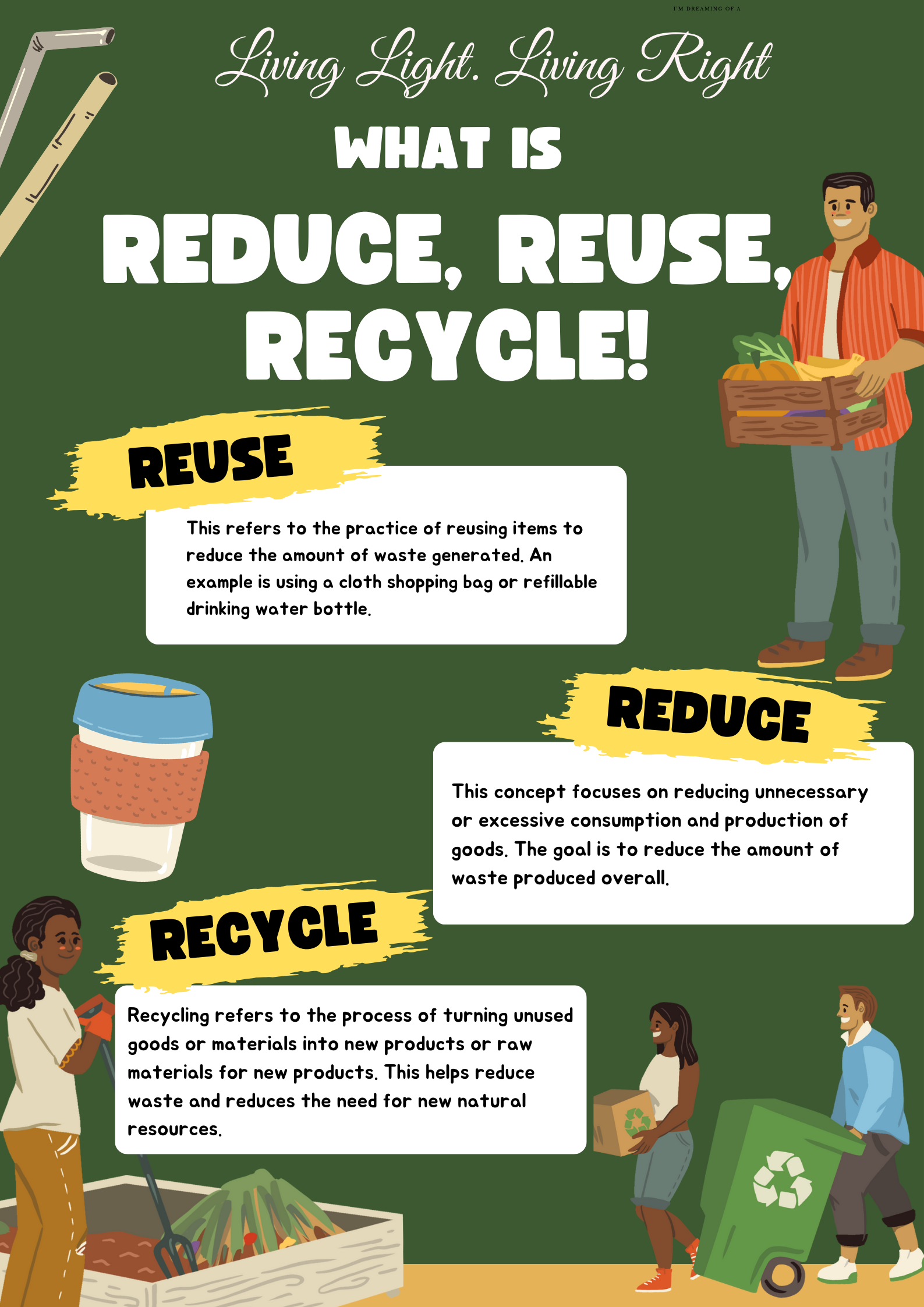
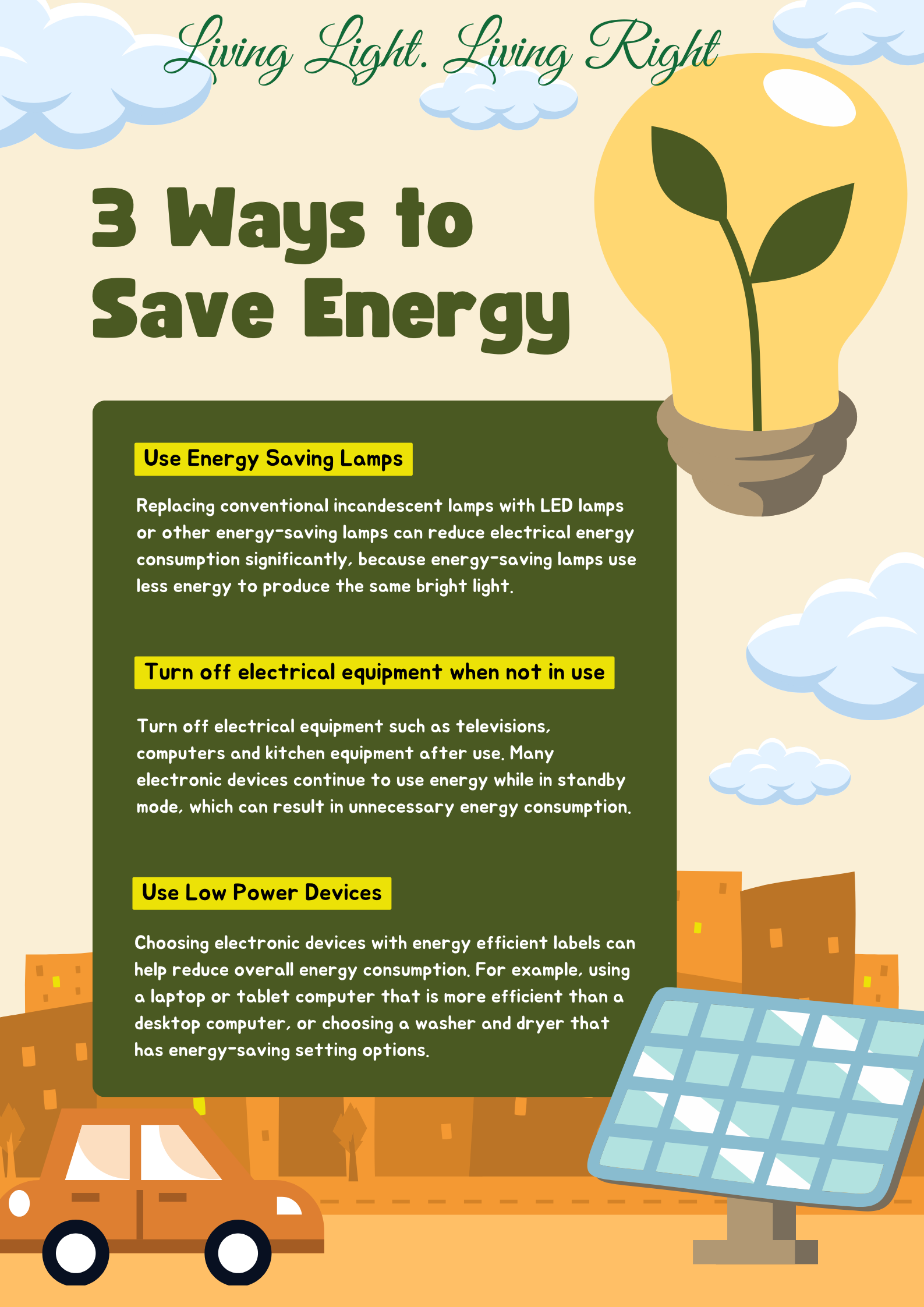
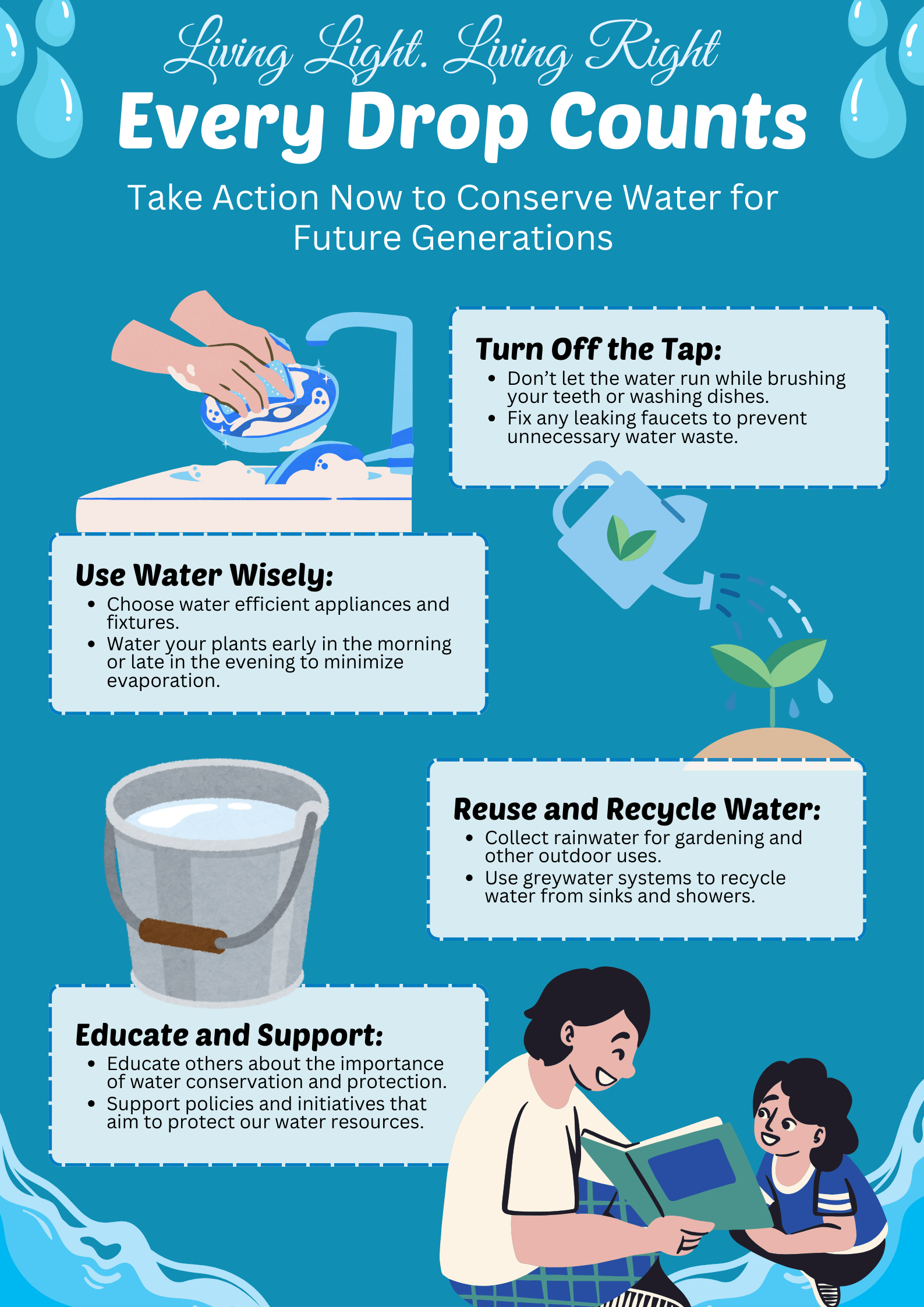
• Development of visual and text solutions for advertising materials (posters, brochures, videos).
Sociological method:
• Conducting surveys among schoolchildren to assess the level of awareness and preferences in the perception of social advertising.
Experimental method:
• Testing the created materials through demonstration in the school environment and social networks with subsequent collection of feedback.
Communicative method:
• Organizing discussions and presentations to increase audience involvement and receive recommendations for improvement.
3.2 Project implementation stages:
Stage 1: Preparatory
• Formulating the goal and objectives.
• Collecting information: studying literature, analyzing current problems.
• Formulating a team and distributing roles.
• Developing a work plan: deadlines and resources.
Stage 2: Research and creative
• Conducting a survey: collecting data and analysis.
• Selecting a topic and developing a concept for materials.
• Creating materials: designing posters, brochures, videos.
Stage 3: Testing and adaptation
• Demonstration of materials to the target audience.
• Collecting feedback.
• Adjusting the content.
Stage 4: Implementation
• Presentations at school: exhibitions, video screenings.
• Publication on social networks with thematic hashtags.
Stage 5: Evaluation and completion
• Repeated survey and analysis of effectiveness.
• Summarizing and presentation of results.
• Planning further steps for project development.
3.3 Results of the work and their discussion:
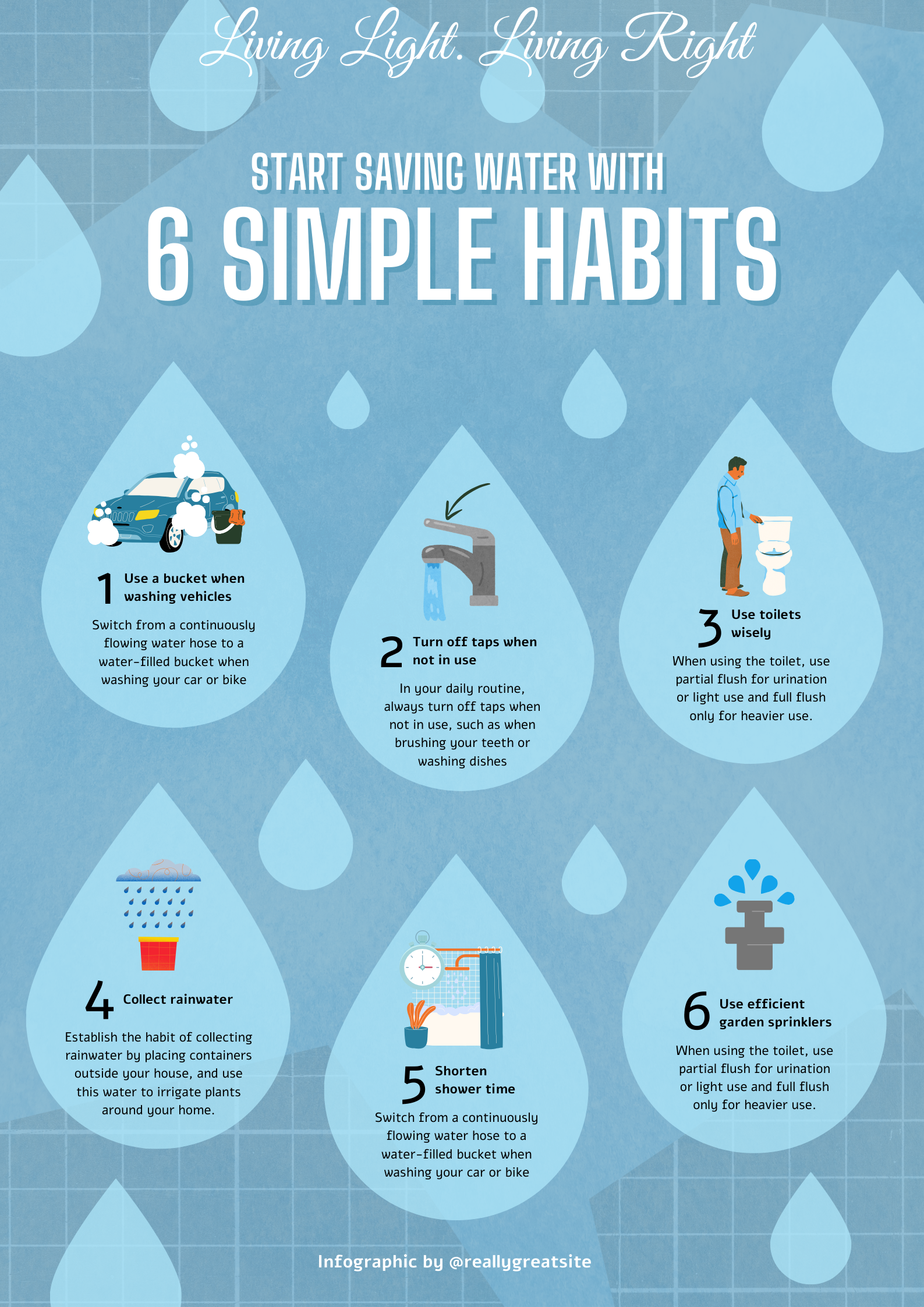
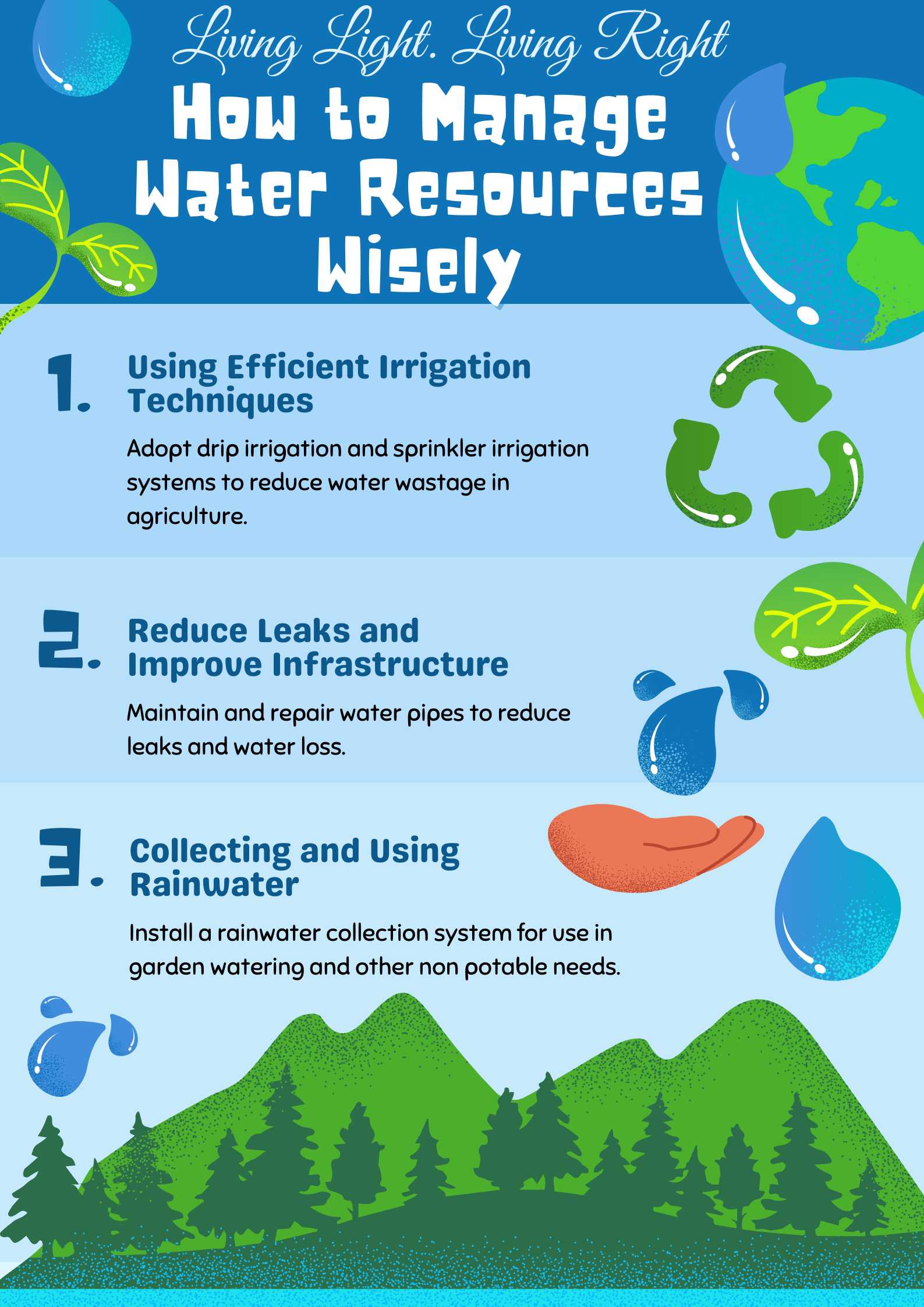
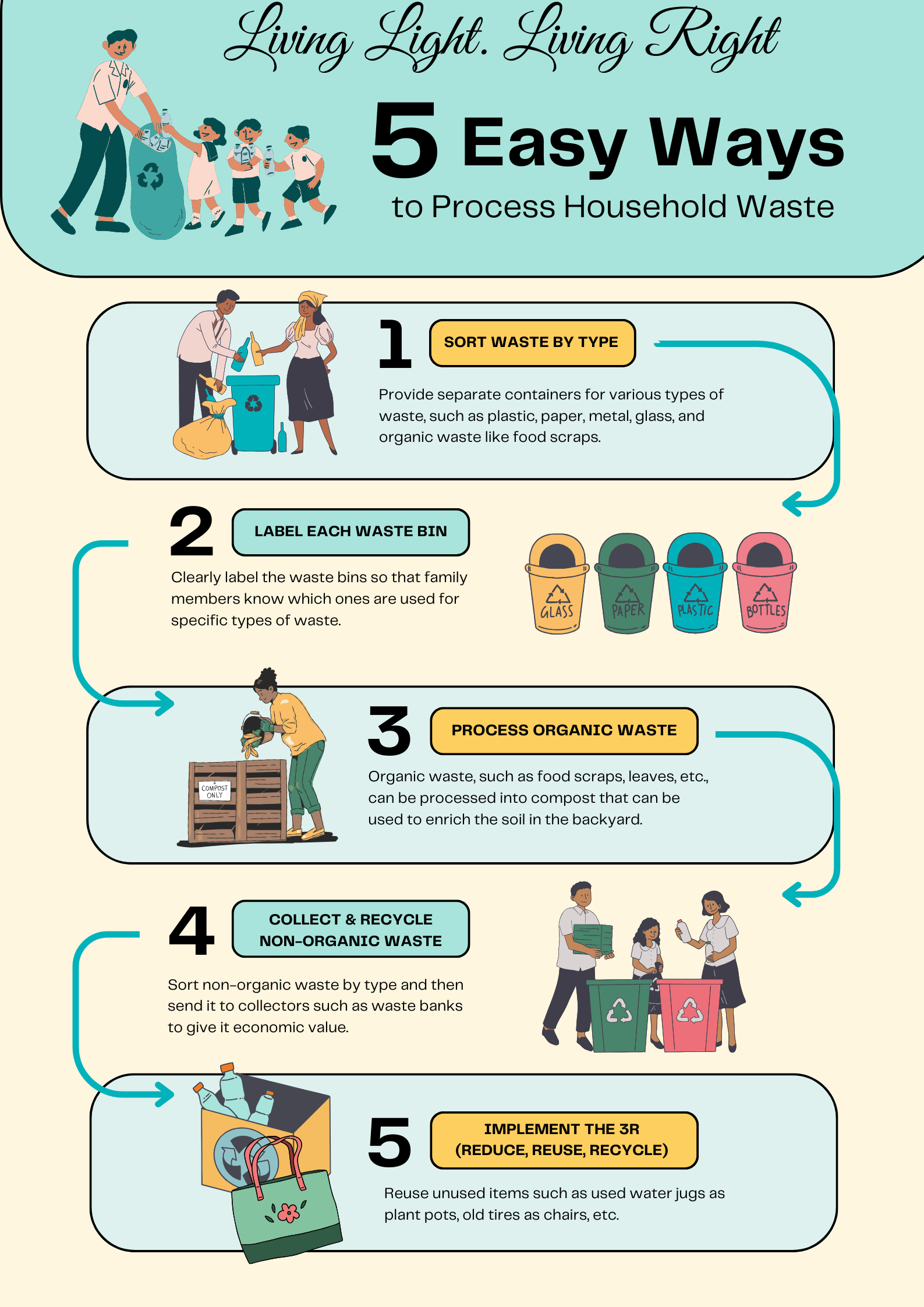
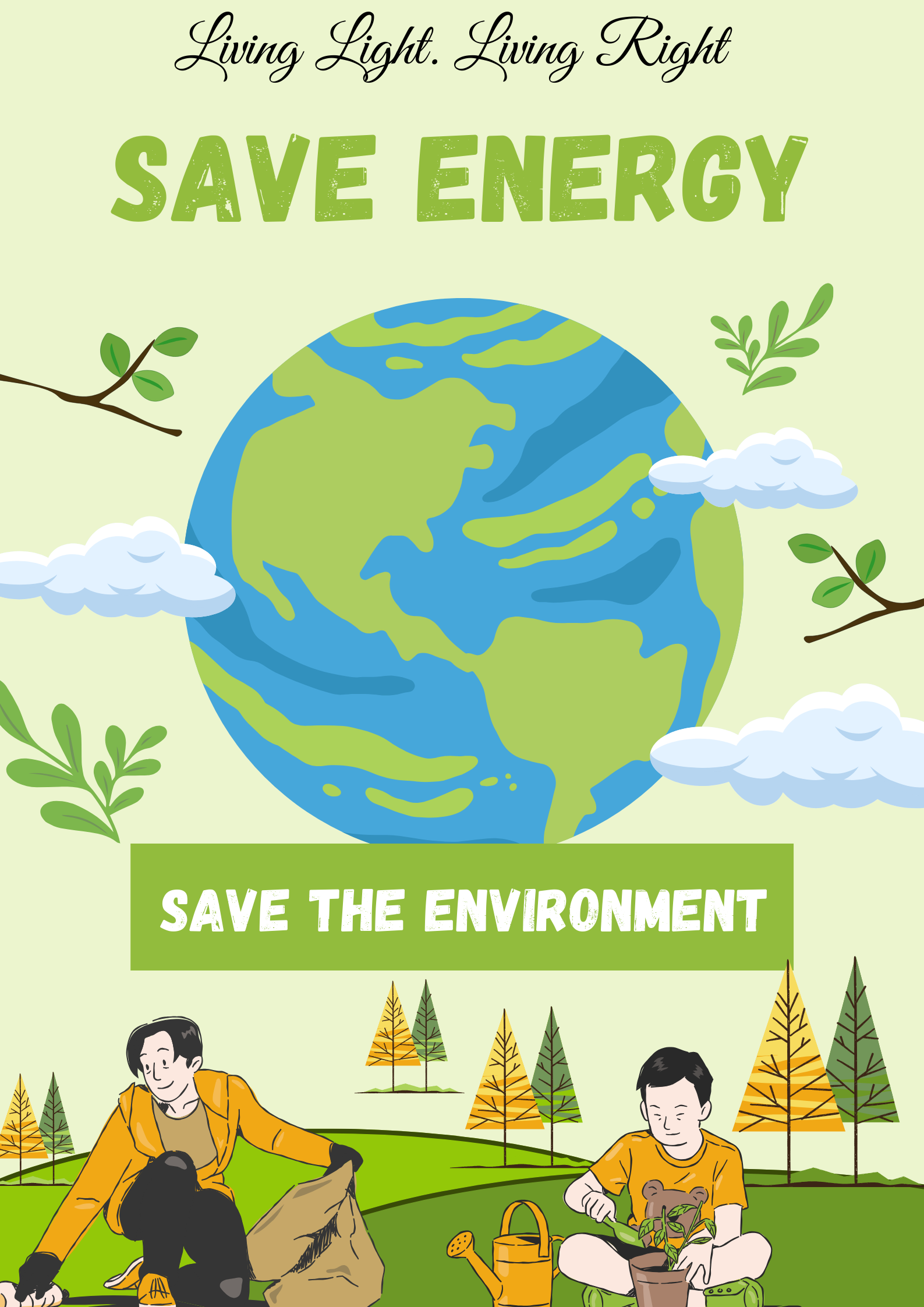
• Development of materials:
Results of the audience survey:
Students of two age groups took part in the survey: from grades 5 to 8 (74 people) and from grades 9 to 11 (157 people). The results presented below show differences in the perception of the topic of a healthy lifestyle, physical activity and the effectiveness of social advertising.
1. Commitment to a healthy lifestyle:
• In grades 5-8, about 65% of students stated that they adhere to a healthy lifestyle, which is about 48 students.
• In grades 9-11, this figure is significantly higher - 80% of students, or about 126 people, follow the principles of a healthy lifestyle.
2. Level of physical activity:
• In grades 5-8, about 40% of students engage in physical activity 3-5 times a week, which is about 30 students.
• In grades 9-11, this figure is higher — 60% of students (or 94 students) play sports regularly.
3. Effectiveness of social advertising:
• Grades 5-8 generally believe that the most effective format of social advertising is posters, which reflects an interest in visual and illustrative materials.
• Grades 9-11 prefer social networks as the main channel for perceiving social advertising, which corresponds to modern trends and the needs of young people.
3.4 Key topics of social advertising:
• In grades 5-8, the main emphasis in social advertising should be on healthy eating, since this topic is of interest to younger students.
• In grades 9-11, a more important topic is mental health, which is associated with the increasing concern of older students about their psycho-emotional state and stress.
3. 5 Conclusions:
• Healthy lifestyle: Older students are more aware and adhere to healthy habits than younger ones.
• Physical activity: In older classes, the level of physical activity is significantly higher, which is confirmed by regular sports activities.
• Social Advertising: Younger students prefer traditional visual forms of advertising, such as posters, while older students rely on social media to obtain information.
• Social Advertising Topics: Healthy eating is more important for younger students, while mental health is more important for older students.
3. 6 Recommendations for the social project:
• Develop social advertising campaigns taking into account the preferences of each age group.
• Include different formats in the materials: visual posters for younger students and active use of social media for older students.
• Focus on nutrition for younger students, and mental health and stress management for older students.
This analysis allows for a more effective approach to developing social advertising, focusing on the interests and needs of different age groups of schoolchildren.
4. Conclusion
The «Living Light. Living Right» Social advertisements project demonstrated that social advertising in English can be an effective tool for informing and engaging young people in solving global problems.
• Social advertising increases awareness of key societal issues.
• Using English helps to expand the audience and develop communication skills.
• The project created a basis for further use of materials in educational and social events.
The «Living Light. Living Right» Social advertisements project demonstrated that social advertising is an effective tool for raising awareness of schoolchildren and their environment about the importance of environmental issues, healthy lifestyles and social justice. The project participants were able to develop their intercultural communication and creative thinking skills by creating visually attractive and informative materials.
4.1 The implementation of the project showed:
• High interest of the target audience in the topics of ecology, health and equality.
• Effectiveness of using English for integration into the global discussion.
• The importance of creative formats (posters, brochures, videos) in the educational and social environment.
• The project achieved its goal by combining educational and social approaches, and laid the foundation for further initiatives aimed at developing awareness and active citizenship among young people.
4.2 Recommendations
Continue working on social advertising projects in schools.
Distribute materials through online platforms to increase reach.
5. List of used literature
-
Kotler, P., & Zaltman, G. (1971). Social Marketing: An Approach to
-
Planned Social Change. Journal of Marketing.
-
World Wildlife Fund (WWF) Campaign Materials.
-
United Nations Social Awareness Campaigns.
-
WHO Reports on Healthy Living Campaigns.
Appendix 1
Appendix 2



Appendix 3

12









 Бұл курс Қазақстан Республикасы Оқу-ағарту министрлігімен келісілген










