ЖИ көмекші


 Қауіпсіз төлем

жүктеу мүмкіндігіне ие боласыз
Бұл материал сайт қолданушысы жариялаған. Материалдың ішінде жазылған барлық ақпаратқа жауапкершілікті жариялаған қолданушы жауап береді. Ұстаз тілегі тек ақпаратты таратуға қолдау көрсетеді. Егер материал сіздің авторлық құқығыңызды бұзған болса немесе басқа да себептермен сайттан өшіру керек деп ойласаңыз осында жазыңыз
 07 Сәуір 2025
 451
451
1 жыл бойы шексіз жүктеңіз
My home, rooms and objects
Short term plan
|
Unit 7. Buildings |
Lesson 53 |
||
|
School: |
N72 |
||
|
Teacher’s name: |
Apzhapparova G.T |
||
|
Date: |
|
||
|
Grade: 3 |
Number present: |
absent: |
|
|
Lesson title |
My home, rooms and objects |
||
|
Learning objectives |
3.1.5.1.use contextual clues to predict content in short, supported talk on a limited range of familiar topics; 3.2.2.1 use isolated words and basic expressions to provide personal information; 3.3.3.2 find out the main points in short simple descriptions with visual support; 3.4.2.1. follow word order rules in short statements; 3.5.1.12 use basic adverbs of place here/there to say where things are. |
||
|
Lesson objectives (assessment criteria) |
Learners will be able to: -identifyparts ofahouse; -talkabout objectsin aroom; -usecontextualcluestopredictcontentinshort,supportedtalkonalimitedrangeoffamiliartopics; usethereis/areinalimitedrangeoffamiliartopics. |
||
|
Stages/ Time |
Teachers actions |
Students actions |
Assessment |
Resources |
|
Beginning of the lesson 5 min |
Organization moment : 1.Greeting. . (Whale class, Individually) Warm-up Teacher asks children what they can remember about the previous story. Ask if they can name all the parts of the body in the story (arms, nose, face and legs Lead – In Hold up flashcards 135-140 and ask What's this? Say the words in English for children to repeat. Hold up the real mask or picture you have brought in and repeat the question |
Greet the teacher and classmates. Introduce themselves in pairs. Teacher tells values of this month. The ability to value work, the results of one’s own and others’ work, the ability to assess the contribution of work results to the development of the country and society. |
Teacher controles the process, gives feedback and asks additional questions if it’s nessasery. Teacher evaluate pupils with phrases like: “Good job! Well done!” Formative Assessment |
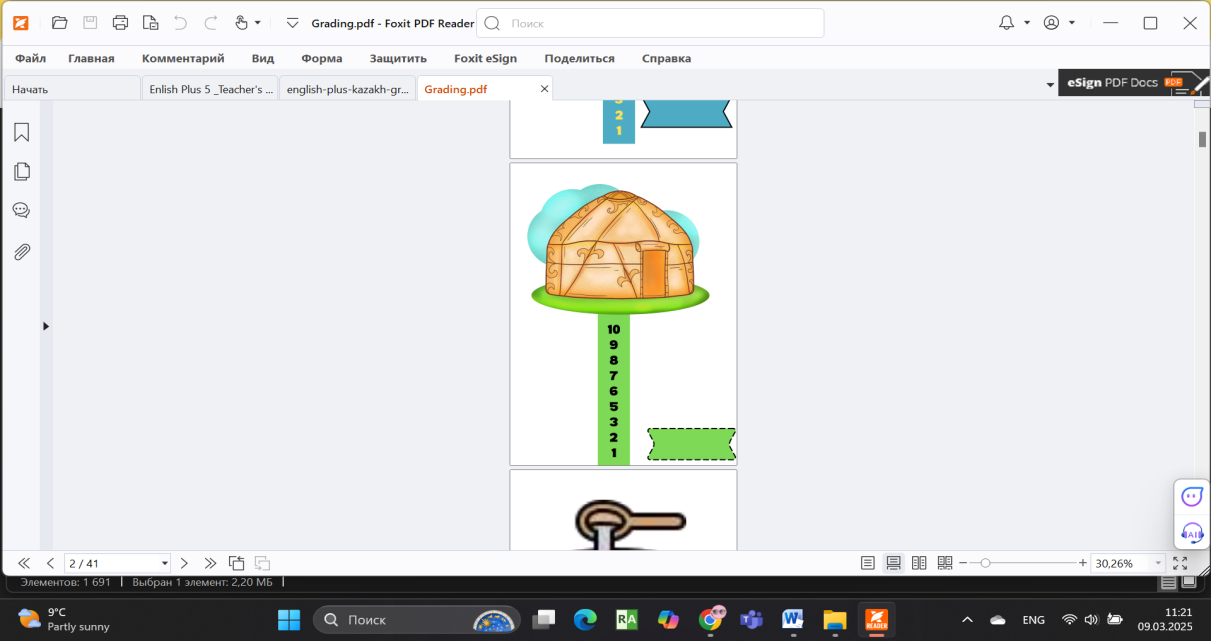
Assessment sheet Kazakh yurt
|
|
Middle of the lesson Presentation part. 35 min |
Task. I Ex:1 P:81 Teacher play the audio twice,pausingaftereachword.Then allow the pupilssome time to look at thepicture andanswerthequestion.Checktheiranswers. |
Learners listen andpoint to the parts of thehouse, chorally and/orindividually. Thepupilsanswer:Therearefiveroomsandagarden. |
T’s feedback Descriptor: - discuss the pictures with support-2 - listen and point-1 Point 3 |
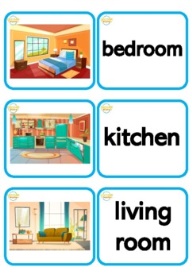
flashcards
|
|
|
Task. II Ex: 2 P: 81 Teacher asks children point to the pictures, oneat a time, and present thethingsinsideahouse. Ask individual pupils toname the items. Ask therest of the class forverification. Pointtothebed,sayandwrite: There’s a bed inthe bedroom. Remind thepupilstheuseofthereis. |
Learners repeatand/orindividually. The pupils look at thehouseinEx.1againandmakesimilarsentences |
Self -assessment Descriptor: - listen to the chant-1 - repeat the words-2 Point 3
|
https://wordwall.net/ru/resource/9234218 |
|
|
Task. III Ex: 3 P: 81 Referthepupilstothepictures and elicit thepartsofthehouse. Explain to the pupils thattheywill listen tothe sounds and numberthe pictures. Play theaudio,twiceifnecessary.Check the pupils’answers. Point to pictureA andask: Where isCody?Elicit:He’sin the kitchen. Follow thesame procedure for theremainingpictures. Asksomepairstoreportbackto theclass. |
The pupils listen andcompletetheactivity. Thepupilsrepeatafteryou. Suggestedanswerkey:Pupil 1: Where isCarlos? Pupil 2: He’s in thebathroom.WhereisTara? Pupil 1: She’s in thehall. |
Descriptor: -numberthe pictures -2 - listen and point-1 Point-3
Total points 10 |
Worksheet
|
|
|
|
|||
|
End of the lesson 5 min |
Briefly ask students what they learned today (greetings, names of characters, introducing themselves). Ex: P: Home task: |
Ss evaluate each other and encourage classmate with phrases like: Well done! Brilliant! Good job! I like it! |
The teacher to assess learners for their ability. “Good job! Well done!” |
Poster Success
|



Short term plan
|
Unit 7. Buildings |
Lesson 54 |
||
|
School: |
|
||
|
Teacher’s name: |
|
||
|
Date: |
|
||
|
Grade: 3 |
Number present: |
absent: |
|
|
Lesson title |
Thingsin a room |
||
|
Learning objectives |
3.1.5.1.use contextual clues to predict content in short, supported talk on a limited range of familiar topics; 3.2.3.1 respond to basic questions with single words or short responses; 3.3.4.1 find specific information in different types of texts (postcards, posters, flyers, messages, and notices: places, time, and prices); 3.4.2.2 use words and short simple phrases to complete a written text at a sentence level; 3.5.1.7 use demonstrative pronouns this, these, that, and those to indicate things in closed questions with support. |
||
|
Lesson objectives (assessment criteria) |
Learners will be able to: -identifythings insideahouse; -saywhat thereisin myroom; -recognizefamiliarwords withvisualsupport; -useinterrogativepronounsto askbasicquestions; usedemonstrativepronounstoindicatethingsinclosedquestionswithsupport |
||
|
Stages/ Time |
Teachers actions |
Students actions |
Assessment |
Resources |
|
Beginning of the lesson 5 min |
Organization moment : 1.Greeting. . (Whale class, Individually) Warm-up Teacher play What's missing? (see Teacher's Book page 88) using flashcards 135-140. Lead – In Point to Story poster 7. Ask what happened in the story. Cover the poster. Ask which party objects were in the story. 1 Listen to the story again and repeat. Act. |
Greet the teacher and classmates. Introduce themselves in pairs.
Teacher tells values of this month. The ability to treat the results of other people's work with care. |
Teacher controles the process, gives feedback and asks additional questions if it’s nessasery. Teacher evaluate pupils with phrases like: “Good job! Well done!” Formative Assessment |
Assessment sheet Kazakh yurt
|
|
Middle of the lesson Presentation part. 35 min |
Task. I Ex:1 P:82 Teacher play the audio twice,pausing after each word.Time permitting, askindividualpupilstopointto and say the thingsinside the house. Ask thepupils what things therearein theirroom. |
Learners listen andpoint to the thingsinsidethehouse.Thepupils repeattheitems,chorally and/orindividually. Suggested answer keyIn my room there is abedandawardrobe. Thereis a desk, a chair and alamp,too! |
Descriptor: - discuss the party objects with support-3 - listen and point-2 Point 5 |
flashcards
|
|
|
Task. II Ex: 2 P: 82 Teacher explain the activity.Tell them to use thecolors indicated by thedots.Checkthepupils’answers.Pointtothefirstitemandask,asyouwrite on the board:What’s this? Underlinethe word in bold. Elicit:It’sayellowcupboard.Thenpointtotheclocksandask,asyouwriteonthe board: What arethese? Underline theword in bold. Elicit:They’reblueclocks. Focus the pupils’attention on this andtheseandelicittheiruse. |
Learners look at thedesigns and color inthe areas with a dot torevealthepictures. Answerkey: A:What’sthis? B:It’saredcupboard.A:Whatarethese? B:They’regreenlamps. |
Self -assessment Descriptor: - use thecolors-2 - color inthe areas 3 Point 5
|
|
|
|
|
|||
|
End of the lesson 5 min |
Briefly ask students what they learned today (greetings, names of characters, introducing themselves). Ex: P: Home task: |
Ss evaluate each other and encourage classmate with phrases like: Well done! Brilliant! Good job! I like it! |
The teacher to assess learners for their ability. “Good job! Well done!” |
Poster Success
|
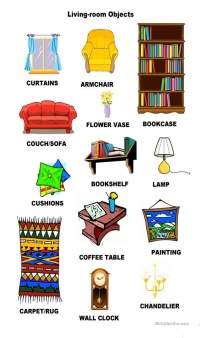
Short term plan
|
Unit 7. Buildings |
Lesson 55 |
||
|
School: |
|
||
|
Teacher’s name: |
|
||
|
Date: |
|
||
|
Grade: 3 |
Number present: |
absent: |
|
|
Lesson title |
Locationofthings. Useof English:plurals. |
||
|
Learning objectives |
3.1.4.2 understand simple descriptions of people, actions, and objects with visual support; 3.2.2.1 use isolated words and basic expressions to provide personal information; 3.3.3.2 find out the main points in short simple descriptions with visual support; 3.4.1.1 spell accurately a few high-frequency words; 3.5.1.3 use cardinal numbers 1-10; 11 - 20; 21 – 100. |
||
|
Lesson objectives (assessment criteria) |
Learners will be able to: - talkaboutlocation; -findoutthemainpointsinshortsimpledescriptionswithvisualsupport; -spell accuratelyafew high-frequencywords; -usesingularand pluralnouns; usethebasicadverb theretosaywherethingsare. |
||
|
Stages/ Time |
Teachers actions |
Students actions |
Assessment |
Resources |
|
Beginning of the lesson 5 min |
Organization moment : 1.Greeting. . (Whale class, Individually) Warm-up Teacher play Jump (see Teacher's Book page 88) using the family words. Draw a picture of a home on the board. Talk about children's homes. Ask Where do you live? Who lives with you? Lead – In PlayWhichoneismissing? with the class.Write the things inside ahouse on the board. Let thepupils look at them for oneminute before closing theireyes. Erase a word. Askthemtoopen theireyes. Ask a pupil to tell youwhich word is missing.Repeat the activity asmany times as you think isnecessary. |
Greet the teacher and classmates. Introduce themselves in pairs.
Teacher tells values of this month. The ability to effectively plan your time and invest efforts to achieve and improve the results of any activity. |
Teacher controles the process, gives feedback and asks additional questions if it’s nessasery. Teacher evaluate pupils with phrases like: “Good job! Well done!” Formative Assessment |
Assessment sheet Kazakh yurt
|
|
Middle of the lesson Presentation part. 35 min |
Task. I Ex:1 P: 83 Teacher asks children books open. Go throughthe Grammar box briefly.Read the instructions andexplain the activity. Readthe example aloud. Allowthe pupils some time tocompletetheactivity. |
Learners complete theactivity with newgrammartheme |
Descriptor: - read the instructions -2 -complete theactivity -3 Point 5 |
flashcards |
|
|
Task. II Ex: 2 P: 83 Teacher ask children to read the example andexplain the game. Explainthe meaning of over there(somewhere a shortdistance away from you).You can also teach overhere (near you). Refer thepupils to the picture andelicit the names of theitems. Focus the pupils’attention on theprepositions in, on andunder. Divide the classintotwo teams,AandB. |
Learners take turnsasking and answeringquestions about thelocation of thecorresponding items inthepicture.Eachcorrectanswer gets a point. Theteam with the mostpointswinsthegame. Suggested answer keyTeamAPupil1:Whereismylamp? TeamBPupil1:It’soverthere. TeamAPupil1:Where? TeamBPupil1:Inthecupboard! |
Self -assessment Descriptor: - read the example- 2 - write a or b-3 Point 5
|
|
|
|
|
|||
|
End of the lesson 5 min |
Briefly ask students what they learned today (greetings, names of characters, introducing themselves). Ex: P: Home task: |
Ss evaluate each other and encourage classmate with phrases like: Well done! Brilliant! Good job! I like it! |
The teacher to assess learners for their ability. “Good job! Well done!” |
Poster Success
|









 Бұл курс Қазақстан Республикасы Оқу-ағарту министрлігімен келісілген