ЖИ көмекші


 Қауіпсіз төлем

жүктеу мүмкіндігіне ие боласыз
Бұл материал сайт қолданушысы жариялаған. Материалдың ішінде жазылған барлық ақпаратқа жауапкершілікті жариялаған қолданушы жауап береді. Ұстаз тілегі тек ақпаратты таратуға қолдау көрсетеді. Егер материал сіздің авторлық құқығыңызды бұзған болса немесе басқа да себептермен сайттан өшіру керек деп ойласаңыз осында жазыңыз
 24 Шілде 2025
 131
131
1 жыл бойы шексіз жүктеңіз
My music
|
LESSON: Module 5 Art and Music. My music |
School: №11 |
||||
|
|
|||||
|
Date: 23.01.2019 |
Teacher name: Bolatbergenova B. T |
||||
|
CLASS: 3 “A” |
Number present: |
absent: |
|||
|
Learning objectives(s) that this lesson is contributing to |
3.2.6.1- take turns when speaking with others in a limited range of short, basic exchanges 3.2.5.1- pronounce familiar words and short phrases intelligibly when reading aloud 3.1.7.1- use contextual clues to predict content in short, supported talk on a limited range of general and some curricular topics 3.1.5.1- distinguish between phonemically distinct words 3.4.3.1- write short phrases to identify people, places and objects 3.2.1.1- make basic statements which provide personal information on a limited range of general topics 3.4.2.1- write words and phrases of regular size and shape 3.2.6.1- take turns when speaking with others in a limited range of short, basic exchanges 3.2.2.1- ask questions to find out about present experiences on a limited range of general and some curricular topics 3.2.6.1- take turns when speaking with others in a limited range of short, basic exchanges 3.5.8.1- use imperative forms [positive and negative] to give short instructions on limited range of familiar topics 3.4.1.1- plan, write and check short sentences with considerable support on a limited range of personal, general and some curricular topics |
||||
|
Aims |
To explore other subject areas (Music); to distinguish different types of musical instruments and the sounds they make; to talk about their favourite type of music. |
||||
|
Previous learning |
Structures: have to, adverbs of manner • Language in use: I don’t play the piano. When you play the ... , you have to ... it. I like pop music. Me, too. |
||||
|
Cross-curricular links |
Music (Ex-s 26, 27) |
||||
|
ICT skills |
Using videos& pictures, working with URLs |
||||
|
Plan |
|||||
|
Planned timings |
Planned activities |
Smiles Resources |
Teacher Notes |
||
|
Beginning the lesson |
Organization moment Good morning, dear pupils! Take your seats. Who is on duty today? Is anybody absent today?
What date is it
today? What was your home task for today? (Activities to revise the language of the previous lesson.) |
|
|
||
|
3.2.6.1 3.2.5.1 3.1.7.1 |
to correctly write the English dictionary. Play the video from the previous lesson.
|
Video |
|
||
|
PRESENTATION AND PRACTICE 3.1.5.1 3.4.3.1 3.2.1.1 3.4.2.1 3.2.6.1 3.2.2.1 3.2.6.1 3.5.8.1 |
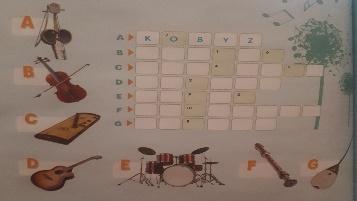
Step 1 (Activities to present and practise musical instruments.) Listen and number. Ex 26
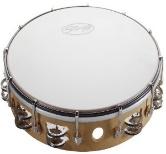
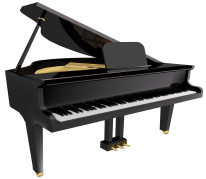
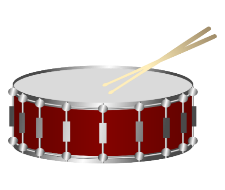
Pupils’ books open. Explain the activity. The pupils listen to the sounds from various instruments, identify them and number the pictures. Play the CD, twice if necessary. The pupils listen and complete the activity. Check the pupils’ answers. 3 2 1
5 4
6
7
|
(Track 58 CD1) POSTER Pupils book 74 |
|
||
|
Step 2 Work in group. Solve the crossword» Instruction: - Look at the numbers on the pictures - Write the musical instruments vocabulary in the crossword puzzle - Take the keys - Check your work in group
Step 3 Which of these instruments do you play (very) well? badly? not at all? Read the example and explain the adverbs of manner. Then the pupils make sentences as in the example.
|
|
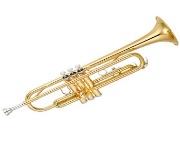
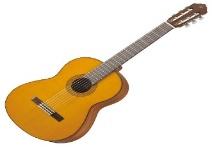
Suggested answer key I play the piano really well. I play the guitar badly. I don’t play the trumpet at all. |
|||
|
Step 4 Read the text We hear music everywhere: in the streets and at home, over the radio and on TV, in the shops and in the parks. People all over the world are fond of music. They listen to music, they dance to music, they learn to play musical instruments. There are a lot of different kinds of music. Some of them appeared long ago, some are quite modern. For example, classical music is often associated with the music of the past and rap is considered to be a modern music style.
Step 5 Match then say. Ex 29 Refer the pupils to the picture. Say as you mime: blow into a recorder. Ther pupils repeat after you. Follow the same procedure for the rest of the verbs. Allow the pupils to match the words to the corresponding pictures, . Check their answers: Answer key: 1 d 2 a 3 , 4 c Explain the pupils that we use have to to show that we must do something. Say: When you play the recorder, you have to blow into it. ask pupils to repeat the same for other musical instruments. Suggested answer key: When you play the tambourine, you have to shake it. When you play the drum, you have to strike it. When you play the guitar , you have to pluck it. Step 6 Talk with you friends. Ex. 30 The pupils complete the activity in pairs. Go around the class monitoring pupils. Suggested answers: A: I like classical music. B: Me too. I don’t like hip hop. |
Pupils book 75
Pupils book 75 |
Explain to the pupils that we use have to to show that we must do something. Say: When you play the recorder, you have to blow into it. Ask pupils to repeat the same for the other musical instruments. |
|||
|
Ending the lesson 3.1.7.1 3.4.1.1 |
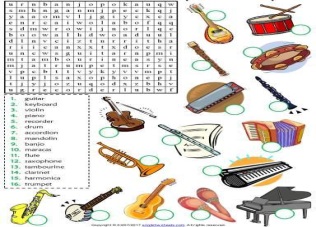
(An activity to consolidate the topic of the lesson.) «Word search» Instruction: - Look for the words written under “The word search” - Read the words - Find and circle names of musical instruments in “The word search” - Take the keys - Check your work in group
|
|
Task “Word search” |
||
|
Reflection |
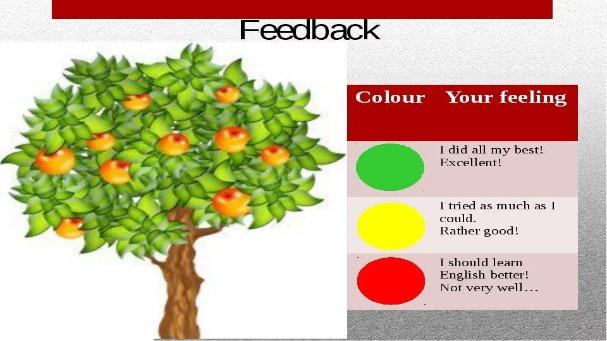
Activity 8 “Task for reflection” Instruction: - Take a green and red leaves - Look at the blackboardс - Come to the board - Stick green leaf on the tree if our lesson was good and all was clear - Stick red leaf if you didn’t like our work and you didn’t understand theme
|
|
Pictures “The tree of success” |
||
|
Additional information |
|||||
|
Differentiation – how do you plan to give more support? How do you plan to challenge the more able learners? |
Assessment – how are you planning to check learners’ learning? |
Cross-curricular links Health and safety check ICT links Values links |
|||
|
• support weaker learners with further modelling and drilling in |
• check pronunciation of new language through group and |
• cross curricular links: Music |
|||
|
their pairs • stronger learners who complete activities quickly should spell new words aloud for others to copy in their notebooks |
individual drilling • check comprehension of listening and reading text through follow-up questions |
|
|||










 Бұл курс Қазақстан Республикасы Оқу-ағарту министрлігімен келісілген