Short term plan
|
Unit: 3. People I love. |
Lesson 22 |
||
|
School: |
Bozshakulskaya OOSH |
||
|
Teacher’s name: |
Tumuruu Prizat |
||
|
Date: |
|
||
|
Grade: 3 |
Number present: 3 |
absent:0 |
|
|
Lesson title |
People’s feelings |
||
|
Learning objectives |
3.1.4.2 understand simple descriptions of people, actions, and objects with visual support 3.2.3.1 respond to basic questions with single words or short responses 3.3.2.1 identify some familiar words and signs on illustrations /pictures in common everyday situations |
||
|
Lesson objectives (assessment criteria) |
Learners will be able to: - Listening: identify people from descriptions of how they feel - Speaking: ask and answer questions about how people feel |
||
|
Values and its purpose: |
Justice and Responsibility Do important tasks for others understand the need and importance |
||
|
Stages/ Time |
Teachers actions |
Students actions |
Assessment |
Resources |
|
Beginning of the lesson 5 min |
Organization moment : 1.Greeting. . (Whale class, Individually) Warm-up Call out an emotion from the unit for children to mime. Repeat with several different emotions. Then ask different children to take it in turns to call out the emotions. Lead – In Ask children what they remember about the poem from the previous lesson. Ask How does the girl feel? What does she do when she's happy/sad? Encourage them to recite any parts of the poem they can remember and let them check on Pupil's Book page 24. Ask children to look at the pictures in Exercise 1 and tell you how the children feel in each one. Ask them to predict what they might hear in the listening exercise |
Learners respond to individual questions with their names and ages. Students listen attentively to the introduction of the new question and answer format. Students practice asking and answering "Where are you from?" in pairs. |
Teacher controles the process, gives feedback and asks additional questions if it’s nessasery. Teacher evaluate pupils with phrases like: “Good job! Well done!” Formative Assessment |

|
|
Middle of the lesson Presentation part. 35 min |
Task. I Ex:1 P:22 Ask children what they remember about the poem from the previous lesson. Ask How does the girl feel? What does she do when she's happy/sad? Encourage them to recite any parts of the poem they can remember and let them check on Pupil's Book page 24. Ask children to look at the pictures in Exercise 1 and tell you how the children feel in each one. Ask them to predict what they might hear in the listening exercise
|
Learners listen to the recording and point to pictures. Students find the picture matching the first description. ANSWERS (top row) 4, 1,3 (bottom row) 5,2 Transcript My name's George. 1 I'm very happy today. I've got a big smile. These are my five best friends: 2 This is Kate. She's sad today. Her bag is broken. Poor Kate. 3 This is Angela. She hasn't got her coat today. She's cold. Poor Angela. 4 This boy is James. James is nervous. Go on, James! Be brave! 5 And this girl is Lucy. She's very tired today. Wake up, Lucy! |
T’s feedback

Descriptor: -describe the pictures. - correct the pictures
|
Feelings flshcards
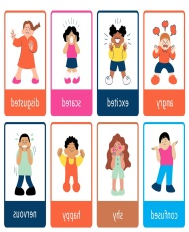
Worksheet
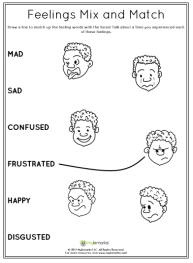
|
|
|
Task II Ex: 2 P: 22 Read the speech bubble with children (Look. He's happy.). Ask which picture it refers to (picture 1, in the middle of the top row). Point to the picture of the girl in the pink top in the top row and ask for a volunteer to make a sentence about how she is feeling (She's cold.). Ask children to work in pairs. They take it in turns to point to the pictures in Exercise 1 and make a sentence to describe how the boy or girl is feeling, using the word pool to help them.
|
Learners participate in reading and identifying the picture in the speech bubble activity. Students work in pairs describing feelings in pictures using the word bank.
|
T’s feedback Descriptor: -speech bubbles with sentences -complete the sentence about Katie's origin |
|
|
|
Task. III Ex:3 P:22 Look at the pictures in exercise 1. Ask and answer. Point to a picture and ask "Is he/she (scared)?" Elicit the answer from a student. Have students work in pairs, taking turns choosing a picture, asking a quest |
Learners participate in asking and answering questions about emotions in pictures. |
Self -assessment Descriptor: - look at the pictures -ask and answer the questions |
|
|
End of the lesson 5 min |
VAK feedback. VAK- Visual, auditory, kinesthetic. What have you learnt with your eyes this lesson? What have you learnt with your ears? What have you learnt with your body? Ex: P: Home task: |
Come back to the lesson objectives and summarize with students if they met the lesson objectives. Ss give the VAK feedback. |
Poster Success

|

|
жүктеу мүмкіндігіне ие боласыз
Бұл материал сайт қолданушысы жариялаған. Материалдың ішінде жазылған барлық ақпаратқа жауапкершілікті жариялаған қолданушы жауап береді. Ұстаз тілегі тек ақпаратты таратуға қолдау көрсетеді. Егер материал сіздің авторлық құқығыңызды бұзған болса немесе басқа да себептермен сайттан өшіру керек деп ойласаңыз осында жазыңыз
People’s feelings 3-сынып
Short term plan
|
Unit: 3. People I love. |
Lesson 22 |
||
|
School: |
Bozshakulskaya OOSH |
||
|
Teacher’s name: |
Tumuruu Prizat |
||
|
Date: |
|
||
|
Grade: 3 |
Number present: 3 |
absent:0 |
|
|
Lesson title |
People’s feelings |
||
|
Learning objectives |
3.1.4.2 understand simple descriptions of people, actions, and objects with visual support 3.2.3.1 respond to basic questions with single words or short responses 3.3.2.1 identify some familiar words and signs on illustrations /pictures in common everyday situations |
||
|
Lesson objectives (assessment criteria) |
Learners will be able to: - Listening: identify people from descriptions of how they feel - Speaking: ask and answer questions about how people feel |
||
|
Values and its purpose: |
Justice and Responsibility Do important tasks for others understand the need and importance |
||
|
Stages/ Time |
Teachers actions |
Students actions |
Assessment |
Resources |
|
Beginning of the lesson 5 min |
Organization moment : 1.Greeting. . (Whale class, Individually) Warm-up Call out an emotion from the unit for children to mime. Repeat with several different emotions. Then ask different children to take it in turns to call out the emotions. Lead – In Ask children what they remember about the poem from the previous lesson. Ask How does the girl feel? What does she do when she's happy/sad? Encourage them to recite any parts of the poem they can remember and let them check on Pupil's Book page 24. Ask children to look at the pictures in Exercise 1 and tell you how the children feel in each one. Ask them to predict what they might hear in the listening exercise |
Learners respond to individual questions with their names and ages. Students listen attentively to the introduction of the new question and answer format. Students practice asking and answering "Where are you from?" in pairs. |
Teacher controles the process, gives feedback and asks additional questions if it’s nessasery. Teacher evaluate pupils with phrases like: “Good job! Well done!” Formative Assessment |
|
|
Middle of the lesson Presentation part. 35 min |
Task. I Ex:1 P:22 Ask children what they remember about the poem from the previous lesson. Ask How does the girl feel? What does she do when she's happy/sad? Encourage them to recite any parts of the poem they can remember and let them check on Pupil's Book page 24. Ask children to look at the pictures in Exercise 1 and tell you how the children feel in each one. Ask them to predict what they might hear in the listening exercise
|
Learners listen to the recording and point to pictures. Students find the picture matching the first description. ANSWERS (top row) 4, 1,3 (bottom row) 5,2 Transcript My name's George. 1 I'm very happy today. I've got a big smile. These are my five best friends: 2 This is Kate. She's sad today. Her bag is broken. Poor Kate. 3 This is Angela. She hasn't got her coat today. She's cold. Poor Angela. 4 This boy is James. James is nervous. Go on, James! Be brave! 5 And this girl is Lucy. She's very tired today. Wake up, Lucy! |
T’s feedback
Descriptor: -describe the pictures. - correct the pictures
|
Feelings flshcards
Worksheet
|
|
|
Task II Ex: 2 P: 22 Read the speech bubble with children (Look. He's happy.). Ask which picture it refers to (picture 1, in the middle of the top row). Point to the picture of the girl in the pink top in the top row and ask for a volunteer to make a sentence about how she is feeling (She's cold.). Ask children to work in pairs. They take it in turns to point to the pictures in Exercise 1 and make a sentence to describe how the boy or girl is feeling, using the word pool to help them.
|
Learners participate in reading and identifying the picture in the speech bubble activity. Students work in pairs describing feelings in pictures using the word bank.
|
T’s feedback Descriptor: -speech bubbles with sentences -complete the sentence about Katie's origin |
|
|
|
Task. III Ex:3 P:22 Look at the pictures in exercise 1. Ask and answer. Point to a picture and ask "Is he/she (scared)?" Elicit the answer from a student. Have students work in pairs, taking turns choosing a picture, asking a quest |
Learners participate in asking and answering questions about emotions in pictures. |
Self -assessment Descriptor: - look at the pictures -ask and answer the questions |
|
|
End of the lesson 5 min |
VAK feedback. VAK- Visual, auditory, kinesthetic. What have you learnt with your eyes this lesson? What have you learnt with your ears? What have you learnt with your body? Ex: P: Home task: |
Come back to the lesson objectives and summarize with students if they met the lesson objectives. Ss give the VAK feedback. |
Poster Success
|
|
шағым қалдыра аласыз