
 ЖИ көмекші


жүктеу мүмкіндігіне ие боласыз
Бұл материал сайт қолданушысы жариялаған. Материалдың ішінде жазылған барлық ақпаратқа жауапкершілікті жариялаған қолданушы жауап береді. Ұстаз тілегі тек ақпаратты таратуға қолдау көрсетеді. Егер материал сіздің авторлық құқығыңызды бұзған болса немесе басқа да себептермен сайттан өшіру керек деп ойласаңыз осында жазыңыз
 06 Қараша 2024
 166
166
Present Simple
Short term plan
|
Unit of a long term plan: Values |
School: |
||
|
Teacher name: |
|
||
|
Date: 07.11. |
|
||
|
Grade: 5 |
Number present: |
absent: |
|
|
Lesson title |
Language Focus: Present Simple |
||
|
Learning objectives |
5.3.4.1 respond with limited flexibility at sentence level to unexpected comments on an increasing range of general and curricular topics 5.4.1.1 understand the main points in a limited range of short simple texts on general and curricular topics 5.6.7.1 use simple present to express the activities on special days |
||
|
Lesson objectives |
Learners will be able to:
|
||
|
Value links |
Fairness – If you value fairness, you might be highly sensitive to situations at school or in the workplace where a teacher or a peer has exhibited favoritism or allowed someone to get away with living by a different set of rules to everyone else. |
||
|
Plan |
|||
|
Stages / Time |
Teachers’ actions |
Students’ actions |
Assessment criteria |
Resources |
|
Beginning of the lesson Warming-up 3 min |
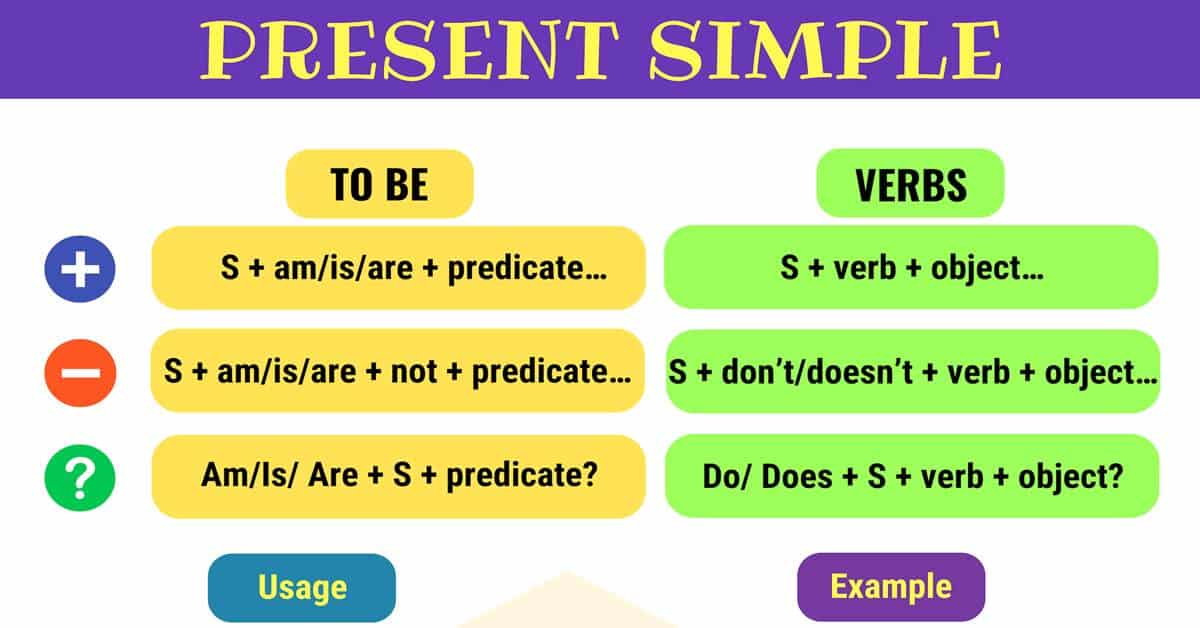
Organization moment 1.Greeting. Ask about the weather. *We use the present simple to talk about facts, habits and routines. For example: He goes to football on Mondays. *We form the negative of the present simple with subject + don’t/ doesn’t + infinitive They don’t speak English. She doesn’t eat eggs. *We form present simple Yes/ No questions with Lead – In
I go to school every day. She goes to school every day. I don’t go to school every day. She doesn’t go to school every day. Do you go to school every day? |
Greets with the teacher Presented with the new theme and objectives of the lesson Students say about daily routines |
At the organization moment T tries to award active Ss. Good job! Well done! |
Student’s book |
|
Middle of the lesson Presentation part. 30 min |
Ex: 1 P: 57 • Draw students’ attention to the examples and to the verbs. Allow them a couple of minutes to read through them. • Tell students to identify which of the sentences have a subject in the third person singular. Elicit that Fernando, My dad, Heidi and Clara are all in the third person singular. Ex: 2 P:57 Allow students some time to read the sentences. Ask them to underline the subject in each case to help them focus on whether they need to add -s or not. Ex:3 P: 57 • Explain that students need to follow the lines from the different people to find out what their activities are in order to make the sentences. Do the first one together as an example. • Students do the activity in pairs. Monitor, helping where necessary and reminding students to add -s to the verb when using the third person singular. Check answers as a class. |
Students look at the verbs in examples. ANSWERS: The verbs for he, she and it are different in the present simple because they end in -s. Students choose the correct words. ANSWERS: 1 make 2 eats 3 wear 4 plays 5 dance Students look at the puzzle and make sentences about the people. ANSWERS: 1 Curtis sings in a band. 2 Dee and Susan make cakes. 3 Patrick eats hot dogs. 4 Dee and Patrick play an instrument. 5 Altynay and Boris dance salsa |
Assessment criteria - Learn and practise using the present simple in the affirmative. Descriptor: -use the present simple Descriptor: -look at the puzzle and make sentences about the people. pupils are evaluated by collecting pencils -Make CCQ questions |
Cards Worksheets |
|
End of the lesson 5 min |
Home task: Ex: 2 P: 35 WB |
Students use their stickers to show their knowledge according to the lesson. |
Poster KWL chart |
|

 Жүктеу


 Жүктеу
шағым қалдыра аласыз


 Бұл курс Қазақстан Республикасы Оқу-ағарту министрлігімен келісілген










