ЖИ көмекші


 Қауіпсіз төлем

жүктеу мүмкіндігіне ие боласыз
Бұл материал сайт қолданушысы жариялаған. Материалдың ішінде жазылған барлық ақпаратқа жауапкершілікті жариялаған қолданушы жауап береді. Ұстаз тілегі тек ақпаратты таратуға қолдау көрсетеді. Егер материал сіздің авторлық құқығыңызды бұзған болса немесе басқа да себептермен сайттан өшіру керек деп ойласаңыз осында жазыңыз
 02 Мамыр 2025
 418
418
1 жыл бойы шексіз жүктеңіз
қмж Action-10, 4-тоқс
Short term plan: term 4
|
Unit 8: Space |
Lesson 81 |
||
|
Teacher name: |
|
||
|
Date: |
|
||
|
Grade: 10 |
Number present: |
absent: |
|
|
Lesson title |
Amazing facts about space |
||
|
Learning objectives |
10.1.9.1 - use imagination to express thoughts, ideas, experiences and feelings; 10.2.5.1 - recognize the attitude or opinion of the speaker(s) in unsupported extended talk on a wide range of general and curricular topics, including talk on a limited range of unfamiliar topics |
||
|
Lesson objectives |
Learners will be able to: -introduce new vocabulary -listen for confirmation |
||
|
Value links |
Hospitality: Traditionally a nomadic culture, hospitality has always been an important part of Kazakh culture. |
||
|
Plan |
|||
|
Stages / Time |
Teachers actions |
Students actions |
Assessment criteria |
Resources |
|
Beginning of the lesson Warming-up 3 min. Pre-learning «Brainstorming» method 7 min. |
Organization moment : 1.Greeting. Ask about the weather. The teacher sets the lesson objectives, letting students know what to anticipate from the lesson.
Lead – In
|
The aim: To develop pupils speaking skills and create friendly atmosphere Students of the class are listed. Students' attention is drawn to the lesson. Students say different words from the picture •Learners remember previous lesson vocabulary •Learners answer the questions |
The teacher to assess learners for their ability. “Good job! Well done!” Formative Assessment
Good job! Descriptor: - remembers the lesson passed Point 1 Assessment criteria make basic statements related to personal information, people and objects |
Pictures worksheet Picture |
|
Middle of the lesson Presentation part. 30 min |
Ex:1a P:97 • Direct Ss' attention to the picture and ask them to read the texts. Go through the words in the list and explain/ elicit the meanings of any unknown words. Give Ss time to complete the texts. Check Ss' answers. Differentiation: «Verbal support» method is used to help Ss use new words in the sentences. Ex: 1b P: 97 •Play the recording. Ss listen and check their answers to Ex. 1a. Play the video for Ss and elicit their comments. Over to you Elicit answers to the questions in the rubric from various Ss around the class. Conclusion during the lesson some tasks differentiated by outcomes of the students and by their abilities. |
• Learners fill the gaps. ANSWERS 1 particles 2 waves 3 radio 4 surface 5. atmosphere 6 Stars 7 dwarf 8 solar 9 telescopes • Learners listen and check. ANSWERS Student’s own answer. • Pupils answer the question. Tell the class. ANSWERS I was impressed that the footprints on the Moon will stay there for at least 100 million years and that an 11-year-old girl got to name a dwarf planet. |
Descriptor: - fill the gaps - complete the texts Total: 2 point
Self assessment Descriptor: - listen and check. Total: 2 point Descriptor: - answer the question - еell the class Total: 2 point -Make CCQ questions Yes / No Total: 1 point |
Card Worksheet Students book |
|
End of the lesson 5 min |
FEEDBACK Learners provide feedback on what they have learned at the lesson. Ex: P: Home task: Write the days |
|
Poster Success
|
|




Short term plan: term 4
|
Unit 8: Space |
Lesson 82 |
||
|
Teacher name: |
|
||
|
Date: |
|
||
|
Grade: 10 |
Number present: |
absent: |
|
|
Lesson title |
UFO tour |
||
|
Learning objectives |
10.2.6.1 - deduce meaning from context in unsupported extended talk on a wide range of general and curricular topics, including talk on a limited range of unfamiliar topics; 10.3.7.1 - use appropriate subject-specific vocabulary and syntax to talk about a range of general and curricular topics; |
||
|
Lesson objectives |
Learners will be able to: - talk about space and expand the topic - predict the content of the text - identify the writer's purpose |
||
|
Value links |
Tradition: Kazakh traditions and culture have been passed on from one generation to another through oral histories told by traditional Kazakh tribal leaders and elders. |
||
|
Plan |
|||
|
Stages / Time |
Teachers actions |
Students actions |
Assessment criteria |
Resources |
|
Beginning of the lesson Warming-up 3 min. Pre-learning «Brainstorming» method 7 min. |
Organization moment : 1.Greeting. Ask about the weather. The teacher sets the lesson objectives, letting students know what to anticipate from the lesson.
Lead – In
|
The aim: To develop pupils speaking skills and create friendly atmosphere Students of the class are listed. Students' attention is drawn to the lesson. Students say different words from the picture •Learners remember previous lesson vocabulary •Learners answer the questions |
The teacher to assess learners for their ability. “Good job! Well done!” Formative Assessment
Good job! Descriptor: - remembers the lesson passed Point 1 Assessment criteria make basic statements related to personal information, people and objects |
Pictures worksheet Picture |
|
Middle of the lesson Presentation part. 30 min |
Ex:1 P:98 • Explain/Elicit what UFO means (unidentified flying object). Play the recording. Ss listen and read the headlines. Explain/Elicit the meanings of any unknown words/phrases (e.g. flying saucer = name for an alien spacecraft from science fiction). Elicit what various Ss think happened in these incidents. Differentiation: «Verbal support» method is used to help Ss use new words in the sentences. Ex: 2 P: 98 • Direct Ss' attention to the title and the introduction in the text. Elicit Ss' guesses as to what it can be about. Ss read the text to see if their guesses were correct. Ex: 3 P: 99 • Ask Ss to read the sentences A-H and give them time to read the text again and match them to the gaps 1-7. Check Ss' answers around the class. Ex: 4 P: 99 • Explain that writers write articles in order to inform, to persuade or entertain readers. Play the recording. Ss listen and follow the text in their books. Ask Ss to identify the reason why the writer wrote the article. Conclusion during the lesson some tasks differentiated by outcomes of the students and by their abilities. |
• Learners listen and read the headlines. Answer the question. ANSWERS A - An alien spacecraft probably crashed on a ranch in the Roswell region and it was captured by some people. B - I think some people reported finding a strange wreckage and they think alien bodies were examined at Roswell Army Base. C - A police officer reported a sighting of an alien spacecraft in Socorro, New Mexico. D - Thousands of people witnessed strange lights over Phoenix, Arizona • Learners read the title of the text and the introduction. Read through to find out. ANSWERS I think the text is about a journalist investigating the case of the UFO crash landing in New Mexico in 1947 and whether or not it may actually have happened • Pupils read the text again. Seven sentences are missing. Match each sentence to the gap. ANSWERS 1 G 2 D 3 A 4 H 5 F 6 C 7 B • Pupils listen to the text. Answer the question. ANSWERS The writer's purpose is to inform readers about the UFO discovery tour and what it's like at Roswell. The writer also describes how the tour can make a sceptic wonder if it's all true or not |
Descriptor: - listen and read the headlines - answer the question Total: 2 point
Self assessment Descriptor: - read the title of the text - read through to find out Total: 2 point Descriptor: - read the text - match each sentence to the gap. Total: 2 point Descriptor: - listen to the text - answer the question Total: 2 point -Make CCQ questions Yes / No Total: 1 point |
Card Worksheet Students book |
|
End of the lesson 5 min |
FEEDBACK Learners provide feedback on what they have learned at the lesson. Ex: P: Home task: Write the days |
|
Poster Success
|
|

Short term plan: term 4
|
Unit 8: Space |
Lesson 83 |
||
|
Teacher name: |
|
||
|
Date: |
|
||
|
Grade: 10 |
Number present: |
absent: |
|
|
Lesson title |
Grammar: The passive |
||
|
Learning objectives |
10.4.5.1- deduce meaning from context in extended texts on a wide range of familiar general and curricular topics, and some unfamiliar topics; 10.5.6.1 - write coherently at text level using a variety of connectors on a range of familiar general and curricular topics |
||
|
Lesson objectives |
Learners will be able to: - consolidate new vocabulary - study/revise the passive |
||
|
Value links |
Freedom: Freedom is the major value of the civil society being formed in Kazakhstan. This must provide everyone with the possibility of creative self-realization. |
||
|
Plan |
|||
|
Stages / Time |
Teachers actions |
Students actions |
Assessment criteria |
Resources |
|
Beginning of the lesson Warming-up 3 min. Pre-learning «Brainstorming» method 7 min. |
Organization moment : 1.Greeting. Ask about the weather. The teacher sets the lesson objectives, letting students know what to anticipate from the lesson.
Lead – In
|
The aim: To develop pupils speaking skills and create friendly atmosphere Students of the class are listed. Students' attention is drawn to the lesson. Students say different words from the picture •Learners remember previous lesson vocabulary •Learners answer the questions |
The teacher to assess learners for their ability. “Good job! Well done!” Formative Assessment
Good job! Descriptor: - remembers the lesson passed Point 1 Assessment criteria make basic statements related to personal information, people and objects |
Pictures worksheet Picture |
|
Middle of the lesson Presentation part. 30 min |
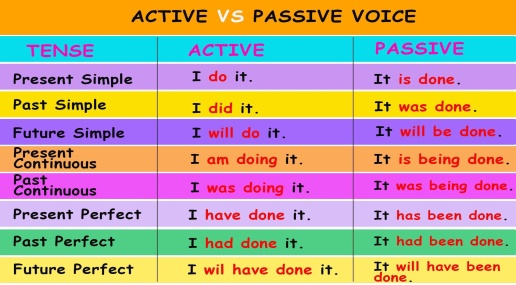
Ex:5 P:99 • Explain the task and give Ss time to complete it. Check Ss' answers. Differentiation: «Verbal support» method is used to help Ss use new words in the sentences. Ex: 6 P: 99 • Explain the task and go through the list of words in the rubric and give Ss time to match them to the words in bold in the text. Tell Ss they may use their dictionaries if necessary. • Check Ss' answers. Ex: 7 P: 99 • Explain that we use the passive to talk about actions when the person who carries out the action is unknown, unimportant or obvious from the context. We also use the passive in formal writing. Explain/Elicit that we form the passive with the verb to be + past participle of the main verb. Point out that the subject of the active sentence becomes the agent in the passive sentence and is introduced with 'by' whereas the object of the active sentence becomes the subject in the passive sentence. Refer Ss to the Grammar Reference section for more details. Conclusion during the lesson some tasks differentiated by outcomes of the students and by their abilities. |
• Learners choose the correct words in bold. Then makes sentences using the other options. ANSWERS 1 trip 2 spot 3 desert 4 examined 5 site 6 locals 7 events • Learners match the words/phrases in bold with their meanings. ANSWERS wandered away: walked without a purpose debris: destroyed remains creepy: scary soared into the sky: moved quickly up hovering: floating in the same position eerie: strange & frightening disturbed: bothered disappointed: felt unhappy • Pupils use the passive ANSWERS We use the passive to talk about actions when the person who carries out the action is unknown, unimportant or obvious from the context. We also use the passive in formal writing such as in a news report or headline. We form the passive with the verb to be + past participle of the main verb. The subject of the active sentence becomes the agent in the passive sentence and is introduced with 'by' whereas the object of the active sentence becomes the subject in the passive sentence. |
Descriptor: - choose the correct words in bold - makes sentences using the other options Total: 2 point
Self assessment Descriptor: - match the words/phrases in bold - use your dictionaries Total: 2 point Descriptor: - use the passive to talk about actions Total: 2 point -Make CCQ questions Yes / No Total: 1 point |
Card Worksheet Students book |
|
End of the lesson 5 min |
FEEDBACK Learners provide feedback on what they have learned at the lesson. Ex: P: Home task: Write the days |
|
Poster Success
|
|
Short term plan: term 4
|
Unit 8: Space |
Lesson 84 |
||
|
Teacher name: |
|
||
|
Date: |
|
||
|
Grade: 10 |
Number present: |
absent: |
|
|
Lesson title |
Moving out |
||
|
Learning objectives |
10.2.1.1 - understand the main points in unsupported extended talk on a wide range of general and curricular topics, including talk on a limited range of unfamiliar topics; 10.4.2.1 - understand specific information and detail in extended texts on a range of familiar general and curricular topics, and some unfamiliar topics; |
||
|
Lesson objectives |
Learners will be able to: - consolidate vocabulary - predict the content of a text - read for cohesion and coherence |
||
|
Value links |
Patriotism: The formation of civil society institutions is impossible without the development of a patriotism shared by the entire Kazakhstan, and with deep roots in the culture, psychology, and historical past of the Kazakhs. |
||
|
Plan |
|||
|
Stages / Time |
Teachers actions |
Students actions |
Assessment criteria |
Resources |
|
Beginning of the lesson Warming-up 3 min. Pre-learning «Brainstorming» method 7 min. |
Organization moment : 1.Greeting. Ask about the weather. The teacher sets the lesson objectives, letting students know what to anticipate from the lesson.
Lead – In |
The aim: To develop pupils speaking skills and create friendly atmosphere Students of the class are listed. Students' attention is drawn to the lesson. Students say different words from the picture •Learners remember previous lesson vocabulary •Learners answer the questions |
The teacher to assess learners for their ability. “Good job! Well done!” Formative Assessment
Good job! Descriptor: - remembers the lesson passed Point 1 Assessment criteria make basic statements related to personal information, people and objects |
Pictures worksheet Picture |
|
Middle of the lesson Presentation part. 30 min |
Ex:1 P:100 • Elicit the names of the planets in our solar system from Ss around the class. Play the recording. Ss listen and check if they named them all as well as practice the correct pronunciation and intonation. Differentiation: «Verbal support» method is used to help Ss use new words in the sentences. Ex: 2 P: 100 • Read the title of the text and the quotation aloud and ask Ss to think about the questions in the rubric. Give Ss time to read the text and then elicit answers to the questions from Ss around the class. Ex: 3 P: 101 • Explain the task and ask Ss to read the sentences A-H and then give them time to read the text again and match them to the gaps Ask Ss to check their answers with their partner and then elicit justifications from Ss around the class. Ex: 4 P: 101 • Explain the task and give Ss time to complete it. Check Ss' answers. Conclusion during the lesson some tasks differentiated by outcomes of the students and by their abilities. |
• Learners say the names of the planets in our solar systems. ANSWERS Mercury, Venus, Earth, Mars, Jupiter, Saturn, Uranus, Neptune • Learners read the title of the text and the quote. Answer the question. ANSWERS The problems of space colonisation are the lack of technology and the lack of money. For example, it would take 1,000 years to travel to the nearest star system and it costs £6,000 to put half a kilo of anything into near-Earth orbit. The solution may be to give 0.25% of the world's financial resources to fund space colonisation • Pupils for each gap, choose from the sentences. ANSWERS 1 F 2 A 3C 4 H 5 G 6E 7 B • Pupils fill the gaps . ANSWERS 1 overcome 2 self-sufficient 3 warm up 4 release 5 afford . |
Descriptor: - say the names of the planets - correct pronunciation and intonation Total: 2 point
Self assessment Descriptor: - read the title of the text - answer the question Total: 2 point Descriptor: - choose from the sentences - choose from the sentences Total: 2 point -Make CCQ questions Yes / No Total: 1 point |
Card Worksheet Students book |
|
End of the lesson 5 min |
FEEDBACK Learners provide feedback on what they have learned at the lesson. Ex: P: Home task: Write the days |
|
Poster Success
|
|
Short term plan: term 4
|
Unit 8: Space |
Lesson 85 |
||
|
Teacher name: |
|
||
|
Date: |
|
||
|
Grade: 10 |
Number present: |
absent: |
|
|
Lesson title |
Grammar: Conditionals types |
||
|
Learning objectives |
10.6.15.1 - use infinitive forms after an increased number of verbs and adjectives use gerund forms after a variety of verbs and prepositions use a variety of prepositional and phrasal verb on a wide range of familiar general and curricular topics 10.1.10.1 - use talk or writing as a means of reflecting on and exploring a range of perspectives on the world; |
||
|
Lesson objectives |
Learners will be able to: -consolidate new vocabulary - practise mixed conditionals - consolidate information in a text. |
||
|
Value links |
Respect: Respect of elders and of the spiritual freedom of other nations are principal values. It is important to develop a productive dialogue between confessions and to acknowledge religion as an element of civil society. |
||
|
Plan |
|||
|
Stages / Time |
Teachers actions |
Students actions |
Assessment criteria |
Resources |
|
Beginning of the lesson Warming-up 3 min. Pre-learning «Brainstorming» method 7 min. |
Organization moment : 1.Greeting. Ask about the weather. The teacher sets the lesson objectives, letting students know what to anticipate from the lesson.
Lead – In |
The aim: To develop pupils speaking skills and create friendly atmosphere Students of the class are listed. Students' attention is drawn to the lesson. Students say different words from the picture •Learners remember previous lesson vocabulary •Learners answer the questions |
The teacher to assess learners for their ability. “Good job! Well done!” Formative Assessment
Good job! Descriptor: - remembers the lesson passed Point 1 Assessment criteria make basic statements related to personal information, people and objects |
Pictures worksheet Picture |
|
Middle of the lesson Presentation part. 30 min |
Ex:5 P:101 • Explain the task and give Ss time to complete it. Ss can use their dictionaries to look up any unknown words. Check Ss' answers. Differentiation: «Verbal support» method is used to help Ss use new words in the sentences. Ex: 6 P: 101 • Refer Ss to the Grammar Reference section at the back of their books and briefly revise conditional types 2 and 3 by giving examples for each type. Ex: 7 P: 101 • Explain the task and read out the example. Give Ss time to complete the task and then check Ss' answers. Ex: 8 P: 101 • Play the recording. Ss listen and follow the text in their books. Then Ss talk in pairs and tell their partner three reasons why space colonisation is difficult. Monitor the activity around the class and then ask some pairs to report back to the class. Conclusion during the lesson some tasks differentiated by outcomes of the students and by their abilities. |
• Learners choose the correct words. Check in your dictionary. ANSWERS 1 Supplies 2 overcome 3 wipe out 4 endless • Learners give an example for each type. ANSWERS type 2: If I won the money, I would buy a new car. type 3: If Ann had been more careful, she wouldn't have made such a big mistake • Pupils rewrite the sentences using mixed conditionals, as in the example. ANSWERS 2 If Mark had handed in his project, he would pass the astronomy course. 3 If Greg hadn't been studying all night, he wouldn't be tired now. 4 If Janet wasn't interested in astronomy, she wouldn't have visited the planetarium yesterday • Pupils fill the gaps listen and read the article. ANSWERS Colonising space is difficult because it is expensive to put things into space. It is also a long way to the nearest solar system which may have Earth-like planets and we don't have the technology to travel fast in space |
Descriptor: - choose the correct words - check in your dictionary Total: 2 point
Self assessment Descriptor: - give an example -complete the task Total: 2 point Descriptor: - rewrite the sentences - use mixed conditionals Total: 2 point -Make CCQ questions Yes / No Total: 1 point |
Card Worksheet Students book |
|
End of the lesson 5 min |
FEEDBACK Learners provide feedback on what they have learned at the lesson. Ex: P: Home task: Write the days |
|
Poster Success
|
|
Short term plan: term 4
|
Unit 8: Space |
Lesson 86 |
||
|
Teacher name: |
|
||
|
Date: |
|
||
|
Grade: 10 |
Number present: |
absent: |
|
|
Lesson title |
Sci – Fi – Films |
||
|
Learning objectives |
10.2.7.1 -understand speaker viewpoints and extent of explicit agreement between speakers on a range of general and curricular topics; 10.3.3.1- explain and justify own and others’ point of view on a wide range of general and curricular topics; |
||
|
Lesson objectives |
Learners will be able to: - prepare for a reading task - introduce the topic - read for specific information |
||
|
Value links |
Respect - treating people with respect, value and courtesy. Especially apologising to them where the situation calls for it. |
||
|
Plan |
|||
|
Stages / Time |
Teachers actions |
Students actions |
Assessment criteria |
Resources |
|
Beginning of the lesson Warming-up 3 min. Pre-learning «Brainstorming» method 7 min. |
Organization moment : 1.Greeting. Ask about the weather. The teacher sets the lesson objectives, letting students know what to anticipate from the lesson.
Lead – In |
The aim: To develop pupils speaking skills and create friendly atmosphere Students of the class are listed. Students' attention is drawn to the lesson. Students say different words from the picture •Learners remember previous lesson vocabulary •Learners answer the questions |
The teacher to assess learners for their ability. “Good job! Well done!” Formative Assessment
Good job! Descriptor: - remembers the lesson passed Point 1 Assessment criteria make basic statements related to personal information, people and objects |
Pictures worksheet Picture |
|
Middle of the lesson Presentation part. 30 min |
Ex:1 P:102 • Refer Ss to the Word List at the back of their books and give them time to look up the meanings of the words/phrases given. Alternatively, elicit the meaning of any unknown words Differentiation: «Verbal support» method is used to help Ss use new words in the sentences. Ex: 2 P: 103 • Read out the questions in the rubric and ask Ss to say what they know about the film Avatar, and think of questions about it. Elicit questions from Ss around the class and write three of them on the board. Ex: 3 P: 103 • Ask Ss to read the questions 1-6 and the possible answers and give them time to read the text again and choose the correct answers. Check Ss' answers around the class and ask Ss to justify their answers with examples from the text. Conclusion during the lesson some tasks differentiated by outcomes of the students and by their abilities. |
• Learners check these words in the word list. ANSWERS Student’s own answer • Learners write down three question. ANSWERS Avatar is a 3D science-fiction film with special visual effects. The words in Ex.1 refer to the new techniques used to make it. 1 Where was the film set? 2 Who directed the film? 3 What was so special about the special effects in the film? • Pupils read the article. For questions choose the best answer. Give reasons for your answers. ANSWERS 1 D (E. 7-9) 2 Β (ε. 11-13) 3 A ('special') 4 C (8. 38-42) 5 B (8.44-56) 6 B (8. 62-64) |
Descriptor: - check these words - give them time to look up the meanings Total: 2 point
Self assessment Descriptor: - read out the questions in the rubric - write down three question Total: 2 point Descriptor: - read the questions - choose the best answer Total: 2 point -Make CCQ questions Yes / No Total: 1 point |
Card Worksheet Students book |
|
End of the lesson 5 min |
FEEDBACK Learners provide feedback on what they have learned at the lesson. Ex: P: Home task: Write the days |
|
Poster Success
|
|
Short term plan: term 4
|
Unit 8: Space |
Lesson 87 |
||
|
Teacher name: |
|
||
|
Date: |
|
||
|
Grade: 10 |
Number present: |
absent: |
|
|
Lesson title |
Grammar: Reported speech |
||
|
Learning objectives |
10.5.7.1 - use independently appropriate layout at text level on a range of general and curricular topics; 10.6.11.1 - use a variety of reported statements and question forms on a wide range of familiar general and curricular topics; |
||
|
Lesson objectives |
Learners will be able to: - answer comprehension questions on a text - consolidate new vocabulary through synonymous words/phrase |
||
|
Value links |
Respect - treating people with respect, value and courtesy. Especially apologising to them where the situation calls for it. |
||
|
Plan |
|||
|
Stages / Time |
Teachers actions |
Students actions |
Assessment criteria |
Resources |
|
Beginning of the lesson Warming-up 3 min. Pre-learning «Brainstorming» method 7 min. |
Organization moment : 1.Greeting. Ask about the weather. The teacher sets the lesson objectives, letting students know what to anticipate from the lesson.
Lead – In |
The aim: To develop pupils speaking skills and create friendly atmosphere Students of the class are listed. Students' attention is drawn to the lesson. Students say different words from the picture •Learners remember previous lesson vocabulary •Learners answer the questions |
The teacher to assess learners for their ability. “Good job! Well done!” Formative Assessment
Good job! Descriptor: - remembers the lesson passed Point 1 Assessment criteria make basic statements related to personal information, people and objects |
Pictures worksheet Picture |
|
Middle of the lesson Presentation part. 30 min |
Ex:4 P:103 • Give Ss time to read the text again and answer the questions in their own words without copying the information straight from the text. Check Ss' answers around the class. Differentiation: «Verbal support» method is used to help Ss use new words in the sentences. Ex: 5 P: 103 • Read the words/phrases in the list and give Ss time to find their synonyms in the text. Elicit answers from various Ss around the class. Ex: 6 P: 103 • Refer Ss to the Grammar Reference section to revise reported speech, give them time to complete the task and check Ss' answers. Conclusion during the lesson some tasks differentiated by outcomes of the students and by their abilities. |
• Learners answer the following question. ANSWERS 1 It took Cameron a long time to produce Avatar because the technology he needed to make the film totally realistic was not available. He had to wait for some of the technology to be invented and he invented some himself so that he could make the film the way he wanted to make it 2 He developed a special 3D camera. He used a virtual camera and a simulation camera to create a 3D Fusion camera. • Learners find words in the text ANSWERS Para A: affected = influenced, was developed = came along Para B: broadly = widely, join together = combine Para C: produce = develop, really = truly, combined = integrated Para E: fascinate = absorb, sense = feeling, made available to the public = released • Learners rewrite the sentences in reported speech. ANSWERS 1 He said (that) Avatar had spectacular special effects. 2 She asked if/whether we could make the characters look more realistic. 3 They said (that) they had used state-of-the-art technology to create the film. 4 David asked me who the main characters in the film were. 5 She asked him if/whether he thought the film would be a box office hit. 6 The scientist says (that) we need to improve computer technology further. |
Descriptor: - read the text - answer the questions Total: 2 point
Self assessment Descriptor: - read the words/phrases in the list - find their synonyms in the text. Total: 2 point Descriptor: - rewrite the sentences - complete the task Total: 2 point -Make CCQ questions Yes / No Total: 1 point |
Card Worksheet Students book |
|
End of the lesson 5 min |
FEEDBACK Learners provide feedback on what they have learned at the lesson. Ex: P: Home task: Write the days |
|
Poster Success
|
|
Short term plan: term 4
|
Unit 8: Space |
Lesson 88 |
||
|
Teacher name: |
|
||
|
Date: |
|
||
|
Grade: 10 |
Number present: |
absent: |
|
|
Lesson title |
Writing: A film review |
||
|
Learning objectives |
10.6.14.1 - use a variety of prepositional phrases before nouns and adjectives; use a number of dependent prepositions following; nouns and adjectives and a variety of prepositions following verbs on a wide range of familiar general and curricular topics; 10.5.6.1 - write coherently at text level using a variety of connectors on a range of familiar general and curricular topics; |
||
|
Lesson objectives |
Learners will be able to: - analyse a model for structure and content - present/practise topic-based vocabulary - identify adjectives in a model |
||
|
Value links |
Respect - treating people with respect, value and courtesy. Especially apologising to them where the situation calls for it. |
||
|
Plan |
|||
|
Stages / Time |
Teachers actions |
Students actions |
Assessment criteria |
Resources |
|
Beginning of the lesson Warming-up 3 min. Pre-learning «Brainstorming» method 7 min. |
Organization moment : 1.Greeting. Ask about the weather. The teacher sets the lesson objectives, letting students know what to anticipate from the lesson.
Lead – In |
The aim: To develop pupils speaking skills and create friendly atmosphere Students of the class are listed. Students' attention is drawn to the lesson. Students say different words from the picture •Learners remember previous lesson vocabulary •Learners answer the questions |
The teacher to assess learners for their ability. “Good job! Well done!” Formative Assessment
Good job! Descriptor: - remembers the lesson passed Point 1 Assessment criteria make basic statements related to personal information, people and objects |
Pictures worksheet Picture |
|
Middle of the lesson Presentation part. 30 min |
Ex:1 P:104 • Ask Ss to read out the Writing Tip and learn about the genre and content of the type of writing. Then give Ss time to read the model review and match the paragraphs to the headings. Check Ss' answers. Differentiation: «Verbal support» method is used to help Ss use new words in the sentences. Ex: 2 P: 104 • Ask Ss to read the sentences and choose the correct words/phrases in bold. Check Ss' answers. Ex: 3 P: 104 • Elicit the adjectives used to describe the items 1-6 in the model from Ss around the class. Ex: 4 P: 104 • Give Ss time to complete the sentences using the words in the list. Check Ss' answers. Conclusion during the lesson some tasks differentiated by outcomes of the students and by their abilities. |
• Learners read the review and match the paragraph to the headings. ANSWERS A 2 B 1 C 4 D 3 • Learners choose the correct word/phrases. Check your dictionary. ANSWERS 1 set 2 is based on 3 main 4 dull, twist 5 box office hit 6 lead • Learners which adjectives has the writer used to describe following in the review. ANSWERS 1 exciting 2 fast-moving 3 action-packed 4 impressive 5 superb 6 spectacular • Learners fill the gaps. . ANSWERS 1 predictable 2 gripping 3 well-developed, likeable 4 surprising |
Descriptor: - read the review - match the paragraph to the headings. Total: 2 point
Self assessment Descriptor: - choose the correct word/phrases - check your dictionary Total: 2 point Descriptor: - complete the sentences Total: 2 point -Make CCQ questions Yes / No Total: 1 point |
Card Worksheet Students book |
|
End of the lesson 5 min |
FEEDBACK Learners provide feedback on what they have learned at the lesson. Ex: P: Home task: Write the days |
|
Poster Success
|
|
Short term plan: term 4
|
Unit 8: Space |
Lesson 89 |
||
|
Teacher name: |
|
||
|
Date: |
|
||
|
Grade: 10 |
Number present: |
absent: |
|
|
Lesson title |
Grammar: The passive |
||
|
Learning objectives |
10.6.16.1 - use a wide variety of conjunctions on a wide range of familiar general and curricular topics 10.5.7.1 - use independently appropriate layout at text level on a range of general and curricular topics |
||
|
Lesson objectives |
Learners will be able to: -practise vocabulary for recommending - review/practise the passive |
||
|
Value links |
Respect - treating people with respect, value and courtesy. Especially apologising to them where the situation calls for it. |
||
|
Plan |
|||
|
Stages / Time |
Teachers actions |
Students actions |
Assessment criteria |
Resources |
|
Beginning of the lesson Warming-up 3 min. Pre-learning «Brainstorming» method 7 min. |
Organization moment : 1.Greeting. Ask about the weather. The teacher sets the lesson objectives, letting students know what to anticipate from the lesson.
Lead – In |
The aim: To develop pupils speaking skills and create friendly atmosphere Students of the class are listed. Students' attention is drawn to the lesson. Students say different words from the picture •Learners remember previous lesson vocabulary •Learners answer the questions |
The teacher to assess learners for their ability. “Good job! Well done!” Formative Assessment
Good job! Descriptor: - remembers the lesson passed Point 1 Assessment criteria make basic statements related to personal information, people and objects |
Pictures worksheet Picture |
|
Middle of the lesson Presentation part. 30 min |
Ex:5 P:105 • Explain the task and give Ss time to complete it. Check Ss' answers by askings around the class to read out their sentences. Differentiation: «Verbal support» method is used to help Ss use new words in the sentences. Ex: 6 P: 105 • Ask Ss to read the film review in Ex. 1 again and identify the passive forms. Then ask Ss to check their answers in the Grammar Reference section. Give S time to complete the task. Check Ss' answers. Then give Ss time to complete the task. Check Ss' answers. Ex: 7 P: 105 • Ask Ss to read the rubric, underline the key words and then answer the questions. Explain to Ss that it is very important to read the rubric carefully so that they include all the points mentioned. Check Ss' answers around the class. Conclusion during the lesson some tasks differentiated by outcomes of the students and by their abilities. |
• Learners fill in the gaps with the phrases in the list. ANSWERS A 1 would definitely recommend 2 well worth seeing B 3 you are looking for 4 is definitely for you 5 box office hits C 6 make sure it's this one 7 won't regret it • Learners find the passive forms in the film review. Then, rewrite these sentences in the passive. ANSWERS Guardians of the Galaxy was directed by James Gunn. 2 In the film, the astronauts were being attacked by aliens. 3 The new sci-fi film is being watched by thousands of people at the cinema. 4 The lead role is played by Ryan Gosling in Blade Runner 2049. 5 Simplistic special effects are used in the film. 6 This film is being highly recommended by lots of people. • Learners read the rubric and underline the key words, then answer the question. ANSWERS 1 a review of a sci-fi film 2 readers of a website 3 present tenses 4 title and type of film, name of director, whether you recommend it, main points of plot, general comments on characters/plot/etc |
Descriptor: - fill in the gaps - complete the task Total: 2 point
Self assessment Descriptor: - find the passive form - rewrite these sentences Total: 2 point Descriptor: - read the rubric - underline the key words Total: 2 point -Make CCQ questions Yes / No Total: 1 point |
Card Worksheet Students book |
|
End of the lesson 5 min |
FEEDBACK Learners provide feedback on what they have learned at the lesson. Ex: P: Home task: Write the days |
|
Poster Success
|
|
Short term plan: term 4
|
Unit 8: Space |
Lesson 90 |
||
|
Teacher name: |
|
||
|
Date: |
|
||
|
Grade: 10 |
Number present: |
absent: |
|
|
Lesson title |
Culture corner |
||
|
Learning objectives |
10.3.3.1- explain and justify own and others’ point of view on a wide range of general and curricular topics; 10.2.6.1 - deduce meaning from context in unsupported extended talk on a wide range of general and curricular topics, including talk on a limited range of unfamiliar topics; |
||
|
Lesson objectives |
Learners will be able to: -introduce the topic and listen and read for gist -read for specific information - consolidate new vocabulary |
||
|
Value links |
Respect - treating people with respect, value and courtesy. Especially apologising to them where the situation calls for it. |
||
|
Plan |
|||
|
Stages / Time |
Teachers actions |
Students actions |
Assessment criteria |
Resources |
|
Beginning of the lesson Warming-up 3 min. Pre-learning «Brainstorming» method 7 min. |
Organization moment : 1.Greeting. Ask about the weather. The teacher sets the lesson objectives, letting students know what to anticipate from the lesson.
Lead – In |
The aim: To develop pupils speaking skills and create friendly atmosphere Students of the class are listed. Students' attention is drawn to the lesson. Students say different words from the picture •Learners remember previous lesson vocabulary •Learners answer the questions |
The teacher to assess learners for their ability. “Good job! Well done!” Formative Assessment
Good job! Descriptor: - remembers the lesson passed Point 1 Assessment criteria make basic statements related to personal information, people and objects |
Pictures worksheet Picture |
|
Middle of the lesson Presentation part. 30 min |
Ex:1 P:106 •Elicit what, if anything, Ss know about the NASA and ISS. Elicit various questions from S55 around the class and write two of them on the board. Play the recording. Ss listen and read the text and see if the questions were answered. Differentiation: «Verbal support» method is used to help Ss use new words in the sentences. Ex: 2 P: 106 • Explain the task and ask Ss to read the sentences 1-6 and then read the text again and mark them as true, false or doesn't say according to the text. Check Ss' answers. Ask Ss to justify their answers. Ex: 3 P: 106 •Explain the task. Give Ss time to complete the task, referring back to the text if necessary. Check Ss' answers. Conclusion during the lesson some tasks differentiated by outcomes of the students and by their abilities. |
• Learners listen and read the text. Answer the question. ANSWERS NASA - National Aeronautics and Space Administration ISS- International Space Station When was NASA set up? (1950s) When did the ISS go into space? (not answered • Learners read the text again and mark the statements. ANSWERS 1 DS 2 F (1969) 3T 4 T 5 F (Baikonur Cosmodrome, Tyuratam, Kazakhstan) 6 DS • Learners fill the gaps. ANSWERS 1 exploration 2 operations 3 science 4 technology 5 Planetary 6 aeronautics |
Descriptor: - listen and read the text - answer the question. Total: 2 point
Self assessment Descriptor: - read the text again - mark the statements Total: 2 point Descriptor: - fill the gaps - complete the task Total: 2 point -Make CCQ questions Yes / No Total: 1 point |
Card Worksheet Students book |
|
End of the lesson 5 min |
FEEDBACK Learners provide feedback on what they have learned at the lesson. Ex: P: Home task: Write the days |
|
Poster Success
|
|
Short term plan: term 4
|
Unit 8: Space |
Lesson 91 |
||
|
Teacher name: |
|
||
|
Date: |
|
||
|
Grade: 10 |
Number present: |
absent: |
|
|
Lesson title |
Curricular: Literature |
||
|
Learning objectives |
10.4.5.1- deduce meaning from context in extended texts on a wide range of familiar general and curricular topics, and some unfamiliar topics; 10.5.6.1 - write coherently at text level using a variety of connectors on a range of familiar general and curricular topics |
||
|
Lesson objectives |
Learners will be able to: - introduce the topic and listen for gist - read for cohesion and coherence |
||
|
Value links |
Respect - treating people with respect, value and courtesy. Especially apologising to them where the situation calls for it. |
||
|
Plan |
|||
|
Stages / Time |
Teachers actions |
Students actions |
Assessment criteria |
Resources |
|
Beginning of the lesson Warming-up 3 min. Pre-learning «Brainstorming» method 7 min. |
Organization moment : 1.Greeting. Ask about the weather. The teacher sets the lesson objectives, letting students know what to anticipate from the lesson.
Lead – In |
The aim: To develop pupils speaking skills and create friendly atmosphere Students of the class are listed. Students' attention is drawn to the lesson. Students say different words from the picture •Learners remember previous lesson vocabulary •Learners answer the questions |
The teacher to assess learners for their ability. “Good job! Well done!” Formative Assessment
Good job! Descriptor: - remembers the lesson passed Point 1 Assessment criteria make basic statements related to personal information, people and objects |
Pictures worksheet Picture |
|
Middle of the lesson Presentation part. 30 min |
Ex:1 P:107 • Read the rubric aloud and direct Ss' attention to the picture. Elicit that triffids are strange plants. Play the recording. Ss listen and find out the answer. Differentiation: «Verbal support» method is used to help Ss use new words in the sentences. Ex: 2 P: 107 • Explain the task and ask Ss to read the sentences A-H. Then give Ss time to read the text and complete the task. Check Ss' answers around the class. Ask Ss to justify their answers. Ex: 3 P: 107 • Explain the task and give Ss time to complete it. Check Ss' answers. Ex: 4 P: 107 • Explain the task and give Ss some time to complete it. Check Ss' answers around the class. Conclusion during the lesson some tasks differentiated by outcomes of the students and by their abilities. |
• Learners look at the picture and read the text. Answer the question. ANSWERS Triffids appear in a science-fiction novel by John Wyndham. They are tall plants with legs that seem intelligent, but are aggressive and attack people with their poisonous stings • Learners read the text. For each gap choose from the sentences. ANSWERS 1 H They don't 'hear'. They're just plants. 2 E ... numbers collected along the fence ... didn't do anything ... They simply settled down 3 A... complete darkness... turned on the light 4 C... pulled the window shut ... as it closed... 5 F took no risks ... thick clothing and gloves leather helmet ... goggles ... wire mask... largest carving knife ... 6 D... in a fine spray ... misted the goggles wash it off my face. 7 G last of the intruders... broke in again. • Learners match the words in bold. ANSWERS wriggled = turned quickly viciously = violently smacked = hit sharply intruders = invaders • Learners write the adjectives the author uses to describe the following ANSWERS 1 slashing 2 grey 3 complete 4 leathery green 5 thick 6 leather 7 largest carving 8 fine |
Descriptor: - look at the picture - answer the question. Total: 2 point
Self assessment Descriptor: - look at the picture - choose from the sentences Total: 2 point Descriptor: - choose from the sentences Total: 2 point -Make CCQ questions Yes / No Total: 1 point |
Card Worksheet Students book |
|
End of the lesson 5 min |
FEEDBACK Learners provide feedback on what they have learned at the lesson. Ex: P: Home task: Write the days |
|
Poster Success
|
|
Short term plan: term 4
|
Unit 8: Space |
Lesson 92 |
||
|
Teacher name: |
|
||
|
Date: |
|
||
|
Grade: 10 |
Number present: |
absent: |
|
|
Lesson title |
Language in Use |
||
|
Learning objectives |
10.3.3.1- explain and justify own and others’ point of view on a wide range of general and curricular topics 10.6.14.1 - use a variety of prepositional phrases before nouns and adjectives; use a number of dependent prepositions following; nouns and adjectives and a variety of prepositions following verbs on a wide range of familiar general and curricular topics; |
||
|
Lesson objectives |
Learners will be able to: - present and practise phrasal verbs with keep, let and pick - practise prepositional phrases - consolidate words which are often confused |
||
|
Value links |
Respect - treating people with respect, value and courtesy. Especially apologising to them where the situation calls for it. |
||
|
Plan |
|||
|
Stages / Time |
Teachers actions |
Students actions |
Assessment criteria |
Resources |
|
Beginning of the lesson Warming-up 3 min. Pre-learning «Brainstorming» method 7 min. |
Organization moment : 1.Greeting. Ask about the weather. The teacher sets the lesson objectives, letting students know what to anticipate from the lesson.
Lead – In |
The aim: To develop pupils speaking skills and create friendly atmosphere Students of the class are listed. Students' attention is drawn to the lesson. Students say different words from the picture •Learners remember previous lesson vocabulary •Learners answer the questions |
The teacher to assess learners for their ability. “Good job! Well done!” Formative Assessment
Good job! Descriptor: - remembers the lesson passed Point 1 Assessment criteria make basic statements related to personal information, people and objects |
Pictures worksheet Picture |
|
Middle of the lesson Presentation part. 30 min |
Ex:1 P:108 • Ask Ss to read the theory box and then give Ss time to complete the task using their dictionaries to help them if necessary. Check Ss' answers. Differentiation: «Verbal support» method is used to help Ss use new words in the sentences. Ex: 2 P: 108 • Explain the task and give Ss time to complete it and then check Ss' answers. Ask Ss to add the words to the Prepositions section in their notebooks. Ask Ss to revise this section regularly as this will help them use the English language in a natural way. Ex: 3 P: 108 • Explain the task and give Ss time to complete it and then check Ss' answers. Ex: 4 P: 108 • Give Ss time to read the theory box and then complete the task. Check Ss' answers. Ex: 5 P: 108 • Explain the task and give Ss time to complete it. Check Ss' answers. Conclusion during the lesson some tasks differentiated by outcomes of the students and by their abilities. |
• Learners choose the correct particle ANSWERS 1 off 2 down 3 on 4 out 5 up • Learners choose the correct preposition ANSWERS 1 in 2 on 3 for 4 at 5 in • Learners choose the correct word ANSWERS 1 attracts 2 sank 3 wandered 4 admitted 5 bring • Learners fill in the sentences with the correct word derived from the word ANSWERS 1 appearance 2 quietness, privacy 3 collection 4 difference 5 activity • Learners fill the gaps. ANSWERS 1 annual 2 travel 3 weather 4 video 5 lifelong 6 demand 7 native 8 highly 9 welcome 10 drive 11 full 12 closely |
Descriptor: - read the theory box - choose the correct particle Total: 2 point
Self assessment Descriptor: - choose the correct preposition Total: 2 point Descriptor: - choose the correct word Total: 2 point Descriptor: - read the theory box - fill in the sentences with the correct word Total: 2 point Descriptor: - fill the gaps Total: 2 point -Make CCQ questions Yes / No Total: 1 point |
Card Worksheet Students book |
|
End of the lesson 5 min |
FEEDBACK Learners provide feedback on what they have learned at the lesson. Ex: P: Home task: Write the days |
|
Poster Success
|
|
Short term plan: term 4
|
Unit 8: Space |
Lesson 93 |
||
|
Teacher name: |
|
||
|
Date: |
|
||
|
Grade: 10 |
Number present: |
absent: |
|
|
Lesson title |
Progress check Summative assessment for the unit « Space» |
||
|
Learning objectives |
10.4.5.1- deduce meaning from context in extended texts on a wide range of familiar general and curricular topics, and some unfamiliar topics; 10.2.6.1 - deduce meaning from context in unsupported extended talk on a wide range of general and curricular topics, including talk on a limited range of unfamiliar topics; |
||
|
Lesson objectives |
Learners will be able to: - read for cohesion and coherence - listen for specific information (gap filling) |
||
|
Value links |
Respect - treating people with respect, value and courtesy. Especially apologising to them where the situation calls for it. |
||
|
Plan |
|||
|
Stages / Time |
Teachers actions |
Students actions |
Assessment criteria |
Resources |
|
Beginning of the lesson Warming-up 3 min. Pre-learning «Brainstorming» method 7 min. |
Organization moment : 1.Greeting. Ask about the weather. The teacher sets the lesson objectives, letting students know what to anticipate from the lesson.
Lead – In |
The aim: To develop pupils speaking skills and create friendly atmosphere Students of the class are listed. Students' attention is drawn to the lesson. Students say different words from the picture •Learners remember previous lesson vocabulary •Learners answer the questions |
The teacher to assess learners for their ability. “Good job! Well done!” Formative Assessment
Good job! Descriptor: - remembers the lesson passed Point 1 Assessment criteria make basic statements related to personal information, people and objects |
Pictures worksheet Picture |
|
Middle of the lesson Presentation part. 30 min |
Ex:1 P:109 • Give Ss time to read the text and match the missing sentences A-H to the gaps 1-7. Check Ss' answers. Differentiation: «Verbal support» method is used to help Ss use new words in the sentences. Ex: 2 P: 109 •* Ask Ss to read the statements 1-10. Play the recording. Ss listen and fill the gaps accordingly. Check Ss' answers Summative assessment for the unit « Space» Conclusion during the lesson some tasks differentiated by outcomes of the students and by their abilities. |
• Learners choose from the sentences the one which fits each gap. There is one extra sentence ANSWERS 1 H (radio transmissions 'signal') 2 D (William Hershel saw a new world beyond Saturn. His discovery of Uranus) ... 3 A (a planet ... It was a world ... It was so close to its sun) 4 G (So far ... 'That is until ... Kepler's incredible NASA telescope) ... 5 F (antennas ... signals ... radio dial ... transmissions ...) 6 B (not inhabited ... could all be dry and empty. Or perhaps) 7 C (still searching. More Earth-like planets will be found ...) • Learners will heazan interview with an author about her book. For questions 1-10 fill the gaps ANSWERS 1 (real) page-turner 2 couple 3 eyewitness 4 non-fiction 5 ghosts 6 Bermuda Triangle 7 articles 8 researchers 9 a week 10 documentary |
Descriptor: - read the text - match the missing sentences Total: 2 point
Self assessment Descriptor: - read the statements - fill the gaps Total: 2 point -Make CCQ questions Yes / No Total: 1 point |
Card Worksheet Students book |
|
End of the lesson 5 min |
FEEDBACK Learners provide feedback on what they have learned at the lesson. Ex: P: Home task: Write the days |
|
Poster Success
|
|
Short term plan: term 4
|
Unit 8: Space |
Lesson 94 |
||
|
Teacher name: |
|
||
|
Date: |
|
||
|
Grade: 10 |
Number present: |
absent: |
|
|
Lesson title |
Progress check |
||
|
Learning objectives |
10.5.6.1 - write coherently at text level using a variety of connectors on a range of familiar general and curricular topics 10.6.14.1 - use a variety of prepositional phrases before nouns and adjectives; use a number of dependent prepositions following; nouns and adjectives and a variety of prepositions following verbs on a wide range of familiar general and curricular topics; |
||
|
Lesson objectives |
Learners will be able to: - practise vocabulary from the module - consolidate vocabulary from the module |
||
|
Value links |
Respect - treating people with respect, value and courtesy. Especially apologising to them where the situation calls for it. |
||
|
Plan |
|||
|
Stages / Time |
Teachers actions |
Students actions |
Assessment criteria |
Resources |
|
Beginning of the lesson Warming-up 3 min. Pre-learning «Brainstorming» method 7 min. |
Organization moment : 1.Greeting. Ask about the weather. The teacher sets the lesson objectives, letting students know what to anticipate from the lesson.
Lead – In |
The aim: To develop pupils speaking skills and create friendly atmosphere Students of the class are listed. Students' attention is drawn to the lesson. Students say different words from the picture •Learners remember previous lesson vocabulary •Learners answer the questions |
The teacher to assess learners for their ability. “Good job! Well done!” Formative Assessment
Good job! Descriptor: - remembers the lesson passed Point 1 Assessment criteria make basic statements related to personal information, people and objects |
Pictures worksheet Picture |
|
Middle of the lesson Presentation part. 30 min |
Ex:3 P:110 • Explain the task. Ss complete the task. Check Ss' answers. Differentiation: «Verbal support» method is used to help Ss use new words in the sentences. Ex: 4 P: 110 • Explain the task. Ss complete the task. Check Ss' answers. Ex: 5 P: 110 • Explain the task. Ss complete the task. Check Ss' answers. Ex: 6 P: 110 • Explain the task. Ss complete the task. Check Ss' answers. Conclusion during the lesson some tasks differentiated by outcomes of the students and by their abilities. |
• Learners fill the gaps ANSWERS 1 hovering 2 applied 3 overcome 4 soared 5 interact 6 generate 7 wondered 8 extract 9 absorbed 10 construct • Learners fill the gaps. ANSWERS 1 dioxide 2 imagery 3 particles 4 atmosphere 5 surface • Learners rewrite the following as conditional sentences ANSWERS 1 If Didar hadn't been writing a report all night, she wouldn't be tired now. 2 If Kairat was careful, he wouldn't have broken his camera. 3 If they had programmed the machine, it would be working now. 4 If Sanzhar's alarm had gone off, he wouldn't have been late for his science class. 5 If I liked robots, I would have joined the robotics club. 6 If they hadn't run out of money, they would have been able to run the mission • Learners rewrite the sentences in the passive ANSWERS 1 Data was being gathered from Saturn by NASA's Cassini spacecraft for 13 years. 2 A mission to Mars was being planned last week by the astronauts. 3 A report about the moon landings is being written by Sultan. 4 Better films are being created nowadays by directors because of advanced equipment. 5 New spacecraft were developed last year by scientists to travel to the moon |
Descriptor: - fill the gaps - complete the task Total: 2 point
Self assessment Descriptor: - fill the gaps - complete the task Total: 2 point Descriptor: - rewrite the sentences as conditional - complete the task Total: 2 point Descriptor: - rewrite the sentences in the passive - complete the task Total: 2 point -Make CCQ questions Yes / No Total: 1 point |
Card Worksheet Students book |
|
End of the lesson 5 min |
FEEDBACK Learners provide feedback on what they have learned at the lesson. Ex: P: Home task: Write the days |
|
Poster Success
|
|
Short term plan: term 4
|
Unit 9: Independent project |
Lesson 95 |
||
|
Teacher name: |
|
||
|
Date: |
|
||
|
Grade: 10 |
Number present: |
absent: |
|
|
Lesson title |
Vocabulary: Scientific breakthrough |
||
|
Learning objectives |
10.1.2.1 - use speaking and listening skills to provide sensitive feedback to peers; 10.2.2.1 - understand specific information in unsupported extended talk on a wide range of general and curricular topics, including talk on a limited range of unfamiliar topics; |
||
|
Lesson objectives |
Learners will be able to: - introduce the topic - listen for confirmation - talk about scientific breakthroughs and expand the topic |
||
|
Value links |
Respect - treating people with respect, value and courtesy. Especially apologising to them where the situation calls for it. |
||
|
Plan |
|||
|
Stages / Time |
Teachers actions |
Students actions |
Assessment criteria |
Resources |
|
Beginning of the lesson Warming-up 3 min. Pre-learning «Brainstorming» method 7 min. |
Organization moment : 1.Greeting. Ask about the weather. The teacher sets the lesson objectives, letting students know what to anticipate from the lesson.
Lead – In |
The aim: To develop pupils speaking skills and create friendly atmosphere Students of the class are listed. Students' attention is drawn to the lesson. Students say different words from the picture •Learners remember previous lesson vocabulary •Learners answer the questions |
The teacher to assess learners for their ability. “Good job! Well done!” Formative Assessment
Good job! Descriptor: - remembers the lesson passed Point 1 Assessment criteria make basic statements related to personal information, people and objects |
Pictures worksheet Picture |
|
Middle of the lesson Presentation part. 30 min |
Ex:1 P:111 • Direct Ss' attention to the pictures and elicit what, if anything, they know about each topic. Ask various Ss to tell the class. Differentiation: «Verbal support» method is used to help Ss use new words in the sentences. Ex: 2 P: 111 • Ask Ss to read the texts. Go through the words in the list and explain/ elicit the meanings of any unknown words. Give Ss time to complete the texts. Play the recording. Ss listen and check their answers. Then have Ss match the texts to the pictures. . Over to you Elicit answers to the questions in the rubric from various Ss around the class. Conclusion during the lesson some tasks differentiated by outcomes of the students and by their abilities. |
• Learners look at the pictures. Answer the question. ANSWERS Student’s own answer • Learners fill the gaps. Match the text to the pictures. ANSWERS 1 elements 2 properties 3 universe 4 DNA 5 helix 1 B 2 C 3 A • Learners answers to the questions ANSWERS The transistor was invented in 1947 by a team of researchers at Bell Labs in the USA. This paved the way for the transistor radio, the television and early computers. Magnetic Resonance Imaging was invented by American chemist Paul C. Lauterbur in 1971. Later Peter Mansfield, an English physicist, developed a technique that meant scans would take seconds instead of hours and produce clearer images. They were awarded the Nobel Prize in Medicine in 2003 for their discoveries. MRI scans can diagnose diseases quickly and easily and have advanced medicine a great deal |
Descriptor: - look at the pictures - answer the question. Total: 2 point
Self assessment Descriptor: - fill the gaps - match the text Total: 2 point Descriptor: - answers to the questions Total: 2 point -Make CCQ questions Yes / No Total: 1 point |
Card Worksheet Students book |
|
End of the lesson 5 min |
FEEDBACK Learners provide feedback on what they have learned at the lesson. Ex: P: Home task: Write the days |
|
Poster Success
|
|
Short term plan: term 4
|
Unit 9: Independent project |
Lesson 96 |
||
|
Teacher name: |
|
||
|
Date: |
|
||
|
Grade: 10 |
Number present: |
absent: |
|
|
Lesson title |
The universe |
||
|
Learning objectives |
10.2.2.1 - understand specific information in unsupported extended talk on a wide range of general and curricular topics, including talk on a limited range of unfamiliar topics; 10.4.1.1 - understand main points in extended texts on a wide range of unfamiliar general and curricular topics; |
||
|
Lesson objectives |
Learners will be able to: - introduce the topic and key vocabulary - predict the content of the text - read for specific information |
||
|
Value links |
Respect - treating people with respect, value and courtesy. Especially apologising to them where the situation calls for it. |
||
|
Plan |
|||
|
Stages / Time |
Teachers actions |
Students actions |
Assessment criteria |
Resources |
|
Beginning of the lesson Warming-up 3 min. Pre-learning «Brainstorming» method 7 min. |
Organization moment : 1.Greeting. Ask about the weather. The teacher sets the lesson objectives, letting students know what to anticipate from the lesson.
Lead – In |
The aim: To develop pupils speaking skills and create friendly atmosphere Students of the class are listed. Students' attention is drawn to the lesson. Students say different words from the picture •Learners remember previous lesson vocabulary •Learners answer the questions |
The teacher to assess learners for their ability. “Good job! Well done!” Formative Assessment
Good job! Descriptor: - remembers the lesson passed Point 1 Assessment criteria make basic statements related to personal information, people and objects |
Pictures worksheet Picture |
|
Middle of the lesson Presentation part. 30 min |
Ex:1a P:112 • Play the recording. Ss listen and repeat chorally and/or individually. Then ask Ss to read the dictionary entries Differentiation: «Verbal support» method is used to help Ss use new words in the sentences. Ex: 1b P: 112 • Ask Ss to name the planets in our solar system. Play the recording for Ss to check. Ex: 2 P: 112 • Read out the Study skills box. Elicit what, if anything, Ss know about the origins of the universe and what they would like to know and elicit various questions from Ss around the class. Write two questions on the board. Play the recording Ss listen and read the text and check if the questions are answered. Ex: 3 P: 112 Go through sentences 1-8 and ask Ss to underline the key words. Explain that this will help them do the task. Give Ss time to read the text again and match the statements to the theories. Ask Ss to look for words/phases synonymous to the underlined key words in the sentences 1-8. Check Ss' answers. Conclusion during the lesson some tasks differentiated by outcomes of the students and by their abilities. |
• Learners listen and say. Then read the dictionary. ANSWERS Student’s own answer • Learners answer the question. Listen and check. ANSWERS Mercury, Venus, Earth, Mars, Jupiter, Saturn, Uranus, Neptune • Learners listen and read the text. Answer the question. ANSWERS What is the most popular theory? (The Big Bang Theory) What other theories are there? (The Cyclical Universe Theory and the Multiple Universe Theory • Learners read the article again. Then for questions choose from theories. ANSWERS 1 space, time, have existed forever 2 most physicists support 3 why, universe, ideal conditions, supporting life 4 universe, came from, earlier universe 5 one universe exists 6 supported by evidence, see 7 will eventually disappear 8 universe, we are living, unique |
Descriptor: - listen and say - answer the question. Total: 2 point
Self assessment Descriptor: - answer the question Total: 2 point Descriptor: - listen and read the text - answer the question. Total: 2 point Descriptor: - read the article again - choose from theories. Total: 2 point -Make CCQ questions Yes / No Total: 1 point |
Card Worksheet Students book |
|
End of the lesson 5 min |
FEEDBACK Learners provide feedback on what they have learned at the lesson. Ex: P: Home task: Write the days |
|
Poster Success
|
|
Short term plan: term 4
|
Unit 9: Independent project |
Lesson 97 |
||
|
Teacher name: |
|
||
|
Date: |
|
||
|
Grade: 10 |
Number present: |
absent: |
|
|
Lesson title |
Grammar: Identifying pronounce references |
||
|
Learning objectives |
10.2.8.1 - recognize inconsistencies in argument in extended talk on a range of general and curricular subjects; 10.3.2.1 - ask and respond to complex questions to get information about a wide range of general and curricular topics; |
||
|
Lesson objectives |
Learners will be able to: - consolidate new vocabulary - identify pronoun references - identify compound nouns, -ing adjectives, compound adjectives and superlative adjectives |
||
|
Value links |
Respect - treating people with respect, value and courtesy. Especially apologising to them where the situation calls for it. |
||
|
Plan |
|||
|
Stages / Time |
Teachers actions |
Students actions |
Assessment criteria |
Resources |
|
Beginning of the lesson Warming-up 3 min. Pre-learning «Brainstorming» method 7 min. |
Organization moment : 1.Greeting. Ask about the weather. The teacher sets the lesson objectives, letting students know what to anticipate from the lesson.
Lead – In |
The aim: To develop pupils speaking skills and create friendly atmosphere Students of the class are listed. Students' attention is drawn to the lesson. Students say different words from the picture •Learners remember previous lesson vocabulary •Learners answer the questions |
The teacher to assess learners for their ability. “Good job! Well done!” Formative Assessment
Good job! Descriptor: - remembers the lesson passed Point 1 Assessment criteria make basic statements related to personal information, people and objects |
Pictures worksheet Picture |
|
Middle of the lesson Presentation part. 30 min |
Ex:4 P:113 • Go through the list of words and explain/elicit their meanings. Give Ss time to complete the task and then check their answers. Differentiation: «Verbal support» method is used to help Ss use new words in the sentences. Ex: 5 P: 113 • Read out the Study skills box and explain the task. Give Ss time to decide which noun each underlined pronoun in the text refers to. Check Ss' answers around the class. Ex: 6 P: 113 • Direct Ss' attention to the words in bold in the text. Elicit what type of noun/adjective each one is. Refer Ss to the Grammar Reference section for more details. Ex: 7 P: 113 Explain the task and ask Ss to read the example. Give Ss time to complete it. Check Ss' answers. Conclusion during the lesson some tasks differentiated by outcomes of the students and by their abilities. |
• Learners fill the gaps. Complete the task ANSWERS 1 expanding 2 prior 3 infinite 4 collapse 5 exploded • Learners look at the underlined pronouns in the text. ANSWERS Text A: it - our universe, it - the Big Bang Theory Text B: it the Cyclical Universe Theory, it - our universe Text C: It the universe, it the multiverse, them universes • Learners look at the words in bold. Give one more example from each one of these. ANSWERS startling - -ing adjective widely accepted - compound adjective single point - compound noun the latest - superlative adjective • Learners write one question for each theory in the text. ANSWERS 1 How did the universe start according to the Big Bang Theory? 2 According to the Cyclical Universe Theory, what caused the big bang? 3 How many universes are there according to the Multiple Universe Theory |
Descriptor: - fill the gaps - complete the task Total: 2 point
Self assessment Descriptor: - read out the Study skills box - decide which noun each underlined pronoun Total: 2 point Descriptor: - decide which noun each underlined pronoun - give one more example Total: 2 point Descriptor: - write one question for each theory Total: 2 point -Make CCQ questions Yes / No Total: 1 point |
Card Worksheet Students book |
|
End of the lesson 5 min |
FEEDBACK Learners provide feedback on what they have learned at the lesson. Ex: P: Home task: Write the days |
|
Poster Success
|
|
Short term plan: term 4
|
Unit 9: Independent project |
Lesson 98 |
||
|
Teacher name: |
|
||
|
Date: |
|
||
|
Grade: 10 |
Number present: |
absent: |
|
|
Lesson title |
Human biology |
||
|
Learning objectives |
10.3.7.1 - use appropriate subject-specific vocabulary and syntax to talk about a range of general and curricular topics; 10.4.1.1 - understand main points in extended texts on a wide range of unfamiliar general and curricular topics; |
||
|
Lesson objectives |
Learners will be able to: - present new vocabulary - read for key information |
||
|
Value links |
Respect - treating people with respect, value and courtesy. Especially apologising to them where the situation calls for it. |
||
|
Plan |
|||
|
Stages / Time |
Teachers actions |
Students actions |
Assessment criteria |
Resources |
|
Beginning of the lesson Warming-up 3 min. Pre-learning «Brainstorming» method 7 min. |
Organization moment : 1.Greeting. Ask about the weather. The teacher sets the lesson objectives, letting students know what to anticipate from the lesson.
Lead – In |
The aim: To develop pupils speaking skills and create friendly atmosphere Students of the class are listed. Students' attention is drawn to the lesson. Students say different words from the picture •Learners remember previous lesson vocabulary •Learners answer the questions |
The teacher to assess learners for their ability. “Good job! Well done!” Formative Assessment
Good job! Descriptor: - remembers the lesson passed Point 1 Assessment criteria make basic statements related to personal information, people and objects |
Pictures worksheet Picture |
|
Middle of the lesson Presentation part. 30 min |
Ex:1 P:114 • Play the recording with pauses for Ss to listen and repeat chorally and/or individually Differentiation: «Verbal support» method is used to help Ss use new words in the sentences. Ex: 2 P: 114 •Go through the Study skills box with Ss and then give Ss time to read the title and skim through the text and identify the author's purpose. Elicit answers to the questions in the rubric from Ss around the class. Ex: 3 P: 114 • Read out the Study skills box. Then give Ss time to read the title and skim through the text in order to identify the main idea of each paragraph. Ss can work in pairs. Conclusion during the lesson some tasks differentiated by outcomes of the students and by their abilities. |
• Learners listen and repeat. ANSWERS • Learners read the title then skim the text. What is the text about? What does the author want us to know about the topic ANSWERS The text is about the aging process. The author's purpose is to discuss the question in the title and inform us about research on slowing the aging process • Learners find the main idea in each paragraph. Compare with your partner ANSWERS Para 1: a recent experiment on mice Para 2: how the experiment may apply to human aging Para 3: theories on aging Para 4: morality of stopping aging Para 5: what we can do today to stay young |
Descriptor: - listen and repeat chorally and/or individually Total: 2 point
Self assessment Descriptor: - read the title then skim the text - answers to the questions Total: 2 point Descriptor: - find the main idea in each paragraph - compare with your partner Total: 2 point -Make CCQ questions Yes / No Total: 1 point |
Card Worksheet Students book |
|
End of the lesson 5 min |
FEEDBACK Learners provide feedback on what they have learned at the lesson. Ex: P: Home task: Write the days |
|
Poster Success
|
|
Short term plan: term 4
|
Unit 9: Independent project |
Lesson 99 |
||
|
Teacher name: |
|
||
|
Date: |
|
||
|
Grade: 10 |
Number present: |
absent: |
|
|
Lesson title |
Grammar: Conditionals Summative assessment for the unit «Independent project» |
||
|
Learning objectives |
10.4.4.1 - read a wide range of extended fiction and non-fiction texts on familiar and unfamiliar general and curricular topics; 10.5.5.1 - develop with support coherent arguments supported when necessary by examples and reasons for a wide range of written genres in familiar general and curricular topics; |
||
|
Lesson objectives |
Learners will be able to: -answer comprehension questions on a text - consolidate information in a text |
||
|
Value links |
Respect - treating people with respect, value and courtesy. Especially apologising to them where the situation calls for it. |
||
|
Plan |
|||
|
Stages / Time |
Teachers actions |
Students actions |
Assessment criteria |
Resources |
|
Beginning of the lesson Warming-up 3 min. Pre-learning «Brainstorming» method 7 min. |
Organization moment : 1.Greeting. Ask about the weather. The teacher sets the lesson objectives, letting students know what to anticipate from the lesson.
Lead – In |
The aim: To develop pupils speaking skills and create friendly atmosphere Students of the class are listed. Students' attention is drawn to the lesson. Students say different words from the picture •Learners remember previous lesson vocabulary •Learners answer the questions |
The teacher to assess learners for their ability. “Good job! Well done!” Formative Assessment
Good job! Descriptor: - remembers the lesson passed Point 1 Assessment criteria make basic statements related to personal information, people and objects |
Pictures worksheet Picture |
|
Middle of the lesson Presentation part. 30 min |
Ex:4 P:115 • Ask Ss to read questions 1-7. Give Ss time to read the text again and answer the questions. Check Ss' answers. Differentiation: «Verbal support» method is used to help Ss use new words in the sentences. Ex: 5 P: 115 •Give Ss three minutes to write down four things they have learnt in the text. Ask various Ss to read their sentences to the class. Ex: 6 P: 115 • Go through the list of words and explain/icit their meanings. Give Ss time to complete the task and then check Ss' answers. Summative assessment for the unit «Independent project» Conclusion during the lesson some tasks differentiated by outcomes of the students and by their abilities. |
• Learners read the text and answer the questions. Discuss with your partner ANSWERS 1 The mice's fertility improved, their fur looked healthier, and their brains worked better. 2 There is more than one enzyme involved in the human aging process. 3 toxins 4 They bred mice that didn't lose their ability to remove damaged proteins from their livers as they aged. 5 The overpopulation of the planet. 6 They contain lycopene which prevents sun damage to the skin and they increase the procollagen in your skin which keeps it firm and prevents wrinkles. 7 Because scientists are doing experiments to develop drugs which may reverse the aging process. • Learners in three minutes, write four things that you have learnt from the text. Tell the class. ANSWERS I learnt that an enzyme called telomerase can repair DNA. I learnt that as we age, we cannot remove toxins from our cells the same as when we were young. I learnt that tomatoes can stop pople from getting a sunburn. I learnt that eating tomatoes also helps to keep the skin firm. • Learners fill the gaps. ANSWERS 1 combat 2 efficient 3 serving 4 reversed |
Descriptor: - read the text - answer the questions Total: 2 point
Self assessment Descriptor: - write four things - read their sentences to the class Total: 2 point Descriptor: - fill the gaps - complete the task Total: 2 point -Make CCQ questions Yes / No Total: 1 point |
Card Worksheet Students book |
|
End of the lesson 5 min |
FEEDBACK Learners provide feedback on what they have learned at the lesson. Ex: P: Home task: Write the days |
|
Poster Success
|
|
Short term plan: term 4
|
Unit 9: Independent project |
Lesson 101 |
||
|
Teacher name: |
|
||
|
Date: |
|
||
|
Grade: 10 |
Number present: |
absent: |
|
|
Lesson title |
Writing: an opinion essay |
||
|
Learning objectives |
10.3.7.1 - use appropriate subject-specific vocabulary and syntax to talk about a range of general and curricular topics; 10.4.1.1 - understand main points in extended texts on a wide range of unfamiliar general and curricular topics; 10.5.7.1 - use independently appropriate layout at text level on a range of general and curricular topics |
||
|
Lesson objectives |
Learners will be able to: - analyse a model for structure and content - substitute linkers, practise linkers |
||
|
Value links |
Respect - treating people with respect, value and courtesy. Especially apologising to them where the situation calls for it. |
||
|
Plan |
|||
|
Stages / Time |
Teachers actions |
Students actions |
Assessment criteria |
Resources |
|
Beginning of the lesson Warming-up 3 min. Pre-learning «Brainstorming» method 7 min. |
Organization moment : 1.Greeting. Ask about the weather. The teacher sets the lesson objectives, letting students know what to anticipate from the lesson.
Lead – In |
The aim: To develop pupils speaking skills and create friendly atmosphere Students of the class are listed. Students' attention is drawn to the lesson. Students say different words from the picture •Learners remember previous lesson vocabulary •Learners answer the questions |
The teacher to assess learners for their ability. “Good job! Well done!” Formative Assessment
Good job! Descriptor: - remembers the lesson passed Point 1 Assessment criteria make basic statements related to personal information, people and objects |
Pictures worksheet Picture |
|
Middle of the lesson Presentation part. 30 min |
Ex:1 P:118 • Ask Ss to read the rubric and underline the key words and then answer the questions. Explain to Ss that it is very important to read the rubric carefully so that they include all the points mentioned. Check Ss' answers around the class. Differentiation: «Verbal support» method is used to help Ss use new words in the sentences. Ex: 2 P: 118 • To analyse a model for structure and content Ask Ss to copy the table into their notebooks. Then give Ss time to read the model essay and complete the table. Check Ss' answers Ex: 3 P: 118 • Ask Ss to read the Useful language box and then give them time to replace the linkers in bold in the text with suitable alternatives from the box. Check Ss' answers. Ex: 4 P: 119 •Explain the task and give Ss time to complete it. Check Ss' answers. Conclusion during the lesson some tasks differentiated by outcomes of the students and by their abilities. |
• Learners read the rubric. Underline the key words and answer the questions. ANSWERS 1 an essay 2 my teacher 3 my opinion on designer babies 4 120-180 words 5 formal 6 (Suggested Answer Key) I think that it is immoral to create designer babies. Just because we have the ability to do something does not always mean that we should do it. Also, there may be unknown consequences to interfering with DNA • Learners read the model. Copy and complete the table in your notebook ANSWERS
• Learners replace the linkers in bold in the essay in Ex. 2 with linkers from the Useful language box ANSWERS Firstly To begin with For example = For instance This would mean = As a result Moreover Additionally As a result = Consequently On the other hand = However In conclusion = To sum • Learners choose the correct linker ANSWERS A 1 To begin with 2 For instance 3 As a result B 4 However 5 In particular 6 That is why |
Descriptor: - read the rubric - underline the key words Total: 2 point
Self assessment Descriptor: - read the model. - copy and complete the table Total: 2 point Descriptor: - replace the linkers in bold - replace the linkers in bold Total: 2 point Descriptor: - choose the correct linker - complete the sentences Total: 2 point -Make CCQ questions Yes / No Total: 1 point |
Card Worksheet Students book |
|
End of the lesson 5 min |
FEEDBACK Learners provide feedback on what they have learned at the lesson. |
|
Poster Success
|
|
Short term plan: term 4
|
Unit 9: Independent project |
Lesson 102 |
||
|
Teacher name: |
|
||
|
Date: |
|
||
|
Grade: 10 |
Number present: |
absent: |
|
|
Lesson title |
Grammar: Expressing opinion |
||
|
Learning objectives |
10.3.2.1 - ask and respond to complex questions to get information about a wide range of general and curricular topics; 10.5.5.1 - develop with support coherent arguments supported when necessary by examples and reasons for a wide range of written genres in familiar general and curricular topics; |
||
|
Lesson objectives |
Learners will be able to: - identify and substitute opinions - analyse a rubric, practise expressing opinion |
||
|
Value links |
Respect - treating people with respect, value and courtesy. Especially apologising to them where the situation calls for it. |
||
|
Plan |
|||
|
Stages / Time |
Teachers actions |
Students actions |
Assessment criteria |
Resources |
|
Beginning of the lesson Warming-up 3 min. Pre-learning «Brainstorming» method 7 min. |
Organization moment : 1.Greeting. Ask about the weather. The teacher sets the lesson objectives, letting students know what to anticipate from the lesson.
Lead – In |
The aim: To develop pupils speaking skills and create friendly atmosphere Students of the class are listed. Students' attention is drawn to the lesson. Students say different words from the picture •Learners remember previous lesson vocabulary •Learners answer the questions |
The teacher to assess learners for their ability. “Good job! Well done!” Formative Assessment
Good job! Descriptor: - remembers the lesson passed Point 1 Assessment criteria make basic statements related to personal information, people and objects |
Pictures worksheet Picture |
|
Middle of the lesson Presentation part. 30 min |
Ex:5 P:119 • Ask Ss to read the Useful language box again and then give them time to identify and replace the phrases the writer uses to express their opinion with suitable alternatives from the box. Check Ss' answers. Differentiation: «Verbal support» method is used to help Ss use new words in the sentences. Ex: 6 P: 119 • Explain the task and read out the example. Then give Ss time to complete it and check Ss' answers by asking Ss around the class to read out their sentences. Ex: 7 P: 119 • Ask Ss to read the rubric and underline the key words and then answer the questions. Explain to Ss that it is very important to read the rubric carefully so that they include all the points mentioned. Check Ss' answers around the class. Ex: 8 P: 119 • Ask Ss to read the viewpoints 1-4 and the examples/reasons/results A-D and give them time to match them. Check Ss' answers. Conclusion during the lesson some tasks differentiated by outcomes of the students and by their abilities. |
• Learners find the phrases the writer uses to express their opinion in the essay in Ex. 2. Replace them with appropriate ones from the useful Language box. ANSWERS To my mind = I think/believe I believe It seems to me • Learners rewrite the statements using phrases for expressing opinion from the Useful Language box ANSWERS 2 It seems to me that we should spend taxpayers' money on improving hospitals, schools and other public services. 3 I think space exploration is responsible for many developments in science and technology. 4 As far as I am concerned, it is a waste of money to keep funding space exploration. 5 In my opinion, it is very important to find another planet that supports life. • Learners read the rubric and underline the key words. Then answer the questions ANSWERS 1 an essay 2 my teacher 3 my opinion on space exploration 4 120-180 words 5 formal • Learners match the viewpoints (1-4) to the examples/reasons/ results (A-D). ANSWERS In favour: 1, 3 Against: 2, 4 |
Descriptor: - find the phrases - replace them with appropriate ones Total: 2 point
Self assessment Descriptor: - rewrite the statements - use phrases for expressing opinion Total: 2 point Descriptor: - read the rubric - underline the key words. Total: 2 point Descriptor: - match the viewpoints - complete the sentences Total: 2 point -Make CCQ questions Yes / No Total: 1 point |
Card Worksheet Students book |
|
End of the lesson 5 min |
FEEDBACK Learners provide feedback on what they have learned at the lesson. |
|
Poster Success
|
|
Short term plan: term 4
|
Unit 9: Independent project |
Lesson 102 |
||
|
Teacher name: |
|
||
|
Date: |
|
||
|
Grade: 10 |
Number present: |
absent: |
|
|
Lesson title |
Culture corner |
||
|
Learning objectives |
10.3.7.1 - use appropriate subject-specific vocabulary and syntax to talk about a range of general and curricular topics; 10.4.1.1 - understand main points in extended texts on a wide range of unfamiliar general and curricular topics; |
||
|
Lesson objectives |
Learners will be able to: - introduce the topic and listen and read for gist - read for specific information - consolidate new vocabulary through synonyms |
||
|
Value links |
Respect - treating people with respect, value and courtesy. Especially apologising to them where the situation calls for it. |
||
|
Plan |
|||
|
Stages / Time |
Teachers actions |
Students actions |
Assessment criteria |
Resources |
|
Beginning of the lesson Warming-up 3 min. Pre-learning «Brainstorming» method 7 min. |
Organization moment : 1.Greeting. Ask about the weather. The teacher sets the lesson objectives, letting students know what to anticipate from the lesson.
Lead – In |
The aim: To develop pupils speaking skills and create friendly atmosphere Students of the class are listed. Students' attention is drawn to the lesson. Students say different words from the picture •Learners remember previous lesson vocabulary •Learners answer the questions |
The teacher to assess learners for their ability. “Good job! Well done!” Formative Assessment
Good job! Descriptor: - remembers the lesson passed Point 1 Assessment criteria make basic statements related to personal information, people and objects |
Pictures worksheet Picture |
|
Middle of the lesson Presentation part. 30 min |
Ex:1 P:120 • Read out the title and elicit Ss' guesses as to what happens during this week. Play the recording. Ss listen and read the text and check. Differentiation: «Verbal support» method is used to help Ss use new words in the sentences. Ex: 2 P: 120 • Explain the task and ask Ss to read the sentences 1-6 and then read the text again and mark them as true, false or doesn't say according to the text. Check Ss' answers. Ask Ss to correct the false statements. Ex: 3 P: 20 • Explain the task. Give Ss time to complete the task. Check Ss' answers. Ex: 4 P: 120 • Ask various Ss around the class to express their opinions on British Science Week and give reasons. Conclusion during the lesson some tasks differentiated by outcomes of the students and by their abilities. |
• Learners read the title of the text. What do you think happens during this week? Tell the class. ANSWERS Science events are held around the country, science documentaries are shown on TV, museums have science exhibitions, poster and photography competitions are held, and schools arrange various activities. Listen read the text again and mark the following sentences as T (true), F (false) or DS (doesn't say). ANSWERS 1 DS 2 F (10 days) 3 F (Royal Mail prints the logo on its envelopes.) 4 T 5 T 6 DS • Learners match the words in bold in the text to their synonyms ANSWERS Association = organisation aimed = directed exploration = search exhibits = displays demonstrations = presentations advances breakthroughs impact = effect • Learners would you like to attend these events? Which part would you enjoy most? Why? Tell the class. ANSWERS I would like to attend British Science Week events because I think they would be fun and interesting. I think I would enjoy listening to scientists speak the most because they can tell me lots of interesting details about specific things |
Descriptor: - read the title of the text. - answer the question Total: 2 point
Self assessment Descriptor: - read the text again - mark the following sentences Total: 2 point Descriptor: - match the words in bold - complete the task Total: 2 point Descriptor: - answer the question. - tell the class Total: 2 point -Make CCQ questions Yes / No Total: 1 point |
Card Worksheet Students book |
|
End of the lesson 5 min |
FEEDBACK Learners provide feedback on what they have learned at the lesson. |
|
Poster Success
|
|
Short term plan: term 4
|
Unit 9: Independent project |
Lesson 102 |
||
|
Teacher name: |
|
||
|
Date: |
|
||
|
Grade: 10 |
Number present: |
absent: |
|
|
Lesson title |
Curricular. Science |
||
|
Learning objectives |
10.4.9.1 - recognize inconsistencies in argument in extended texts on a wide range of general and curricular topics; 10.3.7.1 - use appropriate subject-specific vocabulary and syntax to talk about a range of general and curricular topics; |
||
|
Lesson objectives |
Learners will be able to: - introduce the topic and listen and read for gist - read for specific information - learn/consolidate new vocabulary |
||
|
Value links |
Respect - treating people with respect, value and courtesy. Especially apologising to them where the situation calls for it. |
||
|
Plan |
|||
|
Stages / Time |
Teachers actions |
Students actions |
Assessment criteria |
Resources |
|
Beginning of the lesson Warming-up 3 min. Pre-learning «Brainstorming» method 7 min. |
Organization moment : 1.Greeting. Ask about the weather. The teacher sets the lesson objectives, letting students know what to anticipate from the lesson.
Lead – In |
The aim: To develop pupils speaking skills and create friendly atmosphere Students of the class are listed. Students' attention is drawn to the lesson. Students say different words from the picture •Learners remember previous lesson vocabulary •Learners answer the questions |
The teacher to assess learners for their ability. “Good job! Well done!” Formative Assessment
Good job! Descriptor: - remembers the lesson passed Point 1 Assessment criteria make basic statements related to personal information, people and objects |
Pictures worksheet Picture |
|
Middle of the lesson Presentation part. 30 min |
Ex:1 P:121 •Read the headings in the text aloud and elicit whether any Ss know what causes these reflex actions to happen. Play the recording. Ss listen and follow the text in their books to find out. Differentiation: «Verbal support» method is used to help Ss use new words in the sentences. Ex: 2 P: 121 • Ask Ss to read the sentences, and then give them time to read the text again and complete the task. Check Ss' answers. Ss should justify their answers. Ex: 3 P: 121 • Direct Ss' attention to the highlighted words in the text and the list of words in the rubric. Give Ss time to match them, and then check Ss' answers around the class. Ex: 4 P: 121 • Ss work in pairs, and tell their partners something they remember about each reflex action in the text. Monitor the activity and then elicit answers from various Ss. Conclusion during the lesson some tasks differentiated by outcomes of the students and by their abilities. |
• Learners read the headings in the text. What causes these to happen? Listen and read the text to find out ANSWERS We yawn when we are tired to get more oxygen into the blood. We cough to clear our airways of irritation. We blush when the body releases adrenalin, which increases the blood flow. It usually happens when we are embarrassed. We hiccup when something irritates the diaphragm muscle. We sneeze when something irritates the inside of our nose. We snore when we are asleep and air can't move through our mouth and nose freely Listen write: sneeze, yown, blush, hiccup, snore or cough next to each sentence ANSWERS 1 snore 2 yawn 3 blush 4 hiccup 5 sneeze 6 cough • Learners match the highlighted words with their meanings ANSWERS alert: awake contagious: infectious self-conscious: uncomfortable around others become aware: know about jerky: sudden and fast irritates: bothers vibrate: shake • Learners tell your partner one thing you remember about each of the reflex actions in the text ANSWERS Yawning increases the heart rate. We close our vocal cords when we cough. Babies don't blush. The muscle below our lungs is the diaphragm. We hiccup when something irritates it. A sneeze can be up to 160 kmph. 45% of men snore regularly |
Descriptor: - read the headings in the text - answer the question Total: 2 point
Self assessment Descriptor: - read the sentences - answer the question Total: 2 point Descriptor: - match the highlighted words - complete the task Total: 2 point Descriptor: - work in pairs - tell your partner one thing you remember about each of the reflex actions Total: 2 point -Make CCQ questions Yes / No Total: 1 point |
Card Worksheet Students book |
|
End of the lesson 5 min |
FEEDBACK Learners provide feedback on what they have learned at the lesson. |
|
Poster Success
|
|
Short term plan: term 4
|
Unit 9: Independent project |
Lesson 102 |
||
|
Teacher name: |
|
||
|
Date: |
|
||
|
Grade: 10 |
Number present: |
absent: |
|
|
Lesson title |
Summative control work for the 4th term |
||
|
Learning objectives |
10.3.7.1 - use appropriate subject-specific vocabulary and syntax to talk about a range of general and curricular topics; 10.4.1.1 - understand main points in extended texts on a wide range of unfamiliar general and curricular topics; 10.5.5.1 - develop with support coherent arguments supported when necessary by examples and reasons for a wide range of written genres in familiar general and curricular topics; |
||
|
Lesson objectives |
Learners will be able to: - listen to the recording - read the questions and choose the best option |
||
|
Value links |
Respect - treating people with respect, value and courtesy. Especially apologising to them where the situation calls for it. |
||
|
Plan |
|||
|
Stages / Time |
Teachers actions |
Students actions |
Assessment criteria |
Resources |
|
Beginning of the lesson Warming-up 3 min. Pre-learning «Brainstorming» method 7 min. |
Organization moment : 1.Greeting. Ask about the weather. The teacher sets the lesson objectives, letting students know what to anticipate from the lesson.
Lead – In |
The aim: To develop pupils speaking skills and create friendly atmosphere Students of the class are listed. Students' attention is drawn to the lesson. Students say different words from the picture •Learners remember previous lesson vocabulary •Learners answer the questions |
The teacher to assess learners for their ability. “Good job! Well done!” Formative Assessment
Good job! Descriptor: - remembers the lesson passed Point 1 Assessment criteria make basic statements related to personal information, people and objects |
Pictures worksheet Picture |
|
Middle of the lesson Presentation part. 30 min |
Listening Task. Listen to the recording and choose the best option A, B, C or D. Use the link to listen: Differentiation: «Verbal support» method is used to help Ss use new words in the sentences. Task. Fill in the gaps with NO MORE THAN TWO WORDS: Reading Task. Read the questions and choose the best option A, B, C or D Task. Explain what these numbers state in the text. Example: A few hundred Writing Task. Read the beginning of the story and continue it. Open the brackets in the final sentence correctly. SPEAKING Students work in pairs. They are suggested two pictures (as the example below) to show own point of view on suggested ideas. They ask and answer to the questions of each other Conclusion during the lesson some tasks differentiated by outcomes of the students and by their abilities. |
• Learners listen to the recording and choose the best option ANSWERS Learners read the questions and choose the best option ANSWERS • Learners read the beginning of the story and continue it ANSWERS • Learners work in pairs. They are suggested two pictures ANSWERS |
Descriptor: - listen to the recording - choose the best option Total: 2 point
Descriptor: - read the questions - choose the best option Total: 2 point Descriptor: - read the beginning - continue it Total: 2 point Descriptor: - work in pairs - answer to the questions of each Total: 2 point -Make CCQ questions Yes / No Total: 1 point |
Card Worksheet Students book |
|
End of the lesson 5 min |
FEEDBACK Learners provide feedback on what they have learned at the lesson. |
|
Poster Success
|
|









 Бұл курс Қазақстан Республикасы Оқу-ағарту министрлігімен келісілген