
 ЖИ көмекші


 Қауіпсіз төлем

жүктеу мүмкіндігіне ие боласыз
Бұл материал сайт қолданушысы жариялаған. Материалдың ішінде жазылған барлық ақпаратқа жауапкершілікті жариялаған қолданушы жауап береді. Ұстаз тілегі тек ақпаратты таратуға қолдау көрсетеді. Егер материал сіздің авторлық құқығыңызды бұзған болса немесе басқа да себептермен сайттан өшіру керек деп ойласаңыз осында жазыңыз
 01 Сәуір 2025
 72
72
1 жыл бойы шексіз жүктеңіз
ҚМЖ Action 11 term 4
Short term plan: term 4
|
Unit 8: Recent Advances in Technology |
Lesson 81 |
||
|
Teacher name: |
|
||
|
Date: |
|
||
|
Grade: 11 |
Number present: |
absent: |
|
|
Lesson title |
Vocabulary: Technological advances |
||
|
Learning objectives |
11.2.2.1 - understand specific information in unsupported extended talk on a wide range of general and curricular topics, including talk on a growing range of unfamiliar topics 11.3.2.1 -ask and respond with appropriate syntax and vocabulary to open - ended higher -order thinking questions on a range of general and curricular topics, including some unfamiliar topics |
||
|
Lesson objectives |
Learners will be able to: - provide an overview of the module; -listen and read for coherence &cohesion( cloze text), -discuss how technological advances can change the world; - present the information about other technological advances . |
||
|
Value links |
Hospitality: Traditionally a nomadic culture, hospitality has always been an important part of Kazakh culture. |
||
|
Plan |
|||
|
Stages / Time |
Teachers actions |
Students actions |
Assessment criteria |
Resources |
|
Beginning of the lesson Warming-up
3 min. Pre-learning «Brainstorming» method 7 min. |
Organization moment : 1.Greeting. Ask about the weather. The teacher sets the lesson objectives, letting students know what to anticipate from the lesson.
Lead – In
|
The aim: To develop pupils speaking skills and create friendly atmosphere Efficiency: By wishing each other they feel better and feel the support of others Students of the class are listed. Students' attention is drawn to the lesson. Students say different words from the picture •Learners remember previous lesson vocabulary •Learners answer the questions |
The teacher to assess learners for their ability. “Good job! Well done!” Formative Assessment
Good job! Descriptor: - remembers the lesson passed Point 1 Assessment criteria make basic statements related to communication style |
Pictures worksheet Picture |
|
Middle of the lesson Presentation part. 30 min |
Ex:1 P:97 • • Direct Ss’ attention to the subheadings and pictures. • Have Ss work in pairs and discuss what they know about these technological advances. • Ask some pairs to share their answers with the class Ex: 2 P: 97 • Direct Ss’ attention to the texts and ask them to read the words Student’sbook, IWB,ClassCD in the list. • Then have Ss read the texts and use the vocabulary to fill the gaps. • Play the recording. Ss listen and check their answers. Differentiation: «Verbal support» method is used to help Ss use new words in the sentences. Ex: 3 P: 97 • Ask Ss to work in groups and discuss how important the technological advances in the texts are, and how they can change the world. • Then have various groups share their idea with the class. Conclusion during the lesson some tasks differentiated by outcomes of the students and by their abilities. |
• Learners look at the picture. Answer the question. Tell the class. ANSWERS A: I know that quantum computers are very powerful and advanced machines and that 3D printing is a technology used toprint 3D objects from computer designs. B: Yes, and machine learning is the idea of machines learning how to do tasks on their own without specific instructions. A: Right, but I’m not totally sure about what Blockchain is. B: Neither am I. I think that it might be related to data storage. • Learners read the words and fill the gaps. ANSWERS 1 power 2 mechanics 3 assessment 4 spread sheet 5 network 6 transactions 7 currencies 8 manufacturing 9 object 10 algorithm 11 assistants 12 applications • Learners answer the question. Discuss in groups. ANSWERS A: Do you think these technological advances are important? I think 3D printing is really important. It can help us create somany things. I heard that they can even print medical supplies using these printers. B: That’s impressive. I think machine learning is an important step, because it’s great that machines can start to learn in a similar way to humans, but what if they take over, or learn howto do everyone’s jobs? C: That’s a good point. |
Descriptor: - look at the pictures - answer the question Total: 3 point
Self assessment Descriptor: - read the words - fill the gaps Total: 3 point Descriptor: - answer the question - discuss in groups. Total: 1 point -Make CCQ questions Yes / No Total: 1 point |
Card Worksheet Students book |
|
End of the lesson 5 min |
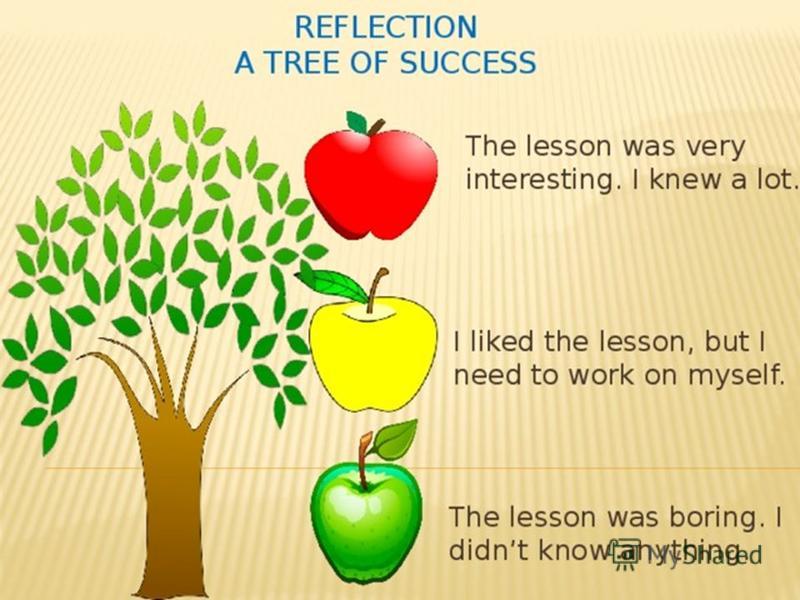
FEEDBACK Learners provide feedback on what they have learned at the lesson. Ex: P: Home task: Write the days |
|
Poster Success
|
|





Short term plan: term 4
|
Unit 8: Recent Advances in Technology |
Lesson 82 |
||
|
Teacher name: |
|
||
|
Date: |
|
||
|
Grade: 11 |
Number present: |
absent: |
|
|
Lesson title |
Apps in education |
||
|
Learning objectives |
11.2.2.1 - understand specific information in unsupported extended talk on a wide range of general and curricular topics, including talk on a growing range of unfamiliar topics 11.3.6.1 - navigate talk and modify language through paraphrase and correction in talk on a wide range of familiar and some unfamiliar general and curricular topics 11.4.3.1 - skim a range of lengthy texts with speed to identify content meriting closer reading on a range of more complex and abstract, general and curricular topics |
||
|
Lesson objectives |
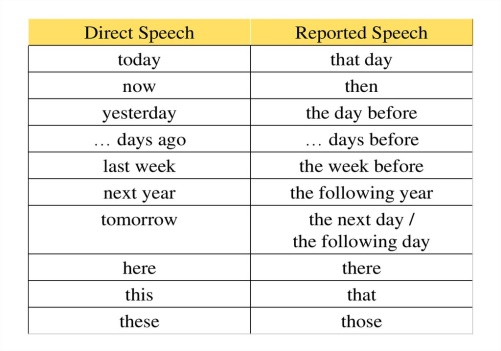
Learners will be able to: -learn vocabulary relating to the topic, - listen and read for gist; - practise reported speech read for specific information ( multiple matching);revise and practise reported speech; |
||
|
Value links |
Tradition: Kazakh traditions and culture have been passed on from one generation to another through oral histories told by traditional Kazakh tribal leaders and elders. |
||
|
Plan |
|||
|
Stages / Time |
Teachers actions |
Students actions |
Assessment criteria |
Resources |
|
Beginning of the lesson Warming-up
3 min. Pre-learning «Brainstorming» method 7 min. |
Organization moment : 1.Greeting. Ask about the weather. The teacher sets the lesson objectives, letting students know what to anticipate from the lesson.
Lead – In
|
The aim: To develop pupils speaking skills and create friendly atmosphere Efficiency: By wishing each other they feel better and feel the support of others Students of the class are listed. Students' attention is drawn to the lesson. Students say different words from the picture •Learners remember previous lesson vocabulary •Learners answer the questions |
The teacher to assess learners for their ability. “Good job! Well done!” Formative Assessment
Good job! Descriptor: - remembers the lesson passed Point 1 Assessment criteria make basic statements related to communication style |
Pictures worksheet Picture |
|
Middle of the lesson Presentation part. 30 min |
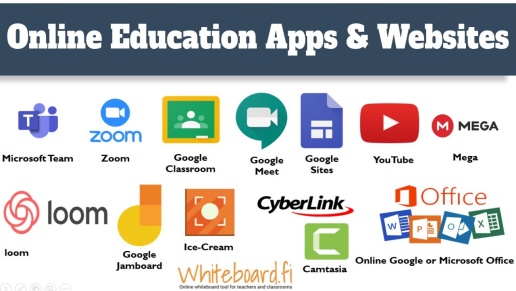
Ex:1 P:98 • Direct Ss to the pictures and read out the phrases relating to online education. • Explain/Elicit the meanings of any unknown items and then elicit which of them Ss have experience of from various Ss around the class. Ex: 2 P: 98 •Ask Ss to look at the picture and the title of the text. Elicit what, if anything, Ss know about the four Cs. • Ss listen to and read the text and say how education apps can be used in a classroom to develop the four Cs. Differentiation: «Verbal support» method is used to help Ss use new words in the sentences. Ex: 3 P: 98 • Ask Ss to read the questions • Then give Ss time to read the text again and decide which sentences refer to which apps. • Check Ss’ answers around the class. Ex: 4 P: 99 Explain the task and give Ss time to complete the gaps using the words in the list and referring back to the text if necessary. • Check Ss’ answers Conclusion during the lesson some tasks differentiated by outcomes of the students and by their abilities. |
• Learners answer the question. Tell the class. ANSWERS I have never taken an online course, but I have downloaded some educational apps. I have no experience of online counselling or distance learning, but I know people who have. I have used a cloudlibrary before. I have experienced creative teaching because myschool uses various technology in the lessons including interactive whiteboards. I have no experience of virtual education, but I have taken many online tests • Learners look at the picture and read the title of the text. Answer the question. ANSWERS The four Cs are Critical thinking, Creativity, Collaboration and Communication. Education apps can be used in different ways to develop the four Cs. For example, turning lessons into games can develop critical thinking and creativity, or sharing class content using apps can help to promote collaboration and communication • Learners read the text again. For questions choose from apps. ANSWERS 1 B 2 A 3 D 4 B 5 D 6 C. • Learners complete the sentences ANSWERS 1 develop 2 exercise 3 grasp 4 bring 5 distribute 6 upload 7 integrate 8 collaborate |
Descriptor: - read out the phrases - answer the question Total: 3 point
Self assessment Descriptor: - look at the picture - read the title of the text Total: 3 point Descriptor: - read the text - choose the correct answer. Total: 1 point -Make CCQ questions Yes / No Total: 1 point |
Card Worksheet Students book |
|
End of the lesson 5 min |
FEEDBACK Learners provide feedback on what they have learned at the lesson. Ex: P: Home task: Write the days |
|
Poster Success
|
|
Short term plan: term 4
|
Stages / Time |
Teachers actions |
Students actions |
Assessment criteria |
Resources |
|
Beginning of the lesson Warming-up
3 min. Pre-learning «Brainstorming» method 7 min. |
Organization moment : 1.Greeting. Ask about the weather. The teacher sets the lesson objectives, letting students know what to anticipate from the lesson.
Lead – In
|
The aim: To develop pupils speaking skills and create friendly atmosphere Efficiency: By wishing each other they feel better and feel the support of others Students of the class are listed. Students' attention is drawn to the lesson. Students say different words from the picture •Learners remember previous lesson vocabulary •Learners answer the questions |
The teacher to assess learners for their ability. “Good job! Well done!” Formative Assessment
Good job! Descriptor: - remembers the lesson passed Point 1 Assessment criteria make basic statements related to communication style |
Pictures worksheet Picture |
|
Middle of the lesson Presentation part. 30 min |
Ex:5 P:99 • Read the questions aloud. Ask Ss to work in pairs and discuss their answers. • Monitor the activity around the class, then ask some pairs to report back to the class. Ex: 6 P: 99 • Refer Ss to the Grammar Reference section to review the theory on reported speech. • Then elicit examples in the text and how tenses/pronouns change from direct to reported speech.. Differentiation: «Verbal support» method is used to help Ss use new words in the sentences. Ex: 7 P: 99 • Explain the task and give Ss time to complete it. • Check Ss’ answers Ex: 8 P: 99 Ask Ss to read the sentences. • Play the recording. Ss listen and fill in the missing information. • Check Ss’ answers. Conclusion during the lesson some tasks differentiated by outcomes of the students and by their abilities. |
• Learners answer the question. Discuss in pairs. ANSWERS A: For me personally, I think the most useful app is Studyblue. It definitely sounds like it would help me study. I often find it difficult to create flashcards and do effective revision. B: I agree. Although I think Google Classroom sounds good too. It would definitely help me become more organised since all the information and resources are in one place. I wish I had an app like that. A: Don’t you use any educational apps? I do. I’ve got a great one that lets me programme my own study timetable in there. I can’t believe how much more I’m getting done. etc • Learners find examples of Reported speech in the text. Answer the question. ANSWERS Examples in the text: We asked deputy head teacher Tara Jones what here favourite classroom apps were and how they help her students develop the 4 Cs. - My students told me that because they could post their work to show their parents, they were inspired to do their best. - Parents said the app has helped them understand how to better support their children. • Learners change the following from direct speech into reported speech. ANSWERS 1 Mr Smith warned us not to use unreliable sources. 2 Tom claimed to have achieved 100% in all the tests. 3 Anna admitted losing the remote for the classroom projector. 4 Kyle wondered how he could create an online quiz. 5 Julie suggested making their/our own flashcards |
Descriptor: - read the questions aloud - answer the question Total: 3 point
Self assessment Descriptor: - find examples of Reported speech -complete the task Total: 3 point Descriptor: - change the following from direct speech - change into reported speech. Total: 1 point -Make CCQ questions Yes / No Total: 1 point |
Card Worksheet Students book |
|
End of the lesson 5 min |
FEEDBACK Learners provide feedback on what they have learned at the lesson. Ex: P: Home task: Write the days |
|
Poster Success
|
|









 Бұл курс Қазақстан Республикасы Оқу-ағарту министрлігімен келісілген










