ЖИ көмекші


жүктеу мүмкіндігіне ие боласыз
Бұл материал сайт қолданушысы жариялаған. Материалдың ішінде жазылған барлық ақпаратқа жауапкершілікті жариялаған қолданушы жауап береді. Ұстаз тілегі тек ақпаратты таратуға қолдау көрсетеді. Егер материал сіздің авторлық құқығыңызды бұзған болса немесе басқа да себептермен сайттан өшіру керек деп ойласаңыз осында жазыңыз
 24 Ақпан 2025
 224
224
Robotics
Lesson plan
|
Unit: |
School Kyzylkum |
||||
|
Date: 18.02.2025 |
Teacher's name: Aitzhanova Lazzat |
||||
|
Class:10 Ә |
Number present: |
Number absent: |
|||
|
Theme of the lesson: |
Robotics |
||||
|
Learning objectives(s) that this lesson is contributing to |
10.1.10.1 - use talk or writing as a means of reflecting on and exploring a range of perspectives on the world; 10.2.6.1 - deduce meaning from context in unsupported extended talk on a wide range of general and curricular topics, including talk on a limited range of unfamiliar topics;
|
||||
|
Lesson objectives to: |
-understand and use relevant vocabulary related to robotics. -improve their listening, reading, speaking, and writing skills in the context of robotics. |
||||
|
Құндылықтар |
"Біртұтас тәрбие бағдарламасы" бойынша "жасампаздық және жаңашылдық" құндылығына баулу |
||||
|
The course of the lesson. |
|||||
|
Planned timings |
Teacher's actions |
Pupil`s actions |
Assessment |
Resources |
|
|
Greeting. Organizationmoment |
Good morning, dear students. I’m glad to see you. How are you today? What is the weather today? What date\day is it today?
In order to create friendly atmosphere in class students should make a circle, touching each other with hands and say some wishes or warm words. I wish you… |
The students greet the teacher. Good morning, good morning to you, We are glad to see you too. How are you? It is sunny/ cold/ hot. The aim:To develop pupils speaking skills and create friendly atmosphere Efficiency:By telling the wishes they show their appreciations. |
At the organization moment T tries to award active Ss. «The praise» method is used to evaluate Ss with phrases like: “Good job! Well done!” Formative Assessment Good job! |
Whiteboard |
|
|
|
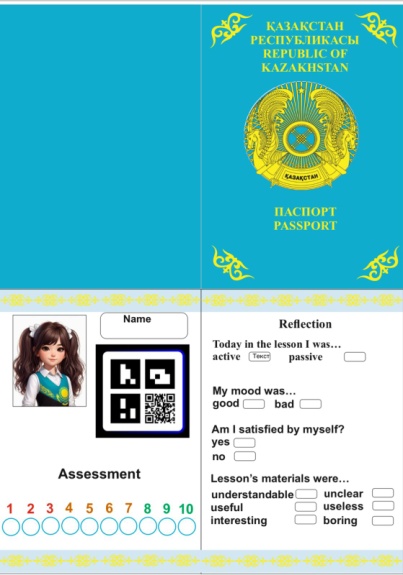
Teacher divides the students into 2 groups by the tickets. 1st group 2nd group Check the home task Teacher check the home task by method “Personal questions”. The teacher asks the students to take a passport and answer the questions on the card inside. |
Students sit on the correct table Teacher check the home task by “Personal questions” method. The students take out task cards and answer |
|
Password, tickets |
|
|
|
Brainstorming Activate prior knowledge and engage students in the theme.
|
Students answer questions. These actions will help students actively engage with the topic and begin thinking critically about human brain |
Descriptor: -true or false |
||
|
|
Lead in Watch the video SSQ
Differentiation: Teacher asks different questions connected with the theme and tries to help Students to give the correct answer. Teacher asks leading questions to clarify the theme to the Students who needs Teacher support. Students give their possible answers. After that Teacher introduces |
Students watch the video and answer the questions |
Descriptor: A learner - watch a video - answer the questions SSQ
|
Watch a video |
|
|
|
New words body language-is a range of nonverbal signals that you can use to communicate your feelings and intentions. emotion –feeling deriving from one's circumstances, mood, or relationships with others. humanoid-it's a science fiction a being resembling a human in its shape. forehead-the part of the face |
Students read new words and check their meaning |
Descriptor: A learner - read the new words; - read the meaning of words |
|
|
|
Main part of the lesson
|
Watching Time: Pepper the Emotional Robots Read the actions and students to discuss which ones they think the robot in the picture can do.
What is a humanoid robot? How can Pepper move around ? In what ways do Pepper robots help young patients in Belgian hospitals ? Apart from hospitals where else could people use Pepper robots? In what way? Would you like to own a robot like Pepper? Why? Why not? |
Ss answer the questions and discuss |
Descriptor: A learner - watch the video; - answer the questions |
Watch a video |
|
|
Middle of the lesson
|
Writing Time Individual work by method “Who is faster?” Teacher asks students do task Exercise 2. p 86 Explain the task and give students time to complete it. |
The students need to select and write down the actions that the robot can perform from the given phrases. Teacher give them time to complete it by ''Who is faster?'' method. |
Descriptor: A learner - write the phrases; - by method who is faster |
|
|
|
|
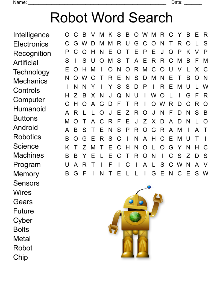
Pair Work. Teacher asks students to work in pairs and find hidden words in 5 minutes
|
Students work in pairs and find hidden words in 5 minutes |
Descriptor: A learner -works in pairs - find hidden words
|
|
|
|
|
A break time The teacher gives time to rest by listening to melody |
Students play Kazakh traditional melody |
- |
Dombra |
|
|
|
Online Tasks Teacher ask students to look at the active board and play an online game. They should choose correct answer looking to photos. Students play this game individually |
Students play online games. They press the start button and choose the correct option |
Descriptor: A learner - Works individually - chooses the correct option true or false |
Task 1 https://wordwall.net/resource/4496805 Task 2 |
|
|
|
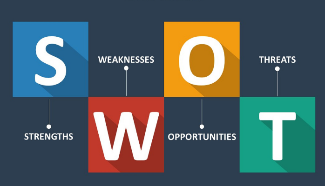
Group Work SWAT- Analysis
Teacher asks to students to make SWOT. SWOT- analysis is a method for identifying and analyzing internal strengths and weaknesses and external opportunities and threats that shape current and future operations and help develop strategic goals. |
Students make analysis is a method identifying and analysing internal strengths and weaknesses and external opportunities and threats that shape current and future operations and help develop strategic goals. |
Descriptor: -make full analysis |
Video AI |
|
|
The end of the lesson |
Give home task Exercise 5. p.87 Feedback
|
Students write their opinions and put the papers into yurt Students write their homework for the next lesson. Pupils. give a mark to themselves for working at the lesson. Students think critically, exploring, developing, evaluating and making choices about their own and others’ ideas. |
Students evaluate themselves using evaluation lists. Reflection. Self- Assessment. |
|
|



 Жүктеу


 Жүктеу
шағым қалдыра аласыз

 Бұл курс Қазақстан Республикасы Оқу-ағарту министрлігімен келісілген