ЖИ көмекші


0 / 1

Барлық 400 000 материалдарды тегін жүктеу үшін
Ұнаған тарифті таңдаңыз
Айлық
Жылдық
1 - күндік
Танысу 690 ₸ / 1 күнге
Таңдау
UstazTilegi AI - ЖИ арқылы тегін ҚМЖ, БЖБ, ТЖБ, тест, презентация, авторлық бағдарлама т.б. 10 материал жасау
Материалдар бөлімі - Барлық 400 000 материалдарды тегін 30 материал жүктеу
Аттестация ПББ тестеріне доступ аласыз шексіз
Көрнекілік бөлімі - 10 000 астам көрнекіліктерді жүктеу Күніне 2 көрнекілік жүктеу
Жеке ҚМЖ бөлімінде - дайын ҚМЖ-ларды, презентацияларды жүктеу5 файлды тегін жүктеу
Олимпиада, турнир, байқауларға 50% жеңілдік
1 - айлық
Стандарт
2990 ₸ / айына
UstazTilegi AI - ЖИ арқылы тегін ҚМЖ, БЖБ, ТЖБ, тест, презентация, авторлық бағдарлама т.б. жасау 30 материал жасау
Материалдар бөлімі - Барлық 400 000 материалдарды тегін 900 материал жүктеу
Аттестация ПББ тестеріне доступ аласыз шексіз
Көрнекілік бөлімі - 10 000 астам көрнекіліктерді жүктеу30 көрнекілік жүктеу
Жеке ҚМЖ бөлімінде - дайын ҚМЖ-ларды, презентацияларды жүктеу 150 файлды тегін жүктеу
Жинақталған ҚМЖ бөлімінде 10 файлды тегін жүктеу
Олимпиада, турнир, байқауларға 50% жеңілдік
Іс-шаралар (мини-курстар, семинарлар, конференциялар) тегін қатысу
1 - айлық
Шебер 7990 ₸ / айына
Таңдау
UstazTilegi AI - ЖИ арқылы тегін ҚМЖ, БЖБ, ТЖБ, тест, презентация, авторлық бағдарлама т.б. жасау 150 материал жасау
Материалдар бөлімі - Барлық 400 000 материалдарды тегін 900 материал жүктеу
Аттестация ПББ тестеріне доступ аласыз шексіз
Көрнекілік бөлімі - 10 000 астам көрнекіліктерді жүктеу90 көрнекілік жүктеу
Жеке ҚМЖ бөлімінде - дайын ҚМЖ-ларды, презентацияларды жүктеу 300 файлды тегін жүктеу
Жинақталған ҚМЖ бөлімінде 50 файлды тегін жүктеу
Олимпиада, турнир, байқауларға 50% жеңілдік
Іс-шаралар (мини-курстар, семинарлар, конференциялар) тегін қатысу

Назар аударыңыз!
Сіз барлық мүмкіндікті қолдандыңыз.
Қалған материалдарды ертең жүктей аласыз.
Ок
Материалдың қысқаша нұсқасы
The theme of the lesson: Kazakh cuisine
The aims of the lesson:
1) Educational: Presentation of the lesson about, new words and discussion an English language
2) Developing: To develop the pupils habits of the oral speech, to develop pupils creative and logical abilities, understanding, reading and writing, grammar and lexical skills.
3) Bringing-up: to bring up love and interest to the subject, to respect each other, to create an English atmosphere in the classroom.
Inter-subject connection: Kazakh, English
The type of the lesson: presentation
Methods of teaching: training, explanation, demonstration, interaction
The equipment of the lesson: diagrams on the tasks, pictures, posters, computers, interactive board.
The procedure of the lesson
I) Organization moment
-Good morning children?
-Who is on duty today?
-Who is absent today?
-What day is it today?
-What date is it today?
II) Phonetic drills
-What is your name?
-How are you?
-How old are you?
-Where are you from?
-What subject do you like?
III) The Presentation of the new theme
Read the text and translate.
Kazakh national cuisine reflects the nature of its people, its history, customs and traditions. Since old times hospitality has been the most distinctive feature of the Kazakh people. A guest is always given a special welcome and offered the place of honor.
He or she is first treated to kumys (fermented mare's milk), shubat (fermented camel's milk) or airan (fermented cow's milk), then to tea with milk or cream, baursaks (fried dough balls), raisins, irimshik (dried cheese balls), kurt (dried cheese and whey).
A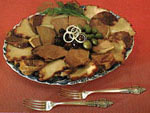 ppetizers of horse or
mutton meat follow (kazy, shuzhuk, zhal, zhaya, sur-yet, karta,
kabyrga) always served with flat bread.
ppetizers of horse or
mutton meat follow (kazy, shuzhuk, zhal, zhaya, sur-yet, karta,
kabyrga) always served with flat bread.
Kazakhs eat at a low table called 'dastarkhan' and the most popular dish has always been the national meat dish 'beshbarmak' (five fingers because of the manner in which it is eaten). It is made of large chunks of boiled meat which the host cuts and serves to each guest according to their importance: the pelvic bones and shin to the elderly guests of honour, the brisket to the son or daughter-in-law, the cervical vertebra to girls and so on.
T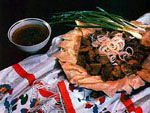 he highest ranking
guest is served a sheep's head cooked in a special way and
distributes it to other guests according to local tradition (old
men, children, close and distant
relatives).
he highest ranking
guest is served a sheep's head cooked in a special way and
distributes it to other guests according to local tradition (old
men, children, close and distant
relatives).
The meat is eaten with boiled pasta sheet and a meat broth called sorpa usually sewed in traditional Kazakh bowls called 'pialas'. At the end of the meal kumys is sewed then tea.
Today the dastarkhan gathers as well as Kazakhs many other nationalities: Russians, Tatars, Ukrainians, Uzbeks, Germans, Uigurs, Dungalts and Koreans.
These people who have lived
peacefully with the Kazakhs have influenced their c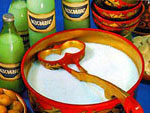 uisine, everyday life
and culture and adopted some Kazakh traditions.Today's Kazakh
cuisine includes traditional Kazakh dishes as well as Uzbek, Uigur,
Russian, Tatar, Korean dishes that the Kazakhs
like.
uisine, everyday life
and culture and adopted some Kazakh traditions.Today's Kazakh
cuisine includes traditional Kazakh dishes as well as Uzbek, Uigur,
Russian, Tatar, Korean dishes that the Kazakhs
like.
Today, the range of ingredients available locally has considerably widened and influenced the national cuisine accordingly.Traditionally Kazakh cuisine was mostly based on meat and milk products. But more recently vegetables, fruits, fish, seafood, baked dishes and sweets have been added to the list of delights Kazakhs offer to their guests
Kazakhstan food and national meals
Kazakhstan food info
First of all the guest of Kazakhstan family regaled with kumiss (the drink based on mare milk), shubat or airan, next meal was tea with milk or cream, baursaks, raisins, irimshik, kurt. Then the guest was tasting horse-flesh or mutton snacks - kazi, shuzhuk, zhal, zhaya, sur-et, karta, kabirga. Wheat flour cookies were very common too.
Kazakhstan food - Kumiss

Kazakhstan traditional food facts and features
The main meal of every dastarkhan and one of the most delicious for Kazakh people was Kazakh style cooked meat. Boiled meat was served in large uncut pieces. The host was cutting the meat himself and treat every guest: pelvic bones and shank for honourable old people, brisket for son-in-law or daughter-in-law, neck-bone for girls and so on.
The most honorable guest received particular method cooked head of the ram. The guest should part the head between people around the dastarkhan obeying to ancient ritual showing respectful attitude to guests, old people, kids, near and far relations.
The delicious aromatic meat was eaten with thin boiled pieces of pastry. Excellent addition to this dish was rich flavoured meat bouillon - sorpa, served in phials. Kumiss and tea were the last dishes of the meal.
Kazakhstan food - Besbarmak

Kazakhstan food - Kazi, Karta, Shuzhuk Kazakhstan food – Kuirdak
Today Kazakh meal is something different from the old one but still it is imbued with ancient laws of hospitability. On the contrary the hospitability is larger then ever for now because not only Kazakhs but people of various nations (Kazakhstan is a multinational country) have a meal around the dastarkhan: Russians, Tatars, Ukrainians, Uzbeks, Germans, Uigurs, Koreans and more. All these nations made their contribution on Kazakhs cookery.
Kazakhstan cuisine includes not only traditional national Kazakhstan dishes but the best dishes of Uzbek, Russian, Tatar, Korean and other cookeries. That’s why Kazakh cuisine saving its national characteristic features has some international features.The assortment of food groceries was changed slightly. During its long history Kazakhstan people gathered a huge experience in cooking dishes from meat and milk. And modern times filled it with a large range of vegetables, fruit, fish, sea stuff, baked, flour dishes and confectionery.
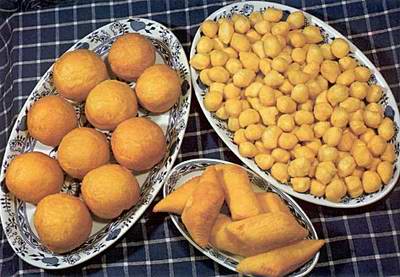
Kazakhstan food - Baursaki
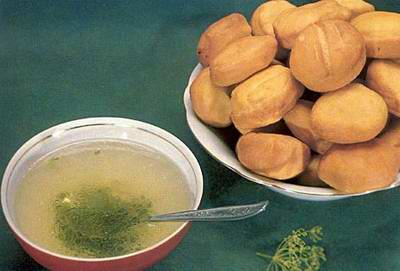
Kazakhstan food - Sorpa and Baursaki
Kazakhstan food – Lagman
But still the most popular Kazakhstan national foodstuff is meat. From olden times Kazakh cookery was special due to its original technology. Some features of Kazakh people living left a mark on Kazakh style of food cooking. The traditional national Kazakhstan cookery is based on boiling. Exactly boiling helps to cook meat with a lot of delicate tastes, gives it softness and aroma.
Kazakh people placed high emphasis on long-term storage of foodstuff. A huge part of meat was prepared for future use being salted, dried. Delicatessen was cooked mainly from horse meat - kazi, shuzhuk, zhal, zhaya, karta and others.
Milk and milk products were widely spread. The preference was for the sour milk products because it was easier to save it during nomadic life. Bread was usually made like cookies. The most popular baked dish is baursaki.
The ancient plates and dishes were made from leather, wood, ceramics. Every family had cast-iron cauldron (kazan) for cooking. The tea was boiled in cast-iron jugs, later in samovars.
Kazakhstan food - Palau Kazakhstan food - Manti Kazakhstan food - Samsa
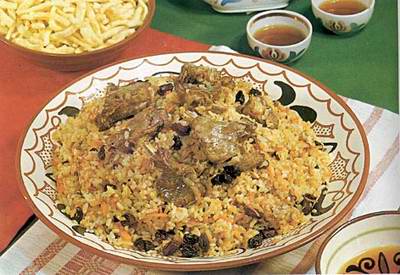
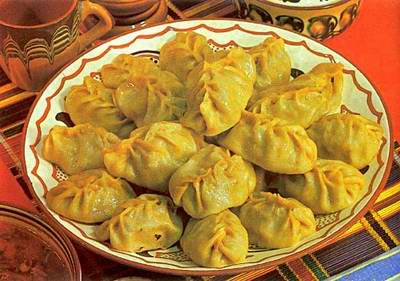
Kazakhstan food - Chak-Chak
V) Home task
Your home task is read the text and translate.
The lesson is over.
You may be free.
Good bye!
 Жүктеу
ЖИ арқылы жасау
ЖИ арқылы жасау

Бөлісу
1 - айлық
Материал тарифі-96% жеңілдік
00
05
00
ҚМЖ
Ашық сабақ
Тәрбие сағаты
Презентация
БЖБ, ТЖБ тесттер
Көрнекіліктер
Балабақшаға арнарлған құжаттар
Мақала, Эссе
Дидактикалық ойындар
және тағы басқа 400 000 материал
Барлық 400 000 материалдарды шексіз
жүктеу мүмкіндігіне ие боласыз
жүктеу мүмкіндігіне ие боласыз
1 990 ₸ 49 000₸
1 айға қосылу
Материалға шағымдану
Бұл материал сайт қолданушысы жариялаған. Материалдың ішінде жазылған барлық ақпаратқа жауапкершілікті жариялаған қолданушы жауап береді. Ұстаз тілегі тек ақпаратты таратуға қолдау көрсетеді. Егер материал сіздің авторлық құқығыңызды бұзған болса немесе басқа да себептермен сайттан өшіру керек деп ойласаңыз осында жазыңыз
Жариялаған:
Темірбек Ақбөбек Мерекеқызы 09 Ақпан 2019
 936
936Шағым жылдам қаралу үшін барынша толық ақпарат жіберіңіз
Сабақ жоспар. Kazakh cuisine. 6-сынып
Тақырып бойынша 11 материал табылды
Сабақ жоспар. Kazakh cuisine. 6-сынып
Материал туралы қысқаша түсінік
6-сыныпқа арналған Қазақ халқының ұлттық тағамдарын дәріптеу.
Материалдың қысқаша нұсқасы
The theme of the lesson: Kazakh cuisine
The aims of the lesson:
1) Educational: Presentation of the lesson about, new words and discussion an English language
2) Developing: To develop the pupils habits of the oral speech, to develop pupils creative and logical abilities, understanding, reading and writing, grammar and lexical skills.
3) Bringing-up: to bring up love and interest to the subject, to respect each other, to create an English atmosphere in the classroom.
Inter-subject connection: Kazakh, English
The type of the lesson: presentation
Methods of teaching: training, explanation, demonstration, interaction
The equipment of the lesson: diagrams on the tasks, pictures, posters, computers, interactive board.
The procedure of the lesson
I) Organization moment
-Good morning children?
-Who is on duty today?
-Who is absent today?
-What day is it today?
-What date is it today?
II) Phonetic drills
-What is your name?
-How are you?
-How old are you?
-Where are you from?
-What subject do you like?
III) The Presentation of the new theme
Read the text and translate.
Kazakh national cuisine reflects the nature of its people, its history, customs and traditions. Since old times hospitality has been the most distinctive feature of the Kazakh people. A guest is always given a special welcome and offered the place of honor.
He or she is first treated to kumys (fermented mare's milk), shubat (fermented camel's milk) or airan (fermented cow's milk), then to tea with milk or cream, baursaks (fried dough balls), raisins, irimshik (dried cheese balls), kurt (dried cheese and whey).
A ppetizers of horse or
mutton meat follow (kazy, shuzhuk, zhal, zhaya, sur-yet, karta,
kabyrga) always served with flat bread.
Kazakhs eat at a low table called 'dastarkhan' and the most popular dish has always been the national meat dish 'beshbarmak' (five fingers because of the manner in which it is eaten). It is made of large chunks of boiled meat which the host cuts and serves to each guest according to their importance: the pelvic bones and shin to the elderly guests of honour, the brisket to the son or daughter-in-law, the cervical vertebra to girls and so on.
T he highest ranking
guest is served a sheep's head cooked in a special way and
distributes it to other guests according to local tradition (old
men, children, close and distant
relatives).
The meat is eaten with boiled pasta sheet and a meat broth called sorpa usually sewed in traditional Kazakh bowls called 'pialas'. At the end of the meal kumys is sewed then tea.
Today the dastarkhan gathers as well as Kazakhs many other nationalities: Russians, Tatars, Ukrainians, Uzbeks, Germans, Uigurs, Dungalts and Koreans.
These people who have lived
peacefully with the Kazakhs have influenced their c uisine, everyday life
and culture and adopted some Kazakh traditions.Today's Kazakh
cuisine includes traditional Kazakh dishes as well as Uzbek, Uigur,
Russian, Tatar, Korean dishes that the Kazakhs
like.
Today, the range of ingredients available locally has considerably widened and influenced the national cuisine accordingly.Traditionally Kazakh cuisine was mostly based on meat and milk products. But more recently vegetables, fruits, fish, seafood, baked dishes and sweets have been added to the list of delights Kazakhs offer to their guests
Kazakhstan food and national meals
Kazakhstan food info
First of all the guest of Kazakhstan family regaled with kumiss (the drink based on mare milk), shubat or airan, next meal was tea with milk or cream, baursaks, raisins, irimshik, kurt. Then the guest was tasting horse-flesh or mutton snacks - kazi, shuzhuk, zhal, zhaya, sur-et, karta, kabirga. Wheat flour cookies were very common too.
Kazakhstan food - Kumiss
Kazakhstan traditional food facts and features
The main meal of every dastarkhan and one of the most delicious for Kazakh people was Kazakh style cooked meat. Boiled meat was served in large uncut pieces. The host was cutting the meat himself and treat every guest: pelvic bones and shank for honourable old people, brisket for son-in-law or daughter-in-law, neck-bone for girls and so on.
The most honorable guest received particular method cooked head of the ram. The guest should part the head between people around the dastarkhan obeying to ancient ritual showing respectful attitude to guests, old people, kids, near and far relations.
The delicious aromatic meat was eaten with thin boiled pieces of pastry. Excellent addition to this dish was rich flavoured meat bouillon - sorpa, served in phials. Kumiss and tea were the last dishes of the meal.
Kazakhstan food - Besbarmak
Kazakhstan food - Kazi, Karta, Shuzhuk Kazakhstan food – Kuirdak
Today Kazakh meal is something different from the old one but still it is imbued with ancient laws of hospitability. On the contrary the hospitability is larger then ever for now because not only Kazakhs but people of various nations (Kazakhstan is a multinational country) have a meal around the dastarkhan: Russians, Tatars, Ukrainians, Uzbeks, Germans, Uigurs, Koreans and more. All these nations made their contribution on Kazakhs cookery.
Kazakhstan cuisine includes not only traditional national Kazakhstan dishes but the best dishes of Uzbek, Russian, Tatar, Korean and other cookeries. That’s why Kazakh cuisine saving its national characteristic features has some international features.The assortment of food groceries was changed slightly. During its long history Kazakhstan people gathered a huge experience in cooking dishes from meat and milk. And modern times filled it with a large range of vegetables, fruit, fish, sea stuff, baked, flour dishes and confectionery.
Kazakhstan food - Baursaki
Kazakhstan food - Sorpa and Baursaki
Kazakhstan food – Lagman
But still the most popular Kazakhstan national foodstuff is meat. From olden times Kazakh cookery was special due to its original technology. Some features of Kazakh people living left a mark on Kazakh style of food cooking. The traditional national Kazakhstan cookery is based on boiling. Exactly boiling helps to cook meat with a lot of delicate tastes, gives it softness and aroma.
Kazakh people placed high emphasis on long-term storage of foodstuff. A huge part of meat was prepared for future use being salted, dried. Delicatessen was cooked mainly from horse meat - kazi, shuzhuk, zhal, zhaya, karta and others.
Milk and milk products were widely spread. The preference was for the sour milk products because it was easier to save it during nomadic life. Bread was usually made like cookies. The most popular baked dish is baursaki.
The ancient plates and dishes were made from leather, wood, ceramics. Every family had cast-iron cauldron (kazan) for cooking. The tea was boiled in cast-iron jugs, later in samovars.
Kazakhstan food - Palau Kazakhstan food - Manti Kazakhstan food - Samsa
Kazakhstan food - Chak-Chak
V) Home task
Your home task is read the text and translate.
The lesson is over.
You may be free.
Good bye!
 Жүктеу
 Бөлісу
ЖИ арқылы жасау
Файл форматы:

docx

09.02.2019

936
Жүктеу
ЖИ арқылы жасау
Жариялаған:
Бұл материалды қолданушы жариялаған. Ustaz Tilegi ақпаратты жеткізуші ғана болып табылады. Жарияланған материалдың мазмұны мен авторлық құқық толықтай автордың жауапкершілігінде. Егер материал авторлық құқықты бұзады немесе сайттан алынуы тиіс деп есептесеңіз,
шағым қалдыра аласыз
шағым қалдыра аласыз