ЖИ көмекші


 Қауіпсіз төлем

жүктеу мүмкіндігіне ие боласыз
Бұл материал сайт қолданушысы жариялаған. Материалдың ішінде жазылған барлық ақпаратқа жауапкершілікті жариялаған қолданушы жауап береді. Ұстаз тілегі тек ақпаратты таратуға қолдау көрсетеді. Егер материал сіздің авторлық құқығыңызды бұзған болса немесе басқа да себептермен сайттан өшіру керек деп ойласаңыз осында жазыңыз
 20 Сәуір 2025
 232
232
1 жыл бойы шексіз жүктеңіз
Short terrm plan "Organic world'
Short term plan
|
Unit of a long term plan:Unit 4 Discussing the difference between organic and non-organic food |
School: Private school “Ulagat” |
|
|
Date:20.02.2024 |
Teacher name: Zhanibekova.G |
|
|
Grade:10 (natural mathematical direction) |
Number present: |
absent: |
|
Lesson title: |
||
|
Learning objectives
|
10.3.3 - explain and justify own and others’ point of view on a wide range of general and curricular topics; 10.3.6 - navigate talk and modify language through paraphrase and correction in talk on a range of familiar general and curricular topics; 10.4.1 - understand main points in extended texts on a wide range of familiar and some unfamiliar general and curricular topics; |
|
|
Assessment criteria |
Assessment criteria Recognize the main points in extended texts Apply the words in oral speech Analyze the text through questions |
|
|
Lesson objectives |
All learners will be able to: learn about the organic farming, food and products industry Most learners will be able to: understand the differences between organic and non-organic farming, food and products. Some learners will be able to discover some of the benefits of eating organic food. A learner with individual educational needs will be able: Recognize the specific information according to the topic Learn to write correctly the specific words according to the theme Differentiate the key words from context with teacher’s support |
|
|
Level of thinking skills |
Level of thinking skills: Higher order of thinking skills Analysis, Synthesis |
|
Plan
|
Part of the lesson/ Time |
Teacher’s activity |
Student’s activity |
Assessment |
Recources |
||||||||||||
|
Start 5 min Warm up Activity
Ice Breaker activity.
“Odd one word out activity” |
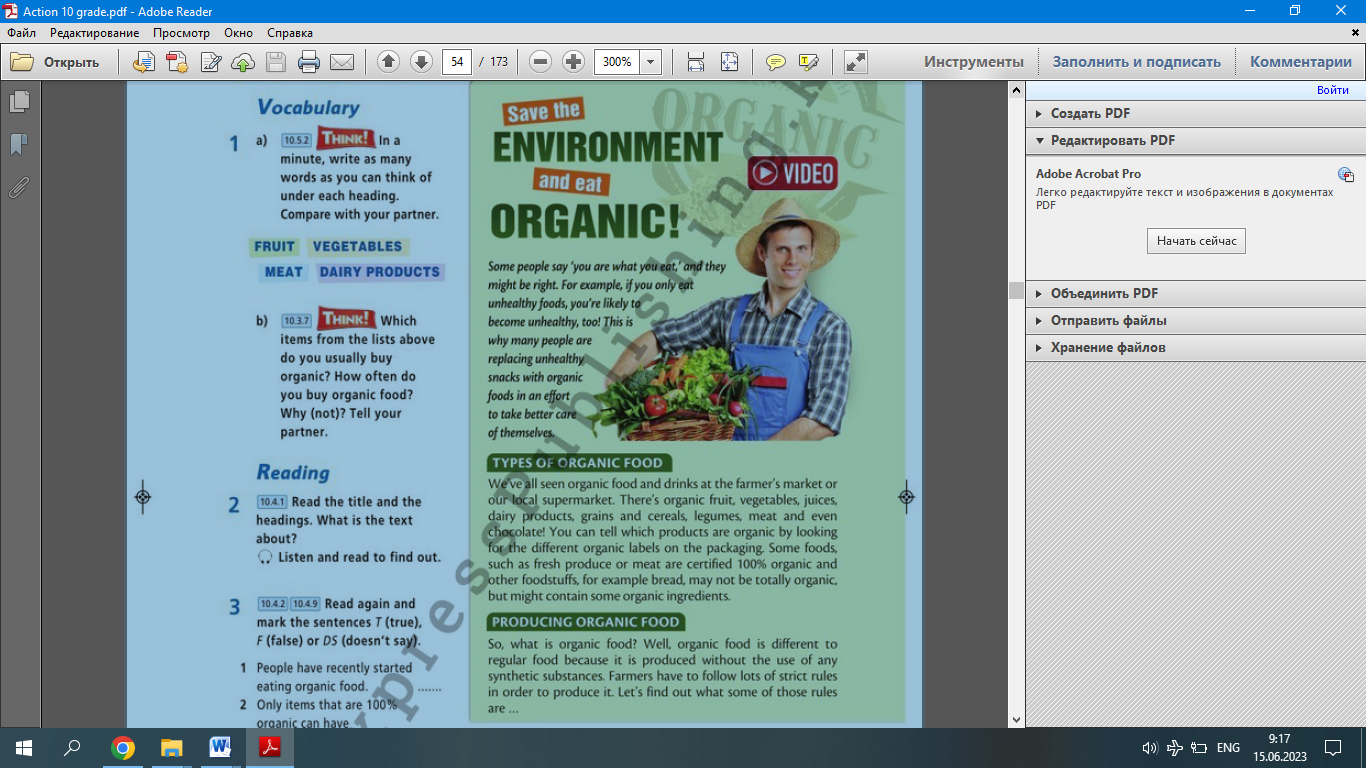
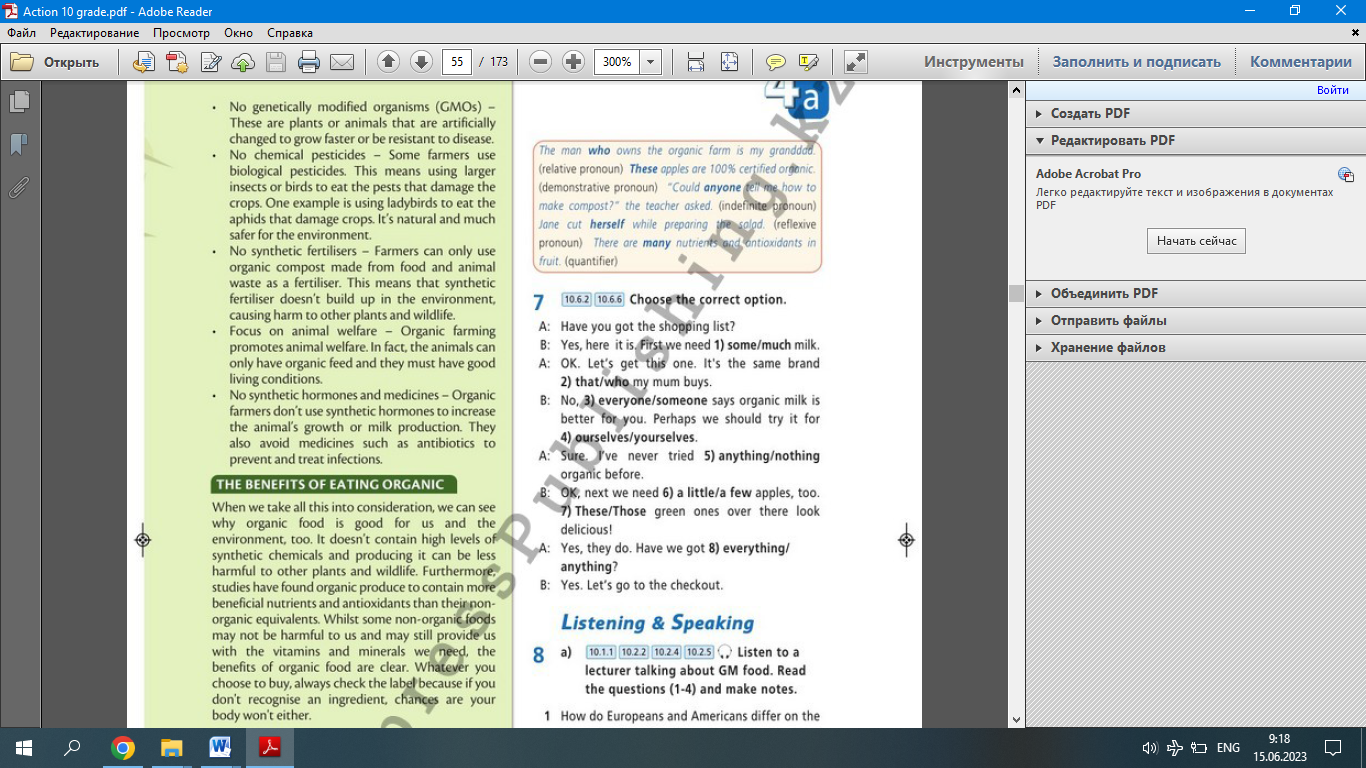
Organization moment Teacher greets students. Teacher discusses learning objectives with the students. Warm up activity/Lead in: Vocabulary work. Think! In a minute, write as many words as you can think of each heading. Compare with your partner. FRUIT MEAT VEGETABLES DAIRY PRODUCTS
Ice Breaker activity. Teacher asks the questions Which items from the lists above do you usually buy organic? How often do you buy organic food? Why (not) ? Tell your partner.
Task for a learner with individual educational needs “Odd one word out activity”
Here is the list of answers for the A1 sheet: 1: Onion – it’s not a
fruit;
6: Pasta – it’s not a typical
breakfast food; |
Ss write as many words as they can according to the given words, then compare the words with patners.
Ss work in pair. They will ask and answer the questions.
A learner must find the odd one out and explain why For example: “Onion doesn’t fit because it’s not a fruit.”
|
Formative assessment
Descriptor: A learner: -answers the question -works in pair
Formative assessment |
Interactive board
Ice Breaker questions
Odd one word out activity worksheet |
||||||||||||
|
Middle 30 min Pre reading stage. The method “Video”
While reading stage The method “Comprehension questions”/ “Focus questions” Post reading stage The method: “What I learned” KWL chart Feedback Chart feeling Assessment |
Reading Pre reading stage. Read the title and the headings. What is the text about? (ss answer) Listen and read to find out. (video) https://www.youtube.com/watch?v=l3SKQcphCeo
While reading stage Teacher asks the focus questions while watching the video. Teacher stops the video and asks focus questions
The text “ “Save the environment and eat organic”
Post reading stage For summarizing the text teacher gives KWL chart The method: “What I learned” Feedback KWL chart Fill in the columns Organics KWL chart Name____________________ Fill in the columns below with what you know, want to know and have learnt about organics
Task for a learner with individual educational needs Chart feeling Teacher gives a chart for completing.
Functional literacy
Teacher asks ss to assess the lesson.
|
Ss watch the video about organic food.
Learners answer the questions one by one.
After reading the text, students complete the given chart
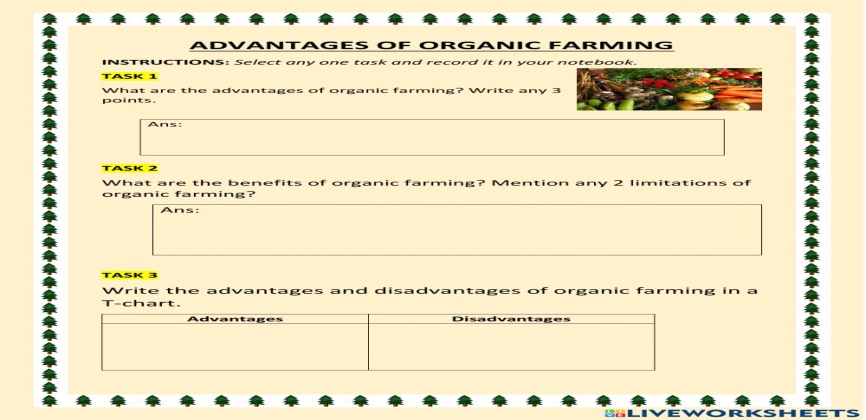
Learner should write the advantages and disadvantages of organic food.
Learners will know how to differ the organic food, will be able analyze how to eat healthy.
Learners assess the lesson |
Descriptor: A learner: -does pre reading tasks -tries to guess the lesson title
Verbal evaluation
Formative assessment
Individual evaluation
Functional literacy
Individual evaluation
Thumbs up, thumbs neutral, thumbs down
|
https://www.youtube.com/watch?v=l3SKQcphCeo
“Comprehension questions”/ “Focus questions”
KWL chart
Chart
Thumbs up, thumbs neutral, thumbs down
|
||||||||||||
|
End 5 min The method “Unfinished sentences”
|
REFLECTION The method “Unfinished sentences” To consolidate the text Teacher uses this method to check whether the ss understand the text or not.
Home task: Ex-4,p-50 Saying goodbye |
Learners answer the specific questions. |
Self-assessment
|
Specific questions
|



Resources
Appendix 1
FRUIT MEAT VEGETABLES DAIRY PRODUCTS
Appendix 2
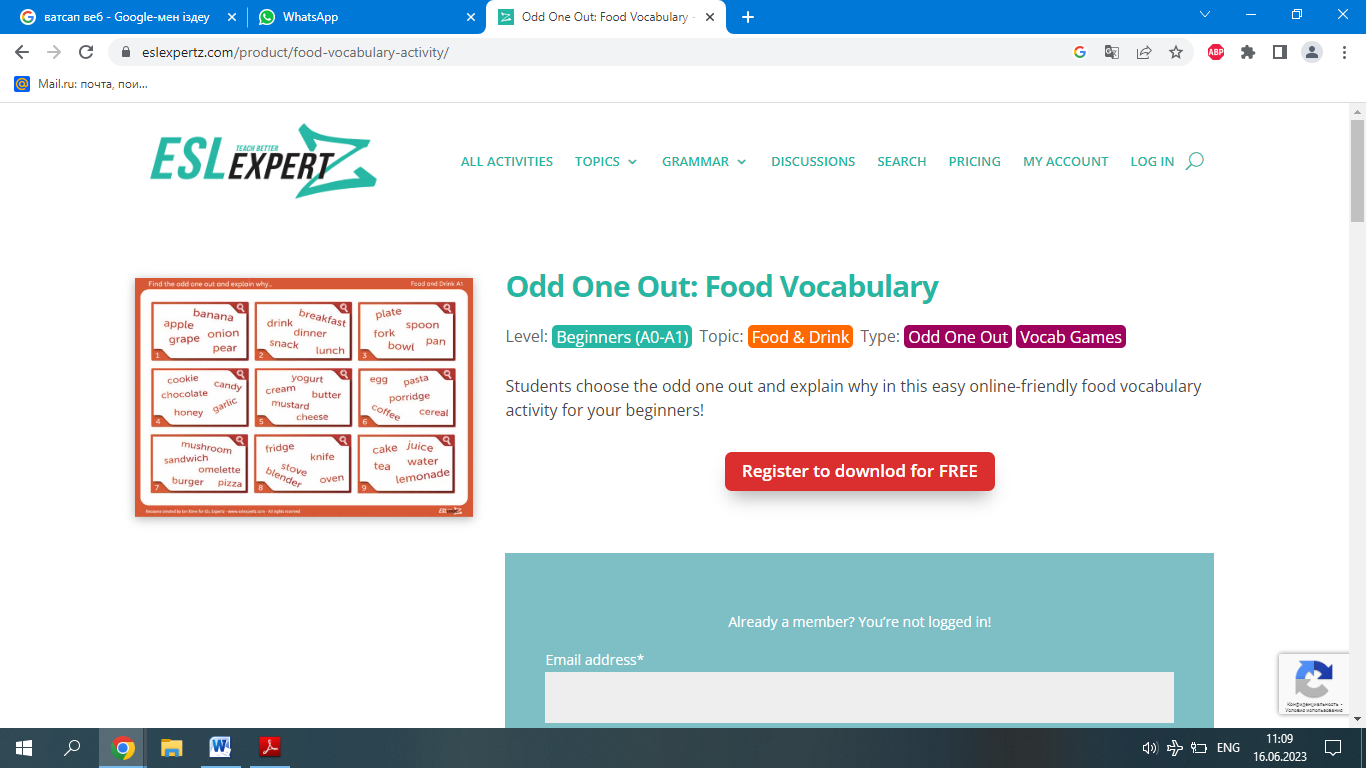
Here is the list of answers for the A1 sheet:
1: Onion – it’s not a
fruit;
2: Drink – it’s not a
meal;
3: Pan – you don’t use it to
eat, you use it to cook;
4: Garlic – it’s not
sweet;
5: Mustard – it’s not made from
milk / it’s not a dairy product;
6: Pasta – it’s not a typical breakfast
food;
7:
Mushroom – it’s not a dish;
8: Knife –
it’s not an appliance in the kitchen;
9: Cake –
it’s not a drink.
Appendix 3
https://www.youtube.com/watch?v=l3SKQcphCeo
Appendix 4
Comprehension questions
-
Should we eat only organic food?
-
What organic food do you buy?
-
Do you think organic food is too expensive?
-
What are the main benefits of organic food?
-
How important is it for you to know where your food comes from?
-
How do you think the demand for organic food has changed in recent years?
-
How can we encourage more people to choose organic food options?
Appendix 5
|
KNOW What I know about organic,farmingfood and products |
WANT TO KNOW What I want to know about organic farming food and products |
LEARNED What I have learnt about organic farming food and products |
|
|
|
|
|
|
|
|
|
|
|
|
Appendix 6







 Бұл курс Қазақстан Республикасы Оқу-ағарту министрлігімен келісілген