Short term plan
|
Unit of a long-term plan Unit 5. Hot and Cold |
School: |
||
|
Date: 11.02.2025 |
Teacher name: Zhabaeva Aizhan |
||
|
Grade: 4 |
Number present: |
absent: |
|
|
Lesson title |
Snow and Ice |
||
|
Learning objectives
|
4.3.6.1 understand with some support some specific information and detail in short, simple texts on a growing range of general and some curricular topics 4.2.7.1 contribute a growing range of suitable words, phrases, and sentences during short pair, group and whole class exchanges 4.5.13.1 use can to make requests and ask permission, use must / mustn’t / have to to talk about obligation, use have to +object + infinitive to talk about obligations |
||
|
Lesson objectives |
- contribute a growing range of suitable words, phrases, and sentences using "can", "must/mustn’t/have to" about snow and ice - read and understand some specific information and details in short, simple texts about the weather |
||
|
Stages / Time |
Teachers actions |
Students actions |
Assessment |
Resources |
|
|
Start 3-5
|
Organization moment • Greeting. T asks “What date is it today?” “What day of the week is it today?” “What's the weather like today?” • T shows a video created with the help of AI. Warm-up • T reads the tongue twister, the ss should repeat the tongue twister after the teacher to improve pronunciation. "Snowy ice, icy snow, Fast and cold, watch me go!" Lead – In • T divides the students into 3 groups using sun/snow/raindrops cards. • T shows picture and distributes snowflake postcards to the students with words written on them, then asks questions (W). "What do you think of when you hear these words?" “Which words from these cards are associated with the words Snow and Ice?” Teacher asks Ss to look around class and try to guess the theme of the lesson. Checking homework\Vocabulary (W) • T uses a projector to display pictures and asks students for words from the previously learned vocabulary. |
The aim: To develop Ss speaking skills Ss answer questions
Ss repeat the tongue twister after the teacher Ss select cards and are divided into groups. Ss select cards with appropriate words and attach them to the board. Ss The students name the words while looking at the pictures.
|
At the organization moment T tries to award active Ss. «The praise» method is used to evaluate Ss with phrases like:“Good job! Well done!” «The praise» method is used to evaluate Ss with phrases like: “Good job! Well done!” «The praise» method is used to evaluate Ss with phrases like: “Good job! Well done!” Assessment criteria Self-assessment -recognize and recall previously learned vocabulary |
Pictures Appendix 1 PPT Appendix 2 Appendix 3 Appendix 4 Projector |
|
|
Middle
35 min 10-12 min
|
Repeating and remembering the rules of the Modal Verb (W) • T asks questions "What are modal verbs? "Which modal verbs do we know? " When do we use "Can"? When do we use "Can’t"? When do we use "Have to"? When do we use "Must"? When do we use "Mustn’t"? Plickers (I) • T displays a question on the interactive board. Ss hold up their Plickers card with the chosen answer facing up. The teacher scans the cards using a smartphone, and the system records responses in real time. New words (W) • T gives students a new vocabulary for today's lesson. T shows words and pictures on the interactive whiteboard, and the children repeat new words after the teacher. Work with new words T gives a differential assignment related to new vocabulary. The students complete the assignment and give it to the teacher for review. Fill in the table (P) • T gives students flashcards with places and photos where they need to describe the weather, what people must wear using new words. Warm-up (Physical Activity Break) • T turns on a weather-themed warm-up video. The children follow the actions while watching the video. Weather poster (G) • The teacher distributes posters and texts related to the weather and new words. Students use the text to make a poster and present their work.
|
Ss answer questions Ss insert the missing words using a Plicker card Ss read vocabulary words and repeat after the teacher Ss complete the task using new words Ss describe the climate, weather, and clothing of people in a specific place Ss do exercises Ss read a short text describing the weather and make a poster based on this text and answer the questions.
|
«The praise» method is used to evaluate Ss with phrases like: “Good job! Well done!” Assessment criteria Self-assessment Descriptor: -work individually -fill the gaps with modal verbs Total: 3 points Time: 5 min «The praise» method is used to evaluate Ss with phrases like:“Good job! Well done!” «The praise» method is used to evaluate Ss with phrases like:“Good job! Well done!” Assessment criteria: Peer-assessment Descriptor: -work in pairs -answer all questions -use must correctly Total: 3 points Time: 5 min «The praise» method is used to evaluate Ss with phrases like:“Good job! Well done!” Assessment criteria: Group-assessment Descriptor: -work in groups -read the text and understand -pronunciation is clear Total: 3 points Time: 5 min |
PPT Handout Plicker platform Appendix 5 PPT Handout Appendix 6 PPT Handout Appendix 7 Handout Appendix 8 Interactive board Appendix 9 Poster Handout Appendix 10 PPT |
|
|
End 4-5 min |
Home task: Write a small text related to the weather and using new words.
|
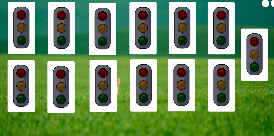
Feedback (traffic light method) T
asks the children to rate the lesson and turns on the traffic light
method. Traffic lights Green- everything is clear Yellow- I need some help! Red - I need more support!
|
|
||
жүктеу мүмкіндігіне ие боласыз
Бұл материал сайт қолданушысы жариялаған. Материалдың ішінде жазылған барлық ақпаратқа жауапкершілікті жариялаған қолданушы жауап береді. Ұстаз тілегі тек ақпаратты таратуға қолдау көрсетеді. Егер материал сіздің авторлық құқығыңызды бұзған болса немесе басқа да себептермен сайттан өшіру керек деп ойласаңыз осында жазыңыз
Snow and Ice
Snow and Ice
Short term plan
|
Unit of a long-term plan Unit 5. Hot and Cold |
School: |
||
|
Date: 11.02.2025 |
Teacher name: Zhabaeva Aizhan |
||
|
Grade: 4 |
Number present: |
absent: |
|
|
Lesson title |
Snow and Ice |
||
|
Learning objectives
|
4.3.6.1 understand with some support some specific information and detail in short, simple texts on a growing range of general and some curricular topics 4.2.7.1 contribute a growing range of suitable words, phrases, and sentences during short pair, group and whole class exchanges 4.5.13.1 use can to make requests and ask permission, use must / mustn’t / have to to talk about obligation, use have to +object + infinitive to talk about obligations |
||
|
Lesson objectives |
- contribute a growing range of suitable words, phrases, and sentences using "can", "must/mustn’t/have to" about snow and ice - read and understand some specific information and details in short, simple texts about the weather |
||
|
Stages / Time |
Teachers actions |
Students actions |
Assessment |
Resources |
|
|
Start 3-5
|
Organization moment • Greeting. T asks “What date is it today?” “What day of the week is it today?” “What's the weather like today?” • T shows a video created with the help of AI. Warm-up • T reads the tongue twister, the ss should repeat the tongue twister after the teacher to improve pronunciation. "Snowy ice, icy snow, Fast and cold, watch me go!" Lead – In • T divides the students into 3 groups using sun/snow/raindrops cards. • T shows picture and distributes snowflake postcards to the students with words written on them, then asks questions (W). "What do you think of when you hear these words?" “Which words from these cards are associated with the words Snow and Ice?” Teacher asks Ss to look around class and try to guess the theme of the lesson. Checking homework\Vocabulary (W) • T uses a projector to display pictures and asks students for words from the previously learned vocabulary. |
The aim: To develop Ss speaking skills Ss answer questions
Ss repeat the tongue twister after the teacher Ss select cards and are divided into groups. Ss select cards with appropriate words and attach them to the board. Ss The students name the words while looking at the pictures.
|
At the organization moment T tries to award active Ss. «The praise» method is used to evaluate Ss with phrases like:“Good job! Well done!” «The praise» method is used to evaluate Ss with phrases like: “Good job! Well done!” «The praise» method is used to evaluate Ss with phrases like: “Good job! Well done!” Assessment criteria Self-assessment -recognize and recall previously learned vocabulary |
Pictures Appendix 1 PPT Appendix 2 Appendix 3 Appendix 4 Projector |
|
|
Middle
35 min 10-12 min
|
Repeating and remembering the rules of the Modal Verb (W) • T asks questions "What are modal verbs? "Which modal verbs do we know? " When do we use "Can"? When do we use "Can’t"? When do we use "Have to"? When do we use "Must"? When do we use "Mustn’t"? Plickers (I) • T displays a question on the interactive board. Ss hold up their Plickers card with the chosen answer facing up. The teacher scans the cards using a smartphone, and the system records responses in real time. New words (W) • T gives students a new vocabulary for today's lesson. T shows words and pictures on the interactive whiteboard, and the children repeat new words after the teacher. Work with new words T gives a differential assignment related to new vocabulary. The students complete the assignment and give it to the teacher for review. Fill in the table (P) • T gives students flashcards with places and photos where they need to describe the weather, what people must wear using new words. Warm-up (Physical Activity Break) • T turns on a weather-themed warm-up video. The children follow the actions while watching the video. Weather poster (G) • The teacher distributes posters and texts related to the weather and new words. Students use the text to make a poster and present their work.
|
Ss answer questions Ss insert the missing words using a Plicker card Ss read vocabulary words and repeat after the teacher Ss complete the task using new words Ss describe the climate, weather, and clothing of people in a specific place Ss do exercises Ss read a short text describing the weather and make a poster based on this text and answer the questions.
|
«The praise» method is used to evaluate Ss with phrases like: “Good job! Well done!” Assessment criteria Self-assessment Descriptor: -work individually -fill the gaps with modal verbs Total: 3 points Time: 5 min «The praise» method is used to evaluate Ss with phrases like:“Good job! Well done!” «The praise» method is used to evaluate Ss with phrases like:“Good job! Well done!” Assessment criteria: Peer-assessment Descriptor: -work in pairs -answer all questions -use must correctly Total: 3 points Time: 5 min «The praise» method is used to evaluate Ss with phrases like:“Good job! Well done!” Assessment criteria: Group-assessment Descriptor: -work in groups -read the text and understand -pronunciation is clear Total: 3 points Time: 5 min |
PPT Handout Plicker platform Appendix 5 PPT Handout Appendix 6 PPT Handout Appendix 7 Handout Appendix 8 Interactive board Appendix 9 Poster Handout Appendix 10 PPT |
|
|
End 4-5 min |
Home task: Write a small text related to the weather and using new words.
|
Feedback (traffic light method) T
asks the children to rate the lesson and turns on the traffic light
method. Traffic lights Green- everything is clear Yellow- I need some help! Red - I need more support!
|
|
||
шағым қалдыра аласыз