ЖИ көмекші


 Қауіпсіз төлем

жүктеу мүмкіндігіне ие боласыз
Бұл материал сайт қолданушысы жариялаған. Материалдың ішінде жазылған барлық ақпаратқа жауапкершілікті жариялаған қолданушы жауап береді. Ұстаз тілегі тек ақпаратты таратуға қолдау көрсетеді. Егер материал сіздің авторлық құқығыңызды бұзған болса немесе басқа да себептермен сайттан өшіру керек деп ойласаңыз осында жазыңыз
 21 Қаңтар 2019
 1165
1165
1 жыл бойы шексіз жүктеңіз
“The most environmental issues”
|
Unit:4 a long term plan |
School: Abay. |
||||||||||||||||||||
|
Date: 10.12.2018 |
Teacher’s name : Kagazbaeva M.J.
k |
||||||||||||||||||||
|
CLASS: 7 “A” |
Number:14 present: 14 |
absent: |
|||||||||||||||||||
|
Lesson title: |
|||||||||||||||||||||
|
Learning objectives(s) that this lesson is contributing to (link to the Subject programme) |
7.C9 use imagination to express thoughts, ideas, experiences and feelings 7.S3 give an opinion at a discourse on a growing range of general and curricular topics 7.L.8understand supported narratives on a wide range of general and curricular topics. |
||||||||||||||||||||
|
Lesson objectives |
All learners will be able to; Give an opinion at a discourse on a growing range of general and curricular topics Most learners will be able to; Ask and answer the questions. Use the new words in their speech Some learners will be able to; Speak about environment problem. |
||||||||||||||||||||
|
Assessment criteria |
Apply the difference between formal and informal speech in a talk. Identify the position of speakers in an extended talk with some support. Demonstrate an ability to organize and express idea clearly. |
||||||||||||||||||||
|
Level thinking |
Knowledge, understanding, application ,analysis.
|
||||||||||||||||||||
|
Values links |
Our country’s national security and its engagement in addressing global and regional issues. . |
||||||||||||||||||||
|
Cross-curricular links |
Biology, geography. |
||||||||||||||||||||
|
Previous learning |
Looking at the future and the environment. |
||||||||||||||||||||
|
Plan |
|||||||||||||||||||||
|
Planned timings |
Planned activities (replace the notes below with your planned activities) |
Resources |
|||||||||||||||||||
|
Start 5.min. |
Org moment; 1.Teacher greets learners, learners respond to greeting and take their places Making a friendly atmosphere. Pupils make a circle, keeps saying compliments to each other. 2.Dividing into subgroups Teacher divides learners into three groups with the method of ‘Puzzle’ . Three groups are named “Water” “Air” “Land”. |
Pictures about environmental issues.
|
|||||||||||||||||||
|
Middle 9.min.
10min.
.
Energizing moment. 1min.
15min. |
Checking up the home task : ,Ex:3 Answer the questions on the text “Monuments in danger” Ex:3(b)Speak about a monument in their country.
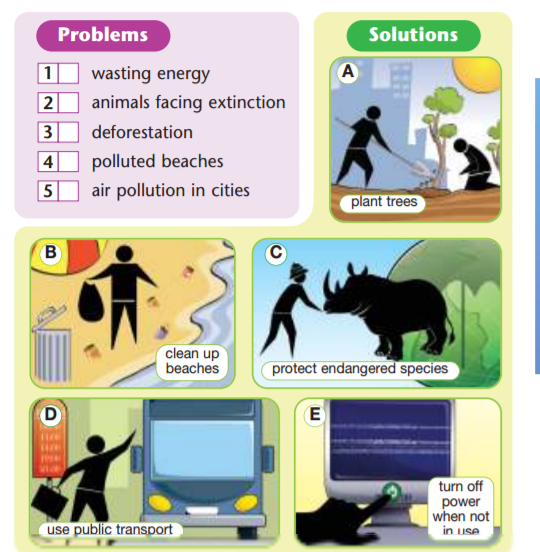
Task:1 To present vocabulary for environmental problems and solutions • Explain the task and read out the example. • Ss complete the task. Check Ss’ answers. Ex:4 Match the problems to the solutions and make sentences.
Task:2 Match the problems to the solutions and make sentences.
Problems Solutions
Descriptor ;match the problems with solutions. makes sentences. Let us do the exercise!
Task:3 To present and practise verbs related to environmental issues Ex:5; • Allow Ss two minutes to complete the task. Ss can look up the meanings of any verbs they are unsure of in the Word List.
Task:4 To listen for specific information (gapfill); to understand specific information and detail of extended talk
Task:5 • Explain the task. Go through the announcement with Ss and ask them to predict the content of the recording. Elicit what word is missing in each gap (noun, number, etc). Ex: 6. • Play the recording. Ss listen and complete the gaps. Task:6 To give a speech on Stonehenge and the problems it faces • Explain the task and allow Ss two minutes to formulate their answers. • Ask some Ss to tell the class about Stonehenge and its problems. Task:7.Discussion box.
Descriptor; discussions in a group, make evaluation of classmates answer,.
|
Excel-grade -7students book. Module4. 43p.
Answers Key: 1.E, 2.C ,3.C, 4.b,5.D. Interactive board.
Answer key: 1. become, 2. rise, 3.dry, 4.melt, 5.be, 6.damage, 7.survive, 8.preserve.
|
|||||||||||||||||||
|
End 5.min.
Giving home task. |
Say some information about environment issues. Learners give self assessment for their participation with “Six thinking hats” They also make comments about the lesson orally. Green: How can you use today's learning in different subjects? Red: How do you feel about your work today? White: What have you leant today? Black: What were the weaknesses of your work? Blue: How much progress have you made in this lesson? (Now I can, I still need to work on, I've improved in, Today I learnt... ) Yellow: What did you like about today's lesson? Homework: Ex: 8. Collect information about another monuments in danger. Complete the paragraph
|
“Six thinking hats” |
|||||||||||||||||||
|
Additional information |
|||||||||||||||||||||
|
Differentiation – how do you plan to give more support? How do you plan to challenge the more able learners? |
Assessment – how are you planning to check learners’ learning? |
Health and safety check |
|||||||||||||||||||
|
Differentiation can be achieved through the selection of activities, identification of learning outcomes for a certain student, provision of individual support to learners,select on of learning materials and resources based on the individual abilities of leaners (Theory of Multiple Intelligences by Gardner). |
Use this section to record the techniques that you will use to assess what the learners have learned during the lesson. |
Health saving technologies. Using physical exercises and active activities. Rules from the Safety Rules book which can be applied in this lesson. |
|||||||||||||||||||
|
Reflection
Were the lesson objectives/learning objectives realistic? Did all the learners achieve the lesson objectives/ learning objectives? If not, why? Did my planned differentiation work well? Did I stick to timings? What changes did I make from my plan and why?
|
Use the space below to reflect on your lesson. Answer the most relevant questions from the box on the left about your lesson.
|
||||||||||||||||||||
|
I think that the lesson objectives are clear and achievable. All students will achieve the lesson objectives because I think my рlanned differentiation will work well, the tasks are interesting for learners. I will stick timings as рossible. May be I will add one task for my lesson рlan if I have extra time. |
|||||||||||||||||||||
|
Summary evaluation What two things went really well (consider both teaching and learning)? 1: Class\ pair activities 2: Differentiated task
What two things would have improved the lesson (consider both teaching and learning)? 1: pay more attention to drilling 2: time management
What have I learned from this lesson about the class or individuals that will inform my next lesson? . Students love doing creative tasks, especially when they have a choice. Everyone was engaging in doing a creative task with high motivation and excitement.
|
|||||||||||||||||||||









 Бұл курс Қазақстан Республикасы Оқу-ағарту министрлігімен келісілген