|
Unit:
2 Values in Myths and Legends
|
School:
19
|
|
Teacher’s
name:
|
Tulebaeva
Zhanar
|
|
Date:
|
30.09.2024
|
|
Grade: 4
“V”
|
Number
present:
|
absent:
|
|
Lesson
title
|
The Vikings
|
|
Learning
objectives
|
4.2.3.1 give short,
basic description of people and objects; begin to describe past
experiences on an increasing range of general and some curricular
topics
4.4.1.1 plan, write and
check sentences with support on a range of basic personal, general
and some curricular topics
4.5.7.1 use personal subject and object pronouns, including
indirect object pronouns and use possessive pronouns mine, yours to
give personal information and describe actions and
events
|
|
Learning
objectives
(assessment criteria)
|
Learners will be
able to:
- to learn and talk about the
Vikings
-to learn and
talk about past civilisations and past events.
|
|
Values
|
Creation and innovation, hardworking and professional
qualification
|
|
Quote
|
“The happiness of my people is called, Let your name,
Motherland, never fade away.”
|
|
Stages/
Time
|
Teachers actions
|
Students actions
|
Assessment
|
Resources
|
|
Beginning of
the lesson
|
Organization moment
:
1.Greeting. . (Whale class,
Individually)
Warm-up
Creating a positive
psychological environment
Lead –
In
- Ask two
pupils to come to the front of the classroom and act out the
dialogue from the previous lesson. Repeat the activity with other
pupils.
Pre
–reading
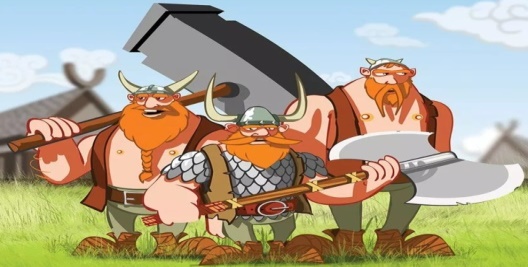
What do you
know about the Vikings?
Does the Vikings live
in a long house?
|
Learners come to the front of the classroom and act
out the dialogue
|
Teacher controles the process, gives feedback and asks
additional questions if it’s nessasery.
Teacher
evaluate pupils with phrases like:
“Good
job!
Well
done!”
Formative
Assessment

|
Pictures
worksheet
Student’s
book
|
|
Middle of the
lesson
Presentation
part.
|
Task. I (pair
work)
While- reading
Ex:6 P:20
Put the flashcards up on the board. Point
to them one at a time and say the corresponding words. The pupils
repeat chorally and individually. Ask individual pupils to name
them.
|
Learners listen, point and
repeat.
ANSWERS
Pupils’ own
answer
|
T’s feedback
Individual evaluate
Descriptor:
-
listen
and repeat
|
Pictures
Student’s
book
|
|
|
Task II (individual
work)
Ex: 7 P:
20
Explain the activity and read the activity and read the
activity aloud. The pupils look at the picture and read the
sentences. Allow the pupils some time to complete the
activity.
|
Learner look, read and write
Yes or No.
ANSWERS
2
yes
3
no
4
no
5
yes
6
yes
|
T’s feedback
Self assessment
Descriptor:
- read and
write
Total: 5 points
|
Worksheets
Pictures
|
|
|
Task.
III (individual
work)
Ex: 8 P:
21
Explain and write on the board: The ancient
Egyptian lived in houses made from
mud. The Romans spoke in Latin. Underline the
words in bold. The pupils repeat after you. Explain / Elicit that
this is the past simple and we use it to talk about actions that
happened at a specific time in the past. Explain / Elicit that we
add –ed at the end of regular
verbs but that some verbs (irregular) in the past simple use a
different form of the verb. Write the following verbs on the board
and elicit the spelling rules and irregular forms: stop – stopped,
live – lived, study – studied, write – wrote, go – went, eat - ate.
Revise the negative and interrogative forms and write short answers
on the board.
A learner with
individual needs: will be paired with helpers
and teacher allows him to use simple, basic statements in his
sentences.
|
Learners complete the sentences.
Then match.
ANSWERS
2
lived
3
wore
4
made.
5
watches
6
wrote
|
Self -assessment
Descriptor:
- read and complete
Total: 5 points
|
Worksheets
|
|
|
Task.
IV
Post
–reading
Ex: 9 P:
21
Explain the activity. Read the example out loud. Allow the
pupils some time to complete the activity.
|
Learners read and circle. Then
listen and check.
ANSWERS
2 played 4
paid
3 didn’t go 5
drank
|
Self -assessment
Descriptor:
- listen and
check
|
Student’s book
|
|
End of the lesson
|
VAK feedback.
VAK- Visual, auditory,
kinesthetic.
What have you learnt with your eyes this
lesson?
What have you learnt with your
ears?
What have you learnt with your
body?
Ex:
P:
Home task:
Exercise-21
|
Come back to the lesson objectives and
summarize with students if they met the lesson
objectives.
Ss
give the VAK feedback.
|
Poster Success

|

 ЖИ көмекші




 Жүктеу



 Бұл курс Қазақстан Республикасы Оқу-ағарту министрлігімен келісілген