
 ЖИ көмекші


 Қауіпсіз төлем

жүктеу мүмкіндігіне ие боласыз
Бұл материал сайт қолданушысы жариялаған. Материалдың ішінде жазылған барлық ақпаратқа жауапкершілікті жариялаған қолданушы жауап береді. Ұстаз тілегі тек ақпаратты таратуға қолдау көрсетеді. Егер материал сіздің авторлық құқығыңызды бұзған болса немесе басқа да себептермен сайттан өшіру керек деп ойласаңыз осында жазыңыз
 25 Сәуір 2025
 1388
1388
1 жыл бойы шексіз жүктеңіз
Top stars kz 4 term new
Top Stars. 3rd grade
IV- TERM
|
Unit: 7 |
BUILDINGS |
||||||||
|
Teacher’s name: |
|
||||||||
|
Date: |
|
||||||||
|
Class: |
Number present: |
Number absent: |
|||||||
|
Theme of the lesson |
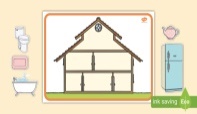
BUILDINGS: Cool House. |
||||||||
|
Learning objective (s) |
3.3.3.1 understand short, simple instructions used in familiar everyday contexts; 3.5.1.12 use basic adverbs of place here/there to say where things are; 3.5.1.14 use basic prepositions of place. |
||||||||
|
Lesson objectives |
|
||||||||
|
Plan |
|||||||||
|
Stages of the lesson |
Teacher’s activities |
Students’ activities |
Assessment |
Resources |
|||||
|
Greeting |
Greet students; students respond to greeting and take their places. Hello, boys and girls! How are you? |
|
|
|
|||||
|
Warm-up |
Introduction.
|
Students repeat |
|
Flashcards |
|||||
|
Presentation Practice |
Activity1. Conveying the meaning of new words.
|
KEY Furniture / Items in a house: lamp, TV, wardrobe, rug |
Verbal Assessment |
Handouts |
|||||
|
Activity2. Listen and read. Then answer: Why is this a cool house?
Activity 3. Look at activity 2 again and match.
Grammar Presentation.
Physical Training
|
KEY Little Red Riding Hood arrives at her grandmother’s house to find out that some fairy-tale characters have occupied the house: Pinocchio is under the table hiding, Snow White is on the bed sleeping, Peter Pan is in the bag and Tinkerbell is on the TV. Tinkerbell flies onto the lamp and she lights up. Key: 1. b 2. a 3. d 4. C |
Peer Assessment Self-Assessment |
Textbook Worksheets https://learnenglishkids.britishcouncil.org/sites/kids/files/attachment/worksheets-directions-1.pdf Grammar Tables Song If you happy.. |
||||||
|
Activity 4. Look and write under, in or on.
Formative Assessment. Look, ask and answer.
Descriptor: A learner:
|
KEY 1. On 2. Under 3. In Students answer about the location of the things indicated by the arrows |
Verbal Assessment
Group Assessment |
Handouts |
||||||
|
Ending the lesson
Feedback |
|||||||||
|
Reflection/Self-Assessment Check students understanding by using apples ‘Apple tree’
|
|||||||||
|
Homework |
|||||||||
|
Additional Information |
|
||||||||
|
Differentiation - how do you plan to give more support? How do you plan to challenge the more able learners? |
Assessment - how are you planning to check learners` learning? |
Health and safety check ICT links |
|
||||||
|
More support will be given to weaker learners by giving them a modified worksheets in some tasks with greater support |
-through questioning and the redirecting of questioning in feedback activities -through observation in group and end performance activities -through formative task |
-White board and video is used no more than 10 minutes -Use water based pens -Health promoting techniques -Breaks and physical activities used. -Points from Safety rules used at this lesson. |
|
||||||
|
REFLECTION |
Answer the most relevant questions to reflect on your lesson. Were the lesson objectives/learning objectives realistic? What did the learners learn? What did/didn’t you like? What was difficult? |
|
|||||||
 don’t understand this at all…
|
Unit: 7 |
BUILDINGS |
||||||||
|
Teacher’s name: |
|
||||||||
|
Date: |
|
||||||||
|
Class: |
Number present: |
Number absent: |
|||||||
|
Theme of the lesson |
BEST FRIENDS: My house, my room and objects |
||||||||
|
Learning objective (s) |
3.1.2.1 recognise familiar words with visual support; 3.2.3.1 respond to basic questions with single words or short responses 3.5.1.5 use with considerable support basic determiners a, an, the to identify things; 3.5.1.14 use basic prepositions of place. |
||||||||
|
Lesson objectives |
|
||||||||
|
Plan |
|||||||||
|
Stages of the lesson |
Teacher’s activities |
Students’ activities |
Assessment |
Resources |
|||||
|
Greeting |
Greet students; students respond to greeting and take their places. Hello, boys and girls! How are you? |
|
|
|
|||||
|
Warm-up |
Start thinking. Ask students to ask and answer the questions about their house:
|
Students answer the questions about their house. |
Oral Assessment |
|
|||||
|
Presentation Practice Ending the lesson Reflection |
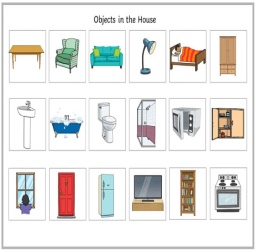
Activity 1. Present objects in the house.
|
|
Verbal Assessment |
Slides |
|||||
|
Activate knowledge:
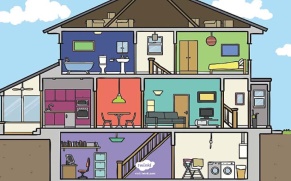
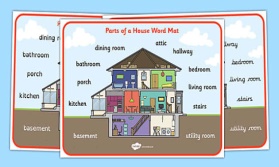
Present rooms in the house:
Grammar Presentation:
Option 1: Use the ‘In
my house I have…’ structure. Option 3:Use the demonstratives “This/That/ These /Those…. Option 4: E.g. “In my house there are twenty two bedrooms” “That’s false!” “Yes, you’re right!” Activity5. Listen and number (1-5).
Formative Assessment Speak and Present Ask students to design their own, imaginary house. They can make this as imaginative as they want.
Feedback to the group: Whose house is big/cold /amazing/dangerous? |
Students have to say what they think is true or false.
Key; a. 5 b. 2 c. 1 d. 3 e. 4
Descriptor 4-5 Open answers with grammar accuracy - Excellent 2-3 Open answers with some mistakes - Good Less 2 answers - Try again |
Self- Assessment
Peer Assessment
Oral Assessment
Self- Assessment |
Rooms House Flashcards https://www.twinkl. kz/blog/ objects-and- parts-of-the-house -vocabulary-a-lesson-plan-for- esl-teachers Handouts CD Imaginary house |
||||||
|
Self-Assessment
To reinforce the basics, this cut, and stick and label activity will help students’ associate objects and areas of the house. |
|||||||||
|
Homework |
WORKBOOK: Activity 1 and 2 |
||||||||
|
Additional Information |
|
||||||||
|
Differentiation - how do you plan to give more support? How do you plan to challenge the more able learners? |
Assessment - how are you planning to check learners` learning? |
Health and safety check ICT links |
|
||||||
|
More support will be given to weaker learners by giving them a modified worksheets in some tasks with greater support |
-through questioning and the redirecting of questioning in feedback activities -through observation in group and end performance activities -through formative task |
-White board and video is used no more than 10 minutes -Use water based pens -Health promoting techniques -Breaks and physical activities used. -Points from Safety rules used at this lesson |
|
||||||
|
REFLECTION |
Answer the most relevant questions to reflect on your lesson. Were the lesson objectives/learning objectives realistic? What did the learners learn? What did/didn’t you like? What was difficult? |
|
|||||||
|
Unit: 7 |
BUILDINGS |
||||||||
|
Teacher’s name: |
|
||||||||
|
Date: |
|
||||||||
|
Class: |
Number present: |
Number absent: |
|||||||
|
Theme of the lesson |
OUR WORLD: My Bedroom |
||||||||
|
Learning objective (s) |
3.1.4.2 understand simple descriptions of people, actions, and objects with visual support 3.2.2.1 use isolated words and basic expressions to provide personal information; 3.5.1.1 use singular and plural nouns, including some common irregular plural forms and high-frequency uncountable nouns |
||||||||
|
Lesson objectives |
|
||||||||
|
Plan |
|||||||||
|
Stages of the lesson |
Teacher’s activities |
Students’ activities |
Assessment |
Resources |
|||||
|
Greeting |
Greet students; students respond to greeting and take their places. Hello, boys and girls! How are you? |
|
|
|
|||||
|
Warm-up
Presentation
Practice
Ending the lesson
Feedback |
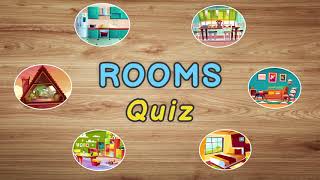
Brainstorming. Play: “Rooms of a house Quiz” (teacher show the pictures on A/b, pupils answer on worksheets )
|
Key: 1. bathroom 2. kitchen 3. bedroom 4. living room |
|
||||||
|
Activity1.Conveying the meaning of new words.
|
Key: Furniture: shelf Nouns: guitar, computer, skateboard, pillow |
Verbal Assessment |
Handouts |
||||||
|
Activity2. Practice in reading for gist. Read the title and look at the pictures. What are the texts about? Listen and read.
Ask students some questions about the texts. For example, ask Ss:
Grammar Presentation. Students say five sentences about what’s in their bedroom. Other students have to say what they think is true or false. Option1: Use the ‘In my house I have…’ structure. Option2: Use the ‘in my house there is/are..’ Option3: Use the plural form “table-tables, shelf-shelves….” E.g. “In my house there is a TV in my bedroom” “That’s false!”/ “Yes, you’re right!” Activity3. Read activity 2 again and circle the correct name(s).
Formative Assessment
Descriptor Learner
|
KEY a guitar, two computers, some pillows, a skateboard and shelves KEY 1. Yes, there is. 2.There’s a wardrobe, a desk, a chair, a rug, shelves with books, a computer / a guitar. 3. It’s blue and green. 4.No, there isn’t. 5.There’s a bed, a desk, a chair, a shelf with books, a pillow on her bed, a lamp, a computer and a skateboard 6.It’s yellow Key: “That’s false!”/ “Yes, you’re right!” Key: 1. Harry, Lorna 2. Harry, Lorna 3.Harry 4.Harry 5. Lorna Students work in pairs to say what things there are in their bedroom, using there is/are and the words in the box, as in the example |
Oral Assessment
Peer Assessment
Peer Assessment
|
Textbook Question tips Grammar Reference Handouts |
||||||
|
|
|||||||||
|
Homework |
WORKBOOK: Activity 3 and 4 |
||||||||
|
Additional Information |
|
||||||||
|
Differentiation - how do you plan to give more support? How do you plan to challenge the more able learners? |
Assessment - how are you planning to check learners` learning? |
Health and safety check ICT links |
|
||||||
|
More support will be given to weaker learners by giving them a modified worksheets in some tasks with greater support |
-through questioning and the redirecting of questioning in feedback activities -through observation in group and end performance activities -through formative task |
-White board and video are used no more than 10 minutes -Use water-based pens -Health promoting techniques -Breaks and physical activities used. -Points from Safety rules used at this lesson. |
|
||||||
|
REFLECTION |
Answer the most relevant questions to reflect on your lesson. Were the lesson objectives/learning objectives realistic? What did the learners learn? What did/didn’t you like? What was difficult? |
|
|||||||
|
Unit: 7 |
BUILDINGS |
|||||||
|
Teacher’s name: |
|
|||||||
|
Date: |
|
|||||||
|
Class: |
Number present: |
Number absent: |
||||||
|
Theme of the lesson |
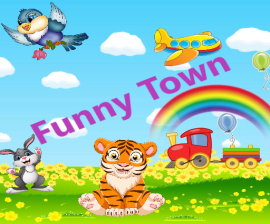
PLAY AND WRITE: The Funny Town |
|||||||
|
Learning objective (s) |
3.3.3.1understand short, simple instructions used in familiar everyday contexts; 3.3.4.1 find specific information in different types of texts (postcards, posters, flyers, messages, and notices: places, time, and prices); 3.5.1.3 use cardinal numbers 1-10; 11-20; 21 – 100; |
|||||||
|
Lesson objectives |
|
|||||||
|
Plan |
||||||||
|
Stages of the lesson |
Teacher’s activities |
Students’ activities |
Assessment |
Resources |
||||
|
Greeting |
Greet students; students respond to greeting and take their places. Hello, boys and girls! How are you? |
|
|
|
||||
|
Warm-up
|
Picture Description
|
Students repeat after a couple of times. |
|
Flashcards |
||||
|
Presentation
Practice
Ending the lesson
Feedback |
Activity1. Conveying the meaning of new words.
|
KEY: Numbers: 20-100 Places: museum, restaurant, amusement park, cinema |
Oral Assessment |
Counting by Tens: 10, 20, 30, 40, 50 to 100! https://youtu.be/NVdupTP4N5Q?si=CMr5d1OURjAxwgb2 |
||||
|
Playing A Game. “What is your phone number?”
“What is your phone number? My phone number is_____. As the students engage in the activity, the teacher walks around, monitoring the activity and passing out the materials for the next activity. Activity 2 Match. Then play. The Funny Town
Descriptor: A learner:
|
Students walk around the room and ask ten other people what their phone number is. This activity also practices the construction: “What is your phone number? My phone number is_____.
Key; There are twenty-four museums in the town. Buildings in our town. |
Verbal Assessment
Peer assessment
|
What's Your Phone Number? (Sing-along) https://youtu.be/HEym20_e84M?si=zxVibgCFtVPOBkxk Towns Places |
|||||
|
R
gestures. |
||||||||
|
Homework |
WORKBOOK: Activity 3 and 4 |
|||||||
|
Additional Information |
||||||||
|
Differentiation - how do you plan to give more support? How do you plan to challenge the more able learners? |
Assessment - how are you planning to check learners` learning? |
Health and safety check ICT links |
||||||
|
More support will be given to weaker learners by giving them a modified worksheets in some tasks with greater support |
-through questioning and the redirecting of questioning in feedback activities -through observation in group and end performance activities -through formative task |
-White board and video are used no more than 10 minutes -Use water-based pens -Health promoting techniques -Breaks and physical activities used. -Points from Safety rules used at this lesson. |
||||||
|
REFLECTION |
Answer the most relevant questions to reflect on your lesson. Were the lesson objectives/learning objectives realistic? What did the learners learn? What did/didn’t you like? What was difficult? |
|||||||
 eflection.
|
Unit: 7 |
BUILDINGS |
||||||||
|
Teacher’s name: |
|
||||||||
|
Date: |
|
||||||||
|
Class: |
Number present: |
Number absent: |
|||||||
|
Theme of the lesson |
PROJECT WORK: My Town |
||||||||
|
Learning objective (s) |
3.2.1.1 pronounce various sounds of phonemes and phoneme blends using appropriate stress, rhythm, and intonation; 3.4.2.2 use words and short simple phrases to complete a written text at a sentence level; 3.4.3.1 create a poster or write a postcard, using words and simple phrases; |
||||||||
|
Lesson objectives |
|
||||||||
|
Plan |
|||||||||
|
Stages of the lesson |
Teacher’s activities |
Students’ activities |
Assessment |
Resources |
|||||
|
Greeting |
Greet students; students respond to greeting and take their places. Hello, boys and girls! How are you? |
|
|
|
|||||
|
Warm-up
Presentation
Practice
Ending the lesson
Reflection |
Prediction based on the title, pictures.
|
Open answers |
|
Pictures |
|||||
|
Activity 1. Listen and repeat.
|
Key: The cat is on the skateboard under the table. skateboard table |
Verbal Assessment |
Picture CD |
||||||
|
Activity 2. Listen and read
Ask Ss some questions about the text,
Writing tip:
e.g. There’s a big park and a zoo. Underline the word ‘big’ and explain to Ss that we use adjectives, e.g. big, before nouns to describe the nouns. Formative Assessment.
Descriptor: A learner:
|
KEY
Writing tip: Adjectives go before nouns. e.g. There’s a big park and a zoo. Students draw or stick pictures depicting the different buildings in their town and present their projects to the rest of the class. |
Peer Assessment
Oral Assessment
Group Assessment |
Handouts Worksheets Handouts Project work |
||||||
|
FEEDBACK
|
|
Self-assessment. |
|
||||||
|
Homework |
WORKBOOK: Activity 1 and 2 |
||||||||
|
Additional Information |
|
||||||||
|
Differentiation - how do you plan to give more support? How do you plan to challenge the more able learners? |
Assessment - how are you planning to check learners` learning? |
Health and safety check ICT links |
|
||||||
|
More support will be given to weaker learners by giving them a modified worksheets in some tasks with greater support |
-through questioning and the redirecting of questioning in feedback activities -through observation in group and end performance activities -through formative task |
-White board and video are used no more than 10 minutes -Use water-based pens -Health promoting techniques -Breaks and physical activities used. -Points from Safety rules used at this lesson. |
|
||||||
|
REFLECTION |
Answer the most relevant questions to reflect on your lesson. Were the lesson objectives/learning objectives realistic? What did the learners learn? What did/didn’t you like? What was difficult? |
|
|||||||


|
Unit: 7 |
BUILDINGS |
||||||||
|
Teacher’s name: |
|
||||||||
|
Date: |
|
||||||||
|
Class: |
Number present: |
Number absent: |
|||||||
|
Theme of the lesson |
CLIL 7: Wonderful Cities |
||||||||
|
Learning objective (s) |
3.1.2.1 recognise familiar words with visual support; 3.3.3.2 find out the main points in short simple descriptions with visual support; |
||||||||
|
Lesson objectives |
|
||||||||
|
Plan |
|||||||||
|
Stages of the lesson |
Teacher’s activities |
Students’ activities |
Assessment |
Resources |
|||||
|
Greeting |
Greet students; students respond to greeting and take their places. Hello, boys and girls! How are you? |
|
|
|
|||||
|
Warm-up
Presentation
Practice
Ending the lesson
|
Say and Repeat.
|
Students repeat it a few times. |
|
|
|||||
|
Activity 1. Presentation Vocabulary.
|
KEY: Nouns: city, shop, stadium, opera house |
Oral Assessment |
Pictures |
||||||
|
Activity2. Look at the pictures and answer: Where are these cities? Then listen and read.
Pair work. Asking and answering questions.
Activity 3. Read and put a √ or an X.
A Game. Ring a word.
Talk in groups of three. Almaty or Venice. • Divide Ss into two teams and invite a S from each team to come to the front of the classroom.
• Then Ss have to guess which city you are referring to. The S that first makes a correct guess wins a point for his/her team. • Continue in the same manner and make sure all Ss have had a chance to participate. |
KEY: 1.
They’re about two cities in different 2. The cities are in Key: 1. Yes, it is. 2. Museums, a stadium and an opera house. 3. In Italy. 4. No, there aren’t. 5. They’re boats. Key: 1. √ 2. x 3. √ 4. √
Students have to race to the board to write the number Suggested Answer: Say: It’s in Italy. Say: It’s in Almaty. |
Oral Assessment
Peer Assessment
Self-Assessment
Group Assessment |
Handouts Worksheets Board Numbers Ring a word Posters |
||||||
|
Feedback |
R
|
|
|||||||
|
Homework |
WORKBOOK: Activity 1 and 2 |
||||||||
|
Additional Information |
|
||||||||
|
Differentiation - how do you plan to give more support? How do you plan to challenge the more able learners? |
Assessment - how are you planning to check learners` learning? |
Health and safety check ICT links |
|
||||||
|
More support will be given to weaker learners by giving them a modified worksheets in some tasks with greater support |
-through questioning and the redirecting of questioning in feedback activities -through observation in group and end performance activities -through formative task |
-White board and video are used no more than 10 minutes -Use water-based pens -Health promoting techniques -Breaks and physical activities used. -Points from Safety rules used at lesson. |
|
||||||
|
REFLECTION |
Answer the most relevant questions to reflect on your lesson. Were the lesson objectives/learning objectives realistic? What did the learners learn? What did/didn’t you like? What was difficult? |
|
|||||||

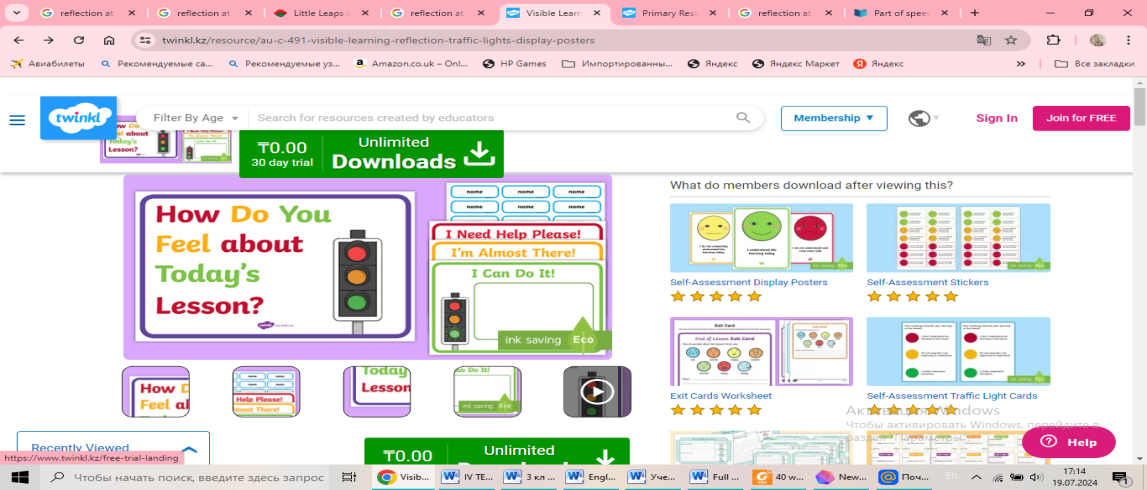 EFLECTION:
|
Unit: 7 |
BUILDINGS |
||||||||
|
Teacher’s name: |
|
||||||||
|
Date: |
|
||||||||
|
Class: |
Number present: |
Number absent: |
|||||||
|
Theme of the lesson |
Unit revision7. Summative Assessment for the unit 7 |
||||||||
|
Learning objective (s) |
3.2.3.2 make basic requests related to immediate personal needs 3.4.1.1 spell accurately a few high-frequency words; 3.4.2.1. follow word order rules in short statements; 3.4.5.1 apply basic rules of punctuation (use capital letters, full stops, and question marks). |
||||||||
|
Lesson objectives |
|
||||||||
|
Plan |
|||||||||
|
Stages of the lesson |
Teacher’s activities |
Students’ activities |
Assessment |
Resources |
|||||
|
Greeting |
Greet students; students respond to greeting and take their places. Hello, boys and girls! How are you? |
|
|
|
|||||
|
Warm-up
Presentation
|
•Start thinking.
|
Open answers |
|
Flashcards |
|||||
|
Activity 1. Complete the song with the words in the box. Then sing.
|
KEY: 1. lamp 2. wardrobe 3. next to 4. behind |
Self- Assessment |
Handouts |
||||||
|
Practice
Ending the lesson
Feedback |
Activity 2. Put the words in the correct order
|
KEY That is a big rug. Where’s my pink skateboard? There’s a playground /museum next to the museum /playground |
Self- Assessment |
Pictures |
|||||
|
Activity 3. Imagine you’re in a shop. Choose and say.
|
Key: Give me a lamp, please. Here you are. Thank you |
Self- Assessment |
Handouts |
||||||
|
Reflection. Expressing opinion about the lesson In my opinion…. |
|
||||||||
|
Homework |
WORKBOOK: Activity 1 and 2 |
||||||||
|
Additional Information |
|
||||||||
|
Differentiation - how do you plan to give more support? How do you plan to challenge the more able learners? |
Assessment - how are you planning to check learners` learning? |
Health and safety check ICT links |
|
||||||
|
More support will be given to weaker learners by giving them a modified worksheets in some tasks with greater support |
-through questioning and the redirecting of questioning in feedback activities -through observation in group and end performance activities |
-White board and video are used no more than 10 minutes -Health promoting techniques -Breaks and physical activities used. -Points from Safety rules used at this lesson. |
|
||||||
|
REFLECTION |
Answer the most relevant questions to reflect on your lesson. Were the lesson objectives/learning objectives realistic? What did the learners learn? What did/didn’t you like? What was difficult? |
|
|||||||
|
Unit: 7 |
BUILDINGS |
||||||||
|
Teacher’s name: |
|
||||||||
|
Date: |
|
||||||||
|
Class: |
Number present: |
Number absent: |
|||||||
|
Theme of the lesson |
CULTURE PAGE 4: Day and Night in Astana |
||||||||
|
Learning objective (s) |
3.1.2.1 recognise familiar words with visual support; 3.3.3.2 find out the
main points in short simple descriptions with visual support; |
||||||||
|
Lesson objectives |
|
||||||||
|
Plan |
|||||||||
|
Stages of the lesson |
Teacher’s activities |
Students’ activities |
Assessment |
Resources |
|||||
|
Greeting |
Greet students; students respond to greeting and take their places. Hello, boys and girls! How are you? |
|
|
|
|||||
|
Warm-up
Presentation
|
•Picture Description.
|
Open answers |
|
|
|||||
|
Activity 1. Listen, point and say.
Activity 2. What do you know about Astana? Listen and read.
|
KEY Phrases: have a picnic, take a walk •Nouns: fountain, flowers, lights KEY 1. Presidential Park and Baiterek Tower. 2. Astana is the capital city of Kazakhstan. Many tourists go to Astana every year. |
Oral Assessment |
Flashcards |
||||||
|
|
|||||||||
|
Practice
Ending the lesson
Feedback |
Pair work. Asking and answering questions.
|
KEY 1. Yes, there are. 2. No, it isn’t. 3. Yes, you can. 4. It’s near Baiterek Tower. 5. You can see lights with many colours and hear music. |
Peer Assessment |
Handouts |
|||||
|
Activity 3. Read and circle.
Activity4. Read and write A for text A or B for text B.
|
Key; 1. big 2. tree 3. near 4. Music
Key: B 2. A 3. B 4. A |
Self-Assessment |
Worksheets |
||||||
|
REFLECTION. TREE OF SUCCESS
|
|||||||||
|
Homework |
WORKBOOK: Activity 3 and 4 |
||||||||
|
Additional Information |
|
||||||||
|
Differentiation - how do you plan to give more support? How do you plan to challenge the more able learners? |
Assessment - how are you planning to check learners` learning? |
Health and safety check ICT links |
|
||||||
|
More support will be given to weaker learners by giving them a modified worksheets in some tasks with greater support |
-through questioning and the redirecting of questioning in feedback activities -through observation in group and end performance activities -through formative task |
-White board and video are used no more than 10 minutes -Use water-based pens -Health promoting techniques -Breaks and physical activities used. -Points from Safety rules used at this lesson. |
|
||||||
|
REFLECTION |
Answer the most relevant questions to reflect on your lesson. Were the lesson objectives/learning objectives realistic? What did the learners learn? What did/didn’t you like? What was difficult? |
|
|||||||

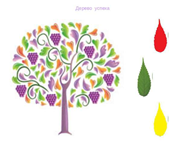 ed
leaf - I don't understand
ed
leaf - I don't understand
|
Unit: 8 |
MY HOLIDAYS |
|||||||||
|
Teacher’s name: |
|
|||||||||
|
Date: |
|
|||||||||
|
Class: |
Number present: |
Number absent: |
||||||||
|
Theme of the lesson |
MY HOLIDAYS: Family holidays |
|||||||||
|
Learning objective (s) |
3.1.2.1 recognise familiar words with visual support; 3.3.3.1 understand short, simple instructions used in familiar everyday contexts; 3.5.1.6 use interrogative pronouns who, what, where, how, and when to ask basic questions |
|||||||||
|
Lesson objectives |
|
|||||||||
|
Plan |
||||||||||
|
Stages of the lesson |
Teacher’s activities |
Students’ activities |
Assessment |
Resources |
||||||
|
Greeting |
Greet students; students respond to greeting and take their places. Hello, boys and girls! How are you? |
|
|
|
||||||
|
Warm-up
Presentation
Practice
Ending the lesson
Feedback |
Start with an image … Look at the picture above and answer these three questions about it, in as much detail as you can:
|
Open answers |
|
|||||||
|
Activity1. Conveying the meaning of new words. • Have Ss look at the pictures in the vocabulary section. Play the recording a few times, and have Ss point to the corresponding pictures and repeat.
|
KEY: Actions: go hiking, go fishing, go mountain climbing Nouns: island, village |
Oral Assessment |
Key Words Flashcards |
|||||||
|
Activity 2. Listen and circle about yourself. Then ask and answer with a partner.
Grammar Presentation: Question words What, Where, Who and When).
Playing A Game: Questions Write different questions using Wh question words on different pieces of paper:
Ask each S to come to your desk, pick up a piece of paper, read the question written on it and answer it about himself/herself. Activity 3. Listen and number
Formative Assessment
Descriptor: Learner:
|
KEY 1.a beach and a small village in the mountains Students listen to the teacher and come up with their own examples of sentences with the Wh-questions. Students come to the desk, pick up a piece of paper, read the question written on it and answer it about himself/herself. Key: a. 2 b. 4 c. 1 d. 3 Key: They are asking and answering questions about their holidays. |
Peer Assessment
Self-Assessment
Oral Assessment Oral Assessment |
Handouts https://www.twinkl.kz/resource/ca-c-15-exit-cards-activity-sheet Grammar Section in the Workbook. Pictures CD |
|||||||
|
S |
|
|
|
|||||||
|
Homework |
WORKBOOK: Activity 1 and 2 |
|||||||||
|
Additional Information |
|
|||||||||
|
Differentiation - how do you plan to give more support? How do you plan to challenge the more able learners? |
Assessment - how are you planning to check learners` learning? |
Health and safety check ICT links |
|
|||||||
|
More support will be given to weaker learners by giving them a modified worksheets in some tasks with greater support |
-through questioning and the redirecting of questioning in feedback activities -through observation in group and end performance activities -through formative task |
-White board and video are used no more than 10 minutes -Use water-based pens -Health promoting techniques -Breaks and physical activities used. -Points from Safety rules used at this lesson. |
|
|||||||
|
REFLECTION |
Answer the most relevant questions to reflect on your lesson. Were the lesson objectives/learning objectives realistic? What did the learners learn? What did/didn’t you like? What was difficult? |
|
||||||||

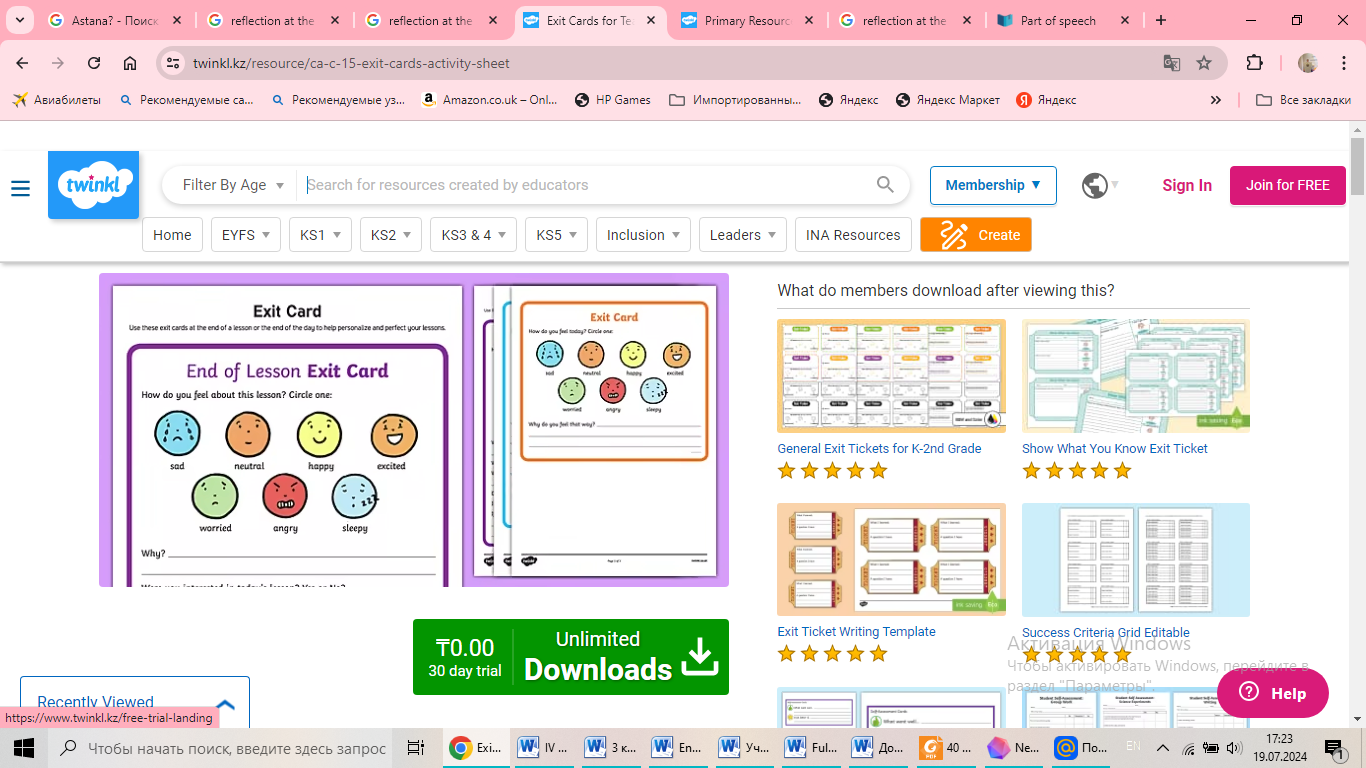 elf-assessment.
|
Unit: 8 |
MY HOLIDAYS |
||||||||
|
Teacher’s name: |
|
||||||||
|
Date: |
|
||||||||
|
Class: |
Number present: |
Number absent: |
|||||||
|
Theme of the lesson |
BEST FRIENDS; Where are the children? |
||||||||
|
Learning objective (s) |
3.2.3.1 respond to basic questions with single words or short responses 3.3.5.1 read short, illustrated fiction and non-fiction stories written in very simple language using a dictionary. 3.5.1.14 use basic prepositions of place; |
||||||||
|
Lesson objectives |
|
||||||||
|
Plan |
|||||||||
|
Stages of the lesson |
Teacher’s activities |
Students’ activities |
Assessment |
Resources |
|||||
|
Greeting |
Greet students; students respond to greeting and take their places. Hello, boys and girls! How are you? |
|
|
|
|||||
|
Warm-up
Presentation |
Talk in pairs.
|
Open answers |
|
|
|||||
|
Activity 1. Listen, point and say.
|
KEY Nouns: party, present, star, home Phrase: take photos |
Verbal Assessment |
Flashcards |
||||||
|
Practice
Ending the lesson
Feedback |
Activity 2. Look at picture 6 and answer: Where are the children? Then listen and read.
Asking and answering questions.
Grammar Presentation.
Keep Moving song and miming actions
Activity 3. Look up the phrases in a dictionary and find their meanings.
Play a guessing game.
Descriptor: A learner:
|
KEY: 1. They are at a party at Zubu’s house. 2. They are at Leo’s house again. 3. Tom, Mia, Leo and Zippy are at a party at Zubu’s house. Leo is looking for Mia and Tom because it is time to go back home. Before they leave, one of Zippy’s friends gives him a present. When the children return to reality, they think Zippy can’t talk, but it is revealed that he actually can talk in the real world too Students sing a song Students look up the phrases in a dictionary and find their meanings
|
Oral Assessment
Peer Assessment Peer Assessment Verbal Assessment |
Handouts Worksheets Grammar tables Keep Moving song and miming actions Dictionary |
|||||
|
Pair share At the end of a lesson learners share with their partner:
|
|||||||||
|
Homework |
WORKBOOK: Activity 1 and 2 |
||||||||
|
Additional Information |
|
||||||||
|
Differentiation - how do you plan to give more support? How do you plan to challenge the more able learners? |
Assessment - how are you planning to check learners` learning? |
Health and safety check ICT links |
|
||||||
|
More support will be given to weaker learners by giving them a modified worksheets in some tasks with greater support |
-through questioning and the redirecting of questioning in feedback activities -through observation in group and end performance activities -through formative task |
-White board and video is used no more than 10 minutes -Use water based pens -Health promoting techniques -Breaks and physical activities used. -Points from Safety rules used at this lesson. |
|
||||||
|
REFLECTION |
Answer the most relevant questions to reflect on your lesson. Were the lesson objectives/learning objectives realistic? What did the learners learn? What did/didn’t you like? What was difficult? |
|
|||||||

|
Unit: 8 |
MY HOLIDAYS |
|||||||
|
Teacher’s name: |
|
|||||||
|
Date: |
|
|||||||
|
Class: |
Number present: |
Number absent: |
||||||
|
Theme of the lesson |
OUR WORLD: Summer in Australia |
|||||||
|
Learning objective (s) |
3.1.4.2 understand simple descriptions of people, actions, and objects with visual support; 3.3.4.1 find specific information in different types of texts (postcards, posters, flyers, messages, and notices: places, time, and prices); 3.5.1.15 use basic prepositions of time |
|||||||
|
Lesson objectives |
|
|||||||
|
Plan |
||||||||
|
Stages of the lesson |
Teacher’s activities |
Students’ activities |
Assessment |
Resources |
||||
|
Greeting |
Greet students; students respond to greeting and take their places. Hello, boys and girls! How are you? |
|
|
|
||||
|
Warm-up
Presentation
Practice
Ending the lesson
|
Discovery activity. Start thinking. Answering questions.
|
Open answers |
Verbal Assessment |
https://games4esl.com/wp-content/uploads/Transportation-Flashcards.pdf |
||||
|
Activity1.Conveying the meaning of new words
|
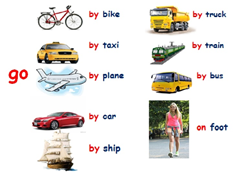
Key: Means of transport: plane, bus, train, ship Phrase: feed the animals |
Oral Assessment |
Song “What's This?” |
|||||
|
Activity2. Listen and read. Then answer: What do you do every day in summer?
Detailed reading. Answering questions.
Draw Ss' attention to the question in the rubric e.g. I go to the beach and play with my friends every day in summer. Grammar Presentation: Prepositions
Activity 3. Look at the picture and remember. Я еду на автобусе – I go by bus Я еду на поезде – I go by train Я лечу на самолете – I fly by plane
A
Play a guessing game.
Descriptor: A learner:
|
Students listen and read, then answer the questions: What do you do every day in summer?. KEY 1.In Perth, Australia 2. It’s summer. 3. He goes to the beach. 4. To the zoo. 5. By train. 6. Feed the animals and buy T-shirts with animals. 7. At nine o’clock. Students guess and say. Students listen to a dialogue between a boy and a girl about a new park in their town, and they have to tick Answer: a Students guess and say. |
Self-Assessment
Peer Assessment
Self- Assessment
Peer Assessment
Group Assessment |
Handouts Worksheets Textbook Grammar in Tables Handouts CD Guessing Game. |
|||||
|
Feedback |
K
|
|
|
|
||||
|
Homework |
WORKBOOK: Activity 2 and 3 |
|||||||
|
Additional Information |
||||||||
|
Differentiation - how do you plan to give more support? How do you plan to challenge the more able learners? |
Assessment - how are you planning to check learners` learning? |
Health and safety check ICT links |
||||||
|
More support will be given to weaker learners by giving them a modified worksheets in some tasks with greater support |
-through questioning and the redirecting of questioning in feedback activities -through observation in group and end performance activities -through formative task |
-White board and video are used no more than 10 minutes -Use water-based pens -Health promoting techniques -Breaks and physical activities used. -Points from Safety rules used at this lesson. |
||||||
|
REFLECTION |
Answer the most relevant questions to reflect on your lesson. Were the lesson objectives/learning objectives realistic? What did the learners learn? What did/didn’t you like? What was difficult? |
|||||||
 ctivity 4.
 ey
Ideas:
ey
Ideas:
|
Unit: 8 |
MY HOLIDAYS |
|||||||
|
Teacher’s name: |
|
|||||||
|
Date: |
|
|||||||
|
Class: |
Number present: |
Number absent: |
||||||
|
Theme of the lesson |
PROJECT WORK: My Holiday |
|||||||
|
Learning objective (s) |
3.2.3.1 respond to basic questions with single words or short responses; 3.4.3.1 create a poster or write a postcard, using words and simple phrases; 3.5.1.6 use interrogative pronouns who, what, where, how, and when to ask basic questions; |
|||||||
|
Lesson objectives |
|
|||||||
|
Plan |
||||||||
|
Stages of the lesson |
Teacher’s activities |
Students’ activities |
Assessment |
Resources |
||||
|
Greeting |
Greet students; students respond to greeting and take their places. Hello, boys and girls! |
|
|
|
||||
|
Warm-up |
Talk in Pairs.
Song “Big numbers”
|
|
|
Song “Big numbers” https://www. youtube .com/watch?v=e 0dJWfQHF8Y
|
||||
|
Presentation
Practice
Ending the lesson
Feedback |
Activity1.Conveying the meaning of new words.
|
KEY: Souvenirs: postcard, mug Nouns: map, sunglasses, pound |
Oral Assessment |
Flashcards |
||||
|
Grammar Practice: How much - How much is it? -asking about prices |ESL Song & Story- Learning English
How much is it? It’s ten pounds. How much are these pens? They’re two pounds. Write the question and answer on the board, read them out and have Ss repeat after you. Activity2. Ask and answer about the prices. Then choose what to buy.
Physical Exercise. Body in Action
PROJECT. Listen and read
Formative Assessment.
Descriptor: A learner:
|
Students read the text and guess the meaning of the how much is/ how much are KEY S1: Hello. How much are the postcards? How much is the hat? The hat, please S2: They‛re two pounds. It‛s twenty pounds. OK. My Holiday. Dear Andy, I’m in Devon in the UK with my dad, my mum and my sister. We come here in summer by plane. We swim and play on the beach all day. It’s very nice here! Tim Students do the project and present it, then ask and answer with your partner |
Self- assessment Peer assessment Oral Assessment Peer Assessment |
How much - How much is it? - asking about prices | ESL Song & Story - Learning English https://youtu.be /I9YYtue3_Cs?si= 2sjQC_LuyPsg _lwf Worksheets Body in Action Writing tip. PROJECT Work |
|||||
|
Self-reflection. Students attach their boat in the appropriate area of the map that reflects their emotions and mood after the lesson. |
|
|
|
|||||
|
Homework |
WORKBOOK: Activity 1 and 2 |
|||||||
|
Additional Information |
||||||||
|
Differentiation - how do you plan to give more support? How do you plan to challenge the more able learners? |
Assessment - how are you planning to check learners` learning? |
Health and safety check ICT links |
||||||
|
More support will be given to weaker learners by giving them a modified worksheets in some tasks with greater support |
-through questioning and the redirecting of questioning in feedback activities -through observation in group and end performance activities -through formative task |
-White board and video are used no more than 10 minutes -Use water-based pens -Health promoting techniques -Breaks and physical activities used. -Points from Safety rules used at this lesson. |
||||||
|
REFLECTION |
Answer the most relevant questions to reflect on your lesson. Were the lesson objectives/learning objectives realistic? What did the learners learn? What did/didn’t you like? What was difficult? |
|||||||

|
Unit: 8 |
MY HOLIDAYS |
|||||||
|
Teacher’s name: |
|
|||||||
|
Date: |
|
|||||||
|
Class: |
Number present: |
Number absent: |
||||||
|
Theme of the lesson |
Unit revision8 Summative Assessment for the unit 8 |
|||||||
|
Learning objective (s) |
3.4.1.1 spell accurately a few high-frequency words; 3.4.2.1. follow word order rules in short statements 3.4.4.1 link ideas with and, but; 3.4.5.1 apply basic rules of punctuation (use capital letters, full stops, and question marks). |
|||||||
|
Lesson objectives |
|
|||||||
|
Plan |
||||||||
|
Stages of the lesson |
Teacher’s activities |
Students’ activities |
Assessment |
Resources |
||||
|
Greeting |
Greet students; students respond to greeting and take their places. Hello, boys and girls! |
|
|
|
||||
|
Warm-up |
Brainstorming.
|
Open answers |
|
Flashcards |
||||
|
Practice
Ending the lesson
Feedback |
Activity 1. Look and write.
Activity2. Put the words in the correct order.
Activity 3. Read and complete with and or but.
Activity 4. Read and correct the sentences. Add a full stop (.) or a question mark (?)
|
KEY 1. star 2. sunglasses 3. map 4. present Key: 1.The cat is in front of the cinema. 2. The museum opens at 9 o’clock. 3. Can birds fly? 4. How much is the mug? Key: 1. and 2. but 3. but 4. an Key: 1. Can you take a photo? 2. I go fishing in summer. 3. How much are the sunglasses? 4. We don’t swim in winter |
Self-assessment Verbal assessment Self- assessment |
Handouts Handouts Handouts |
||||
|
Self-assessment.
|
|
|||||||
|
Homework |
WORKBOOK: Activity 1 and 2 |
|||||||
|
Additional Information |
||||||||
|
Differentiation - how do you plan to give more support? How do you plan to challenge the more able learners? |
Assessment - how are you planning to check learners` learning? |
Health and safety check ICT links |
||||||
|
More support will be given to weaker learners by giving them a modified worksheets in some tasks with greater support |
-through questioning and the redirecting of questioning in feedback activities -through observation in group and end performance activities -through formative task |
-White board and video are used no more than 10 minutes -Use water-based pens -Health promoting techniques -Breaks and physical activities used. -Points from Safety rules used at the lesson |
||||||
|
REFLECTION |
Answer the most relevant questions to reflect on your lesson. Were the lesson objectives/learning objectives realistic? What did the learners learn? What did/didn’t you like? What was difficult? |
|||||||

|
Unit: 8 |
MY HOLIDAYS |
||||||
|
Teacher’s name: |
|
||||||
|
Date: |
|
||||||
|
Class: |
Number present: |
Number absent: |
|||||
|
Theme of the lesson |
STORY 4 (MODULES 7-8): At The Beach |
||||||
|
Learning objective (s) |
3.1.5.1.use contextual clues to predict content in short, supported talk on a limited range of familiar topics. 3.3.3.1 understand short, simple instructions used in familiar everyday contexts; |
||||||
|
Lesson objectives |
|
||||||
|
Plan |
|||||||
|
Stages of the lesson |
Teacher’s activities |
Students’ activities |
Assessment |
Resources |
|||
|
Greeting |
Greet students; students respond to greeting and take their places. Hello, boys and girls! |
|
|
|
|||
|
Warm-up |
Free talk. Discuss.
|
Open answers |
|
Flashcards |
|||
|
Presentation
Practice
Ending the lesson
Feedback |
Activity 1. Picture description
Activity 2. Look and answer: What do the girls do at the beach? Then listen and read. Before reading:
While reading:
After reading:
!!!!VALUE.
Ask Ss:
|
Key: Nouns: turtle, lizard Key: Two sisters get up at ten o’clock on a Saturday morning. They decide to go to the beach, since the weather is hot. The girls play with the sand and create a town, with a school and a zoo made of sand. There are also two turtles in the zoo. Two other children come up and ask if they can play with them. They introduce their pet lizard and place it in the zoo. However, the lizard’s tail knocks down the school. The two girls forgive their new friends and they all have fun on the beach. The lizard and the turtles get along very well. |
Oral Assessment Self Assessment Peer Assessment |
Pictures Worksheets Handouts |
|||
|
Activity 3. Read and write Yes or No
|
KEY 1. No 2. No 3. Yes |
Verbal assessment |
Handouts |
||||
|
Playing A Game. Put the pieces together
Go round the classroom monitoring the procedure and helping Ss if necessary |
Students put the pieces together |
Group Assessment |
Envelope with a colour photocopy |
||||
|
Activity 4. Read activity 2 again and circle.
|
KEY 1. home 2. lizard 3. two |
Self- Assessment |
Tables |
||||
|
Self-assessment: Postcard
|
|
|
|
||||
|
Homework |
Unit revision Workbook |
||||||
|
Additional Information |
|||||||
|
Differentiation - how do you plan to give more support? How do you plan to challenge the more able learners? |
Assessment - how are you planning to check learners` learning? |
Health and safety check ICT links |
|||||
|
More support will be given to weaker learners by giving them a modified worksheets in some tasks with greater support |
-through questioning and the redirecting of questioning in feedback activities -through observation in group and end performance activities -through formative task |
-White board and video are used no more than 10 minutes -Use water-based pens -Health promoting techniques -Breaks and physical activities used. -Points from Safety rules used at this lesson. |
|||||
|
REFLECTION |
Answer the most relevant questions to reflect on your lesson. Were the lesson objectives/learning objectives realistic? What did the learners learn? What did/didn’t you like? What was difficult? |
||||||








 Бұл курс Қазақстан Республикасы Оқу-ағарту министрлігімен келісілген










