|
|
«Интердент» жоғары
медициналық колледжі
|
Құжаттама
тәртібі
ҚТ-СМЖ-003.3-2020
Әдістемелік қызметті
басқару
|
Басылым
1
|
Theme: “Types of literature;
H.G.Wells; The war of the worlds; Character
analysis;
Elements in fiction;
Question types”
English
Language
Teacher: Turmaganbetova
G.B
06.03.2021
1. General
information’s:
Course:
1
Year of study:
2020-2021
Group:
100
The type of the
lesson: combined.
The aim of the
lesson/ Learning Result: to introduce pupils new
words, to test the assimilation of new and previously; to control
students’ skills in speaking, listening according to the
theme.
a)
Educational: understand the main points in unsupported
extended talk on a wide range of general and curricular topics,
including talk on a limited range of unfamiliar
topics;
b)
Pedagogical: to teach students` to get the information, to express
their own opinion
c)Developing: development of the ability to comprehend
perception; development of the ability to logically state content,
statements; development of listening skills, the ability to get the
necessary information from what you hear; development of the
ability to form conclusions, the ability to analyze
Obligations,
assessment criteria: learners have met this
learning objective if they can: understand the content of the task,
make conclusions; use the special words while speaking; express
ideas and thoughts.
1.1List of professional skills and abilities acquired by
students during training sessions:
using correctly new grammar structure based to the theme; asking
questions and answering them; writing new sentences by using
correctly grammar rule based to the theme; understanding new
grammar structures in the tasks.
2. Lesson
equipment:
2.1 Educational
and methodical manuals, reference
literature:
1. Jenny Dooley, Bob
Obee- Action for Kazakhstan- Science Schools Grade
10
Equipments: Handouts, cards, tape,
flipchart, video and presentation, interactive
whiteboard.
Procedure of the
lesson
|
Lesson
stages:
|
Teacher's
activities
|
|
Beginning of the
lesson
Warm-up
activities
|
Good morning, my dear
students. Sit down, please. Glad to see you. Hope you are well
today. Let’s start our lesson with some common
questions:
What date/day is it
today?
Who is
absent?
Why (who is absent for a
good/disrespectful reason)?
Let’s begin our lesson.
|
|
Checking up the home
task:
|
Check up the home
task: repeat all the
materials
|
|
Discussion
point
|
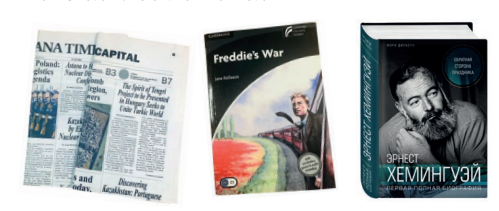
Look at the photos. Ask
and answer in pairs.
|
|
Main
part
|
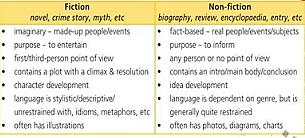
Non-fiction are
texts which are about real people, places, events or things. These
can be newspaper articles, poems, history books or biographies.
Fiction includes texts, stories or poems which an author has
invented. Sometimes an author can mix real people or events in an
invented story or poem.
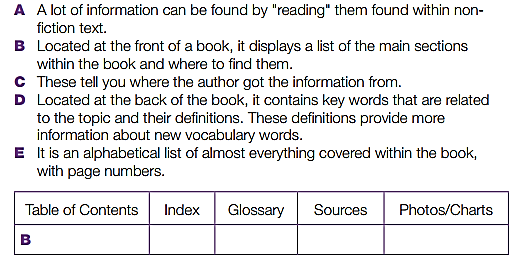
Task
#1. Read the definition and match
them with the non-fiction features. Put the letters in the correct
column.
Task
#2. Read the text then match the
ideas to the correct
paragraph.
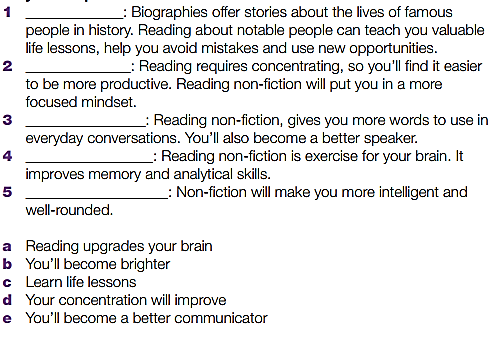
Why is it important
to read non-fiction?
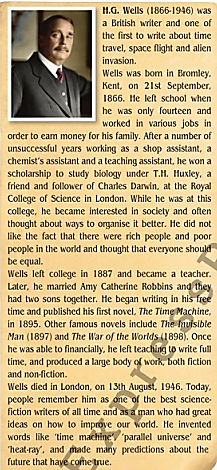
Task
#3. Read about the H.G.Wells. What
kind of novels did he write?
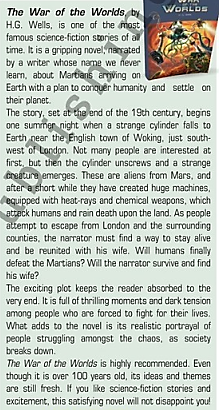
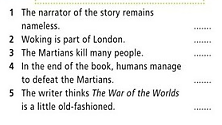
Task
#4. Read the text and decide if
statement 1-5 are T,F or DS
Task
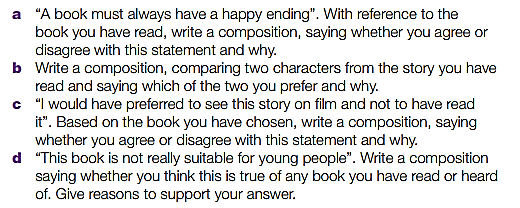
#5. Writing. Work in pairs and
read the following tasks. Choose one task. Discuss the question in
pairs and write your
composition.
Task
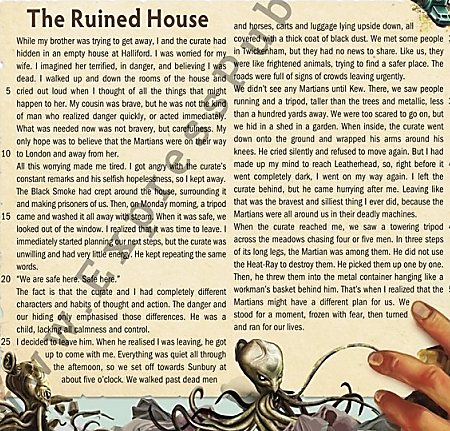
#6. How do the characters in The
War of the Worlds express their fears? Find examples in the adapted
extract below.
Task
#7. In small group, discuss the
questions.
-
What is the longest book you
have ever read?
-
How long did I take you to
read it?
-
What is the funniest book you
have ever read?
-
Has any book ever made you cry
or laugh out loud? Which one and
why?
-
Which book was the strangest
one you have ever read? Why?
Task
#8. Work in pairs. Which words/
phrases in bold do you know? Ask and answer the
questions.

Task
#9. Read the novel. Test your
knowledge.
 
|
|
Conclusive
stage
Feedback
Home
task
|
Thanks for your
work. I hope our lesson will be useful for you. Healthy and study
well.
Feedback:
-
What have you learnt
today?
-
What other information do you
know?
-
Let’s say some examples about
today’s grammar.
Home work: ex.14,
page 67; ex.19, page 68
|

 ЖИ көмекші


 Қауіпсіз төлем












 Бұл курс Қазақстан Республикасы Оқу-ағарту министрлігімен келісілген










