
 ЖИ көмекші


жүктеу мүмкіндігіне ие боласыз
Бұл материал сайт қолданушысы жариялаған. Материалдың ішінде жазылған барлық ақпаратқа жауапкершілікті жариялаған қолданушы жауап береді. Ұстаз тілегі тек ақпаратты таратуға қолдау көрсетеді. Егер материал сіздің авторлық құқығыңызды бұзған болса немесе басқа да себептермен сайттан өшіру керек деп ойласаңыз осында жазыңыз
 20 Ақпан 2025
 141
141
Unit of a long term plan: Our health Food and drink.
|
Unit of a long term plan: Our health |
Lesson 52 |
||
|
Teacher name: |
Kairedenova A.T |
||
|
Date: |
16.01.2025 |
||
|
Grade: 6 b |
Number present: |
absent: |
|
|
Lesson title |
Food and drink. |
||
|
Learning objectives |
6.3.1.1 provide basic information about themselves and others at sentence level on an increasing range of general topics 6.2.4.1 understand the main points of supported extended talk on a range of general and curricular topics 6.4.5.1 deduce meaning from context in short texts on a limited range of familiar general and curricular topics 6.5.5.1 link without support sentences using basic coordinating connectors |
||
|
Lesson objectives |
Learners will be able to: • Learn vocabulary for food and drink. • Listen to a report about healthy eating in schools. • Practise extending vocabulary. |
||
|
Value links |
Honesty – You may highly value telling people the truth. This one gets tricky when being honest can be hurtful to others. So, a person who really puts honesty first might be the sort of person who will tell the truth even if it hurts to do so. |
||
|
Plan |
|||
|
Stages / Time |
Teachers actions |
Students actions |
Assessment criteria |
Resources |
|
Beginning of the lesson 5 min |
Organization moment 1.Greeting. Ask about the weather. Warm-up • Ask individual students what they have for lunch when they are at school. • If there is a school canteen, ask if the meals are healthy. • Ask students if they make an effort to eat healthy food. Lead - In
Lemonade and summer go hand-in-hand. This quintessential refreshment is also the perfect companion for a fresh and fruity appetizer like this strawberry fields salad. For an added burst of strawberry flavor, try making a strawberry-lemonade variation (recipe below)! |
The wish flower” method helps to start the lesson with good wishes to each other. The aim: To develop Ss speaking skills and create friendly atmosphere Efficiency: By telling the wishes they show their appreciations . Describe and imagine the pictures Students say different words from the picture |
At the organization moment T tries to award active Ss. «The praise» method is used to evaluate Ss with phrases like: “Good job! Well done!” Formative Assessment
Good job! |
CD 1 Pictures PPT |
|
Middle of the lesson Presentation part. 35 min |
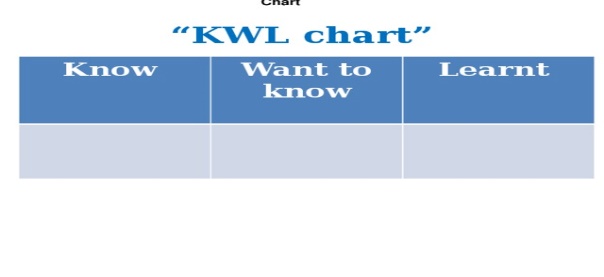
Ex: 1 P: 60 • Students work in pairs to match the words with the pictures. Point out that not all the words in the box are needed. • Play the CD for students to check their answers. • Check that students understand the meaning of all the words. Play the CD again and get students to repeat. Differentiation: «Verbal support» method is used to help Students use new words in the text. Ex: 2 P: 60 • Remind students that a useful way to learn vocabulary is to put new words in groups and list them in their vocabulary notebooks. • Check students understand the first word in each group. • Students copy the word groups and add two more words to each group. They can use dictionaries for this. In a stronger class, tell them to find four more words. Ex: 3 P: 60 • When students have done the questionnaire, discuss their responses and ask if they agree with the key Ex: 5 P: 60 • Explain that students are going to listen again for specific information. Allow them time to read the sentences and the multiple choice options. • Play the CD twice. Students answer the questions while they listen. |
Students match in the photos with words in the box. ANSWERS: 1 soup 9 ice cream 2 water 10 fizzy drink 3 fish 11 chips 4 rice 12 burger 5 salad 13 sweets 6 cheese 14 juice 7 meat 15 sandwiches 8 beans 16 crisps . Students think of two more words to add to each group ANSWERS: Students’ own answers Students ask and answer the questions with a partner ANSWERS: Students’ own answers Students listen to the programme again and choose the correct answers ANSWERS: 1 Some 2 many 3 There are a lot of 4 eat 5 isn’t much |
Assessment criteria - Learn vocabulary for food and drink. Descriptor: - match in the photos with words in the box. Peer assessment: answer key Assessment criteria: - Listen to a report about healthy eating in schools. Descriptor: - listen to the programme again and choose the correct answers -Make CCQ questions Yes / No |
Cards Student’s book Workshets |
|
End of the lesson 5 min |
Home task: Ex: 1 P: 42 WB |
|
Poster Success
|
|




|
Unit of a long term plan: Travel and holidays |
Lesson 60 |
||
|
Teacher name: |
Kairedenova A.T |
||
|
Date: |
06.02.2025 |
||
|
Grade: 6 b |
Number present: |
absent: |
|
|
Lesson title |
Travel equipments. To be going to: affirmative, negative, question |
||
|
Learning objectives |
6.5.8.1 spell most high-frequency words accurately for a limited range of general topics of familiar general topic 6.3.3.1 give an opinion at sentence level on a limited range of general and curricular topics |
||
|
Lesson objectives |
Learners will be able to: • Learn vocabulary for travel equipment. • Do a Rainforest Survival quiz. • Learn about imperatives. |
||
|
Value links |
Gratitude – You value gratitude if you find yourself respecting people who say please and thank you. If you’re a religious person who values gratitude, you may always insist on praying before eating your dinner. |
||
|
Plan |
|||
|
Stages / Time |
Teachers actions |
Students actions |
Assessment criteria |
Resources |
|
Beginning of the lesson 5 min |
Organization moment 1.Greeting. Ask about the weather. Warm-up • With books closed, write the word rainforest on the board and elicit the meaning. • Teach the words expedition, survival and survive. • Ask students what they think it is like on an expedition in a rainforest. Ask what they think the dangers are, and if it is difficult to survive. Ask: What do you need to take with you when you go to the rainforest? Elicit some ideas and write them on the board. Lead - In
|
The wish flower” method helps to start the lesson with good wishes to each other. The aim: To develop Ss speaking skills and create friendly atmosphere Efficiency: By telling the wishes they show their appreciations . Describe and imagine the pictures Students say different words from the picture |
At the organization moment T tries to award active Ss. «The praise» method is used to evaluate Ss with phrases like: “Good job! Well done!” Formative Assessment
Good job! |
CD 1 Pictures PPT |
|
Middle of the lesson Presentation part. 35 min |
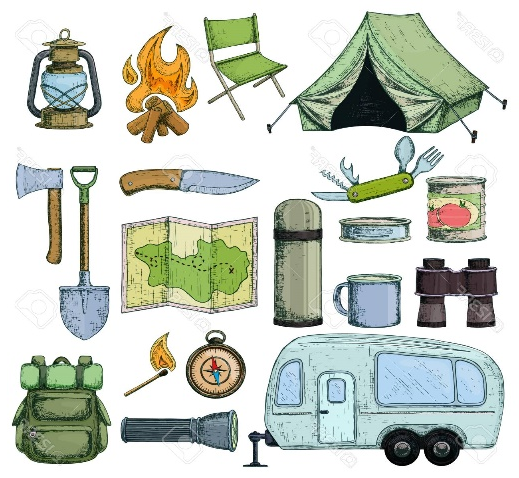
Ex: 1 P: 68 • Encourage students to read all the words carefully. Point out that four of them are not shown in the photo. • After listening, check that students understand all the vocabulary, and drill pronunciation of any words that are new to students. Differentiation: «Verbal support» method is used to help Students use new words in the text. Ex: 2 P: 68 • Students do the quiz individually. In a weaker class, they can work in pairs. • Ask them to work in pairs to add up their scores and read the key. Ask them to discuss whether or not they agree with the key. Ex: 3 P: 68 • Students complete the table individually, then answer the question. LANGUAGE NOTE The full form for negative imperatives is do not, but in spoken language we usually use the contraction don’t: Do not disturb (a notice on a door). Don’t worry. We use imperatives to ask or tell someone to do something: Turn left by the supermarket. Be careful! Don’t watch that film – it’s terrible! Have a nice holiday! We can say please after imperatives to make them more polite: Hurry up, please. |
Students match the equipment with photos. Which four things are not in the photos? ANSWERS: 1 tent 2 sleeping bag 3 rucksack 4 stove 5 waterproof clothes 6 torch 7 first aid kit 8 satellite phone 9 compass 10 map 11 sunscreen 12 insect repellent Not in the photos: rope, sunglasses, gloves, helmet Students do the Rainforest Survival quiz ANSWERS: Students’ own answers. Students complete the table with imperatives from the quiz. ANSWERS: Affirmative: go back, look, watch, stay, wear, be quiet, shine, light, get in, eat, use, call, give, go Negative: don’t worry, don’t eat We use imperatives for instructions. |
Assessment criteria - • Learn vocabulary for travel equipment Descriptor: - match the equipment with photos. Which four things are not in the photos? Assessment criteria: • Do a Rainforest Survival quiz Descriptor: - do the Rainforest Survival quiz -Make CCQ questions Yes / No |
Cards Student’s book Workshets |
|
End of the lesson 5 min |
Home task: Ex: 1 P: 48 WB |
|
Poster Success
|
|

|
Unit 5 Entertainment and media |
lesson 53 |
||
|
School: |
Secondary school №3 |
||
|
Teacher name: |
Kairedenova A.T |
||
|
Date: |
21.01.2025 |
||
|
Grade: 7 ә |
Number present: |
absent: |
|
|
Lesson title |
Skills and people |
||
|
Learning objectives |
7. 2. 2. 1 understand some information on general and academic topics in a long conversation in a limited environment with little support from the teacher; 7. 3. 4. 1 respond in sentences with some flexibility to unexpected comments in the context of general and educational topics; |
||
|
Lesson objectives (assessment criteria) |
Learners will be able to: - Learn vocabulary for skills and people. - Do a quiz on talented people. - Learn how to learn words in groups. - Learn phrases for expressing knowledge. |
||
|
Value links |
"Law and Order" Observance of norms and rules of order and justice understand the need |
||
|
Stages/ Time |
Teachers actions |
Students actions |
Assessment |
Resources |
|
Beginning 5 min |
Greeting. (Whole class, Individually) T tells the class to make groups of 2. Warm up: With books closed, write the word clever on the board and elicit the meaning. Name a few famous artists, musicians or scientists and ask students if these people are / were clever. Ask students to name some more clever people.
|
Learners read the given sentences on the board and guess the topic and share with their ideas. Remember and recognize the main vocabulary. |
Teacher controles the process, gives feedback and asks additional questions if it’s nessasery. Teacher evaluate pupils with phrases like: “Good job! Well done!” Formative Assessment |
|
|
Middle 35 min |
Task. I (Wh, I) (pair dicsussion) Ex:1 P:64 Look at the title of the quiz and elicit that it is going to be about famous people who showed their talents when they were children. Explain that this is a general knowledge quiz. Students should work in pairs. After checking answers, find out who got the most correct answers. In a stronger class, ask students if they know anything else about the people in the quiz. |
Learners work in pairs. Do the Clever kids quiz ANSWERS 1 a Salvador Dalí 2 b Henry Ford 3 b karate 4 a prince 5 c Oliver Twist 6 a lens 7 c Chinese 8 b The X factor |
T’s feedback Descriptor: - work in pairs - do the quiz Total: 2 point
|
Student’s book |
|
|
Task. II (Wh, I) (Task for location) Ex: 2 P: 64 Focus on the table with the class, then ask students to read the quiz to find the missing words to complete the table. Play the CD so that students can check their answers. Drill the pronunciation of the new words if necessary. |
Learners complete the table with verbs and nouns from the Clever kids quiz. Then listen and check. ANSWERS 1 composer 2 swimmer 3 play 4 writer 5 winner 6 program 7 singer |
Self -assessment Descriptor: - complete the table - use verbs and nouns Total: 2 point |
Worksheets Stickers |
|
|
Task. III (Task for understanding) Ex: 3 P: 64 Point out that it is a good idea to learn new vocabulary in groups. Focus on the example, then ask students to work individually to add the related words. To extend the activity, refer students back to the table in exercise 2 and elicit the activity nouns associated with those words. In a stronger class, you could also ask students to look up more words to add to the list and write each form in their notebooks Differentiation: A less motivated student do the first two items with the class as examples. |
Learners complete the table with related words. Then listen and check. ANSWERS 1 actor 2 acting 3 dance 4 dancer 5 cook 6 cooking |
Descriptor: - complete the table - listen and check. Total: 2 point |
|
|
|
Task. IV (Task for understanding) Ex: 4 P: 64 Read the two gapped key phrases with the class and point out that the words in the box fit in one or the other. Explain that there is more than one answer for each key phrase. Students complete the phrases. Check understanding by asking students to translate them into their own language. In a weaker class, say some names of topics or famous people and ask students to respond by using the key phrases |
Learners answer the question. Which words in the box can be used in key phrases 1 and which can be used in key phrase 2 ANSWERS 1 a bit, a lot 2 anything, much |
Descriptor: - answer the question. - use words in the box Total: 2 point |
|
|
End 5 min |
FEEDBACK Learners provide feedback on what they have learned at the lesson. Ex: P: Home task: Write the days |
What worked well for you in today’s class? What could we have done differently to make today’s class better for you? What are you wondering about after today’s lesson? What did you find difficult about today’s lesson? |
Poster Success Ladder |
|


|
Unit 6: Healthy world |
Lesson 42 |
||
|
Teacher name: |
Kairedenova A.T |
||
|
Date: |
04.02.25 |
||
|
Grade: 4 |
Number present: |
absent: |
|
|
Lesson title |
Healthy food |
||
|
Learning objectives |
4.2.6.1 take turns when speaking with others in a growing range of short, basic exchanges; 4.4.2.1 begin to use joined-up handwriting in a limited range of written work; 4.5.3.1 use adjectives, including possessive adjectives, on a growing range of general and some curricular topics to describe things, use simple one-syllable and |
||
|
Lesson objectives |
Learners will be able to: -To talk about food and drinks |
||
|
Value links |
"Creativity and Innovation" Monitoring, measuring, conducting experiments and experiments ability; |
||
|
Plan |
|||
|
Stages / Time |
Teachers actions |
Students actions |
Assessment criteria |
Resources |
|
Beginning of the lesson Warming-up
3 min Pre-learning «Brainstorming» method 7 min. |
Organization moment : 1.Greeting. Ask about the weather. The teacher sets the lesson objectives, letting students know what to anticipate from the lesson. Warming up Where are you from? How old are you? What color is it? How many students are there in class? What day of the week today? Revise the language of the previous lesson. Lead – In
|
Students of the class are listed. Students' attention is drawn to the lesson. Learners write the numbers from previous lesson Determines the topic and purpose of the lesson Students say different words from the picture |
The teacher to assess learners for their ability. “Good job! Well done!” Formative Assessment
Good job! Descriptor: -know key phrases - can make sentence - know vocabulary of previous lesson Total: 1 point |
Pictures |
|
Middle of the lesson Presentation part. 30 min |
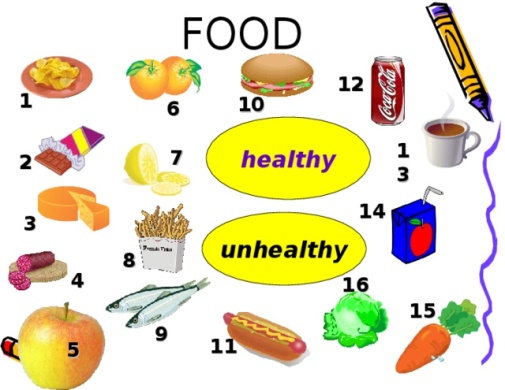
Ex:5 P:84 Put the Time to eat poster up on the board. Point to the items, one at a time, and say the corresponding phrases. The pupils repeat, chorally and/or individually. Point to each item in random order. Ask individual pupils to name the item. Explain to the pupils that in today's lesson you'll talk about food and drinks. Ask them to tell you their favourite food and drink Ex: 6 P: 84 Refer the pupils to the pictures and elicit the names of the food items. Read the dialogue aloud and explain the activity. The pupils, in pairs, ask and answer questions, as in the example. Go around the classroom providing any necessary help. Ask some pairs to report back to the class. Ex: 7 P: 85 Underline the words in bold. The pupils repeat, chorally and/or individually. Then say and write on the board: I am having a piano lesson this evening. Underline the words in bold. The pupils repeat, chorally and/or individually. Ex: 8 P: 85 Refer the pupils to the pictures and elicit the words. Explain the activity. Play the CD. The pupils listen and match. Check their answers. Ask the pupils to tell you what each person is doing for tomorrow's party. |
Pupils listen, point and repeat. Then match ANSWERS 1 b 2 I 3 h 4 g 5 j 6 d 7 a 8 c 9 e 10 Pupils want to make a salad. Cap In pairs, decide what to include. ANSWERS A: Let's put some tomatoes in our salad. B: Yes, sure. Why not? A: Let's put some carrots in our salad. B: Oh, no. Let's put some cucumbers. A: Let's put some mayonnaise in our salad. B: Yes, sure. Why not? etc Pupils match. Then talk with your friend. ANSWERS 2 a 3 b 4 e 5 c A: What are you doing? B: I'm going to the gym. A: Going to the gym? B: Yes. Exercising gives me more energy! Pupils listen and match. Then say. ANSWERS 1 Ayaulym 2 Karlygash 3 Bakhytzhan 4 Nurzhan |
Descriptor: - listen, point and repeat - then match Total: 2 point
Descriptor: - make a salad. - decide what to include Total: 2 point Descriptor: - talk with your friend. Total: 1 point Descriptor: - listen and match Total: 1 point -Make CCQ questions Yes / No |
Card Worksheet Students book |
|
End of the lesson 5 min |
FEEDBACK Learners provide feedback on what they have learned at the lesson. Ex: Home task: |
|
Poster Success
|
|


|
Unit 3 Fantasy world |
lesson 63 |
||
|
School: |
|||
|
Teacher name: |
Kairedenova A.T |
||
|
Date: |
12.02.25 |
||
|
Grade: 5 v |
Number present: |
absent: |
|
|
Lesson title |
People and places |
||
|
Learning objectives |
5. 2. 4. 1 to understand general and educational topics in a long conversation with the support of the main ideas; 5. 3. 6. 1 to express one's thoughts clearly and concretely in sentences in pairs, groups and with the whole class; 5. 5. 3. 1 write specific details with the support of the teacher, describing people, places and objects at the text level; |
||
|
Lesson objectives (assessment criteria) |
Learners will be able to: - Learn and practise basic vocabulary. - Learn how to form plurals. |
||
|
Value links |
"Creativity and Innovation" Use of various cognitive tools, knowledge about the world be able to collect (linguistic, reading culture, information, service in the digital environment) |
||
|
Stages/ Time |
Teachers actions |
Students actions |
Assessment |
Resources |
|
Beginning 5 min |
Greeting. (Whole class, Individually) T tells the class to make groups of 2. Warm up: Books closed. Write the following words on the board I random order: country, village, city, town. Tell students to work in pairs to put these places in order of size, starting with the largest. Ask them to think of an example of each place from their own country. After about 1 minute, stop the students. Get feedback from each pair Setting the aim of the lesson. |
Learners read the given sentences on the board and guess the topic and share with their ideas. Remember and recognize the main vocabulary. |
Teacher controles the process, gives feedback and asks additional questions if it’s nessasery. Teacher evaluate pupils with phrases like: “Good job! Well done!” Formative Assessment |
Flashcards special days
|
|
Middle 35 min |
Task. I (Wh, I) (pair dicsussion) Ex: 1 P:26 Focus students’ attention on the words in the box. If you have done the warm-up activity, they will already be familiar with country, town, city and village. In a weaker class, ask students to work in pairs, using page 77 of the Workbook to help them. In a stronger class, encourage
|
Students check the meaning of the words in the box in the wordlist in the workbook ANSWERS: Places: city, house, town, village People: child, family, man, person, woman |
Descriptor: - check the meaning of the words - use the words in the box Total: 2 point |
Student’s book |
|
|
Task. II (Wh, I) (Task for location) Ex: 2 P:26 Refer students to the quiz on page 23. Look at the photos and ask students to identify words from exercise 1 (people, baby, city, village, house). Explain the task and play the recording. Students work individually and then check their answers in pairs. Check answers as a class. Do any of the facts surprise them? What is the most interesting fact? |
Learners do the Our World quiz. Then listen and check your answers. ANSWERS: 1 a 2 a 3 a 4 a 5 b 6 b 7 a |
- look at the photos - do the quiz Total: 2 point |
Stickers
|
|
|
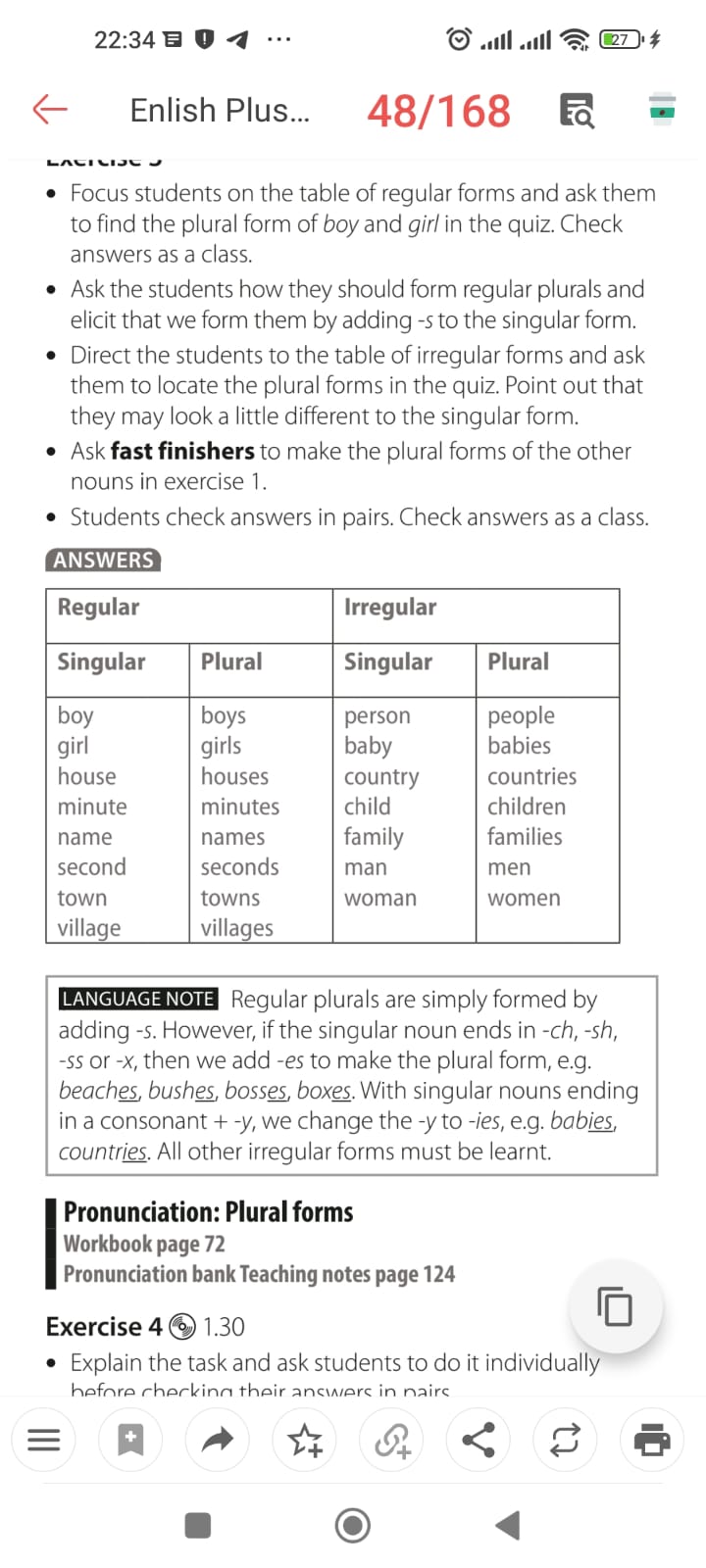
Task. III (Task for understanding) Ex: 3 P:26 Ask the students how they should form regular plurals and elicit that we form them by adding -s to the singular form. Direct the students to the table of irregular forms and ask them to locate the plural forms in the quiz. Point out that they may look a little different to the singular form. Ask fast finishers |
Learners complete the lists with plural forms in the Our World quiz. ANSWERS:
|
Descriptor: - complete the lists with plural forms Total: 2 point |
Pictures |
|
|
Task. IV Ex: 4 P:26 Explain the task and ask students to do it individually before checking their answers in pairs. Check answers as a class. Play the recording and pause after each number for students to repeat. In a weaker class, model the pronunciation of the numbers yourself for the students. |
Learners write the numbers from the quiz. Then listen and repeat. ANSWERS: 1 196 2 267 3 1,000 |
Descriptor: - write the numbers - listen and repeat. Total: 2 point |
|
|
End 5 min |
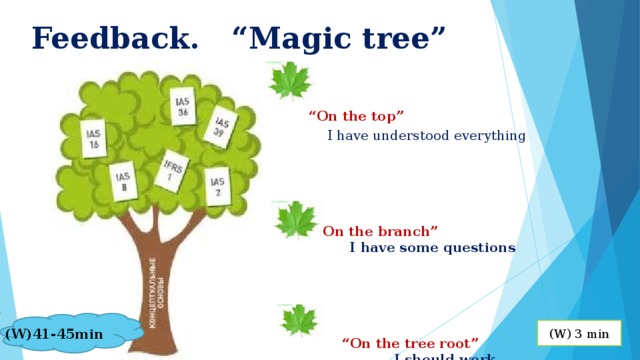
The Ladder method was used as a reflection. T asks Ss to stick their stickers to the Success Ladder. Green- I understood Yellow-I have some questions Red-I need a help. Ex: P: Home task |
What worked well for you in today’s class? What could we have done differently to make today’s class better for you? What are you wondering about after today’s lesson? What did you find difficult about today’s lesson? |
Poster Success Ladder |
|


 Жүктеу


 Жүктеу
шағым қалдыра аласыз


 Бұл курс Қазақстан Республикасы Оқу-ағарту министрлігімен келісілген










